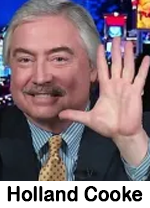
By Holland Cooke
Consultant
 Music radio’s competitors were vinyl, then tape, then CDs – before smartphone streaming and satellite radio offered more portability and variety. And before consolidation, broadcasters were under less of the revenue pressure that now commercializes many stations beyond listeners’ tolerance. TALKERS NAB Show coverage included Edison Research founder Larry Rosin lamenting “many, many [music] stations now loading all their spots into two interminable breaks per hour.” I cringe hearing FMs struggle to remain among listeners’ music appliances. And I fret that monologue-heavy talk radio is relinquishing interactive dialogue to social media.
Before moving to all-news, and eventually news/talk, I worked in music formats less-structured than today’s. So now I hear music radio as an outsider, more like a consumer. Which got me wondering: How does my format sound to music consultants? So, I asked several whose work I respect.
Beware the one-joke act
Mike McVay reckons that “listeners want to know a little bit about a lot of things,” a point other colleagues echo. Explaining that “music radio is all about variety,” adult contemporary specialist Gary Berkowitz: “To me, listeners are tired of all this political back and forth. Sure, it has its place, but it’s like if music radio only played five different artists!” Jon Holiday – who customizes station playlists for a variety of formats – asks “are talk listeners getting what they want?” Calling some formats “very artist-heavy,” he thinks stations were right to play so much Taylor Swift in 2024, certainly her year. And 2025 sure is Trump’s, but Holiday calls “banging the same drum all day, every day” the most common flaw he hears on talk radio.
McVay says listeners like “stories that pull on their heart strings. It’s why “NBC Nightly News” ends with a touching story. It’s not fluff. It’s information relief.” He also recommends topics you are likely to overhear at the next table during lunch: “Discretionary Time Information” (binge-worthy shows on Apple+, Max, Netflix). Health. And – lately more than ever – what Mike calls “purse” stories (think: eggs). Been to Costco? On weekends it’s mobbed. Ask any member and they’ll recite a shopping list of Kirkland-brand bargains.
Play the hits
When Gary Berkowitz – then an accomplished music programmer – took over stately WJR, he “approached it like it was a music station, the only difference was my ‘songs’ were my personalities, news coverage and, at the time, play-by-play of all the major Detroit teams.” He bought a jingle package “to ‘decorate’ the station;” and “got ‘JR involved with everything that was happening in Detroit. All I did was put it all together and present it like my top-40 upbringing taught me.”
I can relate. Before I programmed all-news WTOP, Washington, I had no news experience. I came from a music FM. The WTOP staff I inherited was impressive, and their work was solid, but the station wasn’t “programmed enough.” I was sent there to convert Cume to Average Quarter Hour – the blocking-and-tackling formatics fundamental to music radio. We owned “the Top news…instantly” image, and we said those very words LOTS. But research told us that traffic and weather were “the hits;” and how we presented them moved the needle.

Great talkers are great listeners
In every transaction, consumers now expect to interact; and “listeners like to hear others’ voices,” Mike McVay observes: “When the audience is comfortable enough to weigh in with an opinion, their own story, or a reaction, you’ve created a ‘friend circle.’” Jon Holiday tells morning shows he works with to “take time going into breaks to be topical and interact with callers.” And engage by texting and social media. And don’t just push-TO listeners. Be quick to REPLY, and you will make them feel special.
Yet, in three decades coaching talk hosts, the most unwelcome word I say seems to be “callers.” Imitating gifted Rush Limbaugh, many hosts are prone to windy monologue, rather than inviting the busy dialogue that makes a station sound popular (something local advertisers notice). DJs deftly weaving interactivity into music shows often sound more inviting than sermonizing talkers. Holiday remembers El Rushbo as “a master at having fun, particularly in his early days as a syndicated personality.”
Prescription: Local
Twenty years ago at the TALKERS conference, publisher Michael Harrison’s advice was elegantly simple: “Give them something they can’t get anywhere else.” Especially now, with so many non-local audio competitors. Regardless of format, helpful local information can increase Occasions of Tune-In per week.
Simply doing local news is a start. But does yours enable the listener by telling what an item means to him or her? On any given day, what you’re overhearing at lunch is something big that’s happening somewhere else. Can you explain the local impact? “National news needs to mean something to me, my community, my region or state,” according to McVay.
With weather so erratic in so many places, owning that image is gold. If you’re news/talk, don’t assume that you’re the market’s weather station. If you’re music, don’t assume you can’t be. Noting typical news/talk demographics, Jon Holiday surmises that, “as we get older, we seem to be more interested in weather.”
And as successful music stations have always done, show up! Gary Berkowitz had WJR go all-in on Detroit’s Thanksgiving Day parade, “with our people all over the parade route. It was better than the TV coverage!”
Holland Cooke (HollandCooke.com) is a consultant working the intersection of broadcasting and the Internet. Follow HC on Twitter @HollandCooke and connect on LinkedIn
Share this with your network

 solutions executive Michael Katz writes that, according to Scarborough consumer purchase data, consumers were asked to “select auto dealerships where you or other household members might shop if you were planning to buy or lease a new or used vehicle (including in-store and online shopping)” and 36% were unable to name an auto dealer. Katz adds that one out five auto intenders (21%), those who will lease or buy a new or used vehicle in the next year, cannot name one auto dealer. He says, “Auto dealers need ads that teach people who they are and build their brands.” Read the full blog post here.
  are grateful to Steve and Ken Thiele (founder & executive chairman) for their magnanimous corporate contribution to support the work of the Broadcasters Foundation. With support like this from the broadcast industry, the Broadcasters Foundation can continue to deliver much-needed aid to those in our business who need it most. We hope this match campaign inspires other organizations to find impactful ways to support our unique mission.” For information about the Broadcasters Foundation, including how to make a donation or apply for aid, please visit
  If you saved back issues from when TALKERS was a print tabloid, dig-down about 20 years into the stack. A couple times a year beginning then, I was reporting from conferences then called The Podcast and New Media Expo, which later evolved into NMX and BlogWorld and other incarnations.
 The drive to stream video of radio shows has always been risky. Remember your shock when you first saw one of your radio heroes? Video streaming can present a constant disconnect between the show in the listener’s head and the show on the stream. Many stations make the disconnect worse by streaming terrible video images. Combine the trauma of how a host really looks with a dreary TV show and the package cannot benefit the relationship between station and listener/viewer.
 right, two shows… one on the radio, one on the stream. Seamless and fun.
 KPIs and lower CPMs can be misleading, and a channel’s ability to claim conversion credit doesn’t necessarily translate to real value. This bias can lead to underinvestment in traditional channels, like radio, which, despite being perceived as less effective, can deliver substantial ROI.” The perceived effectiveness of radio by marketers puts it dead last in ROI. But a weighted average shows that radio is second only to social media in ROI. The study also found that “podcasts demonstrate strong ROI, comparable to TV and digital display, yet they are often overlooked or undervalued.”
  manager Liz Mayer says, “There is no denying that YouTube is playing an important role in the podcast ecosystem, especially when it comes to discovering new podcasts. However, over half of weekly podcast consumers indicate they consume via audio primarily. So, while the new video capabilities are exciting and need to be focused on, the industry can’t forget that it’s what consumers are hearing that is most important.” Highlights from the report include: 1) Audio remains the primary mode of podcast consumption (58%) despite growing video options; 2) YouTube is the leading podcast platform, yet it is not a walled garden as consumers listen to podcasts across multiple platforms; 3) Podcast discovery: YouTube is the place to be found; 44% of new podcast audiences started listening on YouTube; 4) Downloads and listens underestimate the actual audience: The current download impression model fails to account for co-listening; and 5) Why podcast advertising works so well: Podcasts hosts are three times more influential than social media influencers.
 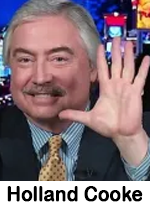 With so many of us taking vacation time soon, guest hosts are often local somebodies who are not career broadcasters and don’t share our second-nature performance routines. For their benefit, these tips, based on my experience on both sides of the mic:
 website: “He was our friend and co-worker at WWJ Newsradio 950 and also a friend to our listeners, bringing you the stories of the day from Detroit and across Southeast Michigan. Someone recently described him as a hero, and we can’t argue with that. We are heartbroken to share that WWJ reporter and anchor Mike Campbell died on Sunday. He was 65 years old, having just celebrated his birthday at the end of May. He was a fearless reporter, with unique style — a way of talking to and connecting with the people who were a part of the stories he told.” Campbell is survived by his wife Terri and is children.
  This coming Sunday, June 15, is Father’s Day. For that day – and the Friday before (hint-hint) – you might have already readied Harry Chapin’s “
 study of 303 media agencies and marketers conducted in August 2024 found the perceived combined audience share of Pandora/Spotify is 43%, much greater than the perceived share of AM/FM radio (27%). In reality, “According to the Q1 2025 Share of Ear, AM/FM radio’s persons 18+ share of ad-supported audio (68%) is 14 times larger than ad-supported Pandora (5%) and ad-supported Spotify (5%).” The data also reveals that podcasts take the second-place spot with a 20% share. Ad-supported Pandora (5%), ad-supported Spotify (5%), and ad-supported SiriusXM (3%) lag distantly.
  “Fewer than half of Americans plan to travel this Summer,” according to a
  encompasses four divisions: Local TV and Radio; Network, Syndication Service, Program Service TV and Radio; Digital News Organizations; and Student Awards. RTDNA says the Murrow Awards “recognize local and national news stories that uphold the RTDNA Code of Ethics, demonstrate technical expertise and exemplify the importance and impact of journalism as a service to the community. Murrow Award-winning work demonstrates the excellence that Edward R. Murrow made a standard for the broadcast news profession.”
  that the KNBR “‘Papa and Silver’ midday show signed off from the 750 Battery St. studios just before 2:00 pm. After a break, the ‘Dirty Work’ afternoon show went live from Daly City.” The story notes that sports talk KNBR was originally KPO-AM when it launched on April 17, 1922 with its tower on top of the Hale Brothers department store at 901 Market Street.
  driving brand preference is ‘mental availability’: how well known a brand is, and how easily it comes to mind. Brands with low mental availability tend to struggle, rejected in favor of more familiar rivals. Or not considered in the first place. Brands with high mental availability don’t have to push so hard to sell, so tend to have higher market shares and better margins.” The authors also advise, “Always aim to get more customers from all segments of the market. It’s the main way brands grow.” The blog post concludes that AM/FM radio makes your media plan better by increasing reach. One example is illustrated as follows: Edison’s “Share of Ear” study of ad-supported audio reveals the combined persons 18+ daily reach of Pandora and Spotify is only 12% of Americans. Adding podcasts causes reach to surge to 29%. The introduction of AM/FM radio lifts daily reach to 74%.
 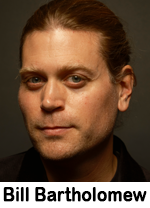 hasn’t committed to the run by opening a campaign account but confirms to the paper he’s seriously considering challenging incumbent Sabina Matos. The story notes that Matos’ 2023 run for congress was marred by a “signature-collecting scandal that led to a campaign worker being charged with a felony.” Bartholomew is the producer and sometimes fill-in host for WPRO’s “Dan Yorke Show.”
  ad-supported media campaign. Among the findings is that in order to ensure that digital audio buys are effective, marketers should commit news/talk and sports stations because they represent 28% of all 25-54 AM/FM radio streaming audiences. Among 25-54s, spoken-word formats have a massive 28% streaming share, 2.4 times larger than the overall spoken word share of 12%. The news/talk format has a 6.7% share of total AM/FM radio listening. The streaming share for news/talk is 15.4% — more than double its total share. The sports format has a 12.5 share of the streaming audience, 2.5 times bigger than its overall 5 share. Further, the data indicates that for the 18-34 demographic, sports and news/talk streaming is a combined 19.6% share.
 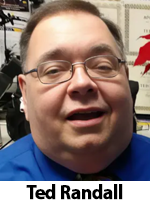 signals including WQKR, WAMG, WCOR, WRMX, WSM-AM, WSM-FM, WZPC – Power Country 102.9, WFCM / Moody Radio, WJKM, and more. He also served with Cumulus and as chief engineer for 5 Star Radio in Clarksville. During his time with WSM-AM, he also served as an announcer for the Grand Ole Opry. Randall managed and operated WJKM for five years and served as chief engineer for Cromwell Radio (now Cromwell Media) for over 20 years, overseeing engineering for ten stations in the greater Nashville area. Randall’s son, Matt Aaron, serves as a broadcast engineer for Ramsey Solutions.
  TALKERS publisher Michael Harrison introduced the term in the 1990s, inviting us to think-beyond the real-time audio we were sending up those towers. What he described seemed conceptual, even futuristic, back then, when we were still logging-onto AOL via dial-up (screech).
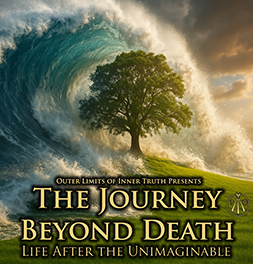 original interviews, including 28 with individuals who have had near-death experiences (NDEs). He says, “This series weaves together stories of survival, grief, revelation, and spiritual awakening. It brings together voices rarely heard in one place: grief counselors, psychologists, metaphysical teachers, mediums, and survivors of clinical death – all sharing their deeply human experiences and insights.” He adds, “This series was created for people in mourning and for those who are curious about life beyond this world. The program is not driven by ideology or dogma. It’s about opening a door and letting others walk through it in their own way. I truly hope this presentation can bring people some measure of peace.”
  LLC, owner of news/talk KIVA, Albuquerque and hosts the afternoon drive “Rock of Talk” show. The seat is currently held by Democrat Gabe Vasquez. The Albuquerque Journal reports that Aragon ran for congress in the state’s 1st Congressional District in 2021 and previously ran for mayor of Albuquerque. He tells the paper, “I can win this race… We need more privatization of education. I think the approach that’s being taken at the national level is important. We don’t want to do without the money, but we definitely want to do without the bureaucracy.”
  radio.” Nielsen says delineating between total listening (or viewing) and the ad supported universe is vital in today’s burgeoning media landscape where consumer choice grows by the day and marketers are looking at every available opportunity to cut through. In the first quarter of 2025, ad supported audio represented 64% of total listening. This is similar to TV, where 72% of total viewing was spent on ad supported platforms, in Q1 according to Nielsen’s recently launched Ad Supported Gauge report. Looking at ad-supported audio, consumers spent 66% of their daily listening time with radio, 19% with podcasts, 12% with streaming audio services and 3% with satellite radio. Radio accounts for anywhere from 47% of daily ad supported audio time among people 18-34 to 73% among 35+. Meanwhile, podcasts are the inverse, representing 15% of daily audio time for people 35 and older compared with 32% among those 18-34.

 voracious consumers of movies in the theater and films on streaming services. They are first to see a movie in the theater on opening weekend and when films debut on streaming services; and 2) Versus linear TV viewers, audio listeners are far more likely to see movies in the theater and indicate a greater willingness to watch content. Looking at data about marketing moves and streaming video, the study finds that 1) Linear TV advertising spend for theatrical releases and video streaming brands is 30X audio. Despite this, TV viewers show low awareness of new films and low interest in upcoming films and streaming service subscriptions; and 2) Audio (AM/FM radio, streaming audio, and podcasts) should become a much greater allocation in the entertainment marketing media plan. Reallocating 20% of linear TV theatrical and streaming video media plans to AM/FM radio doubles campaign reach with no additional cost.
 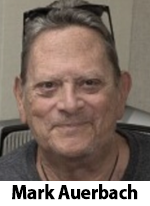 “ArtsBeat,” “Athenaeum Spotlight,” and “On The Mark” for WCPC, Channel 15 and WSKB-FM 89.5, both in Westfield, MA. He was a regular contributor to Berkshire Onstage and a member of the Berkshire Theatre Critics Association. His weekly column “Arts Beat” appeared in The Westfield News. In his youth, Auerbach studied theater at American University and the Yale School of Drama. During his multimedia career his impact was felt nationwide, and he was an indefatigable fundraiser for public broadcasting. As a publicist, he was a devoted supporter of the Springfield Symphony Orchestra and numerous other not-for-profit artistic organizations. TALKERS publisher and local Western Mass resident Michael Harrison states, “I am proud to have been able to call Mark Auerbach a friend for the past 39 years, during which time I have come to respect and admire him as one of the finest media practitioners with whom I have had the pleasure of working. He was a champion of the arts and all that celebrates the humanities in our modern multimedia environment. He was a local giant on a multitude of levels and leaves an irreplaceable void in this part of America’s grassroots media community.” Auerbach requested no funeral services but said if people wish to do something in his memory they can make a gift to either Springfield Chamber Players MOSSO) (
 When a blogger found “no biography, or further information about the woman who is supposedly presenting this show,” it forced Australian Radio Network to
  Podcast Metrics. The top six podcasts are unchanged in rank from the previous chart from Edison with “The Joe Rogan Experience” at #1, followed by “Crime Junkie” at #2, and “The Daily” at #3. Other radio-related podcasts of note include “The Ramsey Show” at #20, “The Dan Bongino Show” at #21, “The Ben Shapiro Show” at #22, and “The Shawn Ryan Show” at #29.
  three stagnant years below inflation and a net drop of 2.5% last year – appear to be rebounding. RTDNA says reported salaries are increasing 14.5%. “Employees who contribute to the web were among the higher earners, which brought the figures up. Additionally, commercial stations often matched or exceeded the wages of non-commercial stations — an uncommon trend historically.”
 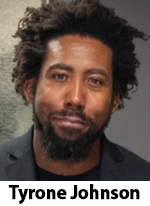 reports that Johnson tweeted on Friday afternoon: “It was a good run. I regret nothing.” The story notes that Johnson – producer and co-host – took over hosting the afternoon show in 2022 after Mike Missanelli’s departure. The most recent iteration of the show included Rickey Bo and Sylvana Kelleher and Crossing Broad says the show’s ratings were on par with the station’s morning show ratings.
  hosting a one-hour show airing Saturdays from 4:00 pm to 5:00 pm. Sterling spent 35 years as the voice of the Yankees prior to retiring last spring. Sterling says he is no stranger to sports talk radio having hosted a show on WMCA, New York during the 1970s.