By Bill Bartholomew
Talk Host/Podcaster/Journalist/Musician
 Folks in the Gen Z and millennial demographics are heavily engaged in political issues, care about news in their communities and the world, and are constantly bombarded with content. So why are they less likely to tune into and interact with news/talk radio than older demographics?
Talk radio has historically skewed older, and from an ad portfolio standpoint, is often targeted at the coveted 35-54 and 55+ demographics. However, in a world where social media influencers and podcasters supply information to millions of young consumers, news/talk radio should be able to effectively compete for the ears of younger generations in a comparable, if not expanded way.
For all of the anecdotal and hard evidence that terrestrial radio may be trending in a downward direction, the format continues to have a vast reach. It is convenient to engage with it in automobiles, and occasionally in home or office settings. Yet, while younger generations listen to radio, news/talk is not the format that they turn to by and large.
Unlike many digital-first content producers, radio retains a unique quality: authority. By virtue of editorial standards, FCC regulation and brand – things that social media and podcasts often lack – radio has the unique ability to deliver credible, vetted, nuanced and universally trustworthy content that can instantaneously adapt to meet the needs of the moment. This is true in everything from natural disasters to rapidly evolving breaking news stories, providing a channel for immediate, reactionary insight and analysis.
There are several steps that news/talk radio should pursue in earnest to adapt to the current climate of content consumption, particularly by younger listeners, that can reach, and most importantly, retain broader, younger, more diverse and more engaged audiences.
- Introduce younger people into the conversation.
Too often, Gen Z and millennials are skewered by older hosts, mocked for their perceived naivety, unchecked optimism and me-first approach. While some of these qualities can be accurate, that approach reflects a disconnect between older generations and the experience of younger ones. Millennials and Gen Z have grown up in a post-9/11 world replete with “endless wars”, the fallout from the 2008 financial crisis, runaway student debt, a massive housing crisis, the mental health stressors of social media, Covid19’s impact on traditional youth experiences, climate change, a deeply bifurcated political environment and a constantly evolving quest for social justice. Through these experiences, younger generations offer an important perspective that should be assigned the same news value as experts from older generations.
Are you discussing shifts towards electric vehicles? Bring on someone from Gen Z to share their perspective on why steps towards carbon neutrality are important to them. Engaging a conversation on the president’s approval rating? Perhaps younger conservative and leftist voices should be included in the conversation. Discussing immigration? How about the perspective of a younger member of a Latino organization?
By giving younger generations and more diverse guests a platform, stations can simultaneously expand their content and reach. With consistency, the station’s brand will become more familiar to younger potential listeners who may be inclined to tune in to hear someone who shares their identity and perspective on – here’s that word again – a platform of authority. Let the guest do the work of establishing the credibility and importance of your station or talk show to younger audiences by posting about their appearance on social media, sharing audio clips and mentioning to their peers. It will build familiarity and trust among those generations, who in turn, will begin to tune in on a more regular basis.
Stations should also consider bringing more younger, competent voices into on-air roles, whether that be through reporting, segments, fill-in hosts, weekend shows or full-time hosts.
- Meet the audience where they are: their phones.
As mentioned above, the convenience of simply turning on AM/FM radio is highly appealing in automobiles, though as Apple Carplay continues to adapt and evolve, digital-first content is likely to become as simple and convenient in the near future.
Talk radio needs to make consuming their product on smartphones as simple and direct as turning on a traditional radio. This means no clunky websites, no lengthy pre-roll spots, a reliable stream connection and a “one touch” means of turning on and off the station. This should also mean expanding talk shows to high-quality video livestreams, following in the footsteps of the top YouTube and Twitch performers; developing unique content for TikTok and Instagram; building podcasts that are focused on specific issues, and; providing interaction via text and chat.
Radio has the ability to be the ultimate livestreamer, social media influencer and podcaster, but rarely harnesses these platforms in a meaningful way.
It is not enough to simply strive to “expand a digital presence”; stations and shows must engage in the hard work of building platform-specific content with their brands.
- Music, cultural references and themes for the modern age.
A few weeks ago on a seemingly benign episode of the TV show FOX NFL Sunday, panelists Jimmy Johnson and Terry Bradshaw offered an example of the type of cultural adaptation that sophisticated writers and producers provide their brands. While describing a fight between two football players, Mr. Johnson said something to the effect of “when it comes to these two, what’s that Taylor Swift song?”, and then in synch with Mr. Bradshaw, “bad blood!”. It is highly unlikely that these two 70+ men listen to Taylor Swift’s music with any regularity or would simultaneously pull the “Bad Blood” reference. Yet, with excellent preparation that played into the greater cultural moment as well as the specific, current Taylor Swift/NFL overlap, in a six-second span, FOX NFL Sunday was able to give the illusion that their panelists are contemporary, hip and plugged into “what is going on”. Is your station or show plugged into what’s going on? Do you use contemporary music for bumps? Are your images – including headshots and social content – modern, interesting and engaging or are they more akin to a miscellaneous real estate agent? You are a performer in an entertainment business that, while certainly paying homage to the past and lineage of the industry, must be contemporary in aural and visual presentation. This goes for everything from wardrobe on video and in photo to fonts on graphic design.
How often do you or your producer read Pitchfork to learn about new music that is breaking this week? How often do you or your producer read Variety to understand major trends that are happening in the broader entertainment industry? What live events are you broadcasting from, covering and building partnerships with? You should strive to be cutting edge.
- We need a friend now more than ever.
This is something that goes for all audiences, but particularly for younger ones. It’s OK, in fact, great to be yourself, present yourself from your generation and retain the authoritative stance that has built your brand. Take a look at the success that sports talker Mike Francesa enjoyed by leaning into his persona – and in turn – developing legions of younger listeners that fell in love with his dad-like delivery and frequent meltdowns.
Few things are as uncomfortable to see as a 40+ person dressing or acting like a teenager. Younger listeners want that senior, experienced, trusted friend to entertain them, inform them, and at times, tell them that everything is going to be OK. You can help make sense of the world for younger audiences, something that is absolutely essential in the modern era.
Through attracting younger listeners by including them in the conversation, effectively delivering content on smartphones, presenting a cutting-edge entertainment product and continuing to serve as a trusted friend, news/talk radio can greatly expand its reach, relevance and revenue.
To that point, some younger listeners who discover a radio station or show via any of the above entry points will likely work backwards to the traditional AM/FM dial. Like the resurgence of vinyl records, AM radio in particular has the opportunity to become a hip delivery format for discerning younger listeners.
The big question is: are radio companies, stations and hosts prepared to do the hard work of reimaging their product?
Share this with your network



 McCaffrey has been co-host of the “Murph and Mac” show with Brian Murphy, who appears to still be employed with the station. The dismissal of Santangelo spells the end of the evening call-in show that’s been part of the station for the past 51 years. Station program director Adam Copeland– who also co-hosts the afternoon show with Tom Tolbert – said on the program, “It’s been a really difficult day. I love this building, I love this station, I love working with you, Tom, and I’ve listened to you for years. I love a lot of people. I love the guys we let go of today. I’m looking forward to the future, but I really think we need to tip our cap and applaud the work that those guys have done.” Read the SFGate piece here.
  WHAT WOULD YOU DO? A very good major market DJ murders his wife and injures her lover upon catching them in the marital bed. An 11-year-old girl was in the house – a witness. The murderer is convicted (second-degree murder/“situational crime”) sent to prison, does his time and is released after a few years for good behavior while incarcerated.
 AM/FM radio listeners are 39% more likely to pay $301+ to have their taxes prepared and show greater familiarity, interest, consideration, and usage of tax category brands; 2) AM/FM radio ads drive site traffic for tax preparation brands: In the LeadsRx attribution study of a tax preparation service’s multi-wave campaign, AM/FM radio generated between a 43% to 47% increase in website traffic; 3) Branding early and often in tax preparation service ads drives more site traffic: LeadsRx found the top three creative executions that drove site traffic for a tax preparation service had the marketer’s brand name within the first five seconds of the ad; and 4) compared to other radio formats, a 2023 tax prep campaign on news/talk and sports stations realized a higher percentage share of interactions than the percentage share of their Nielsen ad impressions.
  (11/25) after a brief illness at the age of 80. Gauthier had been the host of the “Bristol County Breakfast Club” on Bristol County Broadcasting’s WSAR-AM for more than four decades. Gauthier began working at WSAR in the 1960s. During his career with the station he served as program director, general manager, news reporter, production director, account executive, and copy writer. In 2000, Gauthier was named Radio Broadcaster of the Year by the Massachusetts Broadcaster’s Association.
 a host-read ad on a podcast or AM/FM radio show drives powerful brand impact and sales effect and positive emotional impact is what measures a successful campaign. System1 studied host-read ads and devised a rating system that correlates creative quality with long-term share growth – in layman’s terms, “the more you feel, the more you buy.” But the study found that only 17% of the ads tested rated high enough to have the sufficient emotional impact necessary to lift long-term brand share by between 1% and 3%.
  In
In 
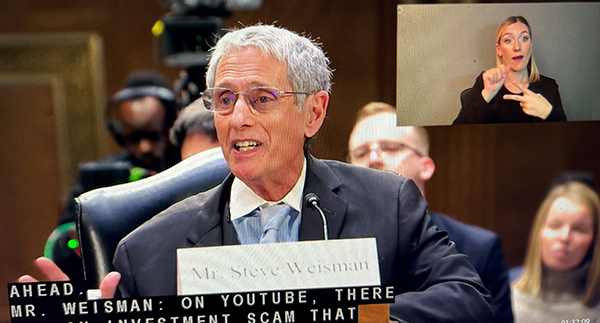
 financial struggles and looks more broadly at how radio as a legacy medium is facing “the same headwinds as other traditional media.” Carman adds, “Stations are losing their grip on younger audiences, and advertisers are tuning out. Fresh sources of revenue, like podcasts and streaming audio, are going to new contenders such as Spotify Technology SA or just failing to make up for the lost radio ad dollars.” The U.S. radio business has always touted its reach, but according to Lauren Russo, EVP at ad buyer Horizon Media, broadcast radio faces real problems. “The broadcast marketplace is extremely soft for ’23 and similarly for ’24. The overall audio ecosystem continues to grow from a streaming and podcasting perspective, but at the expense of broadcasts.”
  the study found that eliminating 10 words of audio copy increases the Creative Standout score by 1%. Creative Standout is achieved when consumers say, “this ad stands out” and rate an ad with an 8, 9, or 10 on a one-to-ten-standout scale. Further it found that eliminating 10 words of audio copy increases web traffic by 0.25%. Creative Standout in audio advertising is strongly linked to ad response via website visits. For each 1% rise in Creative Standout achieved by an audio ad, website response rate increases by 0.25%. Also, the more messages that are included in the ad, the poorer the recall. An ad with four messages will have message recall of only 24%, compared to 43% for ads with just one message. The more messages an ad attempts to communicate, the lower the likelihood of a single message being communicated.
 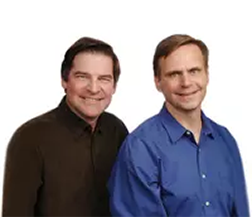 retire from the station on December 6. After his departure, John Kobylt (left) will continue in the daypart as a solo host. He quipped, “I am saying goodbye. After very little thought, this is what I’m gonna do.” The duo rose to prominence during their time at WKXW-FM, Trenton “New Jersey 101.5” beginning in 1988. They moved to KFI in 1992 and briefly went into national syndication in the late 1990s. That move drove a wedge between them and then-KFI owner Cox Communications and they left to do mornings at crosstown Disney-owned KABC, Los Angeles. That didn’t last long, and they returned to KFI where they’ve flourished since 2001.
  Here’s actual news copy, from Joe Connolly’s business report one morning on WCBS, NY: “One third of all domestic flights are now late, by an average of one hour.”
 funded to analyze the potential effects of the AM Radio for Every Vehicle Act on the auto industry reveals the cost to the industry would be minimal, but that AAI “misrepresents, distorts and spins the results of the report it paid for to advance its position” in opposition to the legislation.
  Beasley were unable to come to terms on a new contract a few weeks after the company announced Toucher had inked a new, multiyear deal that will see him continue as lead host of the morning show. WBTS-TV, Boston “NBC10” reports that Toucher announced the change on this morning’s show and indicated he was surprised when management told him Shertenlieb was leaving the program. He also said management wanted him to tell the audience that the company made him “a multi-year offer that he chose not to accept” and that “negotiations weren’t going anywhere.” Shertenlieb has not commented publicly other than to inform the show’s X followers that he has a new X handle.
  inspiring and patriotic radio show features an exclusive interview with Jessica Lynch who recounts her harrowing experience as a prisoner of war during the early days of the 2003 Invasion of Iraq during Operation Enduring Freedom. She reveals details of her treatment during her captivity, her rescue, the ensuing years of medical treatment and the special role Fisher House played (and continues to play) in her recovery. This informational talk show will leave listeners feeling inspired during Veterans Day weekend and through the holiday season, sharing stories of amazing service members, veterans, and their families. Fisher House Foundation provides a home away from home for families of patients receiving medical care at major military and VA medical centers. Fisher Houses provide temporary free lodging so families can be close to their loved ones during medical care because “A Family’s LOVE is Good Medicine.” For more information on this radio special, available cash and barter free, contact Larry O’Connor at 562-665-9537 or loconnor@fisherhouse.org.
 word, which is a 55% increase over nine years ago (20%); 2) Spoken word listening at home has grown dramatically: 60% of the total daily audio time spent with spoken word audio is at home, 24% in the car, 13% at work, and 3% at some other location. The time spent listening to spoken word audio at home has grown to 41 daily minutes in 2023 from 27 daily minutes in 2014. Increases in at-home spoken word audio listening are seen across every hour in the listening day; 3) Spoken word listening in-car has shifted post-pandemic, but AM/FM radio remains on top: Of all the daily time spent listening to spoken word audio, time spent listening in the car has declined from 36% in 2014 to 24% in 2023. In the car, 62% of spoken word audio consumed by those in the U.S. age 13+ is to AM/FM radio content, including over the air and streams; 4) For the first time ever, the mobile device is the primary way people listen to spoken word: 39% of spoken word audio consumed daily by those age 13+ in the U.S. is on a mobile device, followed by 35% on an AM/FM radio receiver. At home, 41% of spoken word audio is consumed on a mobile device, and at work, 47% of spoken word is consumed on a mobile device. AM/FM radio receivers still dominate in-car, garnering 60% of the spoken word audio listening there; and 5) Podcasts represent a large and growing share of spoken word listening: Podcasts now represent over one-third (36%) of time spent with spoken word audio. Twenty-eight percent of time spent listening to podcasts goes to NPR/public radio. At home, 40% of spoken-word audio listening goes to podcasts.
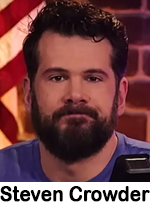 video saying it violates its community guidelines that “prohibit linking to content containing manifestos from individuals who have committed violent attacks.” Crowder issued a notice on X regarding the removal of the content, saying, “YOU determine what matters. YOU determine the content. Not YouTube, not the rest of BigTech, not their lackies, and not a gaggle of sponsors who don’t have the b***s to stand behind the kind of content you actually want to see.” According to a report by Newsweek, “The Metro Nashville Police Department has not confirmed that the screenshots shared by Crowder are Hale’s manifesto. A department spokesperson told Newsweek Monday that police were ‘unable to confirm the authenticity of what has been released, although we are looking into that at this very moment.’”
  Midwest Communications’ news/talk KFGO, Fargo The Mighty 790 on November 2. He tells The Forum that he left the station due to a difference in programming philosophy with management. “We differed on the operation of the ‘Morning Crew,’ and so I decided to step away.” Michaels serves as the public address announcer for North Dakota State football and basketball games, a position he will continue to hold.
  Downs for a $562 million casino project that faces opposition from a group called No Means No Casino, led by Paul Goldman. While hosting a shot on The Box 99.9, Brown referred to Goldman as “a Jew who’s got the same trait as Judas,” and a “white Jew with the background of Judas.” WRIC-TV reports that Urban One regional VP Marsha Landess called Brown’s comments “horrible and offensive” and that Urban One CEO Alfred Liggins apologized directly to Goldman.
  I am always impressed when I see-and-hear radio and TV stations swapping product.
 with Scott Hastings and Tyler Polumbus for the 12:00 noon to 3:00 pm “P.H.D.” show. The 24-year Denver sports radio pro was let go from Bonneville’s KKFN-FM “104.3 The Fan” in September. KSE Radio SVP/GM Dave Fleck comments, “We are excited to add Darren to our new and improved midday P.H.D. show. He is a respected member of the community whose work ethic and passion for broadcasting will help take our radio stations to new heights. Having DMac as part of ‘Altitude Sports Radio’ allows us to reconfigure our daily lineup while adding a great voice to the station.”
  stories of our nation’s heroes, the families who serve by their side, and how Fisher House plays a role in their journey. Fisher House Foundation provides a home away from home for families of patients receiving medical care at major military and VA medical centers. Fisher Houses provide temporary free lodging so families can be close to their loved ones during medical care. The inspiring and patriotic radio show features an exclusive interview with Jessica Lynch who recounts her harrowing experience as a prisoner of war during the early days of the 2003 invasion of Iraq during Operation Enduring Freedom. She reveals details of her treatment during her captivity, her rescue, the ensuing years of medical treatment and the special role Fisher House played (and continues to play) in her recovery.
 advertising. In 2016 and 2017, direct response represented the vast majority of podcast advertising. From 2018 to 2021, the proportion of podcast ad spend was equally split between brand and direct response.” The post says there are four major implications of the shift to podcast brand advertising: 1) Targeting will become much broader: Wide campaign reach will become the priority with a goal of “being known before you’re needed”; 2) Creative will shift to become more entertaining and emotion based: The objective will be to stir passions and create positive feelings and associations with ads that people find interesting and enjoyable; 3) Brand safety and suitability measurement will become more crucial: Firms like Barometer will become powerful resources to help marketers find the right context for their campaigns with nuanced data; and 4) Measurement will focus on how well campaigns build memories to ensure brands are “easy to mind and easy to find”: Key performance indicators are brand awareness, brand consideration, and brand preference.
  Feel busy? Try keeping-up with these four:
 Audacy’s KMBZ, Kansas City yesterday (10/26) after spending the last month in a rehab program, according to a story in the Kansas City Star. Parks says he’s been addicted to alcohol for much of his adult life but had been sober for three years before an undisclosed family trauma in July led him back to drinking. Wright noticed Parks’ relapse and, fearing for his health, contacted Parks’ brother. Parks credits the resulting intervention with getting him the help he needed.
  In May 2007, I was enjoying the brand-new app called YouTube. Still independently owned, still relatively unknown. Some of the videos pulled millions of viewers, more viewers than enjoyed by ESPN or any cable network. More interesting, the videos with high counts were not made by NBC or ESPN or any traditional video source. High view count videos were being made by people with no experience in traditional media, they were experimenters producing in their basements and bedrooms.
 the top sports morning shows in America and has won numerous national industry awards including a Marconi Award. Toucher was a foundational member of the launch of the station in August 2009. Prior to joining the ‘98.5 Sports Hub’ team, he worked at the former legendary rock station, WBCN.” Toucher comments, “I am thrilled to be able to work with my Beasley family over the coming years. I will continue my record of immense competence and brilliance.” Station PD Rick Radzik adds, “Fred has been entertaining ‘Sports Hub’ listeners each morning since 2009 with his compelling viewpoints and opinions on a wide range of topics. We are very pleased that he will continue on with us for years to come.” There’s no mention of morning drive co-host and Toucher’s longtime partner Rich Shertenlieb in the press release and the Boston Globe’s Chad Finn writes about the possibility Shertenlieb will exit the station soon.