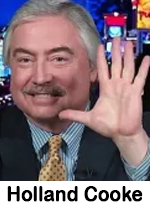
By Holland Cooke
Consultant
 Running a successful radio station, hosting a show, or producing a podcast is a lot like hosting Thanksgiving dinner. You need a plan. You need to deliver something satisfying to a crowd with varying tastes. And most of all – if you get it right – you’ll have leftovers you can turn into even more value long after the main event.
The Menu is the Strategy. You don’t just “wing it” on Thanksgiving. Same goes for your content. Who are you serving? What do they expect? Your content calendar is your shopping list. Your team is your kitchen crew. And if you’re still deciding what’s on the menu the morning of, don’t expect rave reviews.
Timing is the Secret Sauce. Get the turkey in too late, and the sides suffer. Hit “record” without a clear rundown, and the show flounders. Publish an episode at the wrong time? Lost in the noise. Stations, shows, and podcasts are all about flow and timing. Great pacing, clean execution, smart transitions. Just like the perfect meal, everything needs to hit the table hot and in the right order.
The Turkey is your Centerpiece. For a station, it’s your format or your tentpole talent. For a show, it’s the host or the day’s big segment. For a podcast, it might be your story structure or your featured guest. Nail the turkey, and people forgive a few lumpy mashed potatoes. Miss it – bland, dry, underwhelming – and no one remembers the green bean casserole.
The Sides are the Supporting Elements. News, weather, traffic, and imaging turn a decent meal into a memorable one. Great intros, tight sound design, and a well-timed punchline make your core content shine.

Different Tastes, One Table. Uncle Edgar wants deep-fried turkey. Your cousin’s vegan. Grandma’s still mad you skipped the marshmallows on the yams. Your audience is just as varied – P1 loyalists, casual browsers, podcast subscribers who never miss a week. You can’t be everything to everyone, but you can build a spread that makes multiple types of listeners feel seen. Know your audience segments. Serve accordingly.
Table Setting = Delivery Platform. Whether it’s FM, a podcast app, a smart speaker, or a website, presentation matters. Is the user experience smooth? Is the stream clean? Is the podcast art appealing? Are your links working? A cold plate on fine china is still cold. Don’t let great content get lost in clunky delivery.
Leftovers = Repurposing. You spent all that time prepping and recording. Don’t just serve it once. Chop up segments for social. Turn interviews into blog posts. Republish as “Best Of” content. Archive it smartly so people can find it later.
Leftover content, when handled right, can fuel long term engagement. Don’t throw away anything tasty just because the initial serving is over.
Thanksgiving reminds us that people crave connection, comfort, and a sense of occasion. So does your audience, whether they tune in live, stream on demand, or binge your podcast during a road trip.
So, plan well. Deliver hot. Serve generously. And whatever you do, don’t forget the gravy.
Happy Thanksgiving. Pass the ratings.
Holland Cooke (HollandCooke.com) is a consultant working the intersection of broadcasting and the Internet. Follow HC on Twitter @HollandCooke and connect on LinkedIn
Share this with your network



 station featured a strong anti-communist tone. Station general manager Mike Sena says the reason for the change is financial. “Like our beautiful city, Radio Mambí, its audience and the media industry are evolving rapidly, which presents financial challenges for many in the market.” The station is continuing to broadcast, airing archived programming, music, and Spanish-language broadcasts of the NBA’s Miami Heat and MLB’s Miami Marlins. The Miami Herald says staffers that have lost their jobs include Jorge Luis Sánchez Grass, José Luis Nápoles, José Carlucho, Lilliet Rodríguez and Lucy Pereda. See the Miami Herald story here.
 If you missed yesterday’s webinar, look for the replay which will be posted today at
  first handed out in 1971, are among the most prestigious in journalism. In 2025, about 5,000 entries were submitted in the professional and student categories, also making it one of the most competitive.” To be eligible, work must have been published between January 1, 2025, and December 31, 2025. This year, RTDNA is offering an Early Bird Discount for entries submitted by 5:00 pm ET on Tuesday, January 20. The final entry deadline is 5:00 pm ET Thursday, February 19. Entrants can find
  2) Marketers and media agencies significantly overestimate audience shares to Pandora/Spotify and massively underestimate AM/FM radio audiences; and 3) Interestingly, as older demographics flock to podcasts, the median age of the podcast audience ages sharply from 29 in 2017 to 39. The study notes that “in 2017, podcasts’ daily reach was greatest among 18-24s. Eight years later, podcasts’ daily reach has surged, especially in older demographics. The older the age group, the greater the growth in the podcast daily audience. Today, podcasts’ greatest reach centers on 25-44s, with significant growth among 45-64s.”
  grown exponentially in the U.S., so much so that Edison Research just unveiled the results of a new research effort called The Infinite Scroll: A TikTok Report in a recent webinar. Edison says the webinar offered insights into how often U.S. users engage with TikTok, their perceptions of the platform, ad recall on TikTok, if they spend too much time on the platform, and more.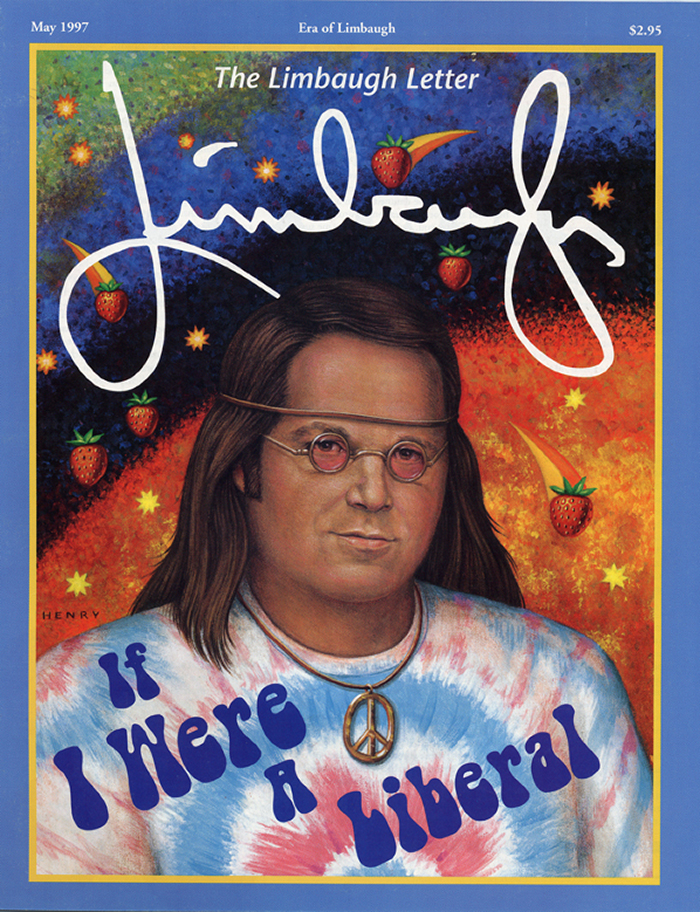
 My introduction to Rush Limbaugh begins in the fall of 1992. I began listening to Rush’s radio show after seeing him campaigning on stage with George H.W. Bush during the 1992 fall presidential election. Bill Clinton would win the election and so would begin the greatest, media political rivalry ever between Rush Limbaugh and Bill Clinton. Rush’s middle America authentic voice was cutting through the mainstream media noise of the day from a generationally unique perspective. He was the perfect counterculture combatant to Bill Clinton’s political philosophy. Being a baby boomer myself and two years younger than Rush, I was immediately hooked on the EIB radio network!
 Program” from 6:00 am to 9:00 am daily. Connoisseur Media says that local news and sports updates will begin being heard on all of the Mason City stations during morning and afternoon drive times. Fisher comments, “It’s great to be back to help re-establish KGLO as ‘Your Hometown News Station in North-Central Iowa’ as well as to continue to provide vital local information to our listeners. With their recent purchase of the radio stations, Connoisseur Media has shown a commitment to serving north-central Iowans with quality, local-based information.” Market manager Dalena Barz adds, “We are absolutely thrilled to have Bob back with Connoisseur Media in Mason City. He has been a well-respected voice in our community for over 30 years. He’s always been an integral part of our radio family, and we sincerely say, Welcome back, Bob!”
  News Association and he penned a great good-bye letter that’s available on the RTDNA site.
  come in every week, and we have to keep up with the demand. We cannot turn our backs on our colleagues who have worked at their local station and are now in desperate need of our help. We ask everyone in radio and television to come together to help our colleagues.” Giving Tuesday donations can be made
  former Milwaukee County attorney, and former Republican legislative staffer Todd Allbaugh are no longer airing. The Milwaukee Journal-Sentinel reports that Allbaugh announced his exit via social media and said the reason was budgetary – for “the long-term financial viability of the company.” Allbaugh noted that he was told of the change before his did his final show, adding, “They did not have to give me a last show. It was immensely appreciated.”
  “Our American Stories” founder and host Lee Habeeb was tapped by the White House to tell the story of John Adams and his defense of the Redcoats in the trial the Boston Massacre. This is part of the White House’s America 250 “Story of America” series that’s being created in partnership with Hillsdale College and the US Department of Education.
  formats. The program is available in three versions: three-hour, one-hour, 25-minutes and 30-minutes and are hosted by radio personality Larry O’Connor, morning drive host at WMAL-FM, Washington, DC. It features stories of America’s military heroes, the families who serve by their side, and how Fisher House plays a role in their journey. Listeners will hear their emotional stories fighting for our freedoms, how they sustained their injuries, and the welcoming homes Fisher House provides for them and their loved ones while they endure their painful and painstaking recoveries. This year’s program features a special focus on the incredibly inspiring victories our wounded warriors enjoy on the field of competitive, adaptive sports. Fisher House supports the Wounded Warrior Games and the lnvictus Games as a vital part of the physical, emotional, and mental healing process for our wounded veterans. For more information on this radio special, available cash and barter free, contact Larry O’Connor at 562-665-9537 or
  Elizabeth Mayer states, “In our continued focus on YouTube and watchable podcasts, this edition of the Podcast Download reveals YouTube at an all-time high for consumption. Regardless of tenure or heavy usage, YouTube remains in the top spot, which speaks to podcast consumers seeking out watchable podcasts. 12% of weekly podcast consumers use Smart TVs where video components are intuitive and easy to access to listen to podcasts.” Signal Hill Insights president and CEO Paul Riismandel adds, “Audio is still key. While we see yet another bump in the preference to use YouTube for podcasts, we don’t see notable change in the number of weekly podcast consumers who are only watching their podcasts. This segment remains a tiny minority – just 8% in this report.”
  In an industry built on speed – breaking news, live liners, commercial deadlines – “pause” can feel like a luxury radio can’t afford. But Kevin Cashman’s The Pause Principle: Step Back to Lead Forward (Wiley) argues the opposite: pausing isn’t weakness, it’s a competitive advantage. For local radio leaders, the message couldn’t be timelier.
 If you’re a news/talk station, be known-for-knowing what’s happening. My client stations routinely invite tune-in “for a quick [name of network] news update, every hour, throughout your busy day.”
 of businesspeople are reducing their exposure to New York City.” He tells Forbes he’s looking for “friendly states.” “The key word is a commonsense place to do business in.” Catsimatidis, whose business interests include Gristedes supermarkets and a controlling share of D’Agostino stores, was irked by Mamdani’s promise of opening “cheap city-run grocery stores” in each of the boroughs. Catsimatidis tells Forbes, “‘We don’t have any profit margins,’ he says, explaining that his stores have been losing money for ‘at least two years.’ He blames the state of the city: ‘Shoplifting is up to an all-time high. A lot of stuff is being closed up, which means that it’s not easy for people to shop, so sales are down.’” Catsimatidis does not talk about his radio businesses in the article but given how much effort he’s put into covering local New York news and his hiring local talk hosts and journalists, it’s hard to imagine him running the radio stations from another state such as Florida.
  Atlanta Journal-Constitution. The Compass Media Networks host is heard in Atlanta on Cox Media Group’s WSB-AM/WSBB-FM. His first piece was printed in September in the wake of the slaying of Charlie Kirk. His latest column is titled, “Democrats are hungry, Republicans complacent and all politics is national,” and
 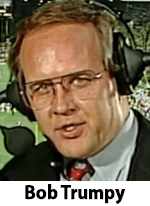 Cincinnati – died on Sunday at age 80. As reported by John Kiesewetter at WVXU.org reports on Trumpy’s passing and his career. Trumpy pitched the idea of a sports talk program to then-general manager of WLW-AM, Cincinnati Charles Murdock but was shot down. He turned to WCKY-AM and launched the show there. Three years later, WLW-AM hired him away from WCKY. Trumpy, who played for the hometown Cincinnati Bengals from 1968-1977, would move on to national television with NBC Sports that culminated with him receiving the Pete Rozelle Award for lifetime achievement in NFL broadcasting.
  to have interviewed tens of thousands of celebrities, authors, politicians and other assorted newsmakers during his long radio career.” The Free Press obit states, “He filled a variety of roles for WJR across the decades beginning in the 1970s. Whether hosting a weekday morning or afternoon slot or doing a weekend shift, he drew fans with his friendly, upbeat style and filled ‘The Warren Pierce Show’ with a mix of interviews, movie reviews, news and weather. A dedicated fan of University of Michigan football, Pierce also did sideline reporting for WJR’s coverage of Wolverines games during the era of coach Bo Schembechler.” He left WJR in 1993 and joined WJBK-TV, Detroit as a morning news anchor.
  Confidence is down. Costco is mobbed.
 them achieve their business objectives through effective radio and digital advertising. The ideal candidate will possess excellent communication skills, have an enthusiastic and outgoing personality, along with a drive to succeed. Most importantly – we are looking for hard-working salespeople who want to have FUN at work, make money, and help local businesses grow.
 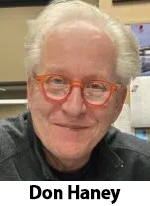 Don Haney and Minnesota Public Radio’s Dan Gunderson will leave their respective employers over the next 10 days. Both news pro spoke with Forum Communications’ The Forum about their careers. Haney covered news in Fargo for nearly 50 years. He joined WDAY in 1982, then
  moved to KFGO in 1995. Seventy-two year old Haney has been working part time with KFGO since last spring. Gunderson, who joined MPR in 1987, say he got into journalism because he enjoyed writing so much. About his radio work he says, “I liked the idea of taking voices and sounds and putting them together in something interesting. It’s like a craft, where you take this raw material, interviews, and facts, and you try to make it into something meaningful.”
  Conduct a “brand early and often” creative audit: Watch/listen to all your ads. Check off if your brand is mentioned in first two seconds and if there are at least five or more audio track brand mentions in 30-second ads; 2) You can look away but you cannot shut your ears: In video ads, audio branding does all the brand recall heavy lifting; 3) Audio case studies reveal implementing the “brand early and often” creative best practice generates stronger purchase intention and increased brand lift and website attribution; 4) Do you want your brand association and recall to explode? Use a jingle with melody that says the name of your company; and 5) Don’t blame the media plan or media vendors for weak attribution and brand lift: Usually creative is the issue and the ad copy fails to “brand early and often.”
  Possibly not – beginning Sunday – unless you live in Hawaii and Arizona (except the Navajo Nation) or American Samoa, Guam, the Northern Mariana Islands, Puerto Rico, or the U.S. Virgin Islands. Everywhere else, clocks will change when we “fall-back” on November 2.
 examining the lifelong love affair of a fictional couple from childhood to old age – an emotional roller coaster ride reflecting the romantic ups and downs of a complex relationship. The tear-jerker is a departure from the heavy-hitting social commentaries that have made Gunhill Road a favorite among talk radio hosts and audiences for the past half decade. The intriguing group, formed in the late 1960s, is still going strong with core members Steve Goldrich, Paul Reisch, Brian Koonin, and Michael Harrison. Matthew B. Harrison produces the ensemble’s videos that employ leading-edge techniques and technology. Ms. Farber, who shares lead vocals on the song with Brian Koonin, is a talented singer, songwriter, and instrumentalist with a number of singles, albums and television commercial soundtracks among her credits. She is presently an advocate for the well-being of nursing home residents and organizer of initiatives to bring live music into their lives.
  in which Tirrell used the proceeds for personal expenses and gambling. Now, prosecutors say Tirrell has done pretty much the same thing again, getting investors to give him money to buy luxury tickets for events like the U.S. Open tennis tournament, Taylor Swift concerts, Indiana Fever games and football and baseball playoff games. Tirrell was to sell the tickets and pay investors their original investment plus a share of the profits. Prosecutors say Tirrell did pay some investors back but did so with money from new investors. In fact, they say Tirrell never made the ticket purchases and instead used the money for personal expenses and gambling. Tirrell worked as a sports talk host at KXLQ-AM, Des Moines and later at KXNO, Des Moines.
  platforms like radio, podcasts, streaming music services and satellite radio, with ad-supported audio representing 64% of total listening.” Breaking that down further, the study reveals that within the ad-supported audio universe,
  consumers spent 62% of their daily time with radio, 20% with podcasts, 15% with streaming audio services and 3% with satellite radio. Among 18-34 year-olds radio accounted for 43% of daily ad-supported audio time, where podcasts accounted for 31%. And adults 35+ spent 69% of daily ad-supported audio time listening to radio and only 16% listening to podcasts. Looking at listening based on radio formats (Nielsen PPM Cross-Market AQH Share. Q3 2025. Mon-Sun 6a-Mid), news/talk garnered a 10.6 share for Persons 18+ and a 12.0 share for Persons 35+, and a 6.1 share in the 25-54 demo.
  charge inflated prices, according to a report by Reuters. At the heart of the complaint is the charge that Nielsen is providing access to the national broadcast radio ratings only if the client spends a lot of extra money on
  the separate local ratings. Cumulus argues that Nielsen’s policy forces them to buy ratings in U.S. markets where it doesn’t operate stations in order to have the complete national ratings data. Nielsen has stated that Cumulus’ suit is “entirely without merit” and “we will respond accordingly.” The complaint also says Nielsen is “degrading product quality, raising prices without justification and blocking competitors from gaining footholds in the industry.”