By Walter Sabo
Consultant, Sabo Media Partners
A.K.A. Walter M. Sterling
Radio Host, “Sterling On Sunday”
Talk Media Network
 To be an expert in marketing requires expertise in how memory works. Early in my consultant practice, I studied and read every book I could find on the processes of memory. The best book is Effective Frequency: The Relationship Between Frequency and Advertising Effectiveness. Put simply, how many times does a consumer have to hear a message before it has impact? The book, a collection of studies, is the foundation for every qualitative study in the field today.
Knowing the foundation studies of frequency’s impact facilitates sales, promo scheduling, topic rotation and external station marketing. No marketing budget? Mistake. The most efficient investment in a radio station’s growth is external advertising. Heightened awareness of a station increases cume, key for direct response advertisers, and makes sales calls shorter because the station is familiar to buyers, improves morale, and minimizes competition.
Key take aways from this book of secrets:
The Law of Six: For a message to have impact, it must be heard by the target six times during the length of the campaign.
The Law of Seven: Why are there seven (7) digits in phone numbers? Over a hundred years ago the phone company had to determine how many digits we could handle. They researched how many items we could remember in any product category. How many brand name soaps, tires, shampoos, deodorants. etc. Try it. Write down all the shampoo brands or tire brands you can think of. I’ve performed this magic act with large audiences around the country.
Almost no one can write down more than seven shampoo, deodorant, cereal, or tire brands. The exception is if the question asks you to write down brands of an industry in which you work. Memory activity applies to the use of presets on car radios. Analog car radios rarely fill all five or six pre-set buttons. In your digital car, even though you’re in radio, I bet the most you’ve programmed is four.
Flight or Dose? A $5,000,000 national campaign was tested for flight effectiveness. What works best? Two weeks on, two weeks off or continuous spots. Same number of spots, same budget but continuous or flighted? Two surprising answers: The flighted campaign resulted in more sales. But the continuous run actually hurt sales and after an initial positive impact, sales declined to pre-campaign levels.
Youth Matters: The younger the customer, the more often they must be exposed to the message. A young person has more distractions than an older person.
People Forget: This is the key takeaway: If a product is not advertised for nine months, customers have no memory of the message. None. They might remember that the product exists, but they have no recall of what the product does for them or why they should buy it… or listen to it. A tragic, industry-wide mistake has been made to cease advertising radio stations. Obviously not advertising is hypocritical for a medium that survives on ad dollars. The no-marketing argument is that with the PPM there is no need to remind listeners of a station’s name because the listener no longer has to write it down in a diary. How much has your city changed in nine months? How many new streams, websites, podcasts have distracted your listener from your station? External marketing of a station protects the investment made in its operation.
Walter Sabo has been a C Suite action partner for companies such as SiriusXM, Hearst, Press Broadcasting, Gannett, RKO General and many other leading media outlets. His company HITVIEWS, in 2007, was the first to identify and monetize video influencers. HITVIEWS clients included Pepsi, FOX TV, Timberland, Microsoft, and CBS Television. He can be reached at walter@sabomedia.com and www.waltersterlingshow.com. “Sterling On Sunday,” from Talk Media Network airs 10:00 pm-1:00 ET, now in its 10th year of success.
Share this with your network



 Got young local radio news talent? CONGRATULATIONS, for five reasons:

 titled, ‘The Chosen One.’ This song was inspired by the media firestorm across the globe in July 2019 when I said on my Newsmax TV show Trump was ‘like the King of the Jews and the Chosen One.’” Root debuted the song on his Real America’s Voice TV show, “The Root Reaction” and on his Talk Media Network nationally syndicated radio show. Root adds, “In light of this unprecedented persecution, indictments and now unjust conviction of President Trump, this is the perfect song and video, at the perfect time, and the perfect place, to lift the spirits of President Trump and the MAGA world, and to show the world President Trump is on a mission from God to make America great again.”
  downloads, listens, or views never contemplated a device utilized by multiple people. What we have uncovered is that there is actually a fair amount of co-listening to podcasts that takes place. Whether it be with kids, friends, or family, the podcast industry is leaving ears on the table. There is a richer consumption story to be told as it is not just one person per download. For agencies and media planners, being able to examine co-listening by genre or podcast can offer invaluable insights into reaching the true audience.” Other notable findings include: 1) Marketers targeting people with a side hustle will find a rich concentration among men, heavy, and 18-34 podcast consumers; 2) Podcast pioneers and women like to go back to listen to back episodes and episodes they missed; 3) YouTube has been the most utilized podcast listening platform in the U.S. over the past year and a half: 31% say it is the platform they use the most, followed by Spotify (21%) and Apple (12%); and 4) As the world’s entertainment search engine, YouTube is the dominant podcast discovery platform where audiences are more likely to find podcasts.
  broadcast and digital journalism. NewsRadio 1080 KRLD in Dallas, WWJ Newsradio 950 in Detroit, KNX News 97.1 FM in Los Angeles and WCBS 880 in New York all were honored with the “Overall Excellence” Award. Other stations receiving Regional Murrow Awards include: KMOX, St. Louis (Newscast); KYW-AM/FM, Philadelphia (Newscast, Digital, Hard News); WWL-AM/FM, New Orleans (Breaking News, Continuing Coverage); and WCCO, Minneapolis (Newscast).
  and the book, we relied on representations made to us by [producer] Dinesh D’Souza and True the Vote, Inc that the individuals depicted in the videos provided to us by TTV, including Mr. Andrews, illegally deposited ballots. We have learned that the Georgia Bureau of Investigation has cleared Mr. Andrews of illegal voting activity in connection with the event depicted in 2000 Mules. It was never our intent that the publication of the 2000 Mules film and book would harm Mr. Andrews. We apologize for the hurt the inclusion of Mr. Andrews’ image in the movie, book, and promotional materials have caused Mr. Andrews and his family. We have removed the film from Salem’s platforms, and there will be no future distribution of the film or the book by Salem.” The statement refers to Georgia resident Mark Andrews, who is suing D’Souza, Salem, and two people involved with True the Vote for defamation.
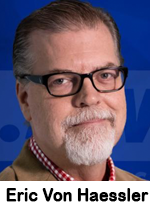 afternoon drive “Von Haessler Doctrine” show hosted by Eric Von Haessler, adding the 3:00 pm hour to the program that now airs live from 3:00 pm to 7:00 pm. Von Haessler made the announcement of the change on the air saying, “It’s a new day. It’s a new age. It’s a new era. Some people tuned in expecting something else. Maybe they’re a little upset. Give us a try. You might like it. It’s going to be this way no matter what.”
  East, the Newscast category for its July 2023 coverage of the Commanders sale and the Overall Excellence category. The WTOP digital team was recognized overall in the Digital category for WTOP.com. Individual awards went to WTOP reporter Matt Kaufax in the Feature Reporting category for his piece on Martin’s Tavern turning 90 and to WTOP associate producer Veronica Canales in the Excellence in Writing Category for her piece on the Dr. Seuss Experience. WTOP director of news and programming Julia Ziegler comments, “Our team’s mission every day is to deliver the latest news to the DC region and help the people who live in our communities. It is a huge honor to be recognized for that work with six regional Murrow awards.”
  due to critical illness or disaster. The campaign also strives to raise awareness of the Broadcasters Foundation’s charitable purpose to ensure that anyone in radio and television who might qualify for aid can apply. BFoA presiddnt Tim McCarthy says, “One hundred percent of Giving Day donations go directly to grants that help our colleagues, who are struggling with life-altering disease or disaster. Any amount – large or small – helps provide much-needed aid to support our colleagues.” The Broadcasters Foundation has distributed more than $15 million dollars in aid over the past 20 years. Monthly grants support broadcasters on a continual basis while they recover from an illness or accident. Emergency grants provide one-time financial aid following a devastating natural disaster or home emergency. Find out more at
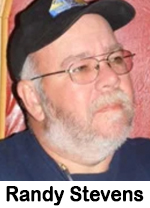 South Carolina morning host Randy “Steam” Stevens recently passed away after suffering injuries in a motorcycle crash that happened on May 10. WLBG says that Stevens recently celebrated the 30th anniversary of his talk show, “Good Morning, Up-Country.” In addition to his work in radio, Stevens was active with the Patriot Guard motorcycle riders and served on the board of directors of the Laurens County Humane Society. Stevens also appeared on the station’s “Morning News Magazine” and the station’s coverage of local elections across Laurens County.
  Comedy is the top genre among weekly podcast listeners age 13+. Edison says 19 genres have been identified as having at least one percent reach among weekly podcast listeners aged 13 and older in Q1 2024. Edison defines a podcast’s genre using its primary genre in Apple Podcasts. Society & Culture (#2) moved ahead of News (#3) while True Crime followed at #4 and Sports came in at #5.
  around the world. The 3-hour, 1-hour, 25-minute, and 30-minute radio specials are hosted by longtime Washington, DC radio personality Larry O’Connor and feature stories of our nation’s heroes, the families who serve by their side, and how Fisher House plays a role in their journey. The inspiring and patriotic radio show features an exclusive interview with Jessica Lynch who recounts her harrowing experience as a prisoner of war during the early days of the 2003 Invasion of Iraq during Operation Enduring Freedom. Ms. Lynch reveals details of her treatment during her captivity, her rescue, the ensuing years of medical treatment and the special role Fisher House played (and continues to play) in her recovery. Fisher House Foundation provides a home away from home for families of patients receiving medical care at major military and VA medical centers. Fisher Houses provide temporary free lodging so families can be close to their loved ones during medical care because “A Family’s LOVE is Good Medicine.” IMPORTANT NOTE: Due to a production delay, some stations may have inadvertently downloaded last year’s holiday edition.
  Because you can? Because you aren’t doing AM/FM radio? Because you are on radio, but can’t-do-there what you can-do podcasting? Because you are making money podcasting?
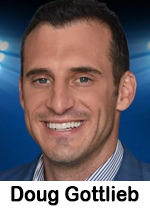 personality Doug Gottlieb is the new head coach of the school’s men’s basketball team. In what is a first, Gottlieb will continue to host his daily, two-hour radio show for FSR while undertaking his new role with UW-GB Phoenix. Gottlieb was a standout point guard at Oklahoma State from 1997 – 2000. He’s coached AAU teams and coached at the Maccabiah Games in Israel. During time in the media, he’s been a studio and in-game commentator for college hoops over the years while serving with ESPN, CBS Sports and Fox Sports.
  defaming two Georgia election workers, and they were accusing him of make new false accusations against them.
 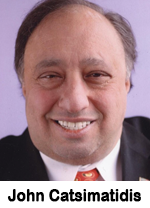 talking about the 2020 election for three years and was never made aware that election talk was off limits. In The New York Times story Giuliani states that WABC’s policies on this topic are “a clear violation of free speech” to which TALKERS founder Michael Harrison comments, “As a lawyer, former attorney
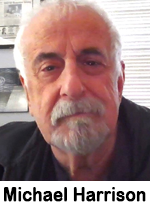 general and former mayor, Giuliani should know better than to muddy the waters about ‘free speech’ by citing it and distorting it for his own defense in this manner. The letter of the law regarding the First Amendment protects the rights and responsibilities of Catsimatidis as the licensee and platform owner in this situation. And as far as the spirit of the law as indicated by the general term ‘free speech’ is concerned, the understanding between these two men as to what Giuliani can discuss on WABC is completely subjective and ultimately based on what the licensee determines at any given moment to be in the best interest of the platform, its listeners and most importantly, the truth.”
  Actor Hugh Grant’s Tweet called it “The destruction of the human experience. Courtesy of Silicon Valley.” He was reacting to Apple’s
 -FM, Philadelphia “97.5 The Fanatic.” Egan posted confirmation of his exit on X, saying, “So last night I got laid off from the Fanatic. I figured it was coming when I heard there were cuts, & the writing was on the wall when I got moved to nights.” As Crossing Broad notes, “Egan was one of the longest-tenured employees remaining at the station. He began as an intern in 2011 and then became a street teamer and producer.”
 as well as conservative talk KTTH-AM morning drive host Bryan Suits. The report indicates that evening host Jake Skorheim moves to PM drive to co-host the 3:00 pm to 7:00 pm “John & Jake” show with John Curley. The evening daypart will be filled by CBS Audio’s “John Batchelor Show.” Taking over the KTTH-AM morning drive daypart from Suits is the syndicated “Armstrong & Getty” show.
  to about 7% of its workforce. Reports of who has been let go are just trickling in but so far some of the people who’ve been let go include (
 Ratings – and advertisers’ results – reward what listeners remember, what sticks-out, not clichés that blend-in. So, avoid blah-blah-blah such as…
 the radio industry and listeners. Voting for inductees begins May 20 and runs through June 3. The top six vote recipients from the more than 900 industry members receiving ballots will gain induction as part of the 2024 Radio Hall of Fame Induction class. The two additional inductees that will make up the eight-person induction class will be selected by the Radio Hall of Fame nominating committee. Spoken-word format personalities nominated include: John & Ken, Larry Elder, Lee Harris, Lincoln Ware, and Phil Hendrie.
  station after retiring from Cumulus Media’s crosstown sports talker KTCK-AM/FM “The Ticket” tells the Observer that he and castmates Julie Dobbs and Jeff Cavanaugh were let go on Friday (4/26). Rhyner says, “I could be standing at the New Mexico border and still see this coming. It’s a feeling that I and plenty of others at the station had been getting for some time now. iHeartRadio is a music company that really doesn’t do that much talk radio, and the talk radio they do is not local or locally originated, and they got caught into something [97.1 The Freak] they didn’t know anything about, and they were kind of overwhelmed by it, and they decided that ‘this is not our bag.’” Whitt’s Athlon story noted that “lagging ratings” and the talent expense [high overhead] had the station in corporate’s fiscal sights.
 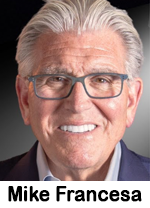 over for Greg Olsen alongside play-by-play announcer Kevin Burkhardt. Francesa is quoted saying that Brady obviously has a deep knowledge of the game but he believes Brady will struggle. “I don’t think his personality is such. I don’t think he’s going to be great at it. I really don’t. I think there’s a unique quality that you have to bring that allows you as an analyst to see the game, see the game quickly, plus bring personality into it. It’s a tricky job for the analyst in football because you’re going to spend a lot of time over replay. You’re going to spend a lot of time breaking down what happens on replay. And you also have to be very personable and glib in how you do it. I don’t see him there.”
 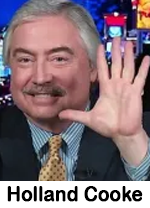 APPLAUSE for Daniel Centofanti, a good egg, known to several generations of Southern New Englanders as “Giovanni,” mornings on WPRO-FM, Providence… until today, the 50th anniversary of the station’s format flip from Beautiful Music to CHR.