Monday Memo: Stakeholder Whispering
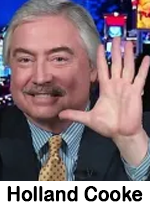
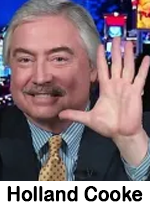
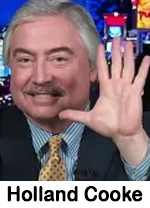
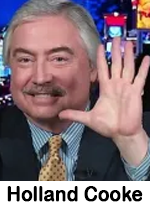
By Holland Cooke
Consultant
 Radio programmers and sales managers know the drill: The GM drops an idea, a client makes a request, or a listener offers feedback – and the reflex is to jump straight into execution. But what if the real opportunity lies not in what’s asked for, but in what’s actually needed?
That’s the premise of Bill Shander’s new book, Stakeholder Whispering: Uncover What People Need Before Doing What They Ask (Wiley, 2025). Though written for a broad business audience, its lessons resonate in broadcasting, where competing priorities and fast-moving decisions are the norm.
Shander reckons that traditional “stakeholder management” sounds paternal – corralling people to fit our plans. Instead, “stakeholder engagement,” gives them a seat at the table. This “whispering” is a deeper, two-way collaboration where probing questions and active listening uncover hidden needs and surface better solutions.

For broadcasters, this can be transformative. Consider sales. If an advertiser wants “a morning drive schedule,” a reflexive seller builds a package and fires back a rate card. But a whisperer pauses and asks: Why morning drive? Who exactly are you trying to reach? What outcome would make this buy successful for you? The conversation shifts from spots and cost to outcomes and value.
Programming is no different. Listeners may say they “want more music” or “less negativity” from talk radio. Whispering means listening past the literal request to the sentiment beneath. Is it about mood, pace, or trust? The host or PD who engages at that level isn’t surrendering control – they’re co-creating an experience listeners feel invested in.
The book also emphasizes “loss aversion” – the tendency to resist change for fear of losing control. Whispering reduces defensiveness by letting stakeholders feel ownership of solutions. In a station environment, that might mean involving talent in shaping format tweaks, or framing sales proposals as shared discoveries rather than dictates.
Stakeholder whispering is a reminder to slow down, listen more deeply, and help others articulate what they really need. For radio, it may be the difference between just checking a box and creating lasting value on both sides of the mic.
Holland Cooke (HollandCooke.com) is a media consultant working at the intersection of broadcasting and the Internet. Follow HC on Twitter @HollandCooke

 Bruce DuMont
 The Museum of Broadcast Communications announces the selection of eight new Legends inductees into the Radio Hall of Fame for 2025, recognizing radio broadcasters who have passed away. This year’s inductees include longtime WLS-AM, Chicago morning drive cohost Don Wade and nationally syndicated host Dale Sommers “The Truckin’ Bozo.” Radio Hall of Fame co-chair Kraig Kitchin comments, “Each of these individuals contributed to the growth and vibrance of our radio industry and are worthy of induction. I’m thrilled to see recognition for their talents and efforts and heartened that their family, friends and colleagues can witness this well-deserved honor.”


 The Cumulus Media | Westwood One Audio Active Group unveils an audio planning guide based on data from Edison Research and Nielsen data. Saying that there are incorrect assumptions among strategists and media planners about which audio media have the most listeners, chief insights officer Pierre Bouvard underscores that AM/FM radio is still the dominant ad-supported audio platform with a 66% share. Podcasting is second with a 20% share and this is true across all demographics. For those who are all-in on digital audio only, Bouvard says they are missing 70% of the potential audience as ad-supported Spotify, Pandora and podcasts reach only 30% of the U.S. in a typical day. Further, Bouvard says the data suggests an optimal allocation of audio ad spend: “The ideal allocation for a 25-54 audio plan is 62% AM/FM radio, 24% podcasts, 12% music streaming (Pandora, Spotify, Amazon Music, and YouTube Music), and 2% SiriusXM satellite radio.”

 My kitchen faucet wouldn’t shut off. It died, of old age. Things start doing that when your “new” house turns 25.
 After 40 years on the air in the Rochester market, legendary radio personality Brother Wease is exiting iHeartMedia’s talk WAIO-FM where he’s been hosting the late morning show for the past two years (he’d been hosting the morning drive show there since November of 2008). According to the Democrat & Chronicle, Brother Wease told his audience that the company is flipping the talk station to rock and he, along with air personality Deanna King, are being let go. Brother Wease launched his on-air career on rock WCMF in 1984 in overnights and moved to morning drive in 1985. The show took off and became a highly successful one in the market for years. He left WCMF in late 2007 after contract talks with then-Entercom broke down and resurfaced on WAIO.
 According to a report in Barron’s, Premiere Networks talk host Buck Sexton filing a federal lawsuit against RAD Diversified REIT, alleging they defrauded him of more than $100,000. In the complaint, Sexton alleges that RAD founders Dutch Mendenhall and Amy Vaughn solicited cash from him for investment coaching for property deals, neither of which ever happened. The story notes that this suit comes just weeks after Florida’s attorney general announced a probe into RAD saying the firm “appears to be a Ponzi scheme.” Sexton’s attorney writes in the complaint, “Despite being an experienced real estate investor, Mr. Sexton was taken in by the documents and investment returns touted by Mendenhall and his representatives. The defendants’ grand promises of sweeping returns never materialized.”
 Nashville “102.5 The Game” after being unable to strike a deal to renew his show. The new program will air live weekdays at 2:00 pm and goes online as a podcast by 3:30 pm that day. He tells the paper, “I was fortunate enough to have what I feel is an incredibly loyal core audience and I plan to provide for them a daily show every day that isn’t behind a paywall and 440 Sports gives me that opportunity. With very limited commercial interruption, the podcast should be able to get most people in Nashville through their afternoon commute.”
 He previously hosted his show on crosstown WJBE-AM. In making room for Basilio on WKGN, Bob Baskerville moved to afternoon drive to team up with Russell Smith in afternoons. Basilio says, “Bob has been really accommodating and gracious. They’ve got talented people on that station. I’m proud to be a part of it.” Read
 Why I love going on sales calls with station reps: Meeting retailers, who have SUCH a feel for their customers’ (our listeners’) mindset. Following-up
 role is vital to bringing our brand to life through on-air, digital, and community engagement initiatives. The ideal candidate will thrive in a fast-paced environment, enjoy working with people, and bring creative energy to our promotions and marketing efforts.
 event will benefit The WABC Radio Foundation, The Tunnel To Towers Foundation, The Police Athletic League (PAL), and Shriners Children’s. The evening will feature performances of patriotic songs including WABC Saturday evening personality and singer Tony Orlando performing “Tie A Yellow Ribbon Round the Ole Oak Tree”; Lee Greenwood performing “God Bless the USA” and America’s tenor Christopher Maccio will sing the National Anthem. Additionally, WABC personality Joe Piscopo will perform Frank Sinatra classics and station host Vinnie Medugno will sing oldies. The gala event will be hosted by 77WABC legendary air personality Bruce “Cousin Brucie” Morrow. Distinguished guests will include United States and New York area politicians, business leaders, and community heroes.
 Score” in March as the result of a social media rant against a critic was his fault. He says, “I own my mistakes. This was the culmination of a slow, rolling mental health crisis.” Bernstein recently began working with Hubbard’s 312 Sports platform on the daily podcast “Dan Bernstein: Unfiltered” with co-host Matt Abbatacola. He says, “I learned a lot in therapy, and I’m continuing to learn a lot about the dopamine outrage cycle and how real that is and how my brain chemistry works.” He adds, “I think I’ll be better served by the pace and tone of podcasting.”
 “justice for the injured… Bradshaw & Bryant.” Key takeaways from the blog include: 1) Through its longterm use of AM/FM radio advertising, Bradshaw & Bryant dominates unaided brand awareness; Across all stages of the consumer journey, Bradshaw & Bryant leads the market; 2) Bradshaw & Bryant offers Madison Avenue a master class on creating future demand and how building a brand is the main driver of longterm growth and profit; 3) Every advertiser has two jobs: Creating future demand and converting existing demand; Bradshaw & Bryant excels at creating future demand; and 4) AM/FM radio advertising works: Among AM/FM radio listeners, Bradshaw & Bryant’s awareness is +19% greater than in the overall market.