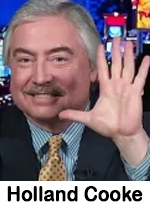
By Holland Cooke
Consultant
 Music radio’s competitors were vinyl, then tape, then CDs – before smartphone streaming and satellite radio offered more portability and variety. And before consolidation, broadcasters were under less of the revenue pressure that now commercializes many stations beyond listeners’ tolerance. TALKERS NAB Show coverage included Edison Research founder Larry Rosin lamenting “many, many [music] stations now loading all their spots into two interminable breaks per hour.” I cringe hearing FMs struggle to remain among listeners’ music appliances. And I fret that monologue-heavy talk radio is relinquishing interactive dialogue to social media.
Before moving to all-news, and eventually news/talk, I worked in music formats less-structured than today’s. So now I hear music radio as an outsider, more like a consumer. Which got me wondering: How does my format sound to music consultants? So, I asked several whose work I respect.
Beware the one-joke act
Mike McVay reckons that “listeners want to know a little bit about a lot of things,” a point other colleagues echo. Explaining that “music radio is all about variety,” adult contemporary specialist Gary Berkowitz: “To me, listeners are tired of all this political back and forth. Sure, it has its place, but it’s like if music radio only played five different artists!” Jon Holiday – who customizes station playlists for a variety of formats – asks “are talk listeners getting what they want?” Calling some formats “very artist-heavy,” he thinks stations were right to play so much Taylor Swift in 2024, certainly her year. And 2025 sure is Trump’s, but Holiday calls “banging the same drum all day, every day” the most common flaw he hears on talk radio.
McVay says listeners like “stories that pull on their heart strings. It’s why “NBC Nightly News” ends with a touching story. It’s not fluff. It’s information relief.” He also recommends topics you are likely to overhear at the next table during lunch: “Discretionary Time Information” (binge-worthy shows on Apple+, Max, Netflix). Health. And – lately more than ever – what Mike calls “purse” stories (think: eggs). Been to Costco? On weekends it’s mobbed. Ask any member and they’ll recite a shopping list of Kirkland-brand bargains.
Play the hits
When Gary Berkowitz – then an accomplished music programmer – took over stately WJR, he “approached it like it was a music station, the only difference was my ‘songs’ were my personalities, news coverage and, at the time, play-by-play of all the major Detroit teams.” He bought a jingle package “to ‘decorate’ the station;” and “got ‘JR involved with everything that was happening in Detroit. All I did was put it all together and present it like my top-40 upbringing taught me.”
I can relate. Before I programmed all-news WTOP, Washington, I had no news experience. I came from a music FM. The WTOP staff I inherited was impressive, and their work was solid, but the station wasn’t “programmed enough.” I was sent there to convert Cume to Average Quarter Hour – the blocking-and-tackling formatics fundamental to music radio. We owned “the Top news…instantly” image, and we said those very words LOTS. But research told us that traffic and weather were “the hits;” and how we presented them moved the needle.

Great talkers are great listeners
In every transaction, consumers now expect to interact; and “listeners like to hear others’ voices,” Mike McVay observes: “When the audience is comfortable enough to weigh in with an opinion, their own story, or a reaction, you’ve created a ‘friend circle.’” Jon Holiday tells morning shows he works with to “take time going into breaks to be topical and interact with callers.” And engage by texting and social media. And don’t just push-TO listeners. Be quick to REPLY, and you will make them feel special.
Yet, in three decades coaching talk hosts, the most unwelcome word I say seems to be “callers.” Imitating gifted Rush Limbaugh, many hosts are prone to windy monologue, rather than inviting the busy dialogue that makes a station sound popular (something local advertisers notice). DJs deftly weaving interactivity into music shows often sound more inviting than sermonizing talkers. Holiday remembers El Rushbo as “a master at having fun, particularly in his early days as a syndicated personality.”
Prescription: Local
Twenty years ago at the TALKERS conference, publisher Michael Harrison’s advice was elegantly simple: “Give them something they can’t get anywhere else.” Especially now, with so many non-local audio competitors. Regardless of format, helpful local information can increase Occasions of Tune-In per week.
Simply doing local news is a start. But does yours enable the listener by telling what an item means to him or her? On any given day, what you’re overhearing at lunch is something big that’s happening somewhere else. Can you explain the local impact? “National news needs to mean something to me, my community, my region or state,” according to McVay.
With weather so erratic in so many places, owning that image is gold. If you’re news/talk, don’t assume that you’re the market’s weather station. If you’re music, don’t assume you can’t be. Noting typical news/talk demographics, Jon Holiday surmises that, “as we get older, we seem to be more interested in weather.”
And as successful music stations have always done, show up! Gary Berkowitz had WJR go all-in on Detroit’s Thanksgiving Day parade, “with our people all over the parade route. It was better than the TV coverage!”
Holland Cooke (HollandCooke.com) is a consultant working the intersection of broadcasting and the Internet. Follow HC on Twitter @HollandCooke and connect on LinkedIn
Share this with your network



 Fame. Root tells TALKERS that he was a friend of Pete Rose. They both lived in Las Vegas, Rose was a guest on Root’s radio show and that led to Root and Rose starring in a national TV commercial together and becoming fast friends. Root wrote a column in 2020 imploring the president to pardon Rose, but it was this February when Root felt compelled to text the president. Root says that within 15 minutes of his sending that text the president announced he would pardon Rose. Root adds, “This all started with an interview on my radio show. I’m sure Pete is looking down from heaven with a big smile. His final dream was to be in the Baseball Hall of Fame. It’s about to come true. All because of a Vegas friendship late in Pete’s life with a guy who just happened to know the President of the United States! Thank you, President Trump.”
 Right now, dozens of well-suited, over-priced, unpleasant lawyers are fighting in Hollywood over the title credit their client should receive on a movie, TV show, or book cover. Placement within the credit roll at the end of a show is a battleground of egos and legalities. Part of the process of securing proper credit is governed by multiple union rules negotiated by multiple unions and corporate dictates of corporate masters. (You don’t get to be CEO of Paramount by being a nice guy.)
 expectations: core radio advertising finished at -12.4% excluding digital, and Cable TV advertising was -6.3%. Our cable TV ratings stabilized significantly in the first quarter of 2025 and are performing in line with our 2025 budget. Second quarter core radio advertising pacings have weakened over the past several weeks and are now -8.7%. Our first quarter 2025 digital revenues were down 16.1% driven by expected weakness in streaming and podcasting revenues. Based on our year-to-date performance, we reaffirm our full year guidance of $75 million in Adjusted EBITDA. Our cumulative debt repurchases so far in 2025 are $88.6 million at an average price of 53.9%, resulting in reduced gross debt of $495.9 million, and we currently have approximately $79.8 million of cash on hand. In a challenging marketplace, our focus remains on controlling costs, managing leverage and retaining a strong liquidity position.”
 voracious consumers of movies in the theater and films on streaming services. They are first to see a movie in the theater on opening weekend and when films debut on streaming services; and 2) Versus linear TV viewers, audio listeners are far more likely to see movies in the theater and indicate a greater willingness to watch content. Looking at data about marketing moves and streaming video, the study finds that 1) Linear TV advertising spend for theatrical releases and video streaming brands is 30X audio. Despite this, TV viewers show low awareness of new films and low interest in upcoming films and streaming service subscriptions; and 2) Audio (AM/FM radio, streaming audio, and podcasts) should become a much greater allocation in the entertainment marketing media plan. Reallocating 20% of linear TV theatrical and streaming video media plans to AM/FM radio doubles campaign reach with no additional cost.
  “It won’t work on FM.” Country. Country was predicted to be a failing format for the FM band. At the dawn of FM proliferation in the 1970s, the future of the band was viewed with fear and skepticism. Why wouldn’t country music work on the FM band? The conventional chatter said that “country needs to be on AM because truckers drive long distances and AM signals cover long distances. FM does not.”
 Global, the parent company of CBS, have begun charging what’s known as ‘reverse’ retransmission fees to broadcasters. The networks demand a share of broadcasters’ revenue for the right to use their content. This practice was once unheard of, but some networks now regularly require more than 100% of broadcasters’ retransmission fees as ‘reverse’ fees, leaving broadcasters to sustain themselves solely on whatever ad sales they can make with their limited inventory (also capped by the networks, and often amounts to only a few minutes of airtime per hour). This funnels more and more money out of local markets and local journalism and into the hands of mega media corporations, who threaten broadcasters with content blackouts if they don’t get sky-high payouts.” They go on to argue that the “problem gets even worse with providers like YouTube TV and Hulu Live. Under their affiliate agreements with the networks, local affiliates can’t even negotiate for online providers to carry the content. The networks do it for them and pay the affiliates whatever they deem reasonable (sometimes, nothing). This gives the networks total control over streaming distribution while robbing local stations of revenue and autonomy in the rapidly growing online video space. What was once a mechanism to support hometown news is now a corporate racket. Instead of investing in local reporters, meteorologists, and producers, local broadcasters’ funds are siphoned to bloated national newsrooms that churn out anti-Trump propaganda and woke talking points. Meanwhile, higher cable bills pass the cost to everyday Americans.”
  Remember how Larry King would interrupt rambling callers to ask, “What’s your question?” It could sound gruff, but it was really a courtesy, to viewers or listeners. Larry feared TV clickers and dashboard radio buttons. He kept-it-moving to keep viewers and listeners from wandering.
 a budget crunch – the company has been eliminating positions at stations across the country. He says he didn’t have “an inkling” that his job was at risk, “I probably should have. Radio is really tough now.” Gordon has been a host on the morning show since June of 2023 and was on in afternoons six years prior to that. During his long career in Detroit, he worked as 11:00 pm news anchor at WXYZ-TV and as morning anchor on WDIV-TV. He told his listeners, “If this is the end of the career, I have no grievances. I’m Lou Gehrig without the horrible disease. I’m the luckiest man on Earth.”
 regulatory framework, beginning with long-overdue reforms to the national television ownership cap and the local radio and TV ownership rules. NAB president and CEO Curtis LeGeyt states, “This is a moment for bold ideas, and NAB is proud to lead the charge. The FCC’s rules should reflect today’s media landscape, not one from decades past. Our filing lays out a clear, actionable path to modernize regulations and empower local radio and TV stations to better serve their communities. We appreciate the Commission, especially Chairman Carr, for launching this important effort. Reforming outdated ownership rules is the essential first step to strengthening local journalism and ensuring broadcasters can continue to survive.”
  These books have helped me tell stories, prioritize programming initiatives and manage career strategies. If interested in a book the link connects to its page on Amazon.
 Streamline Publishing. MIW’s Trailblazer Award, named for music industry pioneer and longtime BMI president and CEO Frances Preston. It is presented annually to a woman who, through her leadership and accomplishments in the industry, champions and creates opportunities for other women in radio to further their careers.
  Serious business coaches reveal that a common trait of successful people is their ability to immediately forget their failures and to move on. Next idea. Next project. Surrounded by seas of committees, forms, rules and mediocrity, effective leaders know that just trying something, regardless of the outcome, is the WIN.
  $171 billion local advertising marketplace. The study reveals that “key categories are driving investments in radio advertising: investment & retirement, quick service restaurants, supermarkets, commercial banking and hospitals. BIA VP of insights and analysis Celine Matthiessen adds, “Notably, hospitals are projected to be one of the top spenders in local radio advertising in 2025, according to our advertising forecast. As they allocate parts of their media budgets to Radio Over-the-Air (OTA),
  Radio Digital and other platforms like Connected TV (CTV), it’s evident that local radio continues to be a trusted and culturally relevant medium, especially in rural and remote communities.” RAB president and CEO Mike Hulvey comments, “Our continued partnership with BIA allows RAB membership insights into opportunity across local advertising categories. Broadcast radio and its digital assets can deliver the services that local businesses want and need to increase their sales revenue. Local businesses across sectors are dependent upon marketing professionals to help guide their growth. Understanding challenges of advertising categories and potential opportunities that exist is the value that this information brings to RAB members and to their prospective advertisers.” RAB and BIA will host, “Radio Ad Forecast 2025: BIA’s Latest Projections,” at 1:00 pm ET on April 16, for RAB members.
  Corporate cost cuts continue. In
  operating income was approximately $38.6 million, an increase of 1.7% from the same period in 2023. Net loss was approximately $35.7 million for the quarter, compared to net loss of $11.0 million for the same period in 2023. Urban One CEO and president Alfred C. Liggins, III states, “Our Adjusted EBITDA of $103.5 million came in at the mid-point of guidance, helped by strong political advertising revenues in the radio division. The radio outperformance was offset by declines in both advertising and affiliate revenues at the cable TV segment, as audience delivery continued to underperform expectations. We are however seeing some stabilization in the first quarter cable TV delivery, which should help to mitigate the continuing decline of linear TV subscribers. First quarter core radio revenue demand weakened, with pacings down 13.6%, although the second quarter is showing signs of improvement, with core pacings currently down 1.7%.”
  NAB says, “Local radio stations provide trusted news, sports and entertainment to their communities free of charge, but stations’ ability to do so would be greatly threatened if faced with a new performance tax, on top of the hundreds of millions of dollars local stations already pay each year in copyright and streaming fees.” The second resolution calls on legislators to support the AM Radio for Every Vehicle Act that would ensure the continued availability of AM in all newly manufactured vehicles. NAB president and CEO Curtis LeGeyt comments, “On the heels of an incredibly successful State Leadership Conference, where over 560 local TV and radio broadcasters traveled to Washington, DC to meet with lawmakers on Capitol Hill, congressional support for local radio is strong. State broadcaster associations play a pivotal role in our advocacy efforts, and I am proud to see the collective unity behind these resolutions.”
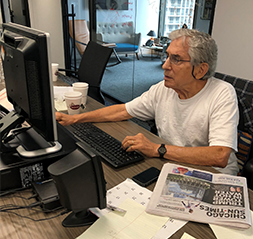 had a storied career in Chicago media. First at newspapers, he moved to television in 1963 working at WBBM as a news writer, reporter and political editor. From 1973 to 1982, Jacobson co-anchored WBBM-TV’s “The 10 O’Clock News” with Bill Kurtis and the two dominated the ratings for nine years. His “Perspective” pieces date to those newscasts when Jacobson would deliver them live from his office. WGN Radio VP and general manager Mary Sandberg Boyle comments, “I ‘knew’ Walter Jacobson mostly for his TV news work virtually all my life. He and Bill Kurtis revolutionized the look and feel of television news broadcasts in Chicago at CBS 2 and it’s still talked about by those who watched them in the 70s. Working with him at WGN Radio and getting to know him in-person has been an honor. After seeing firsthand his uncompromising devotion to his craft, it’s easy to see why he is the media legend that he is. Walter’s personality, contributions and ever unique ‘Perspective’ will be greatly missed.”
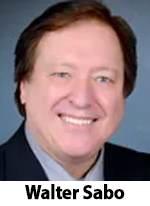 Thank you, TALKERS for placing me on two panels at the IBSNYC conference. All student conferences have one underlying goal: Attendees want to know how to land a starter job in media. Here’s the information I shared with the eager crowd.
 employing an investment bank to see if there might be a buyer for the 40 radio and 12 television stations that make up Cox Media Group. Bloomberg reports that other TV groups, including Nexstar Media Group and Gray Media, might be interested in the television stations.
 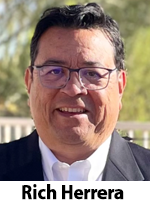 engage listeners in meaningful and entertaining conversation make him a valuable addition to the WRVA team. We’re excited to welcome Rich and continue delivering the news that matters most to our community.” Herrera comments, “I am thrilled to join the WRVA team, a legendary station with a great lineup of hosts and shows. After meeting with Bennett Zier and Zach McHugh and getting the chance to host Richmond’s morning news, I fell in love with the station. My family is excited to make Richmond our home. I want to thank Chris Oliviero and Jeff Sottolano for their support and mentorship, as well as Drew Anderssen, our format vice president, who encouraged me a year ago to transition from sports talk to general news.”
 and market manager Tish Boden says, “Team Cumulus Fayetteville is excited to have Gilbert Baez join our team as the new host for ‘Good Morning Fayetteville’ on WFNC News Talk. When you say the name Gilbert Baez in the market it is synonymous with news. I look forward to Gilbert’s success on Good Morning Fayetteville.” WFNC program director Kelvin Culbreth adds, “Gilbert Baez brings a deep desire to report the news and a true sense of devotion to Fayetteville, Fort Bragg, and Cumberland County. He’ll bring his wealth of knowledge about our area and his vast cache of connections. We have heard, ‘Everyone knows Gilbert and Gilbert knows everyone.’ He is the perfect host to carry GMF into the future.”
 Thank you, TALKERS for having me on panels at the TALKERS Generations 2025 IBSNYC conference this past Saturday (3/8). Moderator and Philadelphia talk show god Dom Giordano asked us the inevitable: “What is the future of radio?”
 people spend by far the most amount of their time at home, the at-home environment offers a variety of listening devices including smart speakers, internet-connected TVs, and computers, in addition to mobile phones… And we know from our qualitative research that podcast listeners can listen while they multitask at home.” After listening at home, listening at work contributes 16% to the overall daily listening time to podcasts, while in-car listening captures 11% of daily listening time. Edison adds, “We can theorize that because people often take short drives during the day including quick trips to the store, or school, or on errands, that those short trips might not be conducive to becoming fully engaged with a podcast.” Finally, 6% of listening happens in various other locations, such as gyms, grocery stores, or while walking.
 During my tenure at NBC, once a month the division heads would meet at the behest of the CEO to report on their progress and trends in their sector. As the executive vice president of the FM division, I took a seat in that formidable group and tried to keep my remarks as brief as possible. What could I possibly say that would be more damn important than the words of the president of NBC News or the NBC Television network? In addition to NBC’s CEO, the CEO of owner RCA would often join the fun.
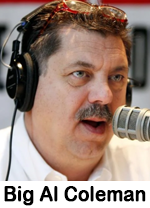 Coleman has been a fixture in Richmond sports talk for more than 30 years on numerous stations in the market. He began his working life as a stockbroker but caught the sports talk bug in the 1990s. He says, “Everybody to a person said to me, ‘Don’t quit your day job. You can’t do a sports talk show in Richmond, Virginia, five days a week. It ain’t gonna work…’ It worked. It worked.” He laments that the business isn’t what it was back in the day, “There’s not the same camaraderie. It’s not the same fun that it used to be.” But he adds, “It’s still fun; I still like doing the show. But it’s just time for me to go.”