By Matthew B. Harrison
TALKERS, VP/Associate Publisher
Harrison Media Law, Senior Partner
Goodphone Communications, Executive Producer
 Every media creator knows this moment. You are building a segment, you find the clip that makes the point land, and then the hesitation kicks in. Can I use this? Or am I about to invite a problem that distracts from the work itself?
That question has always lived at the center of fair use. What has changed is not the question, but the context around it. Over the past year, two federal court decisions involving AI training have quietly clarified how judges are thinking about copying, transformation, and risk in a media environment that looks nothing like the one for which these rules were originally written.
Fair use was never meant to be static. Anyone treating it as a checklist with guaranteed outcomes is working from an outdated playbook. What we actually have is a 20th century rulebook being used to officiate a game that keeps inventing new positions mid-play. The rules still apply. But how they are interpreted depends heavily on what the technology is doing and why.
That tension showed up clearly in two cases out of the Northern District of California last summer. In both, the courts addressed whether training AI systems on copyrighted books could qualify as fair use. These were not headline-grabbing decisions, but they mattered. The judges declined to declare AI training inherently illegal. At the same time, they refused to give it a free pass.
What drove the analysis was context. What material was used. How it was ingested. What the system produced afterward. And, critically, whether the output functioned as a replacement for the original works or something meaningfully different. Reading the opinions, you get the sense that the courts are no longer talking about “AI” as a single concept. Each model is treated almost as its own actor, with its own risk profile.
A simple medical analogy helps. Two patients can take the same medication and have very different outcomes. Dosage matters. Chemistry matters. Timing matters. Courts are beginning to approach AI the same way. The same training data does not guarantee the same behavior, and fair use analysis has to account for that reality.
So why should this matter to someone deciding whether to play a 22-second news clip?
Because the courts relied on the same four factors that govern traditional media use. Purpose. Nature. Amount. Market effect. They did not invent a new test for AI. They applied the existing one with a sharper focus on transformation and substitution. That tells us something important. The framework has not changed. The scrutiny has.
Once you see that, everyday editorial decisions become easier to evaluate. Commentary versus duplication. Reporting versus repackaging. Illustration versus substitution. These are not abstract legal concepts. They are practical distinctions creators make every day, often instinctively. The courts are signaling that those instincts still matter, but they need to be exercised with awareness, not habit.
The mistake I see most often is treating fair use as permission rather than analysis. Fair use is not a shield you invoke after the fact. It is a lens you apply before you hit publish. The recent AI cases reinforce that point. Judges are not interested in labels. They are interested in function and effect.
Fair use has always evolved alongside technology. Printing presses, photocopiers, home recording, digital editing, streaming. AI is just the newest stress test. The takeaway is not panic, and it is not complacency. It is attention.
If you work in the media today, the smart move is to understand how the rulebook is being interpreted while you are busy playing the game. The rules still count. The field just looks different now.
Matthew B. Harrison is a media and intellectual property attorney who advises radio hosts, content creators, and creative entrepreneurs. He has written extensively on fair use, AI law, and the future of digital rights. Reach him at Matthew@HarrisonMediaLaw.com or read more at TALKERS.com.
Share this with your network




 SXSW in Austin on March 16. Nominees for Podcast of the Year include: “Good Hang with Amy Poehler,” “The Breakfast Club,” The Mel Robbins Podcast,” “Pablo Torre Finds Out,” “The Daily,” “The Rest Is History,” “This Past Weekend w/ Theo Von,” “Call Her Daddy,” “Heavyweight,” and “Giggly Squad.” The nominees for Best Political podcast include: “Pod Save America,” “The Bulwark Podcast,” “Breaking Points,” “Hacks On Tap,” and “The Ben Shapiro Show.” See all the nominees here.
  discoverability capabilities to small and mid-sized businesses that are being excluded from emerging search and discovery channels due to cost, complexity, and technical barriers.” Audacy SVP of digital Jenny Sutton says, “Local advertisers can be overwhelmed by the pace of change in digital marketing and discovery. By partnering with Next Net, we’re giving our clients a future-ready solution that integrates AI discoverability directly into the media and marketing strategies they already know and trust, without requiring technical resources or additional burden on the business owner.”
 solutions-oriented conversations about the political, cultural, and social issues shaping Americans’ lives… expected guests in the show’s first days include James Carville, Bob Costas, Mark Cuban, former Senator Joe Manchin, Gov. Wes Moore, Sen. Rand Paul and more. Cuomo comments, “Too much of our politics is about teams instead of truth. ’Cuomo Mornings’ is going to be about breaking through those barriers, asking better questions, and bringing people into the conversation instead of talking past them. We need to prioritize common sense, accountability, and real dialogue, and SiriusXM’s P.O.T.U.S. channel is exactly where that belongs. I’m very excited to be back on the platform and to engage with callers every day. Let’s get after it.”
 Media | Westwood One says, “The relaunch marks Bongino’s most extensive digital commitment to date, designed to meet increasing audience demand for long-form and in-depth content. The two-hour format strengthens the show’s position as a major voice in independent media, offering a highly engaging, daily destination for listeners seeking headline analysis, guest interviews, cultural commentary, and special ‘Bongino Army’ segments.” Bongino comments, “I’m excited to get back behind the mic and reconnect directly with the audience. This show has always been about cutting through the noise and talking honestly about what matters. We’re coming back bigger, bolder, and always unfiltered — exactly how people want it.” Westwood One and Cumulus Podcast Network president Collin Jones adds, “Dan Bongino is back! Few voices in talk media command the loyalty and firepower that Dan brings. His audience? Formidable. His influence? Undeniable. This promises to be an incredible journey as Dan drives the national conversation daily on the most important issues at hand, with authority that has been hard-fought and well-earned. Westwood One is beyond proud to help power the next chapter of ‘The Dan Bongino Show.’”
 councilor Cliff Ponte. WPRI-TV, Providence reports that the new owners say “they’re going to shift programming to cover 100% local content focusing on Fall River and its suburbs while still keeping Celtics and Patriots broadcasts.” Ponte tells WPRI, “This station has been a part of my life for more than two decades. I got my start behind the microphone here as a teenager, learning the ropes at WSAR and later moved to other stations in Cape Cod and Providence.” The report says that Silvia will serve as the station’s general manager, Ponte will serve as program director, and current station general manager Sue Nadar will move to the role of sales manager.
  Evidence that your correspondent is a nerd: my airplane read for my CES back-N-forth was Successful AI Product Creation: A 9-Step Framework by Shub Agarwal (Wiley). If you haven’t got time for all 307 pages, here’s what I gleaned, pertinent to radio:
 Talk show hosts are not motivated or driven like disk jockeys or salespeople. Most general managers have never managed talk show hosts. Few program directors have managed talk show hosts. My career has been blessed with daily exchanges with the best talk show hosts in history. Here are some suggestions I would like to share on how to have a superior relationship with talk stars.
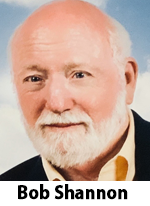 Circus Came to Town.” The Minneapolis-based former DJ, programmer and radio exec tells TALKERS, “In full disclosure, this song was created on suno.com using V5. The lyrics are all mine, and the orchestration is mine too by virtue of having given all of the instructions to create the track. Regardless of how all the controversy about artificial intelligence plays out, I am releasing this opinionated and highly emotional song purely as an expression of my free speech and artistic expression – not for commercial marketing purposes.”
 stations; Jennifer Wells is promoted from business manager to controller after 25 years with the company; after 16 years of service and “proven sales leadership,” Tami Grashof is promoted to regional sales manager; and Brittany Capparelli is elevated event marketing specialist to director of client experience. Galaxy Media CEO Ed Levine says, “These promotions are a pivotal moment for Galaxy Media. We’re energized to celebrate our team’s growth and excited for the leadership, creativity, and drive they bring as we shape the next chapter of our company.” Among Galaxy’s stations is sports talk WTLA-AM/W249BC, Syracuse “ESPN 97.7/100.1.”
 dashboards and API access that support automated reporting and portfolio-level insights. The collaboration will also support select broadcast attribution initiatives within Audacy’s radio portfolio, complementing existing measurement partners. Audacy president of digital sales Michael Biemolt says, “Audacy consistently strives to deliver measurable results for advertisers, and our partnership with Podscribe further strengthens that promise. With enhanced attribution and transparency across our portfolio, we’re giving clients even greater confidence in how Audacy drives performance at scale.”
 president. NYSBA chairman Chris Musial states, “David is doing an outstanding job, but he believes the time has come to turn over management of the Association to the next generation. The Board of Directors is delighted he will continue to lead our lobbying efforts in Albany and Washington. The NYSBA Board and Executive Search Committee look forward to advancing the important work of Broadcasters on Multiple Platforms as we begin this search.” Donovan comments, “It has been a great run. Our goal is to bring someone on board earlier in the year to have a smooth transition. NYSBA has an outstanding Board of Directors and the best staff of any association in America.” Resumes will be accepted until February 28, 2026.
 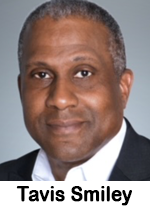 of conversations with world leaders, artists, activists and others who shape our world and “somewhere along the way I’ve realized that the art of conversation is dying.” Because of this he’s creating practical courses in the “art of conversation.” He adds, “I’m going to teach what the past 40 years have taught me: how to have conversations that matter… conversation is a skill and like any skill, it can be taught.” The titles of the six course are: The Anatomy of a Great Conversation, How to Know More Than Your Interlocutor Thinks You Do, Generous Listening as a Superpower, Handling Difficult Conversations and Conflicts, Creating Memorable Moments, and Why Conversation Matters in Democracy.
 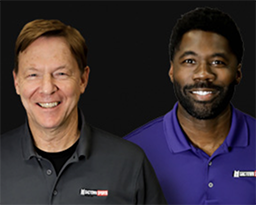 midday talk host Allen Stiles (right) to afternoons to join “The Drive Guys with Kevin Gleason” (left) as a co-host, effective January 12. The station says, “Allen is no stranger to Sactown Sports listeners. He has already been a key part of the Sactown Sports family as the host of ‘The Allen Stiles Show, which currently airs weekdays from 10:00 am to 2:00 pm, building a strong connection with the audience through his knowledge, passion, and engaging style.” The station has not indicated its plans for the midday daypart.
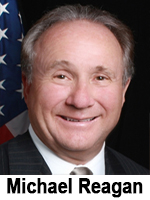 Reagan lived a life shaped by conviction, purpose, and an abiding devotion to President Reagan’s ideals.” Reagan began his talk radio career in the late 1980’s first doing commentary on KABC, Los Angeles and then hosting his own show on KSDO, San Diego. For years his radio program was distributed nationally by Radio America and then by Premiere Networks. At the time of his death, Reagan was serving as a columnist for Newsmax. TALKERS publisher Michael Harrison says, “Michael Reagan was one of the pioneering talents that launched news/talk radio to new levels of achievement and influence in the 90s, in addition to forging a successful decades-spanning career as a host and commentator. From a media industry standpoint, he was a self-made man, never leaning on his famous family connection as an advantage. Off the air, he was a regular guy. On the air, he was just plain good.”
 About Money, the newest release from bestselling author and “The Ramsey Show” co-host Jade Warshaw. Ramsey Press says, “Warshaw draws from her own journey of paying off more than $460,000 of debt to offer readers a clear, practical way forward. She pairs honest storytelling with simple, hands-on tools readers can use to break cycles and build confidence that lasts. Unlike traditional money books that focus only on tactics. Warshaw adds, “People don’t need just another plan — they need a way to understand what keeps pulling them off track. When you deal with the emotional weight behind your money choices, that’s when real progress starts.”
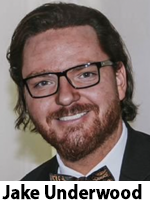 accountability in government spending and policy. He has also served as executive director of the Medina County Republican Party and as national director of state legislation for Make America Healthy Again (MAHA) Action. Un Durwood says, “We’re creating a space where Northeast Ohioans can engage with the issues that matter most to them. Whether you agree or disagree, this show is about elevating the conversation and encouraging active participation in our community’s future. Educating and enlightening our fellow Ohioans in a style that encourages active audience engagement is what drives and motivates me. I look forward to mixing it up with those in our audience with whom I agree — and with those with whom I disagree.”
 and will be distributed as a podcast immediately afterwards. Cohen and LaVicka previously co-hosted together. Cohen currently hosts his national show, “Questionable Call with Josh Cohen”on YouTube. LaVicka is currently the voice of Florida Atlantic University football & basketball, as well as the “Sports & Golf Boardroom” show on “FOX Sports South Florida.” Station brand and content director David Adams says, ”Josh & Ken are two of the best known and most respected voices in our community. I couldn’t be more excited to add them to the ‘FOX Sports South Florida’ lineup!”
 Smith will air from 9:00 am to 12:00 noon and “Jeffrey Wright and Company” is expands to a three-hour show airing from 12:00 noon to 3:00 pm. Station brand manager and operations manager Brad Carson comments, “Since helping launch the station in 2010, Geoff Calkins defined the brand through his unique ability to blend smart, prepared sports storytelling with deeply resonant coverage of the broader Memphis community. We’re excited for the new generation of talent he personally mentored to build upon the powerful legacy he leaves behind and the foundation he built. Our listeners can remain confident that the station will uphold its commitment to unrivaled sports coverage and the authentic, community-driven storytelling that Memphis relies on.”
 that the company is illegally leveraging its dominance over national and local radio audience data to stifle rivals and charge inflated prices. At the heart of the complaint is the charge that Nielsen is providing access to the national broadcast radio ratings only if the client spends a lot of extra money on the separate local ratings. Cumulus argues that Nielsen’s policy forces them to buy ratings in U.S. markets where it doesn’t operate stations in order to have the complete national ratings data. Vargas’ injunction orders Nielsen to cease conditioning national ratings access on local subscriptions during ongoing contract negotiations. It also bars Nielsen from charging a commercially unreasonable rate for its nationwide ratings when sold as a standalone product while the case proceeds.
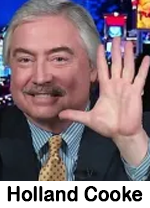 Hello from Las Vegas, where I am both eager and anxious for CES2026.
 manager for San Francisco and San Jose. Murley was most recently chief revenue officer for Beasley Media Group. Connoisseur Media CEO Jeff Warshaw says, “Tina is exactly the kind of leader we look for at Connoisseur. She brings exceptional operational instincts and a people-first leadership style that aligns perfectly with our culture. We could not be more excited to welcome her to the Connoisseur family as we continue to grow our presence on the West Coast.”
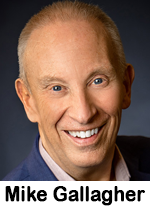 Show will both present live coverage of the expected arraignment of Venezuelan President Nicolás Maduro and his wife on narco-trafficking charges in New York City. Salem Radio Network VP/news and talk programming Tom Tradup interviewed Venezuelan citizens in the Dallas area, saying, “Like their counterparts in Washington, D.C., Chicago and elsewhere, Venezuelans in Dallas appear to be overjoyed that President Trump removed the dictator who had ruled over their home country.”
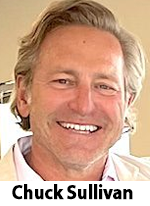 new regional director of sales and digital sales manager. Sullivan previously served with Audacy as SVP/market manager for Milwaukee & Madison. He says, “It’s a homecoming of sorts, having spent several
 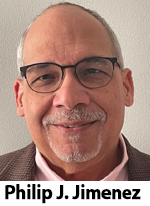 years in Milwaukee and Madison. It’s truly a unique opportunity in our industry, given the fiercely independent and community focused culture of Civic Media. I was drawn to their guiding strategy of ‘Hometown Radio Refreshed.’ I look forward to working with the team and serving our local communities.” Jimenez most recently was general manager for Adams Publishing Group in Sun Prairie, Wisconsin. He remarks, “I look forward to working with all Civic Media team members to maximize their personal and professional growth, as well as assisting our clients and partners to thrive in the communities we mutually serve in Wisconsin and the Midwest.”