

Industry Views

FAIR USE: What Constitutes “Publishing” or a “Publication” on Today’s Media Playing Field?

By Matthew B. Harrison
TALKERS, VP/Associate Publisher
Harrison Legal Group, Senior Partner
Goodphone Communications, Executive Producer

imAs the practice of “clip jockeying” becomes an increasingly ubiquitous and taken-for-granted technique in modern audio and video talk media, an understanding of the legal concept “fair use” is vital to the safety and survival of practitioners and their platforms.

When assessing fair use in audio media, courts closely examine the “nature of the copyrighted work,” especially focusing on whether the work is factual or creative, and published or unpublished. Factual content, such as news reports or data, is more likely to be seen as fair use material, as it’s in the public interest to keep factual information accessible. Creative works, like music, fiction, or original performances, often enjoy stronger protection because they embody the creator’s unique expression and should be compensated accordingly.

Unpublished interviews or speeches.  When audio content includes unpublished material – such as a speech or interview that hasn’t been publicly released – courts typically approach it with heightened caution. For example, if a podcast includes clips from an unpublished interview with a politician to enhance commentary, courts might scrutinize this more heavily than they would a published work, as the speaker retains significant control over whether and how the content reaches the public.

Case study insight: Salinger v. Random House (1987).  The landmark case Salinger v. Random House highlighted how unpublished works generally receive stronger copyright protection. In this case, the use of unpublished letters in a biography was ruled as infringing, emphasizing that unpublished materials hold a unique status in copyright law. If a podcaster today were to use a similarly unpublished interview with a public figure without significant commentary or transformation, they might face greater legal challenges.

Redefining “published” in the digital era.  With digital platforms, the meaning of “published” is evolving. Traditionally, a work was deemed “published” when made available for sale, license, or public distribution. Now, sharing content online, even in a limited way – such as within a closed social media group or private online forum – raises questions about whether the content should be considered published. Courts are increasingly aware that limited digital sharing doesn’t necessarily reduce a work’s unpublished protections, but extensive online distribution might.

Modern considerations of online sharing. Courts today analyze factors like control over access and the sharing platform’s nature. For instance, an audio clip shared in a restricted forum might retain its unpublished protections, while a widely posted clip could lose some of those protections. Additionally, when creators post content on platforms like Instagram or YouTube before officially “publishing” it elsewhere, courts may take the creator’s intent and distribution scope into account when determining the content’s legal status.

As online platforms reshape how creators distribute their work, they also impact fair use, pushing courts to reinterpret what it means for a work to be “published.” This evolving understanding means that copyright protections depend not only on whether a work is accessible but also on the level of control over its distribution, especially for audio content.

Media attorney, Matthew B. Harrison is VP/associate publisher, TALKERS; Senior Partner, Harrison Legal Group; and executive producer, Goodphone Communications.  He is available for private consultation and media industry contract representation. He can be reached by phone at 724-484-3529 or email at Matthew@HarrisonLegalGroup.com

Industry News

Yesterday’s (11/5) Top News/Talk Media Stories

ELECTION DAY WRAP UP:  The presidential race was supremely dominant on the top talk media stories list yesterday (11/5) on Election Day.  Conversation focused primarily on polls, predictions, and encouragement for voter turnout.  Other top issues of discussion emanating from that included abortion rights, the economy, media bias, war and rising tensions in the Middle East and Central Europe, and the ever-present migrant/border crisis according to ongoing TALKERS research.

Industry News

Boston Sports Talk Legend Fred Toucher on the Demise of His Old Partner’s New Show: “I Hate Him”

In an example of just how contentious sports talk radio can be, long-time Boston sports talk radio host Fred Toucher did not hold back in slamming his old partner, Rich Shertenlieb, whose new show was cancelled this week. Fred Toucher ID (From Seminar 2024)Toucher, who now co-hosts “Toucher & Hardy“ on 98.5 The Sports Hub, WBZ-FM, Boston took some time on this morning’s show (11/5) to address ”the elephant in the room.” Shertenlieb‘s new show on local classic rock outlet WZLX had been canceled after five months, and Toucher didn’t seem to have any sympathy for his former partner.  In a story by reporter Nick O’ Malley posted on the news site MassLive.com, “I hate him,” Toucher said. “So, I was happy yesterday when I heard about this. But I was a little disheartened that he still carries none of the responsibility and takes none of the blame and still just can’t be honest.”   Toucher and Shertenlieb co-hosted the “Toucher & Rich” show from 2009-2023, working together to produce one of Boston’s most popular morning shows. However, the show ran into issues in 2023. Toucher missed time due to personal and physical issues, including a stretch of time at an alcohol detox facility. In November, parent company Beasley Media said in a statement that Shertenlieb declined to accept a new contract.  On Monday, Shertenlieb announced that he was “disappointed” that his show was being canceled after just five months. The radio host complained that management forced him to “alter the format” of the show by adding music.  However, Toucher noted Tuesday that Shertenlieb’s show was a “ratings disaster.”  “He not only did not bring in a new audience to that show, he alienated – based on ratings – their entire existing audience,” Toucher said. “He had like a third of the ratings that they got jockless in the morning … Yeah, management might have been a little concerned.”  Toucher said that critics can paint the picture of his reaction however they like. But he did note that he and co-host Jon Wallach say they weren’t alone in celebrating the demise of Shertenlieb’s show.  To see the complete article in MassLive.com, please click here.

Industry News

Yesterday’s (11/4) Top News/Talk Media Stories

POLLS AND PREDICTIONS:  The presidential race was supremely dominant on the top talk media stories list yesterday (11/4) on Election Eve.  Conversation focused primarily on polls and predictions.  Other top issues of discussion emanating from that included abortion rights, the economy, media bias, war and rising tensions in the Middle East and Central Europe, and the ever-present migrant/border crisis according to ongoing TALKERS research.


Industry Views

MORE ON FAIR USE: Using the Audio/Video Content of Others Can Transform a Work into a Sum Greater Than Its Parts – Or Be a Legal Headache

By Matthew B. Harrison
TALKERS, VP/Associate Publisher
Harrison Legal Group, Senior Partner
Goodphone Communications, Executive Producer

Matthew B. Harrison, Esq.As media creators in radio and podcasting explore ways to legally incorporate external audio, the fair use factor of “purpose and character” is crucial. This factor assesses whether the use is “transformative”—adding new expression or meaning—or merely reproduces the original’s essence, potentially infringing on copyright.

Examples from popular platforms provide guidance. Podcaster Joe Rogan, for instance, often uses clips to build commentary and analysis, which could support a fair use defense due to its transformative nature (though others may argue the additions don’t significantly alter the original). Defining “transformative” is challenging, especially when the original creator disagrees on whether substantial new meaning has been added.

Transformative use in podcasts.  In podcasting, many creators use news clips or sound bites to provide commentary or critique, adding analysis or humor that can help support a fair use claim. For example, “The Joe Rogan Experience“ has used various clips and video snippets with added commentary. While Rogan’s show hasn’t faced significant legal challenges for these uses, adding commentary could bolster a fair use defense.

Hypothetical: satire on a radio show. Consider a radio show that incorporates political speech snippets for satire. If the use is genuinely transformative, adding new expression or meaning, it may meet fair use standards. However, the line is thin, especially if the clip isn’t significantly altered. Precedents like Campbell v. Acuff-Rose Music, Inc. inform how courts may handle parody and transformation in fair use.

Example: news clip commentary in political podcasts.  Political podcasts like “The Daily” from The New York Times often use brief clips to provide in-depth commentary on current events. For instance, they might use a clip from a politician’s speech to add a critical or alternative perspective. In such contexts, courts are more likely to view the use as transformative, particularly if it builds on or challenges the original content. These scenarios illustrate the balance media creators must strike in using third-party audio. Whether adding commentary, satire, or criticism, the goal is to transform the original content meaningfully, beyond simple replication. Understanding fair use’s “purpose and character” factor helps media creators leverage third-party content responsibly, aligning with legal standards.

Media attorney, Matthew B. Harrison is VP/associate publisher, TALKERS; Senior Partner, Harrison Legal Group; and executive producer, Goodphone Communications.  He is available for private consultation and media industry contract representation. He can be reached by phone at 724-484-3529 or email at Matthew@HarrisonLegalGroup.com

 

Industry News

Top News/Talk Media Stories this Past Weekend (11/2-3)

The presidential race dominated the weekend talk media discussions (11/2-3), highlighted by each candidate’s “closing case.” VP Kamala Harris‘s appearance on SNL got a buzz as did NBC’s response to backlash with an offer of equal time to former President Donald Trump. Women’s health issues and abortion rights were dominant topics. This was followed by fear of escalating violence in Central Europe and the Middle East. Other topics in the mix were the economy, the migrant crisis, and talk of Trump’s plan to put Elon Musk and Robert Kennedy Jr. in positions of influence in his administration according to ongoing research from TALKERS.

Industry News

Top News/Talk Media Stories this Past Week (10/28-11/1)

It was a power-packed stretch (10/28-11/1) as Election Day rapidly approached less than a week away. The presidential race highlighted by continuing talk about the MSG MAGA event and “garbage” talk emanating from both sides consumed the airwaves and talk media programs on all platforms.  Hot topics included: migrant-border issues; the economy-inflation-tariffs-housing; abortion-healthcare-climate change- race relations; Middle East and Central Europe war-violence; Elon Musk activities- big tech-media corruption-bias; crime-guns; Halloween; and the World Series. To see the complete chart of the most talked about stories and people, please click here.

Industry News

Yesterday’s (10/30) Top News/Talk Media Stories

The presidential race remained dominant on top of the stories list yesterday (10/30) as Election Day rapidly approaches.  Conversation included a continuing rehashing of last Sunday’s controversial MAGA rally at MSG with a huge focus on the comments/fallout from the Puerto Rican community and President Joe Biden‘s controversial remark about former President Donald Trump‘s supporters being “garbage.”  VP Kamala Harris‘s speech in DC, continued to be among the most-talked-about election stories in news/talk media yesterday (10/30).  Other top issues of discussion included the economy, media bias, rising tensions in the Middle East and Central Europe, the migrant crisis, and the World Series according to ongoing TALKERS research.


Industry News

I Am Leaving My Daily Radio Show While On Top to Transition to Podcasts

By Mark Belling
Talk Show Host, WISN-AM, Milwaukee

Industry News

Yesterday’s (10/29) Top News/Talk Media Stories

The presidential race, including a continuing rehashing of Sunday’s controversial MAGA rally at MSG with a huge focus on the comments/fallout from the Puerto Rican community, former President Donald Trump‘s recent appearance with Joe Rogan, and scrutiny over VP Kamala Harris‘s speech in DC, was among the most-talked-about stories in news/talk media yesterday (10/29).  Other issues of discussion included the economy, media bias, rising tensions in the Middle East and Central Europe, and, of course, the migrant crisis according to ongoing TALKERS research.

Industry News

Yesterday’s (10/28) Top News/Talk Media Stories

The presidential race, including rehashing Sunday’s controversial MAGA rally at MSG with a huge focus on the comments/fallout about Puerto Rico and Latinos made by wannabe comedian Tony Hinchcliffe and former President Donald Trump’s “Enemy Within” theme, was among the most-talked-about stories in news/talk media yesterday (10/28).  Other issues of discussion included the economy, media bias, rising tensions in the Middle East and Central Europe, and, of course, the migrant crisis.

Industry Views

TALKERS Legal Series on Fair Use (Part 4): The Amount and Substantiality Factor

By Matthew B. Harrison
TALKERS, VP/Associate Publisher
Harrison Legal Group, Senior Partner
Goodphone Communications, Executive Producer

Matthew B. Harrison, Esq.The “Amount and Substantiality” factor in fair use assesses both the quantity and quality of copyrighted material used – how much is included and whether it contains the most significant, or “heart,” of the original work. Courts often find smaller, less central portions more defensible under fair use, but this varies by context. Using a memorable chorus or key line can weigh against fair use, even if only a small amount is used. For media creators, especially in radio and related forms of broadcasting, fair use is more likely to apply when portions are brief, non-central, and contribute transformative commentary or critique. This is the fourth installment of a multi-part TALKERS Legal Series on Fair Use for the Media Creator. The first installment is here. The second installment is here. The third installment is here.  To read this fourth installment, please click here.

Media attorney, Matthew B. Harrison is VP/associate publisher, TALKERS; Senior Partner, Harrison Legal Group; and executive producer, Goodphone Communications.  He is available for private consultation and media industry contract representation. He can be reached by phone at 724-484-3529 or email at Matthew@HarrisonLegalGroup.com

Industry News

Top News/Talk Media Stories this Past Weekend (10/26-27)

The presidential race dominated the weekend talk media discussions (10/26-27), highlighted by former President Donald Trump’s controversial Sunday rally at Madison Square Garden and his appearance on the “Joe Rogan Experience” podcast. This was followed by fear of escalating violence in Central Europe and the Middle East. Other topics in the mix were the economy, the migrant crisis, abortion, Elon Musk’s election money activity and the MLB World Series according to ongoing research from TALKERS.

Industry Views

TALKERS Legal Series on Fair Use (Part 4): The Amount and Substantiality Factor

By Matthew B. Harrison
TALKERS, VP/Associate Publisher
Harrison Legal Group, Senior Partner
Goodphone Communications, Executive Producer

Matthew B. Harrison, Esq.With the growing popularity of talk media programs utilizing segments of other shows as key elements of scrutiny and commentary in their programming (“Clip Jockey Format” as coined by Michael Harrison), it is important that media content creators be aware of the subtle and often ambiguous rules applying to the legal aspects of this practice under the heading of fair use.

This is the fourth installment of a multi-part TALKERS Legal Series on Fair Use for the Media Creator. The first installment is here. The second installment is here. The third installment is here.

The “amount and substantiality” factor in fair use focuses on how much of the copyrighted material is used and whether that portion is essential to the original work. Despite seeming obvious, this factor can be nuanced, and determining how much use is fair can be challenging because it’s not just about the quantity but also about the significance of the portion used.


Is It Difficult to Distinguish?

In many cases, it’s not always obvious what qualifies as a “small” or “insignificant” portion. Courts often consider both the quantity, and the quality of the material used:

• Quantity: This factor asks if only a small part of the work has been used. Using a shorter clip from a video or a few sentences from a book could be more justifiable as fair use. But what qualifies as “small” can vary depending on the work—10 seconds from a short film may be seen differently from 10 seconds in a longer documentary.

• Quality: Even if a creator only uses a small part of the original work, using its “heart” or most memorable part might still count as substantial. For example, a few lines from a song’s chorus, though short, could be considered significant enough to impact fair use status.

Example Cases Highlighting Amount and Substantiality

To better understand this, it’s useful to look at cases that illustrate when the amount used was deemed fair or not:

• Harper & Row v. Nation Enterprises (1985): This case involved a magazine that used a few hundred words from an unpublished memoir by President Gerald Ford. Although this was a small percentage of the memoir, the excerpt contained key insights into Ford’s decision to pardon Nixon. The court held that this use was not fair because it included the most “substantial” and critical part of the memoir, even though the total percentage of text used was minimal.

• Campbell v. Acuff-Rose Music, Inc. (1994): Here, the hip-hop group 2 Live Crew used portions of Roy Orbison’s song “Oh, Pretty Woman” to create a parody. Even though the song’s recognizable parts were used, the new work was transformative in its purpose (a parody rather than a love song). Because the group’s use was a small part relative to the song’s total content and had a new purpose, the court found it was fair use.

Many books and law school classes have been devoted to this question – so let’s focus on Application in Media and Broadcasting

In radio and broadcasting, this factor is often relevant when using clips, songs, or interview segments from other sources. Using a small clip to support commentary or criticism is more likely to be considered fair use, especially if it does not contain the “heart” of the original work:

• Commentary on a Speech: If a talk show uses a brief part of a public figure’s speech to critique it, the fair use factor may weigh in favor of the radio station if it doesn’t take the most memorable segment.

• Use of Music in Shows: Music clips used for thematic transitions or commentary must be kept brief, as lengthy or highly recognizable parts can affect fair use status. Playing just a few bars might qualify, but a chorus or instrumental hook would likely cross the line. This is less of a mine field in traditional broadcast radio as existing license agreements, such as with ASCAP or BMI, may allow for such uses anyway. However, when focusing on the internet – it’s a completely different matter as no licenses have been formally given, yet there is an incentive for the copyright holder to have their work shared. It’s not cut and dry – which is why the following takeaways should be helpful when navigating forward.

Key Takeaways for Media Creators

• Use Minimal Amounts: The less you use, the more defensible your case for fair use, especially if you avoid the most recognizable parts.

• Avoid the “Heart” of the Work: Select portions that serve your purpose without including critical or memorable parts of the original material.

• Transformative Purpose Matters: If the use adds new meaning or serves a different function (e.g., satire, critique), it’s more likely to be deemed fair, even if it includes some key elements.

Summary

Understanding how much of the work a media creator can use while staying within fair use guidelines can be tricky, as this factor requires balancing quantity and significance. Media creators should focus on minimal use that contributes meaningfully to commentary, criticism, or other transformative purposes.

Media attorney, Matthew B. Harrison is VP/associate publisher, TALKERS; Senior Partner, Harrison Legal Group; and executive producer, Goodphone Communications.  He is available for private consultation and media industry contract representation. He can be reached by phone at 724-484-3529 or email at Matthew@HarrisonLegalGroup.com

Industry News

Top News/Talk Media Stories this Past Week (10/21-25)

It was a heck of a power-packed week (10/21-25) as Election Day draws nearer. The presidential race highlighted by VP Kamala Harris’s appearance on CNN and former President Donald Trump’s various campaign stops/rallies were key items of conversation. Following that, the top stories were: John F. Kelly Trump Fascist Statements; Trump Legal Issues; Escalation Fears in Middle East Violence; Russia-Ukraine War with Potential North Korean Troop Involvement; the Economy including Inflation and Tariffs; Elon Musk Money to Voters Giveaway Flap; Big Tech; Abortion Rights; Health Care; Climate Change; Race Relations; McDonalds E. coli Outbreak; Menendez Murder Case; Disney Price Hike; and the World Series Begins. To see the complete chart of the most talked about stories and people, please click here.

Industry News

Salem Rides Wave of Election Drama with Live BattlegroundTour.com

Knowing full well that this presidential election cycle is serving up an unprecedented level of high drama, Salem Radio Network has been taking it to the peeps.
Salem
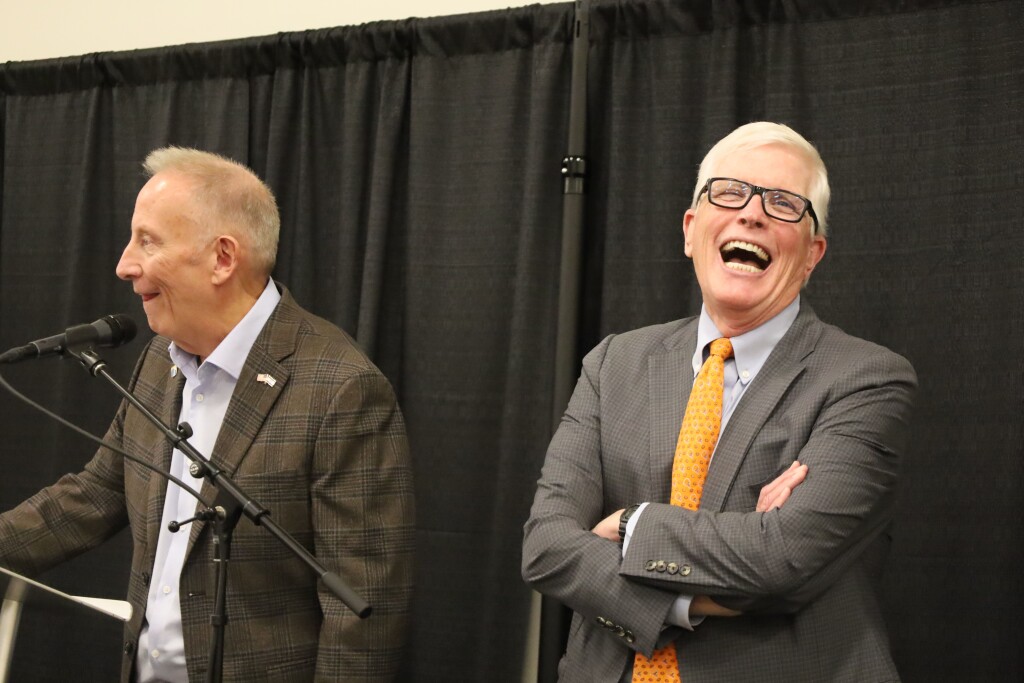
Salem Radio Network’s nationally syndicated talk host Hugh Hewitt (above, right) cracks up at remarks by SRN colleague Mike Gallagher (above, left) addressing VIPs just before walking onstage at Salem’s BattlegroundTour.com in Columbus, Ohio Tuesday evening (10/22).  The event – which drew 1,000 listeners – is designed to tap into and generate excitement over Election Day on November 5th.  Gallagher and Hewitt will be joined by SRN host Larry Elder and Salem/Philadelphia morning host Chris Stigall on tonight (10/24) at The Fuge in Philadelphia for the next stop on their BattlegroundTour.com initiative. (Salem photo by Vince Tornero.)

Industry News

Yesterday’s (10/23) Top News/Talk Media Stories

Industry News

Seven Alumni Inducted into 2024 Hofstra Radio Hall of Fame

im

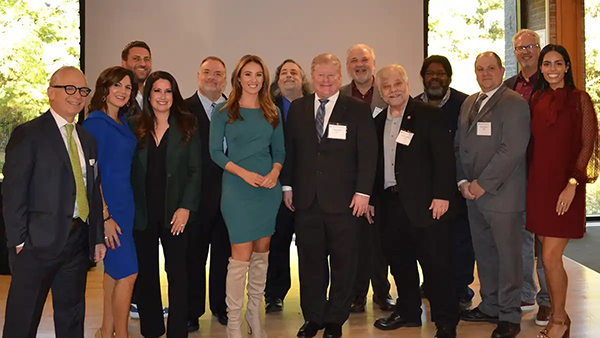
Hundreds of Hofstra alumni, students, faculty, staff, and administrators gathered to celebrate the induction of seven alumni into the University’s Radio Hall of Fame this past Saturday (10/19) at the Hofstra University Club on the school campus in Hempstead, NY. Over its 65 years, WRHU-88.7 (previously WHCH and WVHC) has won some of the industry’s most coveted awards, including four Marconi Awards for College Radio Station of the Year from the National Association of Broadcasters. Student reporters have won national and regional honors and worked alongside professional journalists in covering events ranging from political conventions, presidential debates, and inaugurations to the Super Bowl and major league playoff and championship games. At WRHU, Hofstra students create multiplatform live game content for Hofstra D1 teams and the NBA G League Long Island Nets. They produce and distribute all NY Islanders live NHL games to ESPN Radio NYC, SiriusXM, NHL.com, WRCN-FM, and WRHU-FM. Students also produce and perform on-air roles for the Long Island Ducks baseball franchise. The evening’s celebration was emceed by Lee Harris (front row, far left), a 2009 WRHU Hall of Fame award winner and recent inductee into the national Radio Hall of Fame, and Jamie Morris ’07 (not pictured), host of K-JOY, Long Island’s “Mornings with Jamie and You.” This year’s inductees for the Radio Hall of Fame are Danielle Dellilo ’01 (front row, second from left); Shannan Ferry ’14 (front row, fourth from left); Jared Greenberg ’05 (back row, far left); Damon (Dave) Mock ’00 (posthumously); Shawn Novatt ’00 (first row, second from right); Stu Rushfield ’89 (back row, second from left); and John Santucci ’11 (not pictured). Also pictured: noted agent and president of the executive board of Hofstra University’s Alumni Organization, Heather Cohen (front row, third from left); Mike Kluger (back row, third from left);  Steve Graziano (back row, third from right); George Musgrave (back row, second from right); Jim Helfgott (back row, far right); WRHU general manager, John T. Mullen (front row, fourth from right); and current president Hofstra Radio Alumni Association, Liane Sousa (front row, far right). (HRAA photo)

Industry News

Benztown Unveils List of Top Voiceover Pros

Benztown announced the release of its 9th annual Benztown 50 List of Radio’s Biggest Imaging Voices – the radio industry’s exclusive listing of the top 50 voiceover artists in the U.S. and Canada. Benztown enlisted P1 Media Group to compile and analyze industry data that was the foundation for the list. A special highlight ofim this year’s Benztown 50 is the presentation of the voiceover industry’s highest honor, the Chris Corley Lifetime Achievement Award, to Ann DeWig. Benztown president Dave “Chachi” Denes says, “We are thrilled to recognize the top 50 VO artists in the U.S. and Canada for 2024, along with the peer-voted ‘Best of Format’ honorees and the great Ann DeWig, recipient of the Chris Corley Lifetime Achievement Award. These individuals represent the pinnacle of audio branding and are synonymous with many major brands in our industry. Fifteen years ago, when we began working with VO talent, I never imagined we would collaborate with the best in North America. I am incredibly grateful for their support; without it, Benztown would not be where it is today. As we celebrate these honorees, we also honor all world-class VO talent and the emerging voices that shape the future of the industry.” See all the winners here.
Industry News

Yesterday’s (10/22) Top News/Talk Media Stories

The presidential race, including Kamala Harris’ scheduled Pennsylvania town hall on CNN and former Trump chief of staff John Kelly’s warning about Donald Trump’s “facism,” the escalation of violence in the Middle East, climate change, the economy, abortion rights, the migrant crisis, and the Russia-Ukraine war were some of the most-talked-about stories in news/talk media yesterday, according to ongoing research from TALKERS.

Industry News

TRAVELIN’ MAN: Salem Radio Network’s Greg Clugston to Channel Charles Kuralt “On The Road”

Industry Views

Fair Use: A Media Creator’s Guide to Using Copyrighted Content

By Matthew B. Harrison
TALKERS, VP/Associate Publisher
Harrison Legal Group, Senior Partner
Goodphone Communications, Executive Producer

Matthew B. Harrison, Esq.As a media creator, incorporating copyrighted material, such as video clips or actualities, into your content can enhance your message. But when using someone else’s work, you need to consider fair use, a legal principle that permits limited use of copyrighted material under certain conditions – without needing permission from the copyright holder. Understanding when and how you can safely use this material is critical to avoiding costly liability – whether it’s a copyright strike or complicated copyright litigation.

What is fair use? Fair use is the legal principle that allows copyrighted material to be used without permission for purposes above and beyond the original version – like criticism, commentary, news reporting, education, or parody. It’s not an absolute right but rather a defense you can claim if challenged. Courts assess fair use based on four key factors, all which creators should carefully consider.

Purpose and character of the use.  Is the use of the material transformative? This means that you’re adding something new or giving it a different purpose than the original, rather than just copying it. This is more likely to be allowable. On the other hand, simply reposting someone else’s video with little change is not transformative and could be seen as infringement.

Nature of the copyrighted work.  Not all content is treated equally under fair use. Factual works (such as news reports) are more likely to be subject to fair use than creative works (like movies or music videos). Why? Courts recognize that creative works often involve a higher level of personal expression, so they deserve more protection. Plus, society has an interest in being able to quickly disseminate news and other important information – therefore, facts generally have little to no protection themselves.

Amount and substantiality. The more of the original work you use, the less likely it is to qualify as fair use. Using a brief clip or excerpt is more defensible than using an entire segment or the “heart” of a work, which is often the most memorable or critical part. This becomes less of an issue when using factual material, though immediately can get complicated if the material being used is someone elses opinion and commentary. This is where taking less is going to be more – in terms of preventing potential liability.

Effect on the market. If your use of the copyrighted material could replace the need for the original courts are more likely to see it as infringement. In other words – is your use of the material taking money out of the pockets of the original creator? This isn’t a moral judgement but purely an objective analysis. If your use does not impact the market for the original work, such as in a news or educational context, it’s more likely to fall under fair use.

Practical Takeaways for Media Creators

Use brief excerpts, not whole segments. The less you use, the more likely it’s fair use.

Make sure your use is transformative. Add commentary, criticism, or parody to distinguish your work from the original.

Be mindful of market impact. Avoid using copyrighted material in a way that competes with the original.

Credit is not enough. Even if you give attribution, it doesn’t exempt you from potential liability. Fair use depends on how you use the material, not just on crediting the original creator.

While fair use provides flexibility, it’s crucial to apply it carefully. When in doubt, consult with legal counsel to ensure your content remains within legal bounds.

Industry News

Yesterday’s (10/21) Top News/Talk Media Stories

Industry News

Fair Use: A Media Creator’s Guide to Using Copyrighted Content

Industry News

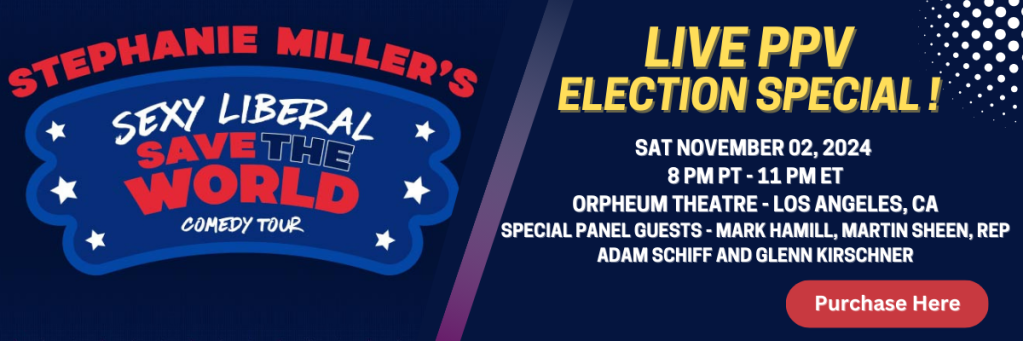
Stephanie Miller Bringing “The Sexy Liberal Show” to the Orpheum Theater in Los Angeles (11/2)

Sexy Liberal Tour

Progressive, multi-platform talk show icon Stephanie Miller is bringing her long-running live touring review, “The Sexy Liberal Show” to the Orpheum Theater in Los Angeles (11/2). The evolving stage presentation has been selling out live theaters and pay-per-views across the nation for years in support of progressive and Democratic Party politics.  In addition to Miller, this installment will feature “Sexy” regulars John Fugelsang, Hal Sparks, and the satirical duo Frangela. Miller tells TALKERS, “This will be the perfect pre-election party to get out the vote for Kamala Harris/Tim Walz and down-ballot Democrats, adding, “We’ve got an incredible lineup of special guests: Mark Hamill, Martin Sheen, Rep. Adam Schiff, and Glenn Kirschner! With their blend of political insight and humor, this night will have you laughing and fired up to hit the polls on Tuesday!”  The show goes live at 8 pm PT and will be available on-demand for a limited time. Live tickets on sale Here. PPV tickets on sale Here.  Also available: VIP Meet and Greet tickets.