Executives from Triton Digital – a global technology and services leader to the digital audio, podcast, and broadcast radio industries – are providing TALKERS readers  with their insights into how audio marketing spending will evolve, how YouTube is impacting the podcasting industry, the growth of contextual targeting tools, and more for the coming year:
• Sharon Taylor, EVP podcast and content delivery: Brands and publishers will respond to a heightened focus on brand suitability by adopting tailored, podcast-specific solutions that integrate contextual curation tools. These tools will not only proactively guide brands on optimal content alignment but also streamline ad buying processes through automation and data-driven insights, reducing the need for extensive manual intervention. This approach will power precise content targeting and scale reach effectively, all while ensuring brand messages align seamlessly with the right contexts and audiences.
• Stephanie Donovan, chief revenue officer: The global advertising industry will exceed one trillion dollars by year’s end and is poised for continued growth in 2025, fueled by economic expansion across the United States, Australia and regions like Europe and Southeast Asia. Digital audio marketing spend worldwide will increase 10% next year, in part due to key drivers including the rise of contextual targeting, allowing advertisers to immerse their message within relevant content, and utilizing the growing versatility of dynamic audio insertion to make scaling campaigns more efficient. Additionally, the rapid growth of influencer marketing on TikTok and X is cooling, with marketers increasing spend on podcasts where creators can cultivate more meaningful audience connections. This growth in audio spending will heighten the insistence for transparency as advertisers demand greater visibility into performance metrics and content alignment to ensure trust and accountability. This convergence will solidify audio’s position as a successful channel for integrated marketing strategies worldwide.
• Daryl Battaglia, SVP measurement: In 2025, the number of podcast listeners will grow at a faster rate than in previous years.  While podcasting will remain fundamentally audio-first, driven by convenience and flexibility, consumers now have more options for how they discover and consume content. YouTube is bringing in new, first-time podcast consumers with a different audience profile. In some cases, they are watching shorter length content or on additional devices other than mobile. Informed by insights about their audience, publishers and creators will be able to deliver an engaged experience across listening platforms and devices, and grow reach.
• Ben Masse, chief product officer: The audio advertising industry will integrate AI more into their tech stack to scale campaigns and audience targeting.  More specifically, the focus will be on enabling humans to automate tasks so they can focus on strategy. AI will be leveraged to drive more effective and efficient spending, including helping achieve yield for publishers and meaningful campaign outcomes for advertisers, as well as content analysis and audience insights. This tech shift will put a bigger emphasis on having robust data-backed insights on audiences, content, and campaign performance.
• Emanuele Rampichini, head of engineering: The podcasting industry will see publishers increasingly diversify into subscription-based revenues and build deeper relationships with dedicated audiences while reducing reliance on traditional ad models. 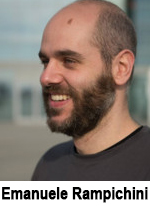 This approach will be particularly transformative for long-tail podcasters and creators with smaller followings, offering a sustainable revenue stream that can be both a growth and retention strategy. For creators with niche audiences, subscriptions provide a viable alternative to ads and ensure the lion’s share of the revenue goes directly to the creator. As platforms invest more in these tools, creators will be able to engage directly with their subscribers through integrated communication features and eliminate the need for third-party tools. This evolution promises to empower indie creators by streamlining their workflows and enhancing their ability to cultivate loyal audiences.
• Rebecca Dalby, vice president of demand: The demand for precision in audio advertising is growing, making nuanced and contextual targeting more essential than ever.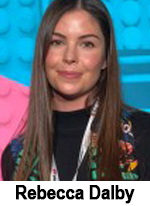 As advertisers prioritize accurate audience engagement, the shift toward contextual targeting is gaining significant traction. This trend is expected to drive more ad dollars into solutions that deliver measurable results. Innovative technology that amplifies the ability to connect with highly specific audiences at scale and helps meet advertisers’ evolving expectations will win. For publishers, this surge in demand for targeted ad placements unlocks exciting opportunities to expand inventory and enhance reach through strategic partnerships within digital audio networks.
Triton Digital, LLC is a worldwide digital audio technology and advertising company. For more info visit TritonDigital.com.
Share this with your network



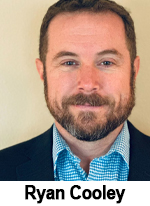 Audacy has named (1/6) Ryan Cooley Senior Vice President and Market Manager of its Portland, OR market. In this role, Cooley will oversee the market’s portfolio of brands including 1080 The Fan (KFXX-AM), 92.3 KGON (KGON-FM), ESPN 910 (KMTT-AM), 94/7 Alternative Portland (KNRK-FM), Bella 105 (KRSK-FM), 99.5 The Wolf (KWJJ-FM), 97.1 Charlie (KYCH-FM), CHANNEL Q (KRSK-HD2) and 94/7 Too (KNRK-HD2). “Ryan’s leadership, extensive broadcast experience and love for the Portland community make him a valuable asset to the market,” said Doug Abernethy, regional president, Audacy. “We look forward to seeing him take on this new role and guide the Portland team to achieve even greater success.” “I’m honored to be named Audacy Portland’s next Senior Vice President and Market Manager. I started with this incredible group of stations 20 years ago and being entrusted with the opportunity to help this team reach its full potential is something I don’t take lightly,” said Cooley. “This team is truly special; these radio stations are iconic and the people here are the heart of everything we do. Together, we’re excited to build on this legacy and continue shaping the future of radio in Portland.” Cooley began his career at Audacy in 2005 as a sales associate and climbed the ranks leading teams in Portland, Boston and San Francisco. He helped launch 95.7 The Game in San Francisco (KGMZ-FM) and directed new business development and account growth for WEEI (WEEI-FM) in Boston. Additional roles include account executive, local sales manager, general sales manager and, most recently, director of sales.
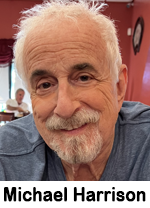 Welcome to 2025… TALKERS 35th year! Everything seems to be moving faster and faster as we hurtle deeper into the 21st century and what is turning out to be a “brave new world” even for Gen-Z. Each year at this time, I am invariably asked by broadcasters, reporters, and friends, “What do you think we’ll be talking about in the new year ahead?” And each year I give the same answer: THE UNEXPECTED.
 Adell Media announced today (1/6) the addition of “Your Morning Show with Michael DelGiorno” to the lineup at 910 AM – Detroit’s News Talk Superstation (WFDF-AM), effective immediately live weekdays 6:00 am – 9:00 am ET. This clearance marks the 50th affiliate for the program, which joined Premiere Networks’ national lineup in October 2024. With a motto of “so much information, so little understanding,” DelGiorno engages listeners with entertaining discussion that goes beyond the latest news and political headlines to include lifestyle, pop culture topics and humor. The goal of the show is to help the audience start their day with fun, witty and interesting conversation that’s also informative. Since the station re-launched in September 2023 with a 24/7 lineup of news and conservative talk, as well as local news, weather and traffic from Total Traffic & Weather Network and breaking news coverage from ABC Radio, the station’s audience has grown +500% to date (Source: Nielsen Audio, PPM, NOV24 v SEP23, MoSu 6a-12m, P6+).
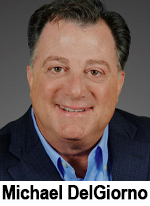 “Michael DelGiorno is a perfect fit to lead our impressive weekday lineup featuring the biggest talent in talk radio,” said Kevin Adell, CEO. Adell Media. “In just over a year since launching our conservative talk format, we continue to see incredible audience gains and look forward to continued growth and success as we provide a leading source for news and information in our community.” “I’m always singing, ‘Oh, how I wish again, I was back in Michigan!’ So, it’s a song come true for me,” said DelGiorno. “All joking aside, as a Flint native, I’m thrilled to be coming home to start the day off right on Detroit’s Superstation and just in time for my Lions’ first Super Bowl!
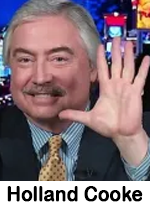 Hello from fabulous Las Vegas, where the faded Tropicana is now a heap of rubble holding space for the Las Vegas Athletics stadium; and where SO much else here changes between visits. There is just too much do-re-mi at stake for this place not to continue to strive to surprise and satisfy, and keep ya comin’ back for more… which is also the ballgame for broadcasters and podcasters.

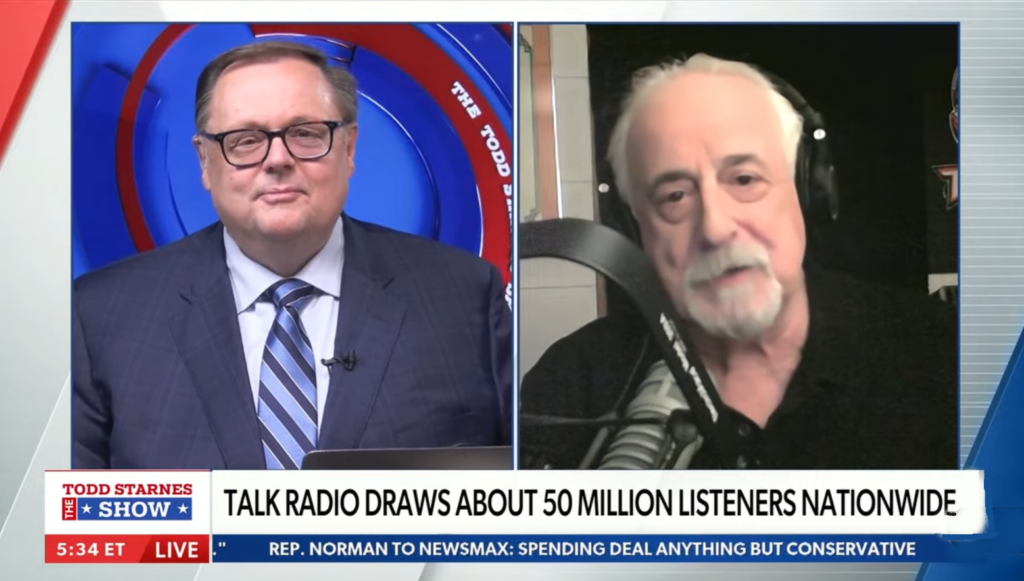
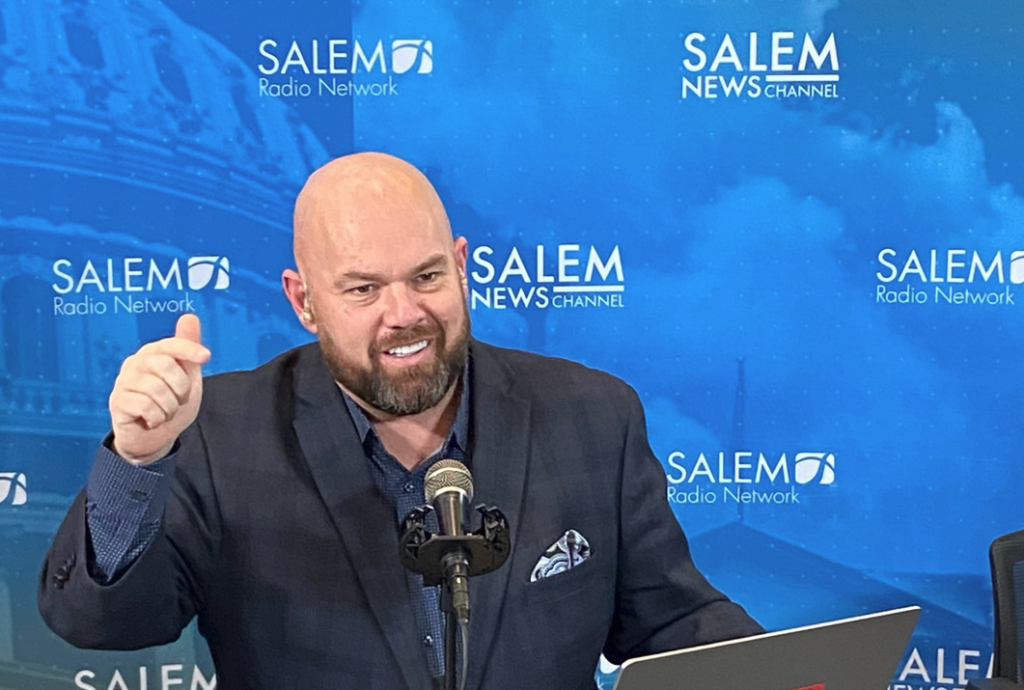 With the imminent departure of Salem Radio Network (SRN) star Sebastion Gorka to join the forthcoming administration of President-elect Donald Trump in an advisory position, longtime Salem Philadelphia morning star Chris Stigall of 980 AM WNTP will replace Hugh Hewitt in the 6:00 am – 9:00 am ET position starting January 13. That same day, Hewitt will move into Gorka’s daily 3:00 pm – 6:00 pm slot. Pictured above: Stigall addressing thousands of conservatives yesterday (12/19) at AmericaFest 2024 in Phoenix where SRN “introduced” him to a large swath of its core audience. AmericaFest is an annual rally hosted by Charlie Kirk of Turning Point USA – also an SRN personality.
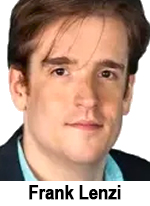 With nearly 30 years of experience in journalism, Lenzi has held roles as morning editor, managing editor, and most recently, news director and program director at KNWN/KOMO. He led coverage of major events such as the 2009 Lakewood Police shooting, the 2014 KOMO TV helicopter crash, and the 2020 police dispersal of the Seattle CHOP Zone. Bonneville Seattle SVP/ market manager Cathy Cangiano tells TALKERS she’s eager for Lenzi to come aboard. “Frank’s extensive experience and proven leadership in the industry make him the perfect fit for our team. His dedication to journalistic excellence and his ability to inspire and lead will keep our newsroom standards high. We look forward to the fresh perspectives and innovative ideas he will bring to KIRO.”
  Bryan Buckalew, KIRO program director, echoed those sentiments. “Frank has a deep commitment to keeping audiences informed and connected. I’m confident he’ll be a great addition to our team.” Lenzi comments, “KIRO has always been the gold standard for radio journalism not only in the Seattle market, but across the country. It is an honor to lead this fine team of veteran broadcasters.” Lenzi will replace outgoing news director Charlie Harger, who will take over as host of “Seattle’s Morning News” on KIRO in January.
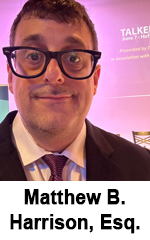 In a recent high-profile case, late-night host Jimmy Kimmel successfully defended himself against a copyright infringement lawsuit brought by former congressman George Santos. The case, which centered on Kimmel’s use of prank videos involving Santos, highlights the ongoing importance of fair use protections for media creators, broadcasters, and digital content producers.
 NYF Radio Categories eligible for the award include News Program, News Report/Feature, Documentary, Entertainment, Promo, Digital, Podcast, and Student.
 In 2024, over 180 award-winning teams worldwide shared their acceptances, while industry leaders spotlighted their creative journeys in special segments. Additionally, the JusticeAid Award-winning submission will be honored at the JusticeAid Concert in May 2025 in New York City, showcasing the transformative power of music and the arts to raise awareness for civil rights and inspire positive change.
 Kylie Kelce, wife of former Philadelpia Eagles star Jason Kelce, sister-in-law of Kansas City Chiefs star (and Taylor Swift boyfriend) Travis Kelce, mother of three (with a fourth on the way), and Dunkin’ Donuts enthusiast, can add another descriptor to that incomplete list: No. 1 podcast host. Wickman writes, “I suspect Rogan will be back in first place soon, but for now, this ranking reinforces the Kelce family’s cultural dominance. (‘If everyone’s going to be talking about me and my family, you might as well hear it from me,’ she says in the show trailer.)” Kelce’s husband Jason and brother-in-law Travis host the popular “New Heights” podcast. The inaugural episode of “Not Gonna Lie,” featuring “It’s Always Sunny In Philadelphia” star Kaitlin Olson as a guest, was published on December 5, with new episodes planned to drop each Thursday. To read Wickman’s entire VF piece, please click
