



Monday Memo: AI Can’t Fake Real
By Holland Cooke
Consultant
 In Full Stack Human: The Mindset Upgrade You Need to Stay Human in a World Ruled by Technology (2026, Wiley Books) Dara Simkin and Tane Hunter describe a 2026 media landscape where people face information overload, shrinking attention spans, negativity fatigue, algorithmic manipulation, and constant distraction.
The irony is that radio may win the future not by becoming more like technology, but by becoming more human. In an age of artificial everything, that’s the sustainable competitive advantage local radio has. And the more crowded the media landscape becomes, the more valuable radio’s unique strengths become.
Consider what today’s digital platforms do best. They personalize content as algorithms learn what users like and deliver more of it. Streaming services can build custom playlists. Social media feeds are tailored to individual interests. AI can generate content instantly.
What those platforms cannot do is belong to a community. Spotify doesn’t know why I-95 is jammed. TikTok doesn’t care that the town council just approved a controversial zoning change. An AI-generated playlist can’t tell listeners where to find shelter during a storm or why Friday night’s high school football game matters. Local radio can. And as media becomes increasingly global, local content becomes increasingly scarce. And scarcity creates value.
Citing research, the book points to another opportunity: Digital platforms are optimized to trigger emotion, especially outrage and conflict – the 1990s talk radio caricature on steroids. The result is a public that often feels overwhelmed, exhausted, and anxious.
Listeners want information, and are looking for context, usefulness, connection, and (dare we?) a reason to smile. Stations willing to do more than simply amplify the argument du jour become indispensable. Winners deliver local information, from trusted voices, a genuine connection that answers the listener’s constant question: “What’s in this for me?”
Click here to read a free sample chapter of “Full Stack Human: The Mindset Upgrade You Need to Stay Human in a World Ruled by Technology.”
Holland Cooke (HollandCooke.com) is a consultant working the intersection of broadcasting and the Internet. Follow HC on Twitter @HollandCooke and connect on LinkedIn
 equity, or Wall Street investors. We answer to one group: our audience. This milestone proves there’s tremendous demand for independent voices delivering news, politics, sports, and commentary people can trust. Truth and clarity are making a comeback.” Company CEO Anne Fredericks adds, “We strive to cover what matters most in people’s daily lives: their country, their community, and their sports teams. News, talk, and sports are simply different expressions of the same mission: giving people truthful information, honest perspective, and a voice. What makes the John Fredericks Media Network different is our independence. No newsroom hierarchy, no C-Suites, no suits and no boardrooms.”
 2026 for its Edison Podcast Metrics, Business is the seventh most popular podcast genre among weekly U.S. consumers 13+, surpassing Religion & Spirituality, Health & Fitness, and Music, among others. Edison ranks the top 10 Business podcasts and NPR’s “Planet Money” is #1, followed by the Ramsey Network’s “The Ramsey Show” at #2. When ranking shows of all podcast genres, “The Ramsey Show” ranks #41 in the U.S. based on Edison’s Q2 2026 Top 50 Podcasts chart.
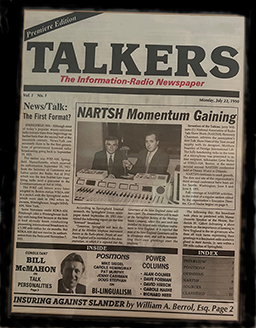 devoted to chronicling the development and growth of what he envisioned as “the coming talk radio phenomenon of the nineties.” The publication went on to publish as a newspaper on newsprint evolving into a glossy magazine and eventually an online publication fully devoted to serving the needs of talk radio and eventually a variety of spoken word platforms that have collectively become known as talk media. TALKERS also contributed to the growth of the field by producing 28 national conventions / conferences in New York and two in Los Angeles, more than 50 groundbreaking radio rows, dozens of talk show host tours of international hot spots, and thousands of hours of spoken word syndicated and online programming. Throughout its colorful history, TALKERS always maintained a neutral position regarding politics except for, as Harrison puts it, “unwavering support of the First Amendment.”
 dangerous and would allow two or three corporations to dominate local television news, reducing competition, independent journalism, and threatening religious broadcasters.” He noted that conservative organizations including CPAC, the National Religious Broadcasters, and the Zionist Organization of America oppose lifting these ownership limits. Ruddy also took the opportunity to address how broadcasters view the American people, saying, “Polling consistently shows Americans are far more center-right than portrayed by the legacy media. There is a growing disconnect between public opinion and media narratives.”
 its growing library of films, documentaries, specials, and original programming. SalemNOW general manager Rob Ellis comments, “We’re excited to partner with Kappa Studios and bring their outstanding programming to SalemNOW. This collaboration strengthens our commitment to offering audiences exceptional faith-based and conservative content that informs, inspires, and entertains while continuing to grow the SalemNOW platform.”
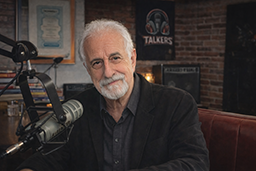 TALKERS founder Michael Harrison is this week’s guest on the National Press Club’s official podcast, Update-1, in which he tackles the topic “Predicting the Future of Media Following the Shutdown of CBS News Radio.” Interviewed by noted American University media professor Gemma Puglisi, Harrison addresses such issues as changes in the tenets of journalism and the general shrinkage of radio news. Along the way, he offers his insights into a variety of media and societal topics including the impact of clickbait and what he describes as “the daily dance of affirmation” resulting
  from the trend toward news platforms “targeting” audiences for purely marketing purposes. Harrison defends AI from critics who claim the technology lacks “heart” and that audiences will swing back to the “authenticity” being destroyed by AI slop. Harrison makes the case that what counts is the humanity behind the operation of AI which is “only a tool.” He says, “Blaming AI for shallow content is like attributing shoddy novels to the invention of the word processor.” Harrison boldly predicts that AI and modern technology will hasten the “death of Hollywood” as we know it among other insights into the future of news, entertainment, and communications. Don’t miss this!
  around getting a little smoke in my lungs, then go out and live your life. I find the pandemonium about some smoky conditions in Western Pennsylvania for like 26 hours to be over the top – especially when you consider this: some of our grandparents lived like this every day here and smoked a pack a day on top of it.” The communications director for Allegheny County executive Sara Innamorato, Abigail Gardner, testily responded to Dunlap suggesting he go smoke a pack on a bridge – and then jump.” Gardner later apologized for her “lapse in judgement.”
 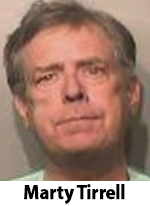 tickets were nonexistent, he had to find more investors to pay off the earlier debts. He served time from 2021 to 2023. That case involved eight investors and about $1.5 million. This latest conviction involved four investors and a little more than $1.5 million. Prosecutors say he diverted most of the funds to pay off earlier investors and used the rest for gambling and personal expenses. Tirrell will be sentenced at a later date and could get up to 20 years on each count. During his days on the air in Iowa, Tirrell hosted shows at KXNO, KXLQ, and KBGG in Des Moines, as well as KJJC, Osceola, Iowa.
 helped shape Salem Surround into the business it is today through his commitment to our people, our clients, and our local markets. We’re incredibly grateful for everything he’s contributed and wish him the very best in his retirement.” The company says that Christian Kligora, senior director of multimedia sales, will assume interim leadership of Salem Surround’s revenue organization. Additionally, Salem says that William Cosey and Jonathan Greer will continue leading Salem Surround’s operations, fulfillment, and client execution, ensuring continuity for customers, vendors, sales teams, and internal stakeholders.
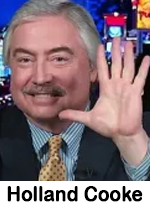 Radio stations used to announce the present temperature at the end of the weather forecast, empowering listeners who are heading out to dress accordingly. It’s the ultimate live-N-local information.
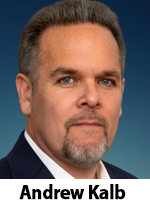 leadership around the priorities that matter most, and I’m confident they will help us move quickly, enhance innovation and stay at the leading edge of a changing media landscape as we build toward the future.”
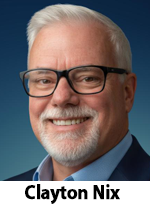 intended to strengthen coordination and execution across our operational functions. Clayton Nix is now chief financial officer. Jones says Nix has become an instrumental member of the executive team in guiding the company’s financial direction, and this title reflects both his growing responsibilities and his impact in shaping our strategic decisions, enhancing partner service and delivering industry insight through reporting and analytics.
 local newsrooms, silence community reporting, and drive-up costs for the American families who depend on local stations for news and emergency alerts. A free and diverse media landscape depends on real limits on how much of the public airwaves any one company can control, and this FCC is now poised to allow local broadcasters to sell those airwaves off to the highest bidder. Congress set the 39 percent national ownership cap in federal law, and only Congress has the authority to raise or eliminate it. The Commission cannot waive away that limit simply because these corporate behemoths want to get out from under it.”
 Other key findings include: Sports content acts as a unique bridge between listening and watching experiences, drawing the closest parity between listeners and viewers across top genres; Format choice signals entirely distinct consumer mindsets: the highly structured, utility-driven “Pragmatic Listener” versus the entertainment-seeking, visually focused “Interactive Watcher.”; and Conversion mechanics differ by format, with audio consumers acting as direct digital responders and video watchers acting as high-intent brand translators and social amplifiers.
  owned an in-car infotainment system, and 40% own one today. In 2019, 86% of in-car listening time among those who have an Android Auto or Apple CarPlay went to non-digital sources such as AM/FM over-the-air, SiriusXM satellite radio, and owned music like CDs. Now, seven years later, in-car infotainment owners spend 36% of their total in-car audio time with digital sources including streaming music, AM/FM streaming, podcasts, and audiobooks. Even on, 64% still goes to non-digital sources like AM/FM over-the air radio and satellite radio.
 as the show prepares to offer just one fresh program per week when Stern returns from his summer break after Labor Day. When Stern renewed with SiriusXM last December, he said the new deal gave him more flexibility and that apparently means fewer workdays. The Post reports that a core group of producers is being retained but with the new schedule, “he just doesn’t need that much content anymore.”
 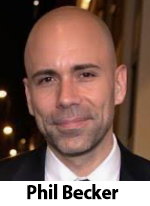 the newly created position on July 20. CMG Radio president Rob Babin comments, “Phil brings a strong and unique combination of audience expertise, content leadership and a passion for developing talent. His experience and audience-first approach will help strengthen our brands and position CMG Radio for continued growth.” Becker says, “CMG Radio has outstanding brands in tremendous markets. I’m excited to join Rob and the team to build on that success, deepen audience connections across platforms, and create remarkable content that matters to listeners, viewers, followers and fans.”
 Weather Channel president Tom O’Brien states, “Ray and Scott represent the very best of what The Weather Channel Radio Network stands for. Their careers are a testament to more than longevity; it is the genuine sense of public responsibility that has guided every forecast, emergency and broadcast for 30 years. We are immensely proud to celebrate this remarkable milestone with them.”