
by Robert Pearl
Exclusive to TALKERS
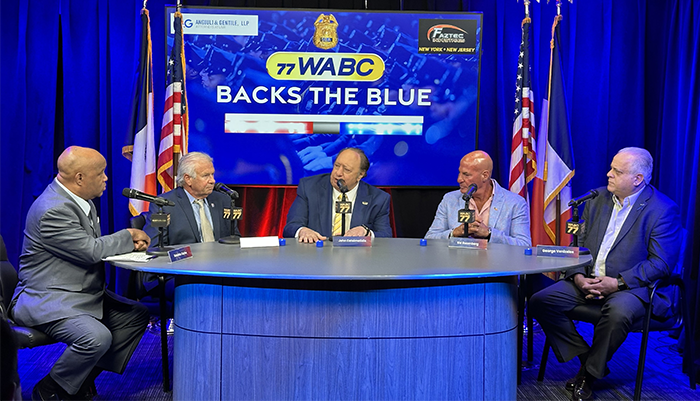
 New York’s Cipriani 42nd Street once again played host to one of radio’s most anticipated annual events of the year: the annual “77 WABC Gala,” held this past Friday (9/5). The spectacular evening blended star-studded entertainment, heartfelt tributes, and plenty of radio family camaraderie – all while raising funds for three cornerstone charities: Tunnel to Towers Foundation, the Police Athletic League, and Shriners Children’s Hospital.
The night doubled as the unofficial kickoff to America’s 250th anniversary celebrations, with patriotic spirit filling the storied hall. Guests were treated to a spectacular mix of tradition and pageantry: bagpipes opened the evening, followed by the Pledge of Allegiance and a soaring rendition of the national anthem from tenor Chris Macchio, fresh from performing at President Donald Trump’s 2025 inauguration. Later, country music legend Lee Greenwood brought the house to its feet with “God Bless the USA,” a fitting soundtrack to the night’s theme.
Radio Legend Served as Emcee
The event was emceed by “Cousin” Bruce Morrow, who set the tone with trademark warmth and humor. Featured performances by Vinnie Medugno, and Joe Piscopo with homage to Frank Sinatra classics. Fellow WABC hosts and personalities were out in force: Sid Rosenberg (with wife Danielle), Curtis and Nancy Sliwa, Dominic Carter, Greg Kelly (joined by his father, longtime NYPD commissioner Ray Kelly), Lionel and his wife Lynn Shaw (founder of Lynn’s Warriors), Brian Kilmeade, Rita Cosby, Lisa G, Anthony Cumia, news director James Flippant, and anchor Liz Ratoballi.
WABC owner John Catsimatidis and Red Apple Media president Chad Lopez anchored the front row, alongside Margo Catsimatidis, who was celebrated as the event’s “First Lady of WABC.” Longtime friend (and WOR personality) Mark Simone – dubbed “Mr. New York”- was on hand, underscoring the collegiality of the broader talk radio community. The gala also drew figures beyond radio, including Mayor Eric Adams and his electoral rival Curtis Sliwa sitting a few tables apart, economic voice Larry Kudlow, the relentless patriot and activist artist Scott LoBaido, Newsmax’s Johnny Tobacco of Wiseguys, and philanthropist Frank Siller of Tunnel to Towers.
Charity with Purpose
While the evening sparkled with entertainment and personality, its heart was rooted in the causes it championed. The Tunnel to Towers Foundation, founded in honor of fallen firefighter Stephen Siller, continues its mission of supporting first responders and veterans, promising to pay off the mortgages of the fallen. The Police Athletic League, New York City’s largest independent youth development nonprofit, provides educational and recreational programs to children in need. And Shriners Children’s Hospital, a global leader in pediatric specialty care, ensures children receive treatment regardless of a family’s ability to pay. These organizations were not just beneficiaries but central characters in a story of service, community, and giving back.
A Night of Theater and Patriotism
Beyond the music, the gala leaned into a spectacle. Impersonators dressed as George Washington, Abraham Lincoln, and Uncle Sam strolled the ballroom, taking pictures with guests. Later, Lady Liberty herself dramatically popped out of a massive birthday cake as red, white, and blue balloons cascaded from the ceiling. Guests waved WABC-branded light sticks in rhythm with the performances, further amplifying the carnival-like energy.
And as tradition dictates, September’s Virgo birthdays were honored in grand style. Joe Piscopo led a rousing “Happy Birthday” for John Catsimatidis and fellow celebrants, which seamlessly transitioned into a full-throated “God Bless America,” with the entire ballroom on its feet.
Political Undertones in a Festive Setting
While the evening was designed as a patriotic celebration, politics were never far from the surface. Just hours before the gala, Mayor Adams publicly doubled down on his mayoral campaign, brushing aside speculation of a possible exit. At Cipriani, Adams was greeted politely – but the room roared when Republican candidate Curtis Sliwa was announced, highlighting the unique political currents swirling through the city and this radio community.
Still, the prevailing message was unity and celebration. “We celebrate America together,” said Greenwood before launching into his anthem. It was a fitting capstone to an event that blended entertainment, politics, and philanthropy in a way unique to WABC.
As the gala wound down, guests departed with gift bags in hand, many still humming Greenwood’s refrain. With its mix of glamour, gravitas, and good causes, the 2025 WABC Gala set the stage not just for America’s 250th birthday, but also for the enduring influence of talk radio as a cultural and political force.
Robert Pearl is a New York City-based freelance journalist. He can be reached at pearlknows@yahoo.com.
Share this with your network




 charge inflated prices, according to a report by Reuters. At the heart of the complaint is the charge that Nielsen is providing access to the national broadcast radio ratings only if the client spends a lot of extra money on
  the separate local ratings. Cumulus argues that Nielsen’s policy forces them to buy ratings in U.S. markets where it doesn’t operate stations in order to have the complete national ratings data. Nielsen has stated that Cumulus’ suit is “entirely without merit” and “we will respond accordingly.” The complaint also says Nielsen is “degrading product quality, raising prices without justification and blocking competitors from gaining footholds in the industry.”
  Microsoft CEO Steve Ballmer retired with enough do-re-mi to indulge two passions. He bought the NBA Los Angeles Clippers (for a record $2 billion). And he built
 complexities of divorce – helping people navigate every stage of the process faster, more affordably, and with far less conflict. Hello Divorce says its service “goes far beyond digitizing forms and redesigns the entire divorce experience with proprietary technology and AI to eliminate costly errors, reduce delays, and remove the bottlenecks that wreak havoc on divorce timelines.” iHeartMedia president of corporate development and ventures Joe Robinson says, “Hello Divorce offers a powerful solution for one of life’s most challenging transitions. This partnership gives them a unique opportunity to connect with people nationwide through our platforms, delivering resources and guidance that can truly make a difference.”
 In the wake of Charlie Kirk’s murder, one would expect every company that owns a talk radio station, every network that syndicates conservative voices, and every corporation that employs talk radio hosts to issue a unified statement of defiance. This was not just an attack on Charlie; it was an attack on the entire industry of talk radio, on the free exchange of ideas, and on the First Amendment itself. Yet, shockingly, most of these companies have remained silent. That silence is unacceptable. At a moment like this, the industry should stand shoulder to shoulder and declare to the world: we will not be intimidated, we will not be silenced, and we will never abandon the microphone.
 In an opinion piece for TALKERS, radio pro Erik Cudd writes, “In such a time as this, because radio is the medium I know best and love most, I write this appeal to those influential in news/talk. My hope is that you will step forward once again as the architects and innovators you have always been and raise a rallying cry for this unique moment. The freedoms and ambitions that make the format so vital also create challenges. By design, it invites sharp opinions, spirited disagreement, and cultural edge. Those qualities are its strengths. But in our current climate, they also carry the risk of drifting into tribalism and rhetoric that can spill over into something more dangerous. This is not an implication that I believe news/talk is responsible for the death of Charlie Kirk. I would like to be crystal clear. What I am saying is that a perfect storm has been gathering for many years, and no one can deny the polarized, charged landscape we now inhabit. And that storm is not radio’s sole responsibility.”
 “The most common type [of shotgun pleading] – by a long shot – is a complaint containing multiple counts where each count adopts the allegations of all preceding counts, causing each successive count to carry all that came before and the last count to be a combination of the entire complaint.” The suit was dismissed without prejudice which gives Newsmax the opportunity to file an amended complaint, but it must do so by September 11 and “must not contain any successive counts that incorporate all prior allegations.” Judge Cannon also adds that if an amended complaint is filed, “each count must identify the particular legal basis for liability and contain specific factual allegations that support each cause of action within each count.
 contracts from the end of 2026 to December 31, 2029. The company says that the amendments provide that outstanding equity awards granted at least six months prior to a qualifying retirement termination will remain outstanding and eligible to vest in accordance with the original vesting schedule (and, for performance-based awards, based on actual performance). Additionally, Bressler’s amendment increased his cash severance multiplier from 1.5x to 2x to align his severance payments and benefits (upon a qualifying termination of employment) with Pittman’s existing severance payments and benefits.
 Why I love going on sales calls with station reps: Meeting retailers, who have SUCH a feel for their customers’ (our listeners’) mindset. Following-up
 best known for hosting the afternoon drive show on WLW from 1981 through his retirement in 2007. He created numerous voice characters on his program, the most famous of which was Earl Pitts Uhmerikun – which took the form of a nationally syndicated commentary during his time at WLW. He also worked at stations including, WMPS, Memphis; WNOE, New Orleans; WAKY and WHAS in Louisville; and CKLW, Windsor/Detroit during his career.
  election. About returning, Spadea says, “I’m excited to be returning to the airwaves with ‘New Jersey 101.5’ and the largest audience in the state. I’m looking forward to continuing our mission of fighting for common-sense solutions to save New Jersey. Our show has always been about the listeners, and I’m ready to keep amplifying the voices of small business owners, parents, teachers, first responders, nurses, and everyone else committed to digging in and staying in New Jersey. Stay tuned – there’s more to come!” Townsquare Media regional VP Brian Lang says, “Bill’s audience and the team at ‘New Jersey 101.5’ are looking forward to his return. There’s no doubt he’ll have great stories to share. I also want to thank Eric Scott and the entire morning show team for doing an outstanding job while Bill was away.”
 hosted the weekend edition of “All Things Considered” since May of 2023. He says, “I’m really excited and honored to step into this role. I’m mindful of just how important All Things Considered’s legacy is for listeners, and I also know just how much I’ve loved working with the show’s team these past two years on weekends. I can’t wait to bring listeners the news five days a week now. And at this moment where we are all focusing on strengthening the entire public media network and working together more closely than ever before, I’m proud that I started out as an ‘All Things Considered’ host at a NPR Member station, and now will be doing that job nationally.”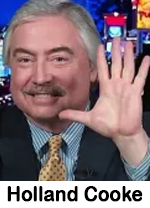
 Imagine a listener “talking” to an AI version of you – trained entirely on your old episodes. The bot knows your cadence, your phrases, even your voice. It sounds like you, but it isn’t you.
 anchor of the agriculture report. McCary also taught high school locally and served as a substitute teach until his retirement in 2018. KMJ says, “McCary’s background as an English teacher gave him a solid foundation as a reporter. KMJ staff could turn to him for his historical knowledge, a valuable asset and vital to a newsroom. His command of the English language was equally impressive and he often corrected bemused coworkers and hosts for any grammatical infractions.”
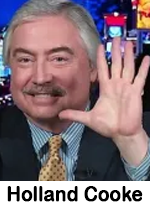 Baby Boomers (born 1946–1964) are some 20% of the U.S. population, but control more than 50% of all household wealth. They hold $70+ trillion in assets and spend an estimated $548 billion annually. They are lifelong AM/FM listeners, and they’re redefining what life after 60 looks like. Are you into what they’re up to?
 Imagine SiriusXM acquires the complete Howard Stern archive – every show, interview, and on-air moment. Months later, it debuts “Howard Stern: The AI Sessions,” a series of new segments created with artificial intelligence trained on that archive. The programming is labeled AI-generated, yet the voice, timing, and style sound like Stern himself.
 saying Stern is mulling retirement and that he might consider a shorter-term deal than the usual five-year pacts he’s been signing. Still other sources say Stern isn’t the draw he once was, and a renewal of his current $500 million deal is not going to happen. Another report indicates SiriusXM may make a bid for his library of shows instead of a renewed contract for new content.
  co-host of the midday show alongside longtime station personality Judi Franco. Johnson – who served as the station’s program director from 1999 through 2017 –
  takes over for Dennis Malloy who retired from the program last week. Johnson says, “Coming back to ‘New Jersey 101.5’ feels like coming home. This station has always had a one-of-a-kind connection to the people of New Jersey. I’m honored to be part of it again — and even more excited to team up with Judi Franco, who’s as sharp, fearless, and funny as they come.” Townsquare Media regional VP Brian Lang says, “Eric is the perfect choice to join Judi on middays. He’s got a longstanding relationship with her, understands the power of the ‘New Jersey 101.5’ brand, and brings instant chemistry to the mic. We couldn’t be more excited — I can’t wait to hear ‘The Judi & EJ Show’ in action.”
 A New Jersey radio station thought they were just being clever online. They scanned a photo from New Jersey Monthly, cropped out the photographer’s credit line, and posted it on Facebook – inviting listeners to edit and reshare it for fun. ying to engage listeners to interact with the station with more than just their ears.”

 retirement of Jeff Austin. The station the serves as flagship for University of Oregon Ducks football, men’s and women’s basketball and baseball. Along with these changes, the station unveils a tweaked program schedule that includes the debut of “The Firm of Harris and Marang,” airing daily from 10:00 pm to 1:00 pm and hosted by Danny Marang and Patrick Harris; “Dirt and Sprague” extending their show an hour from 6:00 am to 10:00 am; and “The Happy Hour with Luke Andersen” airing weekdays from 2:00 pm to 3:00 pm. Audacy Portland SVP and market manager Ryan Cooley says, “We’re incredibly excited to bring ‘The FAN’ to the FM dial. This move is long overdue and all about delivering a better listening experience for our audience with clearer sound and great content our fans know and love. For the first time in our history, our entire primetime on-air lineup will be 100% local and led by our new brand manager, Dusty Harrah, a native Oregonian.”
 SVP of sales for the station group. This move comes after the recent retirement of Jeff Tyler. iHeartMedia division president Nick Gnau comments, “Over the past two years, Dan has consistently demonstrated exceptional performance and a deep understanding of the market, earning him this well-deserved promotion to market president. His leadership as the sales lead has been instrumental to our success, and we are confident that both our team and partners will benefit even more from his expanded role.”
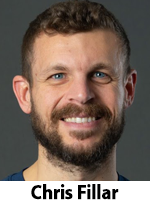 for WWJ and sports talk WXYT-FM “97.1 The Ticket” since 2018. Audacy Detroit SVP and market manager Debbie Kenyon says, “We are excited to have Chris bring his passion and energy to the morning show. Chris and Jackie are a powerful team, and we’re confident they’ll make an impact every morning while connecting with our listeners.” Fillar comments, “I’m ecstatic to take on this new role alongside Jackie and the entire fantastic morning newsroom at WWJ. It’s an honor to wake up and deliver trusted news to our listeners, and I’m humbled to work with such a great team!”
 tirelessly reporting from along the river between Kerrville and Centerpoint, Texas, “delivering succinct and informative reports on NewsRadio 1080, additional Audacy stations, and various CBS affiliates across the country. His Texas State Network reporting includes hourly newscasts reaching over 100 affiliates in 86 markets.” KRLD brand manager and Audacy news/talk foremat vice president Drew Anderssen says, “‘NewsRadio 1080’has been a critical lifeline for Texans. Our commitment to timely and essential news, weather and traffic information never wavered in the early days of this tragedy, over the 4th of July holiday weekend, and we are committed to continuing our compassionate and impactful coverage in the days ahead.”