By Matthew B. Harrison
TALKERS, VP/Associate Publisher
Harrison Media Law, Senior Partner
Goodphone Communications, Executive Producer
This is the third installment of a multi-part TALKERS Legal Series on Fair Use for the Media Creator. The first installment is here. The second installment is here.
The “Nature of the Copyrighted Work” is a key factor in fair use analysis, with courts more likely to allow the use of factual works, such as news reports, than highly creative works like music or films. The landmark case Feist Publications, Inc. v. Rural Telephone Service Co. established that mere facts, like telephone numbers, cannot be copyrighted unless presented with originality. In media, factual content like news clips may support a fair use defense, while creative works like syndicated talk shows are more protected. Broadcasters should add commentary or criticism when using factual material and be cautious when reusing creative content. Understanding this factual-creative spectrum is critical for media creators navigating copyright law.
In the context of fair use, courts are more likely to allow the use of factual works, such as news reports, historical accounts, or other informational content, than highly creative works like songs, movies, or artwork. The theory behind this is that factual works generally serve a public interest – society benefits from the free exchange of information and ideas, and we want “the system” to encourage this. On the other hand, creative works involve more personal expression, and copyright law is designed to protect that artistic effort (and allow for monetization thereof.) This distinction plays a crucial role in determining fair use, as courts are more protective of creative works because they represent a higher degree of originality and personal investment.
Classic Case: Feist Publications, Inc. v. Rural Telephone Service Co. (1991)
A landmark case that helps illustrate this factor is Feist Publications, Inc. v. Rural Telephone Service Co., which asked whether copyright protection could be applied to a seemingly factual work: a telephone directory. In this case, Rural Telephone Service Co., a public utility, created a telephone directory of its customers’ names, addresses, and phone numbers. Feist Publications, a company that produced a larger, regional telephone directory, copied some of these listings and was sued by Rural for copyright infringement.
Rural argued that its directory was protected by copyright, but Feist countered that the information in the directory (names, addresses, and phone numbers) was purely factual and, therefore, not eligible for copyright protection.
The Supreme Court ruled in favor of Feist, stating that facts are not protected by copyright because they are not original to the author. The Court held that Rural’s directory did not qualify for copyright protection because it lacked creativity and originality – it was simply a compilation of facts (names and numbers). The case established the principle that mere facts are ineligible for copyright protection, even if they are compiled in an organized way.
This case is significant because it underscores that factual information, like a telephone directory, cannot be copyrighted unless there is a creative element involved in its presentation, such as an original selection or arrangement of the facts.
Application to Radio and Media:
When it comes to radio, news, or media content, the nature of the copyrighted work often comes into play, especially in cases where factual content (such as news clips or interviews) is being reused. Courts may treat factual works more leniently in fair use cases, allowing them to be repurposed for commentary, criticism, or reporting, as they serve a public interest. However, creative works, like talk shows, are given more protection because they represent original artistic expression. The more creative the work, the less likely its unauthorized use will be considered fair use.
An Example – Associated Press v. Meltwater U.S. Holdings (2013)
While not specific to radio, this case highlights the issue of using factual content in media. Associated Press (AP) sued Meltwater, a news aggregation service, for copying parts of AP’s news articles and distributing them without permission.
The court found in favor of the Associated Press, stating that even though AP’s articles contained factual information, they were written with creativity and journalistic skill – thus, they were still copyrightable. The nature of the work was not purely factual, as it involved a degree of originality in the writing and presentation. This case illustrates that while factual works may be more likely to fall under fair use, their specific presentation or creative treatment can still be protected.
Radio Case Example: Syndicated Content and Commentary
A case that touches on the nature of copyrighted works in radio can be seen in disputes over syndicated talk shows or political commentary. Stations that rebroadcast these shows without proper licensing agreements may argue fair use, but their success often depends on whether the work being used is factual or creative. For example, if a station replays a news clip or political speech, the fact that the content is factual might support a fair use defense. However, if they replay a syndicated talk show where a host offers personal opinions or creative commentary, it would be considered a more creative work, requiring higher protection. In some cases, radio stations have argued that the rebroadcasting of certain content (like portions of interviews or speeches) qualifies as fair use because it’s factual and in the public interest. Still, if the content also involves a unique editorial style or commentary, the courts may treat it as more creative and therefore not subject to fair use.
Practical takeaways for media creators:
• Factual vs. creative: When considering whether fair use applies, broadcasters should analyze whether the content they’re using is more factual or creative. Factual works (such as news reports) are more likely to be protected by fair use, while creative works (like music or dramas) are less likely.
• Add commentary or criticism: Even when using factual content, it’s crucial to add commentary, analysis, or criticism to support a fair use defense. Simply republishing factual material without transformation can still lead to copyright infringement.
• Be mindful of syndicated content: Syndicated content, such as talk shows, often involves a mix of factual information and creative opinion. Replaying such content without proper licensing can lead to legal challenges, as courts may view this as a use of creative work.
The nature of the copyrighted work plays a crucial role in fair use analysis. While factual works are more likely to be used under fair use, creative works enjoy stronger protection. Media creators, including broadcasters and radio stations, need to be aware of this distinction and ensure that their use of copyrighted material is both transformative and legally defensible. By understanding the factual-creative spectrum, media creators can better navigate the complexities of copyright law.
Media attorney, Matthew B. Harrison is VP/associate publisher, TALKERS; Senior Partner, Harrison Media Law; and executive producer, Goodphone Communications. He is available for private consultation and media industry contract representation. He can be reached by phone at 724-484-3529 or email at matthew@harrisonmedialaw.com
Share this with your network



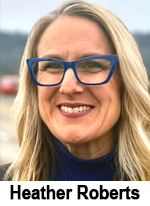 Roberts comes to KXL from KBND in Bend, OR, where she was the news director and morning news anchor. She also currently owns and operates the Oregon Radio News Network, where she covers regional issues for radio stations across the state. Roberts also has experience in television, where she’s done everything from being a live truck operator, to anchoring the news, to moderating debates. “Heather is a consummate professional, who has demonstrated her news chops across Oregon,” said KXL news director Grant McHill, “When we started the process of searching for our next anchor, we made it a priority to find someone who has a relentless sense for finding the stories that matter. So, we’re fired up to welcome Heather to the team.” Roberts commented, “I’m thrilled to be part of such an amazing news team in my hometown.” Roberts and her husband have two children. They call North Portland home.
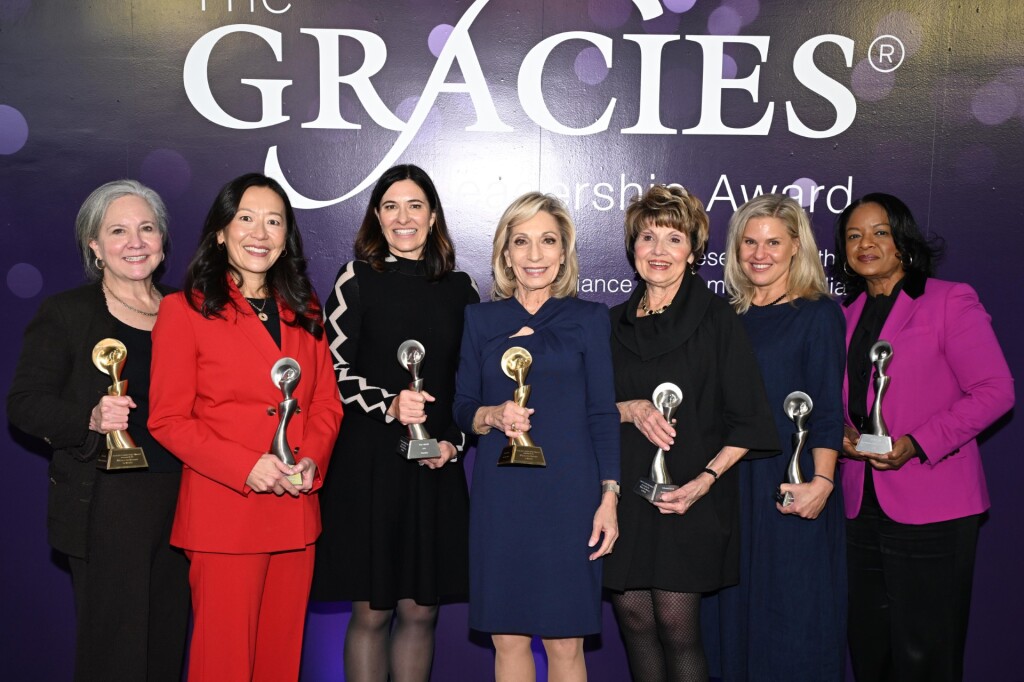 The Alliance for Women in Media (AWM) celebrated the achievements of eight trailblazing leaders at the Gracies Leadership Awards, yesterday (11/19) at Tribeca 360° in New York City. The event honored these extraordinary women for their significant contributions to the media industry, showcasing their leadership, vision and dedication to excellence across broadcasting, journalism, digital media and beyond. In addition to the awards, the luncheon featured a special fireside chat with Andrea Mitchell, recipient of the Gracies Icon Award. As NBC News’ chief Washington correspondent, chief foreign affairs correspondent and host of MSNBC’s “Andrea Mitchell Reports,” Mitchell shared her incredible journey in journalism, offering powerful insights into her decades-long career. Her conversation with Libby Leist, executive vice president of “TODAY” and “Lifestyle” highlighted the importance of elevating women’s voices in the media, mentorship and the lasting impact of bold, investigative storytelling made possible by diligent homework, checking your facts and doing research. Honorees pictured above at the event (l-r): Sylvia Strobel, AWM Legacy Leadership Award recipient and president/CEO, Twin Cities PBS; Holly Tang, CFO, NBC Universal Entertainment; Jennifer Leimgruber, EVP entertainment programming, Premiere/iHeartMedia; Andrea Mitchell, recipient of the Gracies Icon Award – NBC News’ chief Washington correspondent/ chief foreign affairs correspondent and host of MSNBC’s “Andrea Mitchell Reports“; Deborah Parenti, president/publisher, Streamline Media (Radio Ink, RBR + TVBR); Jen Sargent, CEO, Wondery; and Sylvia Bugg, chief programming executive/GM, PBS. Not pictured, Sonia Coleman, ESVP/ chief human resources officer, The Walt Disney Company.
 For the last 10 years, Edison Research’s quarterly “Share of Ear” study has been a highly respected examination of time spent with audio in America. Edison surveys 4,000 Americans annually to measure daily reach and time spent with all forms of audio. Each report is based on a four-quarter rolling average. The most recent Q3 2024 survey is comprised of Q4 2023, Q1 2024, Q2 2024, and Q3 2024. This week’s Cumulus Media | Westwood One Audio Active Group® blog is an analysis of the just released Q3 2024 data and focuses on what advertisers care most about – ad-supported audio.
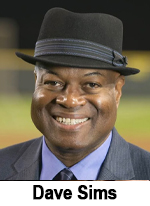 Audacy’s WFAN 101.9 FM / 660 AM announces Emmy Award-winning broadcaster Dave Sims as the new lead play-by-play announcer of its flagship broadcasts of the New York Yankees. Sims replaces recently retired broadcasting legend John Sterling, who held the position from 1989 until his retirement this past season. Dave Sims will join Suzyn Waldman to form the franchise’s new radio broadcast team. “The radio voice of the Yankees is a storied position in the history of baseball,” said Chris Oliviero, Audacy New York Market president. “From [Mel] Allen and [Red] Barber to [Phil] Rizzuto to Sterling, the names are synonymous with the pinstripes. Dave Sims is a worthy successor to that lineage. We are honored to have Dave join the incomparable Suzyn Waldman in the booth in the Bronx.” “It’s great to be home,” said Sims. “What an honor to be part of the iconic Yankees franchise. New York is where it all started for me, and I can’t wait for Opening Day and to work with my good friend Suzyn!” Sims is a Ford Frick Award Baseball Hall of Fame nominee and Emmy Award-winning broadcaster and has spent the last 18 seasons as the lead TV play-by-play voice of MLB’s Seattle Mariners. Sims previously hosted talk shows at WNBC-AM, WFAN-AM and the Madison Square Garden Television Network in New York and also spent time at WCBS-TV and the New York Daily News. Beyond baseball, Sims has covered the NFL for Westwood One and college basketball for ESPN. He also launched the “Hey Now! Podcast” with his two sons in July 2024. WFAN has served as the flagship station of the Yankees since 2014. From 2002 to 2014, games were heard on Audacy’s WCBS 880 (WCBS-AM). Games can be heard on WFAN and streamed via the free Audacy app and website within the team’s geographic region.
 Nexstar’s national news content. He says, “I’m grateful for the chance to work with Nexstar’s incredible team of outstanding journalists. Last week they accurately informed the world who would win the presidency, and this week did the same with the House of Representatives – before any other news outlet – demonstrating yet again, Nexstar’s unwavering commitment to accurate, quality journalism.”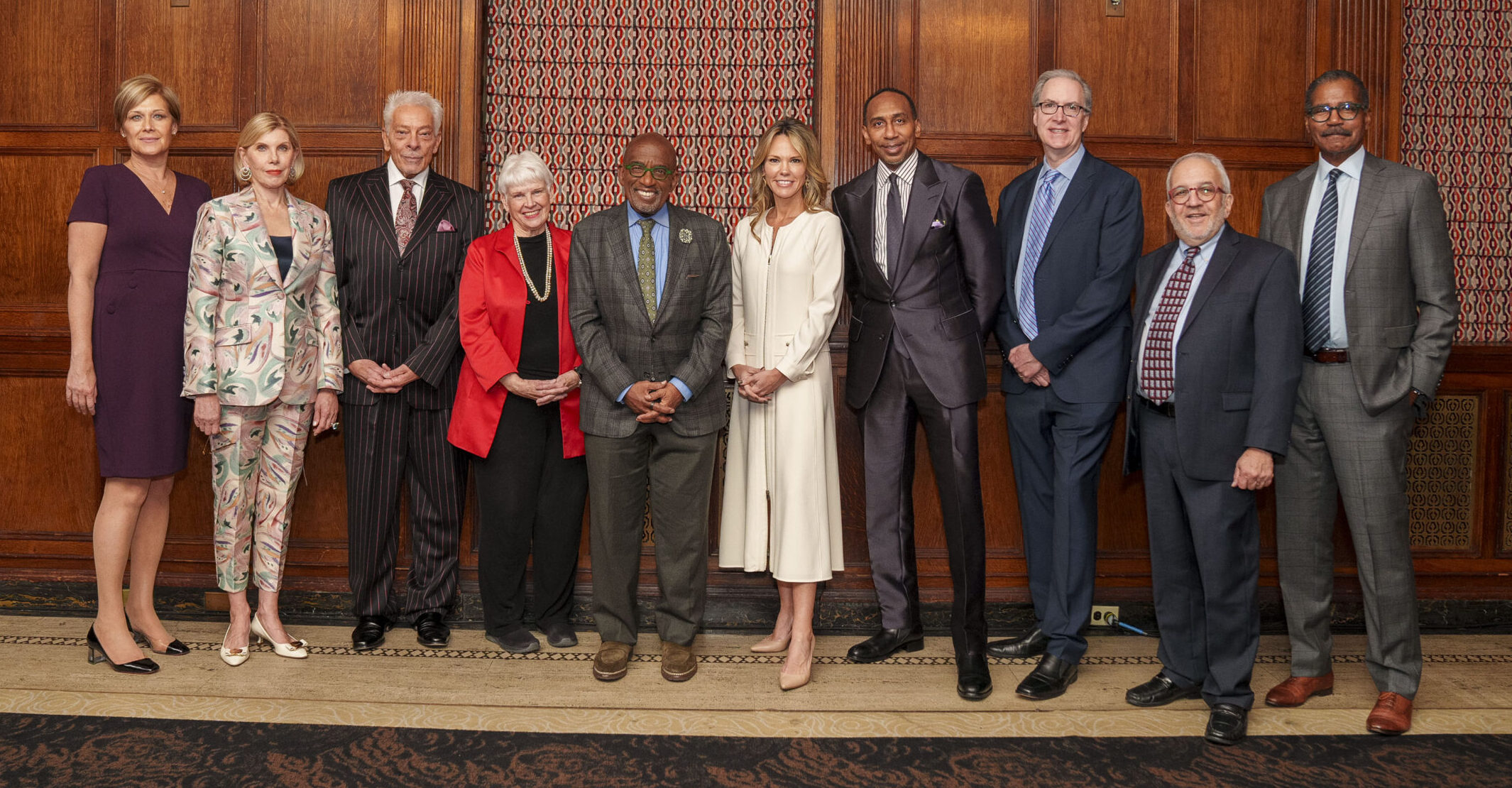

 (11/8) – Bertolucci as program director of heritage giant KFI AM 640, Los Angeles and Martin as EVP of programming, iHeartMedia Sports (which includes FOX Sports Radio) and PD of sports talk AM 570 KLAC, Los Angeles.After nearly a quarter century of exemplary service in these positions,
 the ambiguous terms cited for the couple’s simultaneous departure do not mask the general industry observation that they were direct victims of the national radio cutbacks being affected by iHeartMedia as severe cost-cutting measures. Chris Berry, iHeartMedia EVP of news, will assume the role as interim program director of both KFI and KLAC.
 Included in the cut – their show’s producer Terry Trahim, after more than 20 years of service to the station.
 iHM SVP of programming for the Ohio-West Virginia area and PD /afternoon host of WSPD, Toledo has also been let go.
 In San Antonio, although he remains one of the most successful syndicated hosts in American talk radio with a rapidly growing roster of more than 170 stations coast to coast, Compass Media Networks star Joe “Pags” Pagliarulo‘s local highly-rated afternoon show of 19 years at his flagship WOAI (where he is a market legend) has been dropped from the lineup as a cost-cutting measure. Pags is one of talk radio’s most notable rising stars and will undoubtedly be okay – but his departure from WOAI is indicative of the wrecking ball nature of these types of budget-cutting measures.
 These episodes feature Chachi’s special guests Al Roker, longtime weatherman on NBC’s The Today Show and co-anchor of the iconic morning show’s third hour, and Patsy Smullin, owner/president of California Oregon Broadcasting, and host of the successful television interview series, Up Close and Personal. Roker and Smullin will be among those honored next week as Giants of Broadcasting by the Library of American Broadcasting Foundation at the 2024 Giants of Broadcasting & Electronic Arts luncheon and awards ceremony. The event will be held on Tuesday, November 12th at Gotham Hall in New York City. To listen to these new “Chachi Loves Everybody” podcast episodes, please
  moment.” Striegle tells TALKERS, “There are so many amazing memories. For me, what I will miss most are the people. Everywhere we go, we meet wonderful people, great race fans that tell us, ‘We have been listening to MRN for years…’ they always want to thank us for what we do. Without the fans, there would be no need for the Motor Racing Network.” “Throughout his time with the network Jeff has lent his talents to a number of positions around the racetrack before finding his way to the broadcast booth in 2013,” said MRN president Chris Schwartz. “His broadcast career began like so many others by working the public address booth providing the soundtrack for thousands of fans at his local racetrack, in Jeff’s case Berlin Raceway in Marne, Michigan. He has been involved with calling some of the sport’s most iconic moments, and it is fitting that the checkered flag will fall on his broadcast career by calling the final laps of another NASCAR Cup Series Championship.” Motor Racing Network will have flag to flag coverage of the NASCAR Cup Series Championship Race Sunday, November 10th beginning at 2pm ET. The NASCAR Cup Series Championship Race will be carried LIVE on approximately 300 radio station partners across the United States, the NASCAR mobile app, and at MRN.com. For affiliation in your area, contact Bob Quick, director, radio partnerships & traffic at Motor Racing Network by email at
 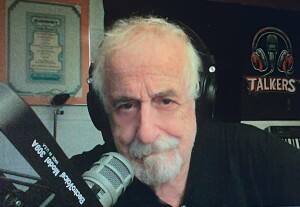 Today is Election Day in America. Finally! Now the talk media industry is about to learn what’s next? No matter which way the presidential race goes, the results will have a measurable impact on news/talk media’s positioning and strategy going forward for years to come. According to TALKERS publisher Michael Harrison, “That’s what happens when the news media operates within the paradigm of primarily ‘targeting’ audiences based on their pre-existing biases, opinions, and passions. The only objective seeking of truth that takes place within the formulation of media strategy, in this transactional environment, focuses on one basic concern – where does the audience, that we so zealously covet, stand on this?” During an editorial conference this morning, Harrison stated, “The two major media-base ‘camps’ that have emerged in the past decade on talk radio, news/talk TV, YouTube and podcasting, fall under the basic headings of the pro-Trump media industry and the anti-Trump media industry. Yes, both have grown into full-fledged industries – and their interests are deeply entangled. As cynical as this might sound, the deck is about to be reshuffled to one degree or another and talk media industry practitioners are going to have to pull off some fancy steps to avoid sinking into the quicksand of inevitable changes in public opinion – regardless of what shape these movements take.” Harrison adds, “If you’ll pardon the ancient reference, no one wants to be left playing Frankie Avalon and Bobby Rydell records the day after the Beatles’ and their British buddies invaded our pop culture.”
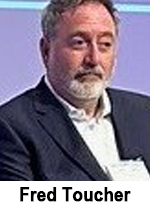 Toucher, who now co-hosts “Toucher & Hardy“ on 98.5 The Sports Hub, WBZ-FM, Boston took some time on this morning’s show (11/5) to address ”the elephant in the room.” Shertenlieb‘s new show on local classic rock outlet WZLX had been canceled after five months, and Toucher didn’t seem to have any sympathy for his former partner. In a story by reporter Nick O’ Malley posted on the news site MassLive.com, “I hate him,” Toucher said. “So, I was happy yesterday when I heard about this. But I was a little disheartened that he still carries none of the responsibility and takes none of the blame and still just can’t be honest.” Toucher and Shertenlieb co-hosted the “Toucher & Rich” show from 2009-2023, working together to produce one of Boston’s most popular morning shows. However, the show ran into issues in 2023. Toucher missed time due to personal and physical issues, including a stretch of time at an alcohol detox facility. In November, parent company Beasley Media said in a statement that Shertenlieb declined to accept a new contract. On Monday, Shertenlieb announced that he was “disappointed” that his show was being canceled after just five months. The radio host complained that management forced him to “alter the format” of the show by adding music. However, Toucher noted Tuesday that Shertenlieb’s show was a “ratings disaster.” “He not only did not bring in a new audience to that show, he alienated – based on ratings – their entire existing audience,” Toucher said. “He had like a third of the ratings that they got jockless in the morning … Yeah, management might have been a little concerned.” Toucher said that critics can paint the picture of his reaction however they like. But he did note that he and co-host Jon Wallach say they weren’t alone in celebrating the demise of Shertenlieb’s show. To see the complete article in MassLive.com, please
 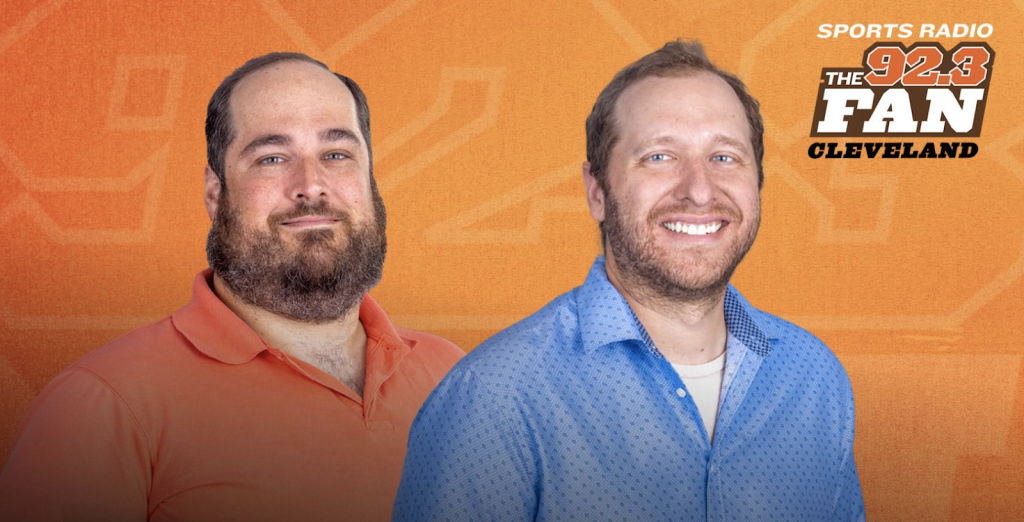 Audacy names Jonathan Peterlin (pictured above right) as afternoon show co-host on 92.3 The Fan (WKRK-FM) in Cleveland. Peterlin will join co-host Nick Wilson (above left) and be heard weekdays from 2:00 to 7:00 pm ET. Peterlin had previously served as the station’s evening host since 2022. “We believe Jonathan’s addition and presence on the show will bring a unique passion and energy to afternoon drive,” said Keith Britton, the station’s brand manager. “He has shown both the ability and readiness for this move and we are full speed ahead in our commitment to providing our listeners with the most engaging sports talk and entertainment on a daily basis.” “92.3 The Fan and its listeners have been with me through every major chapter of my life, and this station has been a constant presence in my world,” said Peterlin. “Afternoon drive in Cleveland is the pinnacle of what I’ve always aspired to, and I truly couldn’t imagine a better person to share this journey with than my good friend, Nick Wilson. I’m extremely thankful for the chance to continue this journey with the listeners and the team at 92.3 The Fan.”
 As media creators in radio and podcasting explore ways to legally incorporate external audio, the fair use factor of “purpose and character” is crucial. This factor assesses whether the use is “transformative”—adding new expression or meaning—or merely reproduces the original’s essence, potentially infringing on copyright.
 Cumulus Media Inc. today (11/4) announced operating results for the three and nine months ended September 30, 2024. Mary G. Berner, president and CEO of Cumulus Media, said, “During the third quarter, we delivered revenue and EBITDA in-line with pacing commentary and analyst estimates. Given the market challenges, we maintained our focus on what we can control. Specifically, we continued investing to drive growth in our digital businesses, including in digital marketing services which increased revenue nearly 40% in the quarter; capitalizing on areas of improvement in national and political ad spending; maximizing operating cash flow; and improving operating leverage through ongoing expense reductions.” Berner continued, “Looking forward, the advertising environment remains uncertain. Nonetheless, Cumulus has a valuable set of assets with which to navigate that uncertainty including: profitable and fast-growing digital businesses; a vast national platform that can reach audiences whenever and wherever they choose to listen; extensive feet-on-the-street local sales capabilities which allow us to walk product through the door; premium programming with particular strength in sports and news/talk; an extensive untapped audio library; and a leadership team with a strong track record of expense management and disciplined stewardship of capital. As we continue to execute against our priorities, we see many paths for leveraging these assets to maximize the value they produce for our shareholders.”
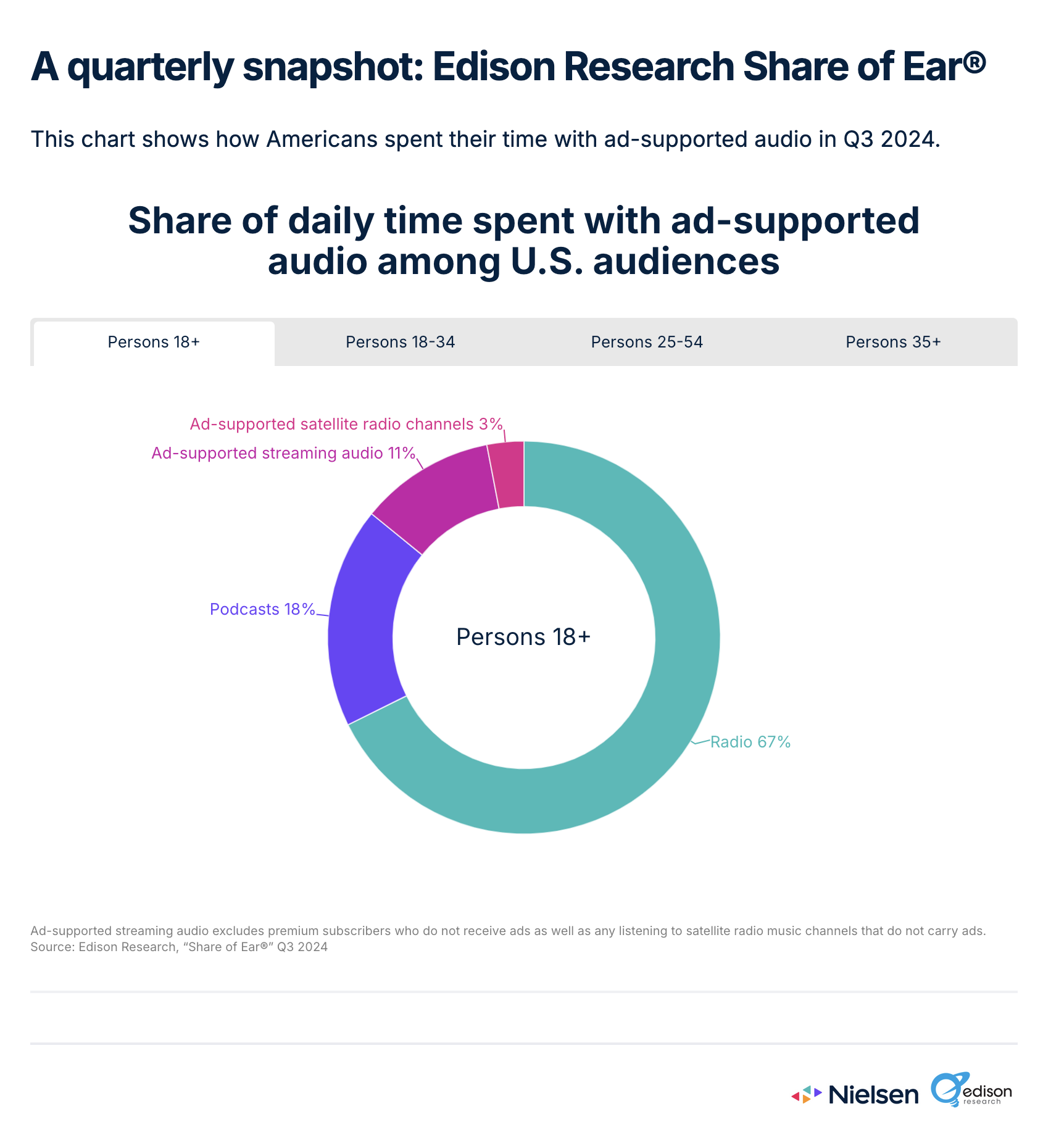
 more recognition as a (legacy) medium that’s constantly innovating and evolving to enhance the consumer experience and the advertiser opportunity. At the heart of Audio lives great storytelling. From the beginning of humankind to today’s best advertising, storytelling is the single most effective tool for sharing information and knowledge – all while entertaining, educating and yes, selling. Storytelling is a constant, but the way stories are told is shifting, driven by new technologies and approaches that allow brands to create more emotional connection, deliver more personalized experiences and scale their campaigns for maximum impact. And no medium is better equipped to do this than audio.”
 The research notes millennials (ages 27-42) are the most concerned at 83%. The survey finds people are feeling the effects of the higher costs of goods and services, and they remain concerned about inflation. In addition, 37% said their finances are in worse shape than four years ago. Thirty-four percent said their finances are about the same, while only 29% said they’re better off than they were four years ago. The research indicates more than half (52%) of Americans believe the U.S. presidency has a major impact on their personal finances. “We encourage every American to go out and vote,” said Dave Ramsey, personal finance expert and host of “The Ramsey Show.” “But remember, what goes on in your house is a whole lot more important than who’s in the White House. The research shows that less than half of Americans believe a written household budget is the way to win with money. That has to change, or nothing will.”
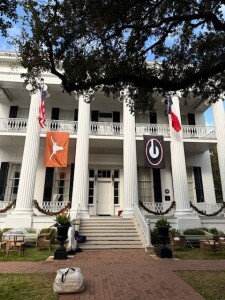 95.5 WSB, Atlanta (and nationally syndicated) TALKERS Heavy Hundred star, Erick Erickson is giving both sides an airing today (10/18) in his midday show that he’s broadcasting from the parlor in the Texas Governor’s Mansion (see pic at left) before UGA battles University of Texas tomorrow. He tells TALKERS, he’ll have on both Governors Gregg Abbott (R-TX) and Brian Kemp (R-GA) to talk about the border, the election, and football.