
Industry Views

Fair Use in 2025: The Courts Draw New Lines

By Matthew B. Harrison
TALKERSVP/Associate Publisher
Harrison Media Law, Senior Partner
Goodphone Communications, Executive Producer

imgImagine an AI trained on millions of books – and a federal judge saying that’s fair use. That’s exactly what happened this summer in Bartz v. Anthropic, a case now shaping how creators, publishers, and tech giants fight over the limits of copyright.

Judges in California have sent a strong signal: training large language models (LLMs) on copyrighted works can qualify as fair use if the material is lawfully obtained. In Bartz, Judge William Alsup compared Anthropic’s use of purchased books to an author learning from past works. That kind of transformation, he said, doesn’t substitute for the original.

But Alsup drew a hard line against piracy. If a dataset includes books from unauthorized “shadow libraries,” the fair use defense disappears. Those claims are still heading to trial in December, underscoring that source matters just as much as purpose.

Two days later, Judge Vince Chhabria reached a similar conclusion in Kadrey v. Meta. He called Meta’s training “highly transformative,” but dismissed the lawsuit because the authors failed to show real market harm. Together, the rulings show that transformation is a strong shield, but it isn’t absolute. Market evidence and lawful acquisition remain decisive.

AI training fights aren’t limited to novelists. The New York Times v. OpenAI case is pressing forward after a judge refused to dismiss claims that OpenAI and Microsoft undermined the paper’s market by absorbing its reporting into AI products. And in Hollywood, Disney and Universal are suing Midjourney, alleging its system lets users generate characters like Spider-Man or Shrek – raising the unsettled question of whether AI outputs themselves can infringe.

The lesson is straightforward: fair use is evolving, but not limitless. Courts are leaning toward protecting transformative uses of content—particularly when it’s lawfully sourced – but remain wary of piracy and economic harm.

That means media professionals can’t assume that sharing content online makes it free for training. Courts consistently recognize that free journalism, interviews, and broadcasts still carry market value through advertising, sponsorship, and brand equity. If AI systems cut into those markets, the fair use defense weakens.

For now, creators should watch the December Anthropic trial and the Midjourney litigation closely. The courts have blessed AI’s right to learn – but they haven’t yet decided how far those lessons can travel once the outputs begin to look and feel like the originals.

Matthew B. Harrison is a media and intellectual property attorney who advises radio hosts, content creators, and creative entrepreneurs. He has written extensively on fair use, AI law, and the future of digital rights. Reach him at Matthew@HarrisonMediaLaw.com
Industry News

Audacy Partners with “Heed the Call NFL Podcast”

Audacy Podcasts is partnering with sports personalities Dan Hanzus and Marc Sessler to handle sales and distribution for the “Heed the Call NFL Podcast.” The duo are well known for their work with the NFL’simg “Around The NFL” podcast. As “Heed the Call NFL Podcast” moves to Audacy on September 1, four new episodes will continue to be released weekly during the NFL season on YouTube and everywhere podcasts are available. Audacy head of podcasts Leah Reis-Dennis says, “Dan and Marc are pioneers in sports podcasting and two of the most respected voices in the NFL media landscape. Their compelling mix of expertise, authenticity, and humor has built a passionate following and we’re proud to bring ‘Heed the Call NFL Podcast’ into the Audacy family as we continue to expand our industry-leading sports audio lineup.”

Industry Views

SABO SEZ: What You Need to Know About the “Law of 200”

By Walter Sabo
a.k.a. Walter Sterling, Host
WPHT, Philadelphia, “Walter Sterling Every Damn Night”
and TMN syndicated, “Sterling on Sunday”

imgThe risk is real. Suggesting that a technique used with great success in the recent past might be beneficial to the present is a perilous course. Is the idea out of touch with today’s reality? Is the author ignoring current trends?

A factual current event from which our industry and our lives suffer: Sales are down. Sales for the radio industry are down every quarter.

Hard research-and-math-people will point to the usual causes. Add to that list the fact that the same dollars that bought spots priced at X for the big morning show are being fed into podcasts for 10 percent of X. But podcasts are digital! Therefore, they are sexy to Wall Street. The result of that dollar transfer is quarterly investor calls featuring CEOs declaring that “digital is a sweet spot.” Actually, “digital” is a cheap whore but back to the topic:

Methods deployed to sell radio today are not working. Salespeople work hard, but the strategies they are given are weak. That’s why sales are down – every quarter. Spreadsheets, ROI, CPP, programmatic are elegant math-major systems. But our product is not math. Our product is emotion. Match sales techniques to the product. Tap the power of emotion.

Everything is ultimately purchased from our emotions. Everything.  Case in point: Joe Girard* understands cars better than anyone in history. No, no, don’t be dismissive of Joe because he was a car salesman; cars are very expensive. Cars have impacted you and your family for years. Cars make you feel great or awful. Powerful purchase.

Happy Birthday! One month a year, Joe would mail out a birthday card to all of his past customers and all of his prospects. All of them. In the same month. One out of 12 recipients were thrilled that Joe remembered their birthday! The other 11 would call Joe and tell him that he had their birthday date wrong. They called Joe. A car salesman.

Joe gave all of them information on the phone about the latest models and deals for… a new car. They called Joe.

The Law of 200. Catholic funeral masses hand out prayer cards featuring a photo of the deceased. Ask a priest how many cards are printed. The answer is 200. Caterers will tell you that the standard number of wedding guests is… 200!

Seems we know 200 people who will come to our wedding and our funeral. Major life events. Buying a car is a major, emotional life event. Joe realized that if he sold a good car, 200 people would learn that the customer was satisfied.

OR 200 were not happy. He gave all car buyers a box, a box of his business cards. 200 cards. He urged customers to hand out Joe’s cards to their friends.

Do those 22-year-old time buyers still want concert tickets, merchandise, meals, autographs, meet and greets? Before the power point presentation starts, book the good seats.

Yes, our product is emotion driven. How many arguments have you had about music repetition? New music? Controversial topics? Borderline morning show jokes? Those are emotional not intellectual discussions. There’s our power – in the center of the rink. Put the commercial on the mat.

How to Sell Anything to Anybody by Joe Girard https://a.co/d/fTpuzoZ

Walter Sabo has been a C Suite action partner for companies such as SiriusXM, Hearst, Press Broadcasting, Gannett, RKO General and many other leading media outlets. His company HITVIEWS, in 2007, was the first to identify and monetize video influencers.. His nightly show “Walter Sterling Every Damn Night” is heard on WPHT, Philadelphia. His syndicated show, “Sterling On Sunday,” from Talk Media Network, airs 10:00 pm-1:00 am ET, and is now in its 10th year of success. He can be reached by email at sabowalter@gmail.com.

Industry News

Top News/Talk Media Stories Over the Weekend (8/23-24)

The most discussed stories over the weekend on news/talk radio and related talk media according to TALKERS research:

1. The Economy / Powell Open to Rate Cuts
2. Guard Troops in DC
3. Raid on John Bolton’s Office
4. Redistricting
5. Abrego Garcia Case

Industry Views

The Annual (Radio Station) Physical

By Jonathan Little
TroyResearch
President

imgAn annual physical is a wise idea. Doc asks, “How are you doing?”. Then he or she asks some detailed questions based on your medical history. Then “how have you been feeling? Any issues?” Doc always orders blood draws to see what might be lurking. Is the statin drug keeping your cholesterol in check? Are you getting plenty of exercise, plenty of sleep? How’s your diet? Over the years, I’ve visited about my health with at least a dozen different doctors. I’m convinced that the good ones always ask good questions and then listen carefully. Good questioner – good listener. That’s the doc I can respect and put my trust in. 
If you operate a radio station, your station could benefit from an annual physical. You already know how it’s doing based on ratings, revenue, and profit. Your listeners know how you’re doing for them personally because they’re the users of your radio product. Is it pleasing, challenging, inspiring or annoying, irritating, and easily ignored with a click? If you ask them, they’ll tell you. You should ask them at least once a year. 

TroyResearch has been in the business of asking listeners what they think for 27 years. We recently teamed up with Midwest Communications, Inc., in Green Bay to conduct an exploratory research project with their news/talk station WTAQ. TroyResearch’s association with MCI goes back nearly 27 years, doing music and perceptual research for the Duke Wright music stations. The WTAQ project was something new. Our goal was to discover what actionable data the opinions of loyal listeners might produce. TroyResearch worked with VP Programming Jeff McCarthy and Operations Manager Jason Hillery to develop a 25-question study. 

Survey respondents were recruited over the air and were encouraged to go to the WTAQ website to take a brief survey. Clearly, we wanted to hear from P1’s, those listeners who produce 60%+ of reported listening. Their answers provided a clear picture of WTAQ loyalists – what they like, what they don’t like, their political affiliation, their listening behaviors (radio, podcasts, TV news, cable news, etc.), favorite news outlets, trustworthiness of news outlets, their thoughts about protests becoming riots, and their favorite podcasts to mention a few. 

More than 200 respondents, Persons 18+, completed the WTAQ perceptual study. (32% 18-54, 68% 55+). With Jeff’s and Jason’s permission, we share some results. 

Political Affiliation

1% Democrat
78% Republican
15% Independent
6% Other, like Libertarian, Socialist

In car listening

80% Local radio
10% Satellite radio
6% Streaming services like Spotify
3% Podcasts
1% Other like personal playlists 

Listening to WTAQ, which simulcasts

76% FM
9% AM
8% Streaming from WTAQ app
6% Streaming from a smart device
1% Streaming from WTAQ.com

Where do you get your news? (Select all that apply)

93% Radio
46% Broadcast TV (local channels)
41% Cable news like Fox, CNN, MSNBC
29% Social Media like X, Facebook, Tiktok
16% Internet news like NY Post, Washington Post
10% Newspaper
12% Other 

Your primary news source

58% Radio
15% Cable news like Fox, CNN, MSNBC
8% Broadcast TV (local channels)
7% Internet news like NY Post, Washington Post
7% Social Media like X, Facebook, Tiktok
3% Other
1% Newspaper

When does a protest/demonstration become a riot? (Select all that apply)

85%+ When protesters strike police, throw projectiles, set fires, do property damage
75% When protesters spit on police officers
60% When protesters burn the American flag
37% When protesters curse at police officers

Do you listen to podcasts?

23% Frequently
29% Occasionally
35% Rarely
13% Never

What podcast platform do you use? (Select all that apply)

32% YouTube
25% Spotify
19% iHeart
19% Apple
10% Amazon
2% Rumble
1% The Blaze
1% Daily Wire 

As a broadcaster that reports news and information, WTAQ is interested in knowing how trustworthy you consider the reporting presented by these companies. (1 = very untrustworthy, 5 = very trustworthy)

4.43 WTAQ Radio, Green Bay
3.78 Fox News
3.59 Fox 11, Green Bay
2.92 WBAY, Channel 2, Green Bay
2.83 WFRV, Channel 5, Green Bay
2.77 WHBY Radio, Appleton
2.71 NBC 26, Green Bay
2.22 Green Bay Press Gazette
2.01 Wisconsin State Journal
1.99 Milwaukee Journal Sentinel
1.46 MSNBC
1.37 CNN 

WTAQ asked the 0-10 Customer Endorsement Score question – “On a scale of 0-10 how likely would you be to recommend WTAQ to a friend or colleague?” Those scores reflect the listeners’ opinions of how the station is doing and it’s a forecast of WTAQ’s future. As a rule, a CES of 50 or higher indicates a healthy and sustainable product. WTAQ scored a strong 73 Customer Endorsement Score. 

VP Jeff McCarthy and OM Jason Hillery are pleased with the results of this exploratory study. The WTAQ Sales Team is delighted with the data. 

Good questioner … Good listener! WTAQ asked good questions. And now their leadership team is “listening” to the answers and determining what adjustments, if any, may result in improved ratings, revenue, and profit, on the way to an 80 Customer Endorsement Score with the next WTAQ study. 

Jonathan Little is president of TroyResearch. He can be phoned at 608-219-1077 or emailed via: jlittle@troyresearch.net

Industry News

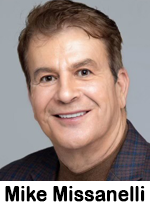
Missanelli’s Exit from “The Fanatic” Appears to Be Budget Related

Philadelphia sports talk host Mike Missanelli was abruptly let go from Beasley Media Group’s sports talkimg WPEN-FM 97.5 The Fanatic on August 8 after almost a year back behind the mic at the station. Missanelli joined sister rock WMMR’s Kathy Romano – a cast member of the “Steve and Preston Show” – was also let go. Beasley issued the following public statement: “We are very grateful for his contributions to the station and our listeners, and we wish him all the best.”

Industry News

Top News/Talk Media Stories Over the Weekend (8/16-17)

The most discussed stories over the weekend on news/talk radio and related talk media according to TALKERS research:

1. Trump-Putin Meeting
2. Guard Troops in DC
3. Texas & California Redistricting
4. The Epstein Files
5. ICE Raids

Industry Views

SABO SEZ: The Future Will Include a Need for Talk Show Hosts

By Walter Sabo
a.k.a. Walter Sterling, Host
WPHT, Philadelphia, “Walter Sterling Every Damn Night”
And TMN syndicated, “Sterling on Sunday”

imgThe problem with technocrats is they believe computer programs and machines solve all problems. A technocrat in charge of a business will it kill it, for sure.  For example, once a movie theatre is automated, not requiring a pesky projectionist or even a snack counter attendant, you and I would still not buy a ticket – unless the theater was showing an actual MOVIE!
A radio company can “invest” in automation systems like Wide-orbit, saving an outrageous 15 bucks an hour for a “board op” or NexGen or NewsBoss. None of those systems win a single Nielsen meter.

The future of the radio medium is determined by its ability to attract an audience. Audience is obviously not built by technology but by compelling hosts. This phenomenon is eternal. For over 100 years, listeners have been attracted by personalities, ideas, information, songs, jokes, passion.

PREDICTION: Tech, AI will not replace any truly talented talk radio host by a mile.

One More Thought: Write a Letter

What can a host do to secure their essential participation beyond prepping a show? Write a letter! My Dad was a retailer who bought a lot of radio time. In his office he had a credenza of awards, family photos, and… framed letters from radio personalities. Spending hours in the car with a radio voice turns that voice into a star. Receiving a letter from a star is a life event. My Dad framed the letters he got from his favorite radio stars who hosted the shows he sponsored.

All the damn spots we air are actually invitations to send fan mail to the advertisers. Cheesy, yes, but the autograph industry is robust. The more ways a host engages with advertisers and listeners (touchpoints), the more secure their job becomes.

Walter Sabo has been a C Suite action partner for companies such as SiriusXM, Hearst, Press Broadcasting, Gannett, RKO General and many other leading media outlets. His company HITVIEWS, in 2007, was the first to identify and monetize video influencers.. His nightly show “Walter Sterling Every Damn Night” is heard on WPHT, Philadelphia. His syndicated show, “Sterling On Sunday,” from Talk Media Network, airs 10:00 pm-1:00 am ET, and is now in its 10th year of success. He can be reached by email at sabowalter@gmail.com.

Industry News

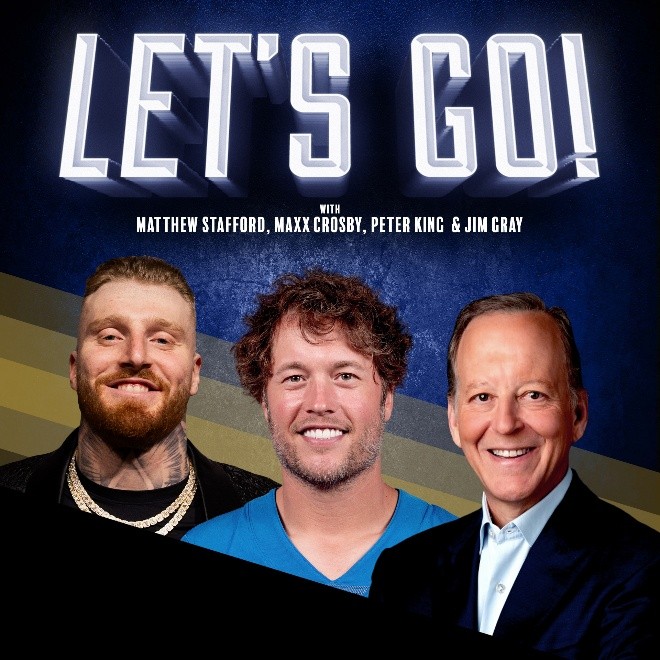
L.A. Rams Quarterback Matthew Stafford to Host “Let’s Go!” on SiriusXM for 2025 NFL Season

Lets Go!

SiriusXM announced (8/12) that Los Angeles Rams quarterback Matthew Stafford, who led the Rams to a championship in Super Bowl LVI, will join the SiriusXM show, “Let’s Go!” as a host for the 2025 NFL season. In his first media role, Stafford will join Hall of Fame broadcaster Jim Gray for weekly discussions on the Rams and other trending topics around the league. Stafford and Gray will also be joined throughout the season by special guests from the worlds of sports, entertainment and beyond. Las Vegas Raiders star defensive end Maxx Crosby and Hall of Fame NFL journalist Peter King also return for their second season on “Let’s Go!” and will host alongside Jim Gray each week. The fifth season of “Let’s Go!” begins Monday, September 1, ahead of the kickoff of the 2025 NFL season later that week. New episodes will debut every Monday at 6:30 pm ET/3:30 pm PT on SiriusXM NFL Radio (channel 88). After debuting on SiriusXM, the show is available on all major podcast platforms, with additional bonus content available only on the SiriusXM app.

Industry News

New Research: The Most Avid NFL Fans Live on Sports Audio

audacy logo horiz color rgb

New research from Audacy and Vision Insights reveals that the most passionate NFL fans aren’t just watching games – they’re living the NFL lifestyle through sports audio. Over 80% of NFL fans listening to sports talk radio, play-by-play, and sports podcasts identify as avid fans – outpacing TV viewers and social media followers. These listeners are also a marketer’s dream: higher incomes, more spending power, and deeper emotional connections to brands that support their teams. Audacy’s sports network claims to reach more monthly listeners than the next three competitors combined, making it the largest home for NFL diehards.

Please click here for full survey results.

Industry Views

Monday Memo: Topics That Tune-Them-In

By Holland Cooke
Consultant

imgBaby Boomers (born 1946–1964) are some 20% of the U.S. population, but control more than 50% of all household wealth. They hold $70+ trillion in assets and spend an estimated $548 billion annually. They are lifelong AM/FM listeners, and they’re redefining what life after 60 looks like. Are you into what they’re up to?

Some are having the time of their lives. Others are confronting new realities. All are seeking relevance, respect, and real-world information. Consider these issues for call-in topics and guest interviews and podcasts. Possibly a sponsored series?

Lifestyle & Purpose

— “How to Make Your Bucket List Actually Happen”
— “Finding Purpose Beyond the 9 to 5”
— “Encore Careers That Start with a Volunteer Gig”

Health & Wellness

— “Sleep After 60: What Changes and What Helps”
— “The Foods That Fight Brain Fog”
— “Fitness Without the Injuries: Smarter Workouts After 50”

Financial Confidence

— “How Much is Enough? Retirement Planning Backwards”
— “Social Security Myths That Could Cost You”
— “Turning Your Home into Income” (downsizing, ADUs, Airbnb)
— “Helping Without Hurting: When Adult Kids Need Financial Help”

im

Freedom & Adventure

— “How to Travel More for Less”
— “National Parks Over 60: Hidden Gems and Senior Pass Tips”
— “Cool Day Trips”

Home & Relationships

— “Downsize Without Drama”
— “Living With – or Near – Your Kids: Pros, Cons & Boundaries”
— “Home Safety Upgrades You’ll Be Glad You Made”
— “The Second Time-Around Marriage: Legal & Emotional Realities”
— “Grandparenting Without Overstepping”

Learning & Creativity

— “The Science of Lifelong Learning: Why Your Brain Craves It”
— “It’s Never Too Late to Learn an Instrument (or a Language)”
— “Turning Your Life Story Into a Book – Or a Podcast”
— “Digital Detox: How to Stay Connected Without Feeling Glued”

Holland Cooke (HollandCooke.com) is a media consultant working at the intersection of broadcasting and the Internet. Follow HC on Twitter @HollandCooke

Industry Views

When the Library Talks Back

2f8c1286 c8c3 4b72 ba11 091cec050fcd
By Matthew B. Harrison
TALKERS, VP/Associate Publisher
Harrison Media Law, Senior Partner
Goodphone Communications, Executive Producer

imgImagine SiriusXM acquires the complete Howard Stern archive – every show, interview, and on-air moment. Months later, it debuts “Howard Stern: The AI Sessions,” a series of new segments created with artificial intelligence trained on that archive. The programming is labeled AI-generated, yet the voice, timing, and style sound like Stern himself.

Owning the recordings might suggest the right to create new works from them. In reality, the answer is more complicated – and the music industry offers a useful comparison.

Music Industry Precedent

Sony, Universal, and others have spent hundreds of millions buying music catalogs from artists such as Bob DylanBruce SpringsteenPaul Simon, and Queen. These deals often include both composition rights and master recordings, giving the buyer broad control over licensing and derivative works.

In music, the song and the recording are the assets. In talk content, the defining element is the host’s persona – voice, cadence, and delivery – which changes the legal analysis when creating new material.

Copyright and Persona Rights

Buying a talk archive usually transfers copyright in the recordings and any scripts. That permits rebroadcast, excerpts, and repackaging of original programs.

It does not automatically transfer the host’s right of publicity – control over commercial use of their name, likeness, and in many states, their distinctive voice. In Midler v. Ford Motor Co. (1988), the court ruled that imitating Bette Midler’s voice in a commercial without consent was an unauthorized use of her identity.

This means a company can own the shows without having the right to make new performances in the host’s voice unless the contract clearly grants that right.

The AI Factor

AI technology can replicate a host’s voice, tone, and style with high accuracy, producing entirely new programming.

Outside broadcasting, a recent AI-generated George Carlin special – written by humans but performed by a voice model trained on decades of his work – sparked debate about rights and legacy.

In talk radio, similar AI use could create “new” episodes featuring well-known hosts. Even with clear labeling, right-of-publicity claims may arise if the host or their estate never authorized it. Disclaimers may address consumer confusion but do not remove identity-rights issues.

Why It Matters

This applies to more than national figures. Any broadcaster or podcaster with a substantial archive could face it. Selling or licensing a library could give the buyer the tools to replicate your voice without your participation.

For buyers, the ability to produce new content from archived material has commercial appeal. But without the right to use the host’s voice for new works, it carries significant legal and reputational risk.

Contracts Decide

The key is in the contract:

— Did the talent assign rights to their name, likeness, and voice for future works?
— Is use limited to original recordings or extended to derivative works?
— Does it address future technologies, including AI?

Older agreements often omit these points, leaving courts to decide. Future contracts will likely address AI directly.

Takeaways

For talent: Know what you are transferring. Copyright ownership does not necessarily include your future voice.

For buyers: Owning an archive does not automatically give you the right to create AI-generated new material in the original host’s voice.

For everyone: As AI advances, control over archives will depend on the contracts that govern them.

Matthew B. Harrison is a media and intellectual property attorney who advises radio hosts, content creators, and creative entrepreneurs. He has written extensively on fair use, AI law, and the future of digital rights. Reach him at Matthew@HarrisonMediaLaw.com or read more at TALKERS.com.

Industry News

Top News/Talk Media Stories Over the Weekend (8/9-10)

The most discussed stories over the weekend on news/talk radio and related talk media according to TALKERS research:

1. Tariffs Go into Effect
2. Deadly CDC Shooting
3. Trump Federal Takeover of DC
4. Trump-Putin Meeting
5. Israel’s Gaza City Takeover

Industry News

WWO: Creative is the Key Sales Driver

Suffice it to say that all the planning and targeting in the world is for naught if your audio ad stinks. This week’s blog from Cumulus Media | Westwood One’s Audio Active Group looks at several studios to determine what actually drives sales and one of the key takeaways from a study by NCSolutions isimg “creative quality is the number one sales driver” and this is often a surprise to advertisers and media agencies who think media tactics (targeting, reach, etc.) drive the most sales. It’s for good reason that everyone wants high brand awareness. A major study from TikTok reveals the greater a brand’s awareness, the greater the purchase conversion. Brands with high aided awareness have 2.86x greater conversion rates compared to low awareness brands. But not all categories operate similarly, Podscribe says that purchase conversion varies widely by advertising category and advises that it’s important to understand the purchase conversion benchmarks for your product category. See the full blog post here.

Industry Views

They Say YOU Infringed – But Do THEY Own the Rights?

By Matthew B. Harrison
TALKERS, VP/Associate Publisher
Harrison Media Law, Senior Partner
Goodphone Communications, Executive Producer

imgYou did everything right – or so you thought. You used a short clip, added commentary, or reshared something everyone else was already posting. Then one day, a notice shows up in your inbox. A takedown. A demand. A legal-sounding, nasty-toned email claiming copyright infringement, and asking for payment.

You’re confused. You’re cautious. And maybe you’re already reaching for the fair use defense.

But hold on. Before you argue about what you used, ask something simpler: Does the party accusing you actually own the rights?

Two Main Reasons People Send Copyright Notices

1. They believe they’re right – and they want to fix it.  Sometimes the claim is legitimate. A rights-holder sees their content used without permission and takes action. They may send a DMCA takedown, request removal, or ask for a license fee. Whether it’s a clip, an image, or a music bed – the law is on their side if your use wasn’t authorized.
2. They’re casting a wide net – or making a mistake. Other times, you’ve landed in a mass enforcement dragnet. Some companies send thousands of notices hoping a few people will pay – whether or not the claim is strong, or even valid. These are often automated, sometimes sloppy, and occasionally bluffing. The sender may not own the rights. They may not even know if what you used was fair use, public domain, or licensed.

Mistakes happen. Bots misidentify content. Images get flagged that were never protected. Even legitimate copyright holders sometimes act too fast. But once a notice goes out, it can become your problem – unless you respond wisely.

The First Thing to Check Is Ownership

Most creators instinctively argue fair use or say they meant no harm. But those aren’t the first questions a lawyer asks.

The first question is: “Do they have standing to bring the claim?”

In many cases, the answer is unclear or flat-out “no.” Courts have dismissed copyright lawsuits where the claimant couldn’t show ownership or any active licensing interest. If they can’t demonstrate control over the work – and actual market harm – they may not have the right to sue.

What To Do If You Get a Notice

Don’t panic. Not all claims are valid – and not all claimants are in a position to enforce them.
Don’t assume fair use will protect you. It might, but only after ownership is clear.
Don’t engage emotionally. Responding flippantly can escalate things fast.
Do get help early. A media attorney can help you assess whether the claim is real – and whether the sender has any legal ground at all.

Matthew B. Harrison is a media and intellectual property attorney who advises radio hosts, content creators, and creative entrepreneurs. He has written extensively on fair use, AI law, and the future of digital rights. Reach him at Matthew@HarrisonMediaLaw.com or read more at TALKERS.com.

Industry News

“New Jersey 101.5” Launches “The Judy & EJ Show”

Townsquare Media’s talk WKXW-FM, Trenton “New Jersey 101.5” welcomes Eric Johnson back as theimg co-host of the midday show alongside longtime station personality Judi Franco. Johnson – who served as the station’s program director from 1999 through 2017 – imgtakes over for Dennis Malloy who retired from the program last week. Johnson says, “Coming back to ‘New Jersey 101.5’ feels like coming home. This station has always had a one-of-a-kind connection to the people of New Jersey. I’m honored to be part of it again — and even more excited to team up with Judi Franco, who’s as sharp, fearless, and funny as they come.” Townsquare Media regional VP Brian Lang says, “Eric is the perfect choice to join Judi on middays. He’s got a longstanding relationship with her, understands the power of the ‘New Jersey 101.5’ brand, and brings instant chemistry to the mic. We couldn’t be more excited — I can’t wait to hear ‘The Judi & EJ Show’ in action.”

Industry Views

Monday Memo: How You Tune Them Out?

By Holland Cooke
Consultant

imgUnintentionally, your poorly phrased comment, dated reference, weary cliché, or offhand remark can at least subtly distance you from your listener and could undercut your credibility, offend, or even spark backlash.

Whether you’re a broadcaster, podcaster, newscaster, or you are crafting commercial or promo copy, take a fresh look at these often-overlooked pitfalls.

Dated references: Nothing can disrupt your listener’s day quicker than quickly changing weather. Being thought of as a weather source can advantage any station in any format. But you risk that currency by calling tomorrow “…a carbon copy of today.” Few under 50 have ever used carbon paper. And with weather more erratic lately, implying otherwise can make your forecast sound – forgive me – “like a broken record.” Also antique: “Rolodex,” now that listeners’ smartphones have “Contacts.” So, purge old-speak from “the radio dial.” Listeners (and advertisers) notice when we keep-up… or don’t.

Stereotyping: 

— “Soccer mom in a SUV” sure is the retail super-consumer advertisers want to see pull-into the parking lot. Visualize her in programming and promotion planning and sales prospecting… OFF-air stuff. But reinforcing gender roles and class assumptions ON-air paints a narrow picture of parenting and lifestyle, potentially alienating women.
— “You know how Millennials are.” Yes – like “Generation X” – they dislike being typecast, and you sound out-of-touch and judgmental.
— Calling someone “a Karen” can alienate listeners who have felt ridiculed suffering a situation similar to whatever you’re describing. And there are millions in the potential ratings sample named… Karen.
— “Probably some college kid with no clue how to drive in the snow” implies incompetence based on age and background. This kind of dig can undermine younger listeners or newcomers to your market.

Stereotypes are lazy, often a shortcut to humor or imagery. Ask yourself: “Is this something I’d say to someone’s face?”

im

Insensitive Humor: “Looks like someone forgot their meds today!” can offend those quietly dealing with anxiety, or depression. Pandemic silver lining: Mental health is no longer a laughing matter. You may have seen TV PSAs by Howie Mandel, sharing how ADHD has impacted his life and asking that it not be a punchline.

“Potty-mouth:” Mom and Dad’s just-the-two-of-them vocabulary is different than the way they speak with kids in the car, and what they want to hear their children repeat after hearing on radio.

— “Pissed-off” has become unnecessarily familiar, particularly with recent inflation…with which we are “annoyed,” “fed-up,” and “frustrated.”
— Even if something sounds commonplace, origins or implications may make it unsuitable for all-audience radio. “Scumbag” began as a term for condom. “Sucks” and “screwed” also have sexual roots some consider vulgar.

Taboo red flags:

— “No offense, but…” or “I’m just saying…” often precede something offensive.
— “It’s just a joke!” often follows a crack at the expense of marginalized groups.
— “Everyone thinks that…” overgeneralizes and can alienate those who disagree.
— Mocking accents or speech patterns can come across as disrespectful rather than entertaining.
— “Real [men/women] do…” Gendered assumptions can feel exclusionary or outdated.
— “This [group] is always…” Sweeping characterizations often reinforce stereotypes.

Words have weight. In a medium where tone, timing, and trust matter, what we say – and how we say it – can either strengthen listener connection or erode it.

NEXT WEEK: Topics to Tune-IN the listeners you want most.

Holland Cooke (HollandCooke.com) is a media consultant working at the intersection of broadcasting and the Internet. Follow HC on Twitter @HollandCooke

Industry News

Top News/Talk Media Stories Over the Weekend (8/2-3)

The most discussed stories over the weekend on news/talk radio and related talk media according to TALKERS research:

1. Tariff Deals
2. Jobs Numbers / Erika McEntarfer Fired
3. Texas Redistricting Controversy
4. The Epstein Files
5. Loni Anderson Dies

Industry News

Programming Changes at Nashville’s “The Game”

Programming changes will take effect on Monday (8/4) at Cromwell Media’s sports talk WPRT-FM, Nashville “102.5 The Game.” The midday “DVD” show starring Derrick “DMase” Mason, Willy Daunic, and Adamimg Vingan moves to the 3:0 pm to 6:00 pm daypart. The late morning Chase & Big Joe show – Chase McCabe and Joe Dubin – moves to the 12:00 noon to 3:00 pm slot, and a new program hosted by Jake Lyman launches in the 9:00 am to 12:00 noon daypart. Director of operations & sports program McCabe says, “This new lineup reflects 102.5 The Game’s deep commitment to being the go-to destination for Nashville sports fans. We’re the place to get your news, celebrate wins, and vent about the losses. Your Sports Live Here!”

Industry News

Kelly Crull Joins “680 The Fan” Full Time

Dickey Broadcasting names sports journalist and broadcaster Kelly Crull a full-time member of sports talk WCNN, Atlanta 680 The Fan’s on-air staff. Dickey says Crull will serve as a “utility player across theimg company’s media platforms, bringing her energy, expertise, and signature charisma to a wide array of content.” Crull will be full-time co-host of “The Buck Belue Show” and will make regular appearances on “The Locker Room” morning show, in addition to leading efforts to expand Dickey Broadcasting’s digital footprint through original podcast content and cross-platform storytelling. Station president and GM David Dickey says, “We couldn’t be more excited to bring Kelly on board full time. She’s the kind of multi-talented broadcaster that elevates everyone around her. Whether she’s behind the mic, in front of the camera, or developing digital content, Kelly brings a passion and professionalism that align perfectly with our mission to inform, entertain, and connect with sports fans across Georgia and beyond.”

Industry News

The Ticket’s “Musers” Debut New Podcast

Cumulus Media announces that KTCK-AM/FM, Dallas-Fort Worth “The Ticket” morning drive show “Theimg Musers” – starring George Dunham, Craig Miller, and Gordon Keith – is joining the Cumulus Podcast Network. Calling it a natural extension of the daily radio program, Cumulus says “The Musers: The Podcast” will deliver exclusive podcast-only segments that fans won’t hear anywhere else. A new episode drops each Wednesday.

Industry Views

SABO SEZ: Top 40 is Always the Answer

By Walter Sabo
a.k.a. Walter Sterling, Host
WPHT, Philadelphia, “Walter Sterling Every Damn Night”
And TMN syndicated, “Sterling on Sunday”

imgReviewing radio’s challenges:

— Trouble attracting and growing younger demos
— Trouble appealing to youth-oriented advertisers
— Trouble generating excitement in our culture
— Trouble owning a seat in the news media
— Trouble attracting out of college/high school employees
in sales, management on air.

The answer is: Top 40 or, if you must, CHR. The answer has always been Top 40.

The brilliant Allen Shaw, president ABC FM Radio, CEO Beasley Broadcasting, CEO/owner Centennial, said, “And Top 40 will always have an important place in radio because it plays the most popular music therefore it will always have an audience.”

In reviewing Spring Nielsens, it is hard to find a Top 40 station that is #1 6+ in any city. Consider how odd that is. Since 1955 there have been hundreds of Top 40 stations that attracted dominant shares of audience.

No, not audience: fans. Passionate fans because music is passion. New music is more passion. Cultural pebbles between the songs dropped by passionate radio stars compel even more passion.

Big contests. Big promotions. Breaking music trends. Huge voices. Pounding jingles. Prizes: Trips to see Taylor Swift in the studio – in England. A week off from school, on us! Free pizza for 50 of your friends – for a year. A new red, customized Z-93 car in your driveway on your birthday. Ed Sheeran plays your prom! A limo to school on opening day. Big Time Rush sings at your street fair.

Alex Warren writes a song for you – and performs it for you. Gift certificates for CAMEO. The Apple package… an iPhone, iPad and MacBook Air.

Media Buyer: Hop on the station yacht this summer, let’s go for a sunset party cruise. One buyer wins this custom Mustang. Wherever you go on vacation, tab’s on us.

Excited? Radio is good at contesting, better than any other medium. Excitement in thin air is what radio does… well, used to do.

Of course radio is a low choice among fresh grads, 18-24s, and media buyers. Radio stopped making the best radio, stunning, pulsing, sexy, unpredictable. We stopped rolling out the red carpet: Hot, current, daring, dangerous… Top 40.

You were drawn to radio because of Top 40. Make that.

Walter Sabo has been a C Suite action partner for companies such as SiriusXM, Hearst, Press Broadcasting, Gannett, RKO General and many other leading media outlets. His company HITVIEWS, in 2007, was the first to identify and monetize video influencers.. His nightly show “Walter Sterling Every Damn Night” is heard on WPHT, Philadelphia. His syndicated show, “Sterling On Sunday,” from Talk Media Network, airs 10:00 pm-1:00 am ET, and is now in its 10th year of success. He can be reached by email at sabowalter@gmail.com.

Industry News

Top News/Talk Media Stories Over the Weekend (7/26-27)

The most discussed stories over the weekend on news/talk radio and related talk media according to TALKERS research:

1. The Epstein Files / Maxwell Interviews
2. U.S.-EU Tariff Deal
3. Trump in Scotland
4. Trump vs The Fed
5. Gaza Humanitarian Crisis

Industry News

Rare 42-Year-Old Ozzy Interview (1983) Conducted by Michael Harrison Resurfaces from the Archives

img

The TALKERS Media Channel on YouTube has posted a gem from the deep past. This rare interview has not been seen for 42 years! The legendary rock icon Ozzy Osbourne appeared as a guest on Michael Harrison‘s “Harrison’s Mike” pioneering cable TV show. Harrison was also a DJ and talk show host on KMET at the time, as well as a nationally syndicated radio personality and trade magazine editor/columnist. At that time, Ozzy was a heavy metal icon at the peak of his badass image, on a hot solo career three years past his decade with Black Sabbath and was considered controversial – even dangerous – by the mainstream media. This amazingly candid conversation, showing the “real” Ozzy Osbourne, took place in the backyard of Harrison’s home in Woodland Hills, CA which often doubled as a sound stage for the TV show. To view the interview in its entirety, please click here.

Industry Views

In the Age of Blogs, Podcasts, and Substack, Defamation Law is Asking: How Public is Too Public?

By Matthew B. Harrison
TALKERS, VP/Associate Publisher
Harrison Media Law, Senior Partner
Goodphone Communications, Executive Producer

imgMark Walters didn’t expect to lose private-figure legal protections over something he never talked about – especially since the thing he never talked about never even happened. A nationally syndicated radio host and outspoken Second Amendment advocate, Walters is publicly known, but in a specific lane. He never discussed nonprofits, financial misconduct, or legal ethics. Yet when ChatGPT hallucinated a claim that he had embezzled from a charity, a Georgia court ruled he was a public figure – and dismissed his defamation suit. 

The logic? Walters had a platform, a following, and a history of public commentary. That was enough. The court held that his general media presence elevated him to public-figure status, even though the allegedly defamatory statement had nothing to do with the subject matter of his actual work. wasn’t defamed about what he’s known for—but his visibility was used against him anyway.

The case didn’t just shut down a complaint. It opened a wider question: who qualifies as a public figure in the modern media era – and when does that designation apply to topics you never touched?

Mark Walters Inspired editorial cartoon for exclusive use by TALKERS


Why Public Figure Status Matters

Defamation law protects people from false, reputation-harming statements – but not equally. A private figure needs only to show that the speaker was negligent. A public figure, by contrast, must prove actual malice – that the speaker knew the statement was false or recklessly disregarded the truth.

This high standard, first articulated in New York Times v. Sullivan, was intended to protect freedom of speech and the press. But in the age of digital publishing and algorithmic reach, it’s increasingly used to deny protection to people who never thought they were stepping into the spotlight.

What Makes Someone a Public Figure?

Courts recognize two main categories:

– General-purpose public figures are household names – people famous across all topics and platforms.

– Limited-purpose public figures are individuals who have voluntarily entered public controversy or engaged in widespread public commentary on specific issues.

Here’s where the modern problem begins.

Thanks to blogs, newsletters, podcasts, and social media, it’s easier than ever to participate in public dialogue – and harder than ever to keep that participation confined to just one topic.

Post a viral thread on immigration?

Host a weekly podcast about school choice?

Weigh in on TikTok about local politics?

You may have just stepped into “limited-purpose public figure” territory – whether you intended to or not.

The Walters v. OpenAI Case – Now the Law

In Walters v. OpenAI, the court didn’t question whether the claim was false – only whether Walters could meet the public figure burden of proof. The court held that he could not. Despite the fact that he had never discussed the subject matter in question, his general visibility was enough to require that he prove actual malice. And he couldn’t.

The decision came with no trial, no settlement – just a dismissal. It now stands as legal precedent: having a public voice on one issue may cost you private-figure protections on others.

Microphone, Meet Microscope

This shift affects:

Independent journalists

– Podcast hosts

– Niche content creators

– Local activists with modest but vocal platforms

They may not feel “public,” but courts increasingly view them that way. And once that threshold is crossed, the burden in a defamation case becomes dramatically harder to meet.

he more you speak publicly—even on one topic—the more legally exposed you are everywhere else.

That wasn’t the intent of Sullivan. But in today’s fragmented, always-on media culture, visibility leaks- and so do legal thresholds.

Final Takeaway

You don’t need to be famous to be “public.” You just need to be findable.

Whether you’re behind a mic, a blog, or a camera, your platform may elevate you into public figure status – and bring defamation law’s toughest burdens with it. If you’re defamed, you’ll have to prove the speaker acted with knowing falsehood. If you’re doing the speaking, your target’s legal classification could determine how costly a misstep becomes.

In 2025, every microphone is also a microscope. Know what the law sees before you go live.

Matthew B. Harrison is a media and intellectual property attorney who advises radio hosts, content creators, and creative entrepreneurs. He has written extensively on fair use, AI law, and the future of digital rights. Reach him at Matthew@HarrisonMediaLaw.com or read more at TALKERS.com.

Industry News

New Frequency, Same Mission: iHeartMedia Norfolk Announces the Debut of the New BIN 92.1 FM, Norfolk’s Black Information Network

iHeartMedia Norfolk announced today (7/25) the debut of BIN 92.1 FM, Norfolk’s Black Information Network, effective immediately.  The Black Information Network has transitioned from 105.3 FM (WNOH) to its new home at 92.1 FM (WHBT), where it will continue delivering what is described as “nonstop, reliable news coverage shaped by the Black community.”  According to iHeartMedia Norfolk market president, Denene Moore, “Listeners can count on the same high-quality journalism, in-depth reporting, and culturally relevant storytelling—now on 92.1 FM and available on the iHeartRadio app.”  Moore continues, “BIN has become a vital voice in communities across the country, and we’re proud to continue that trusted news and perspective here in Norfolk. This move ensures that our listeners have access to the stories that matter most, told through a lens that reflects their experiences and voices.”

Industry News

“The Big 89” Returns (for Two Hours): WLS, Chicago to Pay Tribute to its Music Radio Glory Days

Graphic

Tomorrow night 7/26) listeners can hear “WLS Unwound: Personalities of the MusicRadio Years.” A gathering of air talent from the legendary days of top 40 radio will get-together in the WLS, Chicago lakefront studios to talk about the glory days of when WLS was the Midwest powerhouse for hits and known as “The Rock of Chicago!”  Scheduled to appear: Tommy Edwards, Chuck Knapp, Catherine Johns, Chuck Buell, Jim Kerr and others who may just happen to drop by. This exciting radio event will be hosted by WLS historian Scott Childers, who literally wrote the book on the legendary radio station, now a major talk outlet. Art Vuolo will be archiving the show on video, while Ted Gorden Smucker, Bill Shannon, Tim Larson, Travis Bravo, and Kipper McGee make it all work in harmony. The broadcast will take place Saturday night (tomorrow) on WLS-AM 890 at 10:00 pm CDT

WLS is also available online at wlsam.com.

Lots of great audio clips will also be included. Click below to hear one of the many great promos that WLS is featuring this week. https://app.box.com/s/zyu3elud2u11zrlqy8gxdq3zyy5g80du

Industry News

SABO SEZ: Star Search – They’re Out There!

By Walter Sabo
a.k.a. Walter Sterling, Host
WPHT, Philadelphia, “Walter Sterling Every Damn Night”
and TMN syndicated, “Sterling on Sunday”

imgConventional industry wisdom: “If our morning star leaves, we’re dead. How could we replace them?”

First, loosen up the criteria. There are actual conversations taking place right now at an AC station between executives afraid to hire a great country jock because she has never “done AC.” Let that nonsense go and pay attention to the qualities of a star.

Consulting work brought regular demands to find star talent. Disruptive. Audience builders. Talent can be found anywhere, everywhere when we put down the notion of an ideal resume.

FAVORITE STORY: I was on the 23rd Street bus a few years ago. It was packed. There was a woman on her cell phone giving advice to a caller about living with a man prior to marriage. She had a big personality, easy to hear. New Yorker after New Yorker listened to this intriguing conversation and then… passenger after passenger started to express their opinions to this passenger, on a New York City bus, at rush hour. By the time she had to get off, half the bus was participating with her in her private conversation.

I wrote her a note on my card and asked her to please get in touch with me.

She did. We had coffee for one hour. It seemed like five minutes. Her life story was intriguing, overwhelming, timeless.

Anna Smith. “Anna on the Bus.” I had her in the production room at Audacy in New York and tough big city radio people gathered around the studio and whispered to me, “She should have her own show.”

Anna tells compelling stories: Her father was an 18-wheeler. He would arrive first with his deliveries. Dispatchers usually sent him to the back of the line because he was Black. After waiting for hours to dock, he was fined for late deliveries.

Anna lost several of her seven children to disease and shootings. No anger. Just “the way of the world.” Stories like that. She’s been on my show many times. She’s a radio star.

“Anna on the Bus.”

Walter Sabo has been a C Suite action partner for companies such as SiriusXM, Hearst, Press Broadcasting, Gannett, RKO General and many other leading media outlets. His company HITVIEWS, in 2007, was the first to identify and monetize video influencers.. His nightly show “Walter Sterling Every Damn Night” is heard on WPHT, Philadelphia. His syndicated show, “Sterling On Sunday,” from Talk Media Network, airs 10:00 pm-1:00 am ET, and is now in its 10th year of success. He can be reached by email at sabowalter@gmail.com.

Industry News

Portland’s “The Fan” Gets New FM Signal; Harrah Named Brand Manager

Audacy’s sports talk KFXX-AM “1080 The Fan” gets a full-market FM signal as the company drops the AC format on KRSK-FM and begins simulcasting on the 105.1 FM frequency, effective today (7/22). Additionally, the station announces that longtime station host Dusty Harrah adds brand manager duties following theimg retirement of Jeff Austin. The station the serves as flagship for University of Oregon Ducks football, men’s and women’s basketball and baseball. Along with these changes, the station unveils a tweaked program schedule that includes the debut of “The Firm of Harris and Marang,” airing daily from 10:00 pm to 1:00 pm and hosted by Danny Marang and Patrick Harris; “Dirt and Sprague” extending their show an hour from 6:00 am to 10:00 am; and “The Happy Hour with Luke Andersen” airing weekdays from 2:00 pm to 3:00 pm. Audacy Portland SVP and market manager Ryan Cooley says, “We’re incredibly excited to bring ‘The FAN’ to the FM dial. This move is long overdue and all about delivering a better listening experience for our audience with clearer sound and great content our fans know and love. For the first time in our history, our entire primetime on-air lineup will be 100% local and led by our new brand manager, Dusty Harrah, a native Oregonian.”
Industry Views

Monday Memo: The Dog Days of Summer

By Holland Cooke
Consultant

imgAsk any dog: The humans’ greatest invention EVER? Ice cream. Share summer’s sweetest treat with them, and listeners, during National Ice Cream Month.

Ask dog owners: “What makes YOUR dog happy?” Callers will tell stories.

im

And what’s cooler than hot wings? Do something special on July 29 – National Chicken Wing Day – and you will seem more special than non-local and/or robotic audio competitors.

Ditto International Hot Dog Day, August 26.

Convene a meeting to brainstorm opportunities on Thursday (July 24, National Tequila Day). Or August 8, International Beer Day.

Holland Cooke (HollandCooke.com) is a media consultant working at the intersection of broadcasting and the Internet. Follow HC on Twitter @HollandCooke

Industry News

Top News/Talk Media Stories Over the Weekend (7/19-20)

The most discussed stories over the weekend on news/talk radio and related talk media according to TALKERS research:

1. The Epstein Files
2. The Economy / Interest Rates
3. ICE Raids
4. Gaza Violence
5. Extreme Weather-Flooding

Industry Views

The Soundbite Trap: How Editing in Radio and Podcasting Creates Legal Risk

By Matthew B. Harrison
TALKERS, VP/Associate Publisher
Harrison Media Law, Senior Partner
Goodphone Communications, Executive Producer

imgIn radio and podcasting, editing isn’t just technical – it shapes narratives and influences audiences. Whether trimming dead air, tightening a guest’s comment, or pulling a clip for social media, every cut leaves an impression.

But here’s the legal reality: editing also creates risk.

For FCC-regulated broadcasters, that risk isn’t about content violations. The FCC polices indecency, licensing, and political fairness – not whether your edit changes a guest’s meaning.

For podcasters and online creators, the misconception is even riskier. Just because you’re not on terrestrial radio doesn’t mean you’re free from scrutiny. Defamation, false light, and misrepresentation laws apply to everyone — whether you broadcast on a 50,000-watt signal or a free podcast platform.

At the end of the day, it’s not the FCC that will hold you accountable for your edits. It’s a judge.

1. Alex Jones and the $1 Billion Lesson

Alex Jones became infamous for promoting conspiracy theories on Infowars, especially his repeated claim that the Sandy Hook shooting was a hoax – supported by selectively aired clips and distorted facts.

The result? Nearly $1 billion in defamation verdicts after lawsuits from victims’ families.

Takeaway: You can’t hide behind “just asking questions” or “it was my guest’s opinion.” If your platform publishes it – over the airwaves or online – you’re legally responsible for the content, including how it’s edited or framed. 

2. Katie Couric and the Gun Rights Group Edit

In “Under the Gun,” filmmakers inserted an eight-second pause after Katie Couric asked a tough question, making it seem like a gun rights group was stumped. In reality, they had answered immediately.

The group sued for defamation. The case was dismissed, but reputations took a hit.

Takeaway: Even subtle edits – like manufactured pauses – can distort meaning and expose creators to risk. 

3. FOX News and the Dominion Settlement

FOX News paid $787 million to Dominion Voting Systems after airing content suggesting election fraud – often based on selectively edited interviews and unsupported claims.

Though FOX is (among other things) a cable network, the impact shook the media world. Broadcasters reassessed risks, host contracts, and editorial practices. 

Takeaway: Major networks aren’t the only ones at risk. Radio hosts and podcasters who echo misleading narratives may face similar legal consequences. 

4. The Serial Podcast and the Power of Editing

“Serial” captivated millions by exploring Adnan Syed’s murder conviction. While no lawsuit followed, critics argued the producers presented facts selectively to build a certain narrative. 

Takeaway: Even without a lawsuit, editing shapes public perception. Misleading edits may not land you in court but can damage trust and invite scrutiny.

Whether you’re behind a radio microphone or a podcast mic, your editing decisions carry weight – and legal consequence.

The FCC might care if you drop an indecent word on air, but they won’t be the ones suing you when a guest claims you twisted their words. That’s civil law, where defamation, false light, and misrepresentation have no broadcast exemption.

There’s one set of rules for editing that every content creator lives by – and they’re written in the civil courts, not the FCC code.

Edit with care. 

Matthew B. Harrison is a media and intellectual property attorney who advises radio hosts, content creators, and creative entrepreneurs. He has written extensively on fair use, AI law, and the future of digital rights. Reach him at Matthew@HarrisonMediaLaw.com or read more at TALKERS.com.