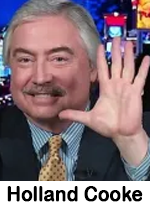
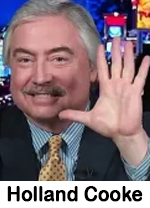
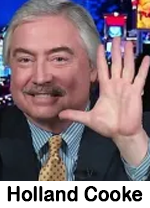
By Holland Cooke
Consultant
 By 2009, I had been making my living consulting and coaching talk hosts for 14 years, but I myself had not yet hosted a talk show. Like Rush Limbaugh before he went-talk, I had lots of on-air time under my belt as a music DJ. And that same skill set contributes to talk radio success: “Play the hits” (topics) and convert Cume to AQH (technique).
This month and next, when so many take vacation time, guest-hosts are often local somebodies who are not career broadcasters and don’t share our second-nature performance routines. For their benefit, these tips, based on my experience on both sides of the mic:
My hosting debut was “The Jim Bohannon Show.” And Jimbo told me I was only the third person to ever guest-host, after Joan Rivers and Chris Matthews jump-started their broadcast careers there. But, to these listeners, who-the-heck was I? Lacking the back-story of an A-list comedian or former presidential speechwriter, I simply told the truth, saying, “I’m Jim’s pal, Holland Cooke” as I quickly invited callers into the hour’s topic or teed up the guest. I had promised myself I would avoid “The Sitting-In For Rush Syndrome:” unscripted monologue about myself and blah-blah-blah until the first break. TALKERS publisher Michael Harrison – himself a well-traveled guest host – recommends nonchalance and warns against, “It’s such an honor to be here!”
So, if you’re filling-in, that’s Tip #1: Cut to the chase. Don’t devalue the show by committing lots of time explaining that the familiar host is away and who you are. Tee-up what the show is about this hour… why it matters to those listening… how they will benefit from not wandering-off when they hear a stranger… and how to join-in.

Demonstrating this technique when “FOX Across America” host Jimmy Failla is off: my long-suffering client Paul Gleiser. His day job is owning KTBB, Tyler-Longview, Texas; and his side hustle is guest-hosting Jimmy’s show, which he’s done a half-dozen times this month. Understanding Tip #2: You’re a guest in someone’s home, Paul asked Jimmy for advice. Always in-character, Failla quipped “Drive it like you stole it!” So Gleiser is all about call count, teeing-up TWO tempting propositions, one topical, the other a softer “Bonus Question.” As I write this, he’s asking, “Which Democrat do we [Republicans] want to run-against in 2024?” and – as new employment numbers are announced – “The WORST job you ever had?” Callers are telling stories.
That’s Tip #3: Invite callers. Admittedly, my debut was a snap, with Jimbo’s show on 500-plus stations. But later, when then-PD Bill White had me do three nights on WBT, Charlotte, he texted me after my first hour to say that I had taken more calls that hour than other hosts get-around-to in a week. In a recession, I asked if callers were “Seeing ‘green shoots’ of recovery?” and “The best car you ever owned?” They all told stories about both. “DON’T beg for callers,” Harrison says. And bring more than just your voice, i.e., guests and sound bites from news feeds. Gleiser: “Prep like the phone is broken.”
Tip #4: Invite participation multiple ways. Many listeners would rather text than call. Do so and you’ll sound accessible and at-the-speed-of-life. And follow @smerconish to see how (effectively) he polls listeners via social media.
Tip #5: “Know what the show was about yesterday,” Gleiser urges, because political topics tend to change little day-to-day. Avoid this trap: The guest host’s outspoken narrative is a point that’s already been talked-to-death BUT this is HIS shot on a big show, so this is HIS turn to me-too the unison. Better approach: Come up with a new wrinkle; like Paul’s aforementioned “Who [Democrat] do we [Republicans] have the best chance of beating in 2024?”
Tip #6: Empower callers, by asking their FEELINGS, rather than asking for facts or their expertise. They’re not experts. Instead, use The Magic Words (“you” and “your”): “Should you be fined for installing or replacing your gas stove?” Or empower them with access to a guest they can Q+A about matters that matter to their lives. When the fill-in host is “a somebody” – the mayor or an athlete or an expert – the host him/herself is an opportune topic. As we say when inviting calls to hosts who broker weekend airtime: “The lawyer is in, the meter is off.”
Tip #7: Establish a relationship with the producer “BEFORE the show” Gleiser advises: “Don’t just show up.” Ascertain who-does-what. In some cases, the producer will have booked guests and may suggest or assign call-in topics. Or – in Jimmy Failla speak – you’re driving, if the producer is simply call-screening and running-the-board (which you should NOT attempt if you’re not an experienced broadcaster or if you are unfamiliar with this particular station’s set-up).
Tip #8: Keep re-setting – succinctly, “matter-of-factly” as Michael Harrison puts it — introducing yourself and your guest-or-topic — when you’re going-into and coming-out-of breaks, and at the beginning of each hour. Why: Listeners are constantly tuning-in.
Tip #9: Always and only announce the call-in number immediately after you tell them WHY to call. Most common mistake I hear, even from experienced hosts: They give-out the phone number at the very beginning of the show or hour or segment, then (eventually) they tell you why to call, possibly minutes later (an eternity in live radio). So, they’re haunted by those dreaded “regulars” who already have the number memorized. Make announcing the number the punch line, whether you’re asking opinions on topic du jour or offering access to a guest they’ll want to interact with. ‘Seems like a little thing, but this can make a big difference in how popular you make the station sound.
Tip #10: “Be a convenience to the station,” not high maintenance. Harrison: “If you’re a diva they won’t ask you back.”
Tip #11: Afterward, give it a listen. If you do this for a living, wait a week, so you hear your work with fresh ears. Not a broadcaster? Was there a segment worth sharing on your blog or via social media? Did you or a guest explain something real useful? On Twitter, link to an audio clip of “Pet Pro Dr. Donna Johnson’s tips for helping your critters keep their cool during a long, hot summer,” so you’re useful to those who weren’t listening live. For LOTS of clicks and shares, include pictures of cuddly kittens and puppies.
Tip #12: If you are a career broadcaster, “always be available (and prepared) on short notice,” Michael Harrison recommends. 😉
Holland Cooke (HollandCooke.com) is a consultant working at the intersection of broadcasting and the Internet. He is the author of “Spot-On: Commercial Copy Points That Earned The Benjamins,” a FREE download; and the E-book and FREE on-air radio features “Inflation Hacks: Save Those Benjamins;“and Multiply Your Podcast Subscribers, Without Buying Clicks,” available from Talkers books. Follow HC on Twitter @HollandCooke
Share this with your network




 Amendment Foundation defamed him. No such accusation ever actually took place. In its Motion to Dismiss, Open AI argues several points, including that Georgia is not the proper jurisdiction, but it summarizes its argument that Walters’ claims don’t meet the burden of defamation when it says, “Even more fundamentally, Riehl’s use of ChatGPT did not cause a ‘publication’ of the outputs. OpenAI’s Terms of Use make clear that ChatGPT is a tool that assists the user in the writing or creation of draft content and that the user owns the content they generate with ChatGPT. Riehl agreed to abide by these Terms of Use, including the requirement that users ‘verify’ and ‘take ultimate responsibility for the content being published.’ As a matter of law, this creation of
  drive program alongside Kevin “KT” Turner and takes on “The Downbeat” as its name. Jeff Cavanaugh and Julie Dobbs move from the morning daypart to afternoons alongside Mike Rhyner for “The Speakeasy” program. The show times are altered by an hour with the morning program airing from 6:00 am to 10:00 am, the midday “Ben and Skin” show airing from 10:00 am to 2:00 pm, followed by the afternoon show airing from 2:00 pm to 6:00 pm. Zaccagnini tells the Dallas Morning News, “The catalyst for this change was to make a better fit for our same staff to further excel in a weekday lineup that best suits their professional and personal lifestyles.”
 on new contracts to continue “The Hang Zone” show. The report indicates that Cumulus and the two hosts had been negotiating for the better part of seven months on new, long term deals but McDowell & Kemp and the company were split over digital media projects that the two wanted to pursue beyond their work with “The Ticket.” They resigned on Tuesday (7/17). Cumulus has not officially named a new host or hosts for the 12:00 noon to 3:00 pm daypart.
 dedicated to talk (Monday through Thursday as Friday nights belong to
 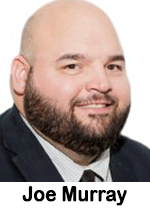 he’s also co-hosted “The Over/Under Show,” the station’s dedicated gambling show and podcast that launched four years ago. He also currently co-hosts the New England Patriots post-game show following the game broadcasts on The Sports Hub Patriots Radio Network. Leroy Irvin expands his role on the station as he’ll continue to serve as
 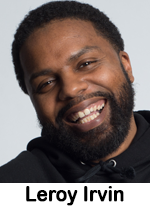 a regular weekend co-host and will add on-air duties for New England Patriots broadcasts on the station, co-hosting the postgame show after each game. Irvin also serves as part of the “Get Up Crew” on Beasley’s sister urban contemporary WBQT-FM “HOT 96.9.” Finally, Cerrone Battle, formerly of the “Play Action Sports Podcast” and “That 617 Life” on NBCSB, joins the staff in which he’ll contribute to the station’s nighttime and weekend programming. Station program director Rick Radzik comments, “Joe, Leroy and Cerrone all grew up in Boston and, like our listeners, have an engrained passion for sports. It’s nice to see Joe’s many years of dedication pay off, have Leroy’s role at the station elevated, and hear Cerrone once again in his hometown. I’m happy for all three of them!”
 How about a collective “thank you” to the 45th president of the United States for keeping your talk radio programming relevant, timely, unpredictable and most of all engaging?
 Last week I had the privilege of moderating a panel at the TALKERS conference. Confession: I listen to speech patterns and tones more than words.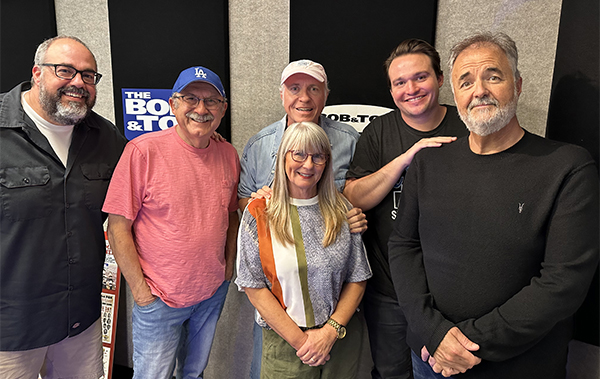
 Show” to a live clearance from 1:00 pm to 4:00 pm. KIDO brand manager Kevin Miller states, “In the world that we live in today, with the possibilities of world war and an upcoming presidential election, the addition of Clay and Buck along with Sean Hannity live will allow Idahoans to hear the news and talk about it as it happens. It’s great having all three talented hosts with Idaho connections and values in the Treasure Valley.”
 community’s access to Michigan’s most influential political, civic, and business newsmakers.” Moving to mornings is current early afternoon host Guy Gordon, who becomes host of “JR Morning” from 6:00 am to 9:00 am. “All Talk” with Tom Jordan and Kevin Dietz airs from 9:00 am to 12:00 noon. Following “Focus” will be the
  newly created “JR Afternoon” show with host Chris Renwick from 2:00pm-4:00pm, followed by “The Mitch Albom Show” from 4:00 pm to 6:00 pm. Additionally, WJR is bringing back “SportsWrap” with host Sean Baligian airing from 6:00 pm to 7:00 pm. Cumulus Detroit VP and market manager Steve Finateri says, “Launching the ‘Focus’ show will give Paul W. Smith the opportunity to expand, on and off the air, his unmatched relationships with Michigan’s most influential newsmakers, for the benefit of our audience and our advertising partners. WJR is ‘The Great Voice of the Great Lakes’ and going 100% local is a big win for all Michiganders who count on WJR to inform and educate us about everything happening here in our state!” WJR program director Mike Wheeler adds, “What a lineup! Each of our talent is a brand unto themselves and have a unique vision and take on the events that shape the news. We are absolutely living up to our claim that WJR is where Michigan comes to talk.”
 for listening for 60% of consumers. According to a study by MARU/Matchbox, there are a number of reasons listeners gravitate to AM/FM. First is comedic relief: 90% strongly or somewhat agree that their favorite DJs make them laugh. Second is local feel: 73% say personalities understand what makes my city/town unique. And third is thought-provoking: 64% agree that they make them think. Additionally, Magna and Vox Media surveyed 2,028 weekly podcast listeners and asked, “Whose influence matters most?” A stunning 75% cited podcast hosts while only 15% named social media influencers or TV/movie celebrities (10%).
  says that in 2020, “Carolla made history when he partnered with
  Sports gambling analyst Jason McIntyre in which crosstown news/talk WIND-AM, Chicago personality Dan Proft soon became involved. In the course of this being discussed by hosts on both WIND and WSCR, Riordan said, directing his words to Proft, “Dan, I’ll have sex with your mother,” and then adding, “Dan Proft, you bring your mother over here, and I’ll bone her.” When Audacy was asked for a comment by the Chicago Sun-Times, it declined to comment.
 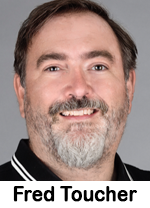 extended absence for a chronic throat condition that led to a cancer scare. Toucher, who co-hosts the morning show with Rich Shertenlieb, says in a video he posted to Twitter, “I feel my voice is getting stronger. I think that if I go to the doctor on Monday, he is going to give me permission to go back on the air. So, what turned out as a big, big cancer scare, where I was given assurances that it was cancer in my throat, might turn out to be that I needed not to talk for a very long time.”
 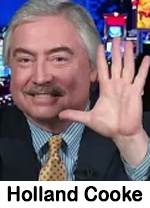 It’s the most effective tactic in marketing: Free samples. And the attorneys, financial advisors, real estate agents, veterinarians, and other ask-the-expert hosts who broker time for weekend call-in shows can drum up lots of new business…IF they execute well.
 and Brian Antonelli. iHeartMedia Boston director of operations, news, talk and sports Bill Flaherty says, “Everyone I talk to is now betting on sports. With the interest at a fever pitch, I can’t think of a better time to launch this show.” Kaufman adds, “There’s no greater platform than live sports talk radio and, since January, there’s no greater obsession in and around Massachusetts than sports betting. I’ve been fortunate to spend many years of my career working in both areas and I couldn’t be more thrilled to have them intersect now. Boston is ready for a nightly gambling show. I’m honored to host it and can’t wait to sweat bets with listeners, industry experts, and our incredible team starting May 1.”
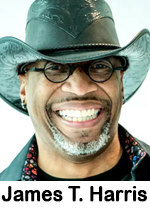 forward by a Phoenix trial court judge. Harris and iHeartMedia appealed, arguing the case should be dismissed as Harris’ statements “were rhetorical hyperbole incapable of being proved false and protected by the First Amendment, and were therefore not actionable.” The State Supreme Court agreed unanimously. Justice William Montgomery wrote, “Under the First Amendment, apparently factual statements must be considered in light of the nature in which the speaker uttered them and the relationship of the statements to the overall context. Here, the nature of the words is colored by the context of an overtly political talk show.” But he also stated, “We do not suggest that the First Amendment provides categorical protection to anything that may be said on a political talk show,” adding a ruling from another case saying, “Candidates cannot make defamatory assertions they hope voters will believe, then, when sued for defamation, seek refuge in the defense that no one believes what politicians say.”
  Carton Show” weekdays from 7:00 am to 9:30 am on FS1 since September of last year in addition to the daily WFAN afternoon drive show he does alongside Evan Roberts. As Marchand writes, doing both shows is time consuming. Carton is up in the middle of the night to get to Midtown for the FS1 show, then does the WFAN show and gets home around 8:30 in the evening. Marchand also speculates that FS1 might believe that Carton’s TV show would draw more viewers if he wasn’t also on “The Fan.” It’s reported that Carton’s contract with Audacy expires later this year so WFAN would like to know what Carton’s plans are sooner rather than later.
  course of his career and we’re pleased to add him and his perspective to our weekday ‘BetQL Daily’ program alongside Joe and Erin. Through his wealth of experience in sports reporting and analysis, Ed will provide valuable insights to our listeners as they make their betting decisions, while using his expertise to break down games, analyze players and teams, and provide valuable betting tips, strategies and Wagertainment.”
 We’ve seen autopsies depicted on various cop shows. As the doctor dispassionately probes the deceased, he or she is dictating into an audio recorder: “I’m opening up the chest cavity…”
 Does anybody really know what time it is? Does anybody really care? YES.
 The show on March 18 will broadcast live from the BetMGM Sportsbook at Mandalay Bay Resort and Casino in Las Vegas as part of Audacy’s exclusive partnership with BetMGM. Audacy president of sports Mike Dee says, “The men’s college basketball tournament is the premier playoff tournament in American sports, and we’re excited to bring back this informative and entertaining program. Whether you’re trying to win your office pool or cash in on this year’s bracket, ‘Countdown to Tip-Off,’ with Nick and Ken will have you covered with their expert analysis of all the madness this March.”
 ‘Stuff You Missed in History Class’ podcast, Holly Frey; and esteemed journalist, author and co-founder of Pushkin Industries, Malcolm Gladwell, joined with today’s biggest marketers to explain why podcasting is growing rapidly and how brands need to adapt, invest and create audio advertising that resonates with podcast fans.” iHeartMedia Digital Audio Group CEO Conal Byrne says, “Podcasters are the most creative, fastest-growing, diverse wave of influencers to hit content and marketing in years – just as influencer marketing more generally was becoming a key new way to reach audiences. This event came together because our podcast creators are deeply invested in the brands and advertising that become part of their shows, that they asked us to give them a chance to sit down with marketers at scale and talk about what makes host-read creative work. What really differentiates podcasting and our iHeartPodcast Network from other mediums is that creators and fans expect the advertising to be endemic to the shows, often voiced by the hosts and authentic to the listening experience. This is a chance to roll up our sleeves and co-create, collaborate and showcase the simplicity, speed and creative potential of podcasting.”
 Whenever possible, USA consumers will pay cash, and they’re paying-down credit card balances, per recently released
 -the-hour news during the “Sid & Friends Morning Show.” He’ll also be responsible for all WABC news content and distribution, on-air and online. Laden served with WABC from 2003 to 2018 in which he was news director, news anchor on the “Imus In the Morning” show, and co-host on the Geraldo Rivera show. Laden says, “I’m very excited to join the new 77 WABC. The station has a terrific lineup of hosts and the ratings are soaring. It’s great to be part of a winning team with passionate owners. We’ve got lots of exciting plans for distribution of our news.” Red Apple Media president Chad Lopez says, “New Yorkers need to be in-the-know first thing in the morning and throughout their busy day. Our goal at WABC Radio is not only to deliver the news but to include all sides of the story.”
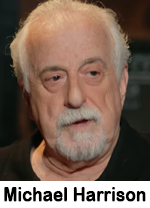 The embarrassing situation and accompanying financial vulnerability being faced by our colleagues at FOX News is a high-profile example of the consequences of audience “targeting” that has become the common positioning strategy in today’s competitive media marketplace. The process is simple: You give the specifically targeted audience what it wants, not necessarily what it needs, even if what it wants is of dubious quality or unhealthy and – in the case of political talk media – untrue. It is a problematic, unsavory practice that has been brewing in our industry for years and, in the case of FOX, the proverbial toxicity has just hit the fan.
 Growing up in a small town, “word of mouth” was the most powerful form of advertising. It could make – or break – a business. Malcolm Gladwell’s important Tipping Point book explained that movements, pandemics, and other things that “catch on” do so because of the influence of “connectors” – people who are asked for their opinion. Today, the media world likes to call them “influencers.”