By Matthew B. Harrison
TALKERS, VP/Associate Publisher
Harrison Media Law, Senior Partner
Goodphone Communications, Executive Producer
 The Problem Is No Longer Spotting a Joke. The Problem Is Spotting Reality
Every seasoned broadcaster or media creator has a radar for nonsense. You have spent years vetting sources, confirming facts, and throwing out anything that feels unreliable. The complication now is that artificial intelligence can wrap unreliable content in a polished package that looks and sounds legitimate.
This article is not aimed at people creating AI impersonation channels. If that is your hobby, nothing here will make you feel more confident about it. This is for the professionals whose job is to keep the information stream as clean as possible. You are not making deepfakes. You are trying to avoid stepping in them and trying even harder not to amplify them.
Once something looks real and sounds real, a significant segment of your audience will assume it is real. That changes the amount of scrutiny you need to apply. The burden now falls on people like you to pause before reacting.
Two Clips That Tell the Whole Story
Consider two current examples. The first is the synthetic Biden speech that appears all over social media. It presents a younger, steadier president delivering remarks that many supporters wish he would make. It is polished, convincing, and created entirely by artificial intelligence.
The second is the cartoonish Trump fighter jet video that shows him dropping waste on unsuspecting civilians. No one believes it is real. Yet both types of content live in the same online ecosystem and both get shared widely.
The underlying facts do not matter once the clip begins circulating. If you repeat it on the air without checking it, you become the next link in the distribution chain. Not every untrue clip is misinformation. People get things wrong without intending to deceive, and the law recognizes that. What changes here is the plausibility. When an artificial performance can fool a reasonable viewer, the difference between a mistake and a misleading impression becomes something a finder of fact sorts out later. Your audience cannot make that distinction in real time.
Parody and Satire Still Exist, but AI Is Blurring the Edges
Parody imitates a person to comment on that person. Satire uses the imitation to comment on something else. These categories worked because traditional impersonations were obvious. A cartoon voice or exaggerated caricature did not fool anyone.
A convincing AI impersonation removes the cues that signal it is a joke. It sounds like the celebrity. It looks like the celebrity. It uses words that fit the celebrity’s public image. It stops functioning as commentary and becomes a manufactured performance that appears authentic. That is when broadcasters get pulled into the confusion even though they had nothing to do with the creation.
When the Fake Version Starts Crowding Out the Real One
Public figures choose when and where to speak. A Robert De Niro interview has weight because he rarely gives them. A carefully planned appearance on a respected platform signals importance.
When dozens of artificial De Niros begin posting daily commentary, the significance of the real appearance is reduced. The market becomes crowded. Authenticity becomes harder to protect. This is not only a reputational issue. It is an economic one rooted in scarcity and control.
You may think you are sharing a harmless clip. In reality, you might be participating in the dilution of someone’s legitimate business asset.
Disclaimers Are Not Shields
Many deepfake channels use disclaimers. They say things like this is parody or this is not the real person. A parking garage can also post a sign that it is not responsible for damage to your car. That does not absolve them when something collapses on your vehicle.
A disclaimer that no one negotiates or meaningfully acknowledges does not protect the creator or the people who share the clip. If viewers believe it is real, the disclaimer (often hidden in plain sight) is irrelevant.
The Liability No One Expects: Damage You Did Not Create
You can become responsible for the fallout without ever touching the original video. If you talk about a deepfake on the air, share it on social media, or frame it as something that might be true, you help it spread. Your audience trusts you. If you repeat something inaccurate, even unintentionally, they begin questioning your judgment. One believable deepfake can undermine years of credibility.
Platforms Profit From the Confusion
Here is the structural issue that rarely gets discussed. Platforms have every financial incentive to push deepfakes. They generate engagement. Engagement generates revenue. Revenue satisfies stockholders. This stands in tension with the spirit of Section 230, which was designed to protect neutral platforms, not platforms that amplify synthetic speech they know is likely to deceive.
If a platform has the ability to detect and label deepfakes and chooses not to, the responsibility shifts to you. The platform benefits. You absorb the risk.
What Media Professionals Should Do
You do not need new laws. You do not need to give warnings to your audience. You do not need to panic. You do need to stay sharp.
Here is the quick test. Ask yourself four questions.
Is the source authenticated?
Has the real person ever said anything similar?
Is the platform known for synthetic or poorly moderated content?
Does anything feel slightly off even when the clip looks perfect?
If any answer gives you pause, treat the clip as suspect. Treat it as content, not truth.
Final Thought (at Least for Now)
Artificial intelligence will only become more convincing. Your role is not to serve as a gatekeeper. Your role is to maintain professional judgment. When a clip sits between obviously fake and plausibly real, that is the moment to verify and, when necessary, seek guidance. There is little doubt that the inevitable proliferation of phony internet “shows” is about to bloom into a controversial legal, ethical, and financial industry issue.
Matthew B. Harrison is a media and intellectual property attorney who advises radio hosts, content creators, and creative entrepreneurs. He has written extensively on fair use, AI law, and the future of digital rights. Reach him at Matthew@HarrisonMediaLaw.com or read more at TALKERS.com.
Share this with your network


 Seven consumer studies commissioned by the Cumulus Media | Westwood One Audio Active Group® over an eight-year period find audio listeners are a rich source of in-market financial consumers and drive significant top and bottom funnel impact. The key findings from the studies are outlined on this week’s blog.
 Earlier this week, Michael Harrison published his top 10 list of suggestions for being a successful talker. Item number three really caught my eye:

 dominant spoken-word audio listening platform, but it was fully sixty-five percentage points higher than podcasts, which accounted for 10% of listening time back then. Quarter by quarter and year over year, time spent using AM/FM radio to listen to spoken-word audio has declined significantly and shifted to time spent with podcasts. As of Q4 2025, 40% of time spent listening to spoken-word is now spent with podcasts and 39% of time is spent with AM/FM radio. Not only does radio not beat podcasts by a significant margin, it now trails the on-demand platform for spoken-word audio listening.”
 help to the entire team throughout the past year, stepping in without hesitation and taking on added responsibility. His work ethic, commitment to the station, and focus on fostering a collaborative environment have not gone unnoticed, making him the ideal candidate for this elevated role.” LaCroix, who’s been with the station since 2017 and has served as executive producer of the morning show since 2021, says, “I’m delighted to accept this role and grateful for the opportunity. I’m excited to continue working with this team and to help drive the continued growth and success of ‘The Fan.’”
 Hubbard says the collaboration brings together Federal News Network’s trusted reporting with Leadership Connect’s proprietary data and analysis to deliver deeper context and insight across the federal marketplace. Federal News Network publisher Jeffrey Wolinsky states, “Our mission has always been to support federal executives with the insights they need to lead effectively. This partnership with Leadership Connect allows us to enrich our reporting with deeper data, ensuring our audience receives more impactful content than ever before. We are thrilled to integrate these resources to better serve the federal community.”
 deal to provide a one-minute news update hosted by one of the network’s anchors to over 15,000 taxis across the country, including in New York City. In a January 21 letter to Mamdani and Taxi and Limousine Commissioner Midori Valdivia, Hoylman-Sigal stated the cabs should not carry Newsmax because of its “politically charged content.” The letter went further, stating Newsmax “is not a credible news source for New Yorkers. I urge you to summarily suspend the NYC Taxi and Limousine Commission’s partnership with Curb… and demand that Curb cease its collaboration with Newsmax as a condition of licensure given the platform’s history of misinformation and disingenuous reporting.” Newsmax says, “This is a pure act of censorship targeting a news organization reaching over 50 million Americans regularly. Newsmax plays it straight and that drives the far left crazy.”
  Linear broadcast media have never been more challenged. Internet video now commands far more viewing time than over-the-air TV. And their own networks are hijacking viewers! Your local NBC station tells you to watch Peacock. ABC points you to Disney+. CBS pushes Paramount+. Affiliates are effectively forced to promote their own competition.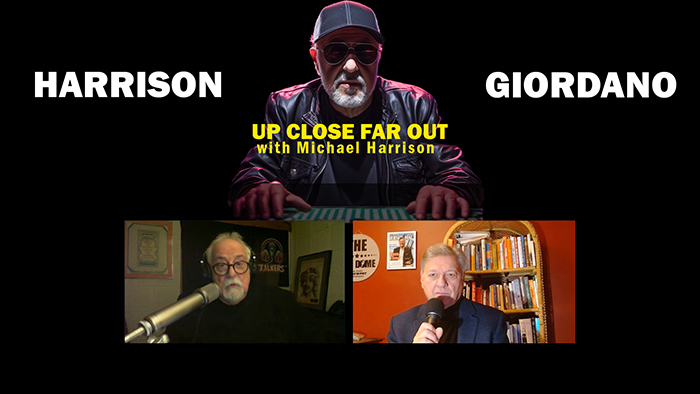
 Giordano is a political commentator, social generalist and seasoned expert on education. He is a former Pennsylvania-based schoolteacher whose keen insights, innovative ideas, and communication skills were discovered by talk radio in Philadelphia in 1987 when, after serving as a dependable “go-to” source on education, he became a fulltime host on WWDB-FM. In 2000, he moved over to powerhouse WPHT 1210 am in Philly where he has been broadcasting ever since. In addition to his enduring radio presence, Giordano hosts several podcasts including the groundbreaking “Old School, New School, Next School” which takes a critical-but-constructive view of America’s education crisis and is must-listening for parents who care about their kids and the future of America. Get ready for a no-holds-barred view of such hot topics as school choice, the tyranny of social media, the distraction of smart phones, short term attention spans, bullying, the threat of guns and violence, responsible parenting, media complacency, and a whole lot more.
 For years, “protect your name and likeness” sounded like lawyer advice in search of a problem. Abstract. Defensive. Easy to ignore. That worked when misuse required effort, intent, and a human decision-maker willing to cross a line.
 competition local radio stations today face for audiences and vital advertising revenues from online and satellite content providers and digital ad platforms not subject to any comparable restrictions on their scale and scope; the dire negative effects that consumer and advertiser substitution of competing digital audio content and advertising for traditional radio has had on the listenership and advertising revenues garnered by local radio stations, including in mid-sized and small markets; and how the retention of asymmetric ownership restrictions has prevented radio broadcasters from gaining local scale to take advantage of important economic efficiencies, obtain investment capital, and better compete for audiences and advertising revenues, and thus enhance – or even maintain – their provision of news, emergency information, and valued entertainment and sports programming in local communities across the country at no cost to the public.” Responding to testimony from musicFirst Coalition and the Future of Music Coalition – referred to as the Coalitions – NAB writes, “First, the fact that the Coalitions continue to hold themselves out as protectors of small, local independent broadcasters not just borders on the absurd but crosses over into full-blown absurdity. The Coalitions represent the interests of the music industry, which is dominated by three consolidated international record labels. Compared to even the largest radio station groups, the giant record labels are the 800-pound gorillas of the music world. Those three labels earn billions more in revenue than the approximately 11,000 full-power commercial AM/FM stations combined. As NAB earlier reported, the three major music companies jointly generated about $2.9 million per hour in 2023. In remarkable contrast, in 2023 and 2024 the vast majority of radio stations garnered less – and often much less – than $2.9 million per year in advertising revenues. Needless to say, the Coalitions have never explained how local radio stations earning such low levels of revenue (and even lower, if any, profits) are supposed to keep talented employees and provide high quality programming, including popular music, sports, and informational programming, such as weather updates and emergency information, OTA and free to the public without achieving increased local scale, greater economic efficiencies, and more robust ad revenues.
  discoverability capabilities to small and mid-sized businesses that are being excluded from emerging search and discovery channels due to cost, complexity, and technical barriers.” Audacy SVP of digital Jenny Sutton says, “Local advertisers can be overwhelmed by the pace of change in digital marketing and discovery. By partnering with Next Net, we’re giving our clients a future-ready solution that integrates AI discoverability directly into the media and marketing strategies they already know and trust, without requiring technical resources or additional burden on the business owner.”
 With the conclusion of 2025 at hand, we are entering the second half of the third decade of the 21st century. It will be a remarkably transitional period for the talk radio industry and its closely associated fields in talk media, as well as media-in-general.
 addition to their existing audio distribution. When this video feature launches, creators will be able to upload their podcast episodes, including full-length video versions, through their standard RSS feeds for seamless distribution in iHeartRadio.” The company goes on to say that this feature will 1) allow podcasters to control how their content is presented; 2) allow creators control over their monetization, with no revenue share required to iHeart; and 3) give them the freedom to have their videos hosted and served from wherever they want and not be tied to an iHeart-owned hosting provider. iHeartMedia chairman and CEO Bob Pittman explains, “While audio remains the backbone of the podcast medium, as well as its primary source of audience connection and the reason for the industry’s explosive growth, video podcasting is now emerging as a completely separate and incremental form to audio, in the same way that podcasting evolved as a new layer on top of broadcast radio. At iHeartMedia creators come first. Providing this new video distribution capability for free to our creators is an additional testament to our continuing focus on creators’ success and is consistent with how and why the podcast industry was built to begin with.”
 working to empower local broadcasters to serve the public interest and meet the needs of their communities. As Congress, the Supreme Court, and the FCC have all made clear, broadcasters are different than every other distributor of media. Specifically, broadcasters are required by both the Communications Act and the terms of their FCC-issued licenses to operate in the public interest. This sets them apart from cable channels, podcasts, streaming services, social media, and countless other types of distributors that have no public interest obligation. The FCC’s broadcast hoax rule, its news distortion policy, its political equal opportunity regulation, its prohibition on obscene, indecent, and profane content, its localism requirements – all of those and more apply uniquely to broadcasters. Congress has instructed the FCC to enforce public interest requirements on broadcasters. The FCC should do exactly that.
 Carolina – southwest of the city of Charlotte. The company says the move will bring “Charlotte’s premier source for news, conversation, and community connection to a powerful 100,000-watt signal.” The company is moving WLNK to the 100.9 and 93.3 frequencies. Charlotte VP and market manager Marsha Landess adds, “We are thrilled to elevate WBT to the FM dial, ensuring that even more listeners can connect with the voices they trust every day. These moves further strengthen our position in the market and reinforce our commitment to serving Charlotte with the best local programming, news, and entertainment.”
 New York. Bold Gold says WDLA-AM will “broadcast Catskills News Talk, the Voice of Sullivan and the Catskills, a news and talk format featuring ‘Ciliberto & Friends’ with radio legend Paul Ciliberto.” Bold Gold Media NY region general manager Dawn Ciorciari states, “There is something truly special about turning the lights back on for a local radio station. We are beyond excited to bring local radio back to life for the people of Walton and Delaware County; to once again give this community a local voice, a source of connection, and radio stations they can call their own.”
  Lochridge entered the business in the sales department and by 1970 became the general manager of WRIF, Detroit. He was promoted by ABC to general manager for WPLJ, New York in 1973. He would serve at KAUM, Houston before returning to New York to serve with ABC Radio Networks. He later joined NBC’s The Source. In 1988 he and his wife purchased a small station in Wickenburg, Arizona.
 distributed by Audacy to unite the biggest sports voices, markets, and fans.” Audacy Detroit SVP and market manager Debbie Kenyon says, “The launch of ‘97.1 Detroit Sports Radio Network’ represents a massive commitment to our listeners and an exciting chapter in our growth. We are excited to partner with Townsquare Media and other media companies to expand our footprint across all of Michigan and to deliver great content to the dedicated fan base we serve. We are proud to deliver best-in-class sports coverage to the entire state, solidifying our position as the essential source for Michigan sports audio content now and for years to come.” The network’s first affiliates include Townsquare Media’s WFGR in Grand Rapids, WJIM in Lansing, WBCK in Battle Creek, and WKMI in Kalamazoo, plus Blarney Stone Broadcasting’s WGRY in Roscommon. Additional affiliates will be announced in the upcoming months.
 16% year-over-year decline in the percentage of Americans who say they get their news ‘often’ from apps like Instagram, Facebook, TikTok and X.2. In this rapidly changing landscape, consumers are increasingly turning to All News Radio for local news, trusted voices, and fact-based reporting.” Borelli cites as evidence for this Nielsen data indicating that Audacy all-news stations are up 11% versus last year and adds that’s coming off a presidential election year. Ben Mevorach is vice president of news at WINS, New York and he says, “As the number of places to get news continues to grow, the number of places to find news that is credible, trustworthy, and without bias is rapidly shrinking. People constantly tell us that 1010 WINS is their sole source for news they can trust.”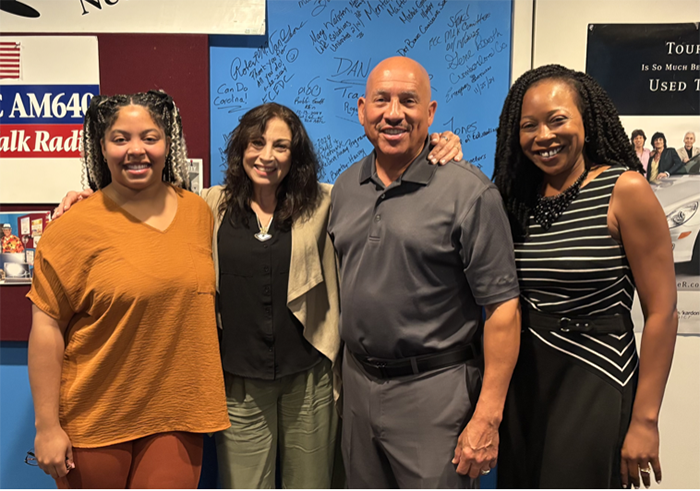
 Microsoft CEO Steve Ballmer retired with enough do-re-mi to indulge two passions. He bought the NBA Los Angeles Clippers (for a record $2 billion). And he built
 but sources tell Reuters that it would likely be sometime after November. Senate Commerce Committee Chair Ted Cruz criticized Carr for comments he made on the Benny Johnson podcast about late night talk host Jimmy Kimmel’s joke that appeared to threaten ABC/Disney and promise FCC action against the company if it didn’t take action on its own. On his Premiere Networks distributed podcast, “The Verdict with Ted Cruz,” Cruz said of Carr’s comments, “I got to say that’s right out of ‘Goodfellas.’ That’s right out of a Mafioso coming into a bar going, ‘Nice bar you have here. It would be a shame if something happened to it.’” Carr recently said that’s not what he meant and stated, “We don’t want to see weaponization of government by any administration against any perspective – and that’s certainly not what we’re doing here.”
 Jimmy Kimmel’s first monologue back after the recent suspension had the audience laughing and gasping, and, in the hands of countless radio hosts and podcasters, replaying. Within hours, clips of his bit weren’t just being shared online. They were being chopped up, (re)framed, and (re)analyzed as if they were original show content. For listeners, that remix feels fresh. For lawyers, it is a fair use minefield.
 complexities of divorce – helping people navigate every stage of the process faster, more affordably, and with far less conflict. Hello Divorce says its service “goes far beyond digitizing forms and redesigns the entire divorce experience with proprietary technology and AI to eliminate costly errors, reduce delays, and remove the bottlenecks that wreak havoc on divorce timelines.” iHeartMedia president of corporate development and ventures Joe Robinson says, “Hello Divorce offers a powerful solution for one of life’s most challenging transitions. This partnership gives them a unique opportunity to connect with people nationwide through our platforms, delivering resources and guidance that can truly make a difference.”