



Monday Memo: Sayonara CBS
By Holland Cooke
Consultant
 Although I don’t have a machine to play it, I have saved the cart. December 9, 1980, the sad morning-after John Lennon died, Charles Osgood, doleful: “I read the news today. Oh boy.” That morning’s CBS World News Roundup – and on-hour newscasts throughout that day – delivered more moments that would keep you sitting in a parked car at your destination. As they would 3 months later when President Reagan was shot. Then soon again when Pope John Paul II was severely wounded in St. Peter’s Square. And five years yonder, when the Space Shuttle Challenger exploded just 73 seconds into its flight.
There have been countless other such moments we emotionally bookmark. But it is the dependable day-in-day-out certainty of its on-hour newscast – what we programmers call “a benchmark” – that we will miss most after Friday, when CBS News Radio ends. Among the stories they will cover that day: Stephen Colbert’s CBS “Late Show” finale the night before.
The CBS Radio Network would have turned 100 next year. It sent home the sounds of war, live from a rooftop: “This… is London,” reported by Edward R. Murrow, whose name adorns the news award broadcasters still strive for. His trademark sign-off “Good Night and Good Luck” titled a 2005 biopic directed by George Clooney, who starred in last year’s ambitious Broadway production (available on Netflix). The New York Times: “Clooney makes Edward R. Murrow a saint of sane journalism for a world that still needs one.”
“It’s no secret that the news business is changing radically, and that we need to change along with it,” is the CBS corporate spin. But neither supply nor demand failed. What failed is the supply chain, 1996 deregulation run-amok. And news/talk stations have borne the brunt of it. Depopulated of local talent and starved for promotion and other resources allocated to co-owned music stations now losing to streaming, too many talk stations became angry, non-local, one-sided political caricatures, too predictable to seem vital. Other stations, with diligent owners hellbent on Doing It Right, are all-the-more conspicuous. They will continue to succeed, even without precious CBS assets. But those stations are anomalies, now outnumbered by others in unattended operation mode, some of which could end up broadcasting dead air on-hour Saturday morning.
Holland Cooke (HollandCooke.com) is a consultant working the intersection of broadcasting and the Internet. Follow HC on Twitter @HollandCooke and connect on LinkedIn
 syndication.” Red Apple says is has brought aboard former CBS Radio broadcast journalists Michael Wallace, Cooper Lawrence, Bill Rehkopf, and Matt Pieper as “the first major hires in what will be a rapid buildout of the network’s team of elite news anchors, correspondents, writers, and producers.” Harris says, “We are assembling top-tier journalists and building a modern radio news operation rooted in speed, authority, and facts – one that stations can rely on and listeners can trust.” Red Apple Media owner and CEO John Catsimatidis adds, “Our mission is to be the most trusted news gathering organization in media. We are creating a powerful, around-the-clock newsroom designed to compete at the highest level of broadcast audio news. Facts are what will drive the Worldwide News Network. We’re looking forward to our expansion in the European markets.”
 include news/talk stations KSDR-AM and KWAT-AM in Watertown along with four music-formatted signals. Connoisseur CEO Jeff Warshaw says, “Riverfront Broadcasting being a South Dakota-based company, understands the local market and can carry on providing local content and will excel in serving the community.” Riverfront president Carolyn Becker comments, “We are very happy to bring local ownership and local focus back to these great stations in the community.”
 available to radio hosts and producers free of charge. Kaye says, “I built this for me. I needed a faster way to break down what the media was actually saying versus what they were leaving out. Then I showed it to a few people. Then a few more. And it hit me. Every American deserves this tool. Not just hosts. Not just journalists. Everyone.” Kaye says RightPen.ai’s signature feature is the trademark Red Pen Correction Tool, which marks up news articles and headlines the way an English teacher marks up a bad essay. Bias gets circled. Spin gets crossed out. Missing context gets added in. The corrections appear directly on the article itself. Hosts or producers interested can reach out to Mark Kaye at
  Jay Clark was the first program director of WABC as a talk station. He set the tone and path for modern talk radio. This week I had Jay on as a special guest on the Red Apple Audio Networks all night show, “The Other Side of Midnight.” We celebrated the anniversary, May 10, (1982) of WABC’s switch from music to talk on the giant signal at 770 AM.
 format in America. KGO was the killer biller in San Francisco. The execs who ran them were mighty proud: Ben Hoberman, Ed McLaughlin, Al Racco, Chuck Debere. Yes, they ran those stations, but they also invented the caller-driven talk format. There were other winning talk stations, but they were guest centric rather than listener centric (i.e. WOR, WGN). At the time, there were 43 stations listed as “talk” stations. 43. Not many models.
 company outside of the New York City market. The station is currently airing a news/talk format of local, syndicated and brokered programming. Local air personalities include the daily morning show hosts Hank Stolz and Ben White (“Talk of the Commonwealth”) and longtime New England talk host Frankie Boyer who is heard in middays. Red Apple will assume operations under a local marketing agreement until the deal closes. Red Apple and Catsimatidis have made no indication of the company’s intent for future programming.
  “accelerating reach and deepening engagement with audiences nationwide.” Newsmax CEO Christopher Ruddy comments, “This growth shows that Newsmax is truly touching a nerve with audiences. We are continuing to execute on our strategy to reach all people on all platforms, and the results speak for themselves. Passion for our brand remains incredibly strong. We’re seeing audiences actively seek out Newsmax across platforms, share our content, and become part of a growing community that values our reporting and viewpoint.”
 on how to use digital tools and strategies to grow and compete in an increasingly digital marketplace. Especially as the city of Philadelphia prepares for a surge of global visitors tied to events including the FIFA World Cup, America’s 250th anniversary, and the MLB All-Star Game, local businesses face a potentially golden opportunity. “Ready, Set, Grow: Digital Business Foundations” is designed to ensure they are prepared to capture that opportunity by strengthening their digital presence, improving customer experience, and increasing visibility. The evening will feature a fireside chat and panel discussion moderated by author and tech influencer Stephanie “TechLifeSteph” Humphrey, host of “Life & Tech” on WURD Radio.
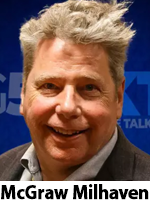 to coast. New station partnerships include WCCO-AM, Minneapolis; KTRS-AM, St. Louis; WPRO-AM, Providence; and KCMO-AM, Kansas City. The show airs live weeknights from 9:00 pm to 12:00 midnight ET. Westwood One says, “McGraw Milhaven delivers appointment listening for late-night audiences, featuring host McGraw Milhaven’s signature mix of compelling interviews, sharp analysis, and positive energy listener interactions. Milhaven brings both authority and approachability to national late-night talk radio – offering a fresh, contemporary voice grounded in experience.”
 advertisers are currently buying audio programmatically, up two times from 2022 (41%); 2) The most used programmatic audio demand-side platforms are Google Display & Video 360, The Trade Desk, and Amazon DSP; 3) Among publishers, the most utilized supply-side platforms for digital audio ads are Google Ad Manager, distantly followed by Amazon Publisher Services, Open X, and PubMatic; 4) Among those who purchase podcasts, Google DV360, The Trade Desk, and Amazon’s DSP are the most utilized demand-side platforms; and 5) Recent announcements from Amazon Ads indicate a major expansion of over-the-air AM/FM radio and audio advertising capabilities within the Amazon Demand Side Platform. Regarding that last point, the study notes that those moves “focus on bridging the gap between traditional broadcast AM/FM radio and digital, programmatic buying, allowing advertisers to use Amazon’s first-party signals for targeting and measurement.”
  Network, and Red Apple has recruited New York radio news legend Lee Harris to serve as vice president of news for WABC Radio and The Worldwide News Network. The company says, “The move positions WABC Radio and Red Apple Audio Networks for a dramatic next chapter, transforming the iconic New York news/talk station’s reach into a 24/7 global audio news presence fueled by streaming technology, smart speakers, mobile platforms, syndication, and digital distribution.” Red Apple owner John
  Catsimatidis says, “Today’s digital technology gives us the power to deliver the truth instantly, not just across America, but across Europe and around the globe. WABC Radio is already heard in all 50 states and in 178 countries through our multi-platform distribution. The Worldwide News Network is the natural next step in building a global destination for fair, balanced, no-nonsense news people can trust.” Lee Harris was the morning news anchor at 1010 WINS in New York for 30 years. Additionally, he has advised broadcasters throughout Europe and Asia, helped launch Moscow’s Kommersant FM as a U.S.-style all-news station, lectured at television and radio outlets across China through the University of Missouri School of Journalism, and served as director of integrated operations and New York bureau chief for cable startup NewsNation. Harris comments, “John Catsimatidis has never thought small, and this venture is no exception. The Worldwide News Network is an ambitious, forward-looking news platform designed for how people consume information today. I am thrilled to join Red Apple Media and WABC Radio at such a transformational moment and help build a news organization with both national strength and international reach.”
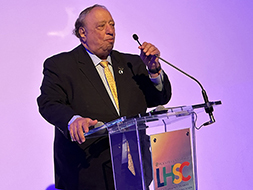 University on Long Island. TALKERS publisher Michael Harrison states, “The selection of ‘Cats’ as keynoter is in keeping with one of the major themes of this year’s edition of the iconic industry event – radio, talk media, and entrepreneurism. John Catsimatidis is presently setting the greatest example of entrepreneurism at work in giving an injection of much needed energy, focus and life to the medium of radio.” Harrison will serve as facilitator of the presentation in a Q&A / interview style format – a role he has played before with the dynamic billionaire media, grocery, and energy mogul.
 Catsimatidis will be joined by more than 60 speakers comprised of legendary industry figures as well as fresh faces and rising stars. A detailed agenda including speakers and schedule – a “who’s who” of industry luminaries – will be posted in TALKERS this coming Tuesday (4/28). See the link below for the names of all speakers booked to date.
 Harrison continues, “This important conference will illuminate the forward path of the expanding talk media universe, including all aspects of digital communications from AI and podcasting to streaming networks. As has been its tradition, this latest TALKERS conference will approach the onrushing future of the talk business from a radio perspective. This crucial gathering will cover the new undeniable realities of the radio business for those who not only want to survive but thrive as well. It will be about opportunities, networking, and entrepreneurism for individuals in talent, programming, sales, marketing, and management who are serious about staying in the game.”
 requests for comment. The report states, “Liberty SiriusXM Group, once an affiliate of John Malone’s media empire, formerly held significant stakes in both companies. But it eventually sold its stake in iHeartMedia, primarily a broadcast radio company, and split off its ownership of SiriusXM, the satellite radio company, into a separate entity.” The story goes on to underscore that the talks are in the early stages, and a deal may not take place.
  provocative podcasts, unexpected live experiences, and new research, tools and planning solutions, Bubbler is designed to get brands into the conversation in fresh ways.” As part of its launch, Bubbler announces a partnership with iHeartMedia to develop and distribute a slate of original business and marketing podcasts, with more than 10 original podcasts slated for this year. President of iHeartPodcasts Will Pearson says, “The iHeartPodcast Network has always been focused on the new genres and audiences we can reach through this incredible medium – and the ‘business-to-business’ space is a perfect example of that. Creating a slate in podcasting for marketing executives to have meaningful, deep conversations with each other about the world of business and advertising will have immense value for our listeners and brand partners alike.”
 TALKERS magazine associate publisher) Matthew B. Harrison, a work designed for today’s news/talk media environment where audio, video, screenshots, and quotes are not just supporting elements – but serve as the actual content itself. This technique has become particularly prevalent on YouTube and even cable news/talk TV but increasingly appears in audio form as what used to be called “actualities” – sound from another source.
 book explains the legal concept of fair use not as a permission structure, but as a legal defense raised after copying has already occurred – an uncomfortable but essential distinction that underpins the entire analysis.
 Cumulus’s relationships with advertisers, goodwill, and market share, and push it towards financial collapse. The District Court accordingly enjoined Nielsen’s anticompetitive conduct.
  Nielsen’s brief attacks those findings as speculative, asserting that Cumulus never showed any real risk of bankruptcy or any other non-compensable harm, but one of those irreparable harms has now come to pass: After a motions panel stayed the injunction, Cumulus declared bankruptcy—citing “the Nielsen network tying policy” as a significant contributing cause. The other harms identified by the District Court remain today and have become increasingly urgent, as Cumulus will lose access to Nationwide this September.” TALKERS associate publisher and Harrison Media Law senior partner Matthew B. Harrison comments, “Cumulus has fundamentally shifted the posture of this case. What began as a forward-looking claim of irreparable harm is now being presented as a realized outcome, following its Chapter 11 filing. The appellate court is no longer being asked to prevent potential damage, but to assess whether the harm that has already occurred can be attributed to Nielsen’s challenged conduct — or to broader economic pressures facing the radio industry.”
 previously disclosed Plan of Reorganization. Cumulus Media president and CEO Mary G. Berner says, “When we initiated this prepackaged restructuring in March, we did so with a clear objective: to right-size our balance sheet to support long-term success. The court’s prompt approval of our plan keeps us firmly on track to eliminate approximately $600 million in debt and positions us to emerge with a significantly stronger financial foundation. We look forward to completing the restructuring and emerging as a well-capitalized company, better equipped to compete in the evolving audio landscape.”
 understate the immense sales effect power of creative. Some 122 marketers placed creative as the third most important contributor toward driving sales behind targeting and brand. But the reality based on analysis of 450 ad campaigns indicates creative is far and away the most important driver of sales. Both marketers and agencies place the greatest importance on targeting. Experts caution that too narrow targeting is ineffective.
  Broadcasting and ESPN Arkansas, which will now serve all the Fort Smith, Hot Springs, Northwest Arkansas, Harrison, Mountain Home, and much of Eastern Oklahoma. Top rated KISR will continue to serve the River Valley from just below its previous dial position, moving to 93.1 FM.” ESPN Arkansas general manager Tommy Craft adds, “We are excited to expand and grow the footprint and coverage areas of our ESPN Arkansas radio stations. The addition of a 100,000-watt station to our roster of current stations is a true game changer. Fred Baker and KISR have spent more than 55 years building something that is far more than just a radio station for so many people, and we are humbled to be able to continue that kind of commitment to listeners. We live in a state where the sports we love and the daily conversations about the teams we follow matter. The opportunity to expand our coverage so that more of the great people in Arkansas can join in the conversation with our live and local sports talk radio shows is a thrill, and we cannot wait to get started.”