Industry News

Bret Baier Signs Extension with FOX News Media

FOX News Media and Bret Baier agree to a multi-year contract extension that allows him to continue his roles as chief political anchor and anchor & executive editor of “Special Report.” Baier will continue to coim-anchor 2024 election coverage and host “The Bret Baier Podcast” on FOX News Audio. President and executive editor Jay Wallace says, “We are thrilled to have Bret continue leading our political coverage as we head into the 2024 election season and beyond.” Baier has been the anchor of “Special Report” on FOX News Channel since January 2009, when he took over for the legendary Brit Hume who created and launched “Special Report” in 1998.

Industry News

Salem Media Group to Sell Greenville-Spartanburg Signals

Salem Media Group announces it is entering into an agreement to transfer the ownership of Greenville-Spartanburg, South Carolina stations news/talk WGTK-FM, classic hits duo WRTH-FM and WLTE-FM toim
Educational Media Foundation for $6,775,000. Salem Media CEO David Santrella states, “We have enjoyed our years in the Greenville-Spartanburg market but have made the strategic decision to divest our interests there. As we do, we are grateful to be able to place these signals in the hands of Educational Media Foundation who share a like-minded mission with Salem through their music programming. We are also thankful to our Greenville-Spartanburg staff for their many years of service.”
Industry News

New Research Shows Audio Advertising Drives Significant Attention Over Other Platforms

Research and consulting firm dentsu announces the results of its research measuring attention in audio advertising that was conducted in partnership with Lumen Research and with audio firms Audacy, Cumulus Media, iHeartMedia, Spotify and SXM Media. Dentsu measured attention in various audio formats and environments across three unique studies in podcasts, radio and music streaming. The podcast study was conducted with participating partners Audacy, Cumulus Media, iHeartMedia, Spotify and SXM Media. The radio study was conducted with Audacy, Cumulus Media, and iHeartMedia. The study found that audio advertising (including podcasts, radio and music streaming) drove significant attention compared to other ad platforms: 1) Average attentive seconds per (000) APM for audio advertising was 10,126 compared to dentsu norms of 6,501 APM; 2) On average, 41% of audio ads generated correct brand recall (vs. 38% of dentsu norms); and 3) Brand choice uplift for audio ads was 10% (vs. 6% for dentsu norms). The study also found that each audio destination has its own unique strength in driving attention and brand impact: 1) Podcasts (measured across Audacy, Cumulus Media, iHeartMedia, Spotify and SXM Media) drove the highest attentive seconds per thousand impressions compared to other digital, social and TV benchmarks. In addition, we saw that brand choice uplift was higher for host reads compared to traditional audio ads within podcasts; and 2) Radio (measured across Audacy, Cumulus Media and iHeartMedia) also impressively drove higher attentive seconds per thousand impressions compared to other digital, social and TV benchmarks. Radio shined as the most efficient of the audio formats studied, proving to be 10x more efficient when compared to the average online video ads measured through dentsu’s Attention Economy. Dentsu Media US EVP Jennifer Hungerbuhler states, “We understand that radio advertising is a cost-efficient way to build reach, that podcast listeners have great affinity not only to the programming but also podcast hosts, and that smart speakers are a compelling new destination for audio ads on streaming services. It’s nice to see each of these unique strengths of different audio formats validated by our audio Attention Economy Study.”

Industry News

KWAM, Memphis News Anchor Ben Deeter Signs Extension

Starnes Media Group announces that it has signed a long-term contract extension with KWAM, Memphis news anchor Ben Deeter. He’ll continue to co-host the award-winning “Wake Up Memphis” show as well as anchor the midday newscasts. Deeter joined KWAM in 2021 after graduating from Cedarville University. He’s the winner ofim multiple Tennessee Association of Broadcasters awards as well as a regional Edward R. Murrow Award. Starnes Media Group CEO Dalton Glasscock says, “For Ben Deeter this is a job and passion, not a side hustle. Ben is the only local conservative morning show host in Memphis bringing you the news every day. Ben Deeter is giving you the news to keep your families safe, holding our leaders accountable, and bringing humor and good stories to match. KWAM, with Ben Deeter, leading the charge is the only place to go for news you can count on.”

Industry News

Sports Betting Network, VoiceAmerica Sign Content Distribution Deal

VoiceAmerica is making The Sports Betting Network’s content the foundation of its new gaming channel. VoiceAmerica vice president of programming Alex Schild notes, “We pursued VSiN’s content because it’s the gold standard in the sports betting industry. As sports betting continues to expand across the country, the demand for this content will continue to grow, and we wanted to align our brand with the best in the category. VSiN content aligns with our current offerings, and we believe it will be a hit with our listeners.” VSiN (The Sports Betting Network) founder/chief executive officer Brian Musburger comments, “We’re thrilled to work with VoiceAmerica to bring VSiN’s brand of sports wagering content to even more of the nation’s growing number of fans who bet on sports. This relationship will further expand VSiN’s audio reach, building on our position as the largest sports betting network in the U.S.”  VoiceAmerica Sports & Gaming Channel powered by VSiN is live now, making VSiN’s sports betting content available to more than 30 million listeners of VoiceAmerica’s programing.

Industry News

Cumulus-Signal Hill Report: YouTube #1 Podcast Platform

Cumulus Media, in partnership with Signal Hill Insights, release their “Podcast Download – Spring 2023 Report,” that studies the podcast audience. Cumulus says this 10th edition of the study that examines weekly podcast consumers is part of its commitment to share insights and research findings with the podcast community. The study concludes that podcast consumersim have embraced YouTube as the number one podcast platform, especially with podcast discovery. Cumulus Media EVP, marketing and president, Westwood One Suzanne Grimes states, “Throughout our long-running ‘Podcast Download Report’ series, we have seen the steady growth of YouTube as a podcast destination and now as a gateway to podcast discovery. While the dominance of YouTube as a platform is exciting and important as we continue to launch our Cumulus Podcast Network shows on YouTube, at the end of the day, content trumps the platform, and our strategy is to focus on podcasts that retain the audience regardless of platform.”

Sales

Pending Business: The Great Resignation

By Steve Lapa
Lapcom Communications Corp
President


PALM BEACH GARDENS, Fla. — No doubt you’ve been reading about The Great Resignation.

Seems we’ve hit a 20-year high in workers throwing in the towel and calling it quits. Who can blame them, with stipend checks and readily available job openings. The Pew survey says the top three reasons for The Great Resignation are: low pay, lack of advancement opportunity, and feeling disrespected at work.

(more…)

Industry Views

Most Podcast Fans Watch and Listen. Very Few Only Watch

By Mark Santos
Mark Studios
Founder

imgTalk hosts keep hearing that podcasting has turned into a video business: put cameras in the studio or get left behind. The newest audience numbers say something more useful. The people who consume podcasts every week now do both, and the shows they follow have to work with the screen on and with the screen off.

Video and audio run level. In the first quarter of 2026, 78% of U.S. weekly podcast consumers watched podcasts with video and 80% listened to audio-only podcasts, according to Edison Research’s The Podcast Consumer 2026. Those are mostly the same people, not two camps. In Edison’s Q3 2025 reading, video had come out ahead for the first time, 82% to 78%. By Q1 2026, audio was back in front by two points.

Almost nobody only watches. In Cumulus Media and Signal Hill Insights’ Podcast Download, Spring 2026, only 8% of weekly podcast consumers said they only watch podcasts, while 92% said they listen. The screen does matter more than it used to: 49% now prefer to actively watch when video is available, up from 30% in April 2022. But 30% prefer to have the video playing in the background while they listen. For a lot of the audience, the picture is company, and the audio still carries the show.

YouTube is where they go. YouTube is the platform weekly podcast consumers use most. Edison’s Q1 2026 data puts it at 37%, and the Cumulus and Signal Hill survey at 44%, against 21% and 14% for Spotify. YouTube says more than 1 billion people a month watch podcasts there. More of that viewing is happening on the living room set: viewers watched more than 700 million hours of podcasts on YouTube’s living-room devices in October 2025, up from 400 million a year earlier, according to YouTube. Those are the company’s own figures.

The biggest shows publish one episode twice. We took Apple’s top 100 U.S. podcasts, from the chart of October 30, 2026, and checked each show’s latest episodes against YouTube. Seventy-four of the 100 post full episodes there. The video goes up a median of 1.1 hours from the audio release, and 67 of those 74 shows post both within a day. Only one show in the top 100 posted clips without full episodes.

Two details stood out. For 14 of the 74 shows, most episodes carried a different title on YouTube than in the podcast feed: a numbered feed title such as “1074. Andy & DJ CTI” turned into a question or a hook. And 30 of the 100 feeds had no YouTube link anywhere in the show or episode notes, so a listener in a podcast app gets no pointer to the video version.

What that means for a talk show

Make it work blind. With 92% saying they listen, assume much of your audience hears the episode without watching it. If a segment depends on something on screen, describe it out loud, the way radio always has.

Post the full episode, not only clips. Among the top 100, full episodes were the norm, and clips alone were the rare exception.

Ship both versions the same day. Most of the top shows put audio and video up within a day of each other, a median of 1.1 hours apart. A video that lands a week later is a rerun to the people who already heard it.

Title for each place. The feed title serves people who already know the show. The YouTube title has to make a stranger click.

Point listeners to the video. Put the channel link in the show notes of every episode. Almost a third of the top 100 feeds have no YouTube link at all.

What these numbers don’t show

The surveys measure different people. Edison Podcast Metrics interviews about 20,000 U.S. weekly podcast consumers age 13 and older a year; the Cumulus and Signal Hill April 2026 wave asked 600. That is why YouTube’s share comes out at 37% in one and 44% in the other, so quote each figure with its source. YouTube’s audience numbers are its own and aren’t independently audited. Our check covers the 100 biggest shows, not the long tail: the Podcast Index listed 4,725,818 podcast feeds on September 16, 2026, and only about 10% had published an episode in the previous 90 days. Even the money is counted the old way. IAB and PwC put U.S. podcast ad revenue at $2.86 billion in 2025, up 17.6%, under an audio-based definition that may miss ad money from video podcasts on video platforms. And none of this measures a station’s own audience. Your P1s may not behave like the weekly podcast audience at large, and your own downloads and YouTube analytics are the test that counts.

Disclosure: I run a video studio that edits podcast video, among other work.

Mark Santos is the founder of Mark Studios, a video studio in Palm Beach County, Florida, that edits video podcasts and YouTube video for shows and businesses across the U.S. He has edited video since he was 10, and Mark Studios has completed more than 8,000 orders for 4,500+ clients. Connect with Mark on LinkedIn

Industry News

Glenn Beck Donates $5 Million to Mercury One Charity

img

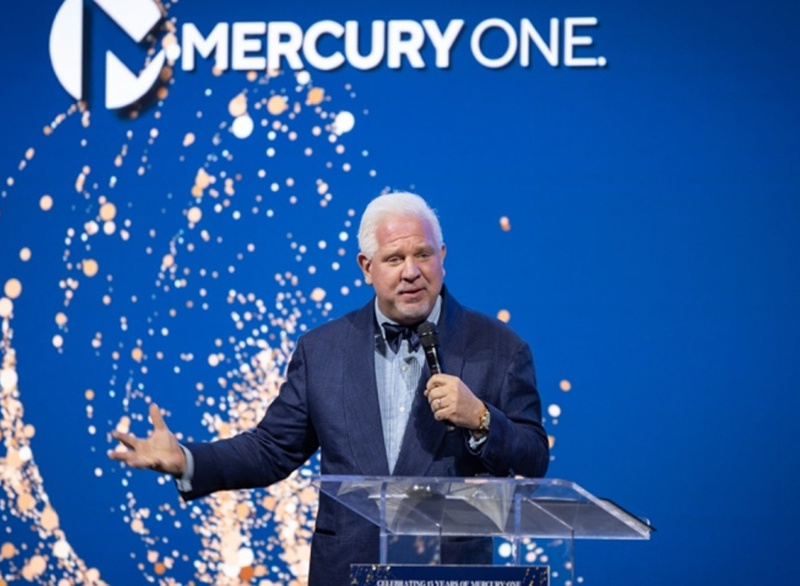
Premiere Networks nationally syndicated talk radio star Glenn Beck celebrates the 15th anniversary of his non-profit Mercury One and at a gala event in Irving, Texas he donated $5 million to the organization’s Maximum Impact Fund that provides flexible funding for urgent humanitarian needs and helps sustain the organization’s commitment to directing 100% of designated donations to those in need. Citing the persecution of Christians in Nigeria, Beck stated, “There’s nobody being killed at the clip that Christians are. We need eyes to be opened. We need countries to be opened. We need the United States to take a bold stand on this, as well.” Mercury One says the donation will help support the organization’s relief and rescue initiatives, which have included disaster response efforts in the U.S. and international humanitarian missions through partners such as The Nazarene Fund.

Industry Views

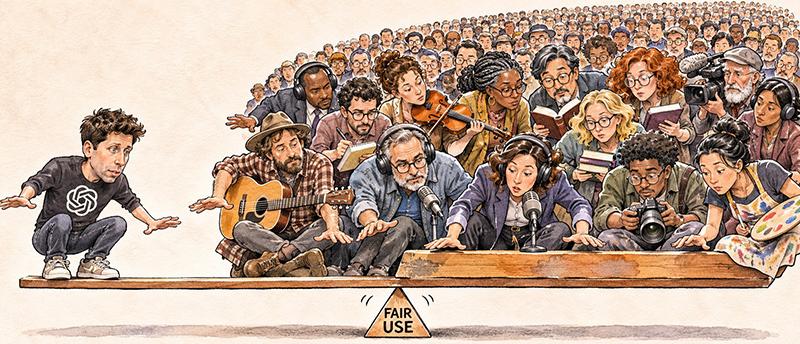
Broadcasters Know Both Sides to the Benefits of Fair Use

img

By Matthew B. Harrison
TALKERS, VP/Associate Publisher
Harrison Media Law, Senior Partner
Goodphone Communications, Executive Producer

imgAt 8:15 am, a radio host plays part of a television interview and explains why the guest’s answer deserves scrutiny. By noon, another program has clipped that host’s commentary and is taking it apart. The first use feels like doing the job. The second can feel like somebody helping themselves to your work, especially when they sell advertising around it.

That tension gives broadcasters a useful perspective on OpenAI’s October 30 statement, “Fair use benefits everyone.” The company assembled arguments supporting fair use in its copyright litigation involving news publishers, emphasizing benefits to creators, researchers, and the public. It is advocacy from a party to the litigation, not a judicial ruling. But the broader proposition deserves consideration from an industry that regularly experiences fair use from both directions.

For a talk host, the benefit can be immediate. An audience may need to hear the disputed answer, see the advertisement, or examine the passage before the host’s criticism makes sense. Requiring permission for every such use could give the subject of criticism considerable control over the discussion. Fair use provides room for qualifying commentary and reporting without that permission, although calling a segment “news” does not automatically establish the defense.

Now move to the other microphone. Your station secured the interview, paid the producer, developed the questions, and cultivated the audience. Another outlet extracts the most revealing exchange and uses it to challenge your coverage. Your investment matters to the business, but it does not automatically give you the power to prevent criticism that qualifies as fair use.

Change the example again. Instead of analyzing your interview, the other outlet uploads a substantial uninterrupted portion, adds a brief introduction, and offers listeners much of the experience your station produced. That raises a different question about substitution and the market for your work. The analysis considers the purpose, the nature of the original, the amount and significance taken, and the effect on its potential market, rather than simply counting seconds or checking for a credit.

This is where broadcasters can contribute something valuable to the AI debate. They understand why access to existing expression supports new commentary, and why producing that expression costs money. They also know that a competing program can win listeners through better reporting or sharper analysis. Competition alone does not tell us whether someone has improperly used protected material.

OpenAI and its supporters argue that training models serve a different purpose from publishing the works used to train them. Broadcasters can take that argument seriously while still asking what material was copied, how it was obtained, and what uses the law permits. Training a model, generating an answer, and publishing that answer involve distinct conduct. A persuasive argument about one does not automatically resolve the others.

The practical discipline is consistency. Before borrowing, identify what the audience needs to encounter and what your program contributes. Before objecting to someone else’s borrowing, examine whether they are criticizing your work or supplying a substitute for it. Neither the presence of advertising nor your understandable irritation settles the question.

That experience on both sides of the microphone is central to my book, Playing the Clip, which examines fair use in the daily work of media creation. Broadcasters need meaningful protection for what they produce, and meaningful freedom to examine what others produce. Fair use benefits the profession by helping preserve both, even when its application to our own work feels less comfortable.

Matthew B. Harrison is a media and intellectual property attorney who advises radio hosts, content creators, and creative entrepreneurs. He has written extensively on fair use, AI law, and the future of digital rights. Reach him at Matthew@HarrisonLegalGroup.com or read more at TALKERS.com.

Industry Views

The Radio Sales Playbook: Take a Good Look

By Harmony Tenney, MBA

imgIt’s budget season. Your clients are planning next year’s spending right now, and your rates should be set before they do, not after.

I help three LPFM stations bring in a few extra underwriters. One of the first reports I requested, before making a single sales call, was their entire account list, sorted by annual revenue, with monthly columns. I winced. Their rates were far too low.

I immediately set my own pricing, about 50% higher than their rate card, with a per-station minimum. I also turned their perceived weakness, a 100-watt signal, into their greatest strength: “Our coverage is focused entirely on the Charlottesville and Albemarle County.”

Prospective underwriters signed, and revenue per underwriter went up without more calls.

Where have you set your bottom line? What’s your average monthly order? How many community events is your station sponsoring, part cash and part trade?

  1. Start with a baseline. Use your Monday–Sunday, 6:00 am to midnight rate to put a dollar value on every PSA, promotional announcement, and extra mention.
  2. Value everything you might give. List every station asset that can land in a proposal (bonus ads, streaming, community calendar listings, stacks of postcards in the lobby, ticket giveaways) with a value and purchase price next to each. If part of your support isn’t written into the proposal, you’re shortchanging yourself. The client either doesn’t know what you’re doing behind the scenes or assumes it’s worth nothing. Ensure nothing goes into a proposal as “free.”
  3. Ask for reciprocals. If your valuation meets their “Silver Sponsor” level, make sure they have what they need to deliver: your station’s logo for their website, social media, print pieces, and event banner, plus signage at the event. Value should run both ways.
  4. Sell annual promotions in advance. Book next year’s event or station promotion before the New Year. Start at this year’s price plus 5% and confirm final numbers and dates once the details are set.

When advertisers follow your lead, you set the price. Make it count.

Harmony Tenney, MBA, is the author of The Ultimate Radio Sales Playbook (Amazon), connecting communities through radio’s superpowers. She’s spent more than two decades selling local radio in the Charlottesville, Va., market, working with small business owners, local governments, and area non-profits; twice named a Top Ten U.S. Radio Marketing Consultant by Radio Ink. Email Harmony@UltimateRadioSales.com or phone 540-255-5686

Industry News

House Democrats Fight for Gomez Renomination

A group of 21 House Democrats is appealing to Senate Majority Leader John Thune and Senate Committee on Commerce, Science, and Transportation chair Ted Cruz to only advance the confirmation of Republican FCC nominee Danielle Thumann Severs alongside the renomination of the agency’s lone Democrat, Anna M. Gomez. The congressmen write: “The imgCommunications Act limits how many commissioners may belong to one political party, ensuring that decisions on broadband, media ownership, and network security are tested by more than one point of view. Preserving that balance is central to how the Commission is meant to function. Commissioner Gomez has brought independent judgment and a clear command of the FCC’s statutory responsibilities to her work and has consistently engaged with members on both sides of the aisle on the merits of an issue rather than its politics. She has remained focused on many of the core responsibilities that Congress has entrusted to the FCC: closing the digital divide, protecting consumers, promoting competition and innovation, strengthening the security of our communications networks, and advancing U.S. technological leadership.” The group also says, “The Commission functions as intended only when both parties have a seat at the table. Confirming an additional Republican nominee without also securing continued Democratic representation would upset that balance. Commissioner Gomez has shown the experience and judgment to continue that work. We therefore ask that the Senate pair any new Republican nominee with her renomination to a full term, consistent with the bipartisan design Congress built into this agency.”

Industry News

Edison: AM/FM Tops in EVs

According to data from Edison Research’s Share of Ear study that looks at share of in-car audio time among the total U.S. 13+ population and those whose primary car is an electric vehicle (EV). Edison says, “AM/FM radio still accounts for the largest percentage of in-car audio time. This is accurate for the total U.S. img13+ population as well as those whose primary vehicle they ride in or drive is an EV, but at dramatically different rates. The total population spends 53% of their in-car audio time with AM/FM radio, while EV drivers and riders spend 42% of their in-car audio time with the platform. Streaming music time remains second behind AM/FM radio, but gains significant ground among EV drivers/riders, increasing from 17% of time to 22%. The EV audience’s share of in-car time with podcasts is twice that of the total population. Time spent with SiriusXM also increases among EV drivers/riders, rising from 16% of time to 20%. All other platforms remain relevantly consistent across the two groups.”

Industry News

TALKERS News Notes

SiriusXM Reveals Election Coverage. SiriusXM today announce its live programming for the 2026 midterm elections, with its political talk channels delivering wall-to-wall coverage throughout election night and into the following day. Starting November 2, Stephen A. Smith will broadcast live from Washington, D.C., for three consecutive evenings, hosting editions of “Straight Shooter with Stephen A.” in front of a studio audience. On Election Night, Megyn Kelly will host a live broadcast from 8:00 pm to 11:00 pm ET.

iHeartRadio Unveils “Lite Mode.” iHeartRadio today announces the launch of “Lite Mode,” a new product feature for the iHeartRadio app designed to give users the ability to simply and quickly toggle back and forth between full-function mode and the ‘just essentials’ Lite Mode depending on their usage and needs at any time. iHeartMedia Digital Audio Group CEO Conal Byrne says, “Radio is uniquely personal – it’s about companionship. Our listeners sometimes want to browse and discover, and at other times they simply want to go directly to what they’re looking for. This new ability to toggle between full functionality and Lite Mode, which has just the essentials, gives them the opportunity to make every experience the right one for them.

Industry News

Gomez Urges NAB to Push Back on “Election Year Intimidation”

FCC Commissioner Anna M. Gomez is petitioning the National Association of Broadcasters president and CEO Curtis LeGeyt to get behind broadcasters’ concerns about the Commission’s threats to investigate stations for news distortion or broadcast hoax for imgairing polling data “this Administration happens to dislike.” In a letter to LeGeyt, Gomez writes, “This Administration is running a coordinated, government-wide effort to reshape the media into its sanctioned messenger, and the Federal Communications Commission has become one of its most active instruments… The Commission’s own guidance is clear on this point. Enforcement of the news distortion policy requires proof that a broadcaster deliberately distorted a factual report on a significant event, not a minor or incidental one, and courts have recognized that the policy draws a firm line between deliberate distortion and mere inaccuracy or differences of opinion.”
Gomez also pointed to the issue of the equal opportunities rule imgnoting that guidance has been settled on the matter for decades. But she says that acting without input from the full Commission and beyond its authority, the Media Bureau rewrote that settled guidance. “This agency does not get to redefine the public interest standard as whatever happens to serve the political interests of whoever is in power. That standard was written into the law to protect the audiences these stations are licensed to serve, not the officials who regulate them. A broadcaster reporting in good faith, whether covering widely available polling data, booking a candidate based on newsworthiness, or airing political advertising in compliance with the law, should know that it is fulfilling that obligation rather than violating it.”
She wraps up by writing: “Despite NAB staying largely quiet through the first year of this censorship and control campaign, I want to acknowledge that you have not stayed completely silent, and for that I am grateful. Your organization spoke up against the FCC’s unprecedented early license renewal order, and I do not take that for granted given the position NAB itself occupies. But I would not be doing my job if I did not say plainly that the volume of that response has not yet matched the scale of what your members are facing. An industry confronting a coordinated effort to turn licensing authority into leverage over election-year coverage needs more than a couple of tempered statements. Your members deserve to hear from their leading voice with the same clarity and urgency that their First Amendment rights, and their bottom line, call for.”  You can read the whole letter here.

Industry Views

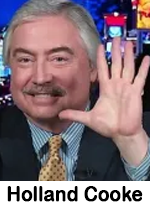
Monday Memo: Clock Shock

By Holland Cooke
Consultant

imgUnless you live in Hawaii or most of Arizona (except the Navajo Nation) or American Samoa, Guam, the Northern Mariana Islands, Puerto Rico, or the U.S. Virgin Islands, we “Fall-back” to Standard Time at 2:00 am Sunday morning… when, suddenly, it’s 1:00 am again.
This past July, the House passed proposal 308–117 which would make Daylight Saving (NOT “Savings”) Time permanent – which President Trump favors – and the Senate recessed without acting on it.

  • Fun Fact: States can choose permanent Standard Time under federal law, but they cannot independently adopt permanent Daylight Time.
  • Fun Fact: We already did that, under President Woodrow Wilson during World War I. President Franklin Roosevelt revived it as year-round “War Time” during World War II.
  • Not-So-Fun Fact: During the 1973 oil crisis, Congress passed the Emergency Daylight Saving Time Energy Conservation Act, signed by President Richard Nixon, placing the USA on year-round Daylight Time in January 1974. Public backlash – especially over school kids at the bus stop in darkness – led Congress to restore Standard Time less than 10 months later.

Back to the future: It’s uncanny how just this one-hour shift impacts listeners’ lives. And if your dog eats at 5:00 pm, just TRY telling him it’s only 4:00 pm. Among humans, this change is a big topic of conversation. So, plan now to empathize with their emotional and practical adjustments.

  • Bump with or play songs related to time (i.e., Cher’s “If I Could Turn Back Time”).
  • Explain the history of DST. Your show prep is above.
  • Ask listeners’ opinions on DST. Do they love it or hate it? You’ll hear both.
  • “What’s the first thing you’ll miss doing after work when it gets dark earlier?” (This invites stories beyond the permanent DST debate.) Also: “How will you spend your extra hour?”
  • Give away nostalgic items (like retro vinyl records or vintage tech).
  • Sleep tips from health professionals and mental health experts.
  • Coffee or breakfast gift card giveaways.
  • Pertinent commercial copy hooks, i.e., “It’s time for a new ___!”

When listeners get an extra hour, give them a reason to spend it with you.

Holland Cooke (HollandCooke.com) is a consultant working the intersection of broadcasting and the Internet. Follow HC on Twitter @HollandCooke and connect on LinkedIn

Industry News

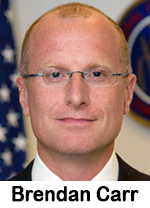
FCC Chair Carr Threatens Media Over “Fake Polls”

Once again stating that television and radio stations have a responsibility – based on their license requirements – to not imgbroadcast news distortions or hoaxes, Federal Communications Commission chair Brendan Carr said via a post on X, “During this election season, there has been a significant surge in entirely Fake Polls and Suppression Polls designed to do nothing more than interfere with the regular functioning of the electoral process and alter the normal patterns of voter turnout and enthusiasm. Broadcasters are advised to avoid engaging in News Distortions or running Broadcast Hoaxes by airing Polls that would violate their regulatory obligations.” imgCarr did not point out any examples of “fake polls” but suggested that broadcasters should carefully vet the polls they publish. Commissioner Anna M. Gomez – the sole Democrat on the Commission – has made numerous statements challenging what she calls the FCC’s intimidation of broadcasters through misuse of the rules. She responded to Carr’s post, saying,“Pollsters who intentionally mislead the public should answer for it, but broadcasters who report publicly available polling data should never be punished when a poll is wrong. FCC rules on news distortion or hoaxes do not apply to a station that reports this data in good faith.”
Industry News

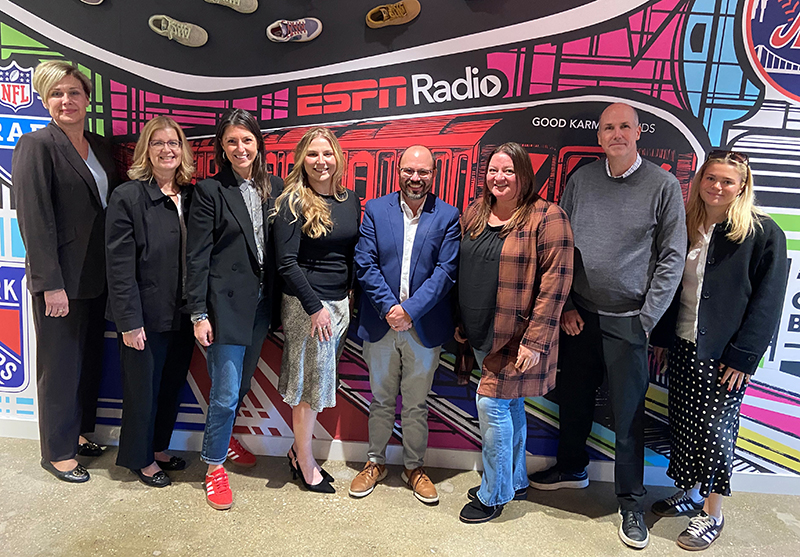
NYSBA Celebrates Rising Leaders Fellowship Class

img

The New York State Broadcasters Association is celebrating its Rising Leaders Fellowship class of 2026. NYSBA says the Rising Leaders Fellowship is “an MBA-style program designed to prepare emerging broadcast leaders for the evolving 360-degree responsibilities of today’s station, c-suite, and community leadership.  Each year the Rising Leaders fellowship challenges participants to learn the business of the business, become more effective station leaders, and build deeper community connections. Each year the fellowship curriculum connects personal leadership development with the operational disciplines essential for station success, including revenue development, news and content leadership, broadcast accounting, and strategic planning.” Pictured above are (from l-r): NYSBA President Heidi Raphael; Kathleen O’Hare-Stewart, Controller, WHEC-TV; Danielle Ashworth, Sales Manager, Regional Radio Group, LLC; Natasha Yurek, Senior Executive Producer, Nexstar / WIVB-TV; Josh Koumjian, News Director, WNYT and WNYA; Candace Curby, Promotions Director & On-Air Personality, Albany Broadcasting; Rob Taylor, News Director, NewsChannel 9 WSYR; and Brielle Travis, Account Executive, Pamal Broadcasting.

Job Opportunity

Lotus Seattle Seeks PT Anchor-Reporter

Lotus Seattle’s all-news KNWN-AM/FM “Northwest Newsradio 97.7 FM and AM 1000” is seeking a dynamic and experienced part-time news anchor, reporter, and news editor. Lotus says, “The ideal imgcandidate will help prepare and deliver engaging news content, report on breaking news events, serve as a board operator for special programming, and produce special projects and programming as assigned. The part-time position fulfills a combination of needs for our station on weekends.” Candidates must submit an audio demonstration of their on-air ability with their resume and be prepared to take a writing test if requested. Please submit resumes and required audio demonstrations to hr@lotusseattle.com.

Industry Views

Monday Memo: Occasions, Not Duration

By Holland Cooke
Consultant

imgFor 100 years, radio programmers have tried to keep listeners listening longer. “Coming up next…”

Another few minutes? Yes! Ask! And do so as-seductively-as-possible, saying “you” and “your.” But there’s very little you can say to keep someone sitting in a parked car after they’ve turned the engine off.

A more realistic opportunity?

Life is fragmented. Audio is everywhere. Listeners move among broadcast radio, podcasts, streams, satellite, YouTube and whatever their phones serve up next. Oh, and off-air promotion – billboards, TV, direct mail – remember them – cost money.

Sales 101: Say it with me: “Your best prospect is…?”  An existing customer! Sell ‘em again, in this case inducing an existing listener to listen again later – specifically later-today, and same-time-tomorrow. You can’t win by earning TSL when they’re not listening. So, seem useful-enough that they’ll want to come back again.

  • First thing in the morning…
  • Before leaving home…
  • During the commute…
  • At lunch…
  • Before the drive home…
  • When weather threatens…
  • When big news breaks…
  • When the game will air…

All-news stations have understood this for decades. The very first one – 1010WINS/New York, to-this-day #1 in morning drive – said, “Give us 22 minutes and we’ll give you the world.” The product was designed for repeat use.

This also changes how we use digital tools 

Too many stations treat the app, stream, and social media as separate products. They should be pathways back to useful content. A push alert can invite immediate listening when something important happens. A social clip can preview what the morning show will develop tomorrow. A podcast can serve someone who missed the original conversation while promoting the next live one.

The objective is not to trap listeners. It is to accompany them. Try this…

  • Map your target listener’s day. Identify five moments when your station could be helpful, entertaining or reassuring. Then ask yourself…
  • Do we offer something worth returning for at each moment?
  • Do listeners know we offer it?
  • Do we remind them when to return?

And when they do return, do we deliver immediately? Or make them wait through clutter?

Duration still matters. Every unnecessary word still spends attention. So, program at-the-speed-of-life. But focusing only on longer listening per-occasion overlooks how people actually live. You can’t keep someone sitting in a parked car. You can earn more visits.  

Holland Cooke (HollandCooke.com) is a consultant working the intersection of broadcasting and the Internet. Follow HC on Twitter @HollandCooke and connect on LinkedIn

Industry News

Comrex Releases FieldLink Cloud Service

Comrex officially releases its new FieldLink Cloud subscription service. This expands the service of the FieldLink sideline reporter codec released in 2025 that replaces expensive wireless mic/IFB solutions and efficiently move audio to and from sideline reporters and the press box using smartphones. With a directional, private, imgwireless access point, sideline reporters use their smartphones to send and receive high-quality, low-delay audio using the free Comrex FieldTap app. This new option provides more connectivity options such as 4G/5G, and public Wi-Fi services. FieldLink Cloud is a Comrex-managed server that gets around complex router and firewall issues to make connections fast and simple. It uses both iOS and Android devices and the device’s default web browser to give the user a simple, yet comprehensive interface for connection, control and statistical feedback when connected to the FieldLink codec. Comre4x says that for a limited time, customers purchasing a FieldLink sideline reporter codec will receive a free, one-year subscription for FieldLink Cloud. Subscription signup is all managed through the FieldLink codec’s front panel OLED screen and is fast and simple. FieldLink and Comrex’s suite of broadcast reliable products will be on display at the NAB New York Show October 21 and 22 at the Javits Convention Center. Visit Comrex at Booth 445.

Industry News

Cumulus Exits Chapter 11 Reorganization

Cumulus Media Inc announces today (10/16) that is has successfully completed its financial restructuring and emerged from the Chapter 11 reorganization process, following receipt of all required approvals, including from the Federal Communications imgCommission. Cumulus canceled 100% of its existing funded indebtedness – approximately $600 million – in exchange for 100% of the Company’s reorganized equity and $50 million of new convertible notes issued to former lenders. Cumulus is now a privately owned company with a new board of directors but retains its existingimg management team. Cumulus president and CEO Mary Berner states, “I am grateful to our lenders and noteholders for their collaboration throughout this process, and to our employees, vendors, affiliates, customers, and partners for their continued trust and support. Emerging with a significantly stronger balance sheet, we are more committed than ever to providing engaging content across our national footprint, serving as a lifeline and voice for the local communities we serve, driving meaningful growth for our advertising partners, and delivering value for our new shareholders.”
Industry News

TALKERS to Serve as the Presenting Sponsor for 2027 Intercollegiate Broadcasting System Conference – Harrisons Set to Speak

imgFor the third consecutive year, TALKERS will serve as the Presenting Sponsor of the Intercollegiate Broadcasting System (IBS) Conference. The event – IBSNYC – the longest running and most important national gathering of campus radio and mediacommunicators, will take place February 25-27, 2027, at the Sheraton Times Square hotel in the heart of Manhattan. It will bring together almost 1,000 outstanding broadcasters from university, college and high school radio-TV stations and departments of communication. Its power packed agenda of speeches, panels, workshops, exhibits, award ceremonies, and networking opportunities will cover the ever-expanding spectrum of platforms and issues unfolding before young practitioners entering the field of modern communications. This outstanding event is a must-attend for bright industry newcomers who are serious about developing careers in a landscape marked by unprecedentedly rapid change as well as established players determined to keep up with what’s coming and discover new colleagues.

mattybheadshotTALKERS VP / associate publisher Matthew B. Harrison will again join the roster of outstanding IBSNYC speakers.  Harrison, senior partner in the firm of Harrison Media Law, is a media and intellectual property attorney and author who advises radio hosts, digital content creators, and creative entrepreneurs. He has written extensively on fair use, AI law, and the future of digital rights.
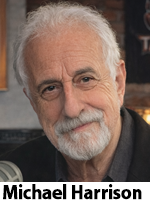
Michael Harrison to Deliver Keynote Address

imgTALKERS founder, publisher, and radio industry icon, Michael Harrison will deliver one of the conference’s two keynote addresses.  The speech, titled, “Five Things Every Communicator Must Know to Survive and Even Thrive During the Next Five Years,” promises to be a riveting, eye-opening highlight of the conference.
Harrison states, “TALKERS is dedicated to the future of this industry and its pioneering visionaries. This amazing conference is the epicenter of that dynamic scene.”

IBSNYC 2027 has been designed for affordability and the convenience of its attendees.  The time to register for the conference and hotel, in order to take advantage of these stunning discounts, is now! For full information, please click here.

Industry News

Shuttered CBS News Radio Honored for Overall Excellence from RTDNA

img

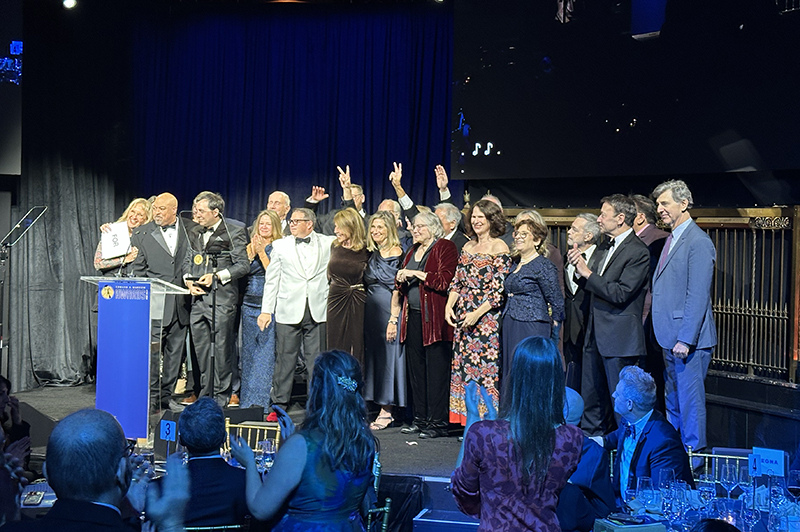
Pictured above are 25 former CBS News Radio staff onstage at New York City’s Gotham Hall during Monday’s Radio Television Digital News Association Edward R. Murrow Awards Gala. Five months after CBS closed the radio news department it was honored with national awards for Overall Excellence and Best Newscast in the Network Radio category (CBS World News Roundup: Plane Crash at DCA). Several of the honorees held up signs reading, “Fired for Overall Excellence.” The group received a standing ovation from the journalists in the room.

Industry News

TALKERS News Notes

Tanner to Exit NYPR. New York Public Radio president and CEO Christy Tanner is stepping down after just eight months in the position, according to Gothamist. Tanner joined shortly after the Corporation for Public Broadcasting, which provided funding for public media across the country, shut down due to funding cuts imposed by Congress and President Donald Trump. New York Public Radio did not provide a reason for Tanner’s exit.

MIW Announces Digital Sales Mentorship. Mentoring and Inspiring Women in Radio, Inc announces the return of its Digital Sales Mentorship Program. The year-long program is designed to strengthen the digital expertise and leadership skills of women working in radio and digital media sales, providing one selected mentee with personalized, hands-on mentorship from an accomplished industry leader. Get more info and apply here.