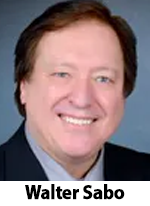
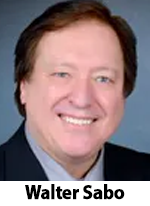
By Walter Sabo
A.K.A. Walter M Sterling
WPHT, Philadelphia
Sterling Every Damn Night
Sterling on Sunday Syndicated, TMN
Another Side of Midnight, WABC, New York
 In 1952, the success formula for today’s radio was discovered and put into practice by two hungry entrepreneurs: Todd Storz and Gordon McLendon. Both men owned dying radio stations in medium and major markets. The industry was suffering from a lack of purpose or solutions due to the advent of television which drove the migration of hit network radio shows to television. Lucille Ball, Bob Hope, and Gertrude Berg were on radio first.
Storz and McLendon developed “Top 40” with their own brains and money. Top 40 was research and focus group based, as well as. Storz tried it first in Omaha, then Kansas City and Miami. McLendon in Dallas, Houston, Minneapolis, and New Orleans. The formula was simple but not obvious. Their common-sense solution worked in all formats: music and talk.
Ruth Meyer was Storz’s PD in Kansas City and I worked with her at ABC. She was very clear when outlining the Storz history, “It was all Todd.”
Success ingredients
The formula: Target one demographic. Play their hits – often. Call out the names of as many people in the audience as possible – make the listener a star. Present with enthusiasm. Promote at every local crowd event possible. Repeat.
All of the McLendon and Storz stations grew instantly, usually to number one.
That ingredient list works repeatedly for station after station for decades. But, and here’s the but, all of those ingredients have to be in the recipe. Leave out promotion, for example, or research, and it doesn’t work. But the full ingredient list does work for every single format.
I asked Mickey Luckoff, who ran talker KGO as the number one station in San Francisco for most of our lives, how he selected his on air talk hosts to which he replied, “They all come from top 40 because I can teach them talk but I can’t teach them radio.” His promotions were non-stop and smart, TV campaigns were non-stop and research, yes, research – non-stop!
When Adult Contemporary was evolving, my team was responsible for the NBC FM properties. Corporate finance people who went to Wharton urged me to go slow, layer in expenses when launching this odd new format. I knew layering was a recipe – for failure!!! All the ingredients had to be rolled out at once. In 1981, WYNY in New York had a $2 million dollar cash and a $2 million barter promotion budget. Result, a $3 million profit and a 5 share. Thanks to PD Pete Salant and GM Al Brady Law. We used the Storz/McLendon recipe with AC music and Dr. Ruth, it obviously works.
WGMS-FM was a classical station in Washington, DC. When it was owned by RKO and run by visionary Jerry Lyman, it applied the Storz/McLendon recipe to classical music. Their promos announced that WGMS played “Real Oldies – Your favorites from the 1600s, 1700s and 1800s!” WGMS aired a tight playlist of hits. Special weekends were popular, such as a “Beethoven Weekend” with t-shirt giveaways. The station was a profit monster, top 10 in Washington DC.
Five years ago, WABC-AM was about 28th in NYC as a result of cutting costs, by god the cost cutting was epic and so was the failure. Today, John Catsimatidis, the owner, and Chad Lopez, the president, have grown the station to a 4 share and number eight in New York. An AM talk station, number eight and growing. What? How? They put in all the ingredients. The station is data driven. The talent is live. External paid ads run for WABC almost every single day. The air team goes to local events to meet the crowds. WABC airs live listener music requests and dedications on the weekend with Cousin Bruce Morrow and Joe Piscopo – live. Did I mention live?
Today not history
The team is happy. They are making radio. This isn’t nostalgia. Mr. Cats is a very current based businessman who expects results. Like Storz and McLendon he is an entrepreneur, a private owner deploying common sense. He’s doing what is proven, what works. Bravo.
Conclusion: There is nothing wrong with radio. Just stop. Include every ingredient in the proven recipe; expect stunning results.
Walter Sabo has been a C-Suite action partner for companies such as SiriusXM, Hearst, Press Broadcasting, Gannett, RKO General, and many others. His nightly show “Walter Sterling Every Damn Night” is heard on WPHT, Philadelphia. His syndicated show, “Sterling On Sunday,” from Talk Media Network, airs 10:00 pm-1:00 am ET, and is now in its 10th year of success. He recently began hosting “Another Side of Midnight” weekends on WABC, New York. He can be reached by email at sabowalter@gmail.com or phoned at 646-678-1110.




 Broadcasting and ESPN Arkansas, which will now serve all the Fort Smith, Hot Springs, Northwest Arkansas, Harrison, Mountain Home, and much of Eastern Oklahoma. Top rated KISR will continue to serve the River Valley from just below its previous dial position, moving to 93.1 FM.” ESPN Arkansas general manager Tommy Craft adds, “We are excited to expand and grow the footprint and coverage areas of our ESPN Arkansas radio stations. The addition of a 100,000-watt station to our roster of current stations is a true game changer. Fred Baker and KISR have spent more than 55 years building something that is far more than just a radio station for so many people, and we are humbled to be able to continue that kind of commitment to listeners. We live in a state where the sports we love and the daily conversations about the teams we follow matter. The opportunity to expand our coverage so that more of the great people in Arkansas can join in the conversation with our live and local sports talk radio shows is a thrill, and we cannot wait to get started.”
 Time Spent Listening to podcasts has now surpassed TSL with spoken word radio. And both are fraught.
 of 2025, net revenue was $741.6 million, a decrease of 10.3% from 2024. For the full year 2025, the company posted a loss of $200.7 million. Cumulus reports by segments and for all of 2025, broadcast revenue was $116.2 million, a decline of 22.2% from 2024. Even digital revenue fell in 2025 to $151.3 million, down 1.9%. Cumulus Media president and CEO Mary G. Berner says, “The Company’s recently announced financial restructuring marks an important step toward meaningfully reducing the debt burden that has constrained the business. Looking ahead, we remain focused on building on the core strengths of the Company to maximize value.”
 The rise of independent, talk show-style political commentary on YouTube has created a new class of media actors who do not see themselves as broadcasters, journalists, or publishers. They see themselves as creators. That distinction is real in terms of identity, tone, and platform. It is not real where it matters most: liability.
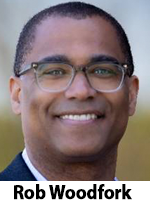 is a key part of our long-term strategy to transform how we cover sports. We’re committed to delivering content that goes beyond highlights and final scores – focusing instead on context, analysis, and storytelling that resonates with today’s audience.” WTOP says that in his new role, Woodfork will lead a more dynamic, multi-platform approach to sports journalism, anchored by daily video and audio commentary designed for modern consumption habits. His work will prioritize insight and authenticity – meeting audiences where they are, particularly among Gen X and Millennial fans seeking more than traditional sports updates.
 says, “Political advertising will drive key spending this year. BIA projects approximately $8.4 billion in local political spending, creating substantial revenue opportunities across broadcast television, linear cable, CTV/OTT, radio, and direct mail. While some legacy formats, including print, continue to face long-term declines, others are evolving. Across the market, advertisers are increasingly adopting full-funnel strategies, combining high-reach media such as cable, broadcast, and OOH with data-driven digital channels to drive both awareness and measurable outcomes. Radio also remains a stable local medium, with additional opportunities emerging through digital audio, including streaming and podcasts.”
 conservative or liberal – depending on the channel – all-news radio’s audience is almost perfectly balanced. Audacy adds that it matters when it comes to election season. “While most national news platforms reach consumers who already lean one way or another, all-news radio’s neutrality makes listeners more willing to hear a message – even from a candidate they might initially distrust. The Alter Agents study found that 77% of listeners considered all-news advertisers to be ‘trustworthy’ simply by running adjacent to the content.”
  advertising market that was partially offset by the continued expansion of our high-margin, owned-and-operated direct digital revenues. Beasley recorded an operating loss of approximately $230.0 million in the fourth quarter of 2025, compared to operating income of $7.6 million in the fourth quarter of 2024, driven primarily by a non-cash FCC license impairment charge of $224.8 million, reflecting the company’s updated assessment of the fair value of its broadcast licenses in light of continued secular pressures on the radio industry, as well as $1.7 million in other operating expenses.”
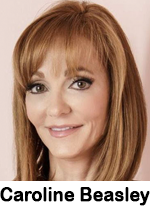 we made tangible progress reshaping this company for long-term value creation. Our digital business delivered record performance, with digital revenue representing approximately 24% of net revenue, up from roughly 19% of net revenue in 2024, and digital segment operating margins reached record levels as our continued shift toward owned-and-operated and programmatic products gained traction across our markets… Building on this progress, we recently announced a debt exchange transaction with our second lien bondholders, pursuant to which we expect to reduce our second lien debt by approximately 50% and repay roughly $15 million of our first lien debt. Upon completion of the transaction, which is subject to bondholder participation and expected to close by the end of April, we anticipate total outstanding debt will be reduced to approximately $110 million from $220 million today. We believe this transaction will meaningfully strengthen our balance sheet, enhance financial flexibility, and better position the Company to execute on its strategic priorities. Following its completion, our focus will shift toward further deleveraging through EBITDA growth and continued portfolio optimization.”
 San Francisco. Cumulus chief content officer Brian Philips says, “Among our strong field of Cumulus programmers, Luis leapt from the pack as the person possessing the energy and imagination to lead WMAL. Luis visualizes the multi-dimensional future of this big brand. The immense benefit of keeping Luis ‘in house’ is that he will continue to offer expert counsel to our revitalized operations in San Francisco and Los Angeles, as needed.” Segura says, “I’m incredibly excited to work with the legendary staff of Cumulus’ flagship news/talk. WMAL is packed with national names like Larry O’Connor and Chris Plante, and I can’t wait to join the team.”
 back at a century of service to the Fox Valley, but today, we turn our gaze forward. After retiring our special 100-year commemorative look, we didn’t want to just go back to ‘business as usual.’ We’re kicking off our second century with a fresh new look that reflects the evolution of WHBY and our unwavering commitment to the next generation of listeners.” WHBY brand manager Alex Thomas adds, “We are excited to usher in a new era of WHBY. Our rebrand represents a new chapter of WHBY and reflects who we are today and where we are heading next. This transformation goes beyond a new logo. It represents our vision of strengthening community awareness, enhancing the way we deliver news and conversation in the Fox Cities and beyond. While our look may be changing, our core values remain the same. Being trusted, local, and community driven remains a pillar of WHBY.”
 Assessing the hourly threat to the very existence of the medium of radio is a popular hobby among conventioneers. The audience levels for radio are astonishingly constant since 1970, but according to “radio people,” they are living at the edge of a volcano. Spotify radio, SiriusXM radio, Pandora radio, TuneIn radio, Internet radio, there are all kinds of radio! General Motors wants to throw AM/FM radio out of the car as in “do you really need radio in the car?” Radio’s response to the in-car-removal threat is by promising non-stop typhoons and hurricanes.
 In “
In “ TALKERS “Heavy Hundred” national prominence for years, originally launching his daily three-hour “The Dr. Asa Show” on its flagship radio affiliate, iHeart’s WLAC, Nashville. Andrew has subsequently and simultaneously returned to his roots as a professional wrestler and recently joined TNA Wrestling as the company’s ringside physician and head of sports medicine.
 manage the business as CEO upon successful acquisition.” Warshaw also says he steered SFM and Del Nin to the deal that made SFM a majority stake holder of the new Audacy in early 2024 and alleges he was promised he’d be the next CEO of Audacy or that he would get 5% of SFM’s profits from the Audacy acquisition.
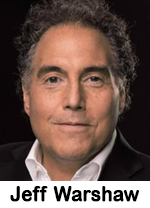 Now, in recent court filings, Warshaw claims that by mid-2023 he had identified HG Vora as the key holder of Audacy’s distressed debt and, through industry contacts, came to believe that HG Vora was already aligned with Cumulus Media to merge the two companies. But the filings stop short of proving that such a deal ever existed in a formal sense.
 greater access to trusted news and talk at a time when local information matters more than ever. This expansion reflects our ongoing commitment to serve Asheville and the surrounding communities with credible voices, local connection and meaningful conversations.” iHeartMedia area SVP of programming Zac Davis adds, “After our post–Hurricane Helene broadcast, it became clear just how essential WWNC is to Western North Carolina. Over the past year, we’ve focused on expanding our ability to serve the community, and this next step allows us to reach even more listeners. It’s a natural extension of the incredible work our Asheville team has already done.”
 Milner comments, “Joyce is an experienced market leader with deep relationships across Salt Lake City, enabling her to bring sharp local insight and credibility to every client partnership. She excels at delivering integrated marketing solutions, helping clients leverage our multi-platform strategies that maximize the combined power of audio and digital to drive results. Joyce will be a tremendous asset to our Salt Lake City team and a growth catalyst for our clients.”
 who founded the company 30 years ago.” Thiele’s message to staff was: “First and foremost, I want to thank you all. Skyview Networks exists, and is respected across the industry, because of the talent, grit and customer commitment each of you bring every day. Since joining Skyview Networks, Steve has expanded our business portfolio and led with a steady focus on growth and stability. It is with this confidence in leadership that Skyview’s trajectory and momentum continues.” Jones adds, “On a personal note, I am proud of the team that has built and sustained Skyview Networks’ reputation across the industry. This company is special because of you. Serving as the leader of Skyview Networks is a responsibility I take seriously, and I am committed to continue leading with transparency, respect and a long‑term focus on our people and business.”
 Federation of Taxi Drivers, Fernando Mateo. The new show, “No Excuses with Fernando Mateo” airs Sundays and 6:00 pm. Station owner John Catsimatidis says, “There are 65 million Hispanics in the U.S. and New York City is home to nearly three million of this fast growing population… With Mateo as part of our on-air lineup, we can super serve the needs and interests of the Hispanic community.”
 Devan Kaney is among those cut. In 2024, Kaney was promoted to sideline reporter after the station let Howard Eskin go. She’d appeared regularly on the morning show with Joe DeCamara and Jon Ritchie. She’s quoted in the Philadelphia Inquirer saying, “I had a blast working at WIP and sincerely enjoyed my time there. But as the old saying goes, when one door closes, another opens.”
  Specifically, since the company must get permission from the court to retain PricewaterhouseCoopers LLP as the independent registered public accounting firm for the company and its subsidiaries to complete the 10-K, it must wait to clear the objection hurdle expected to be complete by April 8. Cumulus notes that the ultimate timing of its filing of its Annual Report is dependent upon entry of the order.
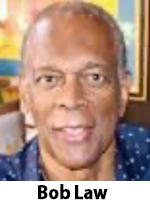 New York, has died at age 86. According to The Grio, Law put “Night Talk” into national syndication in 1981 through the National Black Network. The piece says it was considered the first nationally broadcast Black radio talk show in the country. He began his career with WWRL in New York as a community affairs director, eventually rising to program director.
  pending regulatory approval by the FCC and is expected to close in summer of this year. Connoisseur CEO Jeff Warshaw states, “We are over the moon to be able to add these phenomenal properties and team to our company. This marriage will allow us to even better serve the community and our clients.” NRG Media CEO Mary Quass adds, “The Lincoln stations have been a very important part of our story, and we are pleased to pass them to Jeff and his team. Jeff is a broadcaster who shares our commitment to great local service, quality programming, and deep community connections!” At the same time, Connoisseur is entering into a deal with MSC Radio Group to sell its Topeka cluster that includes news/talk WIBW-AM and three music brands. About this sale, Jeff Warshaw says, “We’re incredibly proud of the impact these stations have had in Topeka and the connections they’ve built with listeners. As we continue to refine our portfolio, this agreement allows us to focus our resources on key growth markets while ensuring these stations are well-positioned for the future with KNZA. We’re confident they will continue their legacy of serving the community with a strong emphasis on local engagement, news, and partnerships.”