Industry News

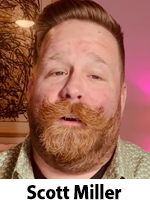
WJBC’s Scott Miller Victim of New Cumulus Cuts

A new round of personnel cuts at Cumulus Media claims news/talk imgWJBC, Bloomington, Illinois morning host Scott Miller. He posted news of his departure in a Facebook video saying, in part, “As many of you know, radio is a business and sometimes difficult decisions are made that are beyond our control. While this isn’t the ending I would have written, I leave here with nothing but gratitude for the opportunity to spend these years with you… wherever life takes me I’ll always be grateful for the time we shared together.”

Industry News

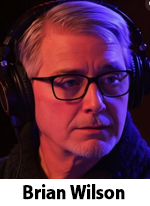
Cumulus’ WWTN-FM, Nashville Cuts Brian Wilson

Another talk pro who exits Cumulus Media is WWTN-FM, Nashville “SuperTalk 997 WTN” air personality Brian Wilson. He posted news of his exit via Facebook, saying, “I have been notified that imgeffective 11/15 I will no longer be associated with SuperTalk 997 WTN. My last appearance was this morning with Dan Mandis. The parting was not something I expected, but it was not acrimonious. We part as friends. I am nevertheless saddened at the news. I have truly enjoyed my time at WTN and thank Cumulus for allowing me to serve on this amazing radio platform. I also want to thank the many listeners who found some value in what I brought to the microphone. Many of you have become friends and please know I feel very honored to have connected with you. What’s next? Stay tuned. Free Agent, Baby!”

Industry News

Saga Reports Q3 Net Revenue Falls 5.4%

Saga Communications reports its operating results for the third quarter of 2026 and says net revenue was $26.7 million, a decline of 5.4% from the same period in 2025. Station operating expense decreased 1.7% for the quarter to $24.2 million compared to the imgsame period last year. The company notes, “For the quarter, we had an operating loss of $9.8 million compared to an operating loss of $626 thousand for the same quarter last year and station operating income (a non-GAAP financial measure) was $2.4 million compared to $3.5 million for the same period last year. For the quarter, the company recorded a non-cash impairment charge based on an evaluation of FCC license values of $9.2 million. Without the non-cash impairment charge, the company’s operating loss would have been $563 thousand for the quarter compared to an operating loss of $626 thousand for the same period last year.” Saga reports that it paid a quarterly dividend of $0.25 per share on October 16, 2026. The aggregate amount of the quarterly dividend was approximately $1.6 million.

Industry News

TALKERS Books Drops “Speeches They Never Gave,” Richard Chemel’s Collection of 50 Imagined Addresses by Historic Figures to Modern Audiences

Veteran music promoter, new-media pioneer and former TALKERS Pop Culture Editor is available for interviews on AI, authorship and what old voices can tell a modern newsroom

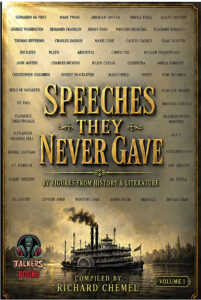
TALKERS Books has published Speeches They Never Gave: Volume One, a collection of 50 imagined speeches compiled and created by Richard Chemel. The paperback went on sale at Amazon on November 7.img

imgThe premise is simple but fascinating. Chemel takes a figure from history or literature, hands that person a present-day subject, and stands them in front of a specific modern audience. For example, Mark Twain talks to journalists about social media. Abraham Lincoln addresses newsroom editors on political polarization. Socrates takes on the internet and misinformation for a room of high-school students. Dracula explains fear and public relations to media executives, and P.T. Barnum has a few things to tell advertising executives about their own business.

Several of those rooms are full of people who work in this industry, and that is by design. Chemel spent his career in and around broadcasting. In the 1970s, he worked in radio promotion on behalf of musical artists including Heart, ELO, and Bob Seger. He moved into special-interest video marketing with Jane Fonda’s home-fitness series, Shirley MacLaine’s Inner Workout and WrestleMania. He was the first host of the Los Angeles Times online platform, moderated chats for MSN Money on CNBC, and served as pop culture editor of TALKERS magazine. The book began with a question he typed into a search engine: what would Al Capp have to say about the world today? The answer suggested a larger project, and each of the 50 pairings that followed started the same way – as a question Chemel wanted to hear answered.

In his author’s note, Chemel writes that broadcasting taught him that “the right voice, saying the right thing to the right room,” can move people further than almost anything else. He was a 20-year-old student at Kent State in May 1970, and he traces his conviction that listening matters back to that month.

A plain statement about AI

Chemel used AI tools in drafting the speeches and says so in the book, in a section titled, “How This Book Was Made.” He describes prompting, rejecting, rewriting and revising, and he is specific about what the tools did not do: choose the premise, the speakers, the audiences or the argument of any speech. “Tools change,” he writes. “Someone still has to have the idea, make the choices, and put a name on the result.”

That disclosure makes him a timely guest. Questions he can take on the air include:

  • When a host, writer or producer uses AI, what does the audience have a right to know?
  • Who is the author when a machine helps with the sentences?
  • Is it fair to put new words in the mouth of Lincoln or Jefferson, and where is the line between interpretation and fabrication?
  • Why does a 19th-century voice sometimes say something about social media that a contemporary one can’t?

The speeches are works of creative interpretation. None was actually delivered by the person or character depicted.

TALKERS publisher Michael Harrison states, “We are very proud to add this timely book to our growing catalogue of talk media-friendly works by authors who make great conversational guests.”

For each paperback sold on Amazon, a donation goes to the Fisher Center for Alzheimer’s Research Foundation. This is an independent promotion; Amazon is not a sponsor.

Availability: Speeches They Never Gave: Volume One is available now at Amazon. More information is at hellospeeches.com.

To book Richard Chemel for an interview, or for signed and bulk orders:hellospeeches@gmail.com

Industry News

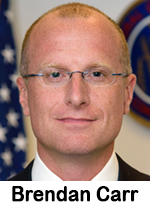
RSF Urges Democrats to Impeach FCC Chair Carr

France-based Reporters Without Borders (RSF) is urging the new Democrat-controlled U.S. Congress to impeach Federal Communications Commission Chairman Brendan Carr. The organization’s statement begins: “Carr’s tenure as FCC Chair has been defined by his campaign to intimidate and punish media organizations disfavored by the president. He has launched baseless investigations into news organizations, seized on vaguely imgwritten regulations to punish news outlets for speech deemed anti-Trump, threatened the broadcast licenses of TV and radio networks based on their editorial lines, gutted rules against media ownership consolidation, put his thumb on the scales of massive media mergers to benefit Trump allies, and improperly supported midterm campaigns. His consistent abuse of his office demands urgent action from Congress.” The executive director of RSF North America is Clayton Weimers and he is quoted in the organization’s statement saying, “The American people have decisively rejected the Trump administration’s trampling of the Constitution. Few individuals have been more instrumental to the White House’s campaign to weaken the First Amendment than Brendan Carr. The incoming Congress now faces a defining test of its commitment to the Constitution and the freedoms it guarantees. Press freedom cannot be defended through words alone. RSF does not take the question of impeachment lightly. In fact, our organization has never before called for the removal of a US official. But the severity and persistence of Carr’s misconduct demand an extraordinary response. Congress has a constitutional responsibility to hold him accountable. Restoring the FCC’s independence must be central to that effort.”

Industry News

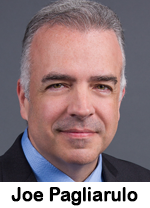
Joe Pags and Compass Sign Multi-Year Extension

Talk radio star Joe “Pags” Pagliarulo and Compass Media Networks are agreeing to continue their partnership for syndication of “The Joe Pags Show.” Compass says, “This multi-year extension is a testament to the remarkable talent of Joe Pags and imgthe power of talk radio today and continuing into the future. The show currently holds the #7 position on TALKERS “Heavy Hundred” chart of the most important talk radio hosts in America and has a long history of success, blending insightful commentary with humor and engaging discussions on topics that matter most to its 2 million monthly radio listeners.” Pags comments, “I am thrilled to continue my relationship with Compass Media Networks. The great folks at Compass Media Networks have become family and have shown incredible faith in what I do. Growing to 170 stations nationwide in the midst of amazing competition is a great commentary to how well they do what they do.”

Industry News

Dellilo Rises to Director of Marketing and Promotions for iHeartMedia New York

iHeartMedia New York ups Danielle Dellilo to director of marketing and promotions. New York EVP of programming Thea Mitchem says, “We’re incredibly excited to have Danielle step into imgthis role. Her leadership, infectious enthusiasm and ability to make things happen have made her a go-to for our teams, talent and sales partners. I’m incredibly proud of the leader she has become over the past 10 years. Danielle has earned this opportunity, and we’re thrilled to have her leading marketing and promotions for our legendary New York brands and talent.” The cluster includes news/talk WOR and The Black Information Network WWRL in addition to five music brands.

Industry News

Urban One Q3 2026 Net Revenue Falls 5%

Urban One reports its operating results for the third quarter of 2026 and states net revenue was approximately $88 million, a decrease of 5.0% from the same period in 2025. The company reported an operating loss of approximately $126.6 million for the quarter compared to operating income of approximately $2.5 million for the imgsame period a year ago. Urban One CEO and president Alfred C. Liggins, III says, “Market conditions in radio continued to adversely impact revenue in the third quarter. We were helped by net political revenue of over $0.8 million in the quarter and the acquisition of stations in our Dallas market, effective July 17th, which contributed an additional $1.9 million of net revenue in the quarter. Net political revenue for the full year is expected to be $8.8 million across all divisions. Weak demand in the Cable TV scatter market, shifted more inventory to the direct response category at lower rates in the third quarter. We saw an increase in local digital revenue in our radio markets, but large client attrition and suppressed rates in national direct digital revenue meant significant revenue declines in the overall digital segment… Management is hyper-focused on cost reductions heading into next year and has identified at least $20 million of annualized savings.”

Industry News

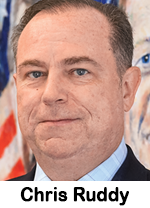
Newsmax Addresses Plans for Miami Radio Stations

Yesterday (11/9), TALKERS reported that Newsmax has filed with the FCC to acquire two Miami radio stations – WAQI-AM and WQBA-AM – from Latino Media Network for $1.8 million. Today, Newsmax says it intends to keep the Spanish-language programming on the stations. Newsmax CEO Chris Ruddy says, img“‘Radio Mambí’ [WAQI-AM] is an institution. For decades, it has been the voice of a community that understands the value of freedom because it has fought to preserve it. We are honored to continue that tradition and ensure ‘Radio Mambí’ remains a trusted source of news, information, and conversation for generations to come.” Newsmax Radio and Audio CEO Ralph Renzi adds, “We are excited to serve the communities of South Florida through these legendary radio stations and to expand the Newsmax brand in this important and dynamic market. WAQI and WQBA have deep roots in South Florida, and we look forward to building on their legacy while creating new opportunities to inform, engage, and connect with their audiences.” Newsmax says expects to begin its operations and programming for the stations in the coming months. The transaction is subject to customary FCC and other regulatory approvals and conditions.

Industry Views

The Radio Sales Playbook: Building the Proof from Day One

By Harmony Tenney, MBA

imgMake sure that you and your client are engaging monthly to ensure Proof of Performance, so that your campaign yield will be ready for harvest (renewal). Agree that the measure of success will be both monthly customer counts, and new customer revenue.

Set the expectations for the campaign’s proof of success at signing

It’s not as easy as this year’s total revenue compared with last year’s. Recognize “total revenue” includes things neither of you control: the weather, staffing, a competitor, a big account walking away. Measure what the campaign controls: new customers, new customer revenue, and each one’s estimated lifetime contribution to the bottom line.

Track these four numbers every month and tally them.

  1.    New customers – a simple count. They can ask, “Is this your first time coming in?” And make a tic mark on that day’s scratch page.
  2.    New customer revenue – what each new customer spent. Tally monthly.
  3.    How they heard about you – ask each new customer to ask and record the answer: radio, friend, web ad, drive-by, etc.

4.    What are their three favorite stations – yours will be on their list, after 13 weeks.

Keep the tallying simple enough that a busy employee will actually do it. Give them easy tools: a tally sheet.

Have their employees ask these four questions at checkout and on the phone:

“Is this your first time coming in?”

“How did you hear about us?”

Then ask them what their favorite three radio stations are, and if used, an offer from your station’s airwaves (usually the on-air talent’s name).

Then ask for two reports. A year-over-year sales report shows each month next to the same month last year. A sales-by-customer report, sorted by the first purchase date, shows exactly who is new and what they spent. With those two reports, my client’s $100,000 would have been visible every month. Those three numbers become the agenda. And when something big happens, like a lost account, a new competitor, or staff turnover, write it down that month, not a year later.

Managers: build measurement into every campaign

Put measurement terms in every annual agreement.

Schedule a proof review every 30 days before renewal, not nine months after signing. Coach your reps to hear “our bottom line didn’t move” as a cue to show the numbers, not to apologize.

Renewals and referrals come from proof. Proof is framed at signing. It ensures your renewal.

Dig deeper. Work the math. Get credit for what you grow.

S. Harmony Tenney, MBA, author of The Ultimate Radio Sales Playbook, is dedicated to connecting communities through radio’s superpowers. Radio Ink twice named her a Top Ten U.S. Radio Marketing Consultant. Reach her at Harmony@UltimateRadioSales.com or UltimateRadioSales.com.
Industry News

Nielsen: News/Talk Top Radio Format in Q3 of 2026

Nielsen publishes its quarterly report card on how “U.S. consumers spend their listening day” (using data from Nielsen and Edison Research) and concludes that “83% of all daily ad-supported audio time goes to radio and podcasts, while only 15% goes to streaming music services.” The Q3 2026 report also imgaddresses listening by radio format and again this quarter news/talk remains the number one format, with a 10.2% share of total radio listening among P18+. “It is even stronger with older listeners, at 11.5% among P35+. Sports captured 4.5% of total radio listening among P18+ and 4.6% among P25-54, as football season kicked off and baseball headed into its pennant races. All-news held a 2.7% share among P18+ and 3.0% among P35+.” Spoken word radio stations dominated streaming listening. “News/talk, sports and all-news together account for about 36% of station streaming among P18+, roughly double their 17% share of all radio listening. News/talk takes 22.1% of AM/FM station streaming among P18+, more than twice its share of total radio. That rises to 24.2% among P35+. Sports is the No. 1 streamed format among P25-54, at 13.0%, and takes 10.3% of station streaming among P18+.” See more about the report here.

Industry News

Newsmax to Acquire WAQI and WQBA in Miami for $1.8 Million

In a filing with the Federal Communications Commission on November 6, Newsmax Radio is agreeing to acquire WAQI-AM, imgMiami and WQBA-AM, Miami (both 50,000 watts Class B signals) from Latino Media Network for $1.8 million. The stations were acquired by Latino Media Network as part of a 2022 $60 million deal with TelevisaUnivision. These will be Newsmax’s first radio properties. There has been no official statement from Newsmax about its plans for the stations.

Industry Views

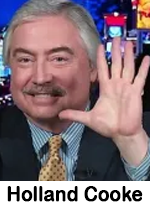
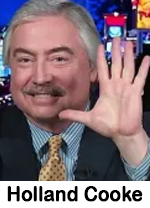
Monday Memo: Read The Room

By Holland Cooke
Consultant

imgThis is not about politics. This is about change, and listening to listeners.

The dust is still settling. But, as you might have, I spent election night surfing news channels. I probably landed most often on FOX News, where Karoline Leavitt’s punditry debut was more resigned than her undaunted press secretary persona. Donald Trump had won twice as a change candidate. As the big story was unfolding, MS Now’s Chris Hayes called change FROM Trump “an expression of exhaustion.”

Georgia elected the USA’s first Black woman governor, New Mexico elected the first Native American woman governor, and a Latina will govern Texas; where her fellow Democrat won the most-watched/most-expensive-ever Senate race there. Reliably-red Kansas turned-out an incumbent Republican to send the Senate its first-ever megachurch pastor and Michigan is sending a Muslim. The Senate also gets its first Native American woman and first openly gay member, and Alabama – Alabama! – sends an openly trans woman to Congress. There are dozens of other stories, and two senate races not yet won in which Democrats lead.

In the month before election day, FOX News posted the biggest year-over-year ratings drop any of the three major cable news networks has suffered during a comparable pre-election month in the past decade. Although FOX News still led both, CNN’s primetime adults 25-54 audience was up 40% percent, and MS Now’s grew 30%.

Premiere Networks host Jesse Kelly told The Guardian: “Honestly, it was easy radio, easy podcasting, easy TV to just sit down and just powder Trump’s butt all day long. That’s what the audience wanted to hear. But like any other politician, same for all of them, you don’t stay hot forever. It’s not possible. No matter what, we’re nearing the end of the Trump era because his last term’s almost over and people are going to start looking around for the next guy.”

In that same report, TALKERS publisher Michael Harrison: “Anybody who is in radio and who plans to be in radio for a very long time has got to – or eventually learns – that the carpet is going to be pulled out from you eventually, with switching circumstances and public opinion.”

On Election Day afternoon, we got fresh 6+ numbers from big markets. Often public radio is beating noisier commercial news/talk stations.

Now what? Relevance to listeners’ day-to-day lives is imperative. Talk dollars-and-sense. Own your market’s weather image. Say “you” and “your” more than “I” and “me” – less monologue, more dialogue. Make the audience the show. Stations I work with are inviting voice texts, which don’t ask busy callers to wait on hold.

All-Christmas-music stations will do well.


Holland Cooke (HollandCooke.com) is a consultant working the intersection of broadcasting and the Internet. Follow HC on Twitter @HollandCooke and connect on LinkedIn

Industry Views

Most Podcast Fans Watch and Listen. Very Few Only Watch

By Mark Santos
Mark Studios
Founder

imgTalk hosts keep hearing that podcasting has turned into a video business: put cameras in the studio or get left behind. The newest audience numbers say something more useful. The people who consume podcasts every week now do both, and the shows they follow have to work with the screen on and with the screen off.

Video and audio run level. In the first quarter of 2026, 78% of U.S. weekly podcast consumers watched podcasts with video and 80% listened to audio-only podcasts, according to Edison Research’s The Podcast Consumer 2026. Those are mostly the same people, not two camps. In Edison’s Q3 2025 reading, video had come out ahead for the first time, 82% to 78%. By Q1 2026, audio was back in front by two points.

Almost nobody only watches. In Cumulus Media and Signal Hill Insights’ Podcast Download, Spring 2026, only 8% of weekly podcast consumers said they only watch podcasts, while 92% said they listen. The screen does matter more than it used to: 49% now prefer to actively watch when video is available, up from 30% in April 2022. But 30% prefer to have the video playing in the background while they listen. For a lot of the audience, the picture is company, and the audio still carries the show.

YouTube is where they go. YouTube is the platform weekly podcast consumers use most. Edison’s Q1 2026 data puts it at 37%, and the Cumulus and Signal Hill survey at 44%, against 21% and 14% for Spotify. YouTube says more than 1 billion people a month watch podcasts there. More of that viewing is happening on the living room set: viewers watched more than 700 million hours of podcasts on YouTube’s living-room devices in October 2025, up from 400 million a year earlier, according to YouTube. Those are the company’s own figures.

The biggest shows publish one episode twice. We took Apple’s top 100 U.S. podcasts, from the chart of October 30, 2026, and checked each show’s latest episodes against YouTube. Seventy-four of the 100 post full episodes there. The video goes up a median of 1.1 hours from the audio release, and 67 of those 74 shows post both within a day. Only one show in the top 100 posted clips without full episodes.

Two details stood out. For 14 of the 74 shows, most episodes carried a different title on YouTube than in the podcast feed: a numbered feed title such as “1074. Andy & DJ CTI” turned into a question or a hook. And 30 of the 100 feeds had no YouTube link anywhere in the show or episode notes, so a listener in a podcast app gets no pointer to the video version.

What that means for a talk show

Make it work blind. With 92% saying they listen, assume much of your audience hears the episode without watching it. If a segment depends on something on screen, describe it out loud, the way radio always has.

Post the full episode, not only clips. Among the top 100, full episodes were the norm, and clips alone were the rare exception.

Ship both versions the same day. Most of the top shows put audio and video up within a day of each other, a median of 1.1 hours apart. A video that lands a week later is a rerun to the people who already heard it.

Title for each place. The feed title serves people who already know the show. The YouTube title has to make a stranger click.

Point listeners to the video. Put the channel link in the show notes of every episode. Almost a third of the top 100 feeds have no YouTube link at all.

What these numbers don’t show

The surveys measure different people. Edison Podcast Metrics interviews about 20,000 U.S. weekly podcast consumers age 13 and older a year; the Cumulus and Signal Hill April 2026 wave asked 600. That is why YouTube’s share comes out at 37% in one and 44% in the other, so quote each figure with its source. YouTube’s audience numbers are its own and aren’t independently audited. Our check covers the 100 biggest shows, not the long tail: the Podcast Index listed 4,725,818 podcast feeds on September 16, 2026, and only about 10% had published an episode in the previous 90 days. Even the money is counted the old way. IAB and PwC put U.S. podcast ad revenue at $2.86 billion in 2025, up 17.6%, under an audio-based definition that may miss ad money from video podcasts on video platforms. And none of this measures a station’s own audience. Your P1s may not behave like the weekly podcast audience at large, and your own downloads and YouTube analytics are the test that counts.

Disclosure: I run a video studio that edits podcast video, among other work.

Mark Santos is the founder of Mark Studios, a video studio in Palm Beach County, Florida, that edits video podcasts and YouTube video for shows and businesses across the U.S. He has edited video since he was 10, and Mark Studios has completed 8,000+ projects and earned 4,500+ reviews. Connect with Mark on LinkedIn
Industry News

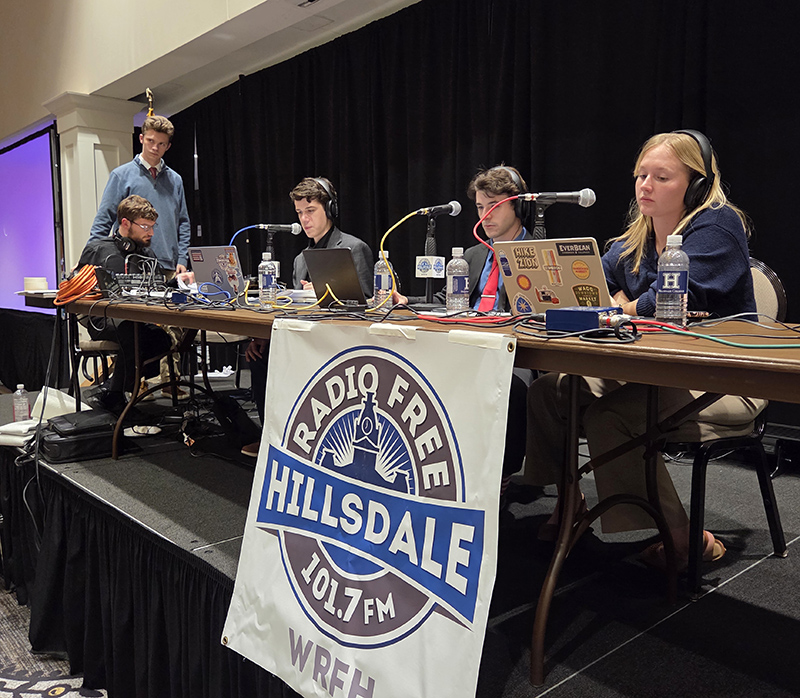
WRFH Students Produce Election Night Coverage

img

Pictured above are some of the students at Hillsdale College producing election coverage on the school’s WRFH-FM, Hillsdale, Michigan “Radio Free Hillsdale 101.7 FM.” The students broadcast from the school’s Searle Center and invited students, faculty, and staff to join to watch election results roll in and listen to analysis. Station general manager Scot Bertram comments, “Students work incredibly hard to prepare for this quite unpredictable night. It’s a great team-building exercise and exposes our staff to all aspects of running a great live event. I’ve heard from many students who took part in our previous Election Night broadcasts that it was one of their favorite experiences on campus and drew them deeper into the journalism program here at Hillsdale.”

Industry Views

The Never-Ending Story

img

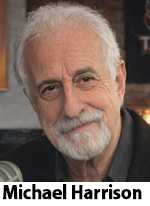
By Michael Harrison
Publisher
TALKERS

imgIn the nearly four decades that I have been publishing TALKERS, I’m consistently asked by reporters who cover media and politics, “Now that the election is over, what is talk radio going to have to talk about?” This inquiry is based on the false – but widely held assumption – that “talk radio” is a one-trick pony. Drives me nuts.
This question hasn’t been limited to elections (although they lead the pack). It also comes after the resolution of wars (the two Persian Gulf wars were biggies), and major murder trials with racial overtones (O.J. Simpson comes to mind and let’s not forget the tragic saga of George Floyd). We need a good “reckoning” every now and then in this country.

There is also a variation of the question that I’ve fielded consistently at the end of each year: “What will next year’s big talk show topic be?” This one is easy. I always say, “The unknown.”  Two mighty examples of that were 9/11 and Covid-19.

I’m often asked, “What would it take to bring people together during these polarized times?”  My answer: “A hefty asteroid impact.”

I clearly remember an incident on April 19, 1995, while being interviewed by a reporter for The New York Times about the mechanics and philosophy of talk radio programming. He asked, “So what will be next week’s big topic on talk shows?” (As if I’m a fortune teller.)

As he was delivering the question, I noticed out of the corner of my eye on the Sony TV screen mounted near the ceiling of the TALKERS newsroom, the gigantic explosion of a building that was identified on the chyron as the Federal Building in Oklahoma City.  I instantly responded, “Turn on CNN… I think it’s happening right now.”

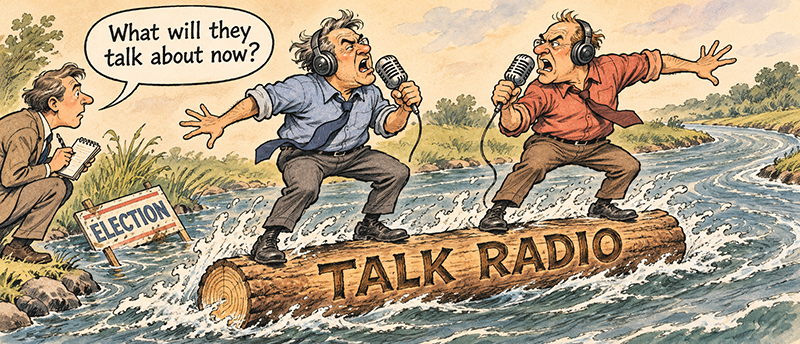
So back to the election.  Every ending launches a new beginning. Talk radio is a competitive game based upon the strategy of positioning. It’s sort of like a log rolling contest.

It requires a deft balance between leaning left or right and understanding the perplexing laws of gravity, momentum, and inertia.

It also requires an understanding of the true nature of marketplace conditions and the ever-changing state of public opinion.

Most important, it requires an understanding of the target core and the awareness that sometimes you have to piss off segments of it in order to maintain forward momentum.

There really is no such thing as “mass appeal” in talk radio. Back when Michael Savage was the highest rated talker in San Francisco, I was often asked, “How is it possible for such a conservative figure to be the top guy in one of the most liberal markets in America?”

My answer, “Because talk radio (and radio in general) is not an election. It is a competition for fractions of a point within niches. Michael Savage couldn’t get elected dog catcher in San Francisco… but he has the right appeal to a disenfranchised minority that is large enough to put him on top in his niche. The game is played the way the game is scored.”

I’ve always believed that there is a place for the left and a place for the right in talk radio.  And as any sailor knows, the winds can change direction on a dime.  The lefties have their work cut out for them and hopefully will take advantage of this new opportunity.

But all is not lost for the righties. Hardly! They are now finally free to move forward and cultivate the fascinating and engaging rebuilding of the very legitimate American Conservative movement without having to kiss the ass of a man who has hijacked both radio and frittered away the legitimacy of its content for far too long.

Michael Harrison can be reached at michael@talkers.com.    

Industry News

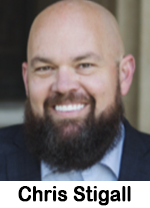
Talk Host Chris Stigall Wins Congressional Seat

Talk radio host Chris Stigall was elected to Congress yesterday representing Missouri’s U.S. House District 6. The Republican beat Democrat Josh Smead and Libertarian Andy Maidment for the seat occupied by Republican Sam Graves, who is leaving Congress and endorsed his former deputy communications imgdirector. Stigall hosted a show on KCMO, Kansas City in the past. Most recently, Stigall hosted his eponymous talk show syndicated by Salem Radio Network. He gave up his radio show to run for office. KCTV-TV reports, “Stigall campaigned heavily on securing Missouri a seat on the House Agriculture Committee, noting the state currently has no members on it. District 6 includes more than 27,000 farms and drives a large share of the state’s agricultural economy. Stigall said a committee seat would help provide stability for farmers and support passage of a new Farm Bill. He has also called for cutting regulatory ‘red tape’ to make it easier for rural hospitals and health care providers to operate.” See the KCTV-TV coverage here.
Industry Views

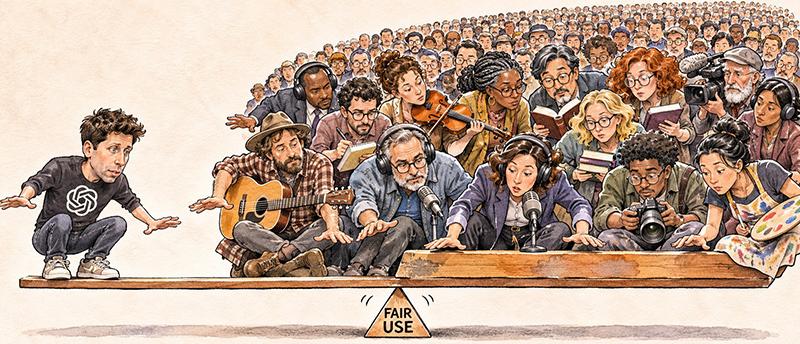
Broadcasters Know Both Sides to the Benefits of Fair Use

img

By Matthew B. Harrison
TALKERS, VP/Associate Publisher
Harrison Media Law, Senior Partner
Goodphone Communications, Executive Producer

imgAt 8:15 am, a radio host plays part of a television interview and explains why the guest’s answer deserves scrutiny. By noon, another program has clipped that host’s commentary and is taking it apart. The first use feels like doing the job. The second can feel like somebody helping themselves to your work, especially when they sell advertising around it.

That tension gives broadcasters a useful perspective on OpenAI’s October 30 statement, “Fair use benefits everyone.” The company assembled arguments supporting fair use in its copyright litigation involving news publishers, emphasizing benefits to creators, researchers, and the public. It is advocacy from a party to the litigation, not a judicial ruling. But the broader proposition deserves consideration from an industry that regularly experiences fair use from both directions.

For a talk host, the benefit can be immediate. An audience may need to hear the disputed answer, see the advertisement, or examine the passage before the host’s criticism makes sense. Requiring permission for every such use could give the subject of criticism considerable control over the discussion. Fair use provides room for qualifying commentary and reporting without that permission, although calling a segment “news” does not automatically establish the defense.

Now move to the other microphone. Your station secured the interview, paid the producer, developed the questions, and cultivated the audience. Another outlet extracts the most revealing exchange and uses it to challenge your coverage. Your investment matters to the business, but it does not automatically give you the power to prevent criticism that qualifies as fair use.

Change the example again. Instead of analyzing your interview, the other outlet uploads a substantial uninterrupted portion, adds a brief introduction, and offers listeners much of the experience your station produced. That raises a different question about substitution and the market for your work. The analysis considers the purpose, the nature of the original, the amount and significance taken, and the effect on its potential market, rather than simply counting seconds or checking for a credit.

This is where broadcasters can contribute something valuable to the AI debate. They understand why access to existing expression supports new commentary, and why producing that expression costs money. They also know that a competing program can win listeners through better reporting or sharper analysis. Competition alone does not tell us whether someone has improperly used protected material.

OpenAI and its supporters argue that training models serve a different purpose from publishing the works used to train them. Broadcasters can take that argument seriously while still asking what material was copied, how it was obtained, and what uses the law permits. Training a model, generating an answer, and publishing that answer involve distinct conduct. A persuasive argument about one does not automatically resolve the others.

The practical discipline is consistency. Before borrowing, identify what the audience needs to encounter and what your program contributes. Before objecting to someone else’s borrowing, examine whether they are criticizing your work or supplying a substitute for it. Neither the presence of advertising nor your understandable irritation settles the question.

That experience on both sides of the microphone is central to my book, Playing the Clip, which examines fair use in the daily work of media creation. Broadcasters need meaningful protection for what they produce, and meaningful freedom to examine what others produce. Fair use benefits the profession by helping preserve both, even when its application to our own work feels less comfortable.

Matthew B. Harrison is a media and intellectual property attorney who advises radio hosts, content creators, and creative entrepreneurs. He has written extensively on fair use, AI law, and the future of digital rights. Reach him at Matthew@HarrisonLegalGroup.com or read more at TALKERS.com.

Industry News

Townsquare Media Q3 Net Revenue Rises 3.9%

Townsquare Media is first out of the gate reporting third quarter 2026 financial results and reveals net revenue of $110.9 million, an increase of 3.9% over the same period in 2025. Townsquare CEO Bill Wilson says, “Townsquare’s third quarter results reflect imgthe continued strength of our Digital Advertising platform. Third quarter net revenue of $110.9 million increased 3.9% year-over-year and exceeded our guidance range, Adjusted EBITDA of $22.6 million increased 2.7% year-over-year and was within our guidance range, and net loss narrowed by $1.5 million year-over-year to $4.0 million. These results were driven by the growth of Townsquare Ignite, our Digital Advertising business, and by political revenue that is tracking ahead of our expectations. Digital Advertising net revenue grew 12.7% year-over-year, accelerating for the third consecutive quarter, led by programmatic revenue growth of 22.5%. Our Media Partnerships business now serves 18 partners and extends our digital programmatic advertising platform to 122 markets across the United States, and we expect Media Partnerships revenue to more than double in 2026. In addition, Townsquare Interactive delivered strong profitability, with Segment Profit margins of 36% in Q3, as we rebuild and grow our sales team.”
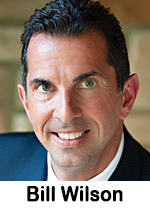
imgWilson continues, “At the same time, we want to be candid about the challenges we face. Our local clients continue to feel pressure from higher operating costs and interest rates, and they are scrutinizing every marketing dollar, particularly those spent on traditional media. Excluding political, Broadcast Advertising net revenue declined 5.2% in the third quarter. We expect those declines to deepen in the fourth quarter, partly as political advertising crowds out other inventory. In addition, while Townsquare Interactive’s profit remains strong, lower-than-anticipated sales velocity means it will not return to sequential revenue growth in Q4 2026 as we had projected.”

Industry Views

Sabo Sez: The Myth of the Farm Team

By Walter Sabo
A.K.A. Walter Sterling 
Host, Red Apple Audio Networks

imgOn the list of imagined crimes committed by the act of consolidation upon the radio industry is the myth that it killed the “farm team” for emerging talent. There never was a farm team.
Radio, like online video web stars, is built on the blind ambition of self-cast stars. Hey kid, if you want to be in radio, you’ll find a way. I can’t recall radio industry recruiters hanging around high schools or colleges listening for compelling voices and story tellers. Radio talent did whatever they had to do to slip into the nearest radio station. Rookies still pester their way past the gate except now their odds of finding a launch pad are much better. Simple math.

America’s radio station count has more than doubled since 1970 – from roughly 6,800 to more than 15,600 total AM, commercial FM, and noncommercial FM stations. AM climbed to nearly 5,000 stations around 1990 before declining approximately 500 to roughly its 1970 level. The expansion came on FM: commercial stations more than tripled, while non-commercial stations grew more than elevenfold. Those totals don’t even include the thousands of FM translators and low-power FM stations now on the dial.

Ironic, huh?

There have never been so many stations which is ironic for a dying medium. More stations, better odds of landing a job. A formal structure for bringing in a new radio talent has never been stronger. Today there are paid internships, training courses, and of course campus radio stations – all formal paths to gaining employment.

There is a whole industry called “on boarding” with which many media companies engage. My on boarding was the owner let me hang around Saturdays, dub commercials to cart and bought me my first cup of coffee. Thanks Nick, owner of WCRV, Washington Boro, NJ

Walter Sabo has been a C-Suite action partner for companies such as SiriusXM, Hearst, Press Broadcasting, Gannett, RKO General, and many other leading media outlets. His nightly show “The Other Side of Midnight” is heard on WABC, New York and the Red Apple Audio Network 1:00 am – 5:00 am. His syndicated show, “Sterling On Sunday,” from Talk Media Network, airs 10:00 pm-1:00 am ET, and is now in its 10th year of success. He can be reached by email at sabowalter@gmail.com.  He can be phoned at 646-678-1110.

Industry Views

Monday Memo: Make Your Podcast Matter

By Holland Cooke
Consultant

imgWhat makes a life – or the work we do – matter? In Make It Matter, author Matthew Emerzian explores how recognizing our own worth, making others feel valued, and contributing to something beyond ourselves can give everyday choices a deeper purpose.

If you are podcasting, here’s your take-away: Make listeners feel that THEY matter…not merely that your podcast matters.

Emerzian’s narrative builds around three perspectives: “I Matter. You Matter. We Matter.” Applying that framework to podcasting suggests practical lessons.

  • Give each episode a listener-centered purpose. Before recording, finish this sentence: “After listening, you will be better able to…” Make a decision? Solve a problem? Understand an experience? Enjoy your day? That answer sharpens the title, opening, questions, and editing.
  • Make the guest feel heard. The book’s discussion of active listening is directly relevant to interviewers: Give full attention, ask open-ended questions, and respond to what someone actually says. Your prepared questions are a starting point. When a guest reveals something interesting, follow it. A useful follow-up: “What did that change for you?”
  • Recognize the person behind the download. Downloads help measure reach; they don’t fully describe impact. Also collect evidence of usefulness: a listener who tried your advice, shared an episode with someone who needed it, or felt understood.
  • Turn participation into a relationship. Invite a specific question, use it in an episode, and acknowledge the contributor, with permission. Then follow up: “Did that help? What happened next?” Those exchanges can give listeners a meaningful role in shaping the show.
  • Let expertise include uncertainty. Emerzian explicitly discusses podcast hosts in his treatment of imposter syndrome. No, you don’t have to know everything to contribute something worthwhile. Explain what you know, acknowledge what you don’t, and invite someone who can fill the gap.
  • Give the audience something to do together. The “We Matter” perspective suggests a shared purpose beyond consuming episodes: try one practical change, contribute experiences, help answer another listener’s question, or support a community effort. Report back on what participants accomplished.
  • Judge the show by what it gives people. A useful editorial question is: “Are we asking listeners to admire us, or giving them a reason to return?” Even a comedy or entertainment podcast can offer recognition, companionship, discovery, and delight.

The big idea: A listener who feels understood has a reason to come back…and recommend your podcast.

Make It Matter: Unlocking Human Potential Through The Mattering Mindset by Matthew Emerzian is published by Wiley Books. To read 2 free sample chapters, scroll down to “Recommended Reading” at HollandCooke.com

Holland Cooke (HollandCooke.com) is a consultant working the intersection of broadcasting and the Internet. Follow HC on Twitter @HollandCooke and connect on LinkedIn

Industry News

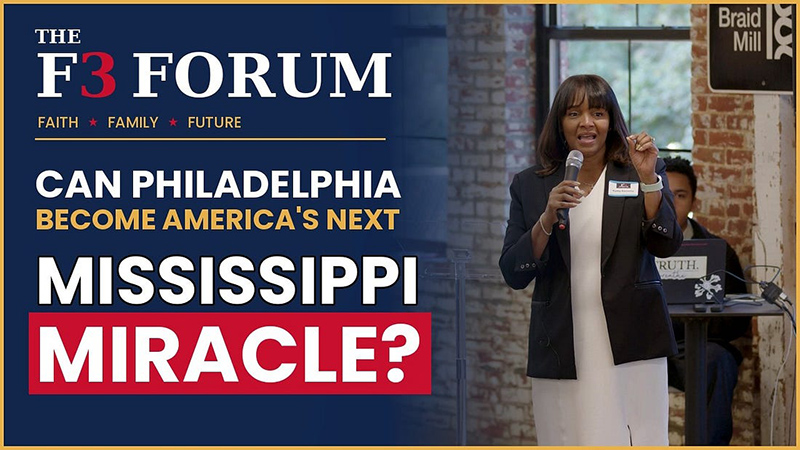
WPHT, Philadelphia Host Kathy Barnette’s Second Annual F3 Forum Successfully Addresses Educational Issues

img

WPHT, Philadelphia weekend talk show host, former U.S. Senate candidate, and community organizer Kathy Barnette‘s recent F3 Forum: Faith • Family • Future of Education in America was aimg resounding success. The power-packed one day event (11/24) drew several hundred parents and concerned citizens to Braid Mill in Germantown to meet, mingle, and see an array of speakers including educators, pasters, and policy experts to discuss the state and future of education. Fellow WPHT talk show host, education advocate and podcaster Dom Giordano was one of the featured panelists (see photo). To view video coverage of the event, please click here.
Industry News

Salem’s “This Week on Capitol Hill” Scores Zelenskyy Interview

Salem Media’s weekly news magazine “This Week on Capitol Hill” with Tony Perkins aired an exclusive, wide-ranging interview with Ukraine President Volodymyr Zelenskyy on this past weekend’s edition of the show. Among the topics discussed imgon the program was the notion that Ukraine has been persecuting Christians. Zelenskyy said on the program, “Tucker Carlson and other such guys, they I think they’ve never been. I mean, I think these men never been in Ukraine, how he can discuss what’s going on in Ukraine and to speak about the what’s going on with the with religious people in Ukraine, we are very free.” “This Week on Capitol Hill” with Tony Perkins is produced by Salem in cooperation with the Family Research Council. It airs live at 10:00 am on Saturdays on the Salem Radio Network and Salem News Channel and is streamed four times each weekend on the Newsmax 2 platform.
Industry News

Crossover Media Group Partners with “No Snooze” Podcast

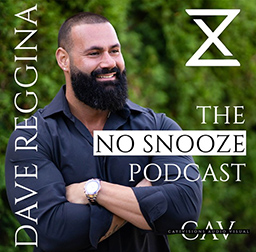
Crossover Media Group is partnering with leadership expert, keynote speaker and author Dave Reggina to handle advertising sales for his “The No Snooze Podcast.” Additionally, CMG has acquired an equity interest in the program. Crossover Media imgGroup managing member Scott Calka says, “‘The No Snooze Podcast’ is a compelling, engaging and inspirational program hosted by a personality who’s equally compelling, engaging and inspirational. With his special blend of motivational leadership insights, uplifting personal-growth stories and practical health and fitness advice, Dave is poised to break out in the podcast universe.  Our new partnership underscores our confidence in his potential and is emblematic of an evolving model for our podcast business.” Reggina’s diagnosis as a teen with Crohn’s disease sparked his dedication to health, fitness and resilience.  He is the author of the book, 30 Lessons to Lead: From Breakdowns to Breakthroughs, and co-founded A.C.E. (Action Cultivates Excellence), a transformative personal and professional growth movement and community.
Industry News

KXEL’s Jeff Stein Talks Iowa Races on Newsmax

img

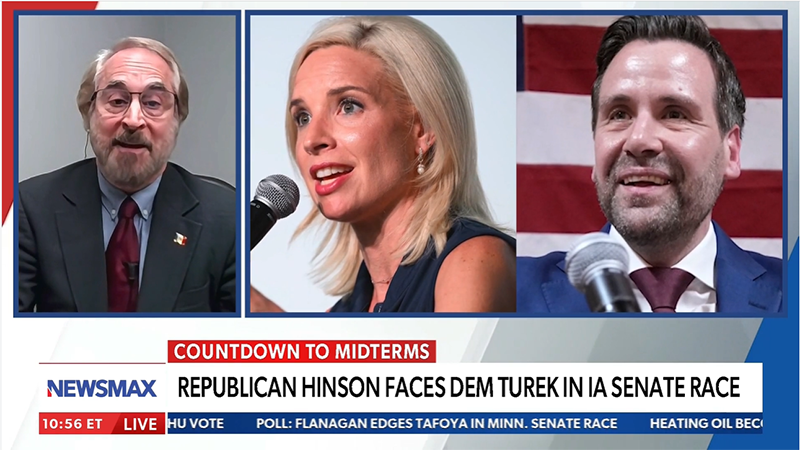
Pictured above in this screen grab is KXEL, Waterloo/Cedar Rapids Jeff Stein (left) appearing on Newsmax TV to provide his local perspective on the Iowa midterm races. The station says that Stein has been a frequent guest on Newsmax leading up to the election. The race for the seat left open by the retirement of Republican Senator Joni Ernst features GOP Congresswoman Ashley Hinson against Democrat state representative Josh Turek and Libertarian Thomas Laehn, an elected county attorney.