By Matthew B. Harrison
TALKERS, VP/Associate Publisher
Harrison Legal Group, Senior Partner
Goodphone Communications, Executive Producer
 When Georgia-based nationally syndicated radio personality, and Second Amendment advocate Mark Walters (longtime host of “Armed American Radio”) learned that ChatGPT had falsely claimed he was involved in a criminal embezzlement scheme, he did what few in the media world have dared to do. Walters stood up when others were silent, and took on an incredibly powerful tech company, one of the biggest in the world, in a court of law.
Taking the Fight to Big Tech
Walters, by filing suit against OpenAI, the creator of ChatGPT, become the first person in the United States to test the boundaries of defamation law in the age of generative artificial intelligence.
His case was not simply about clearing his name. It was about drawing a line. Can artificial intelligence generate and distribute false and damaging information about a real person without any legal accountability?
While the court ultimately ruled in OpenAI’s favor on specific legal procedure concerns, the impact of this case is far from finished. Walters’ lawsuit broke new ground in several important ways:
— It was the first known defamation lawsuit filed against an AI developer based on content generated by an AI system.
— It brought into the open critical questions about responsibility, accuracy, and liability when AI systems are used to produce statements that sound human but carry no editorial oversight.
— It continued to add fuel to the conversation of the effectiveness of “use at your own risk” disclaimers when there is real world reputational damage hanging in the balance.
Implications for the Radio and Podcasting Community
For those spoken-word creators, regardless of platform on terrestrial, satellite, or the open internet, this case is a wake-up call, your canary in a coal mine. Many shows rely on AI tools for research, summaries, voice generation, or even show scripts. But what happens when those tools get it wrong? (Other than being embarrassed, and in some cases fined or terminated) And worse, what happens when those errors affect real people?
The legal system, as has been often written about, is still playing catch-up. Although the court ruled that the fabricated ChatGPT statement lacked the necessary elements of defamation under Georgia law, including provable harm and demonstrable fault, the decision highlighted how unprepared current frameworks are for this fast-moving, voice-driven digital landscape.
Where the Industry Goes from Here
Walters’ experience points to the urgent need for new protection and clearer guidelines:
— Creators deserve assurance that the tools they use are built with accountability in mind. This would extend to copyright infringement and to defamation.
— Developers must be more transparent about how their systems operate and the risks they create. This would identify bias and attempt to counteract it.
— Policymakers need to bring clarity to who bears responsibility when software, not a person, becomes the speaker.
A Case That Signals a Larger Reckoning
Mark Walters may not have won this round in court, but his decision to take on a tech giant helped illuminate how quickly generative AI can create legal, ethical, and reputational risks for anyone with a public presence. For those of us working in media, especially in formats built on trust, voice, and credibility, his case should not be ignored.
“This wasn’t about money. This was about the truth,” Walters tells TALKERS. “If we don’t draw a line now, there may not be one left to draw.”
To listen to a longform interview with Mark Walters conducted by TALKERS publisher Michael Harrison, please click here
Media attorney, Matthew B. Harrison is VP/associate publisher at TALKERS; Senior Partner at Harrison Legal Group; and Executive Producer at Goodphone Communications. He is available for private consultation and media industry contract representation. He can be reached by phone at 724-484-3529 or email at Matthew@HarrisonLegalGroup.com. He teaches “Legal Issues in Digital Media” and serves as a regular contributor to industry discussions on fair use, AI, and free expression.




 African American residents, as well as progressive listeners more broadly. KBLA Talk 1580 continues to be the most ‘trusted, credible, and reliable’ media source in Southern California for African Americans and beyond. While KBLA Talk 1580 is unapologetically progressive, the station and its on-air talent prioritize good ideas over ideology.” KBLA will hold a “Juneteenth Backyard Barbecue” today at Kenneth Hahn State Recreation Area from 4:00 pm to 8:00 pm. On Saturday (6/21) KBLA will present an “Empowerment Congress Juneteenth Community Celebration & Dialogue” at The Beehive from 9:00 am to 2:00 pm, and on Sunday (6/22), station host Dominique DiPrima will moderate a “State of Black Women in Los Angeles” symposium at The Living Room @ Faithful Central Bible Church from 10:00 am to 2:00 pm.
 Olivia will be a great addition to the Commission. Olivia brings years of valuable experience to the agency, including her public service on Capitol Hill and time in the private sector. I am confident that her deep expertise and knowledge will enable her to hit the ground running, and she will be an exceptionally effective FCC Commissioner. I look forward to welcoming Olivia to the Commission as a colleague and advancing an agenda that will deliver great results for the American people.” Fellow Commissioner, Democrat Anna Gomez also welcomes Trusty, saying, “I want to congratulate Olivia Trusty on her confirmation and welcome her to the FCC. I have known Olivia for years and have been very impressed with her strong background in communications policy and deep understanding of the technical aspects of this job, which will be a great asset to this agency. I look forward to working with her to return the FCC to its core priorities of protecting consumers, promoting innovation and competition, and securing our communication networks.”
 community events, retail/client events, local fairs and more. You will meet new people and engage with the public. Plus, interact with multi-media marketing pros to get an edge on your career with real world experience. This is a great job for all ages over the age of 18. If you are retired, a veteran, looking to fill some time on the weekends, in college looking for some extra part-time work or interested in the radio and television industry this is a great opportunity.” The position pays $21 per hour.
 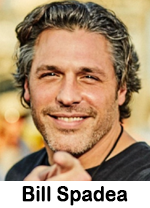 primary to take on Democrat Mikie Sherrill in November. New Jersey 101.5’s coverage noted, “Conservative radio host Bill Spadea was expected to give Ciattarelli a fight, but any hope that Spadea might have had to keep the race close ended when President Donald Trump endorsed Ciattarelli. Ciattarelli defeated Spadea on election night with a landslide victory margin of over 40 points. Ciattarelli swept every county, including Ocean County, where Spadea’s base of support was believed to be strongest.” So far, neither the station nor Spadea have stated whether Spadea intends to return to the morning radio program.
 demonstrating that they have met their duty of inquiry in seeking to obtain the information needed to determine whether programming is sponsored, paid for, or furnished by a foreign governmental entity.” While this new sponsorship identification requirements for foreign government-provided programming was passed 3-2 by the Commission last summer, it has been challenged in the courts and remains there. Because of this, yesterday’s announcement of the publication of the rules in the federal register also adds that the implementation of the rules are being put off for six months until December 8, 2025. One of the arguments put forth by broadcasters opposed to the new rules is that they put radio and TV stations in the position of having to conduct an investigation in order to comply with the law.
 In the golden age of broadcasting, the rules were clear. If you edited the message, you owned the consequences. That was the tradeoff for editorial control. But today’s digital platforms – YouTube, X, TikTok, Instagram – have rewritten that deal. Broadcasters and those who operate within the FCC regulatory framework are paying the price.
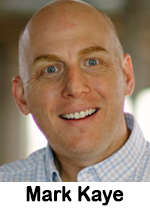 U.S. House in Florida’s 5th Congressional District as a Republican. Since exiting WOKV in February of 2024, Kaye has been hosting daily podcasts, “Mark Kaye Saves the Republic,” and “The 47 Daily.” Kaye says he’ll challenge incumbent Republican Congressman John Rutherford. Kaye says, “I’ve been shouting into microphones and TV cameras about these lazy politicians for years, but nothing’s changed. So, I will go to Washington and shout at them from the House floor!”
 the Corporation” because it was established to be a private non-profit corporation independent from governmental control or influence. This comes after the Trump administration attempted to remove three of the CPB’s board of directors – Laura G. Ross, Thomas E. Rothman, and Diane Kaplan – earlier this year. CPB CEO Patricia Harrison says, “We are very pleased that the Court recognized CPB is an independent, non-profit corporation, free from governmental control or influence, and CPB, board and management, looks forward to continuing our work with policymakers and other stakeholders to ensure accurate, unbiased and nonpartisan public media is available for all Americans.”
 Commission and Republican Commissioner Nathan Simington abruptly announced his departure from his commissioner role earlier this week. President Trump nominated Olivia Trusty for the open seat that existed prior to Starks’ and Simington’s departures but that has been stalled in the Senate. Interestingly, FOX News reports that Simington’s chief of staff Gavin Wax is being floated as a potential nominee, according to “a source close to the FCC.” Regardless, the Senate needs to get at least one nominee confirmed soon as the Commission’s ability to do business is disrupted.
 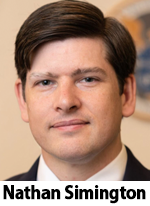 end of this week. It has been the greatest honor of my professional life to serve the American people as a Commissioner. I am deeply honored to have been entrusted with this responsibility by President Donald J. Trump during his first term.
  Dozens of brand-new audio hardware and software companies have been launched during the past 20 years. These start-ups are usually funded by venture capital money. VC money is not invested to return a profit, it’s poured in to – pour it in. Their money is “different” than the cashflow that fuels your business. Start-up money buys time to profit.
 In a ruling that should catch the attention of every talk host and media creator dabbling in AI, a Georgia court has dismissed “Armed American Radio” syndicated host Mark Walters’ defamation lawsuit against OpenAI. The case revolved around a disturbing but increasingly common glitch: a chatbot “hallucinating” canonically false but believable information.
 current Alpha Media shareholders retaining their interest in the company but ceding control to Connoisseur. Under the terms of the deal, Alpha shareholders will reorganize into a new company which will become part of Connoisseur in exchange for a 3.75% equity stake in Connoisseur, plus two warrants to allow them to acquire more equity – one for 5% at $30 million valuation and the other for up to 5% at $70 million valuation. Connoisseur is acquiring new credit facilities to finance the retirement of Alpha debt plus a new, revolving credit line. Connoisseur is operating the Alpha under an LMA and when the deal closes, the new Connoisseur will own and operate 218 stations in 47 markets.
  suitable for all formats. All are hosted by WMAL-FM, Washington, DC morning personality Larry O’Connor. Fisher House says, “The inspiring and patriotic radio show features interviews with wounded warriors and veterans including heroes from Operation Enduring Freedom, the Vietnam War, and an incredible, emotional story of one of America’s World War II living legends. Listeners will hear their emotional stories fighting for our freedoms, the injuries and illnesses they endured, and the welcoming homes Fisher House provides for them and their loved ones while they endure their painful and painstaking recoveries.” For more information on this radio special, contact Larry O’Connor at: 562-665-9537 or
 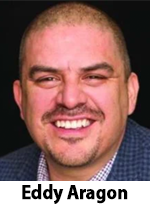 LLC, owner of news/talk KIVA, Albuquerque and hosts the afternoon drive “Rock of Talk” show. The seat is currently held by Democrat Gabe Vasquez. The Albuquerque Journal reports that Aragon ran for congress in the state’s 1st Congressional District in 2021 and previously ran for mayor of Albuquerque. He tells the paper, “I can win this race… We need more privatization of education. I think the approach that’s being taken at the national level is important. We don’t want to do without the money, but we definitely want to do without the bureaucracy.”
  The station says, “As the June 1 increases loom, state leaders and advocates will discuss the impact on consumers and what can be done. With public outrage mounting over stalled grid upgrades and steep bills, a panel of experts and top officials will explore the reason behind the hikes and the possible solutions that can be implemented to prevent such steep hikes in the future.”