



A 20th Century Rulebook Officiating a 2026 Game
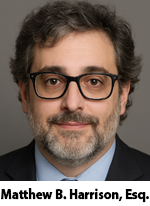
By Matthew B. Harrison
TALKERS, VP/Associate Publisher
Harrison Legal Group, Senior Partner
Goodphone Communications, Executive Producer
 Every media creator knows this moment. You are building a segment, you find the clip that makes the point land, and then the hesitation kicks in. Can I use this? Or am I about to invite a problem that distracts from the work itself?
That question has always lived at the center of fair use. What has changed is not the question, but the context around it. Over the past year, two federal court decisions involving AI training have quietly clarified how judges are thinking about copying, transformation, and risk in a media environment that looks nothing like the one for which these rules were originally written.
Fair use was never meant to be static. Anyone treating it as a checklist with guaranteed outcomes is working from an outdated playbook. What we actually have is a 20th century rulebook being used to officiate a game that keeps inventing new positions mid-play. The rules still apply. But how they are interpreted depends heavily on what the technology is doing and why.
That tension showed up clearly in two cases out of the Northern District of California last summer. In both, the courts addressed whether training AI systems on copyrighted books could qualify as fair use. These were not headline-grabbing decisions, but they mattered. The judges declined to declare AI training inherently illegal. At the same time, they refused to give it a free pass.
What drove the analysis was context. What material was used. How it was ingested. What the system produced afterward. And, critically, whether the output functioned as a replacement for the original works or something meaningfully different. Reading the opinions, you get the sense that the courts are no longer talking about “AI” as a single concept. Each model is treated almost as its own actor, with its own risk profile.
A simple medical analogy helps. Two patients can take the same medication and have very different outcomes. Dosage matters. Chemistry matters. Timing matters. Courts are beginning to approach AI the same way. The same training data does not guarantee the same behavior, and fair use analysis has to account for that reality.
So why should this matter to someone deciding whether to play a 22-second news clip?
Because the courts relied on the same four factors that govern traditional media use. Purpose. Nature. Amount. Market effect. They did not invent a new test for AI. They applied the existing one with a sharper focus on transformation and substitution. That tells us something important. The framework has not changed. The scrutiny has.
Once you see that, everyday editorial decisions become easier to evaluate. Commentary versus duplication. Reporting versus repackaging. Illustration versus substitution. These are not abstract legal concepts. They are practical distinctions creators make every day, often instinctively. The courts are signaling that those instincts still matter, but they need to be exercised with awareness, not habit.
The mistake I see most often is treating fair use as permission rather than analysis. Fair use is not a shield you invoke after the fact. It is a lens you apply before you hit publish. The recent AI cases reinforce that point. Judges are not interested in labels. They are interested in function and effect.
Fair use has always evolved alongside technology. Printing presses, photocopiers, home recording, digital editing, streaming. AI is just the newest stress test. The takeaway is not panic, and it is not complacency. It is attention.
If you work in the media today, the smart move is to understand how the rulebook is being interpreted while you are busy playing the game. The rules still count. The field just looks different now.
Matthew B. Harrison is a media and intellectual property attorney who advises radio hosts, content creators, and creative entrepreneurs. He has written extensively on fair use, AI law, and the future of digital rights. Reach him at Matthew@HarrisonLegalGroup.com or read more at TALKERS.com.
 Hello from Las Vegas, where 150,000+ of us – from around the world — are swarming. Think: hand sanitzer. And comfortable shoes.
 Advice columns blanketing sites like LinkedIn, the Skimm, and Forbes 2.0 – aimed at recent graduates – encourage their readers to seek and bond with an at-work mentor. After years of skimming “5 bullet” articles, I have reached the tipping point and I’m not going to take it anymore: Seeking a mentor as a career strategy is horrible advice. Just horrible.
 Cutting edge technology is on display — and on wheels — this week here in Las Vegas.
  Smith will air from 9:00 am to 12:00 noon and “Jeffrey Wright and Company” is expands to a three-hour show airing from 12:00 noon to 3:00 pm. Station brand manager and operations manager Brad Carson comments, “Since helping launch the station in 2010, Geoff Calkins defined the brand through his unique ability to blend smart, prepared sports storytelling with deeply resonant coverage of the broader Memphis community. We’re excited for the new generation of talent he personally mentored to build upon the powerful legacy he leaves behind and the foundation he built. Our listeners can remain confident that the station will uphold its commitment to unrivaled sports coverage and the authentic, community-driven storytelling that Memphis relies on.”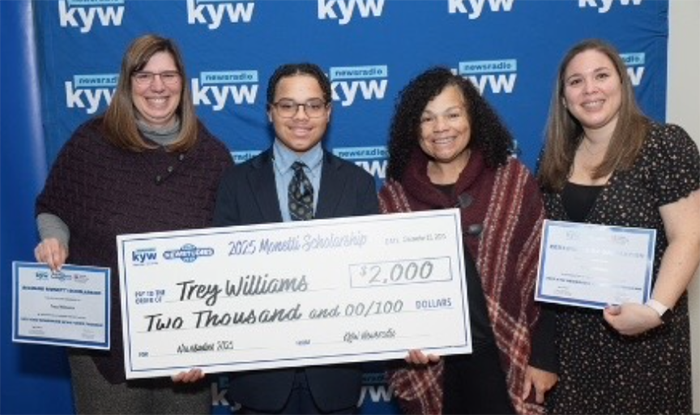
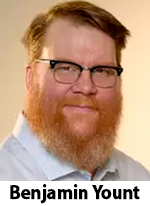 Benjamin Yount is taking over the 6:00 am to 9:00 am show hosting duties. Yount has been with the station since 2018 as host and news director. He comments, “WISN has always been about serving Wisconsin with smart, honest conversation, and I’m honored to take on
  morning drive. Our listeners count on us to start their day informed and engaged, and I’m excited to continue that in a new time slot while keeping the same commitment to strong local coverage.” Jason Goch, who has been a fill-in host on WISN, moves into the morning news anchor and late morning talk host role. He’ll handle news duties during Yount’s program and host his own talk show from 9:00 am to 11:00 am. Station program director Jerry Bott states, “This lineup builds on WISN’s momentum and reflects our focus on serving listeners with strong, credible voices throughout the day. Benjamin has earned the trust of our audience and brings proven ratings success to morning drive, while Jason is a terrific addition whose experience and versatility strengthen our local programming bench.”
 regions. President of community markets John Karpinski says, “Mark and Jeff consistently demonstrate exceptional leadership in developing business, cultivating long-standing client relationships, and building high-performing sales teams. Their strategic vision and deep understanding of our business will be instrumental as we continue to invest in our people and platforms. I am excited to see the impact they will have across even more markets.” Additionally, Marshal Burgess, currently president of the Portland market, is promoted to region president of the Pacific Northwest Area expanding his responsibilities to include Seattle, Portland, and Spokane. Division president Nick Gnau states, “Marshal has been a cornerstone of iHeart’s success in the Pacific Northwest, consistently driving growth and fostering strong relationships throughout the region. With a deep understanding of the business and a proven leadership track record, he is well-positioned to lead the region and drive success.”
 Chicago sports radio hosts Chris Bleck & Adam Abdalla airing from 12:00 noon to 3:00 pm ET. Jim Rome remains in the 3:00 pm to 6:00 pm ET daypart, followed by “BetMGM Tonight” with Brad Evans and Pat Boyle from 6:00 pm to 11:00 pm ET. Finally, “Westwood One Sports Night” will be hosted by Lynnell Willingham and Josh Graham airing from 11:00 pm to 3:00 am ET. SVP of sports | content & audience Bruce Gilbert states, “With our partners at Audacy, we’ve assembled a group of diverse and passionate sports voices committed to covering the biggest sports stories with opinions, expert analysis, and fan interaction. This lineup will highlight the biggest stories and provide timely information that is fresh, fun, and fan focused.”
 Fallen Patriots charity through her Holiday Designs Store that sells her hand-crafted art. Children of Fallen Patriots is a 501(c)(3) nonprofit organization providing college and trade school scholarships, educational assistance, and career support to military children who have lost a parent in the line of duty. She says, “The generous support of my listeners and their purchases from my Holiday Store have provided crucial support for this wonderful organization dedicated to helping military families in need.”
 The Problem Is No Longer Spotting a Joke. The Problem Is Spotting Reality
 than just retail businesses. From brands to home services to manufacturers — if your customers are shopping online, you’ll be able to find them, right at the point of purchase; 2) Move the dollars that matter. Learn why successful advertisers are shifting traditional TV budgets to Amazon DSP to reach ready-to-buy audiences more efficiently; and 3) Prove performance with clarity. See real results from local case studies that connect campaign exposure to leads, site visits, and sales.
 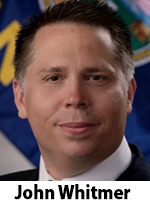 Whitmer to the KNSS morning show alongside Ted Woodward. ‘Woodward and Whit’ will build on the foundation of smart, local conversation that our listeners expect by delivering the essential news, candid analysis and enjoyable banter that starts the day right. This is a powerful pairing that promises to keep the Wichita community informed and engaged.” Whitmer has been hosting an eponymous two-hour weekend show for KNSS since 2018. He’s a veteran of Kansas politics having served in roles for local, state, and national Republican campaigns. Whitmer currently serves as the Chairman of the Sedgwick County Republicans. He says, “I’m honored to join Ted Woodward on ‘Woodward & Whit,’ stepping into the big shoes left by Steve McIntosh, who dedicated over 50 years to Wichita mornings. I look forward to bringing news coverage, straight talk, common-sense discussion and a little fun to help our community start the day on the right note.”
 across documentary, entertainment, news, sports, and corporate audio.” NYFestivals EVP Rose Anderson adds, “The robust world of audio storytelling today is fully represented in the 2026 edition of the Grand Jury. From audiobooks to podcasts and video podcasts, from investigative journalism to live events, and from mystery to social justice, this year’s men and women of the jury volunteer their time and lend their expertise.”
  from its WXYT-FM, Detroit 97.1 The Ticket – and its deal with Townsquare Media to air the format on Townsquare stations in Michigan. Now, Townsquare is flipping WFGR-FM, Grand Rapids from classic hits to sports talk as “Sports Radio 98.7.” Townsquare Media COO Erik Hellum says, “Townsquare Media is excited to bring such high-caliber, Michigan-focused sports programming to West Michigan. This is a big win for listeners who want strong, local sports conversation without having to rely on national networks.”
 News Association and he penned a great good-bye letter that’s available on the RTDNA site.
  January 1. Co-president of the Urban One Audio Division Eddie Harrell says, “For more than three decades, Howard has been a steady, visionary leader for our Baltimore cluster. His commitment to excellence, his instinct
  for developing talent, and his deep understanding of this market have strengthened our stations and helped shape the culture of our entire audio division.” Willner began his career with Urban One and transitioned to account executive before rising to national sales manager, general sales manager and ultimately, director of sales. Harrell adds, “Dave has had the benefit of learning the business under Howard’s guidance for many years, and he embodies the forward-thinking leadership we need for the next chapter. I’m confident he will build on Howard’s strong foundation and continue to advance the success of the Baltimore market.” The company says Mazer will work closely with Willner through the end of the year to ensure a smooth and seamless transition.
 Running a successful radio station, hosting a show, or producing a podcast is a lot like hosting Thanksgiving dinner. You need a plan. You need to deliver something satisfying to a crowd with varying tastes. And most of all – if you get it right – you’ll have leftovers you can turn into even more value long after the main event.
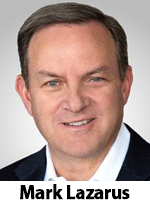 York City. The annual black-tie Golden Mic gala is the biggest fundraiser for the BFoA, which is devoted exclusively to helping radio and television professionals in need of financial assistance due to critical illness or tragedy. Lazarus says, “I am deeply honored to receive the Golden Mic Award from the Broadcasters Foundation of America, an organization that stands at the heart of our industry’s values – service, compassion, and community. Broadcasting has always been about connecting people, and the Foundation’s work reminds us of the profound responsibility and privilege we have to support one another, especially in times of need.”
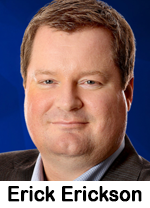 holiday dinners – including turkey or smoked ham, sweet or mashed potatoes, macaroni and cheese, green beans, rolls, and pie – to families who might otherwise go without. Erickson says, “Every year, my listeners remind me why this show exists – not just to discuss the issues of the day, but to drive real change in people’s lives. In these tough times, knowing we’ve put food on the table for thousands of families fills me with gratitude. This isn’t about politics; it’s about compassion, faith, and stepping up for our neighbors. Hungry for a Day makes it seamless, and our audience makes it extraordinary with an impact from coast to coast.”
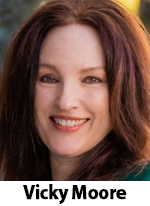 people here at KNX all around me are real. And they are people who live and work in this community. Brian Douglas and Sioux-Z Jessup, our traffic team, Sabina – they care about people driving in from places like Santa Clarita. Or when you hear sirens on the westside or Monrovia, we here at KNX are curious too! And we can joke about the differences between LA and Orange County and how Irvine is always topping the list somewhere because we are here with you in this community. We know Southern California. It has been my privilege to be part of this community and to tell you stories about things that matter, as well as things that just might brighten your day. We’ve had so much fun. It has been my absolute pleasure to meet some of you, along the way… So, I hope that you will continue to listen to KNX and enjoy my partner here and support him, Mike Simpson, and the new owner of my chair as the morning co-host, that is Margaret Carrero, we wish her well.” With Carrero’s move to mornings, Alex Silverman joins the afternoon lineup, alternating shifts with Brian Douglas.
  For most of my life, the sound of an AM signal has been my constant companion. Long before I ever spoke into a microphone professionally, I was the kid hiding under the covers with a transistor radio, slowly turning the dial, discovering voices, ideas, communities, and worlds far beyond my bedroom. AM radio didn’t just shape my career – it shaped who I am.