


Cumulus Nashville’s SuperTalk 99.7 WTN Announces On-Air Lineup Additions and Moves to Offer Enhanced Local News Coverage
Cumulus Media (NASDAQ: CMLS) announces that Nashville’s SuperTalk 99.7 WTN (WWTN-FM) has strengthened its weekday news and talk coverage with multiple lineup additions and moves debuting in January of 2025. Sources at the powerhouse 100,000-watt news/talk station and SuperTalk TV (YouTube) tell TALKERS the station is committed to providing the best in news and compelling live and local content, and these exciting lineup changes reflect this dedication to delivering top-notch local news coverage and engaging talk programming to listeners.
 On-air host Brian Wilson (weekdays from 3:00 pm to 7:00 pm), announced his retirement earlier this month, after a 50-year career in broadcasting that included stints at FOX News and WMAL-FM in Washington, D.C., before landing at SuperTalk 99.7 in 2018. Wilson will continue to contribute to SuperTalk 99.7 in a host-at-large role.
 Matt Murphy steps in as on-air host, afternoon drive (weekdays from 3:00 pm to 7:00 pm), after hosting weekdays on the station from 12:00 noon to 3:00 pm for the last three years. Murphy joined SuperTalk 99.7 in 2021 after a 19-year stint with Talk 99.5 WZRR in Birmingham, AL, as both morning show host and program director.
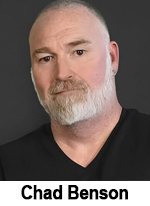 Joining Cumulus Nashville and the new SuperTalk 99.7 lineup is Chad Benson, who will host a live and local show airing weekdays from 12:00 noon to 3:00 pm. Benson will continue as host of his syndicated program, “The Chad Benson Show” with Radio America Network. Chad Benson said, “I’m so excited to be a part of this legendary radio station and to work with an incredible team in an amazing city. I look forward to contributing and building strong connections with both listeners and advertisers.”
 The station further enhances its news coverage with the addition of veteran broadcast journalist Joan Jones as news anchor in morning drive with current host and 2024 Marconi winner Dan Mandis. Jones is known for her successful 10-year career as morning news anchor for news/talk station WTOP-FM in Washington, D.C. Current SuperTalk 99.7 news anchor Ken Weaver will continue to cover the news desk weekday afternoons from 11:00 am to 7:00 pm.
Allison Warren, VP/MM, Cumulus Nashville, tells TALKERS, “We are thrilled to introduce these exciting changes to our lineup at SuperTalk 99.7 WTN. Each addition and shift reflects our unwavering commitment to delivering the highest quality news and talk programming to our listeners. With a blend of seasoned professionals and fresh voices, we are poised to provide even more engaging and comprehensive coverage for Nashville and Middle Tennessee. We look forward to continuing our tradition of excellence and connecting with our community in new and meaningful ways.”
 Tomorrow (12/5) at 7:00 pm, Townsquare Media’s New Jersey 101.5 (WKXW-FM) is presenting a special Town Hall broadcast, “Targeted: Protecting New Jersey Children from Online Predators,” confronting the crisis of online child predators, and how New Jersey children and parents are affected. In what is an alarming statistic, the FBI estimates that 500,000 predators are online daily, with kids between the ages of 12 and 15 most at risk. These predators are lurking on social media sites, online gaming platforms, chatrooms, and anywhere else popular with kids. New Jersey 101.5’s Eric Scott leads the news and digital departments in bringing listeners the most up-to-date information about the ever-changing ways predatory behavior manifests itself on the internet and connected devices. “Our kids are spending considerable time on the internet every day,” Scott warns. “Parents need to understand how to identify where predators are lurking and how to safeguard their children.” The program’s on-air guest panel includes John Pizzuro, CEO of Raven and former commander of the New Jersey State Police Internet Crimes Against Children Task Force; Alicia Kozak, internet safety expert and founder of The Alicia Project; Stephanie Lyon, licensed clinical psychologist and assistant professor of clinical psychology at Rutgers University; and Gina Cavallo, a consultant and vice president for the Board of Trustees for the New Jersey Coalition Against Human Trafficking. Online, the program will be streamed live and available for embedding at facebook.com/nj1015/live. The broadcast may also be accessed via nj1015.com, the New Jersey 101.5 YouTube channel, or the free New Jersey 101.5 app.
 Newsmax launched on DIRECTV Latin America’s leading media technology company in connectivity and entertainment in the region – one recognized for its multi-platform experience. The distribution move comes as millions around the globe are tracking news about the recent presidential election and the upcoming administration of President-elect Donald Trump.
 These critically-praised programs feature many legendary songwriters of fond memory who explain how their classic, holiday hits originated. Currently, there’s a total of 43 programs: 20 Short-Form programs (crafted as entertainment and informative holiday features where all the verses of a particular Christmas song are wrapped around the songwriter’s narrative), and 23 two-minute programs, suitable for the live and local talk and news/talk stations, providing a type of holiday feel to their regular programming. Additional programs are produced and released yearly. Since 2011, Pallotta has been producing and syndicating these one-of-a-kind holiday vignettes. During that time, hundreds of stations throughout the U.S.A. and Canada in mostly small, medium-sized and suburban markets, have aired the series. Thus far, the series is being carried on stations having 14 different formats.

 Cumulus Media in partnership with Signal Hill Insights, yesterday (12/2) released Cumulus Media and Signal Hill Insights’ Podcast Download – Fall 2024 Report, a comprehensive evaluation of the latest podcast audience trends. This 13th edition of the study examining the habits of weekly podcast consumers is part of Cumulus Media’s initiative to share insights and research findings with the podcast community. A key finding uncovered in the Podcast Download Report is that YouTube continues its growth as the dominant podcast platform for consumption, reaching a new high. “Though it began as an auditory experience, over the past few years we’ve seen the growth of podcast visuals, which go hand-in-hand with the similar ascendance of YouTube as a podcast platform,” said Lauren Vetrano, VP of advertiser studies and insights, Cumulus Media | Westwood One Audio Active Group®.
  “We currently see over a third of weekly podcast consumers using YouTube the most for their podcast consumption, up from 28% year over year. Similarly, one in three podcast consumers now prefer podcasts with a video component. Video, and by extension YouTube, cannot be ignored as an important aspect of the podcast experience.” “Thumbnails turn out to be a key discovery driver on YouTube, especially among younger consumers. 53% of those 18 – 34 say they’ve chosen a podcast on the platform based upon the thumbnail,” said Paul Riismandel, president of Signal Hill Insights. “The title or persons featured in that graphic are the two top reasons for choosing an episode. This finding provides direction for podcasters looking to grow their audiences.”
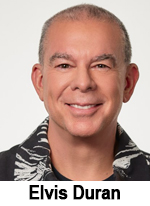 Premiere Networks nationally syndicated personality Elvis Duran, host of “Elvis Duran and the Morning Show,” was featured on “CBS Sunday Morning” this past weekend (12/1). Duran was interviewed by correspondent Mo Rocca for an in-depth piece about the magic of radio and how his personality has won him loyal fans, including some of the biggest names in pop music. Duran also discussed how his love for radio began when he was a young child. He shared that the special connection with on-air personalities is what originally drew him to the platform and that unique friendship continues to inspire him every day. Duran stated, “We are in the friendship business. I think about you (the listener) when you hop in your car in the morning. You’re either leaving a house that may be full of turmoil or going to a job with a boss you don’t like, but I have you for 20, 30 minutes, and I can be your friend,” said Duran. TALKERS publisher Michael Harrison states, “CBS Sunday Morning really nailed it with this piece. When the radio industry started telling DJs to ‘shut up and play the music’ and then backed it up by firing almost all the talented disc jockeys to save money, they basically forfeited their ownership of the popular music culture in America – not to mention the very backbone of radio itself, friendship and companionship.
  Endangered species like Elvis Duran are among the greatest ‘talkers’ out there and prove the potential for integrating talk and pop culture successfully can still keep the idea of ‘radio’ alive for years to come. The terms ‘disc jockey’ and ‘top 40’ are so obsolete. This is a wonderful permutation of ‘talk radio’ and should be regarded as such. I hope everyone in the business watches this past Sunday’s report.” Click
 Baltimore Public Media and WYPR 88.1 FM, announce the appointment of Taylor Holbrooks as the new “Morning Edition” host (12/2). The station issued a statement saying: “Holbrooks’ extensive career in public radio, combined with her commitment to storytelling, makes her a dynamic addition to the WYPR team and a voice that will resonate with listeners each morning.”
 She earned both her bachelor’s and master’s degrees in media and journalism from the University of North Carolina, establishing a strong foundation in impactful reporting and community engagement. “We are thrilled to welcome Taylor to the WYPR family,” said Craig N. Swagler, president/GM, Baltimore Public Media. “Her vibrant energy, thoughtful storytelling, and commitment to community will enhance our programming and strengthen our connection with our listeners.
 Taylor’s approach to journalism will bring new energy to our mornings, setting a meaningful tone for WYPR’s morning broadcasts and enriching the listening experience for our audience.” Holbrooks will officially begin her role at WYPR today (12/3) with her first on-air broadcast scheduled for late December.
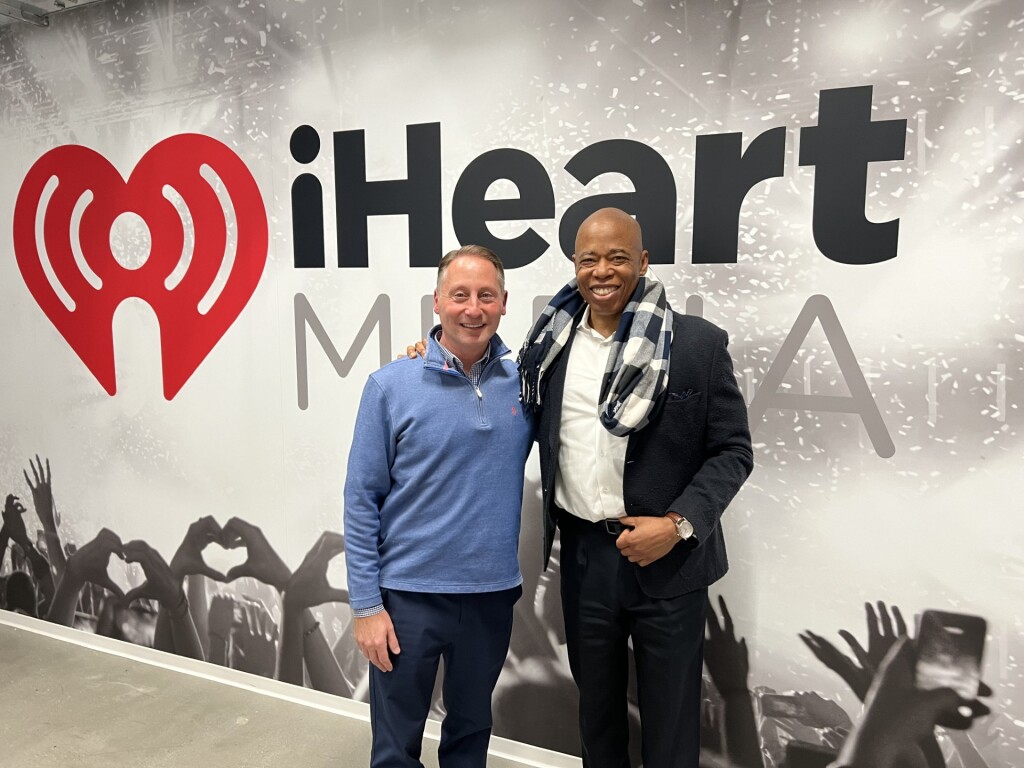 Proving how important live and local weekend news/talk radio can be, New York City Mayor Eric Adams stopped by for an in-studio interview on this past weekend’s edition of “The Rob Astorino Show” (Saturdays 4:00 – 5:00 pm on 710 WOR), where he discussed the idea of working with “Border Czar” Tom Homan in the next administration, and shared his thoughts on the Daniel Penny subway chokehold trial. Pictured above: Astorino (left) and Adams (right) at iHeart’s NYC headquarters. To listen to Saturday’s show (11/30), most of which featured Adams’ guest appearance, please click
  iHeartMedia Philadelphia is teaming up with Boost Mobile and Cradles to Crayons® to launch the “Boost Up for Winter” campaign, a large-scale community coat drive in support of the Cradles to Crayons® Gear Up for Winter initiative. From now (12/2) until Sunday, December 22 the drive will aim to collect and distribute 20,000 warm winter coats and other essential items to children and families in need across the Greater Philadelphia area. Cradles to Crayons® distributes donated items via a robust network of Service Partner organizations including hospitals, schools, and community centers. As winter approaches, many families face the harsh reality of inadequate protection against cold weather. Too often, the cost of winter wear and boots are out of reach for the more than 300,000 children living in low-income or homeless situations in Greater Philadelphia. Through this campaign, iHeartMedia Philadelphia and its partners are committed to ensuring that local children have the clothing and essentials necessary to stay warm at home, at school, and at play throughout the season. For more information on the campaign, including participating Boost Mobile store locations please click
 In an age of rapid information and rising concerns about misinformation, the Kansas Association of Broadcasters (KAB) announces the launch of its statewide KAB Trust Campaign: “Rooted in Community, Committed to Truth.” This initiative highlights the critical role Kansas broadcasters play as trusted sources of news and information. “Broadcasting is built on trust, accountability, and community connection,” KAB president Allison Mazzei tells TALKERS. “This campaign reminds Kansans of the unique value broadcasters provide – delivering accurate, timely, and trustworthy information in an era of misinformation.” To support this effort, KAB partnered with KMBC, Hearst, to produce customizable TV and radio spots, along with digital assets, available to Kansas stations at no cost. Stations are encouraged to customize and air the materials by December 1, 2024. The campaign directs audiences to learn more at
  Legendary journalist and all-around local media hero in Western Massachusetts, G. Michael Dobbs, is this week’s guest on the award-winning PodcastOne series, “The Michael Harrison Interview.” Harrison states, “Western Mass is a special place I’ve called home for the past 40 years. Although I have had several simultaneous homes in different parts of the country during this stretch of time, the Springfield, Massachusetts area has played a very important role in my life. And in this beautiful, ‘salt of the earth’ segment of America, my guest is well-known to just about all its civically, socially and politically active citizens. His half-century career has been a testimony to the power and importance of local media… which, as we all know, is rapidly becoming an endangered species.” After decades of service, the recently retired executive editor of Reminder Publishing, continues his multi-faceted career in mass communications. Harrison comments, “I’m not sure he understands the meaning of the word retirement.” In his no-frills-down-to-the-basics career, Dobbs has worked as a newspaper reporter and editor, freelance writer, radio talk show host, college instructor and was the editor of two nationally distributed magazines about animation. He has written seven books to date and continues to write as well as appear as a host for Focus Springfield cable television. Harrison adds, “He has covered hundreds of school board and city council meetings; conducted thousands of interviews with local leaders; knows just about everything involved in how local government operates; and is an expert on cigars, brandy, old films, cartoons, comics, and even strippers. He’s an amazing guy and a quintessential example of the tremendous importance of local, grassroots journalism in sustaining and preserving American freedom and democracy.” The conversation with Dobbs started out with Harrison appearing as a guest on the media practitioner’s local podcast titled, “The Ink-stained Wretch with G. Michael Dobbs.” But, according to Harrison, “The conversation went deep into some very meaty material, so I decided to dip into it and extract some content for my own podcast.” To listen to the podcast in its entirety, please
  Katz Media Group announces the retirement of Tucker Flood, president of Eastman Radio, after more than 35 years of dedicated service. Tucker will retire at the end of the year, leaving behind a legacy of innovation, growth and lasting relationships across the broadcast and advertising industries. Throughout his career, Flood has been a driving force within Katz Radio Group, known for his passion, strategic insight and commitment to excellence. His tenure has been marked by a unique ability to balance the business and relationship sides of the industry, forging deep partnerships with broadcasters and agencies that have propelled growth and success. Flood’s leadership journey includes years at the helm of Christal Radio and the re-establishment of Eastman Radio, where he built a high-performing team and consistently delivered outstanding results for Katz partners. As president of Eastman Radio, Flood has been instrumental in expanding opportunities and achieving new milestones, establishing Eastman as a trusted and influential player in the market. Beyond his role at Eastman, Flood has also been a pivotal leader across Katz Radio Group significantly contributed to advancing Katz’s systems, technology and programmatic capabilities. In addition, Flood has overseen Katz’s political and multicultural business, collaborating closely with EVPs Pat McGee and Rick Ramos to broaden the company’s impact and enhance its offerings in these critical sectors. “Tucker’s contributions to our company and his mentorship to countless colleagues have been extraordinary,” Christine Travaglini, president of Katz Radio Group. “Working alongside him for over 30 years has been one of the greatest privileges of my career. His wisdom, friendship and guidance have left a lasting imprint on the entire organization and industry.” “Tucker’s leadership, vision and dedication have left an enduring legacy with Katz and the industry as a whole,” said Mark Gray, CEO of Katz Media Group. “We are profoundly grateful for his contributions and the impact he’s had on our team, partners and the broader media community — and wish him all the best in his much-deserved retirement.” “It has been an honor to work alongside so many talented colleagues and partners over the years. I am incredibly proud of what we’ve accomplished together and look forward to watching Katz continue to thrive,” said Flood.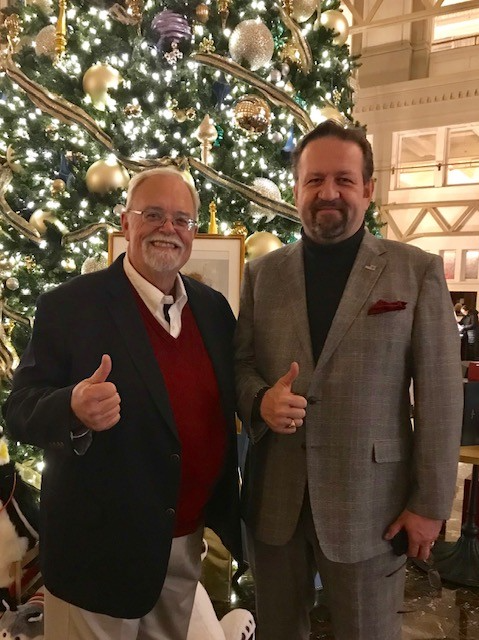
 Cumulus Media announces(11/21) that it has promoted Marv Nyren to regional vice president of Cumulus Media in Chicago, IL, and Minneapolis, MN. Nyren currently serves as VP/MM for Cumulus Chicago and adds oversight responsibilities for Cumulus Minneapolis to his purview. Nyren joined Cumulus Media in 2017 as VP/MM of Cumulus Chicago. Prior to that, he was vice president, corporate sponsorships for Chicago Public Media’s WBEZ-FM. Nyren also held roles as president/regional vice president for iHeartMedia’s 13 radio stations in Jacksonville, FL, and Brunswick, GA, and was regional VP/MM for Emmis Media for 12 years, managing the company’s stations in Chicago, Atlanta, Phoenix, and Indianapolis. Dave Milner, president, operations, Cumulus Media, tells TALKERS, “Marv brings a wealth of experience across multiple U.S. markets to this expanded role. Known for his highly effective and impactful leadership in Chicago, Marv will be a tremendous asset to our talented teams and strong brands in the Twin Cities.” Marv Nyren comments, “I’m deeply honored and grateful for the opportunity to lead the Cumulus Chicago team, and now, expanding to the Minneapolis market is truly a dream come true. Being part of both teams is a privilege, and I’m excited to contribute and make a positive impact in both markets.”
 New York Attorney General Letitia James today (11/22) announced that a court found SiriusXM Radio, Inc. violated the law by forcing customers to undergo a long and burdensome process to cancel their subscriptions. AG James sued SiriusXM in 2023 after an investigation by the Office of the Attorney General (OAG) revealed that the company requires its subscribers to call or chat online with an agent to cancel a subscription and trains its agents not to take “no” for an answer. SiriusXM’s alleged illegal process deliberately draws out conversations with customers as part of a strategy to prevent them from canceling their subscriptions. “No one should have to endure a lengthy and frustrating process to cancel a subscription, and any company that forces customers to jump through unnecessary hoops to end their subscriptions is breaking the law,” said Attorney General James.
  “This decision found SiriusXM illegally created a complicated cancellation process for its New York customers, forcing them to spend significant amounts of time speaking with agents who refused to take ‘no’ for an answer. My office sued SiriusXM to protect consumers, and as a result of our actions, they will have to simplify their cancellation process to stop taking advantage of New Yorkers.” SiriusXM has approximately 35 million subscribers of which nearly 2 million are New Yorkers.
 Today (11/21), Triton Digital released its Canada and U.S. Podcast Rankers for October 2024. The rankers are measured by Triton’s Podcast Metrics measurement service, and both include a reporting period of September 30, 2024 – November 3, 2024.
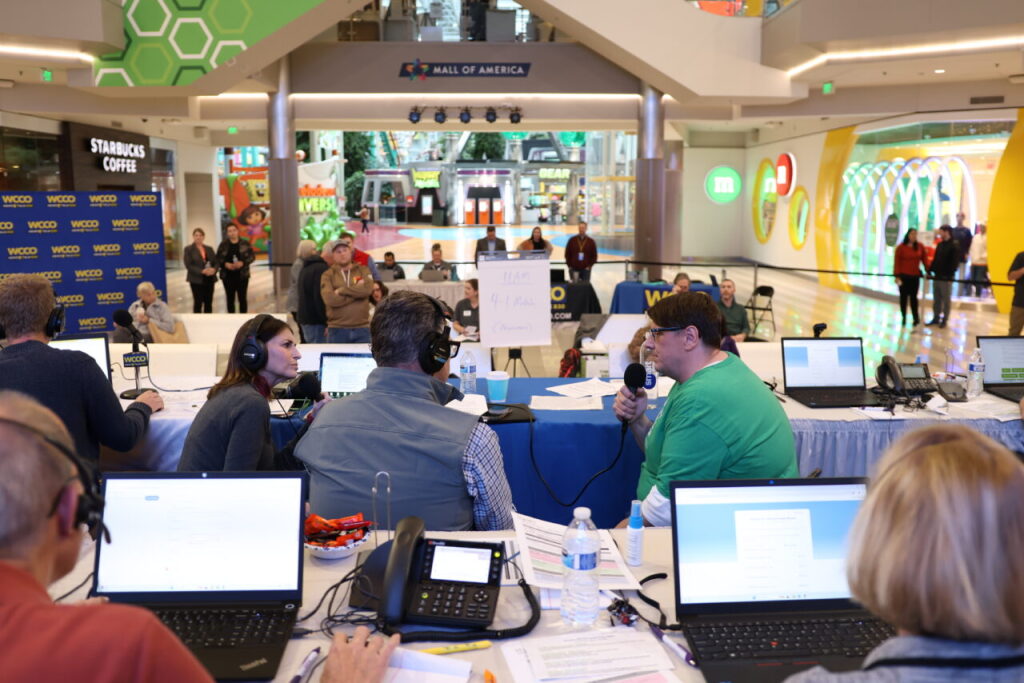 Audacy Minneapolis’ 830 WCCO raised over $348,000 to provide meals and care for those in need for Union Gospel Mission Twin Cities during the 22nd annual “Hunger Mission Radiothon.” This brings the total amount raised to $4.6 million since the radiothon’s inception in 2003. Union Gospel Mission Twin Cities helps people rebuild their lives and aims to break the cycle of poverty. “We are deeply grateful to our fans who always show such tremendous generosity,” said Brad Lane, brand manager of WCCO. “This outpouring of support will continue helping UGMTC do the tremendous and necessary work they are engaged in every day here in the Twin Cities. It also demonstrates the power and relevance of this legacy station in the community!” “Our partnership with WCCO for the Hunger Mission Radiothon 2024 reflects the heart of our mission at Union Gospel Mission Twin Cities – coming together as a community to extend hope and transform lives,” says Pam Stegora Axberg, CEO, Union Gospel Mission Twin Cities. “We are deeply grateful for WCCO’s unwavering support in amplifying the stories of resilience and redemption that inspire us all to make a difference and bring the community together to give.” 830 WCCO’s 22nd annual “Hunger Mission Radiothon” was broadcast live (11/19) from 6:00 am to 6:00 pm inside the Mall of America Huntington Bank Rotunda.
 The Alliance for Women in Media (AWM) celebrated the achievements of eight trailblazing leaders at the Gracies Leadership Awards, yesterday (11/19) at Tribeca 360° in New York City. The event honored these extraordinary women for their significant contributions to the media industry, showcasing their leadership, vision and dedication to excellence across broadcasting, journalism, digital media and beyond. In addition to the awards, the luncheon featured a special fireside chat with Andrea Mitchell, recipient of the Gracies Icon Award. As NBC News’ chief Washington correspondent, chief foreign affairs correspondent and host of MSNBC’s “Andrea Mitchell Reports,” Mitchell shared her incredible journey in journalism, offering powerful insights into her decades-long career. Her conversation with Libby Leist, executive vice president of “TODAY” and “Lifestyle” highlighted the importance of elevating women’s voices in the media, mentorship and the lasting impact of bold, investigative storytelling made possible by diligent homework, checking your facts and doing research. Honorees pictured above at the event (l-r): Sylvia Strobel, AWM Legacy Leadership Award recipient and president/CEO, Twin Cities PBS; Holly Tang, CFO, NBC Universal Entertainment; Jennifer Leimgruber, EVP entertainment programming, Premiere/iHeartMedia; Andrea Mitchell, recipient of the Gracies Icon Award – NBC News’ chief Washington correspondent/ chief foreign affairs correspondent and host of MSNBC’s “Andrea Mitchell Reports“; Deborah Parenti, president/publisher, Streamline Media (Radio Ink, RBR + TVBR); Jen Sargent, CEO, Wondery; and Sylvia Bugg, chief programming executive/GM, PBS. Not pictured, Sonia Coleman, ESVP/ chief human resources officer, The Walt Disney Company.
 For the last 10 years, Edison Research’s quarterly “Share of Ear” study has been a highly respected examination of time spent with audio in America. Edison surveys 4,000 Americans annually to measure daily reach and time spent with all forms of audio. Each report is based on a four-quarter rolling average. The most recent Q3 2024 survey is comprised of Q4 2023, Q1 2024, Q2 2024, and Q3 2024. This week’s Cumulus Media | Westwood One Audio Active Group® blog is an analysis of the just released Q3 2024 data and focuses on what advertisers care most about – ad-supported audio.