By Matthew B. Harrison
TALKERS, VP/Associate Publisher
Harrison Media Law, Senior Partner
Goodphone Communications, Executive Producer
 The Problem Is No Longer Spotting a Joke. The Problem Is Spotting Reality
Every seasoned broadcaster or media creator has a radar for nonsense. You have spent years vetting sources, confirming facts, and throwing out anything that feels unreliable. The complication now is that artificial intelligence can wrap unreliable content in a polished package that looks and sounds legitimate.
This article is not aimed at people creating AI impersonation channels. If that is your hobby, nothing here will make you feel more confident about it. This is for the professionals whose job is to keep the information stream as clean as possible. You are not making deepfakes. You are trying to avoid stepping in them and trying even harder not to amplify them.
Once something looks real and sounds real, a significant segment of your audience will assume it is real. That changes the amount of scrutiny you need to apply. The burden now falls on people like you to pause before reacting.
Two Clips That Tell the Whole Story
Consider two current examples. The first is the synthetic Biden speech that appears all over social media. It presents a younger, steadier president delivering remarks that many supporters wish he would make. It is polished, convincing, and created entirely by artificial intelligence.
The second is the cartoonish Trump fighter jet video that shows him dropping waste on unsuspecting civilians. No one believes it is real. Yet both types of content live in the same online ecosystem and both get shared widely.
The underlying facts do not matter once the clip begins circulating. If you repeat it on the air without checking it, you become the next link in the distribution chain. Not every untrue clip is misinformation. People get things wrong without intending to deceive, and the law recognizes that. What changes here is the plausibility. When an artificial performance can fool a reasonable viewer, the difference between a mistake and a misleading impression becomes something a finder of fact sorts out later. Your audience cannot make that distinction in real time.
Parody and Satire Still Exist, but AI Is Blurring the Edges
Parody imitates a person to comment on that person. Satire uses the imitation to comment on something else. These categories worked because traditional impersonations were obvious. A cartoon voice or exaggerated caricature did not fool anyone.
A convincing AI impersonation removes the cues that signal it is a joke. It sounds like the celebrity. It looks like the celebrity. It uses words that fit the celebrity’s public image. It stops functioning as commentary and becomes a manufactured performance that appears authentic. That is when broadcasters get pulled into the confusion even though they had nothing to do with the creation.
When the Fake Version Starts Crowding Out the Real One
Public figures choose when and where to speak. A Robert De Niro interview has weight because he rarely gives them. A carefully planned appearance on a respected platform signals importance.
When dozens of artificial De Niros begin posting daily commentary, the significance of the real appearance is reduced. The market becomes crowded. Authenticity becomes harder to protect. This is not only a reputational issue. It is an economic one rooted in scarcity and control.
You may think you are sharing a harmless clip. In reality, you might be participating in the dilution of someone’s legitimate business asset.
Disclaimers Are Not Shields
Many deepfake channels use disclaimers. They say things like this is parody or this is not the real person. A parking garage can also post a sign that it is not responsible for damage to your car. That does not absolve them when something collapses on your vehicle.
A disclaimer that no one negotiates or meaningfully acknowledges does not protect the creator or the people who share the clip. If viewers believe it is real, the disclaimer (often hidden in plain sight) is irrelevant.
The Liability No One Expects: Damage You Did Not Create
You can become responsible for the fallout without ever touching the original video. If you talk about a deepfake on the air, share it on social media, or frame it as something that might be true, you help it spread. Your audience trusts you. If you repeat something inaccurate, even unintentionally, they begin questioning your judgment. One believable deepfake can undermine years of credibility.
Platforms Profit From the Confusion
Here is the structural issue that rarely gets discussed. Platforms have every financial incentive to push deepfakes. They generate engagement. Engagement generates revenue. Revenue satisfies stockholders. This stands in tension with the spirit of Section 230, which was designed to protect neutral platforms, not platforms that amplify synthetic speech they know is likely to deceive.
If a platform has the ability to detect and label deepfakes and chooses not to, the responsibility shifts to you. The platform benefits. You absorb the risk.
What Media Professionals Should Do
You do not need new laws. You do not need to give warnings to your audience. You do not need to panic. You do need to stay sharp.
Here is the quick test. Ask yourself four questions.
Is the source authenticated?
Has the real person ever said anything similar?
Is the platform known for synthetic or poorly moderated content?
Does anything feel slightly off even when the clip looks perfect?
If any answer gives you pause, treat the clip as suspect. Treat it as content, not truth.
Final Thought (at Least for Now)
Artificial intelligence will only become more convincing. Your role is not to serve as a gatekeeper. Your role is to maintain professional judgment. When a clip sits between obviously fake and plausibly real, that is the moment to verify and, when necessary, seek guidance. There is little doubt that the inevitable proliferation of phony internet “shows” is about to bloom into a controversial legal, ethical, and financial industry issue.
Matthew B. Harrison is a media and intellectual property attorney who advises radio hosts, content creators, and creative entrepreneurs. He has written extensively on fair use, AI law, and the future of digital rights. Reach him at Matthew@HarrisonMediaLaw.com or read more at TALKERS.com.
Share this with your network


 Super Bowl Week coverage that will emanate live from live Radio Row in San Francisco culminating with the official local call of the game. Station PD Rick Radzik says, “After an eight-year absence, ‘The Sports Hub’ is thrilled to celebrate the Patriots’ return to the big game with fans across the region. We’ll once again deliver the best coverage all week, capped by the best call of the game on Sunday. Pats Nation will be well represented in San Francisco, and we can’t wait to be part of it.”

 As the excitement builds for Super Bowl LIX, Audacy has positioned itself to be the “go-to audio home” for football fans nationwide. With flagship stations 96.5 The Fan (KFNZ-FM) in Kansas City and Sports Radio 94WIP (WIP-FM) in Philadelphia, the company is set to provide fans with in-depth analysis, exclusive interviews, and live play-by-play coverage of the big game on February 9. Additionally, six Audacy sports stations and Audacy’s newly launched BetMGM Network will broadcast live from the radio row, to provide listeners the latest updates, expert insights, and exclusive interviews throughout Super Bowl week. And with Westwood One’s national broadcast on 20 Audacy sports stations, the plan is for fans across the country not to miss a moment. Audacy tells TALKERS, “Whether on the air or on the free Audacy app, listeners can tune in for every snap, every score, and every story leading up to and following Super Bowl LIX.” Please click
 December 30 to January 19 and aims to leverage its on-air reach to help a local business brand, rebuild, or grow. Audacy Chicago VP of sports programming Mitch Rosen says, “This contest and promotion embodies everything ‘The Score’ truly stands for: live, local sports and, most importantly, the community. From the hundreds of entries we received, we know how important it is for the community to support local businesses. We’re excited to spotlight Heritage and share their story to help them grow and expand their business. Given the massive audience the game attracts on ‘The Score,’ our goal is to leverage every platform to maximize exposure for the restaurant.”
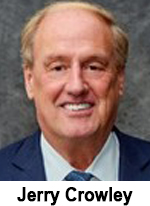 Crowley has had a long and illustrious career in New York talk radio. He has served as vice president/general manager of the Salem Media Group New York – WNYM 970 AM The Answer and WMCA 570 AM The Mission – since 2013. Prior to that, he held key management positions for 18 years as sales manager and VP/GM at WOR, New York. In an internal memo issued to Salem management and corporate staff (9/17), company senior VP East region Jeff Reisman states, “Jerry has been an integral part of our team since 2013, leading both WMCA and WNYM with visionary guidance and unwavering dedication. His remarkable leadership and unique skills have strengthened Salem’s presence in the New York market. Throughout his tenure, Jerry has consistently demonstrated an exceptional ability to blend his gifts and expertise, fostering a positive impact on our NY staff, our [WMCA] ministry partners, and our local advertising clients. His commitment to excellence and his innovative approach has set a high standard for all of us.” Reisman concludes, “There is only one Jerry Crowley, and we are deeply grateful for his 11 years of hard work and dedication. While we will certainly miss his presence and leadership, we wish him all the best as he embarks on this new chapter of his life.”
  Vegas. This will be the 51st time Westwood One will broadcast America’s biggest sporting event. Kevin Harlan will handle play-by-play duties for the 14th straight year, with Super Bowl XXXIV MVP and Hall of Fame quarterback Kurt Warner returning for the sixth consecutive year as lead analyst. Dean Blandino joins the radio broadcast booth as rules analyst. For the fifth time, Laura Okmin will patrol the sidelines, along with former defensive lineman Mike Golic, who returns for his third Super Bowl with Westwood One’s broadcast crew. Scott Graham and three-time Super Bowl champion Devin McCourty will host Westwood One’s pregame, halftime, and postgame coverage, with Devin’s twin brother and fellow Super Bowl champion Jason McCourty and former NFL offensive lineman Ross Tucker also contributing to the pregame coverage.
 Super Bowl will include the Lions, “There is nothing like an NFL run and nothing like knowing your team has a legitimate chance to get to the Super Bowl. I don’t know if they do, but I think it could be the start of a yearly thing. Them getting to the Super Bowl in my last year of doing the morning show, it would be unbelievable. I’d consider myself the lucky charm.” The 64-year-old Stone has been on Detroit sports radio since helping launch the format on WDFN-AM, Detroit in the early 1990s. Stone says he’ll stay with the station as a fill-in host for two more years.
 duties for the 13th straight year, and Kurt Warner returns for the fifth consecutive year as lead analyst. Gene Steratore will also join the radio broadcast booth. For the fourth time, Laura Okmin will patrol the sidelines, along with former defensive lineman Mike Golic, who returns for his second Super Bowl with Westwood One’s broadcast crew. Scott Graham anchors the pregame, halftime, and postgame shows and Ryan Harris provides pregame, halftime, and postgame analysis. Gameday coverage begins at 2:00 pm ET with “Super Bowl Preview,” co-hosted by Scott Graham, Mike Golic, and Kurt Warner, followed by “Super Bowl Insider” at 3:00 p.m. ET with Scott Graham, Jason McCourty, and Ian Rapoport.
 Broadcasting Awards. Stations honored include: NewsRadio WILK, Wilkes-Barre for “Special Edition – Paul Miller’s Law”; KYW Newsradio, Philadelphia
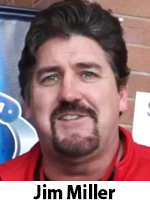 causing listeners to speculate about his status. Earlier this week Kirwan addressed the matter saying, “As most of you have noticed, Jim Miller was not with us last week at the Super Bowl. We’re going to let all of you know, today, that Jim is no longer a member of the SiriusXM team. We’re grateful for all of Jim’s insights and contributions through his many years on SiriusXM, and I’m personally grateful to have him as my on-air teammate for a long time. I wish him the best going forward, as all of you will as well. For the sake of Jim, we should leave this subject as it is and hope and pray that he gets on with his life and things go well.”
 more than two decades of proven media and advertising leadership, along with deep-rooted relationships throughout the Pittsburgh business community. Salem president of broadcast media Allen Power says, “We are excited to combine Jason’s leadership track record at Salem with Dave’s deep market knowledge of Pittsburgh. They are focused on growing our sales team in the market with a commitment to providing outcome-based solutions for advertisers.” Mosher is based in Salem Media’s Atlanta office. He has been with Salem Media for six years and was recently promoted from regional sales director where he led sales efforts for Pittsburgh, Atlanta and Cleveland.
 station general manager John Gallagher states. Bringing Amy Jacobson back to the station fills a huge void for our audience. She has been relentless in her quest for the truth, and she gets answers that our listeners need to hear. Jeanne Ives (right) is one of the most politically connected people in the state of Illinois. She brings a wealth of knowledge regarding so many issues that affect everyone within our listening area. I am looking forward to the in-depth conversation and new perspective this team will offer.” Ives says, “I am thankful and excited to be a part of the Salem family. Information is power and Amy and I want to bring the ‘Real Story’ on policy along with informed commentary from years of experience knowing the players and politicians to our listeners. We want listeners to be informed, so they can hold the politicians accountable.” Amy Jacobson adds, “I am thrilled to be returning home to ‘AM 560 The Answer.’ Jeanne and I will be part of the strongest conservative lineup in Chicago radio! As many of you know, life takes some unexpected turns, but when you love what you do, the signal always finds its way back.”
 Madson and Jesse Tapia airs live from 7:0 am to 9:00 am with a replay airing from 12:00 noon to 2:00 pm the same day. The station notes that this is Tapia’s first on-air role and that he’ll continue producing the “D-Lo and KC” show. That program, starring Damien Barling & Kenny Caraway, is moving to the 2:00 pm to 6:00 pm daypart. The station adds that James Ham is expanding his role as the Sacramento Kings insider as he’ll provide breaking news updates and analysis weekly on “The Jump” and “D-Lo & KC.” Station brand manager Kyle Madson says, “Jesse brings a wealth of knowledge and enthusiasm for sports, and we’re excited to evolve our lineup with the launch of ‘The Jump,’ bringing high-energy to Sacramento mornings. By moving the unmatched wit of D-Lo & KC to the full afternoon drive and having James as our Kings Insider across all shows, we’re doubling down on the local insight and personality that defines Northern California sports radio.”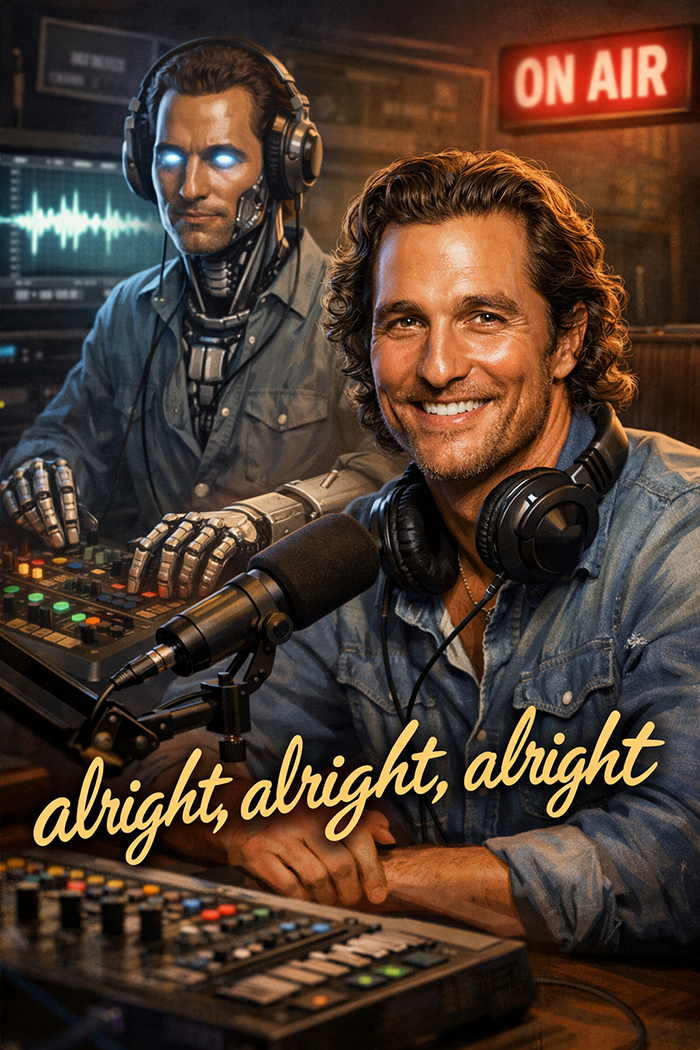
 For years, “protect your name and likeness” sounded like lawyer advice in search of a problem. Abstract. Defensive. Easy to ignore. That worked when misuse required effort, intent, and a human decision-maker willing to cross a line.
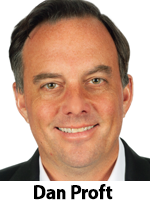 manager John Gallagher says, “The combination of Dan Proft’s intellect and his exceptional interviewing skills is why he’s the best morning radio host in Chicago. His knowledge of the issues that affect the people of Illinois is unmatched. This contract extension solidifies the Chicago Morning Answer brand and the top conservative talk radio line-up in the nation.” Proft comments, “I’m excited to extend my run on Chicago’s Morning Answer, and I am honored to be trusted with such an important platform during these turbulent times. Nothing short of the future of the United States and Western civilization, by extension, is on the line, and I’m humbled to be able to lend my voice to the fight. I want to thank AM 560’s management, along with our loyal, intelligent listeners and our accomplished and thoughtful guests, for their ongoing support.”
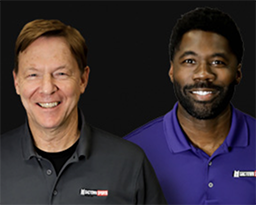 midday talk host Allen Stiles (right) to afternoons to join “The Drive Guys with Kevin Gleason” (left) as a co-host, effective January 12. The station says, “Allen is no stranger to Sactown Sports listeners. He has already been a key part of the Sactown Sports family as the host of ‘The Allen Stiles Show, which currently airs weekdays from 10:00 am to 2:00 pm, building a strong connection with the audience through his knowledge, passion, and engaging style.” The station has not indicated its plans for the midday daypart.
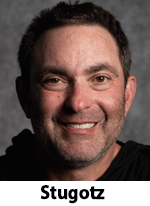 iHeartMedia’s studios in South Florida and airing in the 3:00 pm to 5:00 pm slot being vacated by Doug Gottlieb. iHeartMedia says, “Designed as a live radio extension of his popular podcast ‘Stugotz and Company,’ the show will bring together his regular crew along with a rotating cast of guest co-hosts, blending old friends and new voices.” Additionally, the Stugotz Podcast Network will launch with iHeartPodcasts, featuring “Stugotz and Company” and “God Bless Football,” plus more content to be launched later. Weiner says, “There was a ton of interest and a lot of great conversations, but it became obvious to me rather quickly that iHeart and FOX Sports Radio were going to be the landing spot. I miss doing live radio, and I was looking for a partner to grow my two existing podcasts and help us build out a network. To be able to partner with the biggest and best digital company on the planet – and host a daily, two-hour live radio show with two Hall of Famers, Dan Patrick and Colin Cowherd, as lead-ins – is a place, quite frankly, I never imagined arriving at, and an opportunity I wasn’t going to pass up.”
 rate increases. Cumulus argued, “Nielsen, a monopolist engaging in anticompetitive behavior, holds all of the power during contract negotiations, resulting in an unequal bargaining dynamic that is ripe for retaliation. For example, Nielsen can and has raised its rates significantly during negotiations.
  If identifying information is revealed to Nielsen’s businesspeople, Nielsen can retaliate with additional rate increases, resulting in manifest injustice to these third parties actively involved or who will be involved in negotiations with Nielsen.” After denying Cumulus’ request on December 4, Cumulus filed a supplemental brief and on December 15 Judge Jeannette Vargas agreed with Cumulus, writing, “Cumulus has established that sufficient countervailing factors – in particular, the privacy interests of these non-party declarants, the lack of bearing these narrowly tailored redactions have on the merits of this action, and the non-party declarants’ susceptibility to economic retaliation – outweigh the strong presumption in favor of public access to judicial documents.”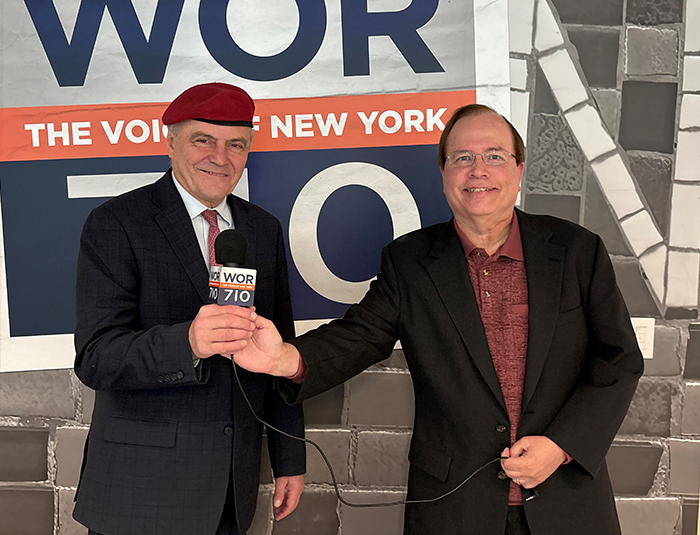
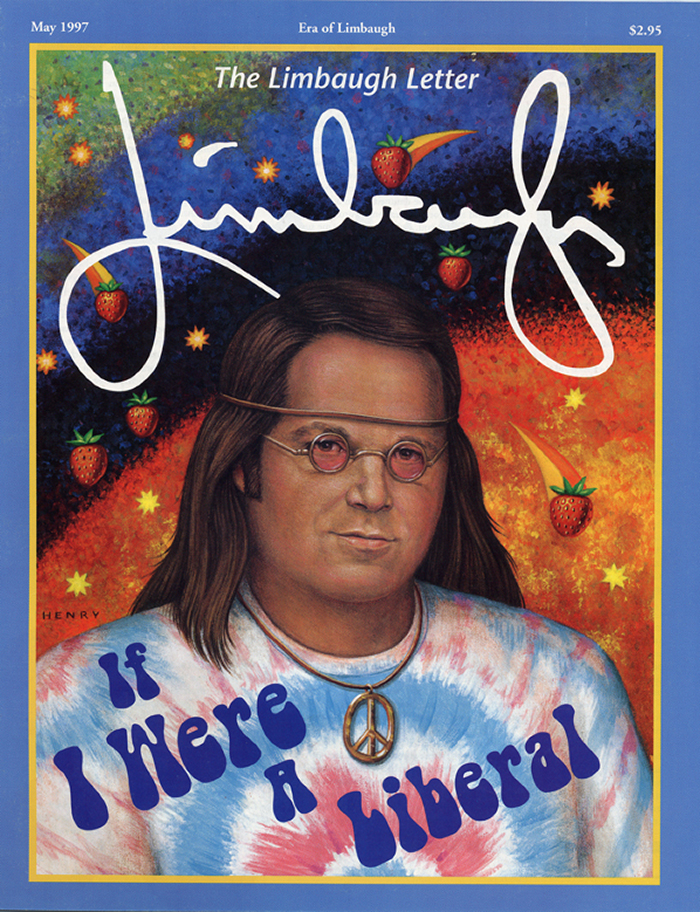
 My introduction to Rush Limbaugh begins in the fall of 1992. I began listening to Rush’s radio show after seeing him campaigning on stage with George H.W. Bush during the 1992 fall presidential election. Bill Clinton would win the election and so would begin the greatest, media political rivalry ever between Rush Limbaugh and Bill Clinton. Rush’s middle America authentic voice was cutting through the mainstream media noise of the day from a generationally unique perspective. He was the perfect counterculture combatant to Bill Clinton’s political philosophy. Being a baby boomer myself and two years younger than Rush, I was immediately hooked on the EIB radio network!