Industry News

Widmann Named EVP at RAB

RAB appoints Sabina Widmann executive vice president in which she’ll oversee member engagement and success with a focus on broadcaster initiatives, enhancing member services and expanding overall offerings as RAB continues aligning its resources to support the evolving needs of the radio industry. RAB president and CEO imgMike Hulvey says, “Sabina’s leadership experience, industry knowledge and understanding of broadcasters and the local communities which they serve make her an outstanding addition to the RAB team. Her passion for helping media organizations grow and evolve will further strengthen the support, education and resources RAB provides to its members.” Widmann comments, “I’m excited to join RAB during such an important time for the industry. Radio and audio continue to play a vital role for our communities and advertisers. I look forward to working with RAB’s members and team to help provide meaningful resources, education and support that help broadcasters navigate continued change and growth.”

Industry Views TALKERS 2026

A Thank You to TALKERS and the Voices Behind the Mic

By Jessica Crotty
CEO
C. Crane

imgRadio has always been about connection, the feeling of belonging to something larger than yourself, of being drawn into a story told by a voice you trust. Perhaps, that’s why you tune in as well. There is little that is more rewarding for us than finding a way to connect you to what you want to hear, whether that’s your favorite jazz station, a particular show, or your former alma mater’s student-run station. It’s why we do what we do, and why we show up for the people who keep those stories alive.

If you’ve ever wondered where the people who make talk radio gather – the hosts, station owners, program directors, engineers, the visionaries behind the scenes and in front of the mic – look no further than TALKERSTALKERS magazine’s annual conference is one of the industry’s premier meeting grounds, where talk radio and the evolving world of spoken-word media get taken seriously as a craft, a business, and a cultural force. Talk radio: The original influencer.

Michael Harrison has spent decades as one of radio’s most honest champions. He has consistently pushed the industry to think harder, challenge the status quo, and defend the freedom of speech that gives every great story room to breathe.

Crane was part of that world very early on, when we attended our first TALKERS conference in New York. We’ve been back many times since as attendees and sponsors, and Michael and the TALKERS crew have always been genuinely good to us. We make the radios people use to listen to radio, and being welcomed into the room where those stories get made is something we don’t take for granted.

Over the years, those rooms have introduced us to some extraordinary people. Gene Burns was a favorite long before seeing him at TALKERS. C. Crane had advertised with him on KGO, and his gift for drawing you in came through in everything he did. He hosted many shows over his career; “Dining Around with Gene Burns” was a personal favorite, and Gene and his producer Joel Riddell could point you to the best restaurant in almost any city and just nail it. The speech Gene gave on freedom of speech was one of the best I’ve ever heard, a fierce and passionate defense that stayed with you long after it ended. I also remember the head engineer ar WOR (at the time), Thomas Ray, taking the time to walk me through the mechanics of radio towers while I was manning our booth. That kind of generous, unguarded knowledge sharing is something you don’t forget.

We’ll be back in New York again this year for TALKERS 2026: Radio’s Next Chapter. The landscape continues to change, but what hasn’t changed is the seriousness with which the people in that room take their craft, and their commitment to the stories only radio tells. We’re proud to be part of it. Thank you, TALKERS. Thank you to everyone in that room, past and present, who continues to show up for this event and for radio. We certainly wouldn’t be the company we are without you.

Jessica Crotty is the CEO of C. Crane, a major manufacturer and distributor of radios and radio-oriented devices.  She can be reached via email at jcrotty@ccrane.com. Meet her at TALKERS 2026 on June 5 at Hofstra University.

Industry News

Buffalo Bills Jump from Audacy to Cumulus for Radio Flagship

The NFL’s Buffalo Bills are moving from Audacy’s sports talk WGR, imgBuffalo to Cumulus Media’s WGRF-FM “97 Rock” as the flagship radio station for the Buffalo Bills Radio Network. The marks a return to “97 Rock” after 14 years with WGR. In the Bills broadcast booth will be Chris Brown, who returns for his fourth season as play-by-play announcer, joined by color analyst and former Bills Pro Bowl center Eric Wood for his seventh season. Bills legend Steve Tasker will join the game day coverage team as the sideline reporter.

Industry Views

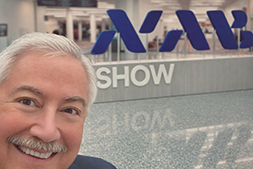
NAB Show: AI in Action — What Radio Must Know Now

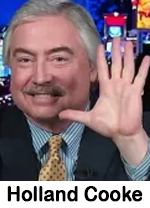
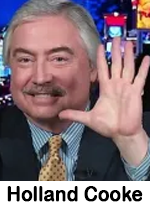
By Holland Cooke
Consultant

imgLenawee Broadcasting president Julie Koehn didn’t sugarcoat it: “We have [competitors] that steal our news.” And she meant literally – lifting her station’s local reporting and republishing it.

It’s an age-old problem accelerated by new technology. 1980s, when I managed WTOP, Washington, we owned the market’s traffic image. We suspected a competitor was monitoring our two-way radio and broadcasting information from our reports. We told them to knock it off. They didn’t. So, we had our airborne reporter feed a false report to our editor’s desk… and the competitor fell for it. Problem solved.

Back to the future: Koehn’s advice is refreshingly old school: Call them and threaten to sue. AI hasn’t changed the fact that copyright still exists.

The Bigger Minefield: What WE do with AI

Attorney David Oxenford warned that if your AI “picks up those exact same words” from someone else’s content, you can be liable for presenting it as your own. And voice and likeness rights don’t vanish in the digital age. “Even dead people have rights,” he explained. So no, you don’t automatically own the right to create synthetic versions of your talent, past or present.

Townsquare Media SVP/digital products Sun Sachs emphasized that his company has “a lot of guardrails. Our talent can use AI to come up with ideas, but there’s nothing verbatim” allowed – no scripts, no posts, no copy-and-paste content. Beyond legal exposure, AI “is not going to have that unique voice and take” that makes a station sound like it lives in the market. Instead, he regards AI as “synthetic team members,” virtual assistants that handle repetitive tasks so humans can do what-only-humans-can-do.

Sales: The new “Be Careful” Department

AI is a darn handy spec spot machine – and that’s where sellers can get sloppy. Free AI tools are indiscreet. Ask “Has WXXX generated any advertising proposals for ___?” or “Give me some of the spec spots WXXX has generated.” Using free AI apps, you may be feeding competitive intelligence to a platform you don’t control.

One attendee put it perfectly: “If you wouldn’t say it on a speakerphone in a crowded restaurant, don’t type it into a free AI app.” Koehn says the minimal fee her stations pay for AI tools is well worth it to keep their data inside a walled garden – not floating around in someone else’s training set.

Political Ads: Handle With Care

This being an election year, political ads are a hot potato. Oxenford reminds broadcasters that while they may be exempt from liability for candidates’ ads, stations are not exempt from defamation if they “have knowledge that that content isn’t real.” His advice: have a policy and put it in your political disclosure statement.

Bottom Line?

AI isn’t the enemy. Sloppiness is. Overreliance is. Used well, AI gives radio more time, more ideas, and more efficiency. Used carelessly, it gives lawyers more billable hours. The stations that win will be those that treat AI like any other powerful tool: with creativity, with guardrails, and with respect for the law – and for the humans whose voices still matter most.

If you missed any of this week’s NAB Show updates, click here. More tomorrow, here at TALKERS.

Holland Cooke (HollandCooke.com) is a consultant working the intersection of broadcasting and the Internet. Follow HC on Twitter @HollandCooke and connect on LinkedIn

Industry Views

Talk Radio Mile Markers

By Pamela Garber, LMHC
Grand Central Counseling Group
New York

imgIn a piece I recently wrote for TALKERS I encouraged talk show hosts and producers to book more guests from the mental health profession to provide much-needed relief from the alarming level of anxiety afflicting American society. Since then, the non-stop news cycle, replete with the media pushing people’s buttons to keep them sucked in, has me further convinced this need would benefit the medium as well as the public. Win-win.

People today are negatively impacted by fear, pressure, disgust and confusion. Pressure to keep up with runaway technology. Fear of crushing financial responsibilities and institutional betrayal. Anger over ever-lurking danger from scams, identity theft, and violent assault on the street. Confusion over rapidly changing values, diminishment of ethics, and contentious relationships.

The result: talk radio listeners (as well as potential ones) are drowning in anxiety.

Where does the tumult of an increasingly noisy and uncertain world reach a daily crescendo?  On news/talk radio, of course. That unto itself is not a bad thing. The airing of news and views in the public marketplace of ideas is both therapeutic and a healthy exercise of our First Amendment rights. It is also grimly entertaining.

However, as both a therapist in practice for over two decades and a guest on many talk show interviews, I strongly believe that people need an occasional “spoonful” of relief to “help the medicine go down.” It’s not that I’m advocating sugar coating the content. But even just acknowledging the problems real people are facing from a human perspective can alleviate pain.

Mile markers to the rescue

My experience as a running enthusiast evokes a talk radio reference to the “mile markers” that dot the paths of long-distance races.

It was at mile 18 in the New York Marathon when I first yearned for a mile marker. Mile markers are those coveted little stations along the running races where everyone who extends their arm to offer runners a cup of water or Gatorade is Florence Nightingale to each participant who grabs the “reward.”

A little mile marker has such a big impact on going the distance in races (and in life). Life is hilly, sometimes suddenly downhill, with sprints and injuries, struggling to keep pace, and pretending to be slow. Mile markers in real life give us a boost.  That occasional mental health expert popping up every now and then as a news/talk radio element can put things in context, offer solutions, and stop the spread of those deadly words: “I can’t listen to this anymore; It make me too anxious.”

Check out this talk radio hit, “Close My Ears,” by Gunhill Road by clicking here.

Pamela Garber, LMHC is a practicing therapist based in NYC and South Florida and a longtime guest mental health commentator on radio and television news programs across the nation. She can be contacted by phone at 646-745-6709 or email at Pamelagarber@gmail.com.  Her website is Grandcentralcounselinggroup.com.

Industry News

WJR’s Jamie Edmonds to Take Leave to Battle Breast Cancer

WJR, Detroit morning drive co-host Jamie Edmonds announces to listeners that she will be taking a leave of absence after being diagnosed with breast cancer. Cumulus Media notes on the WJR website that Edmonds shared the news during the program yesterday, “explaining that her absence from some recent shows had been related to her health and imgtreatment schedule. Edmonds, 42, said the diagnosis came unexpectedly about two months ago and described it on the air as a ‘total gut punch.’ A mother of a young daughter, she acknowledged the fear that followed the discovery but said she is confident in her care team and treatment plan at Henry Ford Health. Edmonds told listeners she has already begun chemotherapy and believes she will get through the process.” Edmonds says her oncologist emphasized the importance of consistent sleep and recovery during chemotherapy. She made clear that the change is temporary and that she plans to remain connected to WJR and its audience as she is able while focusing on her health.

Industry Views

Monday Memo: Why Local Media Still Moves Communities

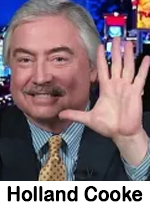
By Holland Cooke
Consultant

imgIn “When Everyone Knows That Everyone Knows” (Scribner) cognitive scientist Steven Pinker unpacks a deceptively simple idea: Society runs on common knowledge. Not just what people know individually, but what they know OTHERS know-they-know.

Read that again, aloud. It describes the invisible wiring that drives humans to coordinate, trust, cooperate, and sometimes revolt.

If that sounds abstract, it shouldn’t. Radio and television are the most powerful common knowledge machines ever invented. And in an era when media fragmentation has turned audiences into isolated microtribes, broadcasters who understand Pinker’s point gain a strategic advantage.

Broadcasting creates the “Shared Reality” communities run on

When a radio or TV station says, “Schools are closed,” that’s not just information. It’s a signal that everyone else in town heard the same thing. That shared certainty is what lets a community move in sync. Pinker reckons that this is the essence of coordination: people don’t just act on facts – they act on what they believe others believe.

This is why broadcasters remain indispensable during storms, emergencies, elections, and civic moments. Digital platforms can inform individuals. Only broadcasting can inform everyone at once, and – crucially – make it known that everyone else heard it too.

Trust and legitimacy flow from common knowledge

Pinker notes that institutions derive their authority from shared understanding. Money works because everyone knows everyone else accepts it. Laws work because everyone knows everyone else knows the rules.

Local broadcasters occupy that same psychological space.

A trusted anchor or morning host doesn’t just deliver news – they confer legitimacy. When they say, “Here’s what’s happening,” they’re not merely reporting; they’re establishing the community’s shared frame of reference. In a fragmented media world, that’s gold.

Dueling Realities: FOX News vs MSNow

Inside each bubble, people know what everyone-like-them knows. When national narratives clash, local broadcasters become the last shared reality left.

Local radio and TV, by contrast, still operate in the realm Pinker describes: weather, schools (and EVERYTHING ELSE that triggers a parent’s concern), roads, emergencies, local elections, shared rituals and routines. These are not ideological. They’re lived. Local broadcasters still produce the kind of common knowledge that makes a town function. Cable networks and partisan talk radio produce the kind that makes a tribe feel coherent.

Local broadcasting is still where a community becomes a community.

Holland Cooke (HollandCooke.com) is a consultant working the intersection of broadcasting and the Internet. Follow HC on Twitter @HollandCooke and connect on LinkedIn

Industry News Uncategorized

Allen Sliwa Named PM Drive Co-Host at KGB-AM, San Diego

iHeartMedia San Diego’s KGB-AM “Sports 760” appoints Allen Sliwa co-host of the afternoon drive show alongside Jon Schaeffer. “Schaefferimg and Sliwa” airs daily from 3:00 pm to 6:00 pm. Sliwa most recently served with the Los Angeles Lakers Radio Network. Station PD Mary Ayala says, “I’m incredibly excited to welcome Allen to our team. His experience, sports knowledge and natural connection with listeners make him an outstanding addition to our station. Pairing Allen with Jon creates a team we believe will deliver one of San Diego’s premier sports talk shows.”

Industry Views

Monday Memo: “Tell Me What Happened”

By Holland Cooke
Consultant

imgGood News/Bad News: Fender‑benders, slip‑and‑falls, and other “injuries caused by the negligent, careless, or reckless actions of others” will always happen. That’s the good news…for personal injury attorneys. Their bad news is that supply WAY-exceeds demand, and their advertising reflects it.

It all looks the same. The billboards are interchangeable: a headshot and a promise of six-figure settlements. When everyone is saying the same thing, differentiate with gimmicks. TV spots are either goofy shtick or tough-guy talk. Where I live, “The Heavy Hitter” has a phone number jingle Southern New Englanders can sing from memory. Competitors’ numbers are even easier, 444-4444 and 777-7777.

If you will be in Las Vegas for the NAB Show, turn on local TV there. You will howl. Some firms pitch “we charge less,” like a radio station dropping trou’ on rate to grab the whole buy. And there are the nationally syndicated spots, customized for local firms, in which cartoonishly terrified insurance executives beg to settle. Or the hard-boiled attorney threatens to “beat them in court.” Baloney! A jury trial is the last thing most personal injury firms want. Too time consuming, too risky.

Like radio’s, a lawyer’s inventory is perishable. We can’t monetize yesterday’s unsold avail. And lawyers can’t add the client who didn’t come in yesterday for that free, no obligation consultation. No “intake,” no sale. Which is exactly why they should be using radio.

“The lawyer is in, the meter is off” is the proposition when attorneys host brokered weekend talk shows and take listener calls. No look-alike billboard or tacky TV spot can humanize the attorney – and demonstrate comforting counsel – like eavesdropping on a conversation with a caller’s relatable situation. So instead of slogans or shouting about settlements, build the client’s message around four words that are turning callers into clients on weekend talk radio: “Tell me what happened.”

Holland Cooke (HollandCooke.com) is a consultant working the intersection of broadcasting and the Internet. Follow HC on Twitter @HollandCooke and connect on LinkedIn

Uncategorized

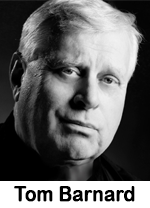
Tom Barnard Announces Alhzeimer’s Diagnosis

Legendary Twin Cities radio personality Tom Barnard announces to his podcast audience that he has been diagnosed with Alzheimer’s disease. The former morning host on rock KQRS-FM, Minneapolis has beenimg hosting “The Tom Barnard Podcast” since leaving the station in December of 2022. On the podcast, Barnard was joined by family members including his wife and podcast co-host Kathryn Brandt who said they began to have concerns about Barnard’s health shortly after he retired from KQRS. Barnard says he’s been undergoing treatment that has had a positive effect on him, but he acknowledges that there is currently no cure for Alzheimer’s.

Industry Views

Monday Memo: Your Local Advantage

By Holland Cooke
Consultant

imgSmall businesses often underestimate their greatest competitive edge. It’s not price. It’s not selection.

It’s localness. Big companies spend millions trying to sound personal and relatable. Small businesses already are those things – yet they often fail to exploit their advantage.

Common small business marketing mistake: Trying to sound big, speaking in an unnatural tone, a kind of “corporate costume.” It sounds like: “We are committed to excellence” or “Our mission is to provide unparalleled service” or “We pride ourselves on quality and customer satisfaction.” That’s verbal Styrofoam. Nobody talks like this and nobody remembers this.

Local isn’t just location

It’s a feeling. When customers say they prefer to “shop local,” they don’t necessarily mean geographically close, independently owned/noncorporate. Those things do matter, but they’re not the heart of it.

What customers really mean is:

  • “I feel like these people understand me.”
  • “They get what matters here.”
  • “They’re part of this place.”
  • “They care about the same things I do.”

Local is emotional

It’s relational, human. Show that you understand the place your customers live by referencing familiar landmarks, acknowledging local quirks, using neighborhood names, mentioning local events, speaking the way locals speak. Explaining that the advertiser is “just off the rotary at the bridge” tells would-be customers: “We’re here. We get it.” Big brands can’t fake that.

Tout personal service: 

“You can buy the same shed from Lowe’s or Home Depot, cash-N-carry. Buy yours at Lorraine Lumber and Paul Jr. will set it up in your back yard.”

This is the second installment in a 3-part series about optimizing commercial copy, the fundamentals we’re covering in Sales meetings as I visit client stations this spring. If you missed last week’s column, here’s “If It Doesn’t Matter to the Customer, It Doesn’t Matter.”  Next week here: “Anatomy of a Results-Producing Spot.”

Holland Cooke (HollandCooke.com) is a consultant working the intersection of broadcasting and the Internet. Follow HC on Twitter @HollandCooke and connect on LinkedIn

Job Opportunity

WVMT, Burlington Seeks PD/Talk Host

Sison Broadcasting’s news/talk WVMT-AM/W242BK in Burlington, Vermont is looking for a program director/talk host. The company says, “Do you have a passion for compelling conversation? Do you live andimg breathe talk radio? We’re looking for a program director to lead our talk radio stations to the next level.

This position requires the talent to host a conservative talk show while overseeing all aspects of programming, talent development, and content strategy for both our news/talk and sports stations. You’ll drive ratings growth, strengthen audience engagement, and ensure our stations remains trusted and influential voices in the community.

Our candidate will have some level of talk radio experience, strong leadership skills and the ability to adapt to Vermont and Upstate New York.  You’ll need to be a quick study and learn the politics of our market while maintaining an understanding of current events nationally.  Experience with digital content strategy including podcasts, streaming and social media is a must.  Experience and knowledge of VT/NY is a big plus but not an absolute necessity.

This position offers a decent starting salary for the market, a nice benefits package and a four-season lifestyle in a beautiful area of New England.  This is an in-market position.

Please send a copy of your resume along with applicable aircheck to operations manager Ted Richards at ted@star929.com.

Industry Views

Spring-Forward Show Prep

By Holland Cooke
Consultant

imgUnless you live in Hawaii and Arizona (except the Navajo Nation) or American Samoa, Guam, the Northern Mariana Islands, Puerto Rico and the U.S. Virgin Islands, your clocks will change when we “Spring Forward” on Sunday 3/8.

Every year, that one missing hour becomes a big topic of conversation. So, it’s an opportunity to flex your local radio advantage. Plan now to empathize with the emotional and practical adjustments listeners are confronting, including…  

Darker Mornings
Positive:

  • Later sunrise can feel cozy, especially for people who enjoy easing into the day.
  • Early-morning workers may appreciate the quieter, calmer pre-dawn hours.

Negative:

  • For many, waking up in darkness can be jarring.
  • Kids heading to school and commuters on the road face reduced visibility.

Longer Evenings
Positive:

  • More daylight after work boosts mood, encourages outdoor activity, and feels like the unofficial start of spring.
  • Families get more time outside; businesses tied to recreation, dining, and retail see a lift.

Negative:

  • Evening routines shift, especially for parents managing homework, sports, and bedtime.
  • People who work late may feel the day stretching uncomfortably long.

Sleep Disruption
Positive:

  • Some listeners welcome the psychological “reset” of a seasonal shift.
  • A later sunset can help night owls feel more aligned with the clock.

Negative:

  • Losing an hour can hit hard.
  • Many experience grogginess, irritability, and a few days of circadian chaos.

Health and Mood
Positive:

  • More evening light is a proven mood-booster.
  • For those prone to Seasonal Affective Disorder, the extended daylight is a relief.

Negative:

  • The abrupt change can trigger fatigue, headaches, and short-term stress.
  • Sleep-deprived mornings can amplify anxiety.

Productivity and Daily Rhythm
Positive:

  • Longer evenings can inspire productivity, exercise, and social plans.
  • People feel like they “get their life back” after winter.

Negative:

  • Morning productivity tanks for a few days as bodies adjust.
  • Parents, shift workers, and early risers feel the strain most acutely.

Safety Considerations
Positive:

  • More daylight during high-traffic evening hours improves visibility and reduces accident risk.

Negative:

  • Darker mornings increase hazards for pedestrians, cyclists, and schoolchildren.
  • Sleep deprivation contributes to slower reaction times.

Energy Consumption
Positive:

  • Longer daylight in the evening can reduce lighting needs.
  • Outdoor activity replaces indoor energy use.

Negative:

  • Darker mornings mean more lights, heat, and coffee makers running earlier.
  • Any savings are inconsistent and vary by region.

Impact on Schedules
Positive:

  • The seasonal shift feels like a milestone — spring is coming.
  • People use the change as a cue to refresh routines.

Negative:

  • Parents, pet owners, and anyone with a rigid schedule face a tough adjustment.
  • “Losing an hour” becomes a shared gripe.

So, What’s a Radio Station To Do?
This is where local radio can shine – being human, helpful, and hyper-local.

  • Songs about time: Cyndi Lauper’s “Time After Time,” Cher’s “If I Could Turn Back Time,” etc.
  • Explain the history of Daylight Saving Time(NOTE: it’s “Saving,” not “Savings”).
  • Ask callers how they feel about DST. You’ll get strong opinions on both sides…and stories.
  • “What will you do with your longer evenings?”
  • Giveaways that fit the moment: Coffee cards, breakfast treats, outdoor gear, spring-cleaning kits.
  • Partner with advertisers: “Spring Ahead Specials,” etc.
  • Interview a local health pro about sleep.

Holland Cooke (HollandCooke.com) is a consultant working the intersection of broadcasting and the Internet. Follow HC on Twitter @HollandCooke and connect on LinkedIn

Industry Views

Reckless Disregard in the Age of AI: What Verification Now Requires

By Matthew B. Harrison
TALKERS, VP/Associate Publisher
Harrison Legal Group, Senior Partner
Goodphone Communications, Executive Producer

imgAI is now embedded in the modern newsroom. Not as a headline, not as a novelty, but as infrastructure. It drafts outlines, summarizes complex reporting, surfaces background details, and accelerates prep for live conversations. For media creators operating under relentless deadlines, that efficiency is not theoretical. It is practical and daily.

That reality raises a quiet but consequential legal question. When AI contributes to your research, what does verification now require?

Professional hosts are not reading raw chatbot answers on air and calling it journalism. That caricature misses the real issue. What is actually happening is subtler and far more common.

AI now sits inside research workflows. Producers use it for background. Hosts use it to summarize reporting. Teams use it to outline controversies or draft rundowns. Most of the time, it works. Sometimes, however, it invents.

When that invention involves a real person and a serious allegation, the legal analysis looks familiar.

For public figures, defamation requires proof of actual malice – knowledge of falsity or reckless disregard for truth. For private figures, negligence is usually enough. In both cases, the focus is not on the tool. It is on the content creator’s conduct.

AI does not change the elements. It changes the context in which reasonableness is judged.

Courts have long held that repeating a defamatory statement can create liability, even if someone else said it first. If you rely on a blog, and that blog relied on AI, and the allegation is false, the question becomes whether your reliance was reasonable.

Was the source reputable? Was the claim inherently improbable? Were there obvious red flags?  Was contradictory information readily available?

AI’s reputation for “hallucinating” facts now forms part of that backdrop. Widespread awareness that these systems can fabricate citations, merge identities, or invent accusations becomes relevant when a court evaluates your verification choices.

This does not mean using AI indicates reckless disregard. It means using AI does not excuse skipping verification when the stakes are high.

The more specific and damaging the claim, the greater the duty to confirm it through independent, reliable sources. Not another prompt. Not a circular reference to the same unverified blog. Rather, a primary record, official statement, or established reporting.

Documentation matters. If challenged, being able to show that you checked multiple sources before broadcast can be decisive.

None of this is new doctrine. What is new is how seamlessly AI blends into ordinary research habits. That integration makes it easier to forget that the legal question is still about human judgment.

The law will not ask whether your workflow was efficient. It will ask whether your conduct was reasonable under the circumstances.

In the age of AI, verification is not a courtesy. It is risk management.

Matthew B. Harrison is a media and intellectual property attorney who advises radio hosts, content creators, and creative entrepreneurs. He has written extensively on fair use, AI law, and the future of digital rights. Reach him at Matthew@HarrisonLegalGroup.com or read more at TALKERS.com.
Industry Views

If the Bot Lies, Who Pays?

By Matthew B. Harrison
TALKERS, VP/Associate Publisher
Harrison Legal Group, Senior Partner
Goodphone Communications, Executive Producer 

img

A reporter recently asked a clean question with sharp edges: “Who is responsible when an AI defames someone?”
It sounds futuristic. It isn’t. It’s a standard defamation analysis dressed in new technology.
The most publicized early test involved radio host Mark Walters, who sued OpenAI after ChatGPT falsely stated he had been accused of embezzlement. The case was dismissed in federal court in Georgia in 2024. The court concluded the complaint did not plausibly allege the required level of fault. No federal appellate court has yet imposed defamation liability on an AI developer for a hallucinated statement alone.
That matters.
Defamation still requires a false statement of fact, publication to a third party, fault, and damages. An AI system cannot form intent. It cannot know falsity. It is not a legal person. But an AI output can absolutely contain a false statement about a real individual.
Courts will not ask whether “the AI defamed.” They will ask who published the statement.
Publication is broader than many assume. It does not require a broadcast tower. It requires communication to at least one third party. If a chatbot produces a false statement visible only to the person who prompted it and that person is the subject of the statement, there is typically no publication. The moment that output is emailed, posted, quoted, aired, or incorporated into a script, publication is satisfied.
The AI session itself is not the problem. Distribution is.
That is where fault enters the picture.
For public figures, plaintiffs must prove actual malice: knowledge of falsity or reckless disregard for truth. “The computer said it” is not a defense. If a host repeats a serious allegation generated by a system widely known to hallucinate and fails to verify it, a plaintiff will argue reckless disregard. For private figures, negligence is usually enough. Failing to check an AI-generated accusation against readily available sources may meet that standard.
The technology does not lower the bar. Nor does it create a new type of immunity. It simply changes the source of the words.
The unsettled frontier is developer exposure under Section 230 and product liability theories. Courts have not yet produced a controlling appellate decision holding a model developer liable in defamation solely because a model generated a false statement. That question remains open, but it is not yet answered in plaintiffs’ favor.
Here is the practical reality for media professionals.
An AI can generate the sentence.
You are the one who makes it public.
That’s where liability is found.
Matthew B. Harrison is a media and intellectual property attorney who advises radio hosts, content creators, and creative entrepreneurs. He has written extensively on fair use, AI law, and the future of digital rights. Reach him at Matthew@HarrisonLegalGroup.com or read more at TALKERS.com.

Industry News

Seattle Sports Brings Back “The John Schneider Show”

Bonneville’s  KIRO-AM “Seattle Sports” announces the return of “The John Schneider Show,” the exclusive weekly program featuring Seattle Seahawks EVP and general manager John Schneider. The show airs beginning today (2/19) and every Thursday through the NFL Draft in April. Schneider joins hosts Dave Wyman and Bob Stelton on “Wyman & Bob” for in-depth conversations about the Seahawks’ offseasonimg following their Super Bowl LX win, roster-building strategy, draft preparation, and the evolving landscape of the NFL. “Seattle Sports” program director Kyle Brown comments, “In the wake of an unforgettable Super Bowl run, we’re excited to give fans even deeper access to the leadership guiding the Seahawks into their next chapter. John’s perspective on team-building, the draft, and what it takes to construct a championship roster will be invaluable as the Seahawks look to build on the momentum of their 2026 title.”

Industry News

Audacy PA Stations Win 12 Excellence in Broadcasting Awards

Audacy is celebrating its Pennsylvania radio stations that received 12 Pennsylvania Association of Broadcasters 2026 Excellence inimg Broadcasting Awards. Stations honored include: NewsRadio WILK, Wilkes-Barre for “Special Edition – Paul Miller’s Law”; KYW Newsradio, Philadelphia for “I’m Listening”; SportsRadio 94WIP, Philadelphia for “WIP: Philadelphia Eagles Championship Parade Coverage” & “WIP: Coverage of Super Bowl LIX”; and KDKA Newsradio, Pittsburgh for “The Colin Dunlap Show.”
Industry News

Top News/Talk Media Stories This Past Week (February 9-13, 2026)

Here are the most talked about stories of the past week (2/9-13) on news/talk radio and related talk media according to TALKERS:

Stories

  1. ICE Operations / End of Minnesota Surge
  2. The Economy / Record Dow / Jobs Report / Falling Crypto
  3. The Epstein Files / Bondi Testimony
  4. Super Bowl Aftermath / Bad Bunny
  5. House Canada Tariffs Vote
  6. Olympics / Political Statements
  7. Artificial Intelligence
  8. U.S.-Iran Tensions
  9. Nancy Guthrie Case
  10. El Paso Anti-Drone Laser Incident

People

  1. Donald Trump
  2. Jeffrey Epstein
  3. Pam Bondi
  4. Howard Lutnick
  5. Bad Bunny/ Kid Rock
  6. Mike Johnson
  7. J.D. Vance / Hunter Hess
  8. Benjamin Netanyahu
  9. Savannah Guthrie / Nancy Guthrie
  10. Sean Duffy

To see the full TALKERS Stories, Topics, and People Charts, please click HERE.

Industry News

Report: Jim Miller Gone from SiriusXM NFL Channel Under Mysterious Circumstances

According to a report from Awful Announcing, sports talk host Jim Miller is no longer co-hosting the SiriusXM NFL Radio channel’s “Movin’ the Chains with Pat Kirwan.” Kirwan and Miller were supposed to work together from Super Bowl week in San Francisco, but Miller was noticeably absent,img causing listeners to speculate about his status. Earlier this week Kirwan addressed the matter saying, “As most of you have noticed, Jim Miller was not with us last week at the Super Bowl. We’re going to let all of you know, today, that Jim is no longer a member of the SiriusXM team. We’re grateful for all of Jim’s insights and contributions through his many years on SiriusXM, and I’m personally grateful to have him as my on-air teammate for a long time. I wish him the best going forward, as all of you will as well. For the sake of Jim, we should leave this subject as it is and hope and pray that he gets on with his life and things go well.”

Industry News

Salem Promotes Mosher in Pittsburgh; Names Cuddihy GSM

Salem Media promotes Jason Mosher to regional general manager overseeing the Pittsburgh and Atlanta markets and brings Dave Cuddihy aboard as general sales manager for the company’s Pittsburgh radio and digital operations that includes news/talk WPGP-AM “The Answer.” Cuddihy most recently served as publisher of the Latrobe Bulletin and Ligonier Echo in Westmoreland County. The company says he bringsimg more than two decades of proven media and advertising leadership, along with deep-rooted relationships throughout the Pittsburgh business community. Salem president of broadcast media Allen Power says, “We are excited to combine Jason’s leadership track record at Salem with Dave’s deep market knowledge of Pittsburgh. They are focused on growing our sales team in the market with a commitment to providing outcome-based solutions for advertisers.” Mosher is based in Salem Media’s Atlanta office. He has been with Salem Media for six years and was recently promoted from regional sales director where he led sales efforts for Pittsburgh, Atlanta and Cleveland.

Industry News

Top News/Talk Media Stories This Past Week (February 2-6, 2026)

Here are the most talked about stories of the past week (2/2-6) on news/talk radio and related talk media according to TALKERS:

Stories

  1. Trump ICE Activities, Policies and Backlash
  2. Epstein Files Revelations
  3. The Economy / Inflation / Interest Rates / Tariffs
  4. U.S.-India Trade Agreement
  5. Trump Floats Controversial Election Reform / FBI Raids GA Election Headquarters
  6. Middle East Tensions – Iran – Gaza / Russia-Ukraine War
  7. Trump’s Health Concerns – POTUS Poops Pants at Presser
  8. Nancy Guthrie Missing
  9. Measles Outbreak
  10. Melania Movie / Pre Superbowl Hype, Speculation, and Politics / Trump to “Renovate” Kennedy Arts Center

People

  1. Donald Trump
  2. Kristi Noem / Gregory Bovino / Tom Homan / Pam Bondi
  3. Jeffrey Epstein / Ghislaine Maxwell / Bill and Hillary Clinton / Melania Trump / Tulsi Gabbard
  4. Alex Pretti / Renee Good
  5. Jerome Powell / Kevin Warsh
  6. Masoud Pezeshkian / Narendra Modi / Marco Rubio / Vladimir Putin
  7. Nancy and Savannah Guthrie
  8. Bad Bunny
  9. Drake Maye / Sam Darnold / Mike Vrabel
  10. Robert F. Kennedy, Jr / Maria Shriver

To see the full TALKERS Stories, Topics, and People Charts, please click HERE.

Industry News

WIND-AM, Chicago Announces “The Real Story” Midday Show

Salem Media’s Chicago news/talk station WIND “AM 560 The Answer” is expanding its Jeanne Ives-hosted weekend show, “The Real Story,” to a daily airing from 11:00 am to 12:00 noon with the addition of former WIND personality Amy Jacobson (left) joining as co-host. Regional VP andimg station general manager John Gallagher states. Bringing Amy Jacobson back to the station fills a huge void for our audience. She has been relentless in her quest for the truth, and she gets answers that our listeners need to hear. Jeanne Ives (right) is one of the most politically connected people in the state of Illinois. She brings a wealth of knowledge regarding so many issues that affect everyone within our listening area. I am looking forward to the in-depth conversation and new perspective this team will offer.” Ives says, “I am thankful and excited to be a part of the Salem family. Information is power and Amy and I want to bring the ‘Real Story’ on policy along with informed commentary from years of experience knowing the players and politicians to our listeners. We want listeners to be informed, so they can hold the politicians accountable.” Amy Jacobson adds, “I am thrilled to be returning home to ‘AM 560 The Answer.’ Jeanne and I will be part of the strongest conservative lineup in Chicago radio! As many of you know, life takes some unexpected turns, but when you love what you do, the signal always finds its way back.”