Industry News

WDEL-AM/FM, Wilmington and Sister Stations to Change Hands

News/talk WDEL-AM/FM, Wilmington and its four music-formatted sister stations are being sold by Forever Media to Draper Media for $11 million. Draper Holdings Business Trust CEO Molly Draper Russell says, “We’re excited to add these stations, each with a long history of serving their local communities, to our company. Our family’s history of service through free over-the-air broadcasting goes back nearly 60 years.img The addition of these stations fits perfectly into our late founder, my father, Thomas H. Draper’s motto that it is our moral obligation to serve our audience and advertising partners.” In a press release, Draper says it currently operates WBOC-TV, FOX21, WRDE-TV, Telemundo Delmarva, Antenna TV, My Cozi TV, The DSN Sports Network, and multiple FM radio stations across the Delmarva Peninsula. Speaking for seller Forever Media, president Lynn Deppen comments, “We are proud of the legacy these stations have built in their communities and grateful to our dedicated teams who have served listeners with passion and professionalism. We are confident that Draper Media shares our commitment to local broadcasting and will continue to provide outstanding service to audiences and advertisers alike as these stations enter an exciting new chapter.” The transaction is expected to close in the third quarter of 2025, subject to approval by the FCC.

Industry Views

Monday Memo: Dear Old Dad

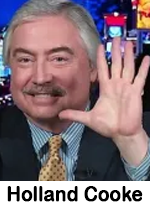
By Holland Cooke
Consultant

imgThis coming Sunday, June 15, is Father’s Day. For that day – and the Friday before (hint-hint) – you might have already readied Harry Chapin’s “Cat’s In The Cradle” and The Winstons’ “Color Him Father” and Dan Fogelberg’s wistful “Leader of the Band.”

Regardless of your format – yes, news/talk stations – hear-me-now-and-believe-me-later: “The Men in My Little Girl’s Life” by Mike Douglas. Guaranteed Kleenex material. Don’t even intro it. Just hit it cold and play the whole thing. You’ll hear about it.

im

GREAT call-in topic: “The best advice he ever gave you?” You will save the aircheck. Callers – some chuckling, others choking-back-tears – tell stories.

And if you still have your Dad, give the lug a hug. If he’s not still around, I suspect that you will find, as my brothers and sisters and I have, that he never really leaves you.

Holland Cooke (HollandCooke.com) is a media consultant working at the intersection of broadcasting and the Internet. Follow HC on Twitter @HollandCooke

Industry News

Thomas Broadcasts Live from “Freedomfest”

Talk Media Network nationally syndicated host Joe Thomas is broadcasting his “First Thing Today” programimg all this week from Palm Springs, California at “Freedomfest.” Thomas tells TALKERS that at the event – billed as “The Largest Gathering of Free Minds”—he will cover everything from farming to energy and, of course, free markets. Thomas also operates Thomas Media LLC which owns news/talk WTON, Staunton/Waynesboro/Harrisonburg.

Industry News

Top News/Talk Media Stories This Past Week (June 2 – 6, 2025)

Here are the most talked about stories of the past week (6/2-6/6) on news/talk radio and related talk media according to TALKERS:

Stories

1. Trump-Musk War
2. Big, Beautiful Bill / National Debt / Debt Ceiling
3. Medicaid Cuts
4. Trump vs Harvard & Columbia
5. ICE Raids / Deportations
6. Trump Doubles Steel & Aluminum Tariffs / U.S.-China Trade War
7. Colorado Fire Attack
8. Biden Health Coverup / Biden Actions Investigation
9. Ukraine Drone Strikes on Russia / Deadly Gaza Violence
10.Travel Ban / Iran Nukes

               People

1. Donald Trump
2. Elon Musk
3. Mike Johnson
4. Rand Paul / Mike Lee
5. Linda McMahon
6. Xi Jinping
7. Volodymyr Zelensky
8. Joe Biden
9. Mohamed Soliman
10.Benjamin Netanyahu

To see the full TALKERS Stories, Topics, and People Charts, please click HERE.

Industry News

NPR Stays Atop Podtrac Podcasts Chart for May

Podtrac releases its Top Podcasts chart for May based on U.S. unique monthly audience and NPR’s “NPR News Now” remains ranked #1, followed by The New York Times’ “The Daily” at #2 and NPR’s “Up First” atimg #3. Radio-related podcasts of note include Cumulus Podcast Network’s “Shawn Ryan Show” steady at #6, iHeartPodcasts’ “On Purpose with Jay Shetty” rising two spots to #9, and Silverloch’s “VINCE” falling two places to #20. See the complete chart here.

Industry News

TALKERS News Notes

Premiere Launches “Comedy Saved Me”. Premiere Networks and Buzz Knight announce the launch of a new podcast, “Comedy Saved Me,” hosted by TV and radio pro Lynn Hoffman. In each episode, Hoffman sits down with comedians, entertainers, and cultural voices to share personal, powerful stories about how comedy changed their lives, and sometimes even saved them.

Jones Joins WNYC/Gothamist. Journalist Gabrielle Jones joins the local news team at WNYC/Gothamist as the director of digital news and audience. The public media organization says Jones will work with the newsroom, live radio shows, and across New York Public Radio to grow audiences on WNYC’s local news website Gothamist, the WNYC app, their newsletters and social media.

Radio CEOs Speak with Chachi. Benztown president Dave “Chachi” Denes interviews two group heads on his podcast, “Chachi Loves Everybody.” The most recent edition of his podcast series features Saga Communications president and CEO Chris Forgy and Meruelo Media president and CEO Otto Padron.

Industry News

TALKERS News Notes

Florida’s Voice Radio Adds Affiliates. Conservative talk host Drew Steele’s “Florida’s Voice Radio” program adds new affiliates as WDBO, Orlando; WOKV, Jacksonville; and WROD, Daytona Beach add the program to their lineups. Steele says, “I’m thrilled to join the lineups of WDBO, WOKV, and WROD. Florida has some of the most passionate and engaged listeners anywhere, and I can’t wait to connect with them and be part of what matters to these communities.”

Stefanik Makes News on Sid & Friends. U.S. Rep. Elise Stefanik (R-NY) said on the “Sid & Friends” morning show on WABC, New York that she is considering a gubernatorial run. Politico reports that Stefanik said to Sid Rosenberg, “We need to save New York, and I’m taking a very strong look. I’m going to make a decision in the coming months.”

“The Breakfast Club” Hits Download Milestone. iHeartMedia and The Black Effect Podcast Network celebrate “The Breakfast Club” podcast surpassing one billion downloads. The show was launched in 2010 on iHeartMedia New York’s “Power 105.1” and the company says it “quickly became a must-stop destination for musicians, entertainers, politicians and the most talked about cultural figures of the moment. Since then, it has amassed a dedicated following captivated by the honest opinions and cultural breakdowns from current hosts DJ Envy, Jess Hilarious and Charlamagne Tha God.”

Industry Views

Mark Walters v. OpenAI: A Landmark Case for Spoken Word Media

By Matthew B. Harrison
TALKERS, VP/Associate Publisher
Harrison Media Law, Senior Partner
Goodphone Communications, Executive Producer

imgWhen Georgia-based nationally syndicated radio personality, and Second Amendment advocate Mark Walters (longtime host of “Armed American Radio”) learned that ChatGPT had falsely claimed he was involved in a criminal embezzlement scheme, he did what few in the media world have dared to do. Walters stood up when others were silent, and took on an incredibly powerful tech company, one of the biggest in the world, in a court of law.

Taking the Fight to Big Tech

Walters, by filing suit against OpenAI, the creator of ChatGPT, become the first person in the United States to test the boundaries of defamation law in the age of generative artificial intelligence.

His case was not simply about clearing his name. It was about drawing a line. Can artificial intelligence generate and distribute false and damaging information about a real person without any legal accountability?

While the court ultimately ruled in OpenAI’s favor on specific legal procedure concerns, the impact of this case is far from finished. Walters’ lawsuit broke new ground in several important ways:

— It was the first known defamation lawsuit filed against an AI developer based on content generated by an AI system.
— It brought into the open critical questions about responsibility, accuracy, and liability when AI systems are used to produce statements that sound human but carry no editorial oversight.
— It continued to add fuel to the conversation of the effectiveness of “use at your own risk” disclaimers when there is real world reputational damage hanging in the balance.

Implications for the Radio and Podcasting Community

For those spoken-word creators, regardless of platform on terrestrial, satellite, or the open internet, this case is a wake-up call, your canary in a coal mine. Many shows rely on AI tools for research, summaries, voice generation, or even show scripts. But what happens when those tools get it wrong? (Other than being embarrassed, and in some cases fined or terminated) And worse, what happens when those errors affect real people?

The legal system, as has been often written about, is still playing catch-up. Although the court ruled that the fabricated ChatGPT statement lacked the necessary elements of defamation under Georgia law, including provable harm and demonstrable fault, the decision highlighted how unprepared current frameworks are for this fast-moving, voice-driven digital landscape.

Where the Industry Goes from Here

Walters’ experience points to the urgent need for new protection and clearer guidelines:

— Creators deserve assurance that the tools they use are built with accountability in mind. This would extend to copyright infringement and to defamation.
— Developers must be more transparent about how their systems operate and the risks they create. This would identify bias and attempt to counteract it.
— Policymakers need to bring clarity to who bears responsibility when software, not a person, becomes the speaker.

A Case That Signals a Larger Reckoning

Mark Walters may not have won this round in court, but his decision to take on a tech giant helped illuminate how quickly generative AI can create legal, ethical, and reputational risks for anyone with a public presence. For those of us working in media, especially in formats built on trust, voice, and credibility, his case should not be ignored.

“This wasn’t about money. This was about the truth,” Walters tells TALKERS. “If we don’t draw a line now, there may not be one left to draw.”

To listen to a longform interview with Mark Walters conducted by TALKERS publisher Michael Harrison, please click here

Media attorney, Matthew B. Harrison is VP/Associate Publisher at TALKERS; Senior Partner at Harrison Media Law; and Executive Producer at Goodphone Communications. He is available for private consultation and media industry contract representation. He can be reached by phone at 724-484-3529 or email at matthew@harrisonmedialaw.com. He teaches “Legal Issues in Digital Media” and serves as a regular contributor to industry discussions on fair use, AI, and free expression.

Industry Views

Monday Memo: Summer! Bummer? Opportunities.

By Holland Cooke
Consultant

img“Fewer than half of Americans plan to travel this Summer,” according to a Bankrate survey, and “cost is a major concern.”

— Just 46% plan to travel, 38% domestically and 15% internationally (with some overlap between the two).
— 65% of non-travelers cite a lack of interest in traveling currently. “Not being able to take time off work and travel being too much of a hassle both came in at 16%.”
— “The expense of everyday life tops the reasons people can’t afford to travel.”
— “15% of respondents said they were worried about flight safety. That comes on the heels of several high-profile aviation incidents in the United States.”

This isn’t bad news. It’s an open door.

Programming/Promotion ideas:

— Local Day Trips vignettes (within 90-minute drive)
— Grilling tips (local chef? listener suggestions?)
— Weekend activities/events calendar
— Near the water? “Shorecast”
— Online Staycation Directory
— Listener photos (garden, patio, pool, grill-N-chill)

im

Any/all-of-the-above are sponsorable. Prospects:

— Outdoor furniture retailers
— Home improvement stores (paint, decking, lighting)
— Grill/smoker shops & barbecue supply
— Pest control services
— HVAC (air conditioner tune-ups)
— Pool and hot tub installers, maintenance
— Gazebo/screenhouse/awning installers
— Water parks/mini golf/drive-in movies
— Ice cream stands, craft breweries

PS: Tomorrow’s bumpers:
“Ode to Billie Joe” by Bobbie Gentry, and “Desiree” by Neil Diamond. Both begin “It was the third of June…”

Holland Cooke (HollandCooke.com) is a consultant working the intersection of broadcasting and the Internet. Follow HC on Twitter @HollandCooke and connect on LinkedIn

Industry News

RTDNA Wraps 2025 Edward R. Murrow Regional Awards

Winners in this year’s annual Edward R. Murrow Regional Awards presented by the Radio Television Digital News Association have been announced. The RTDNA competition has been presented since 1971 and nowimg encompasses four divisions: Local TV and Radio; Network, Syndication Service, Program Service TV and Radio; Digital News Organizations; and Student Awards. RTDNA says the Murrow Awards “recognize local and national news stories that uphold the RTDNA Code of Ethics, demonstrate technical expertise and exemplify the importance and impact of journalism as a service to the community. Murrow Award-winning work demonstrates the excellence that Edward R. Murrow made a standard for the broadcast news profession.” You can see the winners across the 14 regions here.

Industry News

TALKERS News Notes

iHeartMedia Launches “True Crime Tonight.” iHeartMedia announces the premiere of “True Crime Tonight” in collaboration with KT Studios. “True Crime Tonight” will initially launch on more than 20 broadcast radio stations across the country Sunday through Thursday evenings live at 10:00 pm local time beginning June 1. The two-hour show is being led by Stephanie Lydecker, founder and CEO of KT Studios; Courtney McKenna Armstrong, producer and voice of KT Studios’ podcasts; and Baudi Moovan, crime analyst and star of Netflix’s “Don’t F*** with Cats.”

Edison Unveils Infinite Dial UK. At The Podcast Show in London, Edison Research released its finding about UK digital media consumption via it’s the Infinite Dial UK 2025. The study looked at tech ownership, social media usage, online audio, and podcast listening in the UK.

Podcast One Acquires New Shows. PodcastOne announces it broadens its programming slate by adding several new and acquired podcasts to its network. Acquisitions include “Love Murder,” “The Broadside” and “Intrusive Thoughts” by Adam Rippon, with new podcasts “Yestergays” with Justin Sylvester and Blakely Thornton and “A Lot of You Have Been Asking” from comedian Hayden Cohen.

Industry News

Top News/Talk Media Stories This Past Week (May 26 – 30, 2025)

Here are the most talked about stories of the past week (5/26-30) on news/talk radio and related talk media according to TALKERS:

Stories

1. Big, Beautiful Bill / National Debt
2. Trump Tariffs Rulings
3. Trump vs Harvard / Chinese Student Visas Policy
4. Musk to Leave DOGE
5. Israel-Gaza War / Iran Nuclear Talks
6. Russia-Ukraine War / Trump-Putin Tensions
7. FBI-ICE Arrests
8. Golden Dome Defense System
9. Pardons & Commutations
10.Diddy Trial

People

1. Donald Trump
2. Mike Johnson
3. Alan Garber
4. Elon Musk
5. Benjamin Netanyahu
6. Vladimir Putin
7. Xi Jinping
8. Jake Tapper
9. Todd & Julie Chrisley
10.Sean “Diddy” Combs

To see the full TALKERS Stories, Topics, and People Charts, please click HERE.

Industry News

WWO: Reach Helps Build “Mental Availability”

This week’s blog post from Cumulus Media | Westwood One’s Audio Active Group looks at the effects of reach on and advertiser’s “mental availability.” The piece quotes authors Les Binet and Sarah Carter from their book, 66 Ways To Screw It Up: How Not to Plan, “The single most important factorimg driving brand preference is ‘mental availability’: how well known a brand is, and how easily it comes to mind. Brands with low mental availability tend to struggle, rejected in favor of more familiar rivals. Or not considered in the first place. Brands with high mental availability don’t have to push so hard to sell, so tend to have higher market shares and better margins.” The authors also advise, “Always aim to get more customers from all segments of the market. It’s the main way brands grow.” The blog post concludes that AM/FM radio makes your media plan better by increasing reach. One example is illustrated as follows: Edison’s “Share of Ear” study of ad-supported audio reveals the combined persons 18+ daily reach of Pandora and Spotify is only 12% of Americans. Adding podcasts causes reach to surge to 29%. The introduction of AM/FM radio lifts daily reach to 74%. See the full blog post here.

Industry News

BIN Announces Partnership with The Obama Foundation

iHeartMedia’s BIN: Black Information Network announces its collaboration with The Obama Foundation to advance community engagement with youth. “This multi-year collaboration — the first of its kind for BIN — brings together its mission to inform, educate and elevate Black voices with The Obama Foundation’s commitment to empowering individuals and communities to create lastingimg change. Both organizations share a vision of advancing equity, social justice and civic engagement for future generations.” BIN president Tony Coles adds, “This powerful collaboration will deliver important, unbiased information to our audiences, promote civic engagement, and foster inclusive dialogue. In today’s news environment, our responsibility is to ensure the stories, commitment and goals of civic and community leaders are heard by our listeners and carried forward by future generations.” BIN will advance the mission of the Obama Presidential Center in the runup to opening in 2026 by sharing and distributing stories focused on President Obama’s legacy, community-driven initiatives on the South Side of Chicago and engaging in national conversations around equity, democracy and change.

Industry Views

SABO SEZ: They Want What You Have

By Walter Sabo
a.k.a. Walter M Sterling
Host, Sterling Every Damn Night
WPHT, Philadelphia
Sterling On Sunday, Syndicated, TMN

imgDozens of brand-new audio hardware and software companies have been launched during the past 20 years. These start-ups are usually funded by venture capital money. VC money is not invested to return a profit, it’s poured in to – pour it in. Their money is “different” than the cashflow that fuels your business. Start-up money buys time to profit.

Amazon lost money its first 10 years. Spotify launched in 2008 and turned a full year profit for the first time – last year.

MOST venture-backed start-ups do not make it to profit, they close.

With virtually unlimited funds and no deadlines, what are the strategic markers for success of most fresh, new audio businesses? Having performed due diligence for many start-ups, this is an informed summary of their goals:

— Significant distribution of the product.
— Robust, broad-appeal content offerings
— Proven metrics for securing advertising dollars
— Positive cultural impact
— Embraced by late-stage adopters
— Advertiser credibility

Hold radio to the above checklist.  92% of the population has a radio – more households than own a TV. Radio’s distribution is elegant, wireless, and free. Streaming? Yes, radio has streamed to the car since 1938. How’s UCONNECT or APPLE PLAY working in your KIA? Buffering now? Bluetooth pairing? At-home streams cost about $1,000 for a computer, $100 a month for WiFi, $150 for software upgrades and repairs. Radio distribution: turn it “ON.” No startup audio service will match radio’s distribution system.

Mature means predictable. Content offerings on radio are understood, accepted, and quickly adjusted if not appealing. Audio start-ups are rarely run by execs with audio entertainment experience. Their execs tend to be recruited from two groups: techs and discoverers. Techs because somebody has to make it work. Discoverers because you would be shocked at how many audio newcomers were funded on the wacky premise that AM/FM fails to see how badly Americans want to hear brand new music! Lurking among workers within the streaming and satellite communities is the harsh prejudice that pros with actual radio experience are satanic dinosaurs.

Most start-ups flirt with doing good for the country, ie; positive messaging, lots of jazz or world music. AM/FM has hardcore positive impact witnessed by the fact that most public radio stations enjoy ratings dominance. No other medium – none – raises more money for community charities than AM/FM.

Driving a new product past the innovators, early adopters, early majority to late majority is the path to success in any industry. AM/FM reached late majority when Bing Crosby had his own show. How’s mom doing with Spotify?

Advertiser credibility: Procter & Gamble returned to radio in the early 2000s. Last year P&G landed near the top of radio advertisers. Procter has no sense of humor or time for nonsense. If P&G buys a lot of radio, end of story. Again.

Not legacy media. Proven media.

Walter Sabo has been a C Suite action partner for companies such as SiriusXM, Hearst, Press Broadcasting, Gannett, RKO General and many other leading media outlets. His company HITVIEWS, in 2007, was the first to identify and monetize video influencers.. His nightly show “Walter Sterling Every Damn Night” is heard on WPHT, Philadelphia. His syndicated show, “Sterling On Sunday,” from Talk Media Network, airs 10:00 pm-1:00 am ET, and is now in its 10th year of success. He can be reached by email at sabowalter@gmail.com.

Industry News

Bay Area Sports Collective Announces New Shows

Back in March, former Bay Area sports personalities Tom Tolbert, Paul McCaffrey, and John Lund – along with programmer Jeremiah Crowe – launched the digital audio platform Bay Area Sports Collective. Now, the company adds three new podcasts to its offerings. Jeremy Affeldt’s “Built Forimg The Storm,” “Girl, How’d You Get That Gig?” hosted by Amy Gutierrez and Celeste Gehring, and Rod Brooks’ “Quality Hang with Rod Brooks & Friends” debut on Friday (5/23). Jeremiah Crowe says, “After launching Bay Area Sports Collective in early March, it became apparent there were other hosts who wanted to join our team. We are proud to expand our growing podcast network with additional hosts the local Bay Area sports fans know and trust. The future looks bright for the collective and our fans.”

Industry News

NPR Shows Remain Atop Triton Digital Podcast Ranker

Triton Digital releases its U.S. Podcast Ranker for April based on weekly average downloads andimg NPR’s “NPR News Now” and “Up First” remain in the #1 and #2 positions, respectively. Other radio-related podcasts of note include Salem Podcast Network’s “The Charlie Kirk Show” steady at #6, Cumulus Podcast Network’s “VINCE” falling five places to #8 and iHeartRadio’s “The Clay Travis and Buck Sexton Show” dipping one place to #14. See the complete ranker here.

Industry News

Bob & Tom Show Does Live Jingles & Commercials for Indy Clients

img

Yesterday (5/20), “The Bob & Tom Show” and flagship station WFBQ-FM, Indianapolis produced live spots for a dozen local clients. During spot breaks, the advertisers were featured in a live commercial accompanied by musicians and singers from The Bob & Tom Show band. Each business received a custom musical jingle, written and produced by “Bob & Tom” host Tom Griswold and his network of musicians and comedy writers. Griswold says, “This allows local businesses to both have fun with radio advertising and then see the real results that follow when creative thinking is applied to focus on their product or service.” Radio Advertising Bureau CEO Mike Hulvey attended the broadcast and “praised the innovative format as a ‘model for how radio can remain fresh, fun, and deeply connected to the communities it serves.’” The advertisers also received a professionally produced video and audio recording of their performance to use in future marketing.

Industry Views

When the Algorithm Misses the Mark: What the Walters v. OpenAI Case Means for Talk Hosts

By Matthew B. Harrison
TALKERS, VP/Associate Publisher
Harrison Media Law, Senior Partner
Goodphone Communications, Executive Producer

imgIn a ruling that should catch the attention of every talk host and media creator dabbling in AI, a Georgia court has dismissed “Armed American Radio” syndicated host Mark Walters’ defamation lawsuit against OpenAI. The case revolved around a disturbing but increasingly common glitch: a chatbot “hallucinating” canonically false but believable information.

The Happenings: A journalist asked ChatGPT to summarize a real court case. Instead, the AI invented a fictional lawsuit accusing Walters of embezzling from the Second Amendment Foundation — a group with which he’s never been employed. The journalist spotted the error and never published inaccurate information. But the damage, at least emotionally and reputationally, was done. That untruth was out there, and Walters sued for defamation.

Last week, the court kicked the case. The court determined Walters was a public figure, and as such, Walters had to prove “actual malice” — that OpenAI knowingly or recklessly published falsehoods. He couldn’t but now it may be impossible.

The judge emphasized the basis that there was an assumption false information was never shared publicly. It stayed within a private conversation between the journalist and ChatGPT. No dissemination, no defamation.

But while OpenAI may have escaped liability, the ruling raises serious questions for the rest in the content creation space.

What This Means for Talk Hosts

Let’s be honest: AI tools like ChatGPT are already part of the media ecosystem. Hosts use them to summarize articles, brainstorm show topics, generate ad copy, and even suggest guest questions. They’re efficient — and also dangerous.

This case shows just how easily AI can generate falsehoods with confidence and detail. If a host were to read something like that hallucinated lawsuit on air, without verifying it, the legal risk would shift. It wouldn’t be the AI company on the hook — it would be the broadcaster who repeated it.

Key Lessons

  1. AI is not a source.
    It’s a starting point. Just like a tip from a caller or a line on social media, AI-generated content must be verified before use.
  2. Public figures are more exposed.
    The legal system gives less protection to people in the public eye — like talk hosts — and requires a higher burden of proof in defamation claims. That cuts both ways.
  3. Disclosure helps.
    OpenAI’s disclaimers about potential inaccuracies helped them in court. On air, disclosing when you use AI can offer similar protection — and builds trust with your audience.
  4. Editorial judgment still rules.
    No matter how fast or slick AI gets, it doesn’t replace a producer’s instincts or a host’s responsibility.

Bottom line: the lawsuit may be over, but the conversation is just beginning. The more we rely on machines to shape our words, the more we need to sharpen our filters. Because when AI gets it wrong, the real fallout hits the human behind the mic.

And for talk hosts, that means the stakes are personal. Your credibility, your syndication, your audience trust — none of it can be outsourced to an algorithm. AI might be a tool in the kit, but editorial judgment is still the sharpest weapon in your arsenal. Use it. Or risk learning the hard way what Mark Walters just did. Walters has yet to comment on what steps – if any – he and his lawyers will take next.

TALKERS publisher Michael Harrison issued the following comment regarding the Georgia ruling: “In the age of internet ‘influencers’ and media personalities with various degrees of clout operating within the same space, the definition of ‘public figure’ is far less clear than in earlier times. The media and courts must revisit this striking change. Also, in an era of self-serving political weaponization, this ruling opens the door to ‘big tech’ having enormous, unbridled power in influencing the circumstances of news events and reputations to meet its own goals and agendas.”

Matthew B. Harrison is a media attorney and executive producer specializing in broadcast law, intellectual property, and First Amendment issues. He serves as VP/Associate Publisher of TALKERS magazine and is a senior partner at Harrison Media Law. He also leads creative development at Goodphone Communications.

Industry News

“Brad vs Everyone” Joins iHeartPodcasts

Premiere Networks announces that journalist and social media influencer Brad Polumbo’s podcastimg “Brad vs. Everyone” is joining iHeartPodcasts. Polumbo’s podcast featured him covering “the most interesting and entertaining stories in politics and on the internet from a center-right, independent perspective.” He comments, “I’m thrilled to launch this partnership with Premiere Networks and iHeartPodcasts, and to work with their fantastic team to bring ‘Brad vs. Everyone’ to new audiences. It’s an honor to join a network with incredible talent and massive reach, and I look forward to the podcast reaching new heights!”

Industry Views

Monday Memo: Your Passion, Your Media Station

By Holland Cooke
Consultant

imgTALKERS publisher Michael Harrison introduced the term in the 1990s, inviting us to think-beyond the real-time audio we were sending up those towers. What he described seemed conceptual, even futuristic, back then, when we were still logging-onto AOL via dial-up (screech).

The “Media Station” he reckoned we would be producing by now seemed more like a place than a show. It wouldn’t be bound by regulation or sponsor sensitivities or an on-air format. Content needn’t be 30- or 60-seconds or minutes. It won’t even have to be audio. Or governed by how long you can last between bathroom breaks or eating or sleeping, because it won’t be the real-time content that radio was confined to then.

Back to the future. Among headlines from 2025 Edison Research “Infinite Dial” research:

— 248 million Americans are on social media.
— 91% (262 million) own a smartphone.
— 101 million own a smart speaker.
— 40% of vehicles now on the road have phone integration.
— Though AM/FM is still the #1 in-car audio, #2 is online audio, #3: podcasts.
— 210 million listen to online audio every week.
— “Podcast consumption is at an all-time high.” 55% of Americans listen each month.

Anyone anywhere can publish something that is available to everyone everywhere.

im

Most who read this are probably content creators, many working full or part-time at radio stations, doing the station’s business. Using that same skill set, build your own, a Media Station. Most of the tools are free, including ChatGPT, which will even help you plan it.

What’s your area of expertise?? Your hobby? Your passion? Your media station could include:

— Podcasts
— Blog, inviting participation
— Tutorial videos about a craft or skill
— Tips-N-Tricks about ____
— Checklists/worksheets/recipes/other documents, as PDF downloads
— Stories about businesses or artists, traditions or customs, history, science, tech
— DIY projects, of any sort
— Makeover transformations
— Fitness routines and workout tips
— Money topics
— Food topics of all sorts, including restaurant reviews
— Relationship topics
— Travel
— Product reviews/recommendations
— Sports
— Amazon Associate links to earn commission on related products
— Whatever!

NOT saying: Build a media station so it becomes your livelihood after the next round of cutbacks. But, hey…

Holland Cooke (HollandCooke.com) is a consultant working the intersection of broadcasting and the Internet. Follow HC on Twitter @HollandCooke and connect on LinkedIn

Industry News

Conservative Groups Petition FCC for Regulatory Relief

More than 20 conservative groups, led by Heritage Action for America, sent a letter Federal Communications Commission Chairman Brendan Carr voicing their support for the agency’s efforts to modernize what they call outdated ownership regulations that they say negatively impact local TV and radio stations. The letter puts forth the argument that digital media is at an advantage over analogue media due to these regulations. “The FCC’s television and radio ownership rules date back to theimg 1940s, when broadcast dominated mass communications in the U.S. Since then, the media marketplace has changed drastically – from widespread deployment of cable and satellite television networks to the rise of social media, podcasts, and streaming. Local broadcasters compete directly with Big Tech, streaming services, and social media platforms in the marketplace of consumer content. Yet, unlike their competitors such as YouTube and Facebook, broadcasters are limited by the ownership rules in how many households and consumers they can reach. This is an inherent disadvantage.” The letter adds, “By eliminating the national television cap, local TV duopoly restrictions, and local radio ownership caps, broadcasters can better achieve the scale and efficiencies necessary to compete – and to attract vital investment – in a fragmented and rapidly evolving information market.” See the complete letter here as posted by NAB.

Industry News

FCC’s Gomez: Trump Administration in “Coordinated Efforts to Censor and Control”

In a speech at the 2025 Media Institute Communications Forum on May 15, FCC Commissioner Anna Gomez criticized what she called the Trump administration’s “campaign to censor and control” stating “[S]ince day one the FCC has been implementing the will of this Administration and undermining the First Amendment at every turn.” Gomez said the administration has “initiated investigations andimg floated debilitating rate regulation schemes that target national network broadcasters for their newsrooms’ editorial decisions, harassed private companies for their Diversity, Equity, and Inclusion efforts, and threatened tech companies that respond to consumer demands for content moderation and fact-checking.  Separately, they have attempted to shutter Voice of America and sought retribution against lawful residents that protest Administration policies.” She cited two occasions where presidents – FDR in 1939, and John F. Kennedy in the early 1960s – asked their FCC Chairs to shut down media outlets critical of their policies and those FCC Chairmen boldly refused.  She added, “This is what courage looks like—FCC Chairs refusing to wield the agency’s licensing authority as a weapon in contravention of the First Amendment and the Communications Act, even in the face of political pressure.”

Industry News

iHeartMedia and Bloomberg Extend Podcast Partnership

iHeartMedia and Bloomberg Media are renewing their podcast deal to continue co-producing new original podcasts and extend iHeartMedia’s role as the exclusive distributor of Bloomberg Media’s slate of shows. iHeartPodcasts president Will Pearson says, “Since 2021, we have produced andimg distributed over 30 podcasts with Bloomberg Media that offer critical news alongside compelling storytelling across the world of business and finance.  We are thrilled to continue our partnership to develop, distribute and monetize this impressive lineup and grow our audience worldwide. With an impressive lineup of upcoming shows in the pipeline, our renewed partnership will continue to leverage iHeart’s massive audience reach to expand upon Bloomberg’s community of listeners and provide them with engaging content across the current economic landscape.”

Industry News

Salem Media Group Q1 Revenue Falls 12%

Salem Media Group’s first quarter 2025 net revenue was $39.8 million, a decrease of 12% from theimg same period in 2024. The company reports that net broadcast revenue was $39.8 million, down 13.6% from Q1 in 2024, and digital media revenue also fell to $10.2 million, a decline of about 4.5%. Salem’s net loss for the quarter was $7.1 million compared to the net loss of $5.1 million it reported in Q1 of 2024.

Industry Views

SABO SEZ: Give Credit

By Walter Sabo

a.k.a. Walter M. Sterling
Host, “Sterling Every Damn Night”
WPHT, Philadelphia
Host, “Sterling On Sunday,” TMN

imgRight now, dozens of well-suited, over-priced, unpleasant lawyers are fighting in Hollywood over the title credit their client should receive on a movie, TV show, or book cover. Placement within the credit roll at the end of a show is a battleground of egos and legalities. Part of the process of securing proper credit is governed by multiple union rules negotiated by multiple unions and corporate dictates of corporate masters. (You don’t get to be CEO of Paramount by being a nice guy.)

In most mass media, getting credit for the hard work of creating mass media is a very serious matter. What’s the “title slide” credit for you and your colleagues?

To your listener, you are a star. For no cost, you, your station, and our industry would benefit from building a credit roll at the end of each of your shows. Radio has a first class array of production software, processing and SFX libraries. Use those assets to create on air credit rolls for talent, PAs, anyone who touches a show.

The result: Credited employees will grow prouder of their work. They will be recognized by their friends. Advertisers will know their messages are part of a “big thing” and invest with confidence. Subliminally running credits for your station’s team puts radio on the same plateau as movies, TV, print. For free.

Consider every opportunity to elevate the stature of radio stars. When you have a substitute host or DJ please don’t say, “filling in for…” say, “guest starring.” How does your talent present themselves away from the station on remotes or appearances? KMART rack or Dress for Success? Fact: Management of other media say that radio executives and sales people “dress poorly.” Really, that’s their view of radio personnel. Lousy dressers. Easy fix.

Kudos to George Noory. At the end of each show, he credits his predecessors; all-night radio stars who, through the decades, explored UFO’s and non-traditional topics. George’s humble announcement celebrates radio’s robust history and places Noory in an all-hit lineup.

Walter Sabo has been a C Suite action partner for companies such as SiriusXM, Hearst, Press Broadcasting, Gannett, RKO General and many other leading media outlets. His company HITVIEWS, in 2007, was the first to identify and monetize video influencers. His nightly show “Walter Sterling Every Damn Night” is heard on WPHT, Philadelphia. His syndicated show, “Sterling On Sunday,” from Talk Media Network, airs 10:00 pm-1:00 am ET, and is now in its 10th year of success. He can be reached by email at sabowalter@gmail.com

Industry News

TALKERS News Notes

Cruz Podcast Airing in Philly. The Premiere Networks-syndicated “Verdict with Ted Cruz” is airing on Audacy’s news/talk WPHT, Philadelphia. Station brand manager Greg Stocker says, “‘Verdict with Ted Cruz’ is a one-hour, no-nonsense view of the political climate from someone who knows more than most. Bringing Senator Ted Cruz and his years of knowledge and experience to WPHT ensures our audience stays informed and engaged with the political conversations shaping our country.”

The Recombobulation Area Wins Journalism Awards. The Civic Media-owned publication The Recombobulation Area wins six awards in the Milwaukee Press Club’s 2024 “Excellence in Wisconsin Journalism” competition. Since launching in 2019, The Recombobulation Area has won 19 awards from the Milwaukee Press Club, including four gold, nine silver and six bronze honors. Civic Media also owns and operates radio stations across Wisconsin, including 11 news/talk/sports outlets.

Industry News

iHeartMedia Q1 Revenue Rises 1%

iHeartMedia reports consolidated revenue of $807 million in the first quarter of 2025, up 1% from the same period in 2024. iHeartMedia reports its operating results in segments and says Digital Audio revenue increased $38.3 million, or 16%, driven primarily by continuing increases in demand for digital advertising, including podcast advertising. Multiplatform Group revenue – which includes radio stationimg and networks revenue – decreased $20.5 million, or 4.2%, primarily resulting from a decrease in broadcast advertising in connection with continued uncertain market conditions. iHeartMedia chairman and CEO Bob Pittman says, “We are pleased with our Q1 results given the uncertain environment in which we are operating now, and we think these results demonstrate the resilience and relevance of our products and the tremendous growth opportunity we have with our podcast business in particular.” Company president, COO and CFO Rich Bressler adds, “In the first quarter, we generated Adjusted EBITDA of $105 million, flat to prior year, consistent with our previously provided guidance, and our consolidated revenues for the quarter were up 1% compared to the prior-year quarter, above our guidance of down low-single digits, driven by the Digital Audio Group revenues and Adjusted EBITDA growth of 16% and 28% respectively.”

Industry News

Erick Erickson Prioritizes Affiliate Station Visits

img

Compass Media Networks nationally syndicated talk host Erick Erickson says he’s making it a priority to visit stations for listener and client meet and greets and adds that to reduce the burden on the affiliates, the show is picking up travel expenses for himself and team. Pictured above is Erickson chatting with listeners to WEEB, Southern Pines, North Carolina. Erickson says, “Radio is a far more intimate medium than any other form of media. People get to know you based on voice inflection. Getting into the markets and being in person with our listeners builds the audience connection and is important to me. It’s equally important that I do it without being a burden to the affiliates and working in collaboration with them.”

Industry News

WVON, Chicago Unveils New Afternoon Show

img

WVON, Chicago announces that station PD Atiba Buchanan is teaming up with LaDonna Raeh for the afternoon drive show. This comes after the duo have been filling in for Jesse Jackson Jr. since early March, allowing Jackson Jr. to focus on his national show. The station says, “The duo will focus on keeping listeners up to date on breaking news and topics such as social justice and advancing Black economics. In addition, Buchanan and Raeh will highlight the importance of familial networks by teaming up with experts to discuss strengthening family structures and hosting a weekly segment called ‘Relationship Thursdays.’”

Industry News

Frank Morano Leaves WABC Show

WABC, New York overnight talk host Frank Morano is leaving his hosting duties at the Red Apple Media station because of his new role as Staten Island South Shore city councilman. Morano won the seat in a special election and, due to the election schedule, faces a primary election in June and, ifimg successful there, will have a general election campaign to run in the fall for the next term. Morano issued a statement over the weekend regarding his status. He said, “When I was elected, I had expected to continue hosting my radio show until the swearing-in. However, due to concerns about equal-time rules for the upcoming election and uncertainty around what outside work I’ll be allowed to do once I take office, the decision was made that I would no longer host ‘The Other Side of Midnight’ and would step away from the Red Apple Audio Network for now. This wasn’t a decision I made lightly—or one I made at all, frankly—but I completely understand the reasoning behind it. I’m incredibly grateful to the station’s ownership and management for the opportunity to do a show I loved, with a team I respected, for an audience I adored… I do hope to be back on the radio in some form soon. But for now, I’m off the air.  

Industry Views

Monday Memo: Music Lessons For Talk Radio

By Holland Cooke
Consultant

imgMusic radio’s competitors were vinyl, then tape, then CDs – before smartphone streaming and satellite radio offered more portability and variety. And before consolidation, broadcasters were under less of the revenue pressure that now commercializes many stations beyond listeners’ tolerance. TALKERS NAB Show coverage included Edison Research founder Larry Rosin lamenting “many, many [music] stations now loading all their spots into two interminable breaks per hour.” I cringe hearing FMs struggle to remain among listeners’ music appliances. And I fret that monologue-heavy talk radio is relinquishing interactive dialogue to social media.

Before moving to all-news, and eventually news/talk, I worked in music formats less-structured than today’s. So now I hear music radio as an outsider, more like a consumer. Which got me wondering: How does my format sound to music consultants? So, I asked several whose work I respect.

Beware the one-joke act

Mike McVay reckons that “listeners want to know a little bit about a lot of things,” a point other colleagues echo. Explaining that “music radio is all about variety,” adult contemporary specialist Gary Berkowitz: “To me, listeners are tired of all this political back and forth. Sure, it has its place, but it’s like if music radio only played five different artists!” Jon Holiday – who customizes station playlists for a variety of formats – asks “are talk listeners getting what they want?” Calling some formats “very artist-heavy,” he thinks stations were right to play so much Taylor Swift in 2024, certainly her year. And 2025 sure is Trump’s, but Holiday calls “banging the same drum all day, every day” the most common flaw he hears on talk radio.

McVay says listeners like “stories that pull on their heart strings. It’s why “NBC Nightly News” ends with a touching story. It’s not fluff. It’s information relief.” He also recommends topics you are likely to overhear at the next table during lunch: “Discretionary Time Information” (binge-worthy shows on Apple+, Max, Netflix). Health. And – lately more than ever – what Mike calls “purse” stories (think: eggs). Been to Costco? On weekends it’s mobbed. Ask any member and they’ll recite a shopping list of Kirkland-brand bargains.

Play the hits

 When Gary Berkowitz – then an accomplished music programmer – took over stately WJR, he “approached it like it was a music station, the only difference was my ‘songs’ were my personalities, news coverage and, at the time, play-by-play of all the major Detroit teams.” He bought a jingle package “to ‘decorate’ the station;” and “got ‘JR involved with everything that was happening in Detroit. All I did was put it all together and present it like my top-40 upbringing taught me.”

I can relate. Before I programmed all-news WTOP, Washington, I had no news experience. I came from a music FM. The WTOP staff I inherited was impressive, and their work was solid, but the station wasn’t “programmed enough.” I was sent there to convert Cume to Average Quarter Hour – the blocking-and-tackling formatics fundamental to music radio. We owned “the Top news…instantly” image, and we said those very words LOTS. But research told us that traffic and weather were “the hits;” and how we presented them moved the needle.

im

Great talkers are great listeners 

In every transaction, consumers now expect to interact; and “listeners like to hear others’ voices,” Mike McVay observes: “When the audience is comfortable enough to weigh in with an opinion, their own story, or a reaction, you’ve created a ‘friend circle.’” Jon Holiday tells morning shows he works with to “take time going into breaks to be topical and interact with callers.” And engage by texting and social media. And don’t just push-TO listeners. Be quick to REPLY, and you will make them feel special. 

Yet, in three decades coaching talk hosts, the most unwelcome word I say seems to be “callers.” Imitating gifted Rush Limbaugh, many hosts are prone to windy monologue, rather than inviting the busy dialogue that makes a station sound popular (something local advertisers notice). DJs deftly weaving interactivity into music shows often sound more inviting than sermonizing talkers. Holiday remembers El Rushbo as “a master at having fun, particularly in his early days as a syndicated personality.”

Prescription: Local 

Twenty years ago at the TALKERS conference, publisher Michael Harrison’s advice was elegantly simple: “Give them something they can’t get anywhere else.” Especially now, with so many non-local audio competitors. Regardless of format, helpful local information can increase Occasions of Tune-In per week.

Simply doing local news is a start. But does yours enable the listener by telling what an item means to him or her? On any given day, what you’re overhearing at lunch is something big that’s happening somewhere else. Can you explain the local impact? “National news needs to mean something to me, my community, my region or state,” according to McVay.

With weather so erratic in so many places, owning that image is gold. If you’re news/talk, don’t assume that you’re the market’s weather station. If you’re music, don’t assume you can’t be. Noting typical news/talk demographics, Jon Holiday surmises that, “as we get older, we seem to be more interested in weather.”

And as successful music stations have always done, show up! Gary Berkowitz had WJR go all-in on Detroit’s Thanksgiving Day parade, “with our people all over the parade route. It was better than the TV coverage!”

Holland Cooke (HollandCooke.com) is a consultant working the intersection of broadcasting and the Internet. Follow HC on Twitter @HollandCooke and connect on LinkedIn