


Part 2: Understanding Fair Use
TALKERS, VP/Associate Publisher
Harrison Media Law, Senior Partner
Goodphone Communications, Executive Producer
 Incorporating copyrighted material, such as video clips or actualities, can enhance your content, but understanding fair use is critical to avoid legal trouble. Fair use permits limited use of copyrighted material for purposes like criticism, commentary, news reporting, or parody without needing permission. Courts assess fair use based on four factors: purpose and character of the use (is it transformative?), nature of the work (factual vs. creative), amount used, and the effect on the market. Learn practical tips on safely navigating fair use, including using brief excerpts, transforming content, and considering market impact.
This is the second in a series of articles addressing the broader topic of fair use for media creators. Click here for the first installment.
Understanding Fair Use: Purpose and Character of the Use. When using copyrighted material belonging to others in the creation of your own media content, it is important to understanding the concept of fair use. Fair use allows copyrighted material to be used without permission for purposes like criticism, commentary, news reporting, education, or parody. It’s not an absolute right but rather a defense you can claim if challenged. Courts assess fair use based on four key factors, all which broadcasters should carefully consider.
The first factor of fair use that courts consider is the purpose and character of the use. Specifically, is the use of the material transformative? Transformative use is a key concept that can often determine whether your content qualifies as fair use or not – and really is the heart of the inquiry.
What Does Transformative Mean? In legal terms, a use is considered transformative when it adds new expression, meaning, or message to the original work. This is different from merely copying the work or using it for the same purpose as the original creator. By transforming the material, you’re creating something that serves a different purpose or offers new insights, rather than simply replicating the original content.
Example: Auto-Tune the News. One of the most famous examples of transformative use is the Gregory Brothers’ viral “Auto-Tune the News” series, which turned news clips into catchy, auto-tuned songs. In 2010, they took an interview clip with Antoine Dodson, who was describing an attempted home invasion, and turned it into the widely popular “Bed Intruder Song.” In this case, the original news segment was purely factual—a straightforward broadcast of a local news report. However, by remixing the clip with auto-tuned vocals and adding music, the Gregory Brothers transformed the clip into a piece of entertainment and social commentary. This new purpose—entertainment and humor—was distinct from the original intent of simply delivering news, making it a classic example of transformative use. Although the raw news footage was copyrighted, the remix was so different in tone, presentation, and purpose that it was protected under fair use. The transformation added new creative elements and reframed the original material as a humorous, catchy song.
How Does This Apply to Radio? Let’s take this concept and apply it to radio, a medium that often uses clips from other sources. Imagine you’re running a talk show, and you want to use excerpts from a political speech to make a satirical point about current events. If you simply play the speech on air without any changes, it may not qualify as fair use because you haven’t transformed the original material – you’re just rebroadcasting it. However, if you take portions of the speech and then critique, analyze, or poke fun at it, you’re more likely to be in the clear. For example, if your show involves playing clips of political speeches interspersed with humorous commentary or parody, you’re repurposing the original work in a new and transformative way—much like “Auto-Tune the News.”
Another example could be a radio show that plays clips from popular songs but recontextualizes them within a larger discussion of musical trends or cultural history. If the song clips are used to illustrate a point and not simply for entertainment value, the new purpose—educational or critical analysis—can qualify the use as fair. In cases involving parody or political commentary on radio, the fair use defense has sometimes been successful. For instance, radio shows that use short clips from speeches, interviews, or news broadcasts for commentary, satire, or criticism can invoke fair use if the content is transformed for a new purpose.
One example is when talk radio shows play brief excerpts of copyrighted works (e.g., speeches, news clips) to critique or analyze them. If the use is transformative and doesn’t replace the original work in the marketplace (i.e., people wouldn’t listen to the radio show as a substitute for the original), courts have shown a willingness to accept fair use in such contexts. However, detailed legal battles involving radio stations using copyrighted material for parody or commentary are less common than those involving music licensing.
Example: Rogers v. Koons (Rebroadcast of News Content). While not as widely reported as music-related cases, one example of a copyright infringement suit involving the rebroadcast of talk content was a case where a news organization sued a radio station for replaying portions of its copyrighted interviews and reports without permission. In cases like this, radio stations or broadcasters may try to claim fair use based on the purpose of the rebroadcast, such as using a portion of an interview for commentary, satire, or news reporting. However, if the content is used purely to replay the original, as opposed to being transformed into a new, critical, or educational piece, the fair use defense may not succeed. For example, news stations may license their talk content (like interviews or original reporting) through syndication deals. If a radio station broadcasts this content without securing the necessary licensing agreement, they may face a copyright lawsuit.
Example: Talk Show Hosts and Syndicated Content. A real-world scenario can involve syndicated talk shows or podcasts that are copyrighted. Radio stations can face lawsuits if they replay this content without proper authorization. An example would be stations rebroadcasting popular talk radio shows or political commentaries (such as those by syndicated hosts like Rush Limbaugh or Howard Stern) without purchasing broadcast rights. This unauthorized use can lead to legal action from the copyright holders. For example, if a station replays clips of an interview conducted by NPR or a news network for entertainment or even news purposes, and it doesn’t transform the content for criticism or commentary, it may be violating copyright law. Radio companies might try to claim fair use, but the courts will look closely at whether the replay served a new, transformative purpose or was simply a verbatim rebroadcast.
Key Considerations for Broadcasters. To better understand whether your use of copyrighted content is transformative, ask yourself:
• Are you adding new meaning or message? The more your work transforms the original content – such as using it for commentary, criticism, or satire – the more likely it qualifies as fair use.
• Does your use serve a different purpose? If you’re using the content for a new purpose, like entertainment, education, or social commentary, rather than simply duplicating the original, it can be seen as transformative.
• Are you just using the original for its own sake? If the copyrighted material is used in a way that does not add new expression or meaning, it’s less likely to fall under fair use. Transformative use is a powerful defense in fair use claims, but it’s not a guarantee. Always make sure your purpose and character are different from the original intent of the work, and when in doubt, seek legal counsel.
Media attorney, Matthew B. Harrison is VP/associate publisher, TALKERS; Senior Partner, Harrison Media Law; and executive producer, Goodphone Communications. He is available for private consultation and media industry contract representation. He can be reached by phone at 724.484.3529 or email at matthew@harrisonmedialaw.com
 If a shark doesn’t swim, it dies. Radio is just fine, thank you, but it’s not swimming. Water, check. Tank, check, Sharks, check. Swimming to the next meal, nope. For the past 10 years at least, the radio show in every city is stuck in place and that sound in the distance that wakes you up at night is a death rattle.
 The research notes millennials (ages 27-42) are the most concerned at 83%. The survey finds people are feeling the effects of the higher costs of goods and services, and they remain concerned about inflation. In addition, 37% said their finances are in worse shape than four years ago. Thirty-four percent said their finances are about the same, while only 29% said they’re better off than they were four years ago. The research indicates more than half (52%) of Americans believe the U.S. presidency has a major impact on their personal finances. “We encourage every American to go out and vote,” said Dave Ramsey, personal finance expert and host of “The Ramsey Show.” “But remember, what goes on in your house is a whole lot more important than who’s in the White House. The research shows that less than half of Americans believe a written household budget is the way to win with money. That has to change, or nothing will.”
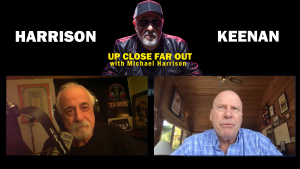 Keenan coached big time teams in the Soviet Union, Russia, Canada, China, the U.S. and more for over five decades! What does it take to be a leader in the competitive and often cutthroat world of major league professional sports? How have the generations of young athletes changed over this stretch of time? What is the state of sportsmanship in today’s culture? What is it like dealing with the media from a professional sports perspective? How is sports culture different around the world? How is gambling impacting sports? Is hockey enjoying healthy growth as both a sport and a business? These questions and more are tackled in an informative and universally interesting conversation between Harrison and Keenan. Keenan, considered one of hockey’s most controversial and intriguing figures, has just released an autobiography titled Iron Mike: My Life Behind the Bench (Randon House Canada, 2024).
 Bortnick is a successful industry veteran who most recently served as regional vice president of sales at iHeart Media in Washington, DC. Elizabeth Hamma, market president tells TALKERS, “We are fortunate to welcome Danny Bortnick as director of sales for Hubbard South Florida. With his extensive and successful track record of driving revenue growth as well as fostering strong client relationships, we are confident Danny will make a big impact on our team and our advertising partners.” Bortnick states, “I couldn’t be more excited to be joining Hubbard South Florida. I’m humbled to be representing such powerful brands, as well 2060 Digital. Looking forward to helping the Hubbard South Florida team reach new levels of success.”
 In his new role, according to the company, Bortnick will oversee sales operations for Hubbard’s South Florida stations, as well as 2060 Digital, focusing on driving revenue growth, building strong relationships with advertisers, and creating innovative solutions to meet client needs.
 “My family, Red Apple Media, and WABC Radio have supported numerous causes and organizations,” stated Catsimatidis.
 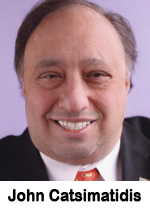 “At this time of great need for colleagues catastrophically impacted by these storms, I will match the next $25,000 in donations to help them get back on their feet. I applaud all those who have already donated any amount because every dollar helps.” “We are grateful to John and Red Apple Media for their generous patronage of our charitable mission,” said Tim McCarthy, president of the Broadcasters Foundation of America. “It is with the support of industry leaders like John that the Foundation can provide assistance to those in our industry who need it most, including in times of emergency. I ask every broadcaster to consider giving an individual or corporation donation so that we can continue our charitable mission for broadcasters in need.” Additionally, WABC is running PSAs to appeal to listeners for donations. In addition, the station has produced a version of the PSA that can be tagged by a radio station with their own call letters. Interested stations should contact WABC. To make a donation to the Broadcasters Foundation of America Hurricanes Helene and Milton Emergency Fund, please click
  language sports network FOX Deportes. It will also be available in podcast form via FOX News Audio. Ahead of the debut, FOX News Digital will launch a Spanish-language version of the FOXNews.com website beginning today which will be machine translated. Campos-Duffy comments, “I am beyond grateful for the opportunity to host ‘FOX Noticias.’ As the fastest-growing electorate, accounting for nearly 20% of the population, the Hispanic American community is thriving, and I am proud to bring a new show that breaks down the news of the day with a focus on the kitchen table issues that matter most to our community.”
 This edition explores game-changing shifts in creativity, artificial intelligence, measurement, and audience activation—highlighting key trends crucial for navigating the evolving ad environment. KEY FINDINGS: According to research compiled in the guide, emotional messaging is gaining renewed importance in audio advertising, driving an 8.2% increase in consumer action with ads that evoke positive feelings. In the creator economy, “test and see” strategies are becoming obsolete, as authentic creator partnerships are now essential to media plans. In fact, 40% of advertisers are shifting from one-off campaigns to year-long collaborations with creators, recognizing the lasting value these partnerships offer.
 As most readers of TALKERS magazine know, dedicated and alert radio stations rise to the occasion of abundant vigilance and public service in providing their communities with vital information and support during natural disasters. Such has been the case with Hurricane Helene and the same thing will take place as Hurricane Milton threatens Florida and the East Coast.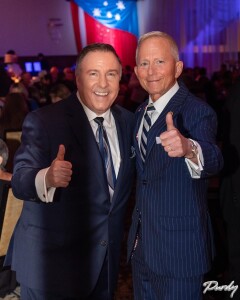

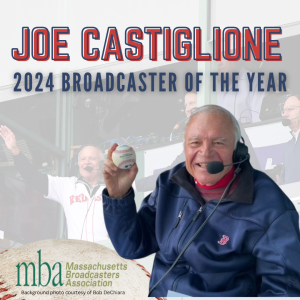 Castiglione, who announced his retirement prior to the conclusion of the 2024 Red Sox season spent 42 seasons in the Red Sox booth, making him the longest tenured radio broadcaster in Red Sox history. A native of Hamden, CT, he began his career calling Colgate University football and baseball games while earning a B.A. from the university. He would later graduate from Syracuse University’s prestigious Newhouse School with a master’s degree in Radio and Television. Castiglione’s Red Sox legacy started in 1983 when he was paired with another Red Sox legend in Ken Coleman. In his 40+ years with the Red Sox, Castiglione was the voice for millions during the lowest lows and highest highs of the franchise. He’s maybe most famous for his call at the end of the 2004 World Series which ended an 86-year World Series drought for the Sox, exclaiming “for the first time in 86 years, the Red Sox have won baseball’s world championship. Can you believe it?” The phrase would become a signature call. Joe Castiglione was inducted into the Red Sox Hall of Fame in 2014, the Massachusetts Broadcasters Hall of Fame in 2015, and was named the Baseball Hall of Fame’s Ford C. Frick Award winner, presented annually by the Hall of Fame for excellence in broadcasting, in 2024.
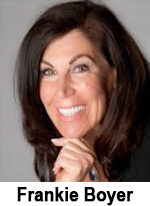 The one-hour show is live weekdays from 6:00 -7:00 pm. WGCH covers Fairfield County, CT as well as neighboring Westchester County, NY. The station serves the community with extensive local news, sports and talk programming. Boyer tells TALKERS, “My show will be fast paced, very informative, full of joy and very uplifting, for my listeners.” Boyer hosts two other syndicated shows – “Cannabis Talk A-Z” and “Frankie Boyer Radio.” For more information contact 508-878-1782 or
  He will report directly to PodcastOne’s president Kit Gray and will leverage his industry expertise to expand internal sales and publishing synergies, increase talent revenues and the company’s prominence with both media buyers and content creators.
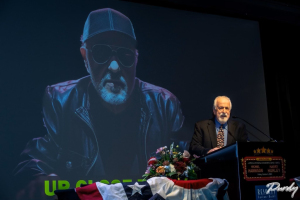
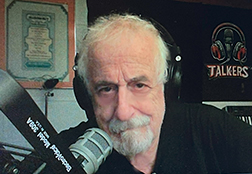 philanthropist Harry Hurley, has raised more than $1.4 million for worthy causes across New Jersey and beyond. It has become one of the most important annual civic events in the Garden State drawing 270+ guests including government officials, media representatives and community-minded business leaders. The gala will be at Resorts Casino Hotel in Atlantic City. Harrison says, “This is a huge honor and I’m looking forward to addressing this distinguished event with observations about the media’s position at the crossroads between politics, journalism and changing social norms.” Hurley tells TALKERS, “Our special event will be taking place four weeks before one of the most consequential national elections in American history… arguably, the most important election since the Civil War era. It deserves to have a keynote speaker as even-handed and eloquent as Michael Harrison.”
 featuring Brady Quinn, LaVar Arrington and Jonas Knox. The program will continue to air in the network’s 6:00 am to 9:00 am ET weekday timeslot on 380 stations nationwide. FSR and iHeartMedia executive Don Martin and Scott Shapiro say in a statement, “We’re so proud of what this trio has built with ‘Two Pros and a Cup of Joe.’ The unique combination of these dynamic personalities has created one of the most fun and entertaining sports morning shows, and we continue to hear excellent feedback from advertisers, affiliates and listeners alike. They are the perfect kickoff to our weekday lineup, and we look forward to extending our relationship for years to come.”