


When Borrowed Becomes Stolen: The Fair Use Line for Talk Hosts and Podcasters
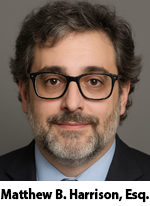
By Matthew B. Harrison
TALKERS, VP/Associate Publisher
Harrison Legal Group, Senior Partner
Goodphone Communications, Executive Producer
 Jimmy Kimmel’s first monologue back after the recent suspension had the audience laughing and gasping, and, in the hands of countless radio hosts and podcasters, replaying. Within hours, clips of his bit weren’t just being shared online. They were being chopped up, (re)framed, and (re)analyzed as if they were original show content. For listeners, that remix feels fresh. For lawyers, it is a fair use minefield.
Playing the Clip, Owning the Take
Audiences increasingly expect their favorite talkers to “play the clip,” whether it is from Kimmel, Stephen Colbert, Sid Rosenberg, or Charlamagne tha God on The Breakfast Club (a show that seems to go viral every other week), and then add their own color commentary, the kind of play-by-play that makes it feel like the home team is calling the action. That format works. It gives context, tone, and a sense of immediacy that no transcript can match. Done right, it is what transforms a broadcast from just a recap into a fulfilling cultural conversation.
But with every replay comes a risk. Fair use does not mean free use. Courts weigh factors like how much of the original work you used, whether your purpose was transformative, and whether your use cuts into the market value of the original. Playing a short excerpt of Kimmel’s joke before riffing on it? Likely fair. Running half the monologue and treating it as your A-block? That edges into trouble, both legally and from a programming perspective. Why would anyone want to hear your take if your “take” is mostly replaying someone else? That is not adding to the common zeitgeist; it is just echoing it.
The Podcaster and Broadcaster Dilemma
Radio hosts have long leaned on “newsworthiness” as a shield. Podcasters often assume the same rules apply. But here is the distinction: news clips and comedy bits are not treated equally in court. A station rebroadcasting a press conference is serving public information. A podcast re-airing Kimmel is competing directly with Kimmel’s own clips on YouTube. One informs, the other risks replacing.
And while linking to ABC or YouTube is a courtesy, just as crediting them in the video itself might be, it does not replace the traffic (and ad dollars) Kimmel’s team expects. The law does not guarantee creators compensation for commentary, but judges do consider market harm. If your listeners stop watching the original because your show already gave them the “best parts,” you have tilted the scale against yourself. John Oliver is often credited (though no one seems able to find the clip): “People are always going to say stupid things, and you’re always going to be able to make jokes about that, but it should be the last thing you add in, because it is the easiest thing.”
Whether he actually said it or not almost proves the point. Recycling someone else’s words without context is the laziest move in the book. And if you cannot find the source? That is about as meta as fair use gets.
The Takeaway
Here is the smart play: use less and say more. A 20-second clip followed by two minutes of commentary is transformative. A five-minute clip with a shrug and a chuckle is not. Audiences do not tune in to hear Kimmel again. They tune in to hear what you think about Kimmel. The moment you let someone else’s content carry your show, you lose both legal ground and creative authority.
Matthew B. Harrison is a media and intellectual property attorney who advises radio hosts, content creators, and creative entrepreneurs. He has written extensively on fair use, AI law, and the future of digital rights. Reach him at Matthew@HarrisonLegalGroup.com or read more at TALKERS.com.
 Joyce Wirthlin says, “We are excited and fortunate to welcome Rick back to iHeart to lead programming for our cluster. His proven leadership, creativity and track record of building winning stations will be invaluable for our listeners and partners in Salt Lake City.” Vaughn comments, “This is an incredible opportunity to help shape the future of iHeart Salt Lake City. iHeartMedia is committed to excellence, innovation and growth, and I’m excited to return to the iHeart family to collaborate with such a talented team, create compelling content, engage listeners across every platform, and deliver outstanding results for our advertising partners.”
 Markets broadcast operations. Salem CEO David Santrella says, “Linnae is a proven builder of teams and revenue streams. For nearly three decades she has delivered results across every part of Salem’s business, and she has the rare ability to connect vision with execution. As we move into a ‘One World’ selling environment, Linnae is exactly the leader we need to unlock new opportunities across all of our platforms and deepen our service to advertisers. Her leadership will be central to accelerating Salem’s growth.” Also, Jamie Cohen is promoted to chief digital officer, a newly created role designed to unify and oversee all digital operations across Salem Media. Cohen was most recently SVP of broadcast digital. Santrella says, “Jamie has been one of the key architects of Salem’s digital transformation. In just seven years, he took a $6 million business and scaled it to over $40 million—proof of both his vision and his execution. This new role gives him the mandate to break down silos and unify all of Salem’s digital assets under one strategy. With Jamie at the helm, Salem is positioned not just to compete in the digital marketplace, but to lead as a fully integrated media company.”
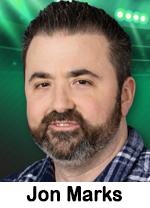 several capacities over the past 20 years but was most recently with crosstown sports talker WIP-FM co-hosting with Ike Reese. Beasley Media Group Philadelphia Paul Blake says, “Jon Marks is a proven leader and a trusted voice in Philadelphia sports. His credibility, passion, and connection with our audience will be instrumental in driving The Fanatic’s continued growth and success in the market.” Marks comments, “I’m beyond excited for this opportunity. Philadelphia is the best sports city in the country, and the fans here are as passionate as they come. To be able to talk sports with them every day in this new time slot is an honor, and I can’t wait to bring that same energy and passion to middays on The Fanatic.”
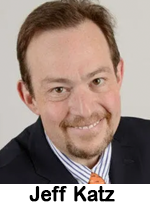 “The
“The 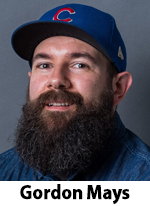 recently and brings nearly 25 years of experience into the market including recent operations and programming gigs in the Milwaukee and Rockford markets. Mays will oversee seven music brands as well as talk outlets WJOL-AM, Joliet; WKRS, Kenosha, Wisconsin and sports talk WLIP. Mays says, “It’s so exciting to be joining Connoisseur Chicagoland right now and getting to work with such a talented, passionate team that I’ve followed and admired for many years.”
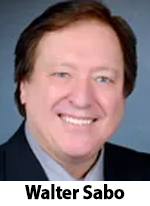 Have you noticed a profile pattern for the mass shooters and political assassins? 20-30 years old. Living at home or close.
 the popularity of mobile devices for audio listening is the most dominant in urban communities. Within that audience segment, 40% of time is spent listening to audio on a mobile device, vs. 28% of time spent listening on an AM/FM radio receiver. The mobile device also holds a strong lead in suburban communities, with 36% of time spent listening on that device compared to 30% of time on a radio receiver. However, the radio receiver is strongest in rural communities where it matches the listening time of the mobile device, each receiving 34%.
 complexities of divorce – helping people navigate every stage of the process faster, more affordably, and with far less conflict. Hello Divorce says its service “goes far beyond digitizing forms and redesigns the entire divorce experience with proprietary technology and AI to eliminate costly errors, reduce delays, and remove the bottlenecks that wreak havoc on divorce timelines.” iHeartMedia president of corporate development and ventures Joe Robinson says, “Hello Divorce offers a powerful solution for one of life’s most challenging transitions. This partnership gives them a unique opportunity to connect with people nationwide through our platforms, delivering resources and guidance that can truly make a difference.”
 our airwaves free from government influence. The First Amendment affords our stations – and all Americans – this fundamental right, and the mere perception that broadcasters acted because of undue pressure is a problem for our credibility and the trust we have built with our audiences.
 Sports” from 6:00 am to 9:00 am, “Nine2Noon” hosted by John Kuhn and Ramie Makhlouf, “The Mason Crosby Show” with Mitch Thunder Nelles from 12:00 noon to 2:00 pm, and “Wisconsin Sports Daily,” hosted Steve “Sparky” Fifer remaining in PM drive. Audacy Wisconsin SVP Jason Bjorson says, “As we celebrate the station’s 20th anniversary, we wanted to match our listeners’ passion by assembling the dream team here at ‘The Fan.’ With legendary names and two former Green Bay Packers players on our roster, we are going full-throttle. We’re excited to bring our fans the best talent in the market and give them the most entertaining sports coverage Wisconsin has to offer.”
 In the wake of Charlie Kirk’s murder, one would expect every company that owns a talk radio station, every network that syndicates conservative voices, and every corporation that employs talk radio hosts to issue a unified statement of defiance. This was not just an attack on Charlie; it was an attack on the entire industry of talk radio, on the free exchange of ideas, and on the First Amendment itself. Yet, shockingly, most of these companies have remained silent. That silence is unacceptable. At a moment like this, the industry should stand shoulder to shoulder and declare to the world: we will not be intimidated, we will not be silenced, and we will never abandon the microphone.