By Dr. Andrew Gladding, EdD
Chief Engineer
WMCA / WNYM, New York
The power of broadcast radio stems from its genesis, which is the use of audio technology and storytelling to transmit messages to large audiences. As industry professionals, we are all acquainted with the power and reach that our trade provides. However, all stories must begin with the spark of an idea. In the case of the curious collaboration between a college radio station in New York and a community radio station in South Africa, this idea started with a simple conversation.
The relationship between 88.7FM WRHU Radio Hofstra University and 89.5FM Bush Radio in Cape Town South Africa began purely as a matter of proximity. In the winter of 2018, I happened upon Bush Radio while in South Africa while on a family vacation. Meeting the passionate broadcasters at Bush Radio has resulted in a fruitful broadcast collaboration spanning six years and many exchanges of audio, information and support between our two broadcast organizations. Students at WRHU in New York, WRCT in Pittsburg and members of Bush Radio co-produce a weekly show called “The 1World Community Radio Show,” which features interviews and music from around the world. WRHU’s Ricky Hubert, WRCT’s Cody Hmelar and Bush Radio host Lydia Marwanqana connect weekly to create a truly unique program that provides a world stage for young, aspiring talent. The show has become a centerpiece of programming for both stations and an example of how stations across the globe can work together to create engaging, community focused audio content. It has also allowed staff members from both stations to develop insight into each other’s cultures and communities.

Pictured above (from l-r) are: Sturgeon Records President David Chapman, Salem NY Chief Engineer Andy Gladding, Bush Radio engineer Renato Van Schalkwyk, WRHU general manager John Mullen, Bush Radio managing director Brenda Leonard, Bush Radio host Jasnine Roberts, WCWP general manager Dan Cox and WKZE “Night Shade” host Paul Higgins at the Bush Radio Studios in Salt River, Cape Town.
In the fall of 2024, members of Bush Radio came to New York City and Washington DC to cover the presidential elections. The purpose of the trip was to find new ways to combat journalistic misinformation. The visit exposed Bush Radio staff members to American journalistic values, broadcast operational practices provided the international broadcasters with an up-front look at the US democratic process in action.
In February of this year, In the spirit of maintaining and strengthening our broadcast partnership, five members of New York radio and audio media , including myself, traveled to Cape Town to see how the Bush Radio folks used their FM reach and power to serve their community. The goals of this part of the exchange were to deepen our understanding of South African media, operations, practices and workplace culture. We went into this journey with our minds and hearts wide open, ready to see how the craft that we know and love was practiced on the other side the world.

Pictured above is Andy Gladding working with Bush Radio engineer Renato Van Schalkwyk to install Comrex hardware in the Bush Radio Air Studio.
The results of this visit were eye opening. During our visit to Cape Town, we observed several similarities between our stations in New York and our South African counterparts. The Bush Radio staff was extremely dedicated to their station and took great pride in serving their community. They used their centrally located studies as both a broadcast center and training facility, with a thriving mentorship and intern program. We also noticed that they followed almost identical practices and standards as we do in the USA, ranging from technical specifications for broadcast engineering to maintaining programmatical integrity. Even the energy and excitement among the staff in the studios and reporting from the field was comparable to any well-run US broadcast entity. This is mainly due to the fact that the folks who run Bush Radio, specifically Managing Director Brenda Leonard and Program Director Adrian Louw, execute a comprehensive and extensive training and operational workflow at the station. Bush Radio holds the proud distinction of being the first licensed community radio station in South Africa, which was achieved with great effort and sacrifice during a time when the practice of community radio was non-existent in the country. Therefore, the management is very observant and powerful of the weight that they carry and this respect is passed along to the station members.
We also noticed some stark differences. Due to the relatively young nature of the South African democracy, there appeared to be a deeper connection between station and community. Bush Radio is involved in many different aspects of Cape Town governance, culture and outreach and this is reflected in their on-air product and station ethos. We also observed that many members of the general public were familiar with the station and proudly considered themselves to be regular listeners and supporters. The station was closely intertwined within the fabric of the community, which is both wide and diverse.
We also noticed that there was an intrinsic willingness between Bush and other community stations to work together. During our visit, we had the opportunity to visit a number of stations in communities around the Western Cape region, including Zibonele FM and The Voice of the Cape. We heard the term “partnership” and “sister station” during our visit many times, which demonstrated a visible willingness between teams at different organizations to work together and collaborate. I personally believe that this positive attitude for partnership and outreach has been a driving force in the successful collaboration WRHU has enjoyed with Bush Radio.
During our visit, the New York contingent felt this energy and openness, which in turn motivated us to jump into the spirit of the occasion. I personally worked with the Bush station engineering team on some facility maintenance and technical improvements, while other members of the crew lent their wisdom and knowledge to the venture. Laura Schaffer, the General Manager of Salem Media of New York had sent us down with a “broadcasters care package,” comprised of surplus equipment and spare parts from New York. The staff at Bush Radio was happy to receive the gear and began using it almost immediately.
The exchange of knowledge was not limited to technical engineering. WRHU’s John Mullen and Dan Cox ran a workshop on sales, marketing and workflow, while Sturgeon Records owner and engineer Dave Chapman taught the station members multi-track production. WKZE’s Paul Higgins, a world music producer, worked with the station’s air staff on interviewing techniques and even conducted an interview with famed producer Steve Lillywhite on 89.5FM, which was re-broadcast to the USA live. The experience of giving and sharing knowledge was both exciting and rewarding.
However, what we received in return was even more fulfilling. Even though we were strangers from another part of the world, we felt strangely at home at 89.5FM. The folks at Bush Radio were excited to show us their station, city and culture and made sure that we enjoyed a completely immersive experience. We saw all sides of the area, from the sparkling beaches and stunning views of the harbor from the top of Table Mountain to areas that were struggling and people that were fighting to survive. Throughout all of our travels, we noticed one constant: Radio was an integral part of all of the communities that we visited. Part of this can be attributed to a lack of broadband access across the region, but I personally believe a larger factor was based around the spirit of the South African people trusting in and embracing their local radio stations.
Considering this current period of uncertainty and transition in the US, it was refreshing to experience radio being used as a force for community connectivity, outreach and positivity in a far-away part of the world. Our team returned from the trip, refreshed with new ideas on how we could use our experience to grow and improve our own stations. One of these action items has gone into effect almost immediately. Since our return, the 1World Community Show has grown into an open-source network, which includes new domestic and international partners. Stations on the network now include WRCT-Pittsburgh, WCWP-LIU Post, WKZE-Red Hook, KCSS-UC Stanislaus, WVCR-Siena College and Kinvara Community Radio in Ireland, in addition to WRHU and Bush, all eager to share audio content and ideas. I personally hope to see the connection between all of our stations, along with this beautiful collaborative relationship, grow larger and endure way into the future. As one Bush Radio station member told me, “the color of our skin may be different, we may pray to other gods and we are from separate countries and cultures. However, our love for radio is above all that, which makes us all the same.” Considering the diversity of storytelling that we each do with the power of broadcasting, it’s nice to know that our passion for the craft and industry can unite us and break down barriers. I look forward to our next adventure with the Bush Radio staff. If anyone reading this would like to get involved in radio outreach and establish a similar program or help expand technical support for our new “sister stations,” please feel free to reach out. Your contributions will not be unappreciated. You can find out more about the 1World Community Radio Network at www.1worldcommunityradio.com
Dr. Andrew Gladding his chief engineer at Salem Media Group’s WMCA and WNYM in New York. He can be emailed at andrew.gladding@salemcommunications.com
Share this with your network


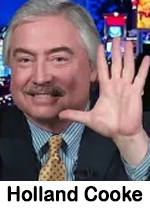
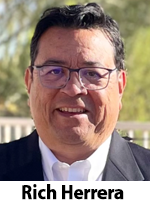 engage listeners in meaningful and entertaining conversation make him a valuable addition to the WRVA team. We’re excited to welcome Rich and continue delivering the news that matters most to our community.” Herrera comments, “I am thrilled to join the WRVA team, a legendary station with a great lineup of hosts and shows. After meeting with Bennett Zier and Zach McHugh and getting the chance to host Richmond’s morning news, I fell in love with the station. My family is excited to make Richmond our home. I want to thank Chris Oliviero and Jeff Sottolano for their support and mentorship, as well as Drew Anderssen, our format vice president, who encouraged me a year ago to transition from sports talk to general news.”
 fires on the historic Black middle-class community of Altadena, California. The company says, “This groundbreaking series will explore the significance of Altadena, its legacy and the personal stories of survivors and community members who lived through one of the region’s most destructive natural disasters.” The series is hosted by Black Information Network journalist Mimi Brown.
 There has never been more news. And news has never been more quotable. It costs two-plus cents to make a penny.
 addition, net income (loss) improved $26.9 million year-over-year in the fourth quarter, and $32.1 million in the year, in large part due to a reduction in non-cash impairment charges… Our Broadcast Advertising net revenue declined in-line with our expectations for 2024 (mid-single digit ex-political decline) which aligns with our view that broadcast is a mature cash cow business that will continue to face headwinds going forward, as businesses will continue to share shift from traditional advertising to digital advertising. Thankfully, we are often the beneficiary in that case, as we frequently have the most comprehensive set of digital advertising solutions available in our markets. Digital is and will continue to be Townsquare’s growth engine, and we believe Townsquare’s ability to drive profitable, sustainable digital growth is a key differentiator for our company, and consistent with our strategy of being a Digital First Local Media Company.”
 is a mistake. Some of the findings include: 1) In a typical day, ad-supported digital audio reaches less than a third of America while AM/FM radio reaches two-thirds of America. Combined, ad-supported digital audio and AM/FM radio reach 74% of the U.S. daily; 2) Between ad-supported Spotify and AM/FM radio, most people only listen to AM/FM radio; 3) Between ad-supported Pandora and AM/FM radio, most people only listen to AM/FM radio; 4) The U.S. ad-supported audio clock: Podcasts and AM/FM radio represent nearly 90% of tuning minutes; 5) With a towering in-car share of 86%, AM/FM radio is the primary way to reach consumers on the path to purchase; The proportion of AM/FM radio in-car listening has surged, returning to pre-pandemic norms.
  Advisory Board. The NYFestivals says Melén’s addition to the board will “further enhance the NYF Radio Awards, strengthening its commitment to celebrating innovation and excellence in the dynamic realm of audio storytelling.” Radio Awards EVP and executive director Rose Anderson adds, “Charlotte Melén’s pioneering work in immersive audio storytelling, especially the use of binaural and ambisonic microphones on location, has redefined the possibilities of the medium. Her team combines the highest production standards with a filmic sensibility to the delight of creators, brands, and listeners.”
 includes sports talk KBBG-AM “The Champ” and four music brands. He most recently served with Walnut Media in Omaha. As director of sales. Cumulus Media president of operations Bob Walker says, “We are excited to welcome Adam to Cumulus Des Moines as this is a homecoming for him, having grown up in Des Moines and being a fan of our brands. Adam is an accomplished leader that is passionate about connecting local clients to the power of radio and the digital products we offer to help them grow their business.”
 families during life’s most challenging moments. Broadcasters Foundation of America president Tim McCarthy says, “For over 70 years, the Broadcasters Foundation has provided critical aid—ranging from medical care to emergency financial assistance—for broadcasters facing hard times. The steadfast generosity of Katz Media Group makes it possible for us to continue our mission, and I can’t thank the Katz team enough for their ongoing commitment.” Katz Media Group has been selected to receive the 2025 Philip J. Lombardo Spirit Award, which will be presented at the BFOA Golden Mic Gala on March 10. This prestigious honor recognizes Katz’s dedication to supporting the Broadcasters Foundation of America and its mission of helping broadcasters in need.
 were three or four minutes. Under the old five-minute listening qualifier rule, none of this tuning would have received listening credit. Effective with the January 2025 PPM survey, Nielsen is now crediting tuning occasions that are three minutes or greater. What are the results so far? First, drive times and weekends experience the greatest growth. Comparing January 2024 to January 2025 for persons 12+ and 25-54 reveals double-digit growth for all dayparts. Weekends and drives times have the greatest increases. Second, AM/FM radio’s listening profile now skews younger: Every major buying demographic has a higher composition of listening. Persons 65+ is the only demographic where AM/FM radio’s audience composition is reduced. Persons 25-54, AM/FM radio’s most popular buying demographic, experiences the largest increase in audience composition. Persons 18-49 have the next largest growth. And third, format shares remain stable. Versus October 2024, PPM January 2025 format shares are very consistent. An uptick in news/talk AQH composition is most likely more due to a heavier news cycle (major weather stories and a new president) than a PPM methodology enhancement. In local markets, there is more share variation.
  radio stations) Q4 2024 revenue was $684 million, flat compared to Q4 of 2023. The company’s Digital Audio Group Q4 2024 revenue was $339 million, an increase of 7%. Withing the Digital Audio Group, podcast revenue was $140 million, an increase of 6%. For the fourth quarter of 2024, the company reports net income of $31.9
  million. For the full year of 2024, it reports a net loss of $1 billion. iHeartMedia chairman and CEO Bob Pittman states, “Our fourth quarter Adjusted EBITDA of $246 million was up 18.2% vs. prior year, our highest percentage increase in almost three years, and our consolidated revenues were up 4.8% compared to the prior year, demonstrating the inherent operating leverage in this business. We are pleased that we successfully completed the comprehensive exchange transaction discussed last quarter – extending the majority of our debt maturities by three years; keeping our consolidated annual cash interest expense essentially flat; and providing overall debt reduction. This provides the company with the flexibility to remain focused on creating shareholder value in 2025 and beyond.”
 impairment charge of $224.5 million compared to a pre-tax non-cash impairment of $65.3 million in 2023, both primarily reflecting FCC-related charges.” Cumulus president and CEO Mary G. Berner states, “Since the pandemic’s onset, the radio industry has experienced tough economic and secular headwinds. In the face of those, we outperformed our peers through the end of 2023 on key metrics including cost takeouts, EBITDA
  margin recovery, free cash flow generation, net leverage, and liquidity. 2024 brought additional challenges, including accelerated national headwinds as well as an industry-wide slowdown in local radio advertising. In response, we doubled down on investing in growth areas, particularly in our digital marketing services business, which is pacing up 30% in Q1. Additionally, we continued evolving our broadcast go-to-market strategies, including with new offerings that are successfully attracting large new broadcast clients, and we drove additional cost efficiencies with 2024 actions that will result in $43 million of annualized fixed cost savings, of which $15 million benefited 2024 with the balance in 2025. Though the industry environment remains challenging for now, our 2024 refinancing efforts provided us with the time needed to both execute our day-to-day blocking and tackling and, in parallel, continue to reimagine the ways in which we can get the most out of our key assets to create new revenue streams and build additional long-term value.”
 says, “Governor Newsom is going solo and diving into the real issues that matter – government, politics, affordability, quality of life, and the cultural moments shaping our world. No spin, no script, just real talk about what impacts listeners most.”
 tapings and discussions aimed at aspiring podcasters in the Black community. He says, “We’re excited to return to Atlanta, building on the incredible momentum of the podcast industry and the growing impact of Black creators in the space. As the influence of Black voices continues to shape culture and drive conversations, The Black Effect remains committed to powerful storytelling, meaningful brand collaborations and unforgettable live experiences. This year, we’re celebrating not just where we’ve been – we’re embracing the limitless future of Black podcasting and the influence it holds.”
 a state-of-the-art podcast studio in Qatar, accompanied by a lineup of original shows and the introduction of some of the world’s most popular podcasts to Arabic-listening audiences. It will also execute specialized masterclasses to nurture local talent and host global industry events, including Web Summit gatherings, positioning Qatar as a meeting point for the world’s top podcasting voices. iHeartMedia CEO Bob Pittman comments, “Podcasting has exploded in the US and is now a mass-reach medium. And iHeartMedia, with our expansive network as the #1 podcaster in America, is in a unique position to grow strong listenership around the globe. iHeartPodcasts features a massive catalog of original shows spanning every category and this new partnership creates an opportunity to work with a long roster of incredible creators and distribute even more content to new audiences in the Middle East.”