

Emergency Radio

By Michael Harrison
Publisher
TALKERS
 Let’s look into the crystal ball. Humor me if you will.
The year is 2030 and someone invented a new radio brand that was recognized by the end of the 2020s as the most innovative AM format to come down the pike since “news/talk” and “all sports” rose to prominence some three decades earlier (although the need for it was plainly obvious for years). It is even credited with “saving the AM band” like Rush Limbaugh did back in the 90s.
Now, at the start of the 21st century’s third decade, this approach to on-air broadcasting exists across America on approximately 20 major and medium market AM outlets and is tagged by a variety of brand names including “Emergency Radio,” “Emergency Room,” “First Responder AM,” and more. (One outlet has been tagged “The Flashlight 570” and another is being called “The Hero 710.”) How about “Crisis 1050?”
It is a commercial format with an extraordinarily wide array of potential advertisers, and it is an “image buy” that defies being dependent on ratings. What image-conscious company wouldn’t want the prestige of sponsoring such a positive media force?
Of course, it streams on the internet and has a syndication component – but it wears its “live and local” dimension and its AM dial frequency like a double-edged sword of honor because by 2030 it has become painfully obvious that the electric grid as provided by digital technology is a fragile structure indeed.
We hold this TRUTH to be self-evident
Emergency Radio is based on the self-evident truth that it is very challenging to be a human being in an environment in which the world is constantly bombarding each and every individual with disasters. Please pardon my messy metaphor – but hurricanes are merely the tip of the iceberg.
The human race is plagued by non-stop natural disasters, man-made disasters, medical disasters, financial disasters, emotional disasters, technical disasters, ethics disasters, and a tsunami of anxiety!
Emergency Radio provides real time help in conveying accurate live and local information to the immediate market during fires, floods, earthquakes, pandemics, accidents, and random acts of violence.
Emergency Radio also provides information about disasters happening around the nation and world. The volcano in a far-away country. The kid trapped in a well in the next state.
But it doesn’t stop there. “Slow news days” are filled with a whole array of revivable radio syndication initiatives that focus on feelings, anxiety, relationships, money, and a slew of real-life problems that impact each and every one of us on a seemingly constant basis. Emergency Radio simply puts them under a different generic umbrella. The world around us, near and far, is one big potential drama waiting to be tapped on the great stage known as the theater of the mind.
Emergency Radio unabashedly recognizes that life’s a bitch and that people need help – including honest inspiration.
BACK TO THE PRESENT: The only problem standing in the way of this prophesy being self-fulfilled is that it will take a bit of a budget still not considered feasible by industry standards and a whole lot of work.
Michael Harrison is the founder of TALKERS. He can be emailed at michael@talkers.com.
 Music on the weekend provides multiple positive strategic weapons for talk stations. From launch, “New Jersey 101.5” (1,000,000+ cumer); WTKS-FM “Real Radio,” Orlando; WABC, New York; WPHT, Philadelphia; and other major market winners air music all weekend or on dayparted shows.
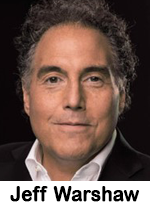 business as CEO upon successful acquisition.” While both parties were doing due diligence on the CMG deal, Warshaw learned that an Audacy majority stake holder was willing to sell its stake in the company. Warshaw says he steered SFM and Del Nin to the deal that made SFM a majority stake holder of the new Audacy in early 2024. Warshaw alleges he was promised he’d be the next CEO of Audacy or that he would get 5% of SFM’s profits from the Audacy acquisition. After that though, Warshaw says Del Nin balked and denied there was ever an agreement, calling any such claims “fabricated.” Now, Soros and Del Nin filed both a Motion to Dismiss saying the “Court lacks personal jurisdiction over Mr. Del Nin under Connecticut’s long-arm statute”; and a Motion to Revise that asks Warshaw to revise his complaint with specific details about his contracts – written or verbal – that he claims were breached, and more. In the Motion to Revise, Soros and Del Nin imply that Warshaw doesn’t have the contractual proof necessary to support his claim.

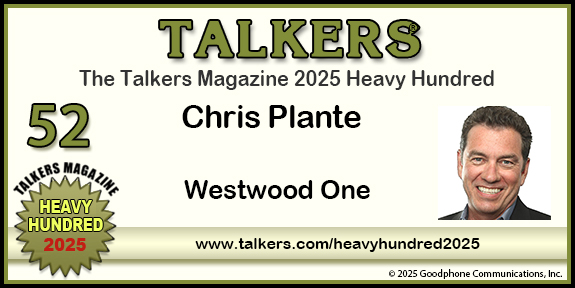

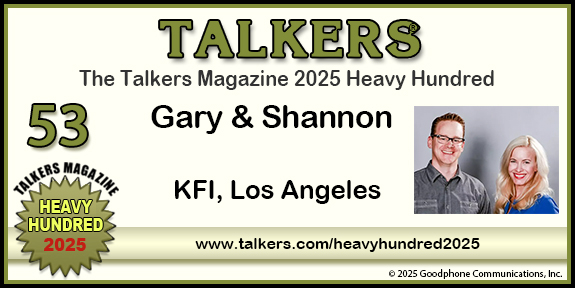
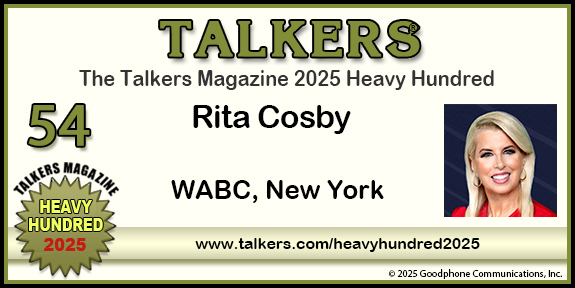

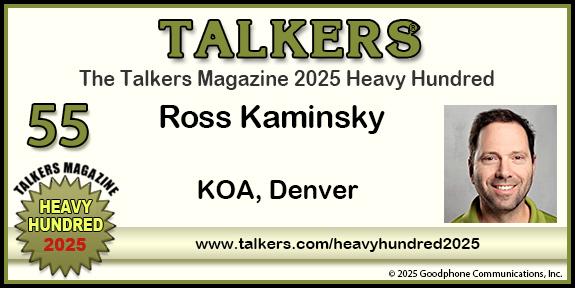
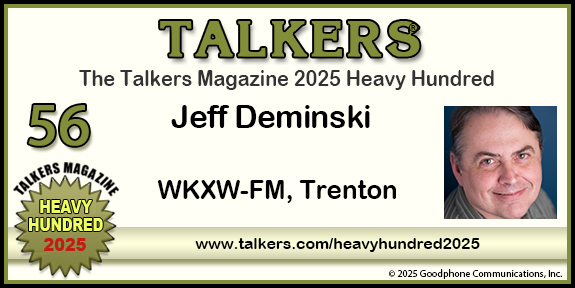

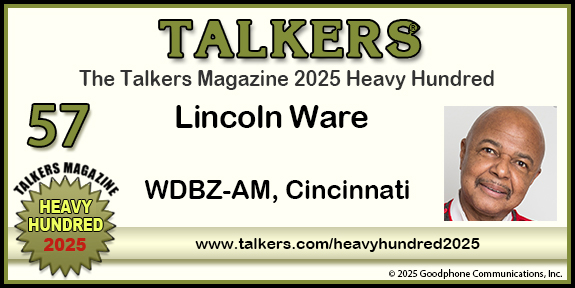
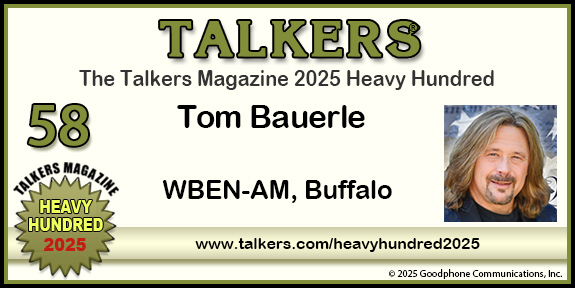
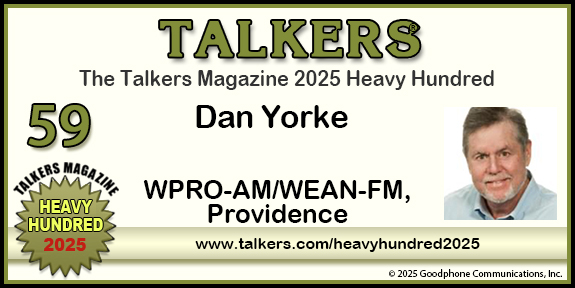




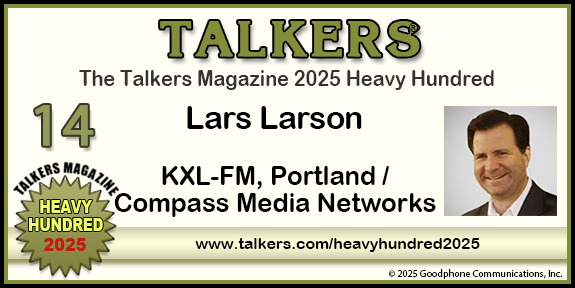

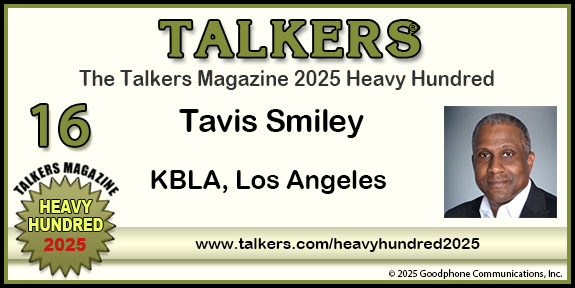
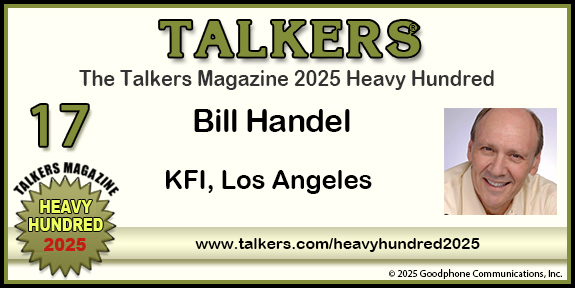
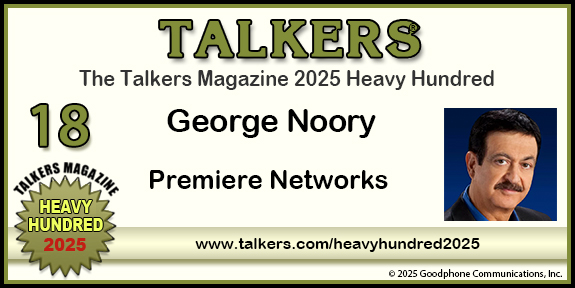


 made last year’s mingling of student and professional broadcasters such a resounding success. The dates are set for Friday, February 20 and Saturday, February 21. TALKERS founder Michael Harrison states, “There are exciting things happening at the radio stations and communication departments of high school, college, and university campuses across America. These institutions and creative outposts embody a spirit emanating from its practitioners as well as its audiences that bode well for the future of general radio, talk media and digital communications. This tremendous source of talent, ideas and energy has been burgeoning right under the noses of our professional industry for years. It’s time to harness that obvious synergy at this pivotal juncture.” More details including agenda, registration, hotel and sponsorship information will be posted in TALKERS in the coming weeks. Save the dates!
 assistants, televisions and gaming consoles. iHeartMedia president of business development and strategic partnerships Michael Biondo says, “This is an exciting day for our industry as the addition of Audacy’s stations to iHeartRadio maximizes
  radio’s presence across the country as the most listened to and trusted medium for audiences and consumers. This move gives our listeners even more opportunities to connect with the stations and content most relevant to them, aligning with our mission to always meet our audiences where they are and enhance their experience.” Audacy chief business officer Chris Oliviero states, “We believe in the power of being everywhere, and this partnership is a meaningful step in our strategy to ensure our iconic stations, talent and programming are available wherever and however audio is consumed.”
  solutions executive Michael Katz writes that, according to Scarborough consumer purchase data, consumers were asked to “select auto dealerships where you or other household members might shop if you were planning to buy or lease a new or used vehicle (including in-store and online shopping)” and 36% were unable to name an auto dealer. Katz adds that one out five auto intenders (21%), those who will lease or buy a new or used vehicle in the next year, cannot name one auto dealer. He says, “Auto dealers need ads that teach people who they are and build their brands.”
 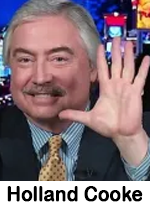 With so many of us taking vacation time soon, guest hosts are often local somebodies who are not career broadcasters and don’t share our second-nature performance routines. For their benefit, these tips, based on my experience on both sides of the mic:
 and outcomes that matter for its partners.” Audacy chief business officer Chris Oliviero says, “Our growing digital portfolio will benefit from this new organizational structure, setting Audacy up perfectly for further success. With Michael at the helm, we will lean into his expertise, experience and creativity to further energize our digital sales, unlocking new opportunities and creating better workflows and results for our local and national teams. We’re excited about what this means for our client partners and colleagues.” Biemolt most recently served as executive vice president at Audacy where he was responsible for leading digital transformation efforts and helping grow national sales capabilities.
 When Georgia-based nationally syndicated radio personality, and Second Amendment advocate Mark Walters (longtime host of “Armed American Radio”) learned that ChatGPT had falsely claimed he was involved in a criminal embezzlement scheme, he did what few in the media world have dared to do. Walters stood up when others were silent, and took on an incredibly powerful tech company, one of the biggest in the world, in a court of law.
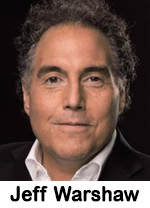 Cox Radio, with Del Nin agreeing that Warshaw would manage the business as CEO upon successful acquisition.” While both parties were doing due diligence on the CMG deal, Warshaw learned that an Audacy majority stake holder was willing to sell its stake in the company. Warshaw says he steered SFM and Del Nin to the deal that made SFM a majority stake holder of the new Audacy in early 2024. Warshaw alleges he was promised he’d be the next CEO of Audacy or that he would get 5% of SFM’s profits from the Audacy acquisition. After that though, Warshaw says Del Nin balked and denied there was ever an agreement, calling any such claims “fabricated.” Warshaw is seeking compensatory and punitive damages and asking that the court award specific performance of their agreement.
 meteorologist. Froney most recently served with WLEX-TV, Lexington, Kentucky. She comments, “I’m looking forward to working with the talented group of meteorologists at FOX Weather. I can’t wait to continue exploring my fascination with meteorology and work with some of the best in the industry.”
 In a ruling that should catch the attention of every talk host and media creator dabbling in AI, a Georgia court has dismissed “Armed American Radio” syndicated host Mark Walters’ defamation lawsuit against OpenAI. The case revolved around a disturbing but increasingly common glitch: a chatbot “hallucinating” canonically false but believable information.
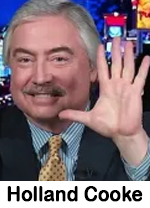 TALKERS publisher Michael Harrison introduced the term in the 1990s, inviting us to think-beyond the real-time audio we were sending up those towers. What he described seemed conceptual, even futuristic, back then, when we were still logging-onto AOL via dial-up (screech).
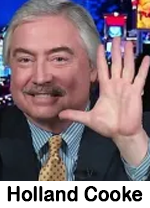 Music radio’s competitors were vinyl, then tape, then CDs – before smartphone streaming and satellite radio offered more portability and variety. And before consolidation, broadcasters were under less of the revenue pressure that now commercializes many stations beyond listeners’ tolerance.
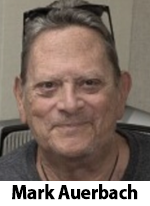 “ArtsBeat,” “Athenaeum Spotlight,” and “On The Mark” for WCPC, Channel 15 and WSKB-FM 89.5, both in Westfield, MA. He was a regular contributor to Berkshire Onstage and a member of the Berkshire Theatre Critics Association. His weekly column “Arts Beat” appeared in The Westfield News. In his youth, Auerbach studied theater at American University and the Yale School of Drama. During his multimedia career his impact was felt nationwide, and he was an indefatigable fundraiser for public broadcasting. As a publicist, he was a devoted supporter of the Springfield Symphony Orchestra and numerous other not-for-profit artistic organizations. TALKERS publisher and local Western Mass resident Michael Harrison states, “I am proud to have been able to call Mark Auerbach a friend for the past 39 years, during which time I have come to respect and admire him as one of the finest media practitioners with whom I have had the pleasure of working. He was a champion of the arts and all that celebrates the humanities in our modern multimedia environment. He was a local giant on a multitude of levels and leaves an irreplaceable void in this part of America’s grassroots media community.” Auerbach requested no funeral services but said if people wish to do something in his memory they can make a gift to either Springfield Chamber Players MOSSO) (
 communicate directly with the Company’s management and directors regarding our views and concerns.” Gate City owns an almost 14% stake in Saga. Melby expresses Gate City’s concerns about Saga, saying, “Gate City’s decision to nominate directors was based on our belief that Saga was determined to pursue its Digital Transformation regardless of the negative impact the transformation could have on Saga’s profitability, cash flow, and share price. Our determination was made following careful analysis and nearly nine months of conversations with the Company’s senior leadership and Board. We repeatedly expressed our concerns
  that Saga lacked the expertise, and the competitive advantages required to succeed in the low-margin and highly competitive digital advertising space. The pursuit of the Digital Transformation would also divert time, attention, and resources away from the Saga’s core broadcast business, where Saga has competitive advantages and earns high incremental margins. Saga also failed to provide investors with any meaningful financial targets or metrics associated with the Digital Transformation including expectations for incremental revenues, costs, margins, and return on investment. Our recommendation that Saga partner with a digitally-savvy company with the capability and experience to execute Saga’s digital strategy without the added costs and risks associated with the transformation was also dismissed.” Melby’s criticism of Saga Communications’ business strategy continues, “In 2024, the Company’s station operating income fell 23.1% year-over-year to $21.1 million, the Company’s operating income fell 79% year-over-year to $2.4 million, and the Company’s operating profit margin fell to 2.1% in 2024 from 10.2% in 2023, a decline of over 800 bps. To make matters worse, this deterioration in financial results occurred during a presidential election year, when Saga should benefit from elevated levels of political spending. Our concern that the pursuit of the Digital Transformation strategy could detract from the Company’s highly profitable broadcast business also appears prescient. On Saga’s Q4 2024 earnings call, the Company noted that it generated $3.3 million in political revenue in 2024. Saga’s 2024 political advertising revenue declined 52% from the $6.9 million generated in 2020 (the last presidential election year) and also fell from the $3.6 million generated in the 2022 midterm election year. The Company’s two largest stations by revenue are located in the battleground states of Ohio and Wisconsin, calling into question the Company’s explanation that Saga’s stations were not in the correct markets. In addition to posting poor financial results, on March 18, 2025, Saga issued a financial filing stating that the Company would be unable to file its 10-K annual report in a timely fashion. This filing further highlights the potential challenges faced by the Company in executing the Digital Transformation.”
  include Chris Oliviero rising from market president for New York to chief business officer; Bob Philips shifting from president of networks and multi-market sales to chief revenue officer; and deputy general counsel Mike Dash rising to EVP and general counsel. Audacy chairman and lead media investor in Soros Fund Management Michael Del Nin says, “On behalf of the Audacy board, we are delighted that Kelli Turner has agreed to take on the permanent president and CEO role and lead Audacy through its next phase of reinvention and growth. She is an exceptional media executive who, along with Chris Oliviero and the rest of the Audacy team, will ensure we continue to invest in high-quality content to engage our audiences and provide best-in-class solutions to our partners.”
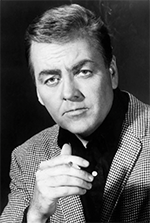 (pictured here) that aired on the program yesterday (3/13). TALKERS publisher Michael Harrison was among those interviewed for the eight-minute segment called Radio Diaries. Pyne began his career as a disc jockey but after injecting political commentary into his show was encouraged to do more talking and that eventually evolved into the Joe Pyne radio show that the NBC Radio Network put into syndication in 1966. Pyne enjoyed bringing controversial guests – including “hippies, women’s libbers, Scientologists, swingers, a snake charmer, members of the Ku Klux Klan and the John Birch Society.” He then segued to television in Los Angeles. Harrison is quoted in the segment saying, “There were a lot of people that didn’t like Pyne, but they watched him anyway because they thought it was — amusing? Entertaining? Sensational? Different? You know, not boring.” Photo: Everett Collection
