Industry News

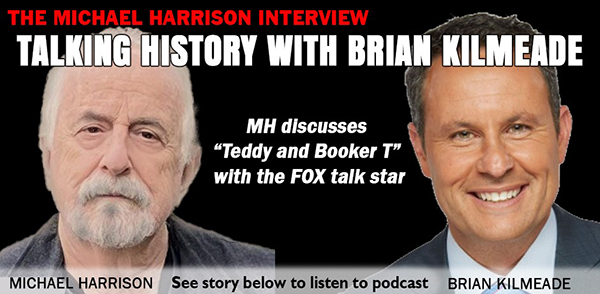
Brian Kilmeade is This Week’s Guest on Harrison Podcast

FOX News Radio and FOX News Channel talk media star Brian Kilmeade is this week’s guest on the award-winning PodcastOne series, “The Michael Harrison Interview.”  Kilmeade, ranked number three on the TALKERS Heavy Hundred, is seen every morning as one of three co-hosts on the popular FOX News Channel TV show “FOX & Friends” and heard on numerous stations across the country hosting his own daily midday program on FOX News Radio…among a number of other FOX projects and programs including the weekend, “One Nation with Brian Kilmeade.” He is the author of eight books – two about sports and he’s just published his sixth about key figures and stories in American history. Subscribing to the tried-and-true adage, “Those who do not learn history are doomed to repeat it,” Kilmeade brings new insights into the lives, times and impact of icons such as George WashingtonThomas JeffersonAndrew JacksonSam HoustonAbraham Lincoln, and Frederick Douglass. His latest book is titled, Teddy and Booker T: How Two American Icons Blazed A Path For Racial Equality (Sentinel, 2023) referring to the relationship between Theodore Roosevelt and Booker T. Washington and its impact on race relations in America. Listen to the podcast in its entirety here.

Industry Views

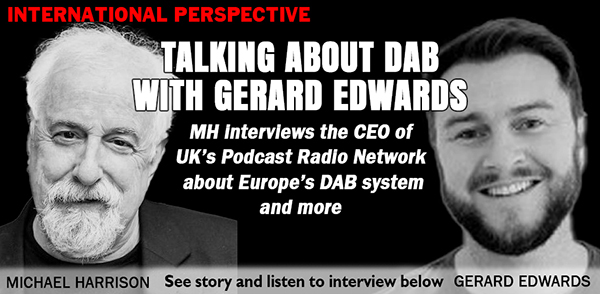
UK Perspective: Shedding Light on DAB and International Radio with Podcast Radio’s Gerard Edwards

TALKERS founder Michael Harrison speaks with Gerard Edwards – the founder and CEO of Podcast Radio (podcastradionetwork.com) based in London, UK. Podcast Radio has shown tremendous growth since its launch less than five years ago and is heard worldwide with a menu of podcasts online as well as on air in the UK via DAB radio stations.  The company recently expanded its footprint into North America as a radio program content supplier. Harrison and Edwards take a deep dive into the state of DAB as a 21st century radio broadcast technology in addition to discussing a big picture view of the state of radio in general. Harrison describes Edwards as one of world radio’s rising young visionaries. Listen to the uninterrupted interview in its entirety here.

Industry News

TALKERS News Notes

Talkers Books, the book publishing arm of TALKERS, celebrates the first anniversary of the release of one of its most successful titles, From Immigrant to Public Intellectual: An American Story (Talkersim Books, 2022) by Dr. Murray Sabrin. The book has been an Amazon bestseller and a popular vehicle sparking conversations on political news/talk shows across America. Its author, Murray Sabrin, Ph.D. is emeritus professor of finance, Ramapo College of NJ. Dr. Sabrin – a prolific author – is considered a “public intellectual” for writing essays about the economy in scholarly and popular publications as well as being a prolific guest and “go-to” resource on hundreds of radio and TV talk shows and podcasts. According to publisher Michael Harrison, who wrote the book’s provocative foreword, “From Immigrant to Public Intellectual is a truly American story about an immigrant child’s rise from humble beginnings to forge a stellar career as an educator, author, candidate, and media influencer. Murray Sabrin explains libertarianism in plain language using his own life story set against a half-century of changing times. Talk show hosts have been tapping into this articulate scholar’s knowledge and views for more than three decades since his impressive third-party showing as the Libertarian candidate for Governor of New Jersey in 1997.” To learn more about Dr. Murray Sabrin please visit murraysabrin.com and murraysabrin.substack.com.

SiriusXM’s Megyn Kelly will host a special live edition of her program on December 6 at 10:15 pm ET immediately following the “NewsNation” Republican Primary Debate. SiriusXM’s Triumph channel will also carry the debate live.

New York-based software firm Aiir Inc announces the addition of five news staffers. They include Paul Carlin and Phil Ray who join the customer support team in the UK. Phil Hannon joins Aiir’s team in North America, as does Chase Daniels, who has been serving as Bold Gold Media’s director of programming. Additionally, Alex Watson assumes the newly created position of customer experience specialist.

Edison Research’s Top 10 Findings of 2023 will be unveiled in a 30-minute webinar on December 13 at 2:00 pm ET. Edison says the list-worthy findings on audio, podcasts, radio, exit polls and more from its custom research and syndicated datasets will be presented by many of the researchers who worked on the studies.

Industry News

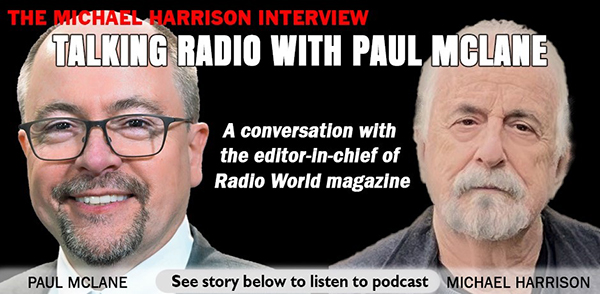
Paul McLane is This Week’s Guest on Harrison Podcast

Noted radio industry journalist Paul McLane is this week’s guest on the award-winning PodcastOne series, “The Michael Harrison Interview.” McLane is editor in chief of the worldwide broadcasting trade publication Radio World, which he joined in 1996. In anticipation of World Radio Day 2024 coming up on February 13, Harrison and McLane discuss the past and present of radio from a global perspective and speculate on the iconic platform’s future integrating into the rapidly changing paradigm of 21st century media while maintaining its unique identity. Listen to the podcast in its entirety here.

Industry News

WTVN, Columbus Unveils New Morning Program

iHeartMedia’s Columbus news/talk WTVN-AM launches a new 5:00 am to 9:00 am show called “Columbus’ Morning News” hosted by station program director Mike Elliott. Contributors to the program include sports director Matt McCoy, news reporter Scott Jennings, traffic reporter Johnnyim Hill, and producer Michael Campana. The station says, “Thirty-year market veteran, Elliott, who started at WTVN in 1999 as the producer for Columbus radio legend Bob Conners, will continue to serve as program director for 610 WTVN. ‘Columbus’ Morning News’ will also feature timely guests and newsmakers to wake up information-hungry listeners with the local and national news they need to start each day in Ohio’s Capital City. Elliott adds, “I’ve done everything on WTVN except host my own show, and now I get that chance. I’m grateful to be working with the most talented team in the business every morning to bring the news to the best audience out there!”

Industry News

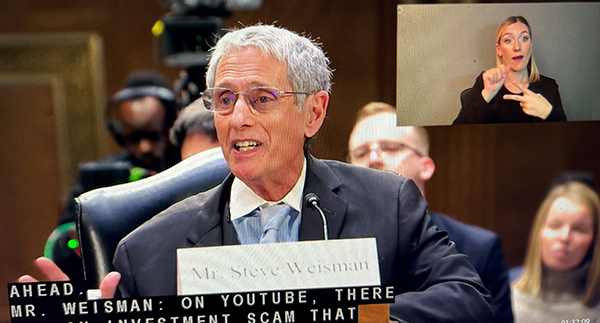
TALKERS Legal Editor Steve Weisman Testifies Before Senate on Scamming

im

Steven J.J. Weisman, Esq., who has served as the legal editor of TALKERS magazine since the early 1990s, testified yesterday (11/16) before the U.S. Senate Special Committee on Aging about the dangerous proliferation of scams being targeted to America’s senior population.  Weisman, a law professor at Bentley University in Boston and the founder of the popular website Scamicide is a nationally renowned expert on scams and cybercrime. In addition to his prepared statement, Weisman was questioned by US Senators Bob Casey (D-PA), Elizabeth Warren (D-MA) and Mark Kelly(D-AZ). You can see Weisman’s testimony here. Steve Weisman is also this week’s guest on the Michael Harrison Interview podcast you can listen to here. TALKERS publisher, Harrison states, “We are fortunate to have a legal mind as prominent and respected as Steve Weisman’s on our team of communication experts.”

Industry Views

SABO SEZ: Seek New Story Sources and Surprise Your Listeners

By Walter Sabo
Consultant, Sabo Media Implementers
A.K.A. Walter Sterling
Radio Host, “Sterling On Sunday”
Talk Media Network

imEarlier this week, Michael Harrison published his top 10 list of suggestions for being a successful talker. Item number three really caught my eye:
“Avoid worn out talking points. Be original. Always bring something new to the table. Otherwise you DESERVE to be replaced by AI.”

 When consulting client stations, the PD and I will take the on-air team through a pragmatic brainstorm session to discover completely unused source material.

First the material should be intriguing to you and appealing to your listener (singular.) New sources mean surprises and the fastest and most economical method of generating word of mouth, phone calls and cume is to present surprises all day.

1. Close to home. Pay foreground attention to incidents at home. Your home. Events that you may view as mundane could bond you with your listener. Consider that water in the basement, check engine light, parent/teacher conference, bad bank behavior, in-law interference. If any of those experiences has happened to you, you honestly know that they are a bigger deal than speeches in Congress.

2. Search the names of locations that you never discuss. Those searches have revealed to me and my listener that the number one fear in Siberia is the vast forest fires and that as the permafrost melts, it could expose million-year-old deadly viruses. One “Siberia news” search. Try this, search “Keith Fons North Pole Alaska” You will discover a bizarre Christmas story.

3. Local morning TV shows have unique fun stories that you don’t see because you’re listening to the radio. Go to their websites and you will see all of their topics, with audio, dated. 

Take a different approach to proven topics. A trait of successful hosts is that they discuss common topics but take a very different tact. Some examples: When TV legend Ann Bishop of WPLG Miami died, fellow broadcaster Neil Rogers mourned Bishop by saying, “She did nothing for me, sir.”

On crime in Cleveland, the late Mike Trivisonno on WTAM declared, “the best thing that could happen is for the Mafia to come back to Cleveland.”

Howard Stern surprises you every time he opens his mouth. It’s the fresh topics combined with surprising POV=Star. 

Walter Sabo has an outstanding track record advising media companies wishing to increase their share of revenue. His weekly syndicated show Sterling On Sunday aims to provide three hours of completely unique topics.  Contact him at walter@sabomedia.com or 646.678.1110

Industry Views

Ten Things You Need to Know to Be a Successful Talker (on or off the air)

By Michael Harrison
Publisher
TALKERS

im

10. Have a flight plan before taking off on a monologue.  Know where and when you intend to land the plane.  This is true of any point you’re trying to spontaneously make in the course of a conversation. There’s nothing worse than a talker bloviating in search of a point.

9. Know what you’re talking about.  Don’t just go with half-baked information for fear of being late to the party or are desperate to fill time.  You can’t be an effective talker if you are not an equally effective listener. Also be careful about assuming you are the first to notice or know something when you might actually be the last.  Respect the fact that some of the people you are addressing might be more knowledgeable than you.

8. Take an extra fraction of a second to edit yourself.  Loose lips sink careers. Especially today!  The art of being an effective talker is like being a quarterback.  Get rid of the ball quickly… but not too quickly.

7. Don’t try to be funny if you’re not. This relates to the point above.  However, humor is an effective communications tool when used properly.  The key is to use it properly with an honest assessment of your own “talent.”  Everyone needs a director.

6. Don’t pander to your target audience (too much).  The daily dance of affirmation – telling people exactly what you think they want to hear and never deviating – eventually leads to a happier but ever-shrinking audience that will eventually turn on you. Super-serving the wrong-headed beliefs (or bad taste) of the target audience can lead to slow-but-sure audience erosion.  Don’t be afraid to occasionally piss-off the core. Its good for the soul as well as the cume. Always have an exit strategy. Don’t endeavor to deceive.

5. Don’t deviate too far from the course and point of the conversation.  Tangents disrupt the flow of a meaningful conversation and make people forget what they are talking about.  (This is equally important in off air conversations.)  If mid-conversation someone asks “do you have time for a quick story,” your first impulse should be to say no.

4. Don’t interrupt.  And don’t allow anyone to interrupt you.  If you must interrupt, do so with surgical finesse. Avoid conversations with wind bags.

3. Avoid worn out talking points. Be original.  Always bring something new to the table. Otherwise you deserve to be replaced by AI.

2. Don’t waste people’s precious time. In today’s world, time is as precious as money.  There’s no such thing as “free” media.  It costs people time to listen to you.

1. Know when to keep your mouth shut.  This is one of life’s most valuable lessons, on and off the air.

Michael Harrison is the publisher of TALKERS.  He can be emailed at michael@talkers.com.

Industry Views

Steven J.J Weisman is This Week’s Guest on Harrison Podcast

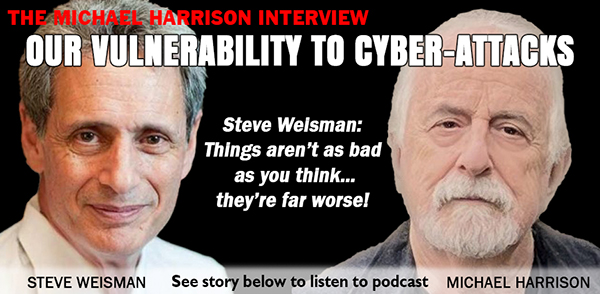
Attorney Steve Weisman is this week’s guest on the award-winning PodcastOne series, “The Michael Harrison Interview.” The idea for this podcast episode originated as a TALKERS magazine webinar for operators of radio stations who are increasingly concerned about the number of ransomware attacks that have been plaguing the communications industry. It is expanded in this dialogue to serve businesses beyond radio and cybersecurity dangers including, but not limited to, ransomware. Weisman is an attorney and college professor at Bentley University in Boston where he teaches White Collar Crime and Media Law. He is a prolific author and one of the America’s leading experts on scams, identity theft and cybersecurity. His widely read blog, Scamicide.com, provides daily updated information about the latest dangers and developments in this arena.  Scamicide.com was named by The New York Times as one of the three best sources of information regarding COVID-related scams. Weisman is a frequent speaker, media guest and consultant regarding all aspects of cybersecurity. He also serves as TALKERS magazine’s legal editor. This conversation will tell you where you are vulnerable and steps you can take to become more secure as well as comply with federal regulations. Listen this podcast here

Industry Views

International “1World Radio” Co-hosts Andy Gladding (USA) and Jamie-Lee Fredericks (South Africa) are This Week’s Guests on Harrison Podcast

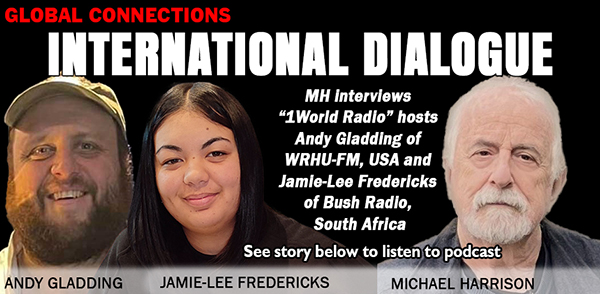
The co-hosts of “1World Radio,” Andy Gladding and Jamie-Lee Fredericks, are this week’s guests on the award-winning PodcastOne series, “The Michael Harrison Interview.” Their weekly international radio show is a co-production of Gladding’s WRHU 88.7 FM, Hempstead, NY, USA and Fredericks’ Bush Radio 89.5 FM, Cape Town, South Africa. WRHU is a highly respected campus radio station broadcasting from Hofstra University on Long Island, just outside of New York City. The American co-host is also the chief engineer at WRHU as well as a college instructor. He simultaneously serves as chief engineer at Salem Media’s WNYM and WMCA in New York. The South African co-host is an air personality on Bush Radio – a dynamic young woman who grew up with an intense love of radio. The conversation explores the differences and similarities between their stations and how they reflect the cultures of their home nations. Not to be missed. Listen to the podcast in its entirety here.

Industry Views

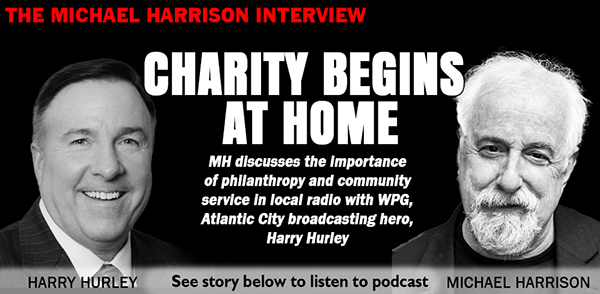
Harry Hurley is This Week’s Guest on Harrison Podcast

WPG, Atlantic City, New Jersey legendary host Harry Hurley is this week’s guest on the award-winning PodcastOne series “The Michael Harrison Interview.” Hurley has been at the helm of the heritage station’s wildly successful morning show for more than 30 years. He is also known to talk radio audiences nationwide as a special guest host making numerous appearances on FOX News Radio. Before he made an indelible mark in radio, Hurley was an accomplished executive in Atlantic City’s hotel and banking industries. Michael Harrison describes Hurley as being “a remarkable combination of business savvy and emotional intelligence – not to mention, extremely talented.” One of the notable accomplishments this outstanding broadcaster has achieved in his career has been on the philanthropical front. During the past 16 years, Hurley’s 501c3 charitable foundation, which annually presents both a gala civic dinner and a charity golf tournament, has raised and distributed more than $1.4 million to worthy causes across the State of New Jersey and beyond. His most recent dinner took place on September 29. It alone raised over $100,000. Hurley is a public service dynamo and in Harrison’s words, “a role model for local hosts and stations to emulate in establishing a positive brand within their market.” Hurley is the recipient of numerous radio industry and local New Jersey honors. Listen to the podcast in its entirety here.

Industry Views

The Problems Facing Radio Were Not Caused by Consolidation

By Walter Sabo
Consultant, Sabo Media Implementers
A.K.A. Walter Sterling
Radio Host, “Sterling On Sunday”
Talk Media Network

imAs your friends get fired and on-air hosts are replaced with WideOrbit and Profitable Software, the mournful refrain is to unfairly blame consolidation. Consolidation has, in fact, made the medium financially viable and brought hundreds of individual stations from a river of red ink to the glow of black ink. Prior to consolidation, over half the radio stations in the U.S. lost money – year after year. Not a secret stat, those numbers were revealed annually by the NAB.

The flaw in the deregulation law was the elimination of the rules regarding financing of station acquisitions. Previous regulations required a licensee to prove it had the financial resources to cover expenses through the term of the license. Licenses could not be purchased with debt. Licensees could not sell the license until it expired. Radio stations could not be used for speculatory financial gain. When those rules were tossed, the industry hit a financial tailspin from which it has not recovered. That’s the problem.

That is not a “problem” with radio. In talks with publisher Michael Harrison about his exciting role in the United Nations as executive advisor to World Radio Day 2024, we shared a key observation: The world’s radio industry is overwhelmingly enthusiastic. Working with clients in London, Toronto, Montreal, Amsterdam, Athens and Sydney, the passion for the medium continues to grow and is supported by audience engagement and response.

Internationally, there is a robust radio set design and manufacturing industry. European listeners seek clothing featuring radio set themes and artwork. Believe me, the food at the NAB Europe is much better than that crap served here.

Follow the money. Radio is not legacy media. Radio is proven media – proven for over 100 years. Local retail advertisers are a practical lot. They buy advertising that works for this weekend. If it doesn’t bring feet to the floor and dollars to the door, sponsors just don’t repeat-buy.

I was the in-house programming guru at SiriusXM Satellite Radio for eight years starting pre-launch. The reason Sirius exists is test after test revealed that Americans liked radio so much, used radio so much, they wanted more stations. More choice. More.

Consolidation, with considerable credit to Randy Michaels, allowed radio to convert from a frequency media buy to a reach media buy. That puts radio in budgets with TV. The opportunity right now is to actually monetize radio’s clout as a reach medium. Create scarcity. More spots mean cheaper spots, smaller budgets and higher expense. More spots mean much less efficiency for media buyers. Media buyers have to spend their budgets. They would prefer to spend that money with one or two outlets before lunch rather than having to “make the buy” by purchasing dozens and dozens of stations acquiring spots that are cheap, bonused, thrown in, flanked, and here are some tickets.  The fix starts with raising the price to meet the public’s perception and usage levels of radio.

Walter Sabo has grown audience share for a roster of clients that has included SiriusXM Satellite Radio, RKO, ABC, Apollo Advisors, Hearst, Wall Street Journal Radio and many others. Reach him at walter@sabomedia.com. Learn about his unique radio show at www.waltersterlingshow.com

Industry News

NYTimes: Radio Preferred Medium for Many in India

A piece in The New York Times by Karan Deep Singh that explores how radio is used by women in rural India to learn and to communicate shows just how important the medium is to many people in the world’s most populous country. The piece focuses on the community radio station “Alfaz-e-Mewat,” – the voice of the Mewati people. Singh notes that “even in a digital era, radio remains the preferred medium for millions of Indians.” Of the radio station he writes, “Its listeners are the million or so people of Nuh, a rural, agrarian district in the foothills of the Aravali mountains in the northern Indian state of Haryana. In this region — which has some of the country’s lowest female literacy rates, where early marriages are common and where violence against women is the norm — the station is the voice of change.” TALKERS founder Michael Harrison, who was recently appointed by UNESCO as executive advisor to the United Nations celebration of World Radio Day on February 13, 2024, states, “This story illustrates just how important the medium of on-air radio is to millions of people around the world. Not only for its accessibility in the many places on Earth, including the United States, that are not fully digitized – but as a grassroots weapon against poverty and injustice in all their many forms. What could be more important?” Read the Times piece here.

Industry News

Jerry Del Colliano is This Week’s Guest on Harrison Podcast

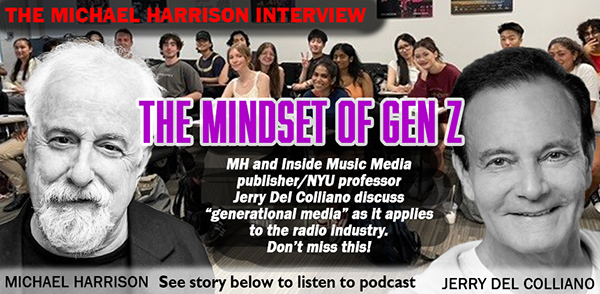
Noted media industries analyst Jerry Del Colliano is this week’s guest on the award-winning PodcastOne series, “The Michael Harrison Interview.” Del Colliano is publisher of the daily newsletter Inside Music Media that serves radio and music professionals with behind-the-scenes happenings at the highest levels in these industries sparked by his hard-hitting and often controversial commentary. Del Colliano has served as Professor of Music Industry at the University of Southern California and currently holds the position of Professor of Music Business Program at New York University’s Steinhardt Department of Music and Performing Arts Profession. These positions have given him insight into today’s youth culture and its potential application in both the radio and music businesses looking to appeal to younger demos. Harrison and Del Colliano engage in an extensive discussion about “generational media” and the professor’s first-hand observations about the habits and mindset of “Gen Z.”  Not to be missed! Listen to the podcast in its entirety here.

Industry Views

Matthew B. Harrison is This Week’s Guest on Harrison Podcast

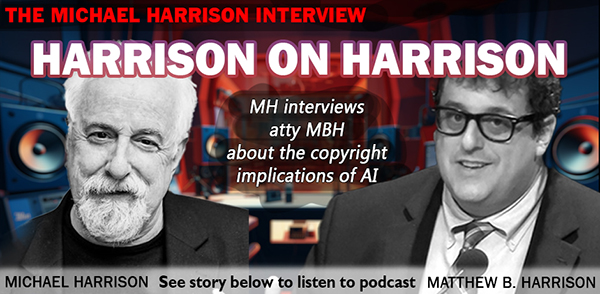
Two generations of the Harrison radio family meet on mic discussing the copyright implications of artificial intelligence as Matthew B. Harrison is this week’s guest on the award-winning PodcastOne series, “The Michael Harrison Interview.” Matthew, the son of Michael, is VP/associate publisher of TALKERS in addition to being a media and intellectual property attorney, talent manager and audio/video producer.  His latest productions, “I Got a Line in New York City” (www.igotaline.com) and “My Friend is Going Away” (www.myfriendisgoingaway.com) are experimental exercises in the utilization of AI graphics in the music video genre. On this podcast, Harrison and Harrison bring into focus the somewhat murky application of copyright law in communications and the arts as we hurtle into the frontier age of artificial intelligence. Listen to the podcast in its entirety here

Industry Views

Talk Host Rick Smith is This Week’s Guest on Harrison Podcast

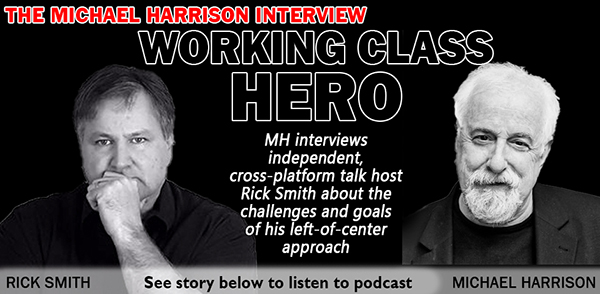
Maverick talk show host, Rick Smith is this week’s guest on the award-winning PodcastOne series, “The Michael Harrison Interview.” Ranked by TALKERS at number 100 on the journal’s Heavy Hundred list, Smith – who has positioned himself as a tell-it-like-it is champion of the working class – is described by Michael Harrison as “somewhat of a square peg in a scene dominated by round holes on both the left and the right.” The Chicago-based genre-bender is a 30-year Teamster trucker-turned-working-class talker heard 9:00 pm to 11:00 pm ET on dozens of radio stations across the U.S. – a mix of commercial and public. He tells Harrison, “I’m not a red hat, I’m not a blue hat… I’m a hard hat.” His left-of-center talk media footprint is enhanced by exposure on a variety of cable TV channels including Free Speech TVDirecTVDish and more. He has a successful podcast with millions of downloads, and he streams on FacebookXTwitch and YouTube. All this is accomplished with a modest, independent operation run by two people and a homemade studio. His show’s slogan is “Where working people come to talk.” Listen to the podcast in its entirety here.

Industry News

Talk Host Mark Simone Inks New Deal with WOR, New York

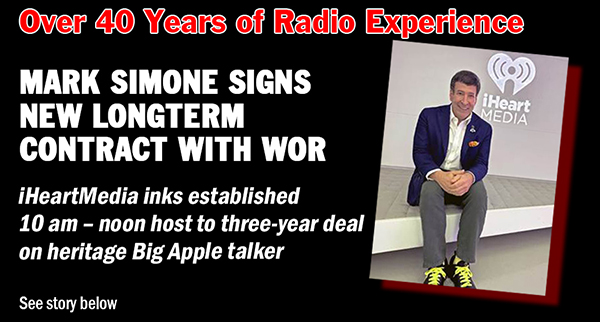
New York City talk radio personality Mark Simone signs a new, three-year deal with iHeartMedia’s news/talk 710 WOR to continue hosting the 10:00 am to 12:00 noon show. Simone says, “There’s no betterim place to be in the radio world than iHeartRadio. Thanks to the finest broadcasting executives around, Tom Cuddy, Thea Mitchem and Bernie Weiss for making it all happen. Walking to work every day is like walking through the Radio Hall of Fame. Just to get to my studio, I pass Elvis Duran, Jim Kerr, Charlamagne tha God, Angela Yee and other all-stars.” WOR program director Tom Cuddy adds, “When I joined WOR almost 11 years ago, Mark was my first hire. Since then, it’s been a blast watching Mark grow into becoming the highest-rated radio talk host in his time slot, along with digital numbers that are among the highest in the country.”

EDITOR’S APOLOGY:  The above story about Mark Simone’s new contract at WOR originally ran yesterday (9/5) in TALKERS.  Unfortunately, our art department utilized a combination of hand-rendered illustration, CGI and AI in creating a headline banner image that apparently missed its mark.  The premise was to depict Simone as the proverbial “800 pound gorilla” of New York radio in which his avatar – a Simone lookalike – inspired by the legend of King Kong, was depicted as a determined figure climbing the Empire State Building.  As it turned out, the King Kong reference was not clear to our readers because there was no actual ape depicted and Simone received a large number of emails telling him that TALKERS ran a photo of the wrong guy.  We meant it to be a caricature but our creative plan backfired.  Simone was upset by the image telling TALKERS, “I have had dozens of caricatures done of me in the past. They are usually somewhat cute.  Never had a problem with them. Yours looked hideous and really cheap. When radio people try to do it, they have no skill at it… no one thought it was a caricature and no one thought it was me. The 13 emails I got from radio execs asked me why you used a picture of someone else, so they never thought for a second it was supposed to be a caricature and no one noticed anything to do with the Empire State Building.”  TALKERS publisher Michael Harrison issued the following statement, “Simone is right.  Looking back at it now, with the increased objectivity of having a full day to think it over, I can understand why he was upset, although there was nothing specifically disparaging about the image. It just wasn’t clear that it was meant to be him and that he was supposed to be climbing a building in an iconic scenario.  After all, a media personality’s sound and image are their brand and they must be protective of its depiction.  We have subsequently pulled the banner from the website and replaced it with a more standard format with the same copy but a different graphic (see above).  The irony is Mark Simone and I have been friendly for more than three decades and I’ve often stated that he is one of the greatest and most successful radio personalities in New York and the nation, not to mention a top notch human being. I still think that.  All of us at TALKERS deeply regret this mistake which was the result of an overly-zealous attempt at being creative. In the world of publicity there’s the old saying ‘as long as they spell your name correctly.’ Well, I guess in this case we spelled Mark Simone’s face wrong.”

Industry Views

Politeness, Punctuality and Power

By Walter Sabo
Consultant, Sabo Media
A.K.A. Walter Sterling
Radio Host, Sterling On Sunday
Talk Media Network

imFor decades the power-lunch spot in Manhattan was the beautiful Four Seasons restaurant. Check it out: A history of the Four Seasons Restaurant in New York City – Four Seasons new ownership (townandcountrymag.com)
Top clients would host luncheons at the Four Seasons with Sabo Media. These included Walter Anderson, former chairman/CEO of PARADE magazine who was a regular customer. If the lunch was scheduled for 12:30 pm and I arrived at 12:15 pm, Anderson was already there. Next time, I would arrive at 12:05 pm for the 12:30 pm lunch; he was already there.

The restaurant manager/maître d’ explained that, “The most powerful person always arrives first.” Of course. The most powerful person could control where she sat, where she faced and what your view of the room would be. When Walter Anderson hosted future lunches, I arrived at about 11:15 am for the 12:30 pm meet!

If I had any early career success it was not because I knew anything, it was because of Eleanor Ranft, my assistant. Prior to working with me she had been Robert Sarnoff‘s assistant for 20 years. Robert, as-in-son of the General. (Eleanor knew how to address letters to ambassadors.) At the end of the workday, she would go over the telephone call sheet and make sure I had returned every call. Neither of us were going home unless I returned every call.

When addressing emails, the most powerful people return the emails instantly. Test it, send a note to the most powerful people you know, see what happens. Mel KarmazinBob PittmanHoward SternMichael HarrisonChris OlivieroKraig KitchinDavid YadgaroffBill WhiteLee HarrisDan MasonJarl MohnMarc Rowan instant answers. Instant response keeps a person in the deal-flow, the conversation and the action. Instant response makes them powerful.

Conversely, for weeks I tried to have lunch with a local market EVP, no answer. I didn’t want a job; I was trying to place a sales order for an agency friend! No answer. Finally, I asked the market program director why I never heard from his boss. Answer, “He doesn’t think you can do anything for him.” Obviously, the order went to a different company.

A common trait of every star I’ve had the privilege to know is that they are all extremely polite. For example, Randy ThomasCharlie VanDykeBruce Morrow, Howard Stern, the late Casey KasemElvis Duran are kindness and manners personified. They send thank you notes. Their interpersonal attitude is to share experience rather than to say look it up yourself. Many top executives built their entire career by sending thank you notes.

That being said, THANK YOU for being a client of Sabo Media. Thank you for clearing “Sterling On Sunday” on stations like KMOX, KMBZ-FM, WPHT, KDKA and Albany’s Talk 1300.  Have a pleasant Labor Day.

Walter Sterling-Sabo can be contacted at Walter@sabomedia.com or 646.678.1110 mobile. He’ll answer immediately. Sabo Media’s robust client list over the years has included PARADE magazine, Sirius Satellite Radio, The Wall Street Journal Radio Service, RKO, Salem, and CBS. Sabo was the first to monetize online video stars and influencers through his company HITVIEWS.

Industry Views

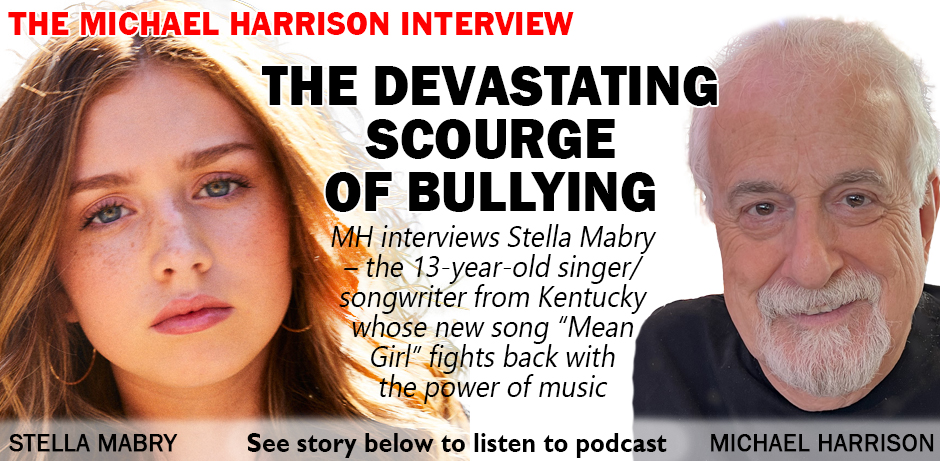
13-Year-Old Singer/Songwriter Stella Mabry Discusses Bullying on Harrison Podcast

Stella Mabry – a stunningly talented 13-year-old singer/songwriter from Owensboro, Kentucky – is this week’s guest on the award-winning PodcastOne series, “The Michael Harrison Interview.” At the tender age of 10, Stella was the victim of school bullying… but she did something about it. She wrote a song as a message to her tormentor titled, “Mean Girl,” and it proved to be a far more effective defense mechanism and diplomatic bridge than a nasty verbal or physical escalation of the problem. The power of music made a huge difference.

Stella’s parents had already recognized their daughter’s musical talent at an early age and gave her lessons and encouragement. But her dad was so taken with the quality of the anti-bullying song that he booked her into a local studio, recorded a rough demo and sent it to his old friend in Los Angeles. That old friend happened to be Les Garland – one of the most plugged in-pop media executives of the past half century – a brilliant radio programmer-turned-innovative-media-entrepreneur who, among his long list of achievements, co-founded MTV.

Garland was so impressed by the song and its back story that he played it for a couple of his buddies in the LA music scene – Sasha Krivtsov and Paul Mirkovich from the famed NBC’s “The Voice” house-band. They loved it and agreed to record it with Stella in the renowned L.A. studio, Sound Factory. With Garland now serving as executive producer, the entire band with instruments in hand was in-studio to record the song as well as a number of other tracks written and performed by Stella. The track “Mean Girl” and its accompanying music video are being released TODAY (8/22). Check it out on YouTube at www.MeanGirlVideo.com.

Michael Harrison says, “Bullying is a major societal cancer with devastating impact. Although with us since the dawn of time – bullying is a worsening problem that torments so many of our children in this era of social media where there’s no relief from taunts, lies and cruelty 24/7 even at home – away from school or the playground. It can lead to depression, unspeakable violence, and teen suicide. I am gratified to be able to interview this young woman about this deeply important topic at such a key point in what could very well become a major musical career. She is authentic, talented and on a meaningful mission. I encourage my colleagues in talk media to book her as a back-to-school guest as soon as possible… before the music media world gobbles her up.” Harrison suggests that interested hosts and producers contact him directly at michael@talkers.com.

Listen to the podcast in its entirety here.

Industry News

Push to “Save AM Radio” Intensifies

There’s been an increase in media attention recently about the AM Radio for Every Vehicle Act making its way through Congress and the future of the AM band. That legislation would direct the “National Highway Traffic Safety Administration to issue a rule requiring automakers to maintain AM broadcast radio in their vehicles without a separate or additional payment, fee, or surcharge.” With each recent natural disaster, we’ve seen broadcasters and politicians point to them as times upon which AM radio is relied. Newsday recently published an in-depth story examining the state of AM radio in which a number of AM personalities are featured. TALKERS publisher Michael Harrison is also quoted in the piece. Read the story here.

Industry News

WOR, New York Hosts Joe Bartlett Retirement Party

im

New York City news pro Joe Bartlett was honored with a retirement party at Patsy’s restaurant in the Big Apple last Thursday (8/24). Bartlett retired from iHeartMedia’s news/talk WOR-AM last May after a 37-year career with the station, most recently as news director and morning news anchor. Pictured above are (from l-r): WOR morning personality Michael Riedel, Bartlett, and WOR morning personality Len Berman.

Industry News

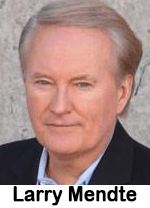
News Pro Larry Mendte Joins WOR, New York

iHeartMedia announces that Emmy Award-winning news anchor Larry Mendte is joining news/talk WOR, New York as news director and morning news anchor. In this role, Mendte will anchor news during the station’s “Len Berman and Michael Riedel in the Morning” and during the late morning “Mark Simone Show.” Mendte takesim over the position after news director Joe Bartlett retired from the station on May 31 after 37 years with the WOR. Mendte had most recently been news director and host at WJLP-TV, Middletown, New Jersey “Me-TV.” Mendte says, “WOR is iconic in radio history, and I’m honored to accept this position. Len Berman and Michael Riedel are smart, entertaining, and informative. It’s the morning show I listen to, and I’m elated to now be part of it.” WOR program director Tom Cuddy states, “I’ve been a fan of Larry’s for many years. So, when the opportunity popped up for him to work with Len and Michael, I was truly pumped up that we were able to bring in a talent of his caliber.”
Industry News

Radio’s Reliance on Power Companies and Internet Impact Ability to Serve

KSCO, Santa Cruz owner Michael Zwerling says as his station prepared to present a program on preparing forim the next big earthquake, ironically, the station lost power numerous times causing continuous off-and-on power situations that impacted the station’s broadcasts. Zwerling says each time the power went out and the generator kicked on – something that happened numerous times – it put stress on the transmitter and the generator. Complicating matters was that the station’s infrastructure – as well as the phone company’s and PG&E’s — is dependent on the internet and that requires consistent power. This puts stations’ abilities to serve at a disadvantage. Zwerling talks about this problem in an audio clip here.
Industry Views

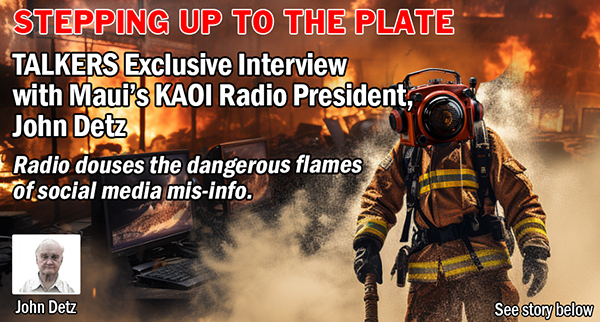
Radio to the Rescue: Maui KAOI Radio Stations Air 24/7 Disaster Coverage

As Southern California radio is currently diving into the process of serving its communities with supportive coverage of Hurricane Hilary’s devastating floods and wind damage, Hawaiian radio stations have stepped up the plate and offering vital support to its listeners. Once again, the medium of radio provides reliable and accurate information to populations under the threat of natural disasters.

The KAOI Radio Group on Maui consists of six legacy Maui County stations, four FMs – KAOI-FM, KDLX-FM, KNUQ-FM, KHEI-FM, and two AM stations, Maui’s only news/talk station KAOI-AM, and Hawaiian music KEWE-AM. The group has translators further solidifying its coverage all of Maui County.  The group is locally owned by Visionary Related Entertainment, based on Maui since 1988.

Coverage of the fires began when the first alert was issued for the Lahaina fire and later confirmed as “contained” only to have it restart later. Local coverage of the “up country” fire in the Kula area continued non-stop with intensive service to Lahaina as soon as the fire was confirmed as having restarted. The stations relied on coverage by AM station morning newsman Jack Gist, afternoon and evening host Garry Forsberg, and group president/GM/owner John Detz. Live reports around the Island were supplied by local talk show hosts including head of the Maui Chamber of CommerceMaui Humane Society, local attorney David Cain, Maui Mayor Richard Bissen, and many others. All stations have remained on the air 24/7 reporting breaking news and community resource information.

TALKERS publisher Michael Harrison obtained an exclusive interview with group owner John Detz conducted yesterday (Sunday 8/20). Listen to their conversation here.

Industry News

ViceTV’s Dark Side of the 2000s Looks at “Shock Jock” Wars

The ViceTV series “Dark Side of the 2000s” delves into the rivalry between radio personalities Howard Stern, Erich “Mancow” Muller and Opie & Anthony in episodes 5 and 6 titled, “Shock Jocks Part 1: The Rise” andim “Shock Jocks Part 2: The Fall.” Through interviews with major players in the radio and entertainment industries, including TALKERS magazine publisher Michael Harrison, the story of the growth of male-targeted “FM talk” along with the vicious battles that took place between the major players is told. ViceTV is on a number of on-demand services. The episodes are also behind a paywall at vicetv.com.

Industry News

Georgia Expert and Heavy Hundred Host Martha Zoller Available as Guest to Share Ground Level Insight to Trump Indictment

TALKERS magazine’s recipient of the 2023 Woman of the Year award, Martha Zoller, is making herself available to her talk radio colleagues to serve as a “go to” on-air resource to illuminate the historic indictment of former President Donald Trump and 18 of his associates on the charge of election tampering in the state of Georgia. Zoller is heard daily on the North Georgia radio powerhouse WDUN-AM/FM based in Gainesville. She is a former Republican candidate for Congress in Georgia’s 9th district and made it to a runoff. After graduatingim in 1979 from the University of Georgia with a degree in Journalism from the prestigious Grady School of Journalism, she worked in the corporate world and met a payroll. She is a wife, mother and a grandmother. She’s stayed at home and juggled children and working priorities. She says there is no glass ceiling and women can have it all, just not at the same time. A life-long learner, she completed her MA in Political Science in 2021 at the University of Georgia’s School of Politics and International Affairs. Her thesis was on women’s electoral success in the GOP. During her formidable broadcasting career in the Peach State, she has pivoted between holding positions on key talk stations and performing stints in politics and the public sector. These include being state director of field offices for Governor Brian Kemp. She’s also worked for Senator David Perdue in senior staff positions. In addition to her daily duties at WDUN, Zoller serves on the Georgia State Board of Education. TALKERS publisher Michael Harrison says, “Martha Zoller is a perfect ‘go-to’ guest to discuss the Georgia Trump indictment. She’s an independent Republican and moderate conservative without an ax to grind. I have always found her to be an extremely credible source for political discussion of the hot issues – now with the Trump Georgia story boiling on the front burner, she is a talk show treasure for her industry colleagues.” To arrange an interview or set up a connection with Martha Zoller, contact Victoria Jones at DC Radio Company at 917-865-3991 or victoria@dcradiocompany.com.
Industry News

Donal Ware Celebrates 18 Years of “BOXTOROW”

Sports talk personality Donal Ware is celebrating the 18th anniversary of his nationally syndicated program “BOXTOROW” that first aired on August 20, 2005 on a radio station in its home base of Raleigh, and stations inim Baltimore, Birmingham, Greensboro, and Winston-Salem. The show airs on SiriusXM’s College Sports channel in addition to radio stations in 12 of the top 50 markets across the country including Washington, Tampa, Portland, Charlotte, Pittsburgh, Austin, Kansas City, Raleigh, Nashville, Norfolk, Jacksonville, and New Orleans. Guests on the program over the years have included Serena Williams, Kevin Durant, Simone Biles, Jerry Rice, Snoop Dogg, Michael B. Jordan, and more.

Industry Views

Kim Komando is This Week’s Guest on Harrison Podcast

im

Syndicated talk radio star, newspaper columnist, and internationally renowned technology expert Kim Komando is this week’s guest on the award-winning PodcastOne series, “The Michael Harrison Interview.” Known to her millions of listeners and readers as “America’s Digital Goddess,” Komando has been burning up the news and talk radio airwaves as a leading authority on the evolving technology and sociological impact of the digital era for the past three decades. Among her numerous honors, she is a Radio Hall of Fame inductee and past recipient of the TALKERS magazine Woman of the Year award. This outstanding broadcaster and modern-day thinker produces, hosts, and distributes a weekend radio talk show, a couple of new daily shows and a number of short-form features about computers and digital technology from her studio at WestStar TalkRadio Network in Phoenix, Arizona along with her husband Barry Young, a legendary radio personality in his own right and an extremely adept businessman. Together they built a multi-million-dollar empire based on her keen intelligence, outstanding personality and extraordinary understanding of the new era. Harrison and Komando engage in an illuminating conversation about the benefits and dangers of artificial intelligence and other technological developments that are changing the world at lightning speed, including the two-pronged threat of Big Tech’s growing domestic power and China’s push for international hegemony. Don’t miss this! Listen to the podcast in its entirety here.

Industry Views

ENOUGH! The Selling Culture Has Failed Radio

By Walter Sabo
Consultant, Sabo Media
A.K.A. Walter Sterling
Radio Host, Sterling On Sunday
Talk Media Network

The creeping culture of sales-determines-all has brought the industry to this moment of despair. The selling culture has failed the medium. It is time to, once again, segregate the sales and programming departments. Take the budgets away from the program directors and inspire them to create exciting UNPREDICTABLE programming.

Earnings calls for most radio companies were held this week. Not pretty. Declarations of the demise of radio are constant, emotional, and desperate. Bleak conditions in the radio industry have occurred before. A review of past crises and how they were overcome is constructive, urgent, and essential.

For example, in 1952, network TV was launched and showed signs of success. NBCABC, and CBS moved their money from radio to TV. Longform radio shows were cancelled leaving stations across the country with a problem. At the time, most radio stations were small shops, usually family-owned, therefore the need to add hours of local programming was a financial challenge. The solution was presented by a programmer.

Todd Storz’ family owned stations in Omaha, Kansas City, Minneapolis, New Orleans, St Louis and Oklahoma City. He was young and obsessed with radio. His stations were losing money and the future, without network show blocks, was uncertain. Todd ate at a diner daily and noticed that even after it closed, the waitresses put their own money in the jukebox to hear the same songs they had heard all day. Hit after hit. Todd created a list of the top 40 songs, built a production sound and put it on his Omaha station. The station was #1 overnight. His top 40 format was aired on his owned stations with the same results.

Ruth Meyer was the program director of WMCA, New York where she established the GOOD GUYS dynasty. Before WMCA Ruth was the PD of Storz’s station in Kansas City. I asked her who did what at Storz and she said, “It was all Todd.” Todd was a programmer who never spent a day in sales. Storz’s programming idea changed and, yes, saved the industry.

When Todd died at 38 years of age his father – a businessman – took over the company. After Todd’s death, the stations died too. Why? Storz station manager Deane Johnson explained, “Todd’s death [and the control of the radio stations falling to Todd’s father] brought about a shift from a ‘programming company’ to a ‘money company.’”

Radio’s next challenge was FM. It is a popular myth that the shift from AM listening to FM was driven by the higher quality of the FM signal. FM’s signal had been available since 1948. No one listened.

You don’t go to iMAX to watch the huge, superior white screen. You go to watch a movie on the huge superior white screen. When the FCC mandated an end to AM/FM simulcasts, the general managers had no idea what to do and isn’t it time for golf?

Obsessed, very young radio fanboy programmers such as Michael Harrison and Allen Shaw joined with frustrated senior programmers like B. Mitchel ReedScott MuniMurray the K and Tom Donahue to EXPERIMENT with new programming techniques. They imagined and implemented progressive rock, free-form, album rock. THEN the crowds came to FM to hear exciting UNPREDICTABLE programming.

In 1966, Tom O’Neil, the founder/chairman of RKO General owned many money-losing, major market stations. The solution? Better sellers? Better sales training? A sales master course? No. The answer was Bill Drake. O’Neil hired Bill Drake and allowed him to create exciting UNPREDICABLE programming. Drake’s programming saved many RKO stations and was copied by hundreds of stations across the country. Drake’s programming saved them, too.

ALL of radio’s challenges today can be solved with programming invented by programmers free to program. Enough with “it’s not in the budget.” Enough with “it will bring in money.” Enough with “it’s good for sales.” Enough with talent having to generate half their salary in billing to be retained. Enough!

Unleash today’s program directors to follow their instincts, their facts and no more having to check with corporate. Why? Because checking with corporate hasn’t worked. Checking with corporate stops the flow of ideas, it freezes them in time. Radio is live, in the moment. When radio programming is frozen in time it MUST failGive up corporate engagement. Let programmers surprise you.

To quote a mentor, ABC Radio Network’s VP Dick McCauley (a sales guy), “A great salesperson is one who has a great product.” He said it a lot.

Walter Sabo was the youngest executive vice president in the history of NBC. He was the programming consultant to RKO General longer than Bill Drake. According to a Sirius corporate EVP, “Sirius exists because of what Walter Sabo did.”  He hosts a Talk Media Network radio show as Walter M. Sterling, “Sterling on Sunday.” Find out more here: www.waltersterlingshow.com  Contact him at walter@sabomedia.com or 646.678.1110

Industry News

TALKERS Vice President/Executive Editor Kevin Casey is This Week’s Guest on Harrison Podcast

Last month marked the 33rd anniversary of the launch of TALKERS magazine – the talk media industry trade publication founded by Michael Harrison in July of 1990. The term “talk media” established and popularized byim the journal refers to AM, FM, online and satellite talk radio, cable news/talk TV, and talk podcasting.

Marking this third-of-a-century milestone, TALKERS longtime VP/executive editor, Kevin Casey is this week’s guest on the award-winning PodcastOne series, “The Michael Harrison Interview.” Casey, then a program director for Clear Channel’s WHYN, imSpringfield, MA, joined TALKERS as its managing editor almost a quarter-of-a-century ago in 2000. The big story during that pre-9/11 year was the excruciatingly inconclusive presidential election between Texas Governor George W. Bush and Vice President Al Gore that took over a month to settle.

Michael Harrison states, “I’ve been blessed with a tremendous group of media professionals who operated and built TALKERS into the established communications vehicle that it has proven to be in many ways paralleling the growth of talk radio and its offshoots for more than three decades. One of the key individuals who has been responsible for its growth and longevity is my dear colleague, Kevin Casey.”

In a casual conversation between longtime friends and co-workers, Harrison and Casey take stock of the publication’s journey which parallels the historic role of talk radio’s modern era. Hear the complete podcast here.

Industry Views

Sabo Sez: Consolidation Has Been Radio’s Savior

By Walter Sabo
Consultant, Sabo Media
A.K.A. Walter Sterling
Radio Host, Sterling On Sunday
Talk Media Network

imHALF of all radio stations in the United States lose money – at least they did back in 1991. The NAB used to put out an annual report revealing how many radio stations were profitable. Usually half the stations in America lost money. Since consolidation, the NAB stopped putting out that report. It is reasonable to believe that far, far fewer stations lose money today.  Shared costs, real estate, technical economies due to digital equipment versus analog all indicate that there must be fewer money-losing properties.
The business of radio is very strong and appealing to investors. Apollo Advisers was the first money-in Sirius. The Apollo fund recently bought Cox radio. Marc Rowan, Apollo’s CEO is the smartest guy in any room. Rowan doesn’t invest in hunches; he buys businesses that grow return on investment.

In 1970, 7% of all ad dollars went to radio. Today, 7% of all ad dollars go to radio.  In 1970, Procter & Gamble spent almost zero dollars in radio. Thanks to consolidation and the vision of Randy Michaels, radio has shifted from a “frequency” ad buy to a “reach”  buy. Reach commands higher rates and more sophisticated advertisers. The RAB’s Erica Farber and Sound Mind’s Kraig Kitchin focused on winning P&G dollars. Today, Procter & Gamble is a top-five radio advertiser.

Are you sick and tired of “experts” saying that radio is slow to digital?  Radio is not slow, radio was first-in. Mark Cuban put thousands of stations on Broadcast.com in the 1990s. Today radio leads the list of most downloaded podcasts. NPR has been the leader in podcasting since Alex Bennett started the industry. Under Bob Pittman and Jarl MohniHeart and NPR dominate downloads.

Why the pessimism and anxiety in the hallways?  It started with the management of consolidation. There are major consulting firms to help employees go through mergers. Consolidating an industry and its workforce is both an art and science. No radio company sought or engaged experienced expertise to manage consolidation. Instead, when a quarter’s revenue was missed, people were fired. Your friends in the next office were suddenly out of work. Layoffs should have happened all at once, based on a strategic plan. There is no plan. Firings are executed on random dates, with no notice; a horrible practice that continues. That’s why you’re miserable. No plan.

Radio stations in Canada, Europe, Australia and the UK are having excellent years. Canadian Music Week conventions, Commercial Broadcasters of Australia and European conferences are bursting with optimism and good news about radio. Why? Consider this possibility: Most radio companies outside the US are owned and managed by executives with a programming background. To do their jobs, programmers must be optimistic about the future. A salesperson’s job requires them to spend their days listening to media buyers’ objections to advertising on radio – negotiators! It sucks.

Consumers like or love radio. The reason SiriusXM Satellite Radio has 34 million listeners PAYING for radio is that listeners want MORE stations. Much, perhaps most, “music discovery” comes from radio listening. 53% of Americans will listen to radio today. In 1970, 53% of Americans listened to radio daily.

Walter Sabo was the youngest executive vice president in the history of NBC. The youngest VP in the history of ABC. He was a consultant to RKO General longer than Bill Drake. Walter was the in-house consultant to Sirius for eight years. He has never written a resume. Contact him at walter@sabomedia.com. or mobile 646-678-1110. Hear Walter Sterling at www.waltersterlingshow.com.

Industry News

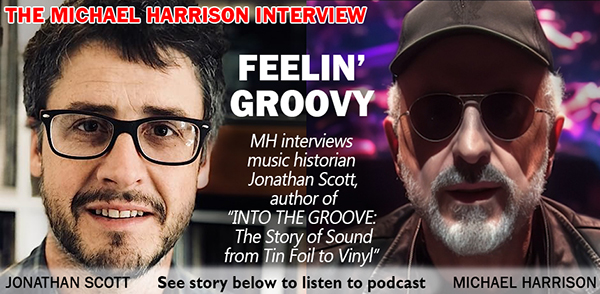
British Record Collector and Author Jonathan Scott is This Week’s Guest on Harrison Podcast

Get ready for a journey back to the earliest days of sound recording as British author and music historian Jonathan Scott is this week’s guest on the award-winning PodcastOne series, “The Michael Harrison Interview.” Scott is the author of the fascinating book, INTO THE GROOVE: The Story of Sound from Tin Foil to Vinyl (Bloomsbury, 2023). He tells the story of recorded sound – the technological developments, the humans that made them happen – and their impact on society, from the phonograph to LPs, EPs and the recent resurgence of vinyl. Harrison and Scott dissect a mind-blowing feat that we all take for granted today –  the domestication of soundThomas Edison’s phonograph, the first device that could both record and reproduce sound, represented an important turning point in the story of recorded sound, but it was only the tip of the iceberg, and came after decades of invention, tinkering and experimentation. Scott traces the birth of sound back to the earliest serious attempts in the 1850s, celebrating the ingenuity, rivalries and science of the modulated groove. And, of course, the conversation raises the controversial question, in which medium does music actually sound better? Vinyl or digital? Listen to the podcast in its entirety here