By Walter Sabo
Host/Producer, Sterling on Sunday
Media Consultant
Lucille Ball earned 50 shares with her classic TV series, “I Love Lucy.” Every year during her summer hiatus she would make a movie. Name a Lucille Ball movie.
Lucy was the all-time star of television but couldn’t open a movie. Each medium creates its own stars and rarely does a star transfer from one medium to another.
Some examples: “NYPD Blue” first season star David Caruso couldn’t wait to break out from TV and become a movie star. He recently retired from 10 years of work on the TV show “CSI Miami.” Exceptions? Maybe three: Michael J Fox, Will Smith, Steve McQueen.
The phenomenon of single medium stardom is true throughout all crafts. Great magazine writers struggle to turn in a publishable book. Book authors are challenged to condense their thoughts to 1,000 words. Megyn Kelly is a cable star but couldn’t cross the golden bridge to broadcast TV.
Every year a local TV weather person bugs the local talk station to fill-in on a talk show over a holiday. How does it go? Beware the fifth minute. After five minutes all of the passionate feelings the TV talent has about their pet topic have been expressed. With two hours and 55 minutes to go, the local weatherman is in trouble hosting an unscripted radio show. Where is the prompter? Where are the phone calls? But put a radio morning host on TV and the results are just as awful. The radio host looks fat because they have no idea how to dress for TV, they don’t understand the cue lights on the cameras and the prompter is confusing.
Which brings us to the relationship between radio and podcasting
One of the burdensome falsehoods of the moment is that radio talent should be churning out original content podcasts. It’s just audio right? Radio is good at talking! Podcasting has fostered its own stable of stars including Joe Rogan, Adam Carolla, Anna Farris and Ben Shapiro (I know he’s a radio guy, but he’s a better podcaster). To a listener, the production styles of a podcast and live radio are strikingly similar, but you know that the production environments are completely different. Talent who intuitively understand on-demand audience preferences thrive hosting commercial-free podcasts. Radio talent excel within the disposable, often-interrupted flow of a live broadcast. Podcasts allow for thinking time, pausing, editing, correcting and fancy production beds. Live radio? You just better get to the next thing. The mindset of a podcast star versus a radio star must of necessity be appropriate to their unique performance stage.
Most radio managers have met with resistance when asking their talent to make original content podcasts. (Not air checks.) Radio talent is right to resist! Creating a very good radio show is demanding and often exhausting. After three or more hours on the air, no performer has the energy to hop into a production chair and attract a million downloads. Tragically mandatory podcast dictates leave little opportunity for talent to say, “I can’t do a podcast well. I’m a radio performer and isn’t that what you hired me for?” My goodness – such a radio talent would be labelled insubordinate, not a team player, and not part of the future!!!
To be productive and on-brand podcasts offered by a radio station should be hosted by podcast stars. The odds of a radio star creating a winning podcast are about the same as finding a Lucille Ball hit movie.
Walter Sabo is a long-time radio industry consultant and thought leader. He hosts and produces a network radio show titled “Sterling on Sunday” 10:00 pm-1:00 am ET. www.waltersterlingshow.com. walter@sabomedia.com
Share this with your network

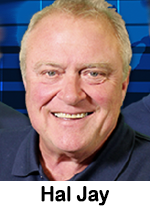 “Last Tuesday night (1/10), I had a ventricular tachycardia event and fell to the floor, and my cardiologist Dr. Shaw, had me transferred to Baylor Scott & White University Medical Center.” He spent the week at the hospital continuing to rest and undergo testing as doctors monitored the situation. But Saturday night (1/14), he had another ventricular tachycardia event. Jay says, “I asked the doctor, ‘How sick am I?’ And he said you are really sick; your heart is done.” Jay has been placed on the heart transplant list. Of the four levels of the list, pending severity, Jay is listed as a level two and it is unknown at this time when a transplant will take place. Jay finished his on-air appearance on Monday by thanking listeners for their prayers, mentioning he intends to document his transplant journey, and check in with the “WBAP Morning News” as he is able.
 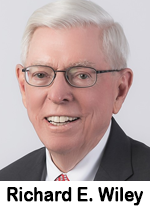 Scott Herman says, “Dick’s commitment to fight for our industry in Washington has given broadcasters the opportunity to grow their business. His strong belief in our industry has extended to his support of the mission of the Broadcasters Foundation to help those in our business who need it most. We are honored to present him with the Lifetime Achievement Award.” Wiley comments, “I am honored to receive this Lifetime Achievement Award from the Broadcasters Foundation. Since arriving at the FCC more than 50 years ago and co-founding our DC law firm almost 40 years ago, it’s been a privilege to work with broadcasters on landmark innovations including the development of high-definition TV. I’m proud to be a part of this great industry’s evolution, and to support the Foundation’s mission of providing a critical safety net for members of the broadcast profession.” The annual Golden Mike Award gala is a major fundraiser for the Broadcasters Foundation, the only charity devoted exclusively to helping broadcasters in acute need. For information, or to reserve a seat or table at the Golden Mike Award gala and fundraiser, please contact the Broadcasters Foundation at 212-373-8250 or
  quarter of fiscal year 2023, the company expects revenue to be $27 million. It adds that the audio division that includes Slacker and PodcastOne will report revenue of $21.6 million for FY/2023 Q3 and for the first nine months of the fiscal year expects to report revenue of $63.5 million. LiveOne previously announced its intent to spin out PodcastOne as a separate, publicly traded company and plans to IPO Slacker this year.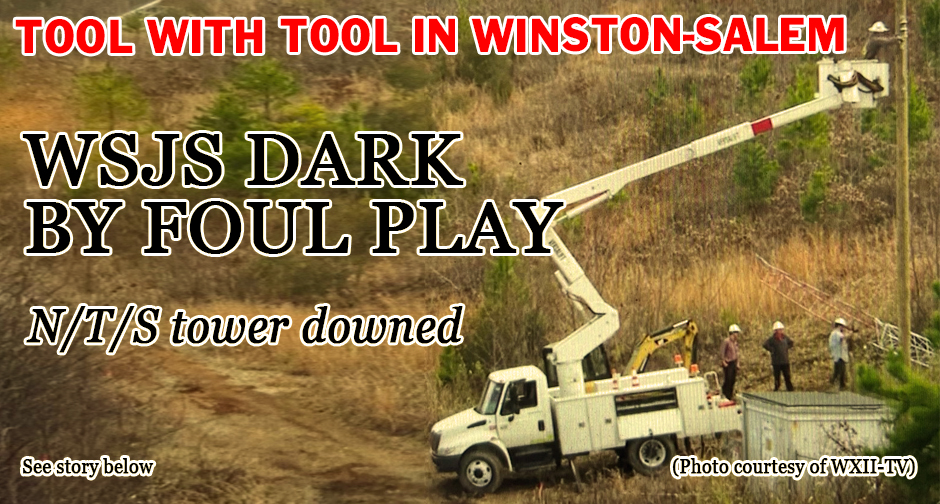
 first tower was damaged, they thought bad weather was the culprit. But, after the second tower was affected, they realized that it was intentional and done by someone who knew what they were doing. The report states that after the second tower was damaged “Truth Broadcasting then hired security, and then the morning after security left the third tower was damaged. Police say someone used a tool to cut through parts of the towers anchoring them to the ground. ‘The person who did this had a real good idea of what they were doing,’ Carbone said. ‘Because they picked the point that was the safest to do what they were going to do.’” Police continue to investigate but so far, they have not made any arrests. Carbone says they are working on another location for the WSJS transmitter and hope to return to the air in a few days.
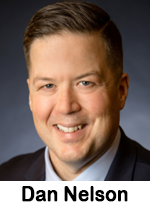 together since my earliest days at Salem. He always impressed me as one of those people that can take an idea and bring it to life. To this day, I can give Danny just the seed of an idea and the next thing you know he has a full-blown working model. I am thrilled to see Danny get this well-deserved promotion.” Salem Media’s president of broadcast media, Allen Power, adds “Dan has consistently set a high standard for everything he has undertaken. His talents are many including creativity, attention to detail, excellence in follow-through, and giftedness in visual marketing and production. Perhaps, his greatest strength is his ability to work with leaders at literally every level of our company to advance Salem’s brand and image. He does all of this with passion, humility, and a great sense of humor. If you look up the definition of ‘go-to’ person, it’s highly likely you’ll see Dan’s smiling face.”
 again this month is NPR’s “NPR News Now,” followed by NPR’s “Up First” at #3, Wondery’s “Morbid” at #4, NBCUniversal News Group’s “Dateline NBC” at #5 and Cumulus Podcast Network’s “The Ben Shapiro Show” at #6. Podcasts from radio-related companies making the top 20 for the period include: Cumulus Podcast Network’s “The Dan Bongino Show” at #9 and Salem Podcast Network’s “The Charlie Kirk Show” at #17. You can see the complete ranker of the top 100 podcasts
  views, over 34 billion multiplatform minutes and averaged 82.7 million monthly multiplatform unique visitors. FOX News states that it was also “the most engaged news brand on social media throughout 2022, according to Emplifi, reaching over 445 million social media interactions. FOX News Digital drove 179.7 million Facebook interactions, 49.6 million Twitter interactions and 215.9 million Instagram interactions. On YouTube, FOX News delivered its best year ever, driving over 3.4 billion views, finishing first in the news competitive set.” While FOX News Digital topped rival CNN.com in the multiplatform minutes and multiplatform views category, CNN.com was the leader in multiplatform unique visitors – the digital equivalent of cume – with 124.9 million compared to NYTimes.com’s 89 million and FOX News Digital’s 82.7 million.
  creative company SpokenLayer, and Casey Hartigan was most recently senior director of strategic partnerships at Nativo. Madeline Ngo joins Veritonic from Career.io/Talent Inc where she was director of product management/head of product. Veritonic founder and CEO Scott Simonelli comments, “At Veritonic, we remain committed to providing brands, agencies, and platforms with the technology and data they need to harness the tremendous power of audio, and that starts from within. Our employees are the heart and soul of our company and the value that we provide. We look forward to the contributions that Lindsay, Kate, Casey, and Madeline will bring to the utility and advancement of our platform moving forward.”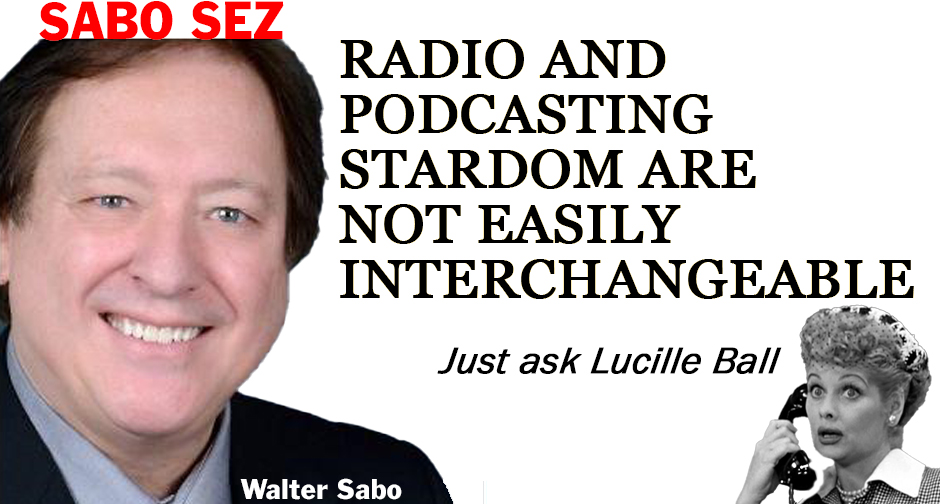
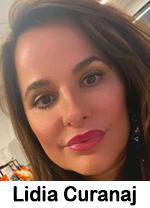 Media news/talk station for a position with Newsmax TV. She says, “I made the incredibly difficult decision to leave WABC Radio and take a job with Newsmax where I’ll have my own show – a national show. (Not bad for an Albanian girl from the Bronx!) The premiere date will be announced soon, but I am super excited yet sad to leave all the amazing people at WABC!”
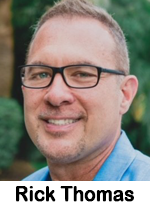 brands. Thomas most recently served as the national format leader and day to day program director at Summit Media’s CHR WWST-FM, Knoxville. Beasley Media Group Tampa VP and market manager Ron deCastro says, “I am excited to once again get the chance to work with Rick Thomas. Rick is one of the best programming minds and Culture builder and I look forward to teaming up again with him in Tampa.”
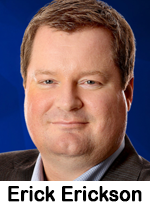 from its previous place on the Premiere XDS system. At the same time, program host Erick Erickson tells TALKERS magazine that his show is now heard on Tri-City Radio LLC’s news/talk WJNZ-AM, Mobile daily and on Radio One’s news/talk WBT-AM/FM, Charlotte on weekends.
 over for longtime board member and former national spokeswoman, Denyse Mesnik, who rises to the MIW advisory council. MIW board president Ruth Presslaff says, “We are so lucky to have someone of Randi’s caliber join our board. Randi has worked diligently on the PR committee and has earned this board seat. Knowing Randi, I suspect we’ll get a lot done and have a whole lot of fun doing it! That said, I will miss working side-by-side with my dear friend and now advisory council member Denyse Mesnik. She has given immeasurably to this organization and can’t be thanked enough.”
 programming and individual achievement by, for and about women in television, radio/audio and digital media. Submissions from all facets of media are encouraged. A full list of the categories can be found
  Answer” and hosts the 10:00 am to 12:00 noon talk program on Cumulus Media’s KCMO-AM, Kansas City. He says, “I want to thank the Salem Podcast Network for bringing our podcast into their family of great shows. As a radio guy my entire career, I wasn’t sure how the podcast version would be received when we launched. Our advertising partners who invested in the show early as well as the smartest audience in the digital space have helped our young podcast crest four million downloads, and we’re just getting started!” Salem SVP of spoken word Phil Boyce adds, “Chris Stigall is a special host who has developed a unique relationship with a very loyal audience. We saw this when we brought him over to ‘AM 990 The Answer’ a few years ago, and we know he will have the same reaction from audiences nationwide with his podcast.”
 “AM 970 The Answer” and is available via Salem Radio Network, Salem News Channel, GCN, BizTV, BizTalkRadio, CRN Digital, and USA Radio. McCullough says, “Through much of the fall of 2022, we did a significant deep dive into not just how much content we were making every week but how it could be more impactful, and after lots of creative brainstorming, hard work and a significant investment in resources and time, the Saturday night program will show just the beginning of the efforts and results… I am also intensely grateful for Jerry Crowley, Phil Boyce, and Cary Pahigian, for challenging me consistently to continue to improve, grow, and reach!”
 team. Of her new position, Carroll says, “I am so excited to be joining the incredible Beasley Media Charlotte sales team. The individual account execs are knowledgeable and have the drive to WIN! Along with Rob [Whitehead], Tom [Neeley], and Mac [ Edwards], I am confident together, we will all accomplish some very exciting sales goals in 2023 and beyond!” Whitehead comments, “We are so excited to have Suzanne join our team in Charlotte. Suzanne brings an amazing amount of experience and knowledge from the media industry. She has had an extensive career including roles as account executive, national sales manager, general sales manager, and director of new business and digital development. Suzanne’s career path has taken her to major markets including Baltimore and Chicago. We look forward to her continued success!”
 Why? Done right, it makes you special. Because new-tech audio competitors don’t do local news, and with most broadcast radio hours now robotic.
 He’s retiring from Lotus Communications’ “Northwest Newsradio” after five decades on the air in Seattle. Hersholt says, “Thank you to those who have listened along the way and the many great people I have worked for. I feel truly blessed.” KNWN program director Rick Van Cise says, “Gregg gave every story he covered the importance it
 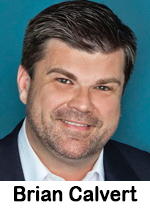 deserved. While his are big shoes to fill, we are pleased to announce the appointment of ‘Northwest Newsradio’ reporter Brian Calvert to the morning co-anchor post with Manda Factor. Brian’s engaging personality, news credibility and unique storytelling make him a great fit.” Calvert comments, “It’s been a thrill to be a part of one of the best morning teams ever in radio as a reporter, and now an honor to co-host the broadcast.”
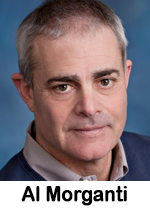 and host weekend programs. The 69-year-old Morganti is a long-time co-host of Angelo Cataldi’s morning drive show and with Cataldi retiring from the station after the Philadelphia Eagles’ season ends, it was unclear what role Morganti would play with the station. In his piece, Blumenthal notes that when Audacy revealed that Joe DeCamara and Jon Ritchie would be the new morning drive show, it stated Morganti would continue to work for the station in some capacity. Morganti will host the hockey podcast twice per week during the season and once per week during the off-season. As for hosting weekend shows, there’s no indication he’ll have a regularly scheduled show, but will fill in when needed. Morganti also works for NBC Sports Philadelphia as a pre-and post-game analyst.
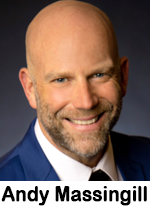 has led his team to unprecedented revenue heights. His leadership across the Western Region played a significant factor in Salem’s overall revenue growth. In addition to Andy’s leadership for the Western Region, Andy will work closely with Chris Gould, SVP national programming and ministry relations and all our national ministry partners to better leverage our digital assets, generating more time with our quality audience while delivering outstanding results.” Massingill comments, “The last three years have been an incredible journey with Salem and the Western Region. I’m proud of our work, the work we will continue to do, and the relationships established across the board. I am very excited to work with Chris and our national ministry partners who are at the core fabric of what Salem stands for.”
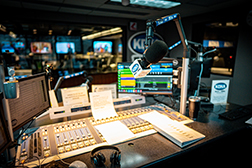 “exemplifies the best attributes of the radio industry.” Recipients may be large or small, commercial or non-commercial, located in any market, and broadcasting in any language. The jury looks for stations that demonstrate “ideals of localism, audience reach, community service, effective use of new digital platforms, diversity in program content and staffing, as well as financial and ratings success.” Previous U.S. winners were Audacy’s WINS-AM, New York; Hofstra University’s WRHU-FM, Hempstead, NY; and Hubbard Broadcasting’s WTOP-FM, Washington. Audacy Pittsburgh SVP and market manager Michael Spacciapolli says, “This distinguished honor underscores not only KDKA’s unwavering commitment to delivering premier news coverage to the Pittsburgh communities, but the individuals who work tirelessly each and every day to make it happen. We’re proud to join the list of iconic heritage brands that represent the very best the radio industry has to offer.” Jurors included representatives of Fletcher Heald & Hildreth, Radio Ink, The Weiss Agency, TALKERS magazine, McVay Media Consulting, Audacy and Radio World.