By Holland Cooke
Consultant
 Observation, as a heavy CNBC viewer: Artificial Intelligence is to 2025 what Dot Com was to the late 1990s, game-changer… and shiny object.
Everyone seemed to be chanting “AI” at this year’s CES. In a previous column here, I offered, from experience, some Do’s-and-Don’ts for crafting commercial copy. And as vendors are applying AI to various other broadcast content and operational functions, I asked the app itself: “How would you caution radio broadcasters against over-reliance on ChatGPT?” SECONDS later, the robot replied:
“Here are some key points to consider:
1. Maintain Authenticity: Radio broadcasting thrives on the personality and authenticity of its hosts. Relying too heavily on AI-generated scripts or content can make broadcasts feel robotic, inauthentic, or detached. Listeners tune in to hear the voice, opinions, and personality of the broadcaster, not just information being read off a script. ChatGPT is great for generating ideas, but it shouldn’t replace the genuine voice of the host.
2. Human Connection: One of the strengths of radio is the personal connection that hosts build with their audience. This connection comes from spontaneous moments, personal anecdotes, and relatable conversations. AI can’t replicate the unique, emotional bond that a human broadcaster forms with listeners. Overusing AI could distance the host from the audience and make the show feel more like a recorded message than a live, engaging experience.
3. Accuracy and Fact-Checking: While ChatGPT can generate a lot of information quickly, it’s not always accurate or up-to-date. Broadcasters need to be mindful that AI-generated content might contain errors, outdated facts, or biased perspectives. Relying on AI without fact-checking could lead to broadcasting misinformation, which can seriously damage the station’s credibility.

4. Tone and Nuance: AI like ChatGPT can struggle with tone, emotion, and subtlety in language. Radio broadcasters need to ensure that the tone of the broadcast fits the subject matter and the audience. AI might miss the mark on this, especially in more nuanced or sensitive topics. A human touch is often needed to tailor the message effectively.
5. Audience Engagement: ChatGPT can provide content, but it can’t engage with listeners the way a broadcaster can. Over-relying on AI could take away opportunities for live interaction, audience call-ins, and real-time feedback. Broadcasting is about creating a dialogue, not just delivering information, and AI isn’t capable of fostering real-time, dynamic conversations.
6. Creativity and Innovation: While AI can assist with generating ideas, true creativity comes from the human mind. Broadcasters should focus on bringing fresh, original ideas to the table—things AI can’t easily replicate. Over-relying on ChatGPT might limit creativity, turning broadcasts into predictable, generic experiences.
In summary, while AI tools like ChatGPT can be incredibly useful for research, inspiration, and content generation, broadcasters should ensure they don’t lose the human element of their shows. Maintaining authenticity, personal engagement, and creativity are key to keeping radio content fresh and compelling. AI should be a tool, not a substitute for the broadcaster’s unique voice and connection with the audience.”
Holland Cooke (HollandCooke.com) is a consultant working the intersection of broadcasting and the Internet. Follow HC on Twitter @HollandCooke and connect on LinkedIn
Share this with your network



 and Subscription Digital Marketing Solutions net revenue increased 4.2%. Townsquare CEO Bill Wilson says, “I am pleased to share that Townsquare’s first quarter results met or exceeded our previously issued guidance, driven by
  the continued strength of our differentiated digital platform. Additionally, this morning we are reaffirming our 2025 full-year guidance for both net revenue and Adjusted EBITDA. In the first quarter, net revenue decreased – 0.5% year-over-year excluding political, and -1.0% in total, meeting our guidance, and Adjusted EBITDA increased +6.2% year-over-year excluding political, and +3.5% in total, exceeding our guidance. In addition, net income declined $3.1 million year-over-year. Digital is and will continue to be Townsquare’s growth engine, and we believe Townsquare’s ability to drive profitable, sustainable digital growth is a key differentiator for our company, and consistent with our strategy of being a Digital First Local Media Company principally focused on markets outside the Top 50 in the U.S.”
 investment. Other notes from the first quarter include: Revenue from new business accounted for 18% of net revenue; Local revenue, including digital packages sold locally, accounted for 71% of net revenue; Digital revenue was comparable to the first quarter of 2024 but increased 6% year-over-year to $10.8 million, on a same-station basis; Digital revenue accounted for 22% of net revenue; and Digital segment operating margin was 18%. Beasley CEO Caroline Beasley says, “Our first quarter results
  reflect the strength of our ongoing transformation and the resilience of our core strategy. While revenue was impacted by persistent macroeconomic headwinds, we mitigated this through disciplined cost management, operational streamlining, and continued momentum in our digital business, resulting in an Operating Loss of $2.0 million and year-over-year Adjusted EBITDA growth. Digital revenue now represents over 20% of total revenue, and the meaningful expansion in digital segment operating income underscores the scalability of our platform and the impact of our strategic investments. As we look ahead, we remain focused on unlocking margin expansion, accelerating our digital evolution, and driving long-term value for our stockholders through thoughtful execution and innovation. We are particularly encouraged by the continued growth in our high-margin digital offerings and the early success of new digital and content initiatives. With a more agile operating structure, a differentiated content portfolio, and deepened advertiser engagement, we believe Beasley is well-positioned to navigate short-term market challenges while building a more durable and diversified revenue base.”
 When a blogger found “no biography, or further information about the woman who is supposedly presenting this show,” it forced Australian Radio Network to
  co-hosted by Bryan “Riggins” Weber. Ritchie says, “This is something I’ve always wanted to do, and getting to do it on the legendary WBT is such a thrill. The timing is perfect because there are so many people who are just starting to become interested in the political landscape of our culture. Being ‘America’s Coolest Conservative,’ I’ll be able to engage them with a high energy, fun, and humorous show. It’s going to be spectacular. All of that AND I get to keep my day job!” WBT program director Mike Schaefer adds, “WBT’s history of night-time programming boasts some of radio’s biggest names – Bob Lacey, ‘Hello’ Henry Boggan, and ‘Charlotte’s Most Beloved,’ John Hancock. When the opportunity to add TJ to that list presented itself, there was nothing to think about besides a start date. We are beyond excited for TJ to bring entertaining late, live, and local programming back to Charlotte on WBT!”
 lies in its ability to deploy high-end, labor-light, automation-heavy processes at scale. It’s a productivity story now, driven by robotics, industrial AI, and, most crucially, advanced 5G infrastructure deployed as an industrial platform — not just as a consumer gimmick.” He adds, “Compare this with our own policy environment, where even the best private sector players are hamstrung by outdated regulations, capricious permitting processes, and the dogma that government shouldn’t pick winners — especially in telecom or manufacturing. That ideology might have made sense in the 1990s, but it’s lethal to the future of our telecommunications industry now, and in consequence, our manufacturing future.”
  president and CEO Curtis LeGeyt commented on the ruling saying, “Today’s decision affirms what local broadcasters and other publishers have long known: Google has used its dominance in the online advertising marketplace to disadvantage content creators and tilt the playing field. We commend the Department of Justice for taking on this critical case. As policymakers and regulators consider the implications of this ruling, we urge them to recognize that the same Big Tech dominance harming digital publishers is also undermining the advertising revenue local broadcasters rely on to serve their communities. We are encouraged that the FCC, under Chairman Carr’s leadership, is taking steps to modernize its rules and look forward to swift action that begins to level the competitive playing field.”
 increasing 19.2% YoY to $62.1 billion, now accounting for 24% of total ad revenue, and that Podcast advertising revenues show a strong YoY growth of 26.4%, a significant acceleration from 5.5% last year. IAB adds, “This growth was fueled by shifting consumer media habits, with cord-cutting driving greater engagement with on-demand audio, and podcasts emerging as a key platform for political advertisers seeking to connect with voters ahead of the election.” Overall, digital audio – including podcasting – has continued to grow, earning $7.6 billion in revenue with an 8.5% YoY growth from FY23 which is a slowdown in growth compared to last year’s 18.9% rate. Podcasting however saw
  Komando Show’ is a nationally syndicated tech radio show heard on over 510 stations, SiriusXM, podcasts and streaming platforms, reaching millions every week. And guess what? We’re based right here in Phoenix. This is the job if you want to level up your career in broadcast and podcasting without leaving the Valley.”
  agreement under which Trump Jr. and Salem will work together to develop a series of high-impact promotional and growth initiatives. At the same time, Salem enters into a strategic agreement with Lara Trump to collaborate on business growth in the digital podcast space, advertiser partnerships, and content innovation. Both Trumps become significant stakeholders in Salem Media. Salem CEO David Santrella states, “These aren’t just partnerships, they’re power moves. Donald Trump Jr. and Lara Trump bring credibility, energy, and the kind of megaphone that moves markets and shapes public opinion. Their alignment with Salem signals a massive leap forward in our ability to lead the next era of conservative media. Donald Trump Jr. and Lara Trump aren’t just becoming business partners with Salem, they now also have significant ownership stakes in the company with a major incentive to grow shareholder value which in turn will drive the stock price. It’s definitely an exciting time to be a Salem shareholder.”
 Eaton/Altadena Fire: 100 Days and Counting,” from 4:00 pm to 6:00 pm at Robinson Park Recreation Area in Pasadena. There will be a panel of survivors, community leaders, activists, experts, and more to reflect on the 100 days since the fire erupted and address hard and heart questions about where the community goes from here. Tavis Smiley, founder of Smiley Audio Media, says, “I’m looking forward to hearing from our beloved Black Altadenians and learning how KBLA Talk 1580 can continue to support their efforts to find justice and accountability to make them whole.”
 Advertiser Perceptions surveyed 301 marketers and media agencies on the sales generated by each of the five sales drivers and as they have for the past six surveys, those surveyed had an average % of perception of creative’s contribution toward driving sales around 20%. But the reality according to one study is that creative’s contribution toward driving sales is actually about 49%. Quatical principle Marc Binkley says, “Creative is the closest thing we have to a silver bullet… it’s a way to supercharge budgets. Emotional, well-branded creative is a way to be more memorable. The goal isn’t just awareness, it’s being memorable in as many buying situations as possible.”
  distribution for its podcast offerings, enabling listeners the option to engage with content in a more dynamic and interactive way. This move has proven highly successful, leading to an explosive increase in video consumption across both its owned channels and third-party platforms.” Company president and co-founder Kit Gray comments, “We are thrilled with the success of our video distribution strategy. Podcasting is no longer just about audio, it’s about offering our audience a rich, immersive, and multi-channel experience. Expanding into video has allowed us to reach new viewers and unlock impactful opportunities for our advertising partners. PodcastOne has a unique ability to support our shows with the technology and resources needed to create best-in-class video podcasts.”
 These conventions used to be about making-the-most-of those towers behind radio stations that played in several rooms at home and occupied two knobs and six buttons in the dashboard. Back to the future…
 Serious business coaches reveal that a common trait of successful people is their ability to immediately forget their failures and to move on. Next idea. Next project. Surrounded by seas of committees, forms, rules and mediocrity, effective leaders know that just trying something, regardless of the outcome, is the WIN.
  from using his radio and TV skills to raise awareness of issues that are important to him. In a piece by KPRC-TV, Houston, Patrick’s efforts to draw attention to courier service lottery sales and legal marijuana in Texas via “amateur investigative-style videos” are highlighted. Patrick tells the station that his efforts are just for the sake of theatrics. “It’s not theatrics to say, ‘look at me.’ It’s theatrics to tell a story, so that people can connect with what we’re doing here and why we’re doing it.” He adds that most people are busy and don’t pay attention to the day-to-day goings-on at the state capitol. “Our job is to break through that.”
  $171 billion local advertising marketplace. The study reveals that “key categories are driving investments in radio advertising: investment & retirement, quick service restaurants, supermarkets, commercial banking and hospitals. BIA VP of insights and analysis Celine Matthiessen adds, “Notably, hospitals are projected to be one of the top spenders in local radio advertising in 2025, according to our advertising forecast. As they allocate parts of their media budgets to Radio Over-the-Air (OTA),
  Radio Digital and other platforms like Connected TV (CTV), it’s evident that local radio continues to be a trusted and culturally relevant medium, especially in rural and remote communities.” RAB president and CEO Mike Hulvey comments, “Our continued partnership with BIA allows RAB membership insights into opportunity across local advertising categories. Broadcast radio and its digital assets can deliver the services that local businesses want and need to increase their sales revenue. Local businesses across sectors are dependent upon marketing professionals to help guide their growth. Understanding challenges of advertising categories and potential opportunities that exist is the value that this information brings to RAB members and to their prospective advertisers.” RAB and BIA will host, “Radio Ad Forecast 2025: BIA’s Latest Projections,” at 1:00 pm ET on April 16, for RAB members.
  fundamental ownership restrictions have remained largely unchanged since the 1990s, imposing undue constraints on broadcasters’ ability to innovate and invest in local content. These regulations are a relic of an era when broadcasters were the only electronic media. Today, any one of the largest Big Tech platforms dwarfs the entire broadcast industry – yet they are held to no similar limitations on their reach. This imbalance places broadcasters at a severe disadvantage in competing for advertising dollars and audience engagement… We urge the FCC to act swiftly in eliminating antiquated ownership restrictions and to embrace a broadcast regulatory framework that reflects the realities of today’s dynamic media ecosystem.”
  many of the shows within the Gamut Podcast Network have already been established across Hubbard’s markets, but this marks a transformation: from podcasts as supplemental to radio, to podcasts as a focused, scalable business in their own right. Hubbard CEO Ginny Hubbard states, “The launch of Gamut is more than a rebrand; it’s a pivotal evolution for our company. By establishing Gamut as a core component of our business, we are embracing the future of media and ensuring Hubbard’s relevance for the next century.” John Goforth joined Hubbard in August and is serving as vice president and general manager of Gamut Podcast Network. He says, “Gamut is designed to reflect both where the industry is and where it’s going. Yes, we’re building a national powerhouse – but we’re just as focused on lifting up unique voices and staying true to the communities we serve. It’s about reach and relevance. That balance is what makes Hubbard special, and it will make Gamut special too.”
 Corporate cost cuts continue. In
 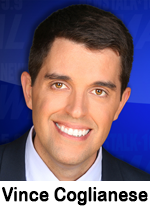 is being distributed in the same daypart – 12:00 noon to 3:00 pm ET – as Dan Bongino’s show prior to the latter’s giving up his media role to take on the deputy director at the FBI. Trump addressed the issue of Greenland and Vice President J.D. Vance’s trip there this week, saying, “We have to have that land because it’s not possible to properly defend a large section of this Earth – not just the United States – without it.” The president also addressed the Signal group chat matter, telling Coglianese that it was possibly an innocent error made by a lower-level staffer for national security advisor Mike Waltz. He noted that it did not impact the success of the attack, but that they would determine how the error happened so it would not happen in the future.
 operating income was approximately $38.6 million, an increase of 1.7% from the same period in 2023. Net loss was approximately $35.7 million for the quarter, compared to net loss of $11.0 million for the same period in 2023. Urban One CEO and president Alfred C. Liggins, III states, “Our Adjusted EBITDA of $103.5 million came in at the mid-point of guidance, helped by strong political advertising revenues in the radio division. The radio outperformance was offset by declines in both advertising and affiliate revenues at the cable TV segment, as audience delivery continued to underperform expectations. We are however seeing some stabilization in the first quarter cable TV delivery, which should help to mitigate the continuing decline of linear TV subscribers. First quarter core radio revenue demand weakened, with pacings down 13.6%, although the second quarter is showing signs of improvement, with core pacings currently down 1.7%.”
  include: Megan Thee Stallion, Mayim Bialik, Kathy Bates, Angela Yee, Keke Palmer, Rita Cosby, Jill Schlesinger, Kristin Klingshirn, Letty Peniche and more. They will be honored at the Gracie Awards Gala on May 20, 2025, at the Beverly Wilshire in Los Angeles, which will be hosted by actress, comedian, and podcaster, Fortune Feimster. Local and student award recipients will be recognized at the Gracie Awards Luncheon on June 18 at Cipriani’s in New York City. AWMF president Becky Brooks says, “For 50 years, the Gracie Awards have honored the storytellers who push boundaries and redefine what’s possible. This is more than an awards show – it is a movement that has championed inclusion, representation, and truth in the media. The women we celebrate today are shaping the next 50 years, ensuring that our narratives are not just seen or heard, but felt and remembered. And we are excited to have Fortune Feimster join us as the host for our Golden Anniversary Gala in Los Angeles, bringing her incredible wit and energy to this unforgettable celebration.”
  Thank you, TALKERS for placing me on two panels at the IBSNYC conference. All student conferences have one underlying goal: Attendees want to know how to land a starter job in media. Here’s the information I shared with the eager crowd.
 addition, net income (loss) improved $26.9 million year-over-year in the fourth quarter, and $32.1 million in the year, in large part due to a reduction in non-cash impairment charges… Our Broadcast Advertising net revenue declined in-line with our expectations for 2024 (mid-single digit ex-political decline) which aligns with our view that broadcast is a mature cash cow business that will continue to face headwinds going forward, as businesses will continue to share shift from traditional advertising to digital advertising. Thankfully, we are often the beneficiary in that case, as we frequently have the most comprehensive set of digital advertising solutions available in our markets. Digital is and will continue to be Townsquare’s growth engine, and we believe Townsquare’s ability to drive profitable, sustainable digital growth is a key differentiator for our company, and consistent with our strategy of being a Digital First Local Media Company.”
 Thank you, TALKERS for having me on panels at the TALKERS Generations 2025 IBSNYC conference this past Saturday (3/8). Moderator and Philadelphia talk show god Dom Giordano asked us the inevitable: “What is the future of radio?”
 announced the news on-air on Tuesday. Murphy is one half of the “Murph and Markus” show. Murphy tells SFGate, “I’ve just really enjoyed my time talking to the Bay Area every morning and talking to my partners – whether it was