By Matthew B. Harrison
TALKERS, VP/Associate Publisher
Harrison Media Law, Senior Partner
Goodphone Communications, Executive Producer
 The rise of independent, talk show-style political commentary on YouTube has created a new class of media actors who do not see themselves as broadcasters, journalists, or publishers. They see themselves as creators. That distinction is real in terms of identity, tone, and platform. It is not real where it matters most: liability.
The difference exists in how the work is produced and presented. It disappears the moment the content is published.
In practice, these creators are engaging in acts that courts have long recognized as publication. They are selecting topics, framing narratives, editing clips, and distributing content to large audiences. Those decisions are not neutral. They are editorial.
The absence of FCC regulation in this space has created a persistent misunderstanding. Traditional broadcasters operate under a regulatory framework that includes licensing and content restrictions. Independent creators do not. But the lack of FCC oversight does not reduce exposure. It removes one layer of regulation while leaving the core legal risk fully intact.
Defamation law applies equally to both groups. A false statement of fact about a real person that causes reputational harm can give rise to liability whether it is spoken on a licensed radio station or uploaded to a monetized YouTube channel. The standards may differ depending on whether the subject is a public or private figure, but the underlying obligation remains the same: accuracy matters.
There is no YouTube exception. There is no creator carveout. The law does not care how the content was distributed, what the platform calls you, or how you see yourself. It cares who made the statement, who chose to publish it, and whether it was false.
The structure of YouTube content introduces additional risk. Many creators rely on rapid production cycles and clip-based commentary. This increases the likelihood of error, particularly when context is compressed or omitted. Editing choices that seem minor from a production standpoint can materially change meaning, which is precisely the type of conduct that courts examine in defamation and false light claims.
Monetization further complicates the analysis. Revenue from ads, memberships, or sponsorships strengthens the argument that content is commercial in nature. That does not eliminate First Amendment protections, but it can influence how a court evaluates intent and reasonableness.
There is also a tendency to assume that platform norms provide a form of protection. If a piece of content is allowed to remain online, or even promoted by an algorithm, it can feel implicitly validated. That assumption is misplaced. Platform enforcement decisions are not legal determinations. They are business judgments.
The most important point is simple and often overlooked. Liability does not turn on intent. It turns on what was said, whether it was false, and whether reasonable steps were taken to verify it.
The platform may change how content looks. It may change how fast it spreads. It may change who gets to participate.
It does not change the consequences of getting it wrong.
Time passes. Technology and fancy packaging change. Exposure and liability do not.
Matthew B. Harrison is a media and intellectual property attorney who advises talk show hosts, content creators, and creative entrepreneurs. He has written extensively on fair use, AI law, and the future of digital rights. Reach him at Matthew@HarrisonMediaLaw.com or read more at TALKERS.com.
Share this with your network



 show is hosted by Carl “Killer Carl” Brown and has been on the air for almost a decade and is part of the John Frederick Radio Network. Seaboard marketing solutions consultant Bob Stei says, “We welcome all shows that affiliates will desire. Carl seems to put his own views and thoughts first, and they are not based on just ideology. That is refreshing.” The program currently airs on stations throughout America including WJFM, Richmond; WJFV, Norfolk; WBRG, Lynchburg; and WLMB, Atlanta.
 Ryan will continue calling live 49ers games, as well as pre-and post-game shows. Cumulus regional VP Larry Blumhagen comments, “We at KNBR are tremendously excited to continue this valued partnership with the Niners. We have a wonderful relationship with the organization and its people, and they are truly a partner to us in connecting their fans with all the gameday action they love and demand. We look forward to continuing to provide 49ers fans with outstanding game day coverage on all KNBR platforms from AM/FM to streaming.”
 way for the reorganization to move to the next step – approval from the Federal Communications Commission. When fully consummated, the plan will have eliminated $592 million of debt for Cumulus and puts control of the company into the hands of secured creditors. A new board of directors will be elected and although current executive management may remain in their positions, it is entirely up to the new board of directors to determine the company’s officers.
 understate the immense sales effect power of creative. Some 122 marketers placed creative as the third most important contributor toward driving sales behind targeting and brand. But the reality based on analysis of 450 ad campaigns indicates creative is far and away the most important driver of sales. Both marketers and agencies place the greatest importance on targeting. Experts caution that too narrow targeting is ineffective.
  treatment schedule. Edmonds, 42, said the diagnosis came unexpectedly about two months ago and described it on the air as a ‘total gut punch.’ A mother of a young daughter, she acknowledged the fear that followed the discovery but said she is confident in her care team and treatment plan at Henry Ford Health. Edmonds told listeners she has already begun chemotherapy and believes she will get through the process.” Edmonds says her oncologist emphasized the importance of consistent sleep and recovery during chemotherapy. She made clear that the change is temporary and that she plans to remain connected to WJR and its audience as she is able while focusing on her health.
 Broadcasting and ESPN Arkansas, which will now serve all the Fort Smith, Hot Springs, Northwest Arkansas, Harrison, Mountain Home, and much of Eastern Oklahoma. Top rated KISR will continue to serve the River Valley from just below its previous dial position, moving to 93.1 FM.” ESPN Arkansas general manager Tommy Craft adds, “We are excited to expand and grow the footprint and coverage areas of our ESPN Arkansas radio stations. The addition of a 100,000-watt station to our roster of current stations is a true game changer. Fred Baker and KISR have spent more than 55 years building something that is far more than just a radio station for so many people, and we are humbled to be able to continue that kind of commitment to listeners. We live in a state where the sports we love and the daily conversations about the teams we follow matter. The opportunity to expand our coverage so that more of the great people in Arkansas can join in the conversation with our live and local sports talk radio shows is a thrill, and we cannot wait to get started.”
 Time Spent Listening to podcasts has now surpassed TSL with spoken word radio. And both are fraught.
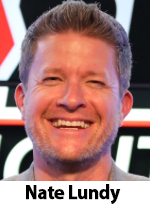 spanning over 30 years, including the last 16 in Denver. As a seasoned host turned executive, he has built a legacy of excellence that now culminates in his role as president and CEO of Mile High Sports. Today, he directs the pulse of Colorado sports, overseeing comprehensive, multi-platform coverage of Colorado’s major professional sports teams.” Lundy comments, “I’ve spent more than 35 years in radio and television, the last 16 right here in Denver. I am so happy to join Audacy as a local voice, and more importantly, as a local fan. This is going to be a fun ride!”
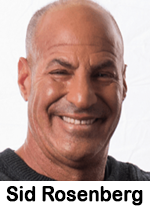 are antisemites. How could this be? Rosenberg posted a video clip of the mascots warmly embracing New York Mayor Zohran Mamdani at Citi Field, followed by a still photo of himself in a corridor at Citi Field with Mr. Met about 20 yards down the same corridor walking in the opposite direction after, Sid says, ignoring him. It’s unclear at this time if the Justice Department has opened an investigation into the New York Mets.
  of 2025, net revenue was $741.6 million, a decrease of 10.3% from 2024. For the full year 2025, the company posted a loss of $200.7 million. Cumulus reports by segments and for all of 2025, broadcast revenue was $116.2 million, a decline of 22.2% from 2024. Even digital revenue fell in 2025 to $151.3 million, down 1.9%. Cumulus Media president and CEO Mary G. Berner says, “The Company’s recently announced financial restructuring marks an important step toward meaningfully reducing the debt burden that has constrained the business. Looking ahead, we remain focused on building on the core strengths of the Company to maximize value.”
 news content, report on breaking news events, serve as board operator for special programming, and produce special projects and programming as assigned. This position does feature regular hours of board operator work, writing, producing, as well as anchoring newscasts. On occasion the position will offer extra hours during the week to cover shifts for those who are ill or on vacation.
 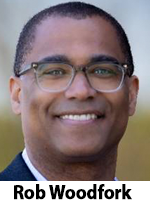 is a key part of our long-term strategy to transform how we cover sports. We’re committed to delivering content that goes beyond highlights and final scores – focusing instead on context, analysis, and storytelling that resonates with today’s audience.” WTOP says that in his new role, Woodfork will lead a more dynamic, multi-platform approach to sports journalism, anchored by daily video and audio commentary designed for modern consumption habits. His work will prioritize insight and authenticity – meeting audiences where they are, particularly among Gen X and Millennial fans seeking more than traditional sports updates.
 says, “Political advertising will drive key spending this year. BIA projects approximately $8.4 billion in local political spending, creating substantial revenue opportunities across broadcast television, linear cable, CTV/OTT, radio, and direct mail. While some legacy formats, including print, continue to face long-term declines, others are evolving. Across the market, advertisers are increasingly adopting full-funnel strategies, combining high-reach media such as cable, broadcast, and OOH with data-driven digital channels to drive both awareness and measurable outcomes. Radio also remains a stable local medium, with additional opportunities emerging through digital audio, including streaming and podcasts.”
 audio in the car among Americans 13+. Edison adds, “As of Q1 2026, 55% of in-car audio time is spent listening to AM/FM radio. The next closest platform in the car is streaming audio. Time with streaming audio has grown over the 12-year history of Share of Ear but remains a distant competitor to AM/FM radio among the total population ages 13+, with 16% of in-car audio time going to streaming platforms… Among Americans 13-34, 46% of their in-car audio time is spent listening to AM/FM radio and 30% with streaming audio sources.”
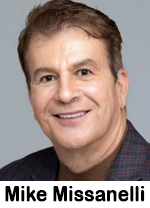 assault and harassment after an alleged incident involving his fiancé. According to several Philadelphia media outlets, Missanelli allegedly slapped his fiancé during a “scuffle” in which she allegedly struck him in the chest. Missanelli has a preliminary court hearing on April 22. Missanelli’s long career in sports talk included time spent with both WIP and WPEN “97.5 The Fanatic.” He left WPEN during a round of staffing cuts last summer.
  conservative or liberal – depending on the channel – all-news radio’s audience is almost perfectly balanced. Audacy adds that it matters when it comes to election season. “While most national news platforms reach consumers who already lean one way or another, all-news radio’s neutrality makes listeners more willing to hear a message – even from a candidate they might initially distrust. The Alter Agents study found that 77% of listeners considered all-news advertisers to be ‘trustworthy’ simply by running adjacent to the content.”
  deceased, known or unknown, in New Mexico who has made a meaningful impact on their community, through service, leadership, sacrifice, or simply showing up when it matters most. On May 4th, News Radio KKOB will begin announcing honorees, with four individuals recognized each weekday, leading up to a culminating event later this summer. KKOB program director Aaron “Buck” Burnett says, “250 Flags is about recognizing the people who don’t always get the spotlight. New Mexico is full of everyday heroes, and this gives us a chance to tell their stories and honor them in a meaningful way.”
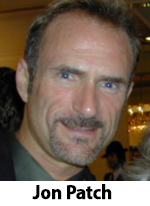 Digital nationally syndicated weekend program “Talkin’ Pets.” Patch says, “Each week you get a variety of veterinarians and trainers, which keep our show current, fresh, exciting, fun and always new. We are available via satellite, ftp and file, live on Saturdays or delayed any time on your stations and each hour stands alone.”
 from February in the top five as NPR’s “NPR News Now” stays in first place. Some moves of note include DailyWire’s “The Ben Shapiro Show” rising one spot to #6; Silverloch’s “The Dan Bongino Show” falling two places to #11; and NPR’s “The NPR Politics Podcast” climbing 10 places to #19.
  Jennifer Arnise says, “Winning the ‘Pitch your Podcast’ contest was so validating and made me feel like my voice and the hidden stories of Black women really matter. This podcast is a love letter to Black girls who never felt seen or heard by their mothers and feels like getting the best advice from your tough but loving big sister and your drunk bestie. It’s what I wish I would’ve had when I started my healing journey.” The launch comes ahead of the fourth annual Black Effect Podcast Festival taking place April 25 at Pullman Yards in Atlanta where the “Pitch Your Podcast” booth will once again be available for festival attendees. The activation allows creators to pitch their shows to members of the Black Effect team for the chance to join the network.
 operator Usher Media LLC. The deal includes news/talk KGFW-AM, Kearney and two music brands plus two other music FMs in Hastings and Grand Island. Usher Media is owned and operated by Alan Usher.
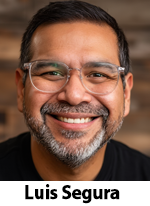 San Francisco. Cumulus chief content officer Brian Philips says, “Among our strong field of Cumulus programmers, Luis leapt from the pack as the person possessing the energy and imagination to lead WMAL. Luis visualizes the multi-dimensional future of this big brand. The immense benefit of keeping Luis ‘in house’ is that he will continue to offer expert counsel to our revitalized operations in San Francisco and Los Angeles, as needed.” Segura says, “I’m incredibly excited to work with the legendary staff of Cumulus’ flagship news/talk. WMAL is packed with national names like Larry O’Connor and Chris Plante, and I can’t wait to join the team.”
 back at a century of service to the Fox Valley, but today, we turn our gaze forward. After retiring our special 100-year commemorative look, we didn’t want to just go back to ‘business as usual.’ We’re kicking off our second century with a fresh new look that reflects the evolution of WHBY and our unwavering commitment to the next generation of listeners.” WHBY brand manager Alex Thomas adds, “We are excited to usher in a new era of WHBY. Our rebrand represents a new chapter of WHBY and reflects who we are today and where we are heading next. This transformation goes beyond a new logo. It represents our vision of strengthening community awareness, enhancing the way we deliver news and conversation in the Fox Cities and beyond. While our look may be changing, our core values remain the same. Being trusted, local, and community driven remains a pillar of WHBY.”
 Assessing the hourly threat to the very existence of the medium of radio is a popular hobby among conventioneers. The audience levels for radio are astonishingly constant since 1970, but according to “radio people,” they are living at the edge of a volcano. Spotify radio, SiriusXM radio, Pandora radio, TuneIn radio, Internet radio, there are all kinds of radio! General Motors wants to throw AM/FM radio out of the car as in “do you really need radio in the car?” Radio’s response to the in-car-removal threat is by promising non-stop typhoons and hurricanes.
 agencies can use AM/FM radio in their upcoming media plans. Some key points include:1) AM/FM radio has a 64% share of ad-supported audio among registered voters; 2) AM/FM radio has substantial shares (62% to 65%) among Independents, Republicans, and Democrats: 3) Marketers and media agencies significantly underestimate AM/FM radio listening shares and dramatically overestimate Spotify and Pandora audiences; and 4) Digital audio only reaches a third of Americans. With AM/FM radio, reach soars to 73%.
  In “
In “