Industry News

Salem Sells Regnery to Skyhorse Publishing

Salem Media Group agrees to sell Regnery Publishing to Skyhorse Publishing. Salem acquired the company that was founded in 1947 by Henry Regnery in 2014. Salem COO David Evans says, “We are thrilled to pass the torch of the oldest and most respected conservative publishing company in America to free speech advocate Tony Lyons and his incredibly successful Skyhorse Publishing. Salem is committed to the dissemination of conservative ideas and is excited that Skyhorse will both be a powerful steward of this important brand and an engine for its future growth.”

Industry Views

Pending Business: Welcome to 2024

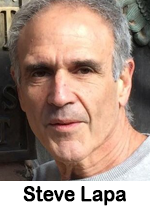
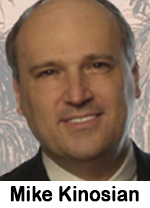
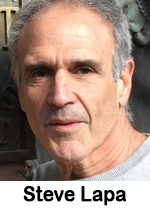
By Steve Lapa
Lapcom Communications Corp
President

imWhat do your New Year’s resolutions look like?

Chances are your resolutions included what I call the old reliable “mores.” Earn more, save more, exercise more, eat more of the healthier foods. Sound familiar? Do you break down the resolutions into daily goals? As in here is what I need to do today to meet my goals and fulfill my resolutions. How about the “less” category? Do you spend any time thinking about what you want to do less often? Let us start with some obvious candidates.

A recent survey by Frequence.com indicated 84% of respondents in marketing and advertising felt stress on the job. Maybe the other 16% had just taken their morning meds. Seriously, can you blame the stressed-out thousands who have spent a career working for companies that stand on the brink of financial peril, delist from the stock exchange, or initiate short-notice personnel cuts? Has anyone in the radio business reading this column ever experienced a fully stress-free experience for over 36 waking hours? If it is not work, maybe it is friends, family, travel issues, or anything else that you simply cannot stop thinking about.

“Less” resolution #1. Less stress on the job, unless you are in the parachute business or an air-traffic controller or emergency room doctor in New York or Chicago, you get where I am going with this.

The same survey showed 72% of respondents work for organizations expecting them to deliver more with less support. The last time I worked for a broadcast company that provided me with my own dedicated assistant, the Cowboys won the Super Bowl in the first ever televised in prime time. Please raise your hand if you are a seller or sales manager with your own dedicated assistant. Anybody? How about in the past 10 years?

“Less” resolution #2. Less is more. The slogan takes on new life in the remote work environment that is a norm for many in the media buyer-seller relationship. Everyone in the chain is being asked to do more, reach increased goals, and perform to a higher standard with less support. You are either on the income money flow line or the expense side. Pick your lane and try your best to deliver measurable results.

Technology is driving change in every corner of the workplace. New strategies and technologies designed to monetize media impressions are part of our culture. Surveys show anywhere from 52-70% of sellers and marketers are challenged with keeping up.

“Less” resolution #3. Prioritize your upskilling. Pick the one area that will allow you to hit your most important “more” goals and master it. Never stop learning, just adjust your learning curve to what works best for you.

Here’s to a more productive and prosperous New Year!

Steve Lapa is the president of Lapcom Communications Corp. based in Palm Beach Gardens, FL. Lapcom is a media sales, marketing, and development consultancy. Contact Steve Lapa via email at: Steve@Lapcomventures.com.

Industry News

Broadcasters Encouraged to Participate in United Nations World Radio Day 2024 on February 13

American radio broadcasters are invited and encouraged by UNESCO to participate in the forthcoming celebration of the UN “World Radio Day (WRD) 2024” which, among a number of facets, provides the industry with the opportunity to create connections with colleagues around the globe to generate international interviews and co-productions. TALKERS readers can register their shows, stations and networks as being available for these connections and discover potential partners in the process by clicking here. https://www.unesco.org/en/days/world-radio/2024/register?hub=66636  WRD 2024 will take place on February 13.

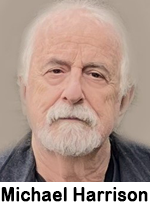
According to TALKERS founder Michael Harrison, who is serving as this year’s executive advisor to UNESCO for World Radio Day 2024, “The time to get your platform listed on the international map of shows, stations and networks is now, while it is relatively early.  American radio professionals, as well as campus station staffers, can schedule interviews/conversations – either live or prerecorded – with their broadcast colleagues worldwide to compare and contrast the history and role of radio in their respective countries on or leading up to February 13.  These shows can be simulcast on both stations or simply be one personality interviewing another. Simply register as being open to joint initiatives for the 2024 celebration, and fill out the form that will pop up if you, your station or network would be interested in partnering with others in this exciting process. Check regularly to see fellow broadcasters or partners who will keep registering between now and February 13.”

In an era marked by the dizzying speed of technological innovation and the rapid obsolescence of one shiny new platform after another, radio is beginning its second century of service as one of the most dependable and widely utilized forms of media in the world. The theme of 2024’s installment of WRD is Radio: A Century Informing, Entertaining and Educating. Harrison says, “Radio, as a technology, science, means of communications and system of programming audio elements, has roots all the way back to the 1800s… so it can be safely said that the medium is already well into its second hundred years of existence with its footprint spanning three centuries. WRD 2024 shines a broad floodlight on radio’s remarkable past, relevant present and promise of a dynamic future.”

Harrison continues, “The opportunity provided by the 100-year-plus milestone of radio begs to be trumpeted at full volume. The century is an occasion to proudly celebrate the medium’s extensive virtues and ongoing potency. It comes at an opportune time, as radio – though statistically popular and enormously trusted by the public – faces increased challenges to audience and revenue numbers from digital platforms, pervasive social media, generational divides, the headwinds of censorship and, for some media, stifling consolidation-induced debt as well as economic hardships exacerbated by a soft advertising market. UNESCO is inviting the worldwide radio industry in all its many forms – commercial, public, non-profit – to join in this global celebration of the medium at this special and pivotal juncture in its century-spanning journey.”

WRD 2024 60-second vignettes 

In addition, broadcasters are invited to tap into preproduced “World Radio Day Minutes” – a series of 20 one-minute vignettes about radio’s past, present and future being made available license-free.  Platforms can run these commercial free as a promotion for radio or attach them for sponsorships by local advertisers.  The produced versions in English feature the voices of Michael Harrison and noted commentator Victoria Jones (of DC Radio Company).  Unvoiced scripts are available for broadcasters who choose to produce their own versions of these vignettes.  To hear and download these 20 one-minute produced programs and scripts please click here. https://www.unesco.org/en/days/world-radio/audios2024

13 ideas to celebrate WRD 2024  

Radio broadcasters are also being provided with 13 useful ideas to help them promote WRD 2024 that include ways to create sponsorship and promotional partnerships with their local communities.  These can be accessed by clicking here.  https://www.unesco.org/en/days/world-radio/13ideas

For more information regarding World Radio Day 2024 please click here. https://www.unesco.org/en/days/world-radio


Industry News

TALKERS News Notes

PodcastOne acquires the exclusive distribution and sales rights to the award-winning podcast, “Was I In A Cult?” from hosts Liz Iacuzzi and Tyler Measom.  PodcastOne co-founder and president Kit Gray says, “The cultural impact that this podcast had and the watercooler talk left a lasting impression in the world of podcasting, and we cannot wait to bring new episodes to listeners and to advertisers in 2024.”

Cumulus Media announces that the podcasts from real estate investment focused BiggerPockets join the Cumulus Podcast Network. BiggerPockets says it helps those interested in finding financial freedom through real estate investing by providing useful tools, education, and support with their network of six podcasts that garner more than four million downloads each month.

Industry News

TALKERS News Notes

Florence, Alabama news/talk/sports WBCF-AM notifies the FCC that it will cease broadcast operations effective December 31, 2023 and will go silent. The station, owned by Benji Carle, simulcasts on translator W246BS at 97.1 FM, also licensed to Florence.

Radio programmer Michael Czarnecki leaves his position with Binnie Media as vice president of programming for that company’s Maine radio stations and “The Pulse of New Hampshire” network of talk stations to join Saga Communications as PD for WMLL, Manchester, New Hampshire “96.5 Live Free Country.”

The OutKick digital sports media platform says it saw strong growth month over month in November 2023 with over 6.4 million total multiplatform unique visitors (up 6% versus the prior month), 24 million total multiplatform views, (up 2% versus the prior month), and 23 million total multiplatform minutes (up 1% flat versus the prior month), according to data from Comscore. On Facebook, X (formerly Twitter), and Instagram, OutKick saw over 1.3 million total social actions in November 2023, up 48% versus the prior month and up 93% versus November 2022.

Josh Krulewitz is named ESPN SVP, communications and assumes leadership of ESPN’s communications department effective December 31. Krulewitz takes over for Chris LaPlaca who is retiring at the end of the year after more than 43 years at ESPN.

VSiN adds two new affiliate stations to its roster as WKCT-AM and WDNS-AM in Bowling Green, Kentucky and WTKG-AM, Grand Rapids, Michigan are now airing content from the network.

Features

Ladd Have Mercy

imLOS ANGELES – As students, enthusiasts and caretakers of this wonderful medium, we’re keenly aware that radio’s “Golden Age” boasted an incredible array of entertainers and broadcasters.
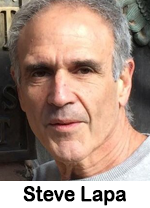
With lifestyles, technology and society being what they are today, it’s almost inconceivable to imagine that families would actually gather around the radio and attentively listen – and indeed hang onto – each and every word that emanated from that mysterious entertainment-laden box sitting in the living room.

Fundamentally important back then, of course, was a concept known as “Theater Of The Mind.”

No one embodied and personified it better than one of the bigger-than-life talents of that era: Orson Welles.

Most are familiar with his epic “War Of The Worlds.”

Pictures Set In Songs

The list of other outstanding “Mercury Theater” presentations Welles was responsible for is much too lengthy to cite here, but his legendary “Theater Of The Mind” mystique lived on nightly in Los Angeles, where Jim Ladd was a welcome guest for Southern California listeners dating back to 1969 and hosted a regular show on SiriusXM’s Deep Tracks channel the past 11 years.

Theater Of The Mind so perfectly describes what Ladd tried to do, although it’s not radio drama in the pure sense. “What I [attempt] at night is to show you pictures and do that by playing sets of songs,” the (then) highly popular KLOS-FM, Los Angeles 10:00 pm – 2:00 am personality remarked to me. “If you follow the lyric content of each song, as well as the song’s emotional feel, it should tell you a story with a beginning, middle and end. Thus, it’s theater.”

Throwback To Creativity

In addition to providing his special spin to Theater Of The Mind, Ladd was also responsible for keeping another bit of radio history on life-support.

Most air personalities are required to adhere to strictly enforced music lists, but Ladd’s nightly, four-hour, Los Angeles air-shift was a throwback to the days of “free-form” radio.

The result was similar to what existed in April 1967, when a new phenomenon started taking shape. “That was the beginning of FM and this multi-billion dollar industry,” Ladd recalled. “[Free-form] started on a station [KMPX, San Francisco] where the phone was literally disconnected, because they couldn’t pay the bill. [Tom Donahue] had an idea; he went there and it took off. For a while before deregulation, that’s what all FM radio did in any market. Free-form worked great, until they killed the golden goose.”

Right Place, Right Time

Southern California native Ladd was extremely fortunate to have been able to launch his radio career in the country’s second-largest market. “Part of it was timing,” he admitted. “I was at a little station in Long Beach [KNAC-FM] that decided it was going to try this new, hippie, underground thing. They didn’t know what it was, but [the feeling was to] hire some hippies and see if they could make some money with it. I happened to be right there at that time.”

A frustrated musician, who wanted to be a songwriter, Ladd recounted a life-altering conversation he and a buddy had in a car. “My friend said that I should be in radio. I was 19 or 20 at the time and your friends at that age seldom notice anything but themselves. For some reason, that stuck with me. Thank God, FM was in its infancy and they’d take complete novices like me off the street and give us shows. Owners didn’t know anything about the Grateful Dead or The Who, but we did.”

Check Mate

Instead of walking into a studio and following a computer-generated music log, Ladd was given freedom to use his imagination. His only preparation was what was happening in life.

Resulting sharp, clever music sets he composed weren’t written out in advance. “The way I work is to turn the music up loud and get the song working on me,” he commented. “Once [that happens], it keys in my mind what will fit next.”

Such an intricate process included a mental checklist. “I’ve figured out the lyrics will work, but I need to know how the song I’m playing ends and how the next song begins,” he explained. “If I’m playing a balls-out rocker, I can’t go into some acoustic piece. In that way, it’s really like a chess game. I have to plan these things to start every single segue as I’m doing it. That’s the way that works best for me.”

There were nights, however, that Ladd knew that he “[didn’t] have it,” but as he maintained, “I’ve been doing it long enough to put on a good professional show. Sometimes, I don’t have what I’m striving for, which is to make a connection with the audience. Without having to prompt them or explain anything, my audience lights up the phones. They call because they get what I’m doing. Once that connection is made, then look out, because the rocket is taking off.”

Gracefully Handling The Tragedy

Recalling the horrific September 11, 2001 “Attack On America,” Ladd noted that although it was one of the country’s greatest tragedies, “It was easy to immerse myself into something like that. It so moved me that I had no problem thinking of songs to play or what I wanted to say.”

Judy Collins’ version of “Amazing Grace” was the first song he played when he went on the air that night. “Believe it or not, it set the tone for what I did for … the next two weeks.”

As it usually did, the audience – even or perhaps especially in this painful period – stepped up to the plate. “This is the thing about free-form radio that’s so precious to me,” Ladd emphasized. “Nobody called me on 9/11 with an idiot request. When I played sets of 9/11 songs, everybody was calling in with [appropriate] suggestions. Second only to dealing with the tragedy, the hardest part was to know when I could play groups like AC/DC again. I found that very difficult; you can only feel your way through it.”

 Loyal Listeners

In his third tour of duty at (then ABC-owned) classic rocker KLOS, Ladd was a legitimate cult figure in the Southland for his work at legendary cross-town rocker KMET.

Southern California listeners were stunned on Valentine’s Day 1987 when the “The Mighty Met” (now Audacy smooth AC KTWV) – became smooth jazz “The Wave.”

Also on Ladd’s impressive resume were stints at Los Angeles outlets KLSX and KEDG.

The notion of an air personality “connecting” with the audience is both elementary and elusive. Ladd was a rare case of a non-drive time music personality who amassed a loyal, vocal following.

Grateful for such audience allegiance, Ladd didn’t take it for granted. “My audience has been that loyal from KMET to KLOS and all the [other] stations in between. My part of the bargain is that I won’t lie to them or let them down by doing a format. I was off the air twice in my career for two years each. That was very difficult, but because I did that, I’ve earned the right to do this and I think the audience responds to that.”

Offered jobs by stations that wanted the “Jim Ladd” name, he opined, “They didn’t understand what that meant. They thought they could just plug in my name, not let me do what I did and it would be the same thing.”

Your Attention Please

Evenings and nights were Ladd’s domain throughout his career. “I wouldn’t want to do middays or afternoon drive,” pointed out the personality known for his “Lord have mercy” exclamations. “Listening habits are such that you can’t sit and listen like you can at night. People are working, picking up the kids and doing life.”

Much like Welles’ Mercury Theater, Ladd’s show required attention. Otherwise, it was just like playing one song after another, without making that all-important connection. “The audience’s side of the bargain is that they have to bring their attention to the show,” he insisted. “I’ve done [6:00 pm – 10:00 pm] in my career and that worked out very well. The show is a bit different, in that, it’s not quite as eclectic. I don’t know if I’d be playing Judy Collins and Johnny Cash in [that time]; maybe – but maybe not.”

Convinced his free-form style could be utilized elsewhere, Ladd, nevertheless, pondered that to his knowledge, “I’m the Alamo – the last guy standing. That’s certainly the case in a major market. The big tragedy is that there are so many talented [personalities] who, although they wouldn’t do the same show that I do, could do free-form radio. We’re losing all that talent. I’m not the only guy in the world who can do it. I’m the one who was stubborn enough to say that I won’t follow a list – I just won’t do it.”

Powerful Trinity

Among those who influenced Ladd’s on-air style were former MTV personality and ex-KEDG program director J.J. Jackson; veteran Los Angeles air talent Raechel Donahue, who went on to do 7:00 pm -12:00 midnight in Denver at KQMT “The Mountain”; longtime KMET personality the late B. Mitchel Reed; KMET’s Pat Kelley; Cynthia Fox; Jack Snyder; and the late, underrated Mary Turner. “The wonderful, beautiful part of free-form radio – and most importantly – at KMET was that it wasn’t about being a star,” Ladd asserted. “What we were doing was our part of the ‘social revolution’ at the time. It was like a triad: The people on the street, the music, and us. We took the message of Dr. [Martin Luther] King and combined it with the music of Bob Dylan.”

One highly significant aspect in noting those former KMET staffers was that they’d each listen to everyone else’s show and it elevated their own game. “I’d hear Cynthia do a great segue, or Mary would do a great segment and that would inspire me,” Ladd enthused. “What I miss most is that kind of camaraderie – it’s just me now. I can’t tune in to hear someone else’s great segue. When I heard one of my colleagues do something that touched me, the first thing I wanted to do was to call them and tell them it was great. The second thing was that – from their subject matter – I got 15 different ideas to use when I got to work that night. That was the beauty of it.”

Role Model

National audiences became aware of the iconic Los Angeles talent through shows such as “Innerview,” “Headsets,” and “Jim Ladd’s Living Room.”

Considerably more than someone who voiced a script for a syndicated show, Ladd spent a great deal of time scrutinizing the fine art of interviewing. “I ripped off just about everything I know about interviewing people from Elliot Mintz,” he confided to me. “Elliott was my role model. He’d interview the Shah of Iran one week and John Lennon & Yoko Ono the following week. He’d talk with everyone in a warm, low-key and intelligent manner. It was completely unlike anything [else] I’d heard at the time and that really impressed me.”

The “Innerview” show had an 11-year run and was carried by 160 stations. “It was the first of its kind,” boasted Ladd, whose other syndication work involved voiceovers for an overseas television show. “I’m very proud of the work we did [on ‘Innerview’]. I did 99% of the interviews in the front room of my house in an artistic community in Laurel Canyon. People would immediately be put in a very comfortable place. It’s not a studio – it’s my home.”

The Work Is The Key

Another reason why people felt at ease was that, instead of focusing on a person’s life, Ladd addressed their work. “They loved that. Rather than talking about how many girls they had, what kind of drugs they did and life backstage, I studied every word of every lyric of the new album they wanted to talk about and grilled them about their songs on the environment. It would require six to eight hours of preparation. Then there was another 20 – 25 hours to write the one-hour show; it was a lot of work.”

Writing became such a worthwhile experience that, in 1991, he penned “Radio Waves: Life And Revolution On The FM Dial.”

As a result of these syndicated projects, this immensely respected rock personality diversified himself; the book became a big hit. “I guess I’m a radio guy who learned how to become a writer,” Ladd mused. “In order to get up enough courage to write my book, I read authors I like. I was required to do a great deal of writing for ‘Innerview’ and would write out what I’d say – which is something I never do [on my live show]. You’d also end up with two hours of tape and pick out what the person was going to say, how I was going to introduce it and what song would follow it.”

A Distant Second

Whenever anyone asked Ladd to name his favorite band, he qualified his answer by separating the Beatles.

The quartet, he stressed, had to be placed in a completely different category.

After that’s been done, he named the Doors as his favorite.

The same applied to his most memorable radio experiences, with KMET being the Beatles’ equivalent. “We were at the right place at the right time with the right people. We loved each other and there’s never been anything else like it.”

Nonetheless, he quickly stated that his favorite time is the next time he was able to sit behind a microphone. “The reason for that is [KLOS’-then program director] Rita Wilde,” he proclaimed. “I don’t know how I got so lucky to have a boss who was [such a great on-air personality] and so supportive. If it weren’t for Rita Wilde, I wouldn’t be on the air – that’s just a fact. I want to keep free-form radio alive for the audience, but I also owe her to make this happen. She’s under a lot of pressure [when it comes to my show]. When I go in at 10:00 pm, the format literally stops. I can’t think of another boss in the world who would understand that.”

Numbers Game

His multi-decade Los Angeles track record and loyal following notwithstanding, Ladd still realized that ratings played a role in dictating his employment; however, as he declared, “Rita is one of the first people I’ve ever worked for in this business I trust when she says the numbers are up or down.  Sometimes in my career I’ve found out from people who didn’t work at the station that my show was doing great. When there’s a down book, [management is usually] right there.”

Ultimate People Skills

Certain managers and programmers, he claimed, kept good books a secret from him; however, “Rita calls immediately when I have an up book. If I have a down book, I don’t hear from her; I have to call her. That says volumes to me. We’ll deal with a problem, but she doesn’t want to get me upset. She might tell me that I’m playing too much of this or not enough of that, but she never says anything [threatening]. It’s always from a helpful and suggestive [stance]. When the numbers are good, she leaves me totally alone. From my perspective, you can’t ask for more than that. Her people skills are unbelievable.”

In addition to have wanted to keep free-form radio alive as long as possible, Ladd disclosed that he wanted “to walk away before I can no longer do my job. I don’t know when it will happen, but the next stage in my life will probably be to write fulltime – I’m working on it.”

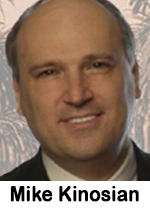
Contact TALKERS Managing Editor Mike Kinosian at Mike.Kinosian@gmail.com

Industry Views

Pending Business: Ad Count

By Steve Lapa
Lapcom Communications Corp
President

imHow many times will we research the same subject and come to the same conclusion?
This time it is the podcast. How many ads will the average listener consider “appropriate” in a 60-minute episode?

If you read the recent research from Cumulus/Signal Hill, you know the answer. For the rest of you, survey says under four minutes per 60-minute episode. The same survey says the magic number for a 30-minute episode is under three.

How ironic is that? The typical talk radio hour runs more ads in one break than an entire 60-minute episode of a podcast. Could it be because we have been integrating radio commercials into hour-long broadcast content for over 100 years? Have we conditioned news/talk listeners to accept more commercials per hour? Our TV friends have been at for over 80 years with an even bigger hourly spot load. Anyone ever see audience research that says add more commercials?

Seriously, unless you pay for the ad-free experience of Netflix, HBO, Hulu, Spotify, Pandora, etc., like most consumers of media, you are comfortable with the ad-supported media model.

So, how has the podcast world been so successful with a model that would leave most traditional radio and TV owners, execs, and sellers dumbfounded.

Here is some insight from my experience.

1) CPM is higher in podcast. The hard facts are when you work with higher CPM you can adjust the commercial load. Demand for digital/social media and podcasts with marketable scale is greater than terrestrial radio. The demand curve for podcast advertising is greater than terrestrial radio. Time to wake up, shake up and shout out loud about our 100-year-old sleepy giant!

2) Survey said 62% of podcast listeners prefer the host read. Talk radio sellers should improve this pitch every day. Today, podcast sellers are simply better at it. Podcast sellers get the intimate relationship between host and listener better than most radio sellers get host and audience. Podcast hosts seem more one-on-one savvy. What will Joe Rogan’s next guest say? What will we hear when your talk talent interviews their next guest?

3) Quality. When your local production director is overloaded and needs to get commercials completed on the air yesterday, what wins: quantity or quality? Be honest here. Where is the next audio creative genius like Dick Orkin or Chuck Blore? Do you know those names?

4) Can you really compare ad load levels between the 60- or 30-minute podcast episode to the average three-hour daily talk radio show?

Traditional molds need to be revisited regularly. My experience with YouTube is showing me even newer models for monetization, different from audio podcasts. Does your 2024 planner have any room for innovation?

Steve Lapa is the president of Lapcom Communications Corp. based in Palm Beach Gardens, FL. Lapcom is a media sales, marketing, and development consultancy. Contact Steve Lapa via email at: Steve@Lapcomventures.com.

Industry News

KYW, Philadelphia Graduates 70+ from “Newstudies” Program

Audacy’s all-news KYW-AM/FM, Philadelphia graduates more than 70 Philadelphia area high school students from its 56th annual “Newstudies” program. The station says, “In October and November, students attended sessions in Audacy’s corporate headquarters, where they learned the principles of broadcast journalism from award-winning media and news professionals from “KYW Newsradio” and other news outlets throughout the city. The students culminated the program by producing their ownim news reports that aired on KYW. Tom Rickert, who serves as assistant brand manager and director of podcasts for KYW Newsradio, says, “There’s no other program that gives students an opportunity to learn from top professionals in news and sports media at one of the best broadcasting facilities in the country. And five decades in, we’re reuniting with parents who graduated from ‘Newstudies’ when they were in high school, who are now watching their teenagers graduate from the same program. We hope to keep investing in the young people of Philadelphia and the Delaware Valley for generations to come, and we’re thrilled to be able to work with our partners at the Klein College of Media and Communication [at Temple University] to make this happen.” At Saturday’s graduation, KYW Newsradio awarded the $2,000 Richard Monetti Scholarship to William Bowens of Sankofa Freedom Academy Charter School. The yearly scholarship is named for a “Newstudies” graduate killed in the 1988 bombing of Pan Am Flight 103 and honors a student whose work demonstrates overall excellence.
Industry Views

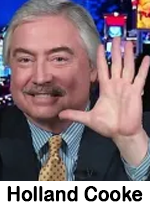
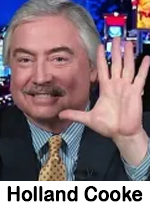
Monday Memo: CES2024, Help Yourself

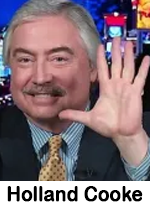
By Holland Cooke
Consultant

imIt’s massive, it’s mind-boggling, and we-the-workin’-press are under strict instructions NOT to call it “The Consumer Electronics Show.” Lotsa luck. 100 thousand+ of us from 150+ countries will descend upon the sprawling Las Vegas Convention Center and other venues up-and-down The Strip.


This long-running expo has evolved from “stereos” and VCRs and drones and smartphones and other thing-in-a-box products, to the new media which are broadcasters’ friends and foes. Yes, CES is still gadget heaven, but Artificial Intelligence – and how it will soon change everyday life – will be the big buzz this year.

im

TV network newscasts and cable news channels cover this event heavily, and you can too. Again, next month, I am offering TALKERS subscribers free daily 60-second radio reports, for air January 8-12, also OK for stream cover-up spots. There’s NO paperwork and NO national sponsor. So, if you sell a local sponsorship, keep the money.

You can hear a sample report (from CES2023), a spec you can use to pitch, at HollandCooke.com, where I will post daily reports the-night-before air.

Holland Cooke (HollandCooke.com) is a consultant working at the intersection of broadcasting and the Internet. He is the author of “Close Like Crazy: Local Direct Leads, Pitches & Specs That Earned the Benjamins” and “Confidential: Negotiation Checklist for Weekend Talk Radio.” Follow HC on Twitter @HollandCooke

Industry News

Nielsen Audio Releases Audio Today Report on the Black Audience

The most recent edition of Nielsen Audio’s Audio Today report focuses on Black consumers and concludes that of all audio services – both ad-free and ad-supported – AM/FM radio dominates in drawing Black listeners. For Blacks 18+, AM/FM reaches 89% of the population monthly, compared to itsim next best competitor – YouTube Music – at 31%. When it comes to Blacks 35-49, AM/FM reaches 90% of that demographic. The Nielsen report dips into Edison Research’s Share of Ear study and notes that when it comes to share of daily time spent listening to all audio sources (Black adults 18+) 44% of that time is spent with AM/FM radio compared to its next best competitor – streaming audio – with 14%. Not surprisingly, when it comes to the top radio formats listened to by Blacks 18+, rhythmic music stations rank at the top. However, out of the 20 radio formats Nielsen lists in its study, news/talk comes in as the 6th most-listened-to format with a monthly reach of almost 2.4 million. That comes out ahead of sports talk with a monthly reach of almost 1.98 million. See the study results here.
Industry News

Houston’s KYST-AM to Become Conservative News/Talk in January

Hispanic Broadcasting Inc will flip Spanish talk KYST-AM, Houston to English-language news/talk on January 1. The company says, “An all-new sound is coming to talk radio in Houston! Beginning January 1, 2024, an exciting new lineup of conservative talk radio personalities are coming to KYST 920 AM.”im The lineup includes Westwood One talk hosts Dan Bongino, Chris Plante and Rich Valdes; Starnes Media Group’s Todd Starnes; FOX News Radio’s Guy Benson, Newsmax’s Rob Carson, and longtime Pittsburgh TV and radio personality Wendy Bell. It will also use FOX News Radio for network news. Hispanic Broadcasting president Matthew Velasquez says, “We’re excited to bring Houston listeners a better choice in news/talk radio. The mission of ‘Patriot Talk 920 AM’ is to become the leader in conservative talk radio with programming that reflects our core values of family, faith and freedom.” For more information, contact Steve Lapa at Steve@Lapcomventures.com.
Industry Views

Monday Memo: Time Management? Don’t Even Try

By Holland Cooke
Consultant

imNews flash: Time cannot be managed. But tasks can.

As we install a new PD at a client station, I will share with you what I’m sharing with him: Four techniques I myself have found EXTREMELY helpful over years of dancing-as-fast-as-I-can in several management positions.

1. “Map” your week. Use a spreadsheet, to create a schedule that doesn’t change week-to-week. Slot-in items like:
a) If you’re on-air: Your show + prep + when you do your daily promo/blog, post/social media, etc.
b) Talent meetings.
c) Regularly-scheduled Boss Time (see “folders’) below.
d) Is there a weekly staff meeting or department heads meeting? Do you routinely meet with sales? Slot it in.
e) In-bin and phone time (see below).
f) Days you’re available to do-lunch, or for sales calls.
g) MBWA time (“Management By Walking-Around”). Build it in.
f) What else?

Tip: Round-up. If something takes 45 minutes, slot-in an hour, to allow for bathroom breaks, checking voicemail, or running-across-the-street for a cuppa cawfee. Consider doing so even if there’s free crankcase coffee there at the station. It’s fresh air. Building in a couple short walks each day can really help you clear your mind between events.

This map you are making is “a living document,” subject to ongoing revision. But plan-your-work-and-work-your-plan, and you’ll find that lots more gets done. You’ll also find that people respond by being more punctual for you.

Tip: Find a hiding place. Always-being-in-your-office tempts interruptions. Two decades of management – and 23 years as a landlord – taught me how some issues that seemed “urgent” to people seeking your attention tend to resolve themselves before the would-be interrupter finds you.

2. Show your boss two file folders, one with your initials on the tab, the other with his/her initials on the tab. Give him/her the one with your initials, and keep the other one. Then, schedule a regular meeting (that goes on your map). The meeting can be weekly, daily, Monday/Wednesday/Friday, whatever. Lock it in, show up on-time.

Pledge to each other that you will avoid ad hoc, single-topic conversations. Unless someone is bleeding or something is on fire, the conversation can wait for a scheduled meeting. Toss a note, or pertinent document, into the folder.

I started doing this when I worked for a particularly “spontaneous” GM. NO NAMES. His half-dozen daily “Got a minute?” interruptions were extremely disruptive. And he was flattered when I showed him the respect of blocking-out Quality Time for issues we shared. Sure, he’d back-slide from time to time. When he did, I would ask, politely, “Do we need to handle this now, or should I put it in The Folder?” He took the hint; and praised me later, during my Performance Review, for suggesting the idea, which he instituted with the sales manager, business manager, and chief engineer. THANK ME LATER FOR THIS ONE.

3. Don’t answer the phone! That’s why there’s voicemail (and caller ID). Phone calls about every little thing are a torturous pause button and invite long workdays and more and taller piles of half-finished tasks. Set aside two times per day to schedule and return calls. Quality Time. Try it, and you will REALLY thank me. And I saved the best for last…

im

4. Touch each piece of paper ONCE. See “In-Bin time” in your weekly map above. Do one-of-the-following with every piece of paper or email that finds you:
a) Deal-with-it instantly (i.e., scribble a response and return to sender), or otherwise bring the issue to closure; OR
b) Send it to someone else (“delegation” in management lingo); OR
c) File it; OR
d) Circular-file-it (sort your mail over the wastebasket); OR
e) There is no e).

Ritualistic as all-of-the-above may seem, YOUR LIFE WILL CHANGE if you take these suggestions literally. Things are busy enough that no routine less structured will suffice. And conducting yourself accordingly will send an important message to the people you work with.

Holland Cooke (HollandCooke.com) is a consultant working at the intersection of broadcasting and the Internet. He is the author of “Close Like Crazy: Local Direct Leads, Pitches & Specs That Earned the Benjamins” and “Confidential: Negotiation Checklist for Weekend Talk Radio.” Follow HC on Twitter @HollandCooke

Industry Views

Pending Business: The Dilemma

By Steve Lapa
Lapcom Communications Corp
President

imWhat’s old is new again.

From Jonathan Swift and Mark Twain to Winston Churchill, Peter Allen and Carole Bayer Sager, historic influencers have been credited with owning that phrase as long as I can remember.

That single concept is one of the foundational principles of media sales, even today. If you have been selling or managing long enough to remember pay phones on street corners, in hotel lobbies and airports, you should have a special appreciation for what follows. Let’s start with:

1. The “Golden Choice: Ratings or Results.” Which would you rather be selling? Top-rated content, or content that generates top performance results? No, they do not necessarily go hand in hand. Just because you sell major-scale delivery, doesn’t necessarily mean your audience will meet the advertiser’s expectation of performance. Like many of you reading this column, I’ve had the privilege of representing both sides of the dilemma; top-ranked content in radio, TV, digital and social media that did not meet the Key Performance Indicator requirements and smaller scale content that delivered annual renewals, year after year. I work with content that generates millions of impressions weekly and content that does not participate in Nielsen surveys, or delivers moderate scale, yet the old dilemma of ratings or results seems new to the newer digital/social media sales teams making calls today.

2. Does the creative match the audience? This is one of my favorite questions, especially when it comes to host-reads. The greatest talents I’ve worked with are never afraid to ask for the creative freedom to tweak copy points to match their audience. Every great host knows the audience. Sometimes it pays dividends to allow for creative freedom and sometimes it becomes a fast track to a cancellation. The difference is the confidence the advertiser has in you and the talent you represent.

3. Just say no, or go with the flow? When business is soft, most sellers and managers will take the short-term test dollars. Thirteen-week minimums become two-week tests and thus a product or service is given a short-term ride on what should be a longer-term campaign. But let’s face it, we’ve all compromised somewhere to help make the cash register ring a little louder. With a respectful nod to every seller and manager, that timeless call is totally up to you.

From local radio sales and podcasts to digital and social media sales, what’s old is new again and again.

Steve Lapa is the president of Lapcom Communications Corp. based in Palm Beach Gardens, FL. Lapcom is a media sales, marketing, and development consultancy. Contact Steve Lapa via email at: Steve@Lapcomventures.com.

Industry News

TALKERS News Notes

PodcastOne is planning a studio launch party on Monday in Beverly Hills with special guests including its longtime star podcaster Adam Carolla.

Benztown is releasing the holiday imaging and programming library “Christmas in a Box” that comes free to stations with Benztown library subscriptions. It includes more than 5,000 tracks of audio Christmas cheer.

Industry Views

Ten Things You Need to Know to Be a Successful Talker (on or off the air)

By Michael Harrison
Publisher
TALKERS

im

10. Have a flight plan before taking off on a monologue.  Know where and when you intend to land the plane.  This is true of any point you’re trying to spontaneously make in the course of a conversation. There’s nothing worse than a talker bloviating in search of a point.

9. Know what you’re talking about.  Don’t just go with half-baked information for fear of being late to the party or are desperate to fill time.  You can’t be an effective talker if you are not an equally effective listener. Also be careful about assuming you are the first to notice or know something when you might actually be the last.  Respect the fact that some of the people you are addressing might be more knowledgeable than you.

8. Take an extra fraction of a second to edit yourself.  Loose lips sink careers. Especially today!  The art of being an effective talker is like being a quarterback.  Get rid of the ball quickly… but not too quickly.

7. Don’t try to be funny if you’re not. This relates to the point above.  However, humor is an effective communications tool when used properly.  The key is to use it properly with an honest assessment of your own “talent.”  Everyone needs a director.

6. Don’t pander to your target audience (too much).  The daily dance of affirmation – telling people exactly what you think they want to hear and never deviating – eventually leads to a happier but ever-shrinking audience that will eventually turn on you. Super-serving the wrong-headed beliefs (or bad taste) of the target audience can lead to slow-but-sure audience erosion.  Don’t be afraid to occasionally piss-off the core. Its good for the soul as well as the cume. Always have an exit strategy. Don’t endeavor to deceive.

5. Don’t deviate too far from the course and point of the conversation.  Tangents disrupt the flow of a meaningful conversation and make people forget what they are talking about.  (This is equally important in off air conversations.)  If mid-conversation someone asks “do you have time for a quick story,” your first impulse should be to say no.

4. Don’t interrupt.  And don’t allow anyone to interrupt you.  If you must interrupt, do so with surgical finesse. Avoid conversations with wind bags.

3. Avoid worn out talking points. Be original.  Always bring something new to the table. Otherwise you deserve to be replaced by AI.

2. Don’t waste people’s precious time. In today’s world, time is as precious as money.  There’s no such thing as “free” media.  It costs people time to listen to you.

1. Know when to keep your mouth shut.  This is one of life’s most valuable lessons, on and off the air.

Michael Harrison is the publisher of TALKERS.  He can be emailed at michael@talkers.com.

Industry News

Yesterday’s (11/13) Top News/Talk Media Stories

Israel’s ongoing invasion of Gaza, allegations of a Hamas command center under Al-Shifa  hospital, and U.S. campus protests; the Trump Organization trial; House Speaker Mike Johnson’s efforts to avoid a government shutdown; Senator Tim Scott suspends his presidential campaign; the Supreme Court adopts a code of ethics; Xi Jinping in San Francisco and President Joe Biden’s planned for Wednesday with China’s dictator; and fire closes the I-10 freeway in California were some of the most-talked-about stories in news/talk media yesterday, according to ongoing research from TALKERS magazine.

Industry Views

Monday Memo: TV Synergies

By Holland Cooke
Consultant

imI am always impressed when I see-and-hear radio and TV stations swapping product.

— The most obvious asset is weather. Many radio stations’ forecasts are voiced by local television meteorologists, often gratis because their boss assigned them to, as part of an information alliance. So, the radio station’s weather cred’ stands on the broad shoulders of the weather brand the TV station promotes so relentlessly.

— For some news/talk stations, simulcasting a television newscast is the only way they can air local news in the afternoon. Turn lemons into lemonade. Radio people who love to hate TV audio under-estimate how loyal viewers are; and how conspicuous and convenient this can make the radio station.

— Especially if the deal includes promos – on both stations – voiced by trusted local TV anchors, offering that “If you can’t be home in time to SEE us, you can HEAR us…”

— In every market where we have executed this strategy, the TV talent has remarked about how many compliments they get for being on radio.

— Deal point: During simulcast newscasts, the TV station supers “Heard live on WXXX 8:50 AM.”

How’s THIS for resourceful?  

— A radio station’s afternoon drive newscast consists of a 60-second live shot (or prerecorded live-on-tape) from a local TV newsroom, voiced by the TV anchor who ticks-off “the stories we’re following” that will be seen on evening newscasts.

— The radio station wraps it into a four-minute package, including:

— that live headline package, at the end of which

— the TV anchor hands off to radio’s traffic reporter, then…

— the traffic reporter teases weather into a radio spot, and…

— after the commercial, the weather comes on.

— And here’s the kicker…that live shot from the TV newsroom is a commercial for the TV station! To the listener’s ear, it’s a free newscast from a credible, branded source. Possibly a trade for TV time to advertise the radio station?

im

Another win-win synergy: Reciprocal excerpting, with attribution 

Translation: Each station gives blanket permission for the other to grab, from the air, whatever it wants, crediting the originating partner.

— There will be times when someone from the radio station is on-scene; or when radio scores a newsworthy interview that TV can use the audio of. More often, thinner-staffed radio will use TV sound more than vice-versa.

— When I programmed WTOP, Washington, WUSA9 let us help ourselves to their newscast audio (“And the mayor told Channel 9…”). Each day, our desk and theirs compared assignments, and we recorded every WUSA newscast.

— True story: The news director from NBC4 came to my office and said, “You can use OUR sound, and you don’t even have to say ‘Channel 4!’ Just STOP saying ‘Channel 9.’”

— It was a flattering offer, but we remained loyal to WUSA, the once-upon-a-time WTOP-TV. Decades later we were still getting mail addressed to “WTOP-TV.” And both stations being CBS affiliates contributed to the lingering impression that we were siblings, so the confusion was actually useful. Does your radio station have a long-lost TV brother? 

Radio takes TV where it otherwise can’t go: in-car

Note how aggressively TV stations are programming their apps and websites. They want to be a news brand, not just a news station.

— A smart TV station should want to give radio a ROSR (Reporter On-Scene Report) during the day (when radio audience is high and TV audience is low), because doing so serves to promote the upcoming evening TV newscast.

— WARNING, based on experience: This can be a tough sell to over-protective TV news directors, who may fret that by going-live on radio they’re alerting other TV stations to the story. Stinkin’ thinkin.’ Other TV stations could show up anyway, and they wouldn’t be as-well-known for covering the story as the TV station that’s also already reporting it on radio.

Local TV news is a hungry critter…

…with a limited budget. Which is why some TV stations toss-live to their radio partner’s host: “Gene, what are your callers saying about the congressman’s abrupt resignation?” Arrangements like this were commonplace even decades ago, when TV had to equip the radio studio with equipment more elaborate than modern day video chat requires.

The calculus is simple

Radio + TV > Radio – TV or TV – Radio

(Radio PLUS television is greater-than Radio MINUS television or television MINUS Radio.)

Even if you’re a music station that doesn’t do much news at all, these opportunities are worth exploring. At least trade spots, because neither station can afford to promote as much as it should.

Holland Cooke (HollandCooke.com) is a consultant working at the intersection of broadcasting and the Internet. He is the author of “Close Like Crazy: Local Direct Leads, Pitches & Specs That Earned the Benjamins” and “Confidential: Negotiation Checklist for Weekend Talk Radio.” Follow HC on Twitter @HollandCooke

Features

THE BIG 88 to become New York and New Jersey’s Largest College Radio Station on November 8

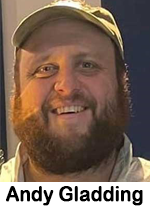
By Andy Gladding
Chief Engineer
WRHU-FM (Hofstra University), Hempstead, NY

imCollege radio is a special place on the FM dial. Listeners know it as the channel at the low end of the band where student and volunteer DJs have free reign to play music not usually heard from commercial operators. College students recognize it as a place where they can hone their broadcasting skills and put their passion and talents to work to prepare for a career in the industry. Hiring managers recognize it as a proving ground that provides quality pre-professional development and a destination to seek out qualified candidates to fill entry level media industry roles.
Despite the widespread recognition of the benefits and value of college radio stations, the format and institution has come under attack. Financial issues affecting the commercial sector of terrestrial broadcasting have led to a reduced perception of the effectiveness and reach of terrestrial FM, causing many universities across the country to part ways with their beloved heritage stations. Religious and community operators, recognizing the vulnerability of college operators, have actively approached educational institutions with cash offers to acquire the licenses and effectively end the independent radio voice of the college into the community. Many universities, facing their own financial issues due to declining enrollment and national attacks on the value and benefits of a four-year liberal arts education, are welcoming the opportunity for a quick infusion of cash for the acquisition their broadcast assets. This troubling trend paints a grim outlook for the future and sustainability of this widely popular medium.

However, in some markets, college radio is thriving and enjoying a renaissance. The New York radio market enjoys a wide variety of college programming across its heavily populated FM band and college stations in this market are considered a clearinghouse for students looking enter the country’s largest media sector. The tri-state area has over 20 university-owned stations operating on the FM band, with their parent organizations often touting them as some of the brightest jewels in the crown of their college media and communications program.

I have spent 20 years working as a student volunteer and administrator at WRHU, Radio Hofstra University and have seen first-hand how college radio contributes to the growth and success of students looking to pursue a career in radio, television and digital media. Students and community volunteers who participate at college radio stations find themselves engaged in a diverse community of voices, opinions and music. While their approach and interests may be different, their practice at the college radio station unites them with one unified goal: to serve the listening audience by creating imaginative and alternative audio programming using the university’s FM transmission facility as their channel to the world. For anyone who has been part of this experience as either a contributor or listener, the results can be absolutely magical. In the New York / New Jersey market, these stations and students have found a unique way to make their voices even louder, using some of the finest tools available in their radio and audio toolbox.

The Big 88

Wednesday, November 8, eight university and high school owned and operated stations broadcasting in the 88.1-88.9 segment of the FM band in the number one media market in the country will be joining together to celebrate their love of college radio. Starting at 12:00 noon, “The Big 88” will become New York and New Jersey’s largest college radio station, covering an FM broadcast footprint of over 120 miles. Participating stations will include WRSU, Rutgers University; WPSC, William Patterson University, WRHU, Hofstra University; WCWP, LIU Post; WARY, Westchester Community College; WFNP, SUNY-New Paltz; WPOB,  Plainview-Old Bethpage High School; and WKWZ ,Syosset High School.

Programming will feature voices and shows from all participating stations, a consolidated newscast from members of each station’s news department and appearances by station alumni working in radio. WRHU will also be hosting a meet and greet at their studios in Hempstead, NY, where participants are invited to gather to exchange station swag, music from local bands and stories. High school participants have also been invited to the WRHU studios to meet with the participating station members where they will get a first-hand look at what their college radio experience can look like. All of the participating stations hope that the broadcast will focus attention on the issues affecting college radio and encourage listeners and universities to continue to support the mission of student and community broadcasting.

For more information on the program schedule and participation, you can contact me at Andrew.j.gladding@hofstra.edu. All of the stations involved hope that listeners will tune in to enjoy this unique celebration of NCE radio.

Andy Gladding is the chief engineer and air personality at WRHU-FM, Hofstra University as well as chief engineer at Salem Media’s WNYM/WMCA, New York. He also is a communications lecturer at Hofstra.  

Industry News

TALKERS News Notes

The Alliance for Women in Media (AWM) announces a new partnership with the International Coaching Federation Foundation (ICF) that will provide AWM members with the unique opportunity to access professional coaching at an exclusive discounted rate. Participants in the AWM Coaching program can anticipate a series of six to 10 coaching sessions with their individual ICF Coach, ensuring a productive and tailored coaching experience. The schedule and goals for these coaching sessions will be established between the coach and participant. Learn more about the program here.

Gemini XIII’s United Stations Radio Networks announces a new partnership with Yea Networks to represent the advertising sales for “The Kidd Kraddick Morning Show.” Gemini XIII CEO Spencer Brown states, “The Kidd Kraddick Morning Show is one of the most popular and successful morning shows in the country, and we are confident that sponsorships, cross-platform opportunities and activations for brands will once again be a part of the media mix for clients looking to activate with female demos in a meaningful way.”

FOX News Audio expands its partnership with Audacy to include FOX Weather, FOX News Media’s free, ad-supported streaming television (“FAST”) weather service. This deal expands FOX News Audio’s existing relationship with Audacy, which also distributes FOX News Podcasts and the FOX News Talk audio streams.

Industry News

NRG Media’s Iowa Talking Points Goes on Remote

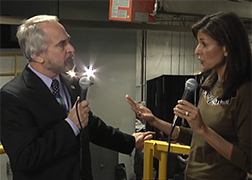
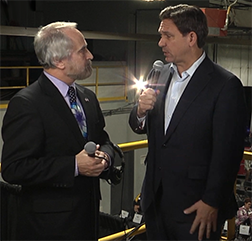
The cross-platform program “Iowa Talking Points” – produced by NRG Media and Mudd Advertising, took to the road last Friday (10/20) for a remote broadcast that featured GOP presidential candidatesim Gov. Ron DeSantis, Amb. Nikki Haley, Vivek Ramaswamy, Sen. Tim Scott, Gov. Doug Burgum, Gov. Asa Hutchinson, and Ryan Binkley. “Iowa Talking Points” is produced for live video stream, imvideo and audio on-demand playback, and radio rebroadcast by NRG’s “News/Talk 1540” KXEL, Cedar Rapids-Waterloo and is hosted by KXEL program director and host Jeff Stein. Previous programs in the series have been produced in front of a live studio audience from Mudd’s state-of-the-art “Studio5@Mudd” facility in Cedar Falls. Last week, the team arranged a special live broadcast from the annual tailgate fundraiser sponsored by Iowa State Rep. Mariannette Miller-Meeks. Stein says, “There are very few opportunities to have access to this many candidates at one time. Engaging with them in this way gives our audience the best information free from sound bites and media filters.” Pictured here is Stein with DeSantis (left) and Haley (right).
Industry Views

Pending Business: Your 2024 Ad Sales Forecast

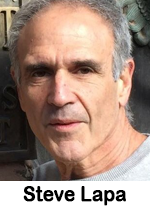
By Steve Lapa
Lapcom Communications Corp
President

imYour crystal ball is still foggy, isn’t it?
Even worse, no matter how many times you try and shake it into a predictive submission, the answer is still the same, “Political-not sure, Weather Emergency-unforecastable.”

Nobody in business likes a lack of confidence, so “Not Sure” is a non-starter. For us radio fans, the variables in predicting a 2024 ad sales forecast are the most unforecastable, unpredictable, variables since the original gang of head-in-the-sand radio gurus pegged MTV as a 1981 fad.

And here we are, 42 years later where a pure-play music video channel challenging FM music radio, satellite music radio, music streaming and downloadable audio would include dating games and ridiculousness, once again saving America’s most-listened-to free music source: radio.

Remember 1981 when talk radio was mounting a competitive threat to all-news radio. Rush was 30, Hannity was 20, Bongino was seven and Ben Shapiro was not born yet. Anybody here have 42 years to wait out your 2024 predictions and get it right? How about 42 days late with your forecast?

Our new world of AI, super-speed computer analysis, blended into an ever-changing digital and social media landscape, under pressure from the economy, global events and the melting radio revenue ice cube has made predicting 2024 ad projections a Vegas skill game.

Thankfully, we have the experience, patience, and cooperation of radio’s leadership to adjust forecasting quarter by quarter, sort of. Back to the task at hand and how to navigate this cracked crystal ball as you mount your sales strategy into 2024.

— Keep your eye on the prize. Always remember, your current advertiser is your best advertiser. Take diligent care of your foundational base billing and that means super serving your customers, as competitors from every medium are monitoring, planning, and pricing a counter plan.

— Positive Paranoia. Thank you, Andy Grove. The third CEO of Intel and a driving force behind Silicon Valley’s original exponential growth knew how to channel innovation and competition into a positive zone. How about you?

— Never stop learning. What new strategies and sales techniques will you drive into next year.

— Something will drop out of your sales picture. What is it? Eventually a sale resource will drop out. Identify how you will compensate for the loss and how you will grow your business as a result.

— Do you have minimum and maximum goals? There are only so many accounts you can sell and service in a month. What is that number and how much do each of those accounts need to generate monthly?

— Attrition. The arch-enemy of sales. Some business never returns. Now what?

Many 2024 projections are falling in the ultra-conservative, no risk, under promise/overdeliver category. Yet there is a fine line between being too conservative and a vote of no confidence. What’s in your forecast?

Steve Lapa is the president of Lapcom Communications Corp. based in Palm Beach Gardens, FL. Lapcom is a media sales, marketing, and development consultancy. Contact Steve Lapa via email at: Steve@Lapcomventures.com.

Industry News

Top News/Talk Media Stories for Week of October 9 – 13

The deadly Hamas-led attacks on Israel and Israel’s response was the most-talked-about story in news/talk media this week, landing atop the Talkers TenTM. At #2 this week was President Joe Biden’s collaboration with Qatar to freeze Iran’s oil assets due to Iran’s solidarity with Hamas, followed by U.S. House Republicans’ efforts to nominate and confirm a new House Speaker at #3. The Talkers TenTM is a weekly chart of the top stories and people discussed in news/talk media during the week and is the result of ongoing research from TALKERS magazine. It is published every Friday at Talkers.com. See this week’s complete chart here.

Industry News

AM Radio Act Gets Support from Rural Organizations

Congressional leadership receives a letter from a coalition of organizations representing rural communities in support of the AM Radio for Every Vehicle Act (H.R. 3413 and S. 1669), legislation that would direct the Secretary of Transportation to ensure consumer access to AM radio in all vehicles because of its critical role in disseminating vital information during emergencies. The groups signing the letter are the Independent Beef Association of North Dakota, Independent Cattlemen’s Association of Texas, Latino Farmers & Ranchers International, Inc., Livestock Marketing Association, National Farmers Union, National Grange, North Dakota Farmers Union, Rural & Agriculture Council of America, U.S. Cattlemen’s Association and Women Involved in Farm Economics. The letter reads, in part: “Whether it be the routine or the unexpected, U.S. farmers and ranchers rely on the information transmitted through AM radio to make decisions that affect their everyday lives. The undersigned organizations urge Congress to prevent rural communities from losing access to their favorite local programming by ensuring that AM radio continues to be a free, standard feature in all vehicles.”

Industry News

Yesterday’s (10/11) Top News/Talk Media Stories

Republicans nominate Steve Scalise to be the next Speaker of the House; the Israel-Hamas war and the controversy over Americans voicing support for Palestinians in Gaza; pressure on President Joe Biden to freeze Iranian assets in response to the Hamas attacks on Israel; former President Donald Trump’s legal battles; the 2024 presidential race; the Supreme Court hears arguments in the South Carolina redistricting case; new charges against Congressman George Santos and his tenuous hold on his seat; the ongoing UAW strike against the big three U.S. automakers; and the $1.72 billion Powerball jackpot were some of the most-talked-about stories in news/talk media yesterday, according to ongoing research from TALKERS magazine.

Industry News

TALKERS News Notes

Salem Radio Network talk host Mike Gallagher began yesterday’s program launching an emergency campaign raising funds for Israeli victims through the International Fellowship of Christians and Jews. Gallagher’s campaign is also being highlighted on other Salem Media Group platforms including SRN News, TOWNHALL.com, and several local morning shows including Mark Davis’ program on KSKY, Dallas and Joey Hudson’s show on WGTK-FM in Greenville, South Carolina as well as TOWNHALL News.

According to an article in the New York Post (10/7) by reporter Brooke Kato, scientists have unsheathed an electrifying new treatment for erectile dysfunction that’s possibly better than popping a little blue pill — AM radio waves!  New research published in the International Journal of Impotence Research suggested that self-administered, low-intensity radio frequency zaps to the penis could be effective for ED treatment due to anatomical and physiological changes in the penile tissue. When used at lower frequencies, the radio waves create heat, due to the interaction between molecules and ions, triggering “structural changes” and the creation of collagen and elastic fibers, according to study author Dr. Ilan Gruenwald. Read the complete article here.

International imaging firm Benztown and research company P1 Media Group are hosting a free webinar for radio professionals titled, “Checking in on the World’s First AI Presenter – Is This Radio’s Future?” The 40-minute webinar will be hosted by Andreas Sannemann, CEO, Benztown, and Ken Benson, partner, P1 Media Group, and will feature AI pioneer Dylan Salisbury, content director, “Live 95.5,” in Portland, OR, and creator of the first AI radio personality in the world, “AI Ashley.”

The Alliance for Women in Media (AWM) announces that radio legend Delilah will be honored with the inaugural Gracies Icon Award at the 2023 Gracies Leadership Awards. The Premiere Networks nationally syndicated personality “will be celebrated for her outstanding contributions to the world of radio and her unwavering commitment to uplifting and empowering listeners.” AWM will honor her at the Gracies Leadership Awards on November 13 at Tribeca 360° in New York City, alongside previously announced honorees.

The Broadcasters Foundation of America elects Adrienne Roark, president of content development and integration for CBS News, Stations, and CBS Media Ventures to its Board of Directors.

Ratings Takeaways

September 2023 PPM Ratings Takeaways – Part Two

imSeptember 2023 PPM Data – Information for the September 2023 sweep has been released for Washington, Boston, Miami, Seattle, Detroit, Phoenix, Minneapolis, San Diego, Tampa, Denver, Baltimore, and St. Louis.

Nielsen Audio’s September 2023 sweep covered August 17 – September 13.

TALKERS magazine managing editor Mike Kinosian provides “Takeaways” for spoken-word stations finishing in their respective markets’ top twenty.

Cited as well are each particular city’s #1 station (6+) and loftiest (6+) upticks and drop-offs.

All comparisons noted are August 2023 – September 2023 (6+).

Note: The NFL season began September 7 – flagships are bolded, where applicable.

WASHINGTON, DC

News/Talk: Cumulus Media’s WMAL “105.9 FM – Where Washington Comes To Talk” 3.5 – 3.9, +.4, repeats in seventh-place

News: Hubbard Broadcasting-owned WTOP & WTLP “Washington’s Top News” 9.3 – 8.7, -.6, ensconced in the runner-up slot for the ninth straight month

Sports Talk: Audacy’s WJFK-FM “106.7 The Fan” (Nationals) steady at 2.6, #16 to #12

Public Radio News/Talk: American University-owned WAMU 11.6 – 12.0, +.4, #1

Number One 6+: public radio news/talk WAMU, 22nd month in succession, 11.6 – 12.0, +.4

Largest 6+ August 2023 – September 2023 Increase: contemporary Christian WGTS (+1.7)

Largest 6+ August 2023 – September 2023 Decrease: urban contemporary WKYS (-.7)

BOSTON

News/Talk: iHeartMedia’s WRKO “AM 680 The Voice Of Boston” 3.5 – 2.8, -.7, #12 to #15

News – Talk: iHeartMedia-owned WBZ-AM “News Radio 1030” 4.2 – 3.8, -.4, eighth to tenth

Sports Talk: Beasley Media Group’s WBZ-FM “98.5 The Sports Hub” (New England Patriots) 5.6 – 7.8, +2.2, third to first

Audacy-owned WEEI-FM “93.7 Boston’s Sports Station” (Red Sox) 3.7 – 4.2, +.5, #11 to #9

Public Radio News/Talk: Boston University’s WBUR 5.6 – 5.4, -.2, repeats in third-place

WGBH Educational Foundation-owned WGBH 3.9 – 3.6, -.3, #10 to #11

Number One 6+: Beasley Media Group sports talk WBZ-FM, first month, 5.6 – 7.8, +2.2*

Largest 6+ August 2023 – September 2023 Increase: sports talk WBZ-FM (+2.2)*

Largest 6+ August 2023 – September 2023 Decrease: classic hits-oldies WROR (-1.5)

*Represents a tie for the largest August 2023 – September 2023 increase (6+) of any station from these 12 – and the previous 12 – PPM-markets

MIAMI

News/Talk: None in the top twenty

News: None in the top twenty

Sports Talk: None in the top twenty

Public Radio News/Talk: Dade County School Board-owned WLRN 3.9 – 3.8, -.1, repeats in eighth-place

Number One 6+: Cox Media Group urban AC WHQT, seventh straight month, 7.9 – 8.0, +.1

Largest 6+ August 2023 – September 2023 Increase: Spanish contemporary WAMR (+1.9)

Largest 6+ August 2023 – September 2023 Decrease: urban contemporary WMIB (-.8)

SEATTLE

News/Talk: Bonneville-owned KIRO-FM “97.3 FM” (Seahawks) steady at 4.7, seventh to sixth

News: Lotus Communications-owned KNWN-AM & KNWN-FM “Northwest News Radio” 2.0 – 2.2, +.2, #19 to #20

Sports Talk: Bonneville’s KIRO-AM “710 AM ESPN Seattle” (Mariners, Seahawks) 4.7 – 6.0, +1.3, seventh to third

iHeartMedia’s KJR-FM “93.3 FM Seattle’s Sports Leader” 2.4 – 2.3, -.1, #17 to #18

Public Radio News/Talk: Northwest Public Radio-owned KUOW 6.8 – 5.9, -.9, second to fourth

Number One 6+: Audacy country KKWF, fourth straight month, 7.9 – 6.8, -1.1

Largest 6+ August 2023 – September 2023 Increase: rhythmic hot AC KHTP (+1.8)

Largest 6+ August 2023 – September 2023 Decrease: adult contemporary KSWD (-1.2) 

DETROIT

News/Talk: Cumulus Media’s WJR “News Talk 760 AM” 1.9 – 1.8, -.1, #16 to #17

News: Audacy-owned WWJ News Radio 950” flat at 4.0, repeats at #11

Sports Talk: Audacy’s WXYT-FM “97.1 The Ticket” (Tigers, Lions) 7.2 – 8.6, +1.4, second to first 

WXYT-FM’s internet stream 1.3 – 2.0, +.7, #19 to #16

Public Radio News/Talk: University of Michigan-owned WUOM 1.6 – 1.8, +.2, continues at #17

Wayne State University’s WDET 1.0 – 1.1, +.1, #21 to #20

Number One 6+: sports talk WXYT-FM, first month, 7.2 – 8.6, +1.4

Largest 6+ August 2023 – September 2023 Increase: sports talk WXYT-FM (+1.4)

Largest 6+ August 2023 – September 2023 Decrease: CHR WKQI (-.8)

PHOENIX 

News/Talk: iHeartMedia’s KFYI “News Talk 550” 3.9 – 4.1, +.2, tenth to fifth

Bonneville-owned KTAR-FM “News 92.3 FM” (Arizona Cardinals) 3.0 – 2.9, -.1, #15 for the third straight month

News: None in the top twenty

Sports Talk: None in the top twenty

Public Radio News/Talk: Maricopa County Community College-owned KJZZ 4.1 – 3.9, -.2, seventh to sixth

Number One 6+: iHeartMedia adult contemporary KESZ, first month, 6.1 – 7.5, +1.4

Largest 6+ August 2023 – September 2023 Increase: adult contemporary KESZ (+1.4)

Largest 6+ August 2023 – September 2023 Decrease: classic hits-oldies KAZG (-1.7)

MINNEAPOLIS

News/Talk: Audacy’s WCCO “News Talk 830” (Minnesota Twins) 3.5 – 3.3, -.2, #14 to #12

Hubbard Broadcasting-owned KTMY “My Talk 107.1” 2.2 – 2.3, +.1, #16 for the fourth straight month

iHeartMedia’s KTLK-AM “Twin Cities News Talk AM 1130” 1.3 – 1.4, +.1, #19 for the third month in succession

News: None in the top twenty

Sports Talk: iHeartMedia-owned KFXN “FM 100.3 K-Fan” (Minnesota Vikings) 4.8 – 8.8, +2.0, ninth to fourth

Public Radio News/Talk: Minnesota Public Radio’s KNOW flat at 6.2, fourth to fifth

Number One 6+: Northwestern Media contemporary Christian KTIS-FM, sixth consecutive month, 10.7 – 10.1, -.6

Largest 6+ August 2023 – September 2023 Increase: sports talk KFXN (+2.0)

Largest 6+ August 2023 – September 2023 Decrease: hot AC KTCZ and country KMNB (-.7)

SAN DIEGO 

News/Talk: iHeartMedia’s KOGO “News Radio 600” steady at 4.7, seventh to fifth

News: None in the top twenty

Sports Talk: Audacy-owned KWFN “97.3 The Fan” (Padres), 4.9 – 4.7, -.2, sixth to fifth

Public Radio News/Talk: San Diego State University’s KPBS 5.8 – 6.2, +.4, repeats in third-place

Number One 6+: Audacy classic hits-oldies KXSN, first month, 6.5 – 6.8, +.3

Largest 6+ August 2023 – September 2023 Increase: Spanish contemporary XRST (+1.0)

Largest 6+ August 2023 – September 2023 Decrease: adult hits KFBG (-2.1)**

**Represents a tie for the largest August 2023 – September 2023 decrease (6+) of any station from these 12 – and the previous 12 – PPM-markets 

TAMPA

News/Talk: Cox Media Group’s WHPT “102.5 The Bone – Real, Raw, Radio” 5.2 – 5.3, +.1, repeats in fifth-place

iHeartMedia-owned WFLA “News Radio 970” 4.3 – 4.0, -.3, #8 to #11

News: None in the top twenty

Sports Talk: iHeartMedia-owned WDAE “Tampa Bay’s Sports Radio” (Rays) 1.8 – 2.0, +.2 #20 to #19

Public Radio News/Talk: University of South Florida’s WUSF 2.2 – 2.3, +.1, #19 to #17

Number One 6+: Cox Media Group adult contemporary WDUV, 26th month in a row, 7.8 – 8.0, +.2

Largest 6+ August 2023 – September 2023 Increase: country WQYK (+1.7)

Largest 6+ August 2023 – September 2023 Decrease: country WFUS (-1.5)

DENVER 

News/Talk: iHeartMedia’s KOA “News Radio 850” (Colorado Rockies, Broncos) 2.7 – 3.7, +1.0, #16 to #13

KOA cluster-mate KDFD “Freedom 93.7” 2.0 – 1.7, -.3, #20 to #19

News: None in the top twenty

Sports Talk: Bonneville’s KKFN “104.3 The Fan” 3.8 – 4.6, +.8, #11 to #7

Public Radio News/Talk: Colorado Public Radio-owned KCFR 4.0 – 4.2, +.2, tenth to ninth

Number One 6+: Bonneville country KYGO, second consecutive month, 6.6 – 6.2, -.4

Largest 6+ August 2023 – September 2023 Increase: adult contemporary KOSI (+1.0)

Largest 6+ August 2023 – September 2023 Decrease: hot AC KIMN and sports talk KKSE (-.7)

BALTIMORE

News/Talk: Hearst Television’s WBAL “News Radio 1090 AM & 101.5 FM” (Orioles, Ravens) 3.2 – 4.1, +.9, #12 to #8

WCBM Maryland-owned WCBM “Talk Radio AM 680” 1.5 – 1.8, +.3, repeats at #18

News: Hubbard Broadcasting’s WTOP & WTLP “Washington’s Top News” .9 – 1.0, +.1, #21 to #19

Sports Talk: Audacy’s WJZ-FM “Baltimore Sports Radio 105.7 The Fan” 4.4 – 4.0, -.4, eighth to ninth

Public Radio News/Talk: Your Public Radio Corporation-owned WYPR 4.4 – 4.5, +.1, eighth to seventh

Number One 6+: Audacy adult contemporary WLIF, first month, 6.4 – 8.6, +2.2

Largest 6+ August 2023 – September 2023 Increase: adult contemporary WLIF (+2.2)*

Largest 6+ August 2023 – September 2023 Decrease: urban AC WHUR (-.8)

*Represents a tie for the largest August 2023 – September 2023 increase (6+) of any station from these 12 – and the previous 12 – PPM-markets

ST. LOUIS

News/Talk: Audacy’s KMOX “The Voice Of St. Louis” (Cardinals) 5.9 – 5.8, -.1, sixth to eighth

KMOX cluster-mate KFTK “Talk 97.1 FM” 1.8 – 1.9, +.1, repeats at #16

iHeartMedia-owned KTLK-FM “104.9 The Patriot” .9 – 1.0, +.1, #18 to #19

News: None in the top twenty

Sports Talk: Hubbard Broadcasting’s WXOS “101 ESPN” 2.4 – 2.3, -.1, repeats at #15

Public Radio News/Talk: University of Missouri-owned KWMU 3.6 – 3.5, -.1, #12 to #13

Number One 6+: iHeartMedia classic hits-oldies KLOU, first month, 9.0 – 8.7, -.3

Largest 6+ August 2023 – September 2023 Increase: urban AC WFUN (+1.2)

Largest 6+ August 2023 – September 2023 Decrease: adult hits WARH (-2.1)**

**Represents a tie for the largest August 2023 – September 2023 decrease (6+) of any station from these 12 – and the previous 12 – PPM-markets

Up next: September 2023 overviews for Portland; Charlotte; San Antonio; Sacramento; Pittsburgh; Salt Lake City; Las Vegas; Orlando; Cincinnati; Cleveland; Kansas City; and Columbus.

Email Mike Kinosian at Mike.Kinosian@gmail.com

Industry News

TALKERS News Notes

Benztown and Envisionwise are hosting a free webinar for radio professionals titled, “Keeping it Real in the Digital Age,” with host Mike McVay, president of McVay Media, and guests Jackie Parks, founder/CEO of Envisionwise; Peter Smyth, former chairman and CEO of Greater Media, Inc; and Sheri Lynch, co-host of “The Bob & Sheri Show.” The 45-minute webinar on Friday (10/6) at 1:00 pm ET will provide specific tools and strategies for increasing stations’ digital revenue. You can register here.

Audacy announces an expansion of its relationship with Puck and the launch of “About a Boy: The Story of Vladimir Putin” – a five-part documentary podcast series exploring the forces that shaped Russian President Vladimir Putin’s childhood (and life) and why it’s critical to understanding what he might do next in the war against Ukraine. The series is written and narrated by Julia Ioffe, Puck founding partner and Washington correspondent, and one of the leading journalists covering Russia and Putin.

Salem Media Group says “Grace and Truth with Owen Strachan” is joining the Salem Podcast Network. Owen Strachan is provost and research professor of Theology at Grace Bible Theological Seminary and is the author of 20 books, including his latest, The War on Men: Why Society Hates Them and Why We Need Them (Salem Books, 2023). Salem SVP of spoken word Phil Boyce comments, “Salem Podcast Network continues to add multi-talented podcasters who share our worldview. Owen is an amazing voice for what is true and right in America, and adding him to our platform is a home run. I can’t wait to become a regular listener when he gets started.”

iHeartPodcasts announces the return of the “Work in Progress” podcast for its third season. The program features actor, producer, and activist Sophia Bush and in the first two episodes she interviews former White House Press Secretary Jen Psaki along with an interview with actor Matthew McConaughey.

Industry News

WNEX-FM, Macon to Launch Sports Talk Show

Creek Media is launching a daily, one-hour sports talk program on the Americana-formatted WNEX-FM,im Macon, Georgia. The Macon Telegram reports that “Creekside Sports” is hosted by Steve Norris and Daniel Shirley. The piece notes that Norris has experience broadcasting area high school and junior college football and has served as a local sports and news reporter, having been a freelance sportswriter for The Telegraph from 2008 until 2012. Read the Macon Telegram story here.
Industry Views

Monday Memo: Beware the Banter

By Holland Cooke
Consultant

imRadio talkers: What is this hour about? How will listeners benefit from listening? And how long do you expect them to wait to hear that?


To quote Jerry Seinfeld…

“There is no such thing as an attention span. This whole idea of an attention span is, I think, a misnomer. People have an infinite attention span if you are entertaining them.”

Are they entertained hearing about your weekend? About your sidekick/board-op/screener’s weekend? By a long, self-amused, produced show intro? Or are they quickly engaged, by your invitation to weigh-in-on topic du jour? Or by your offering them Q+A access to a guest who can address their concerns?

What if they believe the promos?

 As each day’s news causes us all to wonder “What NEXT???” smart stations methodically invite on-hour listening appointments, for “stay close to the news… a quick update, throughout your busy day.” Whether that’s a network feed or a local newscast, whoever delivers it reckons what is relevant to the lives of the mentally busy, in-car listeners our advertisers want as customers. In consultant-speak, it’s “take-home pay” for tuning-in.

im

They may listen mostly to other stations that play music, but those stations aren’t as informative. So – as the weather forecast signals the end of that on-hour update – can you freeze the driver’s index finger in mid-air between the steering wheel and the button for “Kiss” or “Magic” or “Cat Country?”

 Does your A-block rock?

Most common miscalculation I hear? Extended banter before the first break. A-block ends with (finally) a specific, inviting call-in proposition or teases the guest coming up… after the break, when the show really begins.

Better: Tee-up what’s-up immediately as the hour begins. Try this: Make the very first thing you say a question which includes “you” and/or “your.” Then say hello, and swap takes on that topic with your sidekick/board-op/screener.

One warning: Sounding so-quickly-engaging may divert your screener. The phone’s already ringing.

Holland Cooke (HollandCooke.com) is a consultant working at the intersection of broadcasting and the Internet. He is the author of “Your Trusted Voice: How to Attract New Clients More Efficiently than Competitors Who Spend a Fortune on Advertising.” Follow HC on Twitter @HollandCooke

Industry News

Officially Rebranded PodcastOne Begins Trading on Nasdaq

PodcastOne, which began trading on Nasdaq under its new name at the open of the market on Tuesday (9/26), officially changes its name from Courtside Group, Inc to PodcastOne, Inc. Parent company LiveOne owns approximately 81% of the new company, which recently converted theim remaining unsecured convertible notes in the aggregate principal amount of $5.8 million at $3 per share. Following this transaction, the company is now debt free. The Courtside Group name was of the parent company founded by the late Norm Pattiz, who was known for sitting courtside at Los Angeles Lakers games from many years. PodcastOne’s president and co-founder Kit Gray comments, “The corporate name change to PodcastOne, Inc provides a true characterization of our company as one of the 10 largest podcast publishers in the U.S., ranked ahead of media giants Paramount, CNN and FOX.”

Industry News

Report: New York Public Radio to Cut Workforce by 12%

According to a report by Benjamin Mullen in The New York Times, public media firm New York Publicim Radio plans to reduce its workforce by 12% due to a “free fall in the advertising market.” The source is a memo to staffers from NYPR CEO LaFontaine Oliver. The story goes on to note that the organization employs about 340 full- and part-time workers at WNYC, classical WQXR, and the Gothamist news site. Read the Times piece here.
Industry Views

Monday Memo: Sell Yourself a Schedule

By Holland Cooke
Consultant

imI asked my pal, longtime radio seller, now retired: “How often were you asked, ‘How much would you charge for ONE commercial?’”

“Many times!” he guffawed. “I told ‘em ‘Keep your money! It won’t work!’” And he would explain to the prospect that repetition is the key to radio advertising.

Pitch like your happiest advertisers

Smart reps schedule commercial flights using the Radio Advertising Bureau’s Optimum Effective Scheduling formula (OES), because “message retention and recall begins after three exposures.”

Don’t stop there. I don’t know WHEN I’ll need to buy a tire, but when that next nail finds me, I know WHERE I will buy, because that retailer advertises enough to own “tires” in my mind. Purchasing a whole car is more foreseeable, and I’ve read that it takes many buyers 90 days to pull the trigger. So, if the copy is just right, always-on always works.

Programmers: Are you selling your station, on its own air, with the frequency we preach to clients? And – no matter how often you freshen your imaging – is the benefit statement as consistent as the many ways “Liberty-Liberty-Libbberty” assures us “you only pay for what you need?”

im

Sales 101: “Your best prospect is…”

Say it with me: “…an existing customer.”

To be clear: Nothing you say on-air will add cume, because the only people who hear your imaging are already listening.

Hey, who wouldn’t want a bigger budget for billboards over the Interstate? But it’s…the Interstate. Many who give it a glance (at most) don’t even live here. Some of those who do might give you a try. And whether they do or whether they don’t, there’s very little you can do to keep them sitting in a parked car, listening. So how can we invite them back more often?

Tip: On-hour news appointments, “a quick [name of network] update, throughout your busy day” as the world we live in has listeners wondering “What NEXT???” This is increasingly useful for music stations, with music now commoditized by non-broadcast competitors.

Rip me off

On-air promos accomplish three things:

— Defining the station, labeling your button in the listener’s mind.

— Asking for more occasions of listening, thus the newscast tip above.

— Listeners REMEMBER having-listened. Not just opportune in diary markets, where we want diarykeepers to round-up. 😉 In PPM markets, awareness drives use. So, in both cases, ratings are a memory test. And this matters even if you don’t subscribe to ratings, because advertisers need prospects to hear that tire commercial multiple times.

So, it’s worth your time to review all imaging and promos now airing. Of each piece, ask yourself: What does this accomplish? Does this convey why/when/how the listener should/can listen more often?

To hear 21 examples of imaging work I’ve done for client stations, click “DO listeners understand why to spend more time with you?” at HollandCooke.com

OK…ONE exception…

I asked my bud, who sold a lotta radio for a lotta years: “What if the request to buy ONE commercial was a pop-the-question surprise, to air when the hopeful groom knew she would be listening?”

“Ka-CHING!” he winked, “and I’d nick him good! You know what that ring cost?”

Holland Cooke (HollandCooke.com) is a consultant working at the intersection of broadcasting and the Internet. He is the author of “Spot-On: Commercial Copy Points That Earned The Benjamins,” a FREE download; and “Your Trusted Voice: How to Attract New Clients More Efficiently than Competitors Who Spend a Fortune on Advertising.” Follow HC on Twitter @HollandCooke