By Walter Sabo
a.k.a. Walter Sterling, Host
WPHT, Philadelphia, “Walter Sterling Every Damn Night”
TMN syndicated, “Sterling on Sunday”
 The plague of pessimism about the future of radio is fueled internally by radio employees. Doomsayers are logically found in the sales department. All day, salespeople meet with buyers. A buyer’s job is to negotiate a lower price by arguing radio’s negatives. The wall of negativity thrives within the work environment of a seller. Tough. But there is little or no reason for pessimism.
Kevin O’ Leary (a.k.a. “Mr. Wonderful” on TV’s Shark Tank) is a pragmatic investor. When asked about AI’s impact on radio, he says, “It’s the same phobia we had when television hit radio. ‘Oh, it’s going to decimate radio!’ No, it’s not. The art form exists today, even bigger, terrestrial, and in space. To me, AI is just a tool.” (Variety. January 5, 2026)
Surprising to many, radio’s audience numbers today are virtually the same as they were in 1970.
Radio Listenership Today (2020s)
Weekly Reach: As of 2022–2023, approximately 82% to 88% of Americans aged 12 and older listen to terrestrial (AM/FM) radio in a given week.
Monthly Reach: Nielsen data indicates that AM/FM radio reaches 91% of U.S. adults each month.
Daily Listening: Approximately 66% of U.S. adults listen to broadcast or streaming AM/FM radio on a daily basis.
Resiliency: Despite the rise of podcasts and music streaming, 55% of Gen Z in the U.S. still listen to AM/FM radio every day, and it remains the top reach medium, even exceeding social media.
1970s: The era of AM to FM transition and the peak of top-40 terrestrial radio, with 25 million CB radios also becoming popular in the mid-70s.
Today: While reach is still high, the amount of time spent listening is more fragmented, with radio facing competition from streaming (Spotify/Apple Music) and podcasts, although it remains the dominant ad-supported audio choice in cars.
CB radio, cassettes, 8-tracks, CDs, DVDs, Walkman, iTunes, iPhones, SiriusXM, Spotify, podcasts, Pandora… all terminators of radio. None of them made a dent. The killer of radio will be radio’s odd internal pessimism that while predicting doom that never comes drives actions that are suicidal: Elimination of audience qualitative research. Tracking. More Tracking. (Radio Fracking!) No external marketing. Endless talent cuts. No contests. (A $1,000 national contest WOW!) None of those cuts are good business because they cut potential revenues.
And yet there is a relentless, funded determination to end all FCC ownership caps allowing companies to buy more radio stations to operate with great Panglossian efficiency!
Walter Sabo has been a C-Suite action partner for companies such as SiriusXM, Hearst, Press Broadcasting, Gannett, RKO General, and many other leading media outlets. His company, HITVIEWS, in 2007, was the first to identify and monetize video influencers. His nightly show “Walter Sterling Every Damn Night” is heard on WPHT, Philadelphia. His syndicated show, “Sterling On Sunday,” from Talk Media Network, airs 10:00 pm-1:00 am ET, and is now in its 10th year of success. He can be reached by email at sabowalter@gmail.com.
Share this with your network


 is a fearless communicator with unmatched credibility. His experience, intelligence, and no-nonsense delivery make him a strong addition to our primetime lineup. Scott doesn’t just react to the news — he shapes the conversation and arms listeners with insight they can use.” Jennings comments, “I’m thrilled to join the lineup at Seattle Red! My mission is to debunk liberal narratives, bring forward blockbuster news-making conversations, and give the audience a daily dose of common sense. Can’t wait to be part of this terrific station!”
 For years, “protect your name and likeness” sounded like lawyer advice in search of a problem. Abstract. Defensive. Easy to ignore. That worked when misuse required effort, intent, and a human decision-maker willing to cross a line.
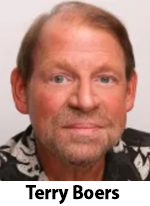 January of 2017. WSCR operations manager Mitch Rosen posted the following to social media: “The Score lost one of our own today. Terry Boers passed away today surrounded by loved ones. Terry was one of the founding fathers of The Score and one of the most popular people on the air and in The Score hallways. Terry was original, funny, smart, witty and most importantly a beautiful person. Terry’s family’s wish is there won’t be a funeral, but The Score will celebrate his life on the air next week. So today and forever, RIP Terry Boers.” Boer was one of the original hosts on “The Score when it launched in January 1992. Boers had worked for years in the newspaper business, including as a sports columnist for the Chicago Sun-Times.
 fundamentally changed with respect to our political broadcasting rules. The FCC has not adopted any new regulation, interpretation, or Commission-level policy altering the long-standing news exemption or equal time framework. For decades, the Commission has recognized that bona fide news interviews, late-night programs, and daytime news shows are entitled to editorial discretion based on newsworthiness, not political favoritism. That principle has not been repealed, revised, or voted on by the Commission. This announcement therefore does not change the law, but it does represent an escalation in this FCC’s ongoing campaign to censor and control speech.
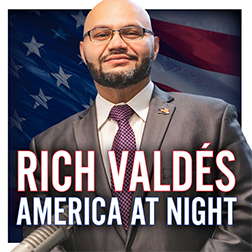 Media Federation and its streaming network Festiva TV syndication partnership. The deal will make Valdés’ late-night show exclusively in Spanish to Roku’s 90 million+ subscribed households. Valdés’ English-language show continues to be available via iHeartRadio, and Valdés says he is “completely open to English syndication opportunities across terrestrial radio, cable television, and streaming platforms like Rumble—building on my ongoing work in those spaces.”
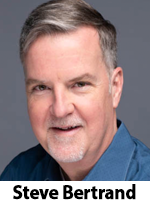 with the Lifetime Achievement Award, an honor designated contributions to local news. Bertrand has been a trusted voice on WGN Radio for four decades, anchoring news since 1992 and earning the confidence of generations of Chicago listeners. Over his career, he covered many of the most significant local and national events of the past 40 years while mentoring colleagues and helping define the standard for excellence in local radio journalism. His retirement in 2025 marks the culmination of a lifetime dedicated to informing the public and strengthening the role of local news.”
  gathering – will take place February 19-21 at the Sheraton Times Square Hotel in midtown Manhattan.
 Providence market outlet for Audacy’s sports talk WEEI-FM, Boston for more than two decades. Audacy closed the WVEI offices in 2023. Ocean State Media president and CEO Pam Johnston says they are spending $4.9 million on the new FM. “From an operational and financial standpoint, we are going to be financing the cost of this frequency, which will allow us to eventually sell all the frequencies that we currently have. And so over time we believe that this transaction actually is going to pay for itself.” She says making it easier for listeners is important, “One signal reaching much farther than our current series of five different signals, a greater experience where you don’t have to change the channel as you move your way through Rhode Island and southeastern Massachusetts.”
 serve in the public interest, the FCC yesterday issued a Guidance on Political Equal Opportunities Requirement for Broadcast Television Stations. While the memorandum is written to television stations, it obvious applies to radio stations as well. The memo ultimately addresses the 1959 order that exempts broadcasters from providing equal time to qualified candidates on any: (1) bona fide newscast; (2) bona fide news interview; (3) bona fidenews documentary (if the appearance of the candidate is incidental to the presentation of the subject or subjects covered by the news documentary); or (4) on-the-spot coverage of bona fide news events (including but not limited to political conventions and activities incidental thereto). Programs such as “The Tonight Show” and “The View” are cited as entertainment shows in which an interview segment can qualify as a bona fide news interview. Regarding this, the memo concludes with two important paragraphs:
 iHeartRadio’s “Stuff You Should Know” was #1, followed by Audacy’s “48 Hours” at #2 and Salem Media Group’s “Charlie Kirk Show” at #3. Other talk radio-related shows include Cumulus Podcast Network’s “VINCE” at #10, iHeartRadio’s “The Clay Travis and Buck Sexton Show” at #11, and “Armstrong & Getty on Demand” at #14.
  appeal of the District Court’s ruling on Cumulus’ request to seal the record and protect witnesses’ identities. That request was granted by the District Court. Cumulus Media is suing Nielsen alleging that the company is illegally leveraging its dominance over national and local radio audience data to stifle rivals and charge inflated prices. At the heart of the complaint is the charge that Nielsen is providing access to the national broadcast radio ratings only if the client spends a lot of extra money on the separate local ratings. Cumulus argues that Nielsen’s policy forces them to buy ratings in U.S. markets where it doesn’t operate stations in order to have the complete national ratings data.
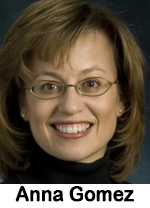 the way the commission is operating. She took issue with FCC Chair Brendan Carr’s interpretation of how the Commission should ensure that licensees operate in the public interest. She stated, “For months, this FCC has asserted an apparent roving mandate to police speech that this Administration does not like, invoking an undefined and unchecked concept known as the ‘public interest’ standard.
 audience engagement – a considerable value add for Cumulus Media and its stakeholders and an important next step in the development of advanced capabilities for the audio sector.” Cumulus adds that Eon Media is an award-winning technology company for media that harnesses state-of-the-art artificial intelligence that is fully built in-house to extract metadata from media assets, including segments, stories, categories, audio transcription, music recognition, people mentioned, demographics, and much more. Cumulus Media president and CEO Mary G. Berner says, “We are excited to join forces with Eon Media to create innovative solutions that will provide Cumulus Media with access to new market opportunities and untapped monetization paths. Importantly, this partnership will significantly enhance our ability to drive greater discoverability. By expanding touchpoints and engagement opportunities, we ensure our listeners and audiences can connect with our content more easily and more often than ever.”
 competition local radio stations today face for audiences and vital advertising revenues from online and satellite content providers and digital ad platforms not subject to any comparable restrictions on their scale and scope; the dire negative effects that consumer and advertiser substitution of competing digital audio content and advertising for traditional radio has had on the listenership and advertising revenues garnered by local radio stations, including in mid-sized and small markets; and how the retention of asymmetric ownership restrictions has prevented radio broadcasters from gaining local scale to take advantage of important economic efficiencies, obtain investment capital, and better compete for audiences and advertising revenues, and thus enhance – or even maintain – their provision of news, emergency information, and valued entertainment and sports programming in local communities across the country at no cost to the public.” Responding to testimony from musicFirst Coalition and the Future of Music Coalition – referred to as the Coalitions – NAB writes, “First, the fact that the Coalitions continue to hold themselves out as protectors of small, local independent broadcasters not just borders on the absurd but crosses over into full-blown absurdity. The Coalitions represent the interests of the music industry, which is dominated by three consolidated international record labels. Compared to even the largest radio station groups, the giant record labels are the 800-pound gorillas of the music world. Those three labels earn billions more in revenue than the approximately 11,000 full-power commercial AM/FM stations combined. As NAB earlier reported, the three major music companies jointly generated about $2.9 million per hour in 2023. In remarkable contrast, in 2023 and 2024 the vast majority of radio stations garnered less – and often much less – than $2.9 million per year in advertising revenues. Needless to say, the Coalitions have never explained how local radio stations earning such low levels of revenue (and even lower, if any, profits) are supposed to keep talented employees and provide high quality programming, including popular music, sports, and informational programming, such as weather updates and emergency information, OTA and free to the public without achieving increased local scale, greater economic efficiencies, and more robust ad revenues.
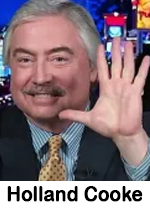 Often, when visiting client stations, I ride shotgun on a sales call, and it’s always a masterclass. Retailers have a canny, insightful feel for their customers (our listeners). And accompanying these reps, I feel like I’m “Dancing With The Stars.”
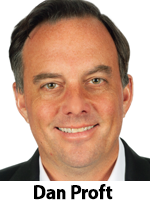 manager John Gallagher says, “The combination of Dan Proft’s intellect and his exceptional interviewing skills is why he’s the best morning radio host in Chicago. His knowledge of the issues that affect the people of Illinois is unmatched. This contract extension solidifies the Chicago Morning Answer brand and the top conservative talk radio line-up in the nation.” Proft comments, “I’m excited to extend my run on Chicago’s Morning Answer, and I am honored to be trusted with such an important platform during these turbulent times. Nothing short of the future of the United States and Western civilization, by extension, is on the line, and I’m humbled to be able to lend my voice to the fight. I want to thank AM 560’s management, along with our loyal, intelligent listeners and our accomplished and thoughtful guests, for their ongoing support.”
 February 2. Audacy Chicago SVP and market manager Kevin Cassidy states, “Chicago fans are the best in the world, and they deserve coverage that matches their passion. Our roster features the best talent in the city with unmatched dedication to delivering the latest sports news and insight. We’re excited to expand The Score’s reach through this FM simulcast, bringing our premier sports content to an even wider audience so they can join the conversation and stay connected to their favorite Chicago teams.”
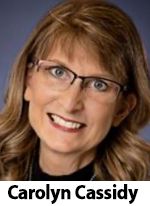 her leadership role as part of the company’s Senior Leadership Team. Salem says, “Cassidy has been an integral part of Salem for many years, beginning with her leadership in Columbus, where she cultivated a strong culture of teamwork, community involvement, and business growth. She later took on management of Salem’s Tampa market, followed by oversight of Orlando and, most recently, Miami.” Salem president of broadcast media Allen Power adds “Carolyn has consistently demonstrated exceptional leadership, market insight, and a deep commitment to Salem’s mission. Her ability to lead multiple large and diverse markets with both strategic focus and personal care makes her an outstanding addition to our VP ranks.”
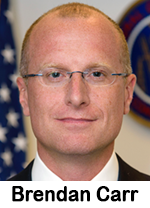 made clear, broadcasters are different than every other distributor of media. Specifically, broadcasters are required by both the Communications Act and the terms of their FCC-issued licenses to operate in the public interest. This sets them apart from cable channels, podcasts, streaming services, social media, and countless other types of distributors that have no public interest obligation. The FCC’s broadcast hoax rule, its news distortion policy, its political equal opportunity regulation, its prohibition on obscene, indecent, and profane content, its localism requirements — all of those and more apply uniquely to broadcasters. Congress has instructed the FCC to enforce public interest requirements on broadcasters. The FCC should do exactly that.” Carr added, “To ensure that broadcasters can meet their public interest obligations, the FCC has taken a number of actions, including seeking public comment for the first time in more than 15 years on the relationship between the large, national programmers on the one hand and the many local broadcast television stations on the other. Comments in that proceeding suggest that many local broadcasters are concerned that the national programmers have amassed enormous power and influence in recent years and have made it more challenging for local broadcasters to fulfill their public interest obligations. The FCC is going to continue its efforts to empower local broadcasters to meet their public interest obligations.”
 commercially unreasonable rate for its Nationwide Report may cause it to have to do away with the Nationwide Report altogether. This testimony accompanied Nielsen’s request for a stay pending appeal as it appeals to the Second Circuit. This is the latest in action in Cumulus’ suit alleging that
  Nielsen is illegally leveraging its dominance over national and local radio audience data to stifle rivals and charge inflated prices. Judge Vargas denied the stay pending appeal but did grant an administrative stay will be in effect only until January 16, 2026, to allow Nielsen time to file a motion for a stay in the Second Circuit Court of Appeals. Tunkel’s testimony states that the order would cause Nielsen “significant irreparable harm if required to comply with the Court’s ruling during the pendency of Nielsen’s appeal… As a result, Nielsen would not be able to apply that policy in any of the at least ten negotiations with clients that Nielsen expects to have in 2026. If Nielsen is unable to apply the Network Policy, then it will be hindered in its ability to ensure that it can recover the costs of collecting the local radio-ratings data that make up the Nationwide report and spread those costs appropriately across the customers that use the products generated from those joint costs. If Nielsen cannot recover these costs, then it may have to retire the Nationwide report, similar to when Nielsen retired its other national data product, RADAR. If it does not retire the Nationwide report, it may have to pass a higher share of the costs of collecting local data on to other customers, including local radio stations, hurting Nielsen’s negotiating position with respect to those customers, as well as those customers themselves.”
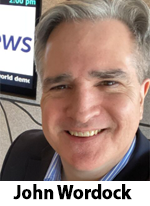 served as a media consultant. He states, “WTOP is setting the pace for the radio industry in our digital world. It’s a leader both in Washington and in the country. I look forward to joining its award-winning newsroom and evolving business reporting in the age of social video, YouTube, podcasts, and whatever comes next.” WTOP says it will expand the scope of its business reporting under Wordock’s leadership, including by Wordock producing original video content and written articles for WTOP.com and the station’s social media channels. WTOP director of news and programming Julia Ziegler comments, “Evolution is more important than ever in the news industry. We need to meet our consumers where they are and bring them the stories they need in the formats they want. John brings a wealth of multi-platform experience and business expertise to WTOP, and we can’t wait for news consumers in the DMV to be reintroduced to him.”
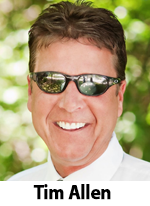 through March 25. Allen will also host a post-game show, adding to the station’s 2026 Brewers coverage, which also includes Tommy Wortz’s “Lead Off Show.” Audacy Wisconsin SVP and market manager Jason Bjorson says, “If you’re going to be the number one sports radio station in Milwaukee, then you have to have the best coverage of the Brewers. Tim Allen is the definitive voice of the franchise’s fanbase, and his presence solidifies our commitment to local listeners.” Allen states, “I’m very appreciative to have my post-game show back on ‘The Fan’ in Milwaukee and now on the Wisconsin Sports Radio Network. We started this post-game show on ‘The Fan’ 21 years ago, and to have it continue with them is a pretty special feeling.”
 councilor Cliff Ponte. WPRI-TV, Providence reports that the new owners say “they’re going to shift programming to cover 100% local content focusing on Fall River and its suburbs while still keeping Celtics and Patriots broadcasts.” Ponte tells WPRI, “This station has been a part of my life for more than two decades. I got my start behind the microphone here as a teenager, learning the ropes at WSAR and later moved to other stations in Cape Cod and Providence.” The report says that Silvia will serve as the station’s general manager, Ponte will serve as program director, and current station general manager Sue Nadar will move to the role of sales manager.
  Evidence that your correspondent is a nerd: my airplane read for my CES back-N-forth was Successful AI Product Creation: A 9-Step Framework by Shub Agarwal (Wiley). If you haven’t got time for all 307 pages, here’s what I gleaned, pertinent to radio:
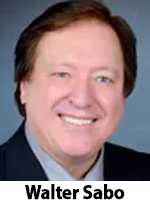 Talk show hosts are not motivated or driven like disk jockeys or salespeople. Most general managers have never managed talk show hosts. Few program directors have managed talk show hosts. My career has been blessed with daily exchanges with the best talk show hosts in history. Here are some suggestions I would like to share on how to have a superior relationship with talk stars.