

MONDAY MEMO: Does Anybody Really Know What Time It Is?
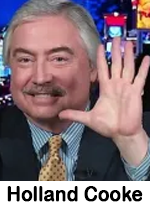
By Holland Cooke
Consultant
 Possibly not — beginning Sunday — unless you live in Hawaii and Arizona (except the Navajo Nation) or American Samoa, Guam, the Northern Mariana Islands, Puerto Rico, or the U.S. Virgin Islands. Everywhere else, clocks will change when we “fallback” on November 3.
It’s uncanny how just that one-hour shift impacts listeners’ lives. So, it’s a BIG topic of conversation. Plan now to empathize with the emotional and practical adjustments they’re confronting, including…
Increased Morning Light:
• Positive: With the clock set back, it becomes lighter earlier in the morning, which can help people wake up more easily and feel more alert, especially for those who need to start their day early.
• Negative: For people who start their day later, they may not notice much of a change, but the adjustment period can still be disruptive.
Shorter Evenings:
• Positive: The extra hour of light in the morning might be useful for early morning commuters, outdoor activities, or children heading to school.
• Negative: On the downside, the sun sets earlier in the evening, meaning it gets dark sooner. This can affect evening activities and make commutes home feel less pleasant or even more dangerous due to reduced visibility.
Disruption to Sleep Patterns:
• Positive: The “fall back” of the clock gives people an extra hour of sleep, which many enjoy.
• Negative: Some people experience disrupted sleep patterns and may feel temporarily groggy as their bodies adjust to the new time.

Health and Mood:
• Positive: For some, the extra morning light can improve mood and reduce symptoms of Seasonal Affective Disorder (SAD).
• Negative: The early evening darkness can lead to feelings of fatigue, a drop in energy levels, or contribute to “winter blues” or SAD. especially as daylight becomes limited.
Impact on Productivity:
• Positive: People may feel more productive in the morning due to earlier sunlight.
• Negative: However, the earlier sunset could reduce motivation to engage in activities after work or school, potentially leading to a decrease in evening productivity.
Safety Considerations:
• Positive: More daylight in the morning can make commuting safer for drivers and pedestrians during rush hour.
• Negative: With darker evenings, there’s an increased risk of accidents, especially for people who are walking or biking.
Energy Consumption:
• Positive: Energy usage patterns may shift because of less artificial light being used in the morning.
• Negative: However, people tend to use more lighting and heating in the evenings, which may counterbalance the potential energy savings.
Impact on Schedules:
• Positive: Some people enjoy having the extra hour in their day when DST ends.
• Negative: For parents and workers, adjusting children’s or personal routines to the earlier darkness can be challenging.
What’s a radio station to do?
• Bump with or play songs related to time (Cyndi Lauper “Time After Time,’ Cher‘s “If I Could Turn Back Time”).
• Explain the history of DST.
• Ask listeners’ opinions on DST. Do they love it or hate it? You’ll hear both.
• “How will you spend your extra hour?”
• Give away nostalgic items (like retro vinyl records or vintage tech).
• Sleep tips from health professionals and mental health experts.
• Advertisers offer “10% off for the extra hour! Sale only valid from midnight to 1:00 am.”
• Coffee or breakfast gift card giveaways.
• Pertinent commercial copy hooks, i.e., “It’s time for a new ___!”
And please note: It’s “Daylight Saving Time,” not “Daylight Savings Time.”
Holland Cooke (HollandCooke.com) is a consultant working the intersection of broadcasting and the Internet. Follow HC on Twitter @HollandCooke and connect on LinkedIn
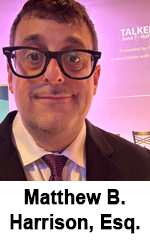 With the growing popularity of talk media programs utilizing segments of other shows as key elements of scrutiny and commentary in their programming (“Clip Jockey Format” as coined by Michael Harrison), it is important that media content creators be aware of the subtle and often ambiguous rules applying to the legal aspects of this practice under the heading of fair use.
 One day last winter, Alison Stewart, the host of “All of It” on public station WNYC, New York was alarmed to find herself speaking gibberish.
 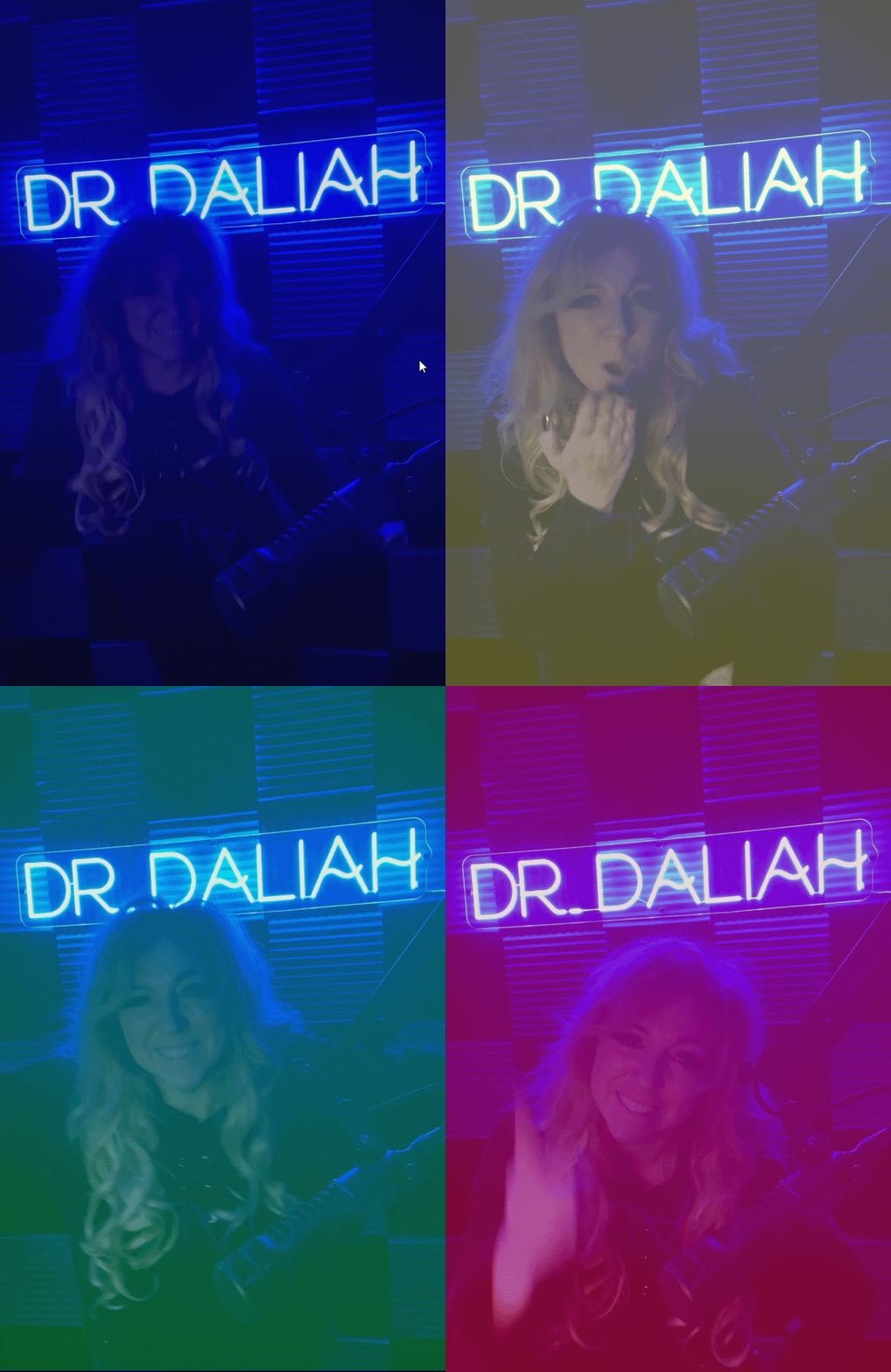 Music Group Gunhill Road Putting Final Touches on Talk Radio Anthem. Gunhill Road, the perennial pop music ensemble that has attracted hundreds of thousands of worldwide followers with its growing repertoire of issue-oriented songs and music videos, is currently in post-production with an anthem celebrating talk radio. Titled “Don’t Stop Talkin’” – the song is an uplifting and infectiously catchy tune about the vital role talk radio plays in serving the cause of American freedom of speech. With lines that include “As long as you’ve got a voice, don’t ever stop!” and “As long as you’ve got the truth, don’t ever stop!” the original composition co-written by band members Steve Goldrich, Paul Reisch, Brian Koonin, and Michael Harrison encourages talk radio practitioners to keep up the good work and great service they provide the nation.TALKERS Heavy Hundred syndicated host Dr. Daliah Wachs pictured above bopping to the music in a scene from the forthcoming video “Don’t Stop Talkin'” by Gunhill Road.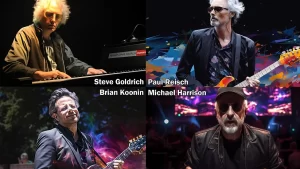
 This is an exceptional opportunity for an experienced professional to drive success in the country’s number one media market. The ideal candidate will have a deep understanding of the NYC media landscape and strong market relationships to drive business growth. Apply online at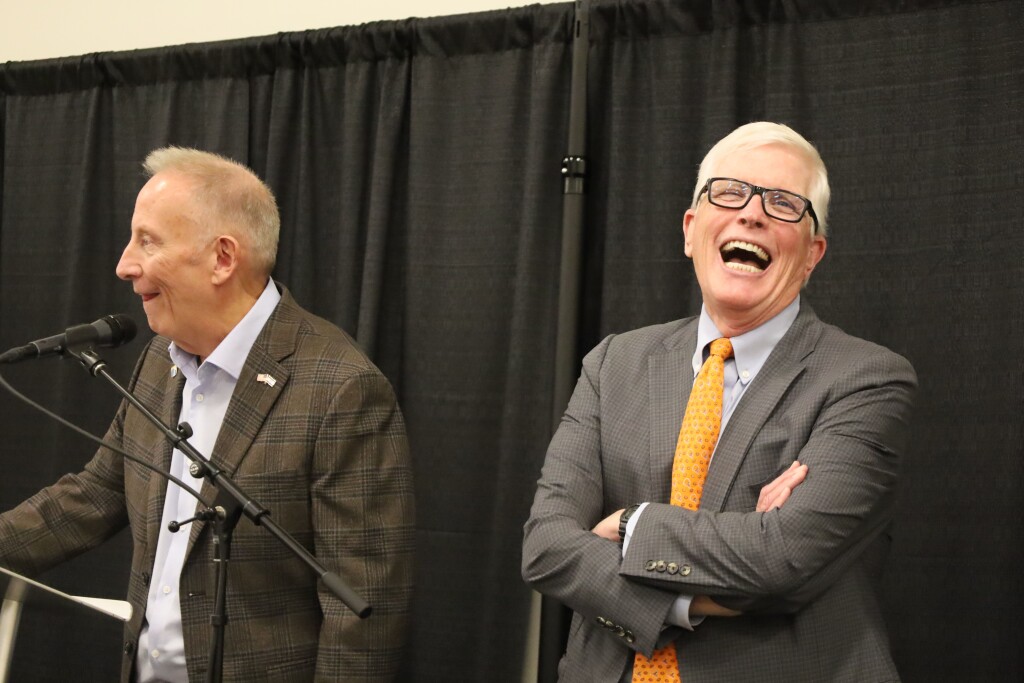

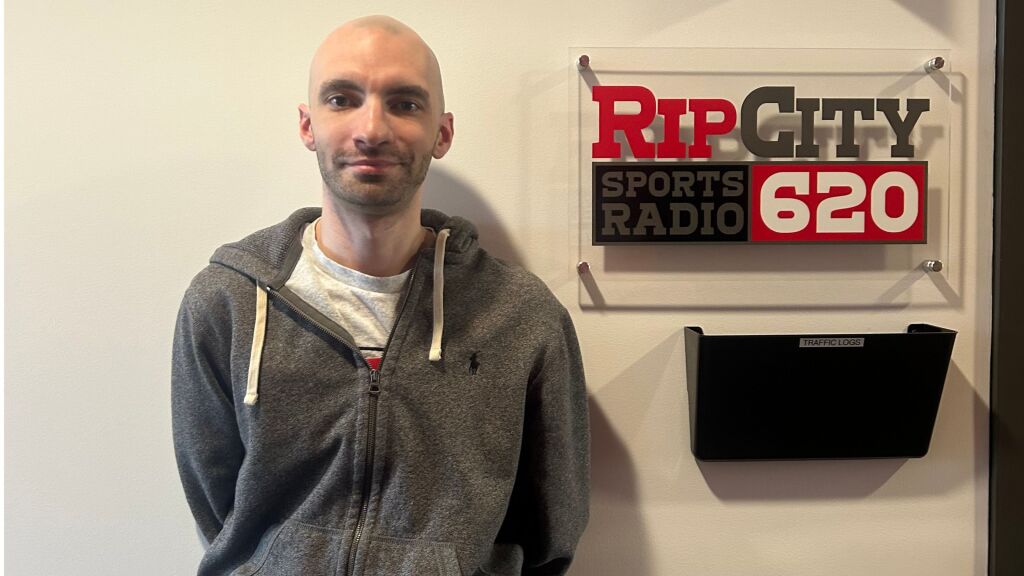 iHM Portand Adds Sean Highkin as Trail Blazers Correspondent on WPOJ-AM. iHeartMedia Portland’s Rip City Radio 620, “Your Home of the Portland Trail Blazers,” announced today (10/24) that acclaimed sports journalist Sean Highkin will join the station as the Portland Trail Blazers correspondent, effective immediately. He will provide comprehensive coverage of the games, practices, press conferences and everything revolving around the Portland Trail Blazers on their flagship station. Highkin brings over a decade of experience covering the NBA, including seven years dedicated to the Portland Trail Blazers. As a trusted voice in basketball, his experience includes contributing to national outlets such as Bleacher Report, USA Today, The Athletic and NBC Sports. In 2023, Highkin was named Oregon Sportswriter of the Year by the National Sports Media Association. “Sean’s knowledge, expertise and impressive track record will elevate and take our Trail Blazers coverage to the next level,” said Marshal Burgess, metro president of iHeartMedia Portland. “His insightful analysis and in-depth reporting have made him a respected voice in the sports journalism community, and we are thrilled to have him join the iHeartRadio Portland team.”
 New York Festivals 2025 Radio Awards Announces Distinguished Grand Jury. The New York Festivals® Radio Awards has announced its 2025 Grand Jury. The 2025 Radio Awards Grand Jury features over 100 global leaders from the radio industry across six continents. This distinguished panel comprises world-class content creators, industry visionaries, and iconic voices. Recruited from renowned companies, these directors, producers, journalists, writers, and sound artists are celebrated for their innovation and engaging storytelling. “The robust world of audio storytelling today is fully represented in the 2025 edition of the Grand Jury,” said Rose Anderson, EVP/executive director, New York Festivals Radio Awards. “From audiobooks to podcasts, from investigative journalism to live events, and from mystery to social justice, this year’s jury members volunteer their time and lend their expertise.” The New York Festivals Radio Awards provides a platform to celebrate creative storytellers from around the world. For 67 years, NYF has recognized both innovation and exceptional quality in broadcast audio content across all genres and platforms since 1957. Since 2023, The National Press Club, has partnered with New York Festivals to honor the highest scoring news program across the Coverage Of Breaking News Story, Coverage Of Ongoing News Story, Nonfiction Series, Investigative Journalism Podcast, and News Podcast categories. The winner will be announced during the 2025 Storytellers Gala in April. NYF’s Radio Awards receives entries from radio stations, networks, and independent producers from over 30 countries around the globe. The mission of the competition is to honor the achievements of the men and women who make up the global audio storytelling community. To see complete list of Grand Jurors click here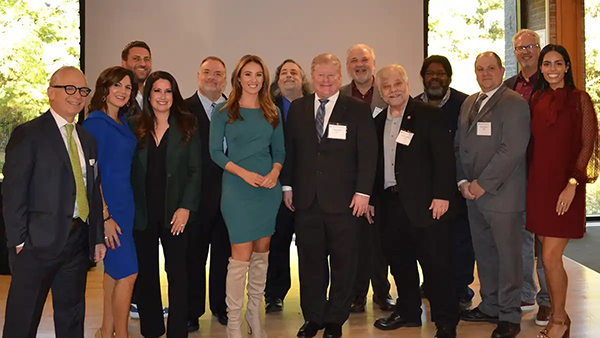
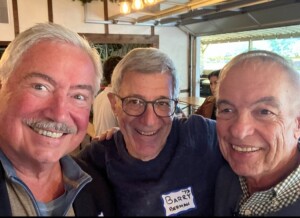 Old Friends and Colleagues Gather for CRN International Reunion. Some 50 long-ago colleagues gathered at a warm weekend reunion at a cozy restaurant in the Nutmeg State for what, in the 1970s, began as “Connecticut Radio Network.” It evolved into CRN International, a major advertising promotion agency, which ceased operations a decade ago. CRN SkiWatch reports aired across the USA, customized for each affiliate, and based on conditions reported by CRN’s army of spotters. Pictured above (l-r): consultant Holland Cooke; CRN International founder Barry Berman; and WABC, New York news personality, Joe Connolly. (NOTE: CRN International is not to be confused with long-active CRN Digital Talk Radio.)
 AdLarge Adds Innovative “CIRCLE THIS” Podcast to Client Stable. AdLarge, a pioneering podcast advertising agency, has announces the addition of “CIRCLE THIS with Andrea ‘Dre’ Bendewald” to the

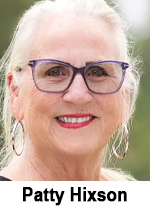 The hallmark awards ceremony, presented by CalViva Health in the New Exhibit Hall of the Fresno Convention & Entertainment Center. The awards paid tribute to 10 Central Valley women who have excelled professionally, served as role models, and given back to their communities, as well as one business honored for its support of women and women’s issues. Patty Hixson’s successful radio career spans 32 years serving the Central Valley. An active leader in the community, she has been a member of the Fig Garden Rotary Club for 30 years, serving as president in 2018, and was a longtime member of the California State University-Fresno’s Bulldog Foundation. Hixson also served on the Board of Directors of the Greater Fresno Area Chamber of Commerce. Patty Hixson said: “I’m honored and humbled to be recognized among this astute group of leaders. Giving back to the community is a central part of my DNA, and I thank the Marjaree Mason Center for this award and for its important efforts supporting all women in our community.”
 The agreement extension will feature Jeff Lewis expanding his popular show, “Jeff Lewis Live” to two hours a day giving listeners more of Jeff Lewis promoted as “just the way you want him…live and uncensored.” Lewis tells TALKERS, “SiriusXM has given me the freedom to build a show that is unfiltered, unapologetic, and morally corrupt. I’m grateful for the opportunity to grow my show and my cult…I mean, listeners.” The show will now air Monday through Fridays from 12:00 noon – 2:00 pm ET on SiriusXM’s
 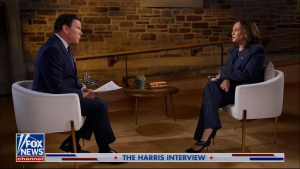 Ideology and, as Michael Harrison calls it, “the daily dance of affirmation” aside – perhaps there’s something to be said about booking “opposition” political luminaries as guests on our industry’s highly “targeted” venues. FOX News Channel’s (FNC) “Special Report with Bret Baier” delivered 7.8 million viewers and 1,126,000 in the 25-54 demo during anchor Bret Baier’s exclusive interview with VP Kamala Harris from 6:00 pm – 6:30 pm ET this past Wednesday (10/6), according to Nielsen Media Research. The interview marked the highest rating of the Harris-Trump political season, outrating Harris’s individual appearances on “60 Minutes,” “The View,” “The Late Show with Stephen Colbert,” CNN and MSNBC. For the full 6:00 pm ET hour, “Special Report” drew 6.7 million viewers and 901,000 in the 25-54 demo. Combined with the show’s midnight airing 12:00 midnight -12:30 am ET, the interview with VP Harris nabbed 9.2 million viewers and 1.4 million in the 25-54 demo, beating ABC’s interview with President Joe Biden before he dropped out of the race (8.5 million viewers).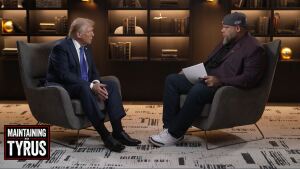
 Triton Digital has just released its
  The Florida Association of Broadcasters (FAB) has donated $25,000 to the Broadcasters Foundation of America (BFOA)
  “Unfortunately, this is far from over,” he continued. “Many of our colleagues are just now discovering the extent of the damage and the cost of repairing or rebuilding. On behalf of our members and all broadcasters who are suffering from the catastrophic impact of these storms, please continue to contribute to the Broadcasters Foundation Hurricanes Fund.” “We are so grateful to John and Pat and all the individual donors who continue to rise to the occasion and provided much-needed donations to help our colleagues, many of whom are temporarily homeless,” stated Tim McCarthy, President of BFOA. “The volume of requests that pour in every day is overwhelming. We need everyone in radio and television to give as much as they can afford. There is no such thing as a too small donation. Every dollar helps.” The Broadcasters Foundation has temporarily adjusted its already streamlined Emergency Grant Guidelines and Application Process to make it even easier and faster to get funds into the hands of broadcasters hit hardest by these storms. Under the adjusted guidelines, broadcasters who have suffered catastrophic loss contact their market manager or GM, who then fills out the
  Andrea Mitchell to Receive Prestigious Award. Alliance for Women in Media (AWM) has announced that Andrea Mitchell, NBC News chief foreign affairs correspondent and chief Washington correspondent, will be honored with the prestigious Gracies Icon Award at the 2024
 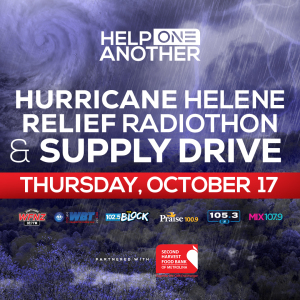 Radio One Charlotte, in partnership with Second Harvest Food Bank of Metrolina, is presenting an all-day radiothon today (10/17) to support those affected by Hurricane Helene. This event is taking place from 6:00 am to 7:00 pm across Radio One Charlotte stations: WOSF, WFNZ, WLNK, WPZS, WOSF-HD2 and heritage news/talk WBT. Marsha Landess, Radio One Charlotte regional VP, tells TALKERS, “We are focusing the power of our six radio stations to help raise funds for the relief efforts for our neighbors in the western part of our state. We know their lives have been turned upside down, and we want to do our part to assist them in rebuilding and recovering. Our goal is to raise a substantial amount to help them begin to put their lives back together. Every dollar counts, whether large or small.” Kay Carter, CEO of Second Harvest Food Bank of Metrolina, adds, “Everyone at Second Harvest Food Bank of Metrolina is so grateful to Radio One for all their efforts to assist us as we work to help the many victims of Hurricane Helene. The needs are great, and we want to thank all the radio stations and their listeners for considering a donation to the Radiothon. We promise to use the donations wisely to provide food and other supplies throughout the affected areas.”
 Even as its stations were airing hundreds of hours of continuous live news and storm coverage during hurricanes Helene and Milton, Cox Media Group (CMG) was raising nearly $1 million and providing food, water and necessities for impacted people and communities. That includes taking mobile charging stations into communities for people to charge their phones and other devices. Hurricane relief efforts took place across CMG’s southeast TV and Radio stations. “These efforts by our CMG family highlight the indispensable role of our stations – and our entire broadcasting industry – as we work together to make a powerful and positive impact on the communities we live in and serve,” said Dan York, CMG’s president/CEO. “As importantly, none of this would have been possible without the incredible support from our local partners and audiences. The response of our viewers and listeners has been nothing short of remarkable.” CMG radio stations include news/talker WDBO 107.3 / AM 580 in Orlando.
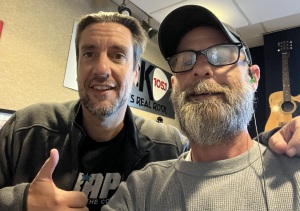 Premiere Networks personality Clay Travis co-hosted “The Clay Travis and Buck Sexton Show” live from affiliate News Radio 570 WWNC in Asheville, NC (10/11). Travis toured the area via helicopter to witness the extensive damage from Hurricane Helene in an effort to continue raising awareness, funds and volunteers for hurricane relief that will be needed for months to come. During the visit, WWNC morning host/news director Mark Starling joined the broadcast for a powerful conversation about the devastation the community has experienced. He detailed how the station covered Hurricane Helene, providing vital information to the Asheville community including coordinating rescue efforts and reuniting families. Starling, who stayed at the station for 14 days straight during the hurricane, said: “…when TV couldn’t do it, the newspaper couldn’t do it, there was nothing online, the only thing left was AM/FM radio. All seven stations stayed on the air simulcasted… we were wall-to-wall…what we wanted to do here at the radio station, at iHeart Asheville, was we wanted to show the community that we can get through this. And we’ve been kind of repeating this line: ‘community is the answer to this crisis.’ …what we have seen is the absolute best in humanity in an absolute horrific, horrific time.” Listen to their full conversation
 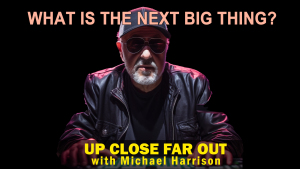 In this clip, he discusses the “next big topics” that will be discussed in talk radio and its associated forms of spoken word media. One of the many highlights of Harrison’s 48-minute keynote address was his observation that one of the next big things on the talk media menu is invariably something that is unknown or unexpected that comes out of the blue and literally changes the conversation. He pointed out that the U.S. Rep. Gary Condit (D-CA)/intern Chandra Levy murder mystery scandal was the biggest talk media story for weeks during the middle of 2001 – until the events of 9/11 completely wiped it off the talk shows in one fell swoop. Beyond that, Harrison discusses the growing national conversation role of such topics as societal anxiety, clean water, time management, privacy and technology’s assault on our humanity. To watch the brief clip on the TALKERS MEDIA YouTube channel, please
 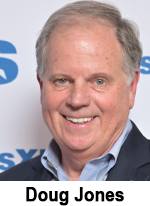 “The CloakRoom with Former Senator Doug Jones” will air live tomorrow from 6:00 pm – 8:00 pm ET on channel 127. According to company sources, with just a few weeks remaining before the November 5 elections, Senator Jones will engage with Progress listeners, taking calls to discuss the pressing news stories of the day. He’ll also leverage his personal political experience to analyze the key senatorial races, as well as the presidential election. In addition, the former senator will be joined by Julie Chavez Rodriguez, VP Kamala Harris’s campaign manager, as well as a surprise guest. “The stakes in this election could not be any higher,” Jones tells TALKERS. “I can’t think of a better way to talk directly with voters nationwide and have real conversations about the issues at the top of their minds as we head into Election Day. As a regular guest on SiriusXM’s Progress channel, I know they have a passionate audience with a lot of important, fresh subjects to discuss, so this should be a lot of fun.” The show will have its first run live during the usual time slot of “The Dean Obeidallah Show.”
 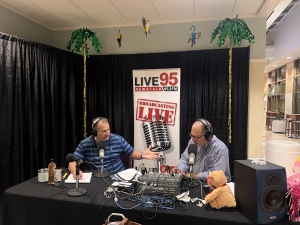 The 22nd annual Children’s Miracle Network Radiothon benefitting McLeod Children’s Hospital was recently held in Florence, SC. During the Radiothon, Community Broadcasters’ stations WWKT 99.3 The Cat, (news/talker) WFRK Live 95.3, WPDT Almighty 105.1 and WSIM 93.7 Frank FM hosted live broadcasts from McLeod Children’s Hospital. Pictured above: former SC Lt. Gov. Ken Ard and station VP operations Dave Baker (r) during broadcast on news/talk Live 95. “As always, at Community Broadcasters, we are always doing our best to live up to our name, and stand for the communities that we broadcast in,” company VP Wayne Mulling tells TALKERS. “And we are proud of what we have been able to do in hosting the Children’s Miracle Network Radiothon each year to raise funds for McLeod Children’s Hospital and Children’s Miracle Network. We are humbled by the amount of people that have been helped directly through the years by these organizations, and glad to play a small part in keeping this active and ongoing to continue to help others every year. We invite you to be a part as well.” DJs and talk show hosts asked listeners for donations in support of the programs and technology that McLeod offers to families in the Pee Dee. Listeners also had the opportunity to hear real stories from those who have benefited directly from the McLeod Children’s Hospital, in addition to interviews with doctors, nurses and employees who all share the same passion. “What an exciting Radiothon we had this year raising more than $127,000 for the McLeod Children’s Hospital!” says Davis Sawyer, Children’s Hospital fund manager. “The hard work and dedication from all involved truly make a difference in the lives of the children treated in McLeod Children’s Hospital. I value the partnership and friendship we have with Community Broadcasters and look forward to growing this partnership as we continue to impact the children we serve.” There was also a live auction throughout the week, with some bids surpassing $500. Auction items were donated from collegiate and professional sports teams, nationally known musicians and local businesses. At the conclusion of the Radiothon, this year’s donations equaled $127,098. All donations will remain here in the Florence area to help fund life-saving McLeod programs, and purchase new technology to better serve the Pee Dee families. To learn more about the annual Radiothon, check out this year’s sponsors, or make a donation, visit
 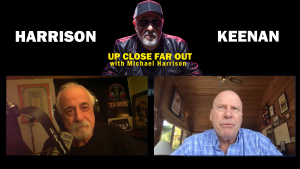 Keenan coached big time teams in the Soviet Union, Russia, Canada, China, the U.S. and more for over five decades! What does it take to be a leader in the competitive and often cutthroat world of major league professional sports? How have the generations of young athletes changed over this stretch of time? What is the state of sportsmanship in today’s culture? What is it like dealing with the media from a professional sports perspective? How is sports culture different around the world? How is gambling impacting sports? Is hockey enjoying healthy growth as both a sport and a business? These questions and more are tackled in an informative and universally interesting conversation between Harrison and Keenan. Keenan, considered one of hockey’s most controversial and intriguing figures, has just released an autobiography titled Iron Mike: My Life Behind the Bench (Randon House Canada, 2024).
 “The Doug Gottlieb Show” will debut on Northeast Wisconsin airwaves, alongside the return of “The Mike Heller Show” to WSCO, while “The Show” continues with host Eric Balkman. Starting October 28, “The Doug Gottlieb Show,” a FOX Sports Radio nationally syndicated program, will air weekdays from 2:00 pm – 4:00 pm. “Our show is so excited to expand our footprint in Wisconsin!” said Doug Gottlieb. “Everywhere I go, people ask where they can hear us…now the answer is WSCO! Let’s go!” Woodward Community Media’s talk brand manager, B.J. DeGroot, shared, “With Doug now serving as head coach for UW-Green Bay Men’s Basketball and continuing his national show, it was essential to bring his voice to sports fans in Northeast Wisconsin.” Additionally, WSCO will welcome back the statewide syndicated “Mike Heller Show,” which will air weekdays from 12:00 noon – 2:00 pm. Heller, a local favorite and graduate of Appleton East High School and UW-Oshkosh, previously hosted the show on WSCO from 2016 to 2019. “The Show with Leo and Balky’ will now be rebranded as “The Show with Balky” following John Leopold’s decision to step back to focus on his sales executive role. Balky will continue as the solo host from 11:00 am – 12:00 noon. DeGroot added, “We are thrilled to enhance our local and regional sports coverage by bringing Doug’s show to our audience and welcoming Mike back to Northeast Wisconsin.”
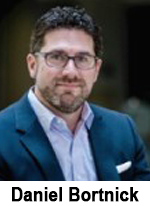 Bortnick is a successful industry veteran who most recently served as regional vice president of sales at iHeart Media in Washington, DC. Elizabeth Hamma, market president tells TALKERS, “We are fortunate to welcome Danny Bortnick as director of sales for Hubbard South Florida. With his extensive and successful track record of driving revenue growth as well as fostering strong client relationships, we are confident Danny will make a big impact on our team and our advertising partners.” Bortnick states, “I couldn’t be more excited to be joining Hubbard South Florida. I’m humbled to be representing such powerful brands, as well 2060 Digital. Looking forward to helping the Hubbard South Florida team reach new levels of success.”
 In his new role, according to the company, Bortnick will oversee sales operations for Hubbard’s South Florida stations, as well as 2060 Digital, focusing on driving revenue growth, building strong relationships with advertisers, and creating innovative solutions to meet client needs.
 The station will continue to be heard on 1250 AM. Concurrent with the FM relaunch, the station will introduce two new local weekday shows. “The Pack-A-Day Radio Show” will air weekdays from 8:00 am to 9:00 am CT. Hosted by Green Bay Packers insider Andy Herman, the show will serve as a destination for all things green and gold. Herman currently hosts the “Pack-A-Day Podcast” and “Packer Report.” The station will also launch “The Mason Crosby Show,” starring 17-year NFL kicker, Super Bowl champion and Packers all-time leading scorer Mason Crosby, weekdays from 9:00 am to 11:00 am CT. The show will also feature Mitch “Thunder” Nelles as co-host and veteran producer Tommy Wortz. “We couldn’t be more excited to bring The Fan back to FM and expand the reach of the best sports talk in Milwaukee,” said Jason Bjorson, SVP/market manager, Audacy Madison and Milwaukee. “Milwaukee has long been a premier market for football coverage, and through the addition of ‘The Pack-A-Day Radio Show’ and ‘The Mason Crosby Show,’ coupled with our existing must-listen programming, we’re elevating the listening experience and keeping fans connected to their favorite teams.” The station’s weekday lineup rounds out with “The Jim Rome Show” from 11:00 am to 2:00 pm CT and “Wisconsin Sports Daily” with station APD Steve “Sparky” Fifer from 2:00 pm to 5:00 pm CT.
 Paired association learning is the primary strategy our brain uses to remember facts: Oh, What a Feeling, Toyota. For several years, our business has worked hard to “save” the AM band by demonstrating how useful radio is in times of Emergency: Floods, fires, hurricanes, tornadoes. Think AM and think local disaster!
 According to a report in The Forum, Fieldstone Group, which owns Fargo heritage radio station “The Flag” at AM 1100 / FM 92.3, is planning to purchase WDAY Radio from Forum Communications, owner of WDAY-TV and The Forum. In November 2020, Fargo-based Fieldstone Group began managing WDAY. If the sale is approved by the FCC, Fieldstone will own the 102-year-old AM radio station, its online properties, social media accounts, and transmitter/tower site. Terms of the sale were not immediately disclosed by the buyer or the seller. “We are thrilled to see this day arrive,” said Steve Hallstrom, president and managing partner of Fieldstone Group. “We thank the Marcil family and the leaders and staff of Forum Communications for a great partnership these last four years. WDAY Radio has always had a tradition of serving the community with great news, weather, ag, and sports and we’ve enjoyed the journey of growing those elements with the help of our friends and partners at Forum Communications.” Hallstrom said it’s been important to have WDAY Radio “serve the community with quality local programming from sunrise to sunset, which is becoming a rarity in our business. I also want to thank our listeners for their loyalty and the many local businesses and organizations that have trusted us with their advertising and marketing dollars.” Fieldstone Group also owns KTGO “The Flag” in Tioga, N.D, at AM 1090 and FM 92.7, three stations in Grand Rapids, Minn: KOZY 1320 AM / 93.1 FM, KMFY 96.9 FM and KBAJ 105.5 FM; and The McKenzie County Farmer newspaper based in Watford City, N.D. “WDAY Radio is North Dakota’s longest-serving broadcast operation,” said Scott Hennen, VP/partner of Fieldstone Group and general manager of WDAY Radio from 2001-2009. “It is an honor to take ownership of this iconic community source of information.”
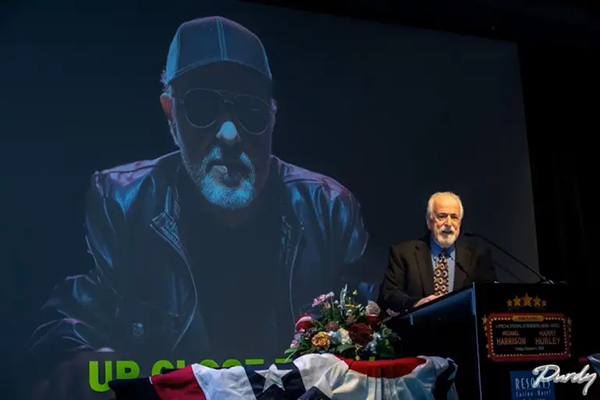 TALKERS publisher Michael Harrison addressed a packed house of New Jersey political, civic, and business leaders at last Friday’s Hurley in the Morning Foundation Charity Dinner in Atlantic City (10/4) discussing the biological and sociological impact of modern era communications technology. In this clip, he discusses the potential influence of AI on the talk show host job market. One of the many highlights of Harrison’s 48-minute keynote address was his observation that it is very possible for robots powered by artificial intelligence to be able to hold multi-faceted on-air conversations with each other or with guests or callers by tapping into their ability to instantaneously access every talking point already out there in cyberspace – left, right, or center – and to present them with an endless array of voices and attitudes. To protect their jobs and future against this formidable competitor, Harrison advises talk show hosts to significantly “up their game” and operate with more originality outside the realm of hackneyed talking points. To see a brief clip of Harrison’s comments please