


SABO SEZ: What You Need to Know About the “Law of 200”
By Walter Sabo
a.k.a. Walter Sterling, Host
WPHT, Philadelphia, “Walter Sterling Every Damn Night”
and TMN syndicated, “Sterling on Sunday”
 The risk is real. Suggesting that a technique used with great success in the recent past might be beneficial to the present is a perilous course. Is the idea out of touch with today’s reality? Is the author ignoring current trends?
A factual current event from which our industry and our lives suffer: Sales are down. Sales for the radio industry are down every quarter.
Hard research-and-math-people will point to the usual causes. Add to that list the fact that the same dollars that bought spots priced at X for the big morning show are being fed into podcasts for 10 percent of X. But podcasts are digital! Therefore, they are sexy to Wall Street. The result of that dollar transfer is quarterly investor calls featuring CEOs declaring that “digital is a sweet spot.” Actually, “digital” is a cheap whore but back to the topic:
Methods deployed to sell radio today are not working. Salespeople work hard, but the strategies they are given are weak. That’s why sales are down – every quarter. Spreadsheets, ROI, CPP, programmatic are elegant math-major systems. But our product is not math. Our product is emotion. Match sales techniques to the product. Tap the power of emotion.
Everything is ultimately purchased from our emotions. Everything. Case in point: Joe Girard* understands cars better than anyone in history. No, no, don’t be dismissive of Joe because he was a car salesman; cars are very expensive. Cars have impacted you and your family for years. Cars make you feel great or awful. Powerful purchase.
Happy Birthday! One month a year, Joe would mail out a birthday card to all of his past customers and all of his prospects. All of them. In the same month. One out of 12 recipients were thrilled that Joe remembered their birthday! The other 11 would call Joe and tell him that he had their birthday date wrong. They called Joe. A car salesman.
Joe gave all of them information on the phone about the latest models and deals for… a new car. They called Joe.
The Law of 200. Catholic funeral masses hand out prayer cards featuring a photo of the deceased. Ask a priest how many cards are printed. The answer is 200. Caterers will tell you that the standard number of wedding guests is… 200!
Seems we know 200 people who will come to our wedding and our funeral. Major life events. Buying a car is a major, emotional life event. Joe realized that if he sold a good car, 200 people would learn that the customer was satisfied.
OR 200 were not happy. He gave all car buyers a box, a box of his business cards. 200 cards. He urged customers to hand out Joe’s cards to their friends.
Do those 22-year-old time buyers still want concert tickets, merchandise, meals, autographs, meet and greets? Before the power point presentation starts, book the good seats.
Yes, our product is emotion driven. How many arguments have you had about music repetition? New music? Controversial topics? Borderline morning show jokes? Those are emotional not intellectual discussions. There’s our power – in the center of the rink. Put the commercial on the mat.
* How to Sell Anything to Anybody by Joe Girard https://a.co/d/fTpuzoZ
Walter Sabo has been a C Suite action partner for companies such as SiriusXM, Hearst, Press Broadcasting, Gannett, RKO General and many other leading media outlets. His company HITVIEWS, in 2007, was the first to identify and monetize video influencers.. His nightly show “Walter Sterling Every Damn Night” is heard on WPHT, Philadelphia. His syndicated show, “Sterling On Sunday,” from Talk Media Network, airs 10:00 pm-1:00 am ET, and is now in its 10th year of success. He can be reached by email at sabowalter@gmail.com.
 Ninety seconds. That’s all it took. One of the interviews on the TALKERS Media Channel – shot, edited, and published by us – appeared elsewhere online, chopped into jumpy cuts, overlaid with AI-generated video game clips, and slapped with a clickbait title. The credit? A link. The essence of the interview? Repurposed for someone else’s traffic.

 “justice for the injured… Bradshaw & Bryant.” Key takeaways from the blog include: 1) Through its longterm use of AM/FM radio advertising, Bradshaw & Bryant dominates unaided brand awareness; Across all stages of the consumer journey, Bradshaw & Bryant leads the market; 2) Bradshaw & Bryant offers Madison Avenue a master class on creating future demand and how building a brand is the main driver of longterm growth and profit; 3) Every advertiser has two jobs: Creating future demand and converting existing demand; Bradshaw & Bryant excels at creating future demand; and 4) AM/FM radio advertising works: Among AM/FM radio listeners, Bradshaw & Bryant’s awareness is +19% greater than in the overall market.
  technical operations. This one-of-a-kind, year-long mentorship pairs a rising professional with a seasoned industry leader to provide one-on-one coaching and deep exposure to the technical side of the broadcast industry.” The selected mentee will gain hands-on insight into critical areas including FCC compliance, RF systems, EAS, IP-based broadcast systems, automation, and network operations. The program also explores key aspects of IT, remote broadcasting, digital audio, streaming, and systems integration, equipping participants with both the knowledge and connections to lead confidently in the evolving audio landscape. In addition, the chosen mentee will attend the 2026 NAB Show in Las Vegas. MIW Board President Sheila Kirby says, “The LAUNCH program is a cornerstone of MIW’s mission to open doors for women in every corner of broadcasting. By focusing on engineering and technical operations, we’re not only providing critical skills and mentorship, but also ensuring that women have a strong voice in shaping the future of our industry. We are deeply grateful to Mr. Master, Premiere Networks, and of course the NAB Leadership Foundation for their support in helping us prepare the next generation of broadcast leaders.”
 women’s basketball games this season and a total of 28 episodes of the “Bruin Insider Show” on Thursdays at 7:00 pm. KABC program director Luis Segura comments, “With KABC’s powerhouse signal and UCLA’s legacy teams, Southern Californians will get some of the best in sports programming starting Fall 2025! We are tremendously excited to partner with UCLA as the new official broadcast home of Bruins football and men’s basketball and look forward to turning up the volume on Bruins coverage for our passionate 790 KABC listeners and Southern California sports fans.”
 Imagine a listener “talking” to an AI version of you – trained entirely on your old episodes. The bot knows your cadence, your phrases, even your voice. It sounds like you, but it isn’t you.
 his remarkable contributions to the radio industry over the past four decades. Mike’s deep expertise, creative vision and unwavering commitment to excellence have shaped countless careers, inspired new generations of broadcasters and driven innovation in every corner of the audio industry. His ability to nurture talent and create programming that resonates with audiences makes him a most deserving recipient of this year’s National Radio Award.” McVay is president of McVay Media and recently served as EVP of content and programming for Cumulus Media and the Westwood One radio network. NAB says the celebrated media strategist, programmer, talent coach and industry leader will receive this prestigious accolade during the NAB Marconi Radio Awards at the 2025 NAB Show New York.
 says, “Tommy’s deep roots in the Los Angeles media landscape, combined with his passion for building brands and connecting with the community, make him the ideal leader for ‘ESPN LA.’ He has excelled at leading teammates across sales, marketing, and support, serving as a strong conduit between those areas and the content team. His proven track record of innovation and results will continue to elevate the brand’s reach and impact with fans and partners.” Lam comments, “I am honored to take on this role and continue building on ESPN LA’s momentum. Los Angeles is one of the most dynamic sports markets in the world, and I’m excited to work with our talent team to deliver outstanding experiences for our fans, partners and teammates.”
 An annual physical is a wise idea. Doc asks, “How are you doing?”. Then he or she asks some detailed questions based on your medical history. Then “how have you been feeling? Any issues?” Doc always orders blood draws to see what might be lurking. Is the statin drug keeping your cholesterol in check? Are you getting plenty of exercise, plenty of sleep? How’s your diet? Over the years, I’ve visited about my health with at least a dozen different doctors. I’m convinced that the good ones always ask good questions and then listen carefully. Good questioner – good listener. That’s the doc I can respect and put my trust in.
 Salem Podcast Network’s “The Charlie Kirk Show” remains ranked #5 while Cumulus Podcast Network’s “Shawn Ryan Show” rises one place to #6. Other talk radio related shows of note include: Cumulus Podcast Network’s “VINCE” dipping three places to #13; iHeart Audience Network’s “Clay Travis & Buck Sexton Show” rising two places to # 14; and Cumulus Podcast Network’s “Mark Levin Show” falling six places to #35.
  his program’s 20th anniversary with a live broadcast on SiriusXM (Channel 380), Big Sports TV, and the BOXTOROW YouTube channel. The event is tomorrow (8/20) in Raleigh at North Hills Main District and will feature appearances by legendary college football coach Bill Hayes, Raleigh sports talk host Adam Gold, Raleigh Mayor Pro Tempore Corey Branch and Durham Mayor Leo Williams.
 Newsmax were defamatory. However, Newsmax is not admitting guilt; just the opposite. “Newsmax believed it was critically important for the American people to hear both sides of the election disputes that arose in 2020. We stand by our coverage as fair, balanced, and conducted within professional standards of journalism.” The company says Delaware Court Judge Eric Davis would not provide a fair trial wherein the company could present standard libel defenses to a jury. Newsmax CEO Christopher Ruddy says, “The Delaware Court under Judge Davis effectively enforced a confiscation of our property because our reporting was not always sympathetic to Joe Biden. The actions taken against Newsmax, and earlier against FOX News, represent a direct attack on free speech and a free press.”
 Murrow Awards for Television, Radio and Digital news operations at the network, large market and small market levels. Radio Network winners include ABC News, NPR and Canada’s CBC. Radio station winners include: KMOX, St. Louis; WSB, Atlanta; WTOP, Washington; and WWNC, Asheville. The presentation of the awards will take place on October 13 at Gotham Hall in New York City.
 The problem with technocrats is they believe computer programs and machines solve all problems. A technocrat in charge of a business will it kill it, for sure. For example, once a movie theatre is automated, not requiring a pesky projectionist or even a snack counter attendant, you and I would still not buy a ticket – unless the theater was showing an actual MOVIE!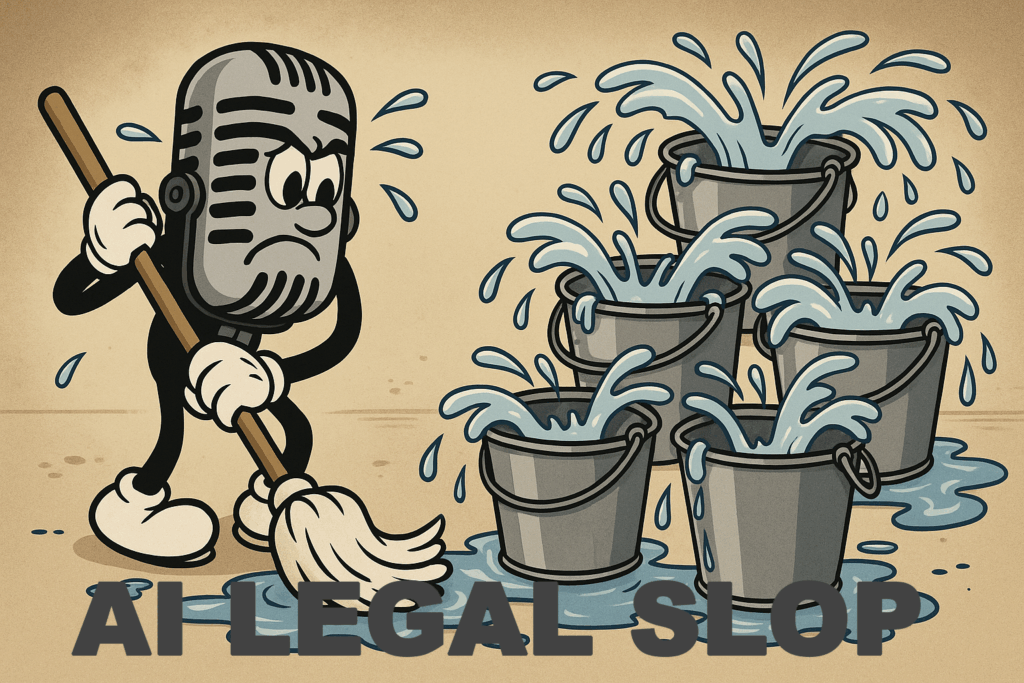
 Artificial intelligence now makes it possible to replicate a human voice with striking accuracy. For broadcasters, podcasters, and content creators, the central question is: When does using or imitating a voice become a legal problem? The answer depends on the person being imitated, the purpose of the use, and the rights attached to that voice. Below is a six-bucket framework to help evaluate the risk.
 pursuit of pure profit. It embraced this Administration’s radical notion that discriminatory behavior should be tolerated and even embraced, while efforts to expand opportunity for everyone should be rejected.
 for the quarter to $22.2 million compared to the same period last year. For the quarter, operating income was $1.4 million compared to $2.1 million for the same quarter last year and station operating income decreased 6.4% to $6.0 million. Saga reports net income of $1.1 million for the quarter compared to the net income of $2.5 million it reported in the second quarter of 2024.
 says, “While the advertising backdrop for legacy media remains challenging, in the quarter we continued to outperform our radio peers, gaining market share across all broadcast spot revenue channels. We also significantly outperformed in digital, delivering double the growth rate of our radio peers, driven by the 38% year-over-year increase in our digital marketing services business. Additionally, we executed $5 million of annualized cost reductions, bringing total annualized cost reductions to $175 million over the last 5 years. These results underscore our disciplined focus on optimizing performance and investing in growth opportunities despite capital constraints. Looking ahead, while we do not expect near-term relief from market headwinds, we are confident in our ability to position the business for long-term success through strong execution and by capitalizing on the Company’s valuable underlying assets.”
 football and men’s basketball games broadcast on WGN and he’ll also serve as a fill-in anchor on the WGN-TV sports desk. Eanet says, “Can’t believe it’s been 41 years since I first set foot in the WGN studios. As I close this chapter of my career,
  the word that comes to mind is ‘grateful.’ I’m so thankful to the entire WGN family for their friendship and support over the years. It’s not just the names you know, but the entire crew on and off the air. I’m forever indebted to the managers, engineers, producers, newspeople, sales team, and all the others who have made WGN such a special place to work. Most of all, I’m thankful to the listeners who have a special relationship with this station.” WGN Radio VP and general manager Mary Sandberg Boyle says, “I am thrilled to share that our own Andy Masur will assume morning show sports duties going forward. Andy is a talented broadcaster who has built a rapport with the WGN Radio audience as a regular fill-in for Dave and as our weekend sports anchor. We are lucky to have him.”
 a partnership between NewsTalkSTL and Newsmax. NewsTalkSTL says this will be Chris Arps’s second visit to Israel in the past month. His previous trip, which took place during Iranian airstrikes, was a sightseeing tour. This time, he returns as part of a diplomatic delegation organized by Newsmax in coordination with the Israeli government. Tim Jones says, “Traveling to Israel, especially during this consequential time, will be a life changing trip. Experiencing the Holy Land, visiting with top Israeli officials, all while literally walking in the footsteps of Jesus, will be an incredible experience for all of us in NewsTalkSTL nation.” NewsTalkSTL president of programming Jeff Allen says, “It should be an incredible week of content from Tim and Chris. They won’t just be sharing their impressions; they’ll have stories you can only get by being there on the ground.”
 president and CEO John Rosso says, “Sharon has been instrumental in our continued success at Triton Digital, and her promotion to chief revenue officer is a reflection of her exceptional leadership, strategic thinking and proven ability to drive results. Her track record in scaling audio technology platforms and her deep understanding of the evolving digital landscape will be invaluable as we accelerate our global growth and deepen partnerships with audio publishers and advertisers.”
 2025, with Siena Lending Group LLC. The Amendment, among other things, adds additional real property owned by Salem Radio Properties, Inc. to the collateral under the Loan Agreement, which increases the borrowing base and therefore the amount that the company may borrow under the Loan Agreement.
 detective story. It takes someone who is an exceptional journalist with seasoned and sharp instincts like Geoff to follow the plot. I’m excited to see how he continues to build on the legacy that Craig Dellimore left behind and how his presence strengthens our multi-platform political coverage to better serve our Chicago area listeners.” Buchholz comments, “Chicago and Illinois are entering a critical era, and it’s more important than ever that our audience understands how the actions at City Hall, in Springfield and Washington affect their lives. I’m so grateful for our listeners’ trust, and I’m looking forward to being our station’s politics-to-English translator and excited to get to work.”