Industry News

Top News/Talk Media Stories for Week of August 12 – 16

Industry Views

Monday Memo: Talking About Abortion

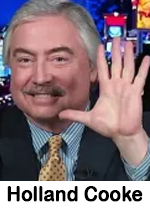
By Holland Cooke
Consultant

imMany Americans have been, in the two years since the Supreme Court punted the issue down to the states. For suburban women voters in swing states, it is – by far – the number one issue, per a Wall Street Journal poll. It tipped 2022 midterms and 2023 elections and swung other elections in battleground states.

As the 2024 vote looms, your reporting will likely be criticized, by both sides; and experience recommends a useful posture when listeners question your coverage and threaten to shun your advertisers.

im

No local radio market enjoys – or suffers – more politically outspoken listeners than Washington DC. I programmed all-news WTOP there for seven years in the 80s and 90s. Even then – with Roe’ the law of the land – this was a white-hot issue.

The quickest way we could make EVERYONE angry was by reporting crowd estimates for abortion rallies. Half the callers accused us of inflating the numbers, the other half said we low-balled it.

Here, from my files, are an actual complaint letter, and our standard reply.

Holland Cooke (HollandCooke.com) is a consultant working the intersection of broadcasting and the Internet. He is the author of The Local Radio Advantage: Your 4-Week Tune-In Tune-Up and “Close Like Crazy: Local Direct Leads, Pitches & Specs That Earned the Benjamins” and “Confidential: Negotiation Checklist for Weekend Talk Radio.” Follow HC on Twitter @HollandCooke and connect on LinkedIn

Industry News

Top News/Talk Media Stories for Week of July 22 – 26

Industry News

McClure Segues To VP Of iHM’s Unified Partnerships CA

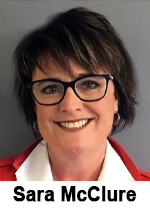
Sara McClure
Effective immediately, nine-year iHeartMedia Sacramento market president Sara McClure transfers within the company to become VP of its Unified Partnerships For California division. Replacing McClure as Sacramento market president is Steve Darnell (see story above). iHeartMedia Unified Partnerships president Michael Preacher states, “I am extremely excited to have Sara join our division. She will be broadening her responsibilities and offering her incredible expertise to leading agency partners throughout California.” McClure looks forward to, as she notes, “advancing my career by joining the Unified Partnership division. This incredible team has unlimited possibilities and I’m excited to bring my scope of marketing and big-idea thinking to our partners.” The Chico State University (California) alum has nearly 30 years of experience as a media executive, including director of sales for Entercom Sacramento, as well as positions at CBS Radio and Sinclair Broadcasting. She will report to United Partnerships EVP Breeanna Malik. Unified Partnerships provides advanced media resources for its ad agency partners.

Industry News

Connoisseur Sells Frederick, MD Properties

WFMD Free Talk
Williamsburg, VA-based Local Daily Media acquires Connoisseur Media’s Frederick, Maryland news/talk WFMD “Free Talk 930” and country WFRE for $4.275 million. Connoisseur Media chief executive officer Jeff Warshaw tells TALKERS, “While it’s difficult for us to part with our Frederick stations, we were convinced that Local Daily Media’s management leadership and its focus in the Maryland/Virginia region could move these stations forward in a way we would be proud of. Senior management of Local Daily Media includes longtime Connoisseur partner Mike Dufort, who we have worked with closely and respect. Mike understands local radio and shares our view on the need for radio to be involved with and serve the local community.” Aforementioned Local Daily Media president Mike Dufort remarks, “With my nearly 11 years of working with Jeff and the entire Connoisseur team, I deeply understand and appreciate the care and nurturing that went into building these stations. I’m excited for the opportunity to continue along their journey to reaching even greater heights.” Meanwhile, Local Daily Media chief financial officer Adam Crotty adds, “We’re incredibly fortunate to welcome these legendary stations, along with their talented and dedicated teams, to our growing organization. Their rich history of supporting and improving the vibrant Frederick community will undoubtedly inspire our entire team to find new ways to positively impact each community we serve.” Connoisseur Media acquired “Free Talk 930” and WFRE five years ago from iHeartMedia’s Aloha Stations Trust in exchange for its Erie, Pennsylvania cluster.

Industry News

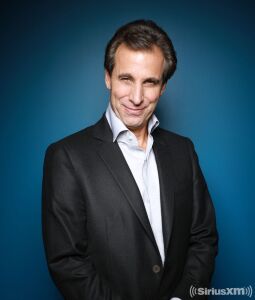
Christopher “Mad Dog” Russo and SiriusXM Ink Multi-Year Deal

Maddog Radio Hall of Famer Christopher “Mad Dog” Russo has signed a new three-year agreement to remain the face and voice of SiriusXM’s popular national all-sports talk channel, Mad Dog Sports Radio (channel 82).  Russo will continue to host his daily all-sports show, “Mad Dog Unleashed,” every weekday (3:00 – 6:00 pm ET). The new agreement will extend Russo’s tenure on SiriusXM through its 19th year.  He joined SiriusXM to launch Mad Dog Sports Radio in 2008.  “SiriusXM is my radio home,” said Russo. “I’m proud of what we’ve built here over these last 16 years. I love the platform and the freedom to be me and do the kind of show my audience and I enjoy. Four decades into my career I can honestly say I am as excited to turn on that mic and talk to my listeners every day as I was when I first started my career!”  “While he has inspired a lot of imitators over the years, there’ll never be anybody else on the air like Chris,” said Scott Greenstein, SiriusXM’s president and chief content officer. “He’s more popular and dynamic today than he has ever been and we couldn’t be more excited and proud to have him continue his legendary career on SiriusXM.” In 2022 Russo was inducted into the Radio Hall of Fame, recognizing a pioneering on air career that has spanned four decades and made him one of the most prominent and popular hosts in radio history. After 19 years hosting the market-leading “Mike and the Mad Dog” show on WFAN, Russo embarked on the second major chapter of his career with SiriusXM and built his Mad Dog Sports Radio channel into a popular national sports talk platform. (Photo credit Maro Hagopian).

Industry Views

SABO SEZ: Ratings Lessons from Dr. Ruth

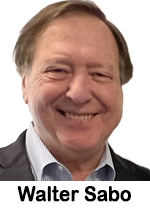
By Walter Sabo
CEO, Sabo Media Action Partners
A.K.A. Walter M Sterling
Host, WPHT, Philadelphia – daily
Talk Media Network – Sundays

imDr. Ruth Westheimer holds the audience share record for 18-34s in New York.

When her first-ever radio show launched on WYNY-FM it was 15 minutes a week. She solicited letters. By the end of the second week, she had gotten over 1,000 letters.

General manager Dan Griffin put her on the air. Mitch Lebe had a good talk show and had booked Ruth as a guest… she was memorable! Betty Elam, public affairs director met her at a City College lecture. Everyone saw and felt the potential, but it was Mr. Griffin who came to me with the plan to hire Dr. Ruth. I was executive vice president in charge of the NBC FM stations and WYNY-FM was my responsibility. Being tactically and boldly irresponsible I said, “Yup, put her on.”

A few months later, Al Brady Law the next GM and Pete Salant expanded her show to two hours on Sunday nights taking live phone calls. Very quickly she got on the cover of PEOPLE, guested on the “Tonight Show” and became Dr. Ruth!

How did this happen? 

— Dan Griffin had been in the CIA. He was brilliant, fearless, and Catholic. I never heard him raise his voice or do anything without reasons and facts. My confidence in his judgement made a sex talk show easy to launch. He knew how to talk to humorless lawyers, advertisers, listeners and the NBC Standards and Practices department.

Dr Ruth’s world was fearless thanks to Dan Griffin. Amateur GMs would have panicked when she said, “blow job” and “vagina,” every week. Dan never blinked.

The underpinning of her success was the lack of fear. Management was fearless. She was fearless. Therefore, she could be authentic. Authenticity is rare, appealing, and always successful. Today, I’ve known talent beaten for making fun of Erin Andrews or posting a meme. How would that management have handled Dr. Ruth? They’d be passed out under the table. When listeners, lawyers, advertisers complain – that means it’s working!

Note GMs Griffin and Law were GOAT programmers who had never spent a second in sales.

— Dr. Ruth had two bullet wounds from her service in the Israeli army. She had no fear – of anything. This is key – she had no concerns about the comments of her psychologist peers or her private patients. Every other radio psychologist I’ve worked with were all concerned about their colleagues’ reactions to their radio work. Not Ruth. She maintained a listed private practice in Manhattan the rest of her life.

— She took direction. We gave her a few tips on how to take phone calls, how to pace a radio show. She embraced and enacted them all.

— Relentless promoter. Dr. Ruth was a self-made star. Every single day, at every meeting she pushed for more air time, press, appearances. She was happy to show up, do the heavy lifting, and work on every possible opportunity to grow the show. All whoopee parties were good news for Dr. Ruth. She launched two cable networks including Lifetime.

— She focused on the cross hairs of her expertise and the listeners’ interests. She never strayed from her knowledge and the listener’s expectations.

Dr. Ruth entered the Radio Hall of Fame without objection from anyone.

She received a purple heart from her service in the Israeli army.

And she was funny as heaven. Thank you, Dr. Ruth.

Walter Sabo has been a C Suite action partner for companies such as SiriusXM, Hearst, Press Broadcasting, Gannett, RKO General and many other leading media outlets. His company HITVIEWS, in 2007, was the first to identify and monetize video influencers.. His nightly show “Walter Sterling Every Damn Night” is heard on WPHT, Philadelphia. His syndicated show, “Sterling On Sunday,” from Talk Media Network, airs 10:00 pm-1:00 am ET, and is now in its 10th year of success. He can be reached by email at sabowalter@gmail.com.

Industry News

KURM-AM/FM, Rogers, Arkansas to Cease Operations

According to a report in the Siloam Springs Herald Leader, news/talk KURM-AM/FM in Rogers, Arkansas (about 25 miles north of Fayetteville) go dark on July 1 after 45 years of service to the community. The station is owned by Kermit Womack, the 89-year-old father of Republican U.S. Rep. Steve Womack, whoim states in a press release, “It’s with a great deal of regret that I announce today the end of an era in local broadcasting. KURM has been a mainstay in this region for nearly 45 years, dedicated to the coverage of local events across a three-state region. Our style of radio is hard to do. That, coupled with some unfortunate health circumstances, have led to this decision.” Steve Womack put the station on the air in 1979 and the Herald Leader says he managed it for 11 years before leaving to join the Army ROTC program at the University of Arkansas. Steve Womack tells the paper, “It’s a sad day, to be sure. But over time, not only has this business changed dramatically, but the listening habits of people have changed. There are simply too many outlets competing for consumers. My father is an institution. He’s among the last of a vanishing breed. He is KURM, and if he is unable to continue, it is fitting that the station retires with him.” Read the Herald Leader report here.

Industry News

Ray Stevens Back on Mornings at WLS-AM, Chicago; Steve Cochran Exits

Cumulus Media made sweeping changes to news/talk WLS-AM, Chicago on Friday as it dropped the Steve Cochran morning drive show, “The Closing Bell” and “PM Chicago” and brings Ramblin’ Ray Stevens back to host the new morning show. The station also moves Westwood One’s Michael Knowles and Matt Walsh into the PM drive hours where “The Closing Bell” and “PM Chicago” had aired. The morning drive changeim also affects air personalities Andrea Darlas and Jane Clauss, but it appears Darlas will continue with the station for weekends and her podcast. WLS-AM program director Stephanie Tichenor says, “Ray has been part of the fabric of ‘The Big 89’ for years. We’re thrilled to have him back in morning drive on 890 WLS-AM.” Stevens comments, “I am beyond ecstatic to be back doing mornings at WLS and 890 in my hometown. Special thanks to Marv Nyren and Stephanie Tichenor for having faith and believing in me. Also special thanks to KCMO’s Donna Baker and Pete Mundo who’ve let me work middays at the radio station for the better part of the year. I can’t wait to get to work and be on the air at the legendary 890 WLS-AM talking NASCAR, politics, football, and everything that makes us the greatest city in the world!”

Industry News

9th Music Industry Reunion: “The Best One Yet!”

im

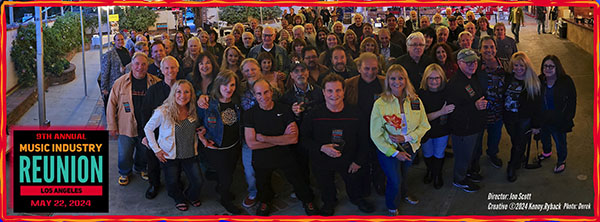
The 9th annual Music Industry Reunion held in Los Angeles on May 22 brought together more than 120 of radio and record industry artists, managers, producers, lawyers, legends and pros to the Sagebrush Cantina in Calabasas, California. Former AllAccess publisher Joel Denver called it “The best one yet.” Legendary radio personality, actor and stand-up comedian Frazer Smith hosted the In Memoriam celebration of colleagues Dusty Street, Geno Michellini, and Jim Ladd that ended with a toast to their memory. Event organizers Jon Scott and Kenny Ryback welcomed folks who traveled from as far away as New York and Florida. Guest included: Val Garay, Michael Lloyd, Rick Frio, David Forman, J.B.Brenner, Mike Bone, Diane Bennett, Mike Gormley, David Helfant, Jean Johnson, Toby Mamis, Tommy Nast, Marsha Costa, Roy Trakin, and Steve Resnik.

Industry Views

Pending Business: Who Cares?

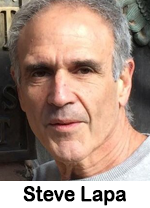
By Steve Lapa
Lapcom Communications Corp
President

imDoes anyone care anymore?

The latest Pew Research study, “Americans’ Changing Relationship with Local News,” confirmed a personal experience last week. More on that later.

If you believe the survey, almost 80% of us say we no longer follow local news very closely. It doesn’t matter if you live in a top 10 all-news radio market, or a city with a heritage news/talk/information station. The survey says we just lost interest and stopped consuming local news.

Wait, what happened? Real estate taxes in many communities are through the roof. The cost of insurance, health care and basic groceries are the highest in years. Some hospitals in local communities are rumored to be discussing charging in advance for certain procedures. How about your local mall; is it still safe during weekdays? Is your local school system better or worse post covid? And those local roads; are they still in great shape? All of this in addition to the college campus in your community that may be unraveling or not. Did 80% of us really stop following and talking about local news? Perhaps it is just easier and less expensive for on-air talent, producers, and programmers to focus on Trump trials and Gaza. Do we serve the audience what we think they want and forget local?

My first-hand “we don’t care to cover local news” experience was a frightening eye opener. As I was traveling South along Florida’s I-95, a truck hauling propane gas caught fire as it was parked on the right shoulder of the Interstate. The tanks started exploding and a roaring fire emitting huge dark plumes of smoke stopped traffic for miles. Our car was second in line in the standstill, not more than 250 feet away from the fire. We could feel the explosions from the propane as local police motioned us to back up. We were speechless in our car watching this horrific scene. My fiancé searched her mobile phone for any breaking news report. Nothing. I kept looking to the sky for local news chopper, or a local news team, cruiser, or SUV with reporters to cover this from the ground. Nothing. Would a local news/talk radio station take a caller with an eye-witness account? Nobody broke in with a report.

Thankfully, local police, Florida State troopers, firefighters and Special Ops all arrived on the scene in minutes. Still no local news team. First responders did an amazing job getting this dangerous propane fire under control. After a 30-minute delay, we were finally directed past the burned out remains of the truck. As I scanned the rear-view mirror, the radio, the sky above me and the opposite side of I-95, there was still no local news reporting.

No wonder 80% of us stopped following local news very closely, nobody cares to report the story.

Steve Lapa is the president of Lapcom Communications Corp. based in Palm Beach Gardens, FL. Lapcom is a media sales, marketing, and development consultancy. Contact Steve Lapa via email at: Steve@Lapcomventures.com.

Industry News

Hannity’s “Outlaws and Lawmen: The West” Series Debuts Tomorrow

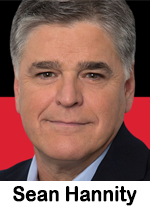
FOX Nation debuts a new historical drama series titled, “Outlaws and Lawmen: The West,” FOX News Channel’s Sean Hannity tomorrow (5/8), announced. Over the course of four episodes which will drop weekly on Wednesday nights, Hannity will delve into true stories of legendary Wild West outlaws andim lawmen, exploring law versus crime and hero versus villain, ultimately revealing the rugged path that led to the rise of modern law enforcement. FOX Nation president Lauren Petterson says, “Viewers will feel as if they’ve teleported back to the Wild West as Sean Hannity masterfully bridges the past and the present, highlighting this fascinating era of time.” Hannity will use the true stories of the outlaws and lawmen of America’s past to track the evolution of law enforcement from the Wild West to today. From Butch Cassidy to Bass Reeves to Billy the Kid, Hannity details the men of both honor and infamy, bringing life to the myths, legends, and truths of the time. Hannity comments, “As our viewers know, I am a strong supporter of our men and women in law enforcement and I look forward to spotlighting a period of time that is pivotal in their origin.”

Job Opportunity

WHO, Des Moines Seeks Talk Host

iHeartMedia is seeking a talented talk show host in a rare opportunity to join one of America’s great radioim stations… the legendary WHO in Des Moines, Iowa. Des Moines is a wonderful place in which to live with terrific amenities. You will work with strong local management invested in your success. WHO is a ratings and revenue leader that is looking for opportunities to grow and win. You could be the next chapter in the second century of WHO serving Iowa! Find out more and apply here.

Industry News

TALKERS News Notes

Industry News

Berliner Resigns From NPR

NPR

As we reported just yesterday (TALKERS  4/17), NPR senior business editor Uri Berliner was suspended one week without pay from the public media organization after writing an essay for Substack publication The Free Press without first seeking permission from NPR as required by his contract. Now comes word from The New York Times that Berliner – who accused the broadcaster of liberal bias in that online piece – has resigned from the nonprofit. In his resignation letter, Berliner called NPR “a great American institution” that should not be defunded. In the letter posted on his X (formerly Twitter) account, Berliner writes, “I respect the integrity of my colleagues and wish NPR to thrive and do important journalism.” He, however, continues that he “cannot work in a newsroom where I am disparaged by a new CEO whose divisive views confirm the very problems I cite in my Free Press essay.” CBS News notes that Katherine Maher, who became NPR’s CEO last month, wrote a staff memo several days after publication of Berliner’s essay addressing his criticisms of the organization’s editorial process. Among Berliner’s claims are that NPR is failing to consider other viewpoints and that it is fixated on diversity, equity and inclusion initiatives.   
Industry Views

Monday Memo: The Irresistible Offer

By Holland Cooke
Consultant

imHaving written thousands of commercials and promos, I’ve become a copy connoisseur. And, admittedly, a tough grader when it comes to delivery. Sell me and you’re good.

So, all four flight attendants caught my ear as I flew to/from a radio conference in Hawaii. The pitch came toward the end of 10+ hours each way nonstop Boston/Honolulu; and aboard the quick hops to/from Kauai.

They sounded neither sing-songy, as though they were reading; nor falsely enthusiastic. That alone impressed me. Thirty years ago, I scripted such announcements – and coached flight attendants – when I programmed 3 live USA Today Sky Radio channels aboard Delta, United, and Northwest Airlines. Back to the future…

They were hawking the Hawaiian Airlines Mastercard, which, already having a wallet full of plastic, I didn’t need. Each dollar spent earns a Hawaiian Mile (double miles for restaurant purchases), which would be tempting if I wanted to visit again. But I wasn’t sold… yet. I had been to Hawaii once before, on vacation, and only went this second time for business. Travelogue here recently explains that we East Coasters have quicker paths to paradise.

im

Typically, these affinity cards come with a signing bonus. Another one I have awarded 20,000 points if I used it to make at least $1,000 in purchases within the first 90 days. So, I smiled when these flight attendants emphasized that – using the promo code on applications they were handing out – I could quickly earn 80,000 miles, a bonus “you won’t see if you sign-up online.”

And as an announcement aficionado, I noted how all four recited this line verbatim: Unlike other cards that ask $1,000 or more purchases to qualify, “Just buy a cup of coffee or a pack of gum, and you’ve got 80,000 Hawaiian Miles.”

And they explained that 80K was enough for a free round trip from Boston or New York to Honolulu, or TWO round trips from a West Coast airport… DARN tempting… if I ever want to go back to Hawaii. Still not sold.

The clincher? I can also use those miles on JetBlue, which services my home airport, Providence, and flies to the Bahamas. SOLD. And my first purchase was indeed for a cup of coffee, and I did get the 80,000 miles. So, this is my restaurant card now.

Every time I’ve told this story in a client station sales meeting, at least one rep says, “Spell that all out again?” and starts writing. Successful sellers anticipate and address objections as well as that inflight announcement. Ditto commercial copy you craft for local retailers. Welcome aboard.

Holland Cooke (HollandCooke.com) is a consultant working at the intersection of broadcasting and the Internet. He is the author of The Local Radio Advantage: Your 4-Week Tune-In Tune-Up,” and “Close Like Crazy: Local Direct Leads, Pitches & Specs That Earned the Benjamins” and “Confidential: Negotiation Checklist for Weekend Talk Radio.” Follow HC on Twitter @HollandCooke and connect on LinkedIn

Industry News

Gunhill Road Music Video on YouTube Flagged and “Shadow Banned” by Google for Containing Shocking Content

im

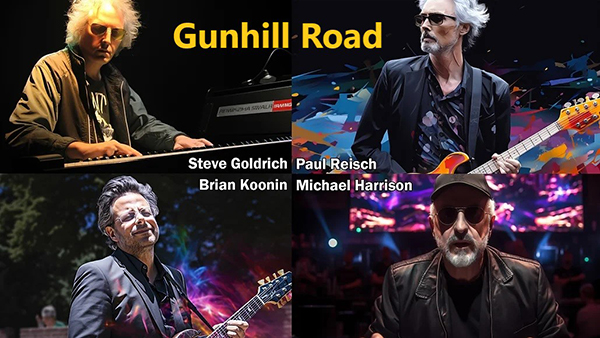
The music video for the Gunhill Road song “Damn Scammers (Get Off My Phone)” has been flagged by the editorial powers-that-be at Google for containing “shocking” content. The video has, thus, been relegated to a covert censorship process on YouTube commonly known as shadow banning which drastically inhibits its ability to garner views and potentially go viral within the processes of the platform’s algorithms. The song and video make a powerful statement against the growing practice of scamming that is polluting the internet and sowing the seeds of distrust throughout modern society. TALKERS publisher Michael Harrison, a member of the heritage rock band and co-writer (with Steve GoldrichPaul Reisch and Brian Koonin) of the controversial song states, “When we wrote the song and created the accompanying video images, we knew that some folks – including the censors at Google – might find it troubling. But we were pretty sure that most people (and hopefully the folks at Google) would realize it is just provocative satire and not a literal call for violence. After all, we are only venting in highly dramatic fashion against a universally hated category of criminals who operate in the darkness of anonymity and are destroying innocent people’s lives. Perhaps we misjudged its potential impact. Regardless, we are neither withdrawing it from distribution nor apologizing for its alleged offensiveness. We realize this is not a First Amendment issue. Google and YouTube have the right to post whatever they choose. And for the most part, I love and am a big fan of YouTube. However, because of the enormous, borderline monopolistic power of Big Tech, it might eventually be considered a First Amendment issue.” The song and video presents scammers as hideously ugly, troll-like figures and calls for their deaths by firing squad, electric chair, hanging, burning at the stake, castration and being blown up by drones.

Media attorney and TALKERS associate publisher, Matthew B. Harrison – the video’s producer – states, “It’s like being silenced but without a whisper – shadow banning – an invisible barrier between your content and your audience. Social media platforms may limit the visibility of your content without any notification, causing confusion and frustration. Why does this happen? Often, it’s due to violations of community guidelines, albeit sometimes mistakenly. Do you think they’ve got people watching everything? No. It was most likely a bot. So, understanding context is not going to be at the top of its abilities. The solution? Regularly review the platform’s policies, engage with your content positively, and diversify your social media presence to ensure your voice is widely heard.”

To view the unedited version of “Damn Scammers (Get off My Phone)” (viewer discretion is now advised) please click here.

Industry News

WLS-AM, Chicago’s Steve Cochran Lands Sosa Interview

im

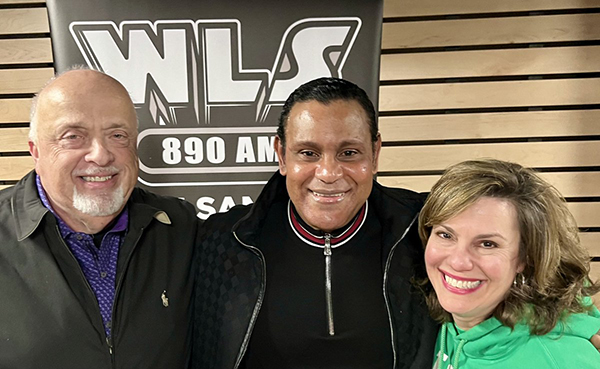
WLS-AM, Chicago morning drive host Steve Cochran (left) interviewed former Chicago Cubs star Sammy Sosa (center) on March 15 as the controversial former ballplayer returned to the Windy City. Sosa left Chicago and the Cubs after the 2004 season and, in 2009, it was revealed that Sosa was among MLB players found to have tested positive for PEDs in 2003 in baseball’s steroids scandal. Last Friday, fans were treated to Sosa’s first interview with Chicago media in many years. WLS allowed local TV cameras into Cumulus Chicago studios to capture Sosa’s return to Chicago media. Also pictured here is Cochran’s co-host Andrea Darlas (right). See the interview here.

Industry Views

Sabo Sez: Five Predictions

By Walter Sabo
Consultant, Sabo Media Implementers
A.K.A. Walter Sterling
Radio Host, “Sterling On Sunday”
Talk Media Network

im1. Financial solvency laws. Consolidation is not the problem; it actually saved the radio industry. The problem is the 1986 rule change that dropped financial solvency requirements for station ownership. Prior to 1986, stations could not be purchased with debt. A potential owner had to prove that they could meet the expenses of a station through the duration of its license. Once the financial efficacy rule was dropped and stations could be purchased with debt, the industry was financially decimated. Prediction: Financial solvency laws will be re-instated.

2. Ratings change. Ratings giant Nielsen will change its system of measurement of audio. The PPM was created over 20 years ago by a company that no longer exists. For a station to earn proper audience levels, Nielsen must measure all audio distribution platforms including radio sets, in car, cell phone streaming, computer streaming, satellite, public address systems and ear pods and whatever comes next. Now you choose one – over the air or the stream. This will change or more companies will follow the recent lead of Good Karma Brands radio which just cancelled Nielsen.

3. New leadership. Who’s in charge? Most radio companies are run by very sharp and very senior CEOs and Boards. The Boca effect — I don’t want trouble, just get me to my retirement and condo on Boca. The primary reason FM grew from 10% household usage in 1968 to 60% in 1981 was the “kids” were put in charge – and caused “trouble.” Allen Shaw at ABC FM, Walter Sabo at NBC FM (forgive me), Jerry Lyman at RKO FM and the sons and daughters of the owners of thriving AMs paired with orphaned FMs (think Beau Woods at WEBN, Cincinnati and Bart McClendon in Dallas) were given free range to create and implement brand new formats. While the AM management played golf, those 20-somethings aired daring, new, shocking, amazing radio that drew listeners to FM. No, not stereo or low commercials, it was the FM package of subversiveness. For radio to level up and serve the joy of an audience born with iPhones in their cribs, it will be led by today’s 20-somethings without suffering interference by bosses sharing really interesting stories about their time at CBGBs.  The essential leadership will come from younger programmers and executives who have only known a world with online video stars, a thousand cable channels, and on-demand video and audio entertainment.

4. New sales paradigm. Digital entertainment companies – audio and video – are fueled by stupid money. Venture capitalists launch new businesses with the goal of claiming a stake and then selling the business for their ROI. VCs have no interest in operating profit. Really. That means start-up media companies pay much more for sales executives than radio companies. Start-ups are shinier goals than radio stations to a media advertising seller. There will be a revolution in the way salespeople are identified, recruited, managed, and paid or the decline in radio revenue will accelerate.

5. Renovated voice tracking. Voice tracking is not horrible, it’s an opportunity that has not been realized. Today voice tracking is a poor imitation of being live – without benefits. No time, temp, urgent news. Here’s the miss: Every station has a stunning, amazing production library. Don’t have one? Swipe from YouTube. Rather than pretending to be live, admit to being recorded. Use that production freedom to produce. Tap the production library to create a running drama, comedy, mood, listening environment. Make the show between the songs to be as compelling as Taylor Swift. That’s the future of music radio.

Walter Sabo has been a C Suite action partner for companies such as SiriusXM, Hearst, Press Broadcasting, Gannett, RKO General and many other leading media outlets. His company HITVIEWS, in 2007, was the first to identify and monetize video influencers. HITVIEWS clients included Pepsi, FOX TV, Timberland, Microsoft, and CBS Television. He can be reached at walter@sabomedia.com www.waltersterlingshow.com

Industry Views

Pending Business: Q2

By Steve Lapa
Lapcom Communications Corp
President

imHave we passed the disappointment of 2023?

If ad sales at your radio station finished last year up double digits (excluding digital) please skip past the next few paragraphs. If you’re in the same boat as most radio ad sellers across the country at various levels – i.e. local, national, syndication, network – last year was a struggle.

Now then, how is Q1 shaping up?

Are you making up for lost ground, like the airline business, automotive business, restaurants or are you still pushing that boulder uphill? Here is some straight-from-the-field unfiltered feedback:

1. Valentine’s Day at most restaurants was one of the busiest on record. People at the packed-in table next to ours waited two hours after sitting to be served. So much for a 6:45 pm reservation. They got free dessert. Seriously?

2. Travel is back, make no mistake about it. Discount airfares are a thing of the past on the big-name airlines. At 6’2” I really believe my knees should not be touching the seat in front of me in comfort class on most major airlines.

3. Try negotiating a new car deal this month. No, not the incentives on the 2023 models, I’m talking 2024 in 2024. As the goodfellows said back home, fuhgeddaboudit.

There is nothing wrong with trying to make up for the lost income of the Covid years. After all, testing the pricing upside in business is the American way. We pay more, tip more, and adjust. It is the Darwin theory eating into our wallets every day. So why are most broadcast radio sales teams at all levels still throwing it against the wall to see what sticks? I see it every day in my marketing work. We have lost touch with the excitement, the “wow” factor, the customizations, the basic intangibles of selling the great talent we represent.

Let us learn from other successful businesses. Travel pitches pent-up demand, restaurants make sure you will get the special occasion marketing message no matter where you are, and the auto business, well the ships and chips are in!

What do we not understand about the current weakness in our broadcast radio sales strategy?

1. How current is your value proposition? Successful podcasters like Joe Rogan and Alex Cooper along with YouTubers, Facebook, Instagram, and all social media have changed the game-forever. How does your value proposition stand out today?

2. Talk radio will not go away. Programmers and talent will learn what they need to adjust to refocus one of the great radio formats ever created since someone said, “Let’s play the top 40 songs over and over.”

3. Let us start re-thinking what broadcast radio sellers need to prioritize to make a difference-today.

Steve Lapa is the president of Lapcom Communications Corp. based in Palm Beach Gardens, FL. Lapcom is a media sales, marketing, and development consultancy. Contact Steve Lapa via email at: Steve@Lapcomventures.com.

Industry News

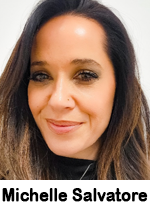
Compass Media Networks’ Michelle Salvatore to Leave the Company

Compass Media Networks announces that sports division SVP and general manager Michelle Salvatore is resigning after more than 15 years with the company to pursue an entrepreneurial opportunity outside of media. The company says Salvatore will continue with the company through the spring and will advise the company on a transition plan. Compass founder and CEO Peter Kosannim says, “Back in Spring of 2009, during the chaos and sleepless nights involved in launching this national media company, the media gods sent me an angel in the form of Michelle Salvatore. Michelle faced down every challenge, worked tirelessly and with good cheer, and set a gold standard of excellence for not only Compass Media Networks, but our industry. We love and will miss Michelle dearly. Our goal is to build upon the greatness she created as we move ahead into the next chapter of our evolution.” Salvatore comments, “Working at Compass Media Networks literally changed my life for the better. I was able to travel the globe, producing games throughout the United States, Latin America and Europe, and had the chance to work with incredibly talented, passionate, and kind people. I am forever grateful to my dear friends at Compass Media Networks.”

Industry Views

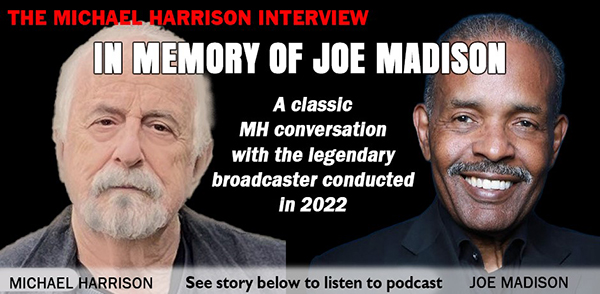
FROM THE ARCHIVE: Joe Madison Classic Interview Posted This Week on Harrison Podcast

im

Legendary radio talk show host and civil rights activist Joe Madison, who succumbed last week to cancer at 74, is memorialized on this week’s installment of the award-winning PodcastOne series, “The Michael Harrison Interview.” In addition to expressing his personal view of Madison’s career and historic accomplishments, Harrison presents what he describes as the “most comprehensive interview with Joe Madison available in the extensive TALKERS archives.” Harrison continues, “Joe Madison has appeared as a guest on eight occasions during this podcast’s eight-year history (a milestone achieved this month) in addition to delivering two major keynote addresses and making at least five additional panel appearances at national TALKERS conferences – so we certainly have a wealth of material from which to choose.” The interview presented here was conducted and originally posted in April, 2022 in conjunction with the publication at that time of Madison’s long-awaited book, Radio Active: A Memoir of Advocacy in Action, on the Air and in the Streets. The strikingly candid conversation between the two old friends covers Madison’s personal exploration into his genealogy along with his experiences in dealing with alleged racism in his radio career, life-threatening hunger strikes, and his general complex overview and connection with Black and White relations in America. Harrison states, “As warm as our personal friendship grew over the years, interviewing Joe was never easy.  He challenged me at every turn – even when I agreed with him. At one point in this interview, he bluntly tells me that my question is naïve!” Listen to the podcast in its entirety here.

Industry News

BFoA Announces Speakers for Golden Mic Award Gala

The Broadcasters Foundation of America announces the presenting speakers at this year’s Golden Mic Award gala and fundraiser taking place on March 4 at the Plaza Hotel in New York City. David Barrett, retired chairman and CEO, Hearst Television; Michael J. Hayes, SVP, Hearst Corporationim and President, Hearst Television; and Emily Barr, retired president and CEO, Graham Media Group, will pay tribute to 2024 Golden Mic honoree Jordan Wertlieb, EVP and COO of Hearst. There will be a special tribute to Phil Lombardo, former longtime chairman of the Broadcasters Foundation, who passed away last month. Entertainment at the gala will be provided by Pete Caldera, well-known to New Yorkers for singing swingin’ standards made famous by Frank Sinatra, Dean Martin, and more. As previously announced, EMMY winning broadcast journalist and nationally syndicated talk show host Soledad O’Brien will return as host of the event.

Industry News

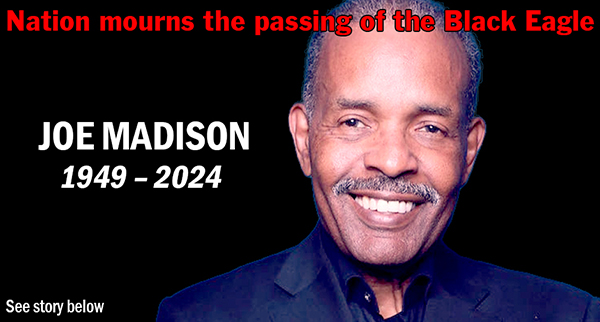
Industry and Nation Mourn Death of Joe Madison

Talk radio host Joe Madison – also known for much of his career as The Black Eagle – died on Thursday (2/1) at 74 after a battle with cancer. His family released the following statement: “It is with a heavy heart that we announce the passing of our beloved husband and father, Joe Madison. He passed away peacefully at home surrounded by family. Joe dedicated his life to fighting for all those who are undervalued, underestimated, and marginalized. On air he often posed the question, ‘What are you going to do about it?’ Although he is no longer with us, we hope you will join us in answering that call by continuing to be proactive in the fight against injustice. The outpouring of prayers and support over the last few months lifted Joe’s spirits and strengthened us as a family. We continue to ask for privacy as we gather together to support each other through this difficult time.” Madison had been hosting the morning drive program on SiriusXM’s Urban View channel since 2008. Before he went into radio, Madison had become the youngest Detroit NAACP chapter leader at 24 years old. While Madison dabbled in radio while at Washington University in St. Louis, he first worked in commercial radio at Detroit’s WXYZ. From there he hosted a show on WWDB-FM, Philadelphia before moving to Washington, DC for a long stint at WWRC. He moved across town to Radio One-owned WOL, Washington where he hosted the afternoon drive show and served as program director. At this time, Radio One began syndicating his show nationally and it was simultaneously added to the lineup at SiriusXM. TALKERS founder Michael Harrison issued the following statement: “Joe Madison was one of the greatest of the greats among radio talk show hosts of the modern era. He transcended the role of ‘talent’ to rise among the ranks of America’s most influential civil rights thought leaders. His devoted following crossed the boundaries of race, age, gender, and politics. During his illustrious career, in addition to receiving countless awards in the fields of broadcasting and activism, he was a recipient of TALKERS magazine’s two most important honors, the Freedom of Speech Award and the Humanitarian of the Year Award. I am humbled to have had the privilege of this great man’s friendship for more than three decades and will treasure his inspiring memory for the rest of my days.”

Industry News

TALKERS News Notes

Research Director, Inc promotes Nicole Somerville to chief operating officer. Somerville joined the company in July of 1998 and has held several prominent positions over the past 25-plus years. In 2022, she began her role as data and production manager where she oversaw the process of transforming raw data into specific, actionable client deliverables.

iHeartPodcasts, Dan Patrick, and Never Ever Productions announce the addition of “Playing Dirty: Sports Scandals” to The Dan Patrick Podcast Network. The new podcast features stories from the dark side of sports – from passport doping and armed assault to car chases and sex scandals. The series is narrated by veteran ESPN personality Jay Harris and written by Emmy Award-winning sports broadcaster Jenn Brown and federal prosecutor Francey Hakes.

Audacy launches “Superfly,” a new, weekly spinoff of the comedy podcast, “Fly on the Wall,” created and hosted by Dana Carvey and David Spade. On “Superfly,” Carvey and Spade will riff on current events, pop culture, social clips, and audience submissions with their trademark hilarity, absurdity, and impressions, with guests appearing from time to time.

Industry News

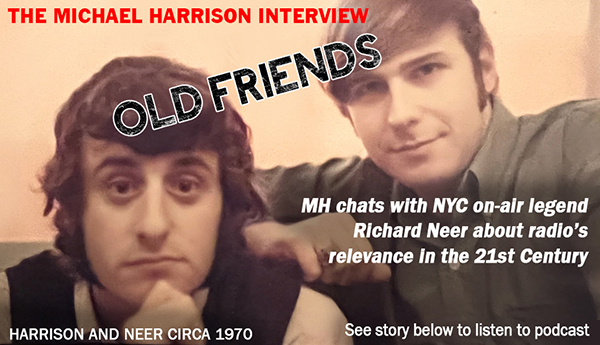
NYC Radio Legend Richard Neer is This Week’s Guest on Harrison Podcast

Long-running sports talk radio WFAN, New York personality Richard Neer is this week’s guest on the award-winning PodcastOne series, “The Michael Harrison Interview.” Inspired by the approach of the United Nations’ World Radio Day 2024 on February 13, Harrison and Neer – whose careers and friendship date back to 1967 at WLIR-FM, Long Island which they launched as an historic progressive rocker – engage in an analytical conversation about the evolving role of the medium as it continues into its second century of service as a provider of information, education and entertainment. Eclipsed only by WABC’s “Cousin” Bruce Morrow, Neer is arguably the second-longest continuously running radio personality in the New York radio market, which he entered with Harrison at legendary music station WNEW-FM in 1971. A prolific author, he penned the landmark FM: The Rise and Fall of Rock Radio (Villard 2001) as well as the successful ongoing Riley King murder mystery series. Harrison states, “I always enjoy having Richard on the podcast – we have shared so much history together. He has valuable insights into the past, present and future of radio – as well as music, sports and popular culture –bringing his experience as a top personality and program director in multiple formats to the table.” Listen to the podcast here

Features

Remembering Charles Osgood

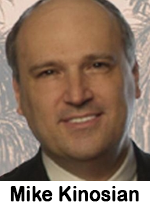
By Mike Kinosian
TALKERS magazine
Managing Editor
imDespite his seemingly nonchalant, bad boy on-air persona, David Letterman is exceptionally respectful of broadcasting and its history.

An easily discernable gleam could be seen in the late-night talk host’s eyes when – in 1993 – he formally announced he was jumping to CBS-TV.

One would be naïve not to think that the astonishingly lucrative payday played a significant part in his exhilaration, but Letterman was genuinely enthusiastic about joining the “Tiffany Network.” The entertainment division helped sculpt that vaulted reputation, but the Eye Network’s image was also greatly enhanced by its stellar news department.

Names of those who’ve graced CBS news broadcasts read like a veritable “Who’s Who” of the industry, with the incomparable Walter Cronkite at the very top.

Additionally, there’s Murrow. Sevareid. Collingwood. Rather. Reasoner. Wallace. Edwards. Kuralt. Safer. Mudd. Bradley. Schieffer. Stahl. Rooney. Burdett. Pauley. Hottelet. Chung. Threlkeld. O’Donnell. That just scratches the surface.

Perhaps no one on that – or any similar – list is more erudite, witty and thought provoking than Charles Osgood (Wood).

In a special April 18, 2005 NAB presentation in Las Vegas, the man who did as much for boosting bowtie sales (far pre-dating Tucker Carlson) received the Paul White Award from the RTNDA.

Established in 1956, the recognition carries on the name of CBS’ first news director.

Illustrious company

Past Paul White Award recipients have included Edward R. Murrow, Dan Rather, Bob Schieffer, Ed Bradley, Tom Brokaw, Ted Koppel, Peter Jennings, and Jane Pauley, who succeeded Osgood on CBS-TV’s “Sunday Morning” in 2016. Osgood humbly noted, “I’ve known about the Paul White Award for a long time and have been there to see others get it. It’s obviously a very distinguished company I join. I was there when [former CBS News Division President] Richard Salant [received] it and certainly regard it with a lot of respect. If you hang around long enough, it finally gets to be your turn.”

There’s a parallel with this recognition and Osgood’s 1990 induction to the NAB Hall of Fame. “[Neither] one is the kind of thing you campaign for,” he remarked. “The first I heard about it is when they called and told me it happened. There’s no tension about it and no disappointment that you didn’t get it.”    

Mistaken identity

Rich, God-given voice with which Osgood was blessed became evident at an early age. “My dad was a textile salesman and executive. His name was Charles Osgood Wood – I’m actually Charles Osgood Wood, the third. I’d answer the phone and the person on the other end would [automatically assume they were talking to my father]. He and I talked almost exactly alike.” 

Somewhat of a built-in schizophrenia existed in the famed broadcaster. A friend with whom he’d frequently play tennis noticed that when the multiple Peabody and Emmy Award winner screwed up he’d say, “Come on Osgood.” As a result, “I’d be harder on ‘Osgood’ than I would be on ‘Wood.’ You don’t talk to yourself when you do something right – you just sort of smile.”

Distinctive difference

Understandably, the natural tendency was to automatically link the instantly likable Osgood to CBS for his impeccable long-running role as voice/writer of CBS Radio’s “The Osgood File” and for hosting duties of CBS-TV’s “Sunday Morning.” In addition, he spent six years (1981-1987) as anchor of “The CBS Sunday Night News.”

Many, however, forget that predating those résumé credits, he toiled for ABC.

When he began there, ABC – as luck would have it – already had an announcer named Charles Woods. “In those days, some staff announcers did newscasts,” Osgood explained. “They hired me, but said they didn’t want to have a Charles Woods and a Charles Wood. When they told me to pick a name, I used my middle name as my last name. It’s worked out well and is a little more distinctive and professional.”

Safe haven

Selection of another type made a great impact on his life, as the broadcaster with the industry’s most stylish writing style was an Economics major at New York’s Fordham University. “I never really had an idea that this is what I was cut out to do,” Osgood candidly stated. “As a result, I never took any writing or editing courses. When I started [in broadcasting], I really hung on by my fingernails and just did it the best way I could think of. It took more than a couple of years to get a sense of what I could do. If I’d started the kinds of things in journalism school that I do now, they would have said, ‘No – that’s not how you do it.’ I would have had it drummed out of me early on.” 

Thankfully though, someone realized a broadcaster existed within Osgood and the New York native became actively involved at Fordham’s campus radio station. “That was my locker – the place I’d go between classes,” he pointed out. “At least in those days, regardless of your [declared major], you really majored in Philosophy. You learned things like ethics, logic and cosmology. That really turned out to be pretty useful for what I’m doing.”

Never was there a moment’s regret for the father of five that he didn’t pursue a career in economics. “I’m not even sure I understood what economics was when I decided to make it my major,” Osgood sheepishly admitted. “I knew it had something to do with money and I thought it would be good to know something about that.” 

Sailing with Uncle Walter

As things eventuated, it was immaterial that Osgood never took any college journalism courses. “I went to the best school of broadcast journalism that you could go to, [because] I got to work with Walter Cronkite and a pretty potent lineup of [other] people,” Osgood asserted. “I was often in the same room and could see how Walter’s mind worked and his idea of telling a story. He’s the most centered guy you’re ever going to meet and is very tough.”

Fabled anchorman Cronkite was also managing editor of “The CBS Evening News,” a responsibility he took very seriously. “He was a newsman and kept asking questions of everybody; I have all the respect in the world for him,” Osgood reverently recalled of Cronkite, who was 92 when he died in 2009. “Within a year after I went to work in the CBS newsroom, I found myself sailing in a boat with Walter Cronkite. I felt like I died and went to heaven.” 

Mid-1950s on-air job at Washington, DC classical outlet WGMS enabled Osgood to display his familiarity with – and dexterity to handle –  names like Nikolay Rimsky-Korsakoff. “I really did like that kind of music,” the long time ASCAP member emphasized. “They [eventually] gave me a job that was like the assistant to the GM. It paid all of about $25 a week, but I learned a little bit about station management. WGMS was sold to RKO General and I ended up being program director and, for a time, co-manager.”

Ahead of its time

Also dotting Osgood’s notable vitae is a 1963 stint as general manager of Hartford’s WHCT, the country’s first pay television station. “It was an over-the-air station that CBS owned at one time. It had a mechanism that would encode both picture and sound.”

Subscribers paid $125 for a decoder that needed to be attached to their television set; however, Osgood readily conceded it wasn’t exactly the ideal system. “Color was starting to come on strong, but this only worked in black and white, [so] we had a few strikes against us going in. We were, however, able to play ‘subsequent first-run’ movies – [films] that hadn’t yet been seen in local theaters.”

A tape inside the decoder recorded what a subscriber watched and customers were sent a bill once a month. “The system as an experiment failed, but it was not a bad idea,” Osgood maintained. “Now, of course, we have pay-per-view television, which is essentially the same thing.” 

Shared versus singular responsibilities

Each Osgood-fronted “Sunday Morning” broadcast concluded with the affable host reminding viewers that he would, “See you on the radio,” which was his way of reinforcing that radio is a visual medium. “You create pictures in your own mind and those are much richer than the ones that can be shown on television,” Osgood contended. “On television, what you see is what you get and [that medium] is very pre-occupied with the picture. There’s often wonderful writing there, but television people don’t tend to think about that or the sound at all.”

Images are their main focus and having had vast experience in each medium, Osgood opined that radio is a much more individual effort. “You decide what you’re going to do; you write it; and you do it. You can take all the credit or blame for whatever you do on radio. Television is a collaborative process. There are producers, writers and photographers. One person really can’t take any bows.”

Demanding schedule

One hour separated each of his four daily “Osgood File” features. The general rule was that Osgood didn’t start writing the next one until he finished delivering the last. “If it takes more than an hour, I’m in a lot of trouble,” he deadpanned. “I have to write it in somewhat less than an hour.”

Preparation for that Monday through Friday workday ritual began at the petrifying time of 2:30 am. “It somehow always feels like a horrible mistake when the alarm goes off then,” Osgood declared in his perfectly inflected trademark delivery. “I’m usually in the office at 4:30 am. I have to get my ducks in a row before [doing the first piece] so I know what I’m going to do the rest of the morning. You spend part of that time reading to see what’s there in the way of tape and to see what news stories are of interest that morning.” 

Newspapers, wire sources and the internet provided plenty of possibilities, so Osgood didn’t start worrying about what he was going to put on paper until he arrived at the office. “The news is a constantly refreshing source of material,” he commented. “If you’re doing something that has to last for a long time, you have a different problem. It’s just a question of what you can get your teeth into.”

Road to Sunday Morning

Four-year tour of duty (1967 – 1971) as morning anchor/reporter at New York City’s all-news WCBS-AM got Osgood accustomed to getting up early; he had the luxury of sleeping in until 4:30 am each Sunday. “You have no idea how much later 4:30 am is than 2:30 am,” he convincingly put forth. “I don’t have to get up early on Saturdays. There are [‘Osgood File’] shows, but they’re repeats of things that were done during the week. It’s a great delight to wake up on a Saturday and then realize I can go back to sleep, but it’s still never that late. I get up by 7:00 am.”

Energetic Osgood actually preferred a slow news day when it came to doing his 90-minute Sunday television broadcast. “I’m certain I’m the only network TV anchor who hopes there’s no news. We’ve worked on the show all week and want to do the broadcast that was planned. Some of our shows have themes or, at least, have connections between the pieces. If there’s a big story, you might have to throw something out and that may – or may not – hold up the following week.”                                                    

Succeeding Charles Kuralt as host of “Sunday Morning” nearly 30 years ago (4/10/1994) was a tough act for Osgood to follow, especially since he viewed “On The Road” legend Kuralt as a great personal hero. “He was one of the best who ever came along,” Osgood succinctly stressed. “Charles was a country boy with that wonderful North Carolina accent and had a way of using the language. I thought he was simply terrific. He taught me a lot, [including] not to imitate or copy what you hear. He was in control of every sentence he put down and had an idea of how he wanted to come across to the audience; he was really brilliant.”

Admiration for his predecessor

No advance notice was given to Osgood that his colleague – who would die of complications from lupus in 1997 at just 62 – was planning to leave the Sunday morning show. “I remember getting up one day at the usual hour and putting on my socks in a dark room,” Osgood recollected. “I had the radio on and heard Charlie had announced his retirement. That was terrible news and it never even occurred to me that CBS might ask me to replace him. For one thing, I was older than Charles [by approximately 20 months]. You don’t replace a person who retires with someone older, but that’s what happened. The real reason I got the job was they needed someone whose first name is Charles.”       

Sunday’s audience was conditioned to expect a high-level broadcast, and Osgood acknowledged that made the transition much easier. “As long as I didn’t try to be Charles and try to do an imitation of him, I thought I’d be okay [provided] the audience would put up with me long enough to get used to me.”

Certain things about the CBS-TV show were the same every week. “When we change something, the audience usually doesn’t like it at first,” Osgood contended. “It was especially daunting for me at the beginning because [Kuralt] was so terrific.” 

All tied up

Play a visual word association game about Osgood and “bowtie” will invariably be the first response, but he viewed that fashion statement as a relatively new choice. “I’ve only been doing it for 20 years,” he quipped tongue-in-cheek.

It all began when he wore a clip-on bowtie to work one day. CBS-TV “Evening News” writer John Mosedale admonished Osgood to never wear a clip-on. “He actually walked me into the men’s room and taught me how to tie a bowtie. When you teach an old dog a new trick, he wants to keep doing it. I wear a bowtie when I do speaking dates or television. The excuse I use for my attire is that I get dressed in the dark.”

Write stuff

This author of six books (the last one, 2004’s “Defending Baltimore Against Enemy Attack”) also formerly wrote a “USA Weekend” column and a King Features’ syndicated column. Moreover, he had a full plate with four daily CBS Radio shows (via Westwood One) and a weekly morning television show. “I always have a book that I’m either thinking about or actually in the process of writing,” CBS’ “Poet In Residence’ disclosed. “I’ve been talking with publishers about several book ideas, but they’re not far enough along to really [discuss] at this point. The [leisure time] thing I do more than anything else is fooling around at the piano; I like doing that.”

Unexpected situations like receiving the Paul White Award; being inducted into the NAB Hall Of Fame; and replacing Charles Kuralt as host of CBS Sunday Morning seemed to be the norm for the 1999 International Radio & Television Society Foundation award winner for Significant Achievement.

Long-range plans

With that as a backdrop, it was noteworthy that Osgood never considered himself to be a permanent replacement for Dan Rather on the “CBS Evening News” – a job that would eventually go to Katie Couric in 2006. “I’m not a candidate for anything,” Osgood vehemently insisted to me in our conversation, “[although] I do think it’s important that the ‘CBS Evening News’ be our flagship show. When they asked Bob Schieffer what he thought about doing ‘The Evening News,’ he said it was something to keep him busy until he was old enough to be on ‘60 Minutes.’”   

More than satisfied to have carried on with his radio and television assignments, Osgood – who had a summer residence in France – didn’t look forward to retirement. “I like vacations, but I like them because they are vacations. It’s nice to get away from work, but that’s only if you’re working. I hope they realize I intend to continue to do this for a long time. If it stops being fun, that’s when it’s time to hang it up.”

Mike Kinosian can be emailed at Mike.Kinosian@gmail.com

Industry News

WJR, Detroit Brings Anthony Bellino Aboard as “SportsWrap” Co-Host

Cumulus Media names Detroit sports media personality Anthony Bellino co-host of WJR’s “SportsWrap,” alongside Lomas Brown. WJR parted ways with the program’s previous co-host Sean Baligian in December.  Bellino currently serves as an in-game host for Detroit Lions and University of Michigan football broadcasts and is public address announcer for University of Michigan men’s andim women’s basketball programs and the University of Toledo men’s and women’s basketball programs. WJR notes that Bellino spends his free time helping his family at their Monroe, Michigan grocery store, Danny’s Fine Foods, where he works as a fourth-generation butcher. WJR program director Ann Thomas says, “Anthony Bellino started his broadcasting career as an intern for the ‘Paul W. Smith Show’ in 2007. I could not be more pleased to welcome him back to the ‘Great Voice of the Great Lakes’ as a seasoned sports professional ready to bring our listeners timely and thoughtful insights on Detroit’s sports scene.” Bellino comments, “What an honor and a privilege it is to be joining the ‘Great Voice of the Great Lakes,’ 760 WJR. I can’t wait to contribute to the station’s legendary broadcasting history and make some new history of our own. The phone call from WJR was really a full-circle moment… I can’t wait to get started and to host ‘SportsWrap’ with my good friend Lomas Brown.”
Industry News

TALKERS News Notes

Cable news network NewsNation launches a new Sunday public affairs program titled, “The Hill Sunday with Chris Stirewalt.” The show will debut on March 3 at 10:00 am ET. NewsNation president of news Michael Corn states, “We are delighted that Chris will be joining the new weekend lineup. He is a legendary figure in Washington and one of the most respected, intelligent, and well-sourced journalists covering U.S. politics.”

Digital sports platform OutKick announces that it finished 2023 with the most growth year over year amongst its competitive set in total multiplatform unique visitors, delivering a monthly average of 7.2 million total multiplatform unique visitors, up 65% versus 2022, according to Comscore. OutKick founder Clay Travis says,“2023 was a tremendous year for OutKick. We’ve added new shows, top-tier talent, and most importantly continued to generate engaging content with a roster that’s unfiltered and fearless.”

PodcastOne renews the exclusive sales and distribution rights for the “Our Fake History” podcast, created and hosted by Canadian high school history teacher Sebastian Major. PodcastOne chief content officer Eli Dvorkin says, “We’re thrilled to continue our long-term relationship with Sebastian and ‘Our Fake History.’ This podcast is a leader in debunking or verifying historical myths and legends while instilling the sort of knowledge that makes any listener just that much smarter.”

Industry News

13 Ideas to Celebrate World Radio Day 2024

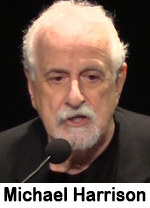
By Michael Harrison
Founder
TALKERS

imThe United Nations and its specialized agency, the United Nations Educational, Scientific and Cultural Organization (UNESCO) have given the radio industry all around the globe an invaluable gift. It’s called “World Radio Day 2024.” Now in its 13th installment, WRD takes place annually on February 13 with the purpose of spotlighting the accomplishments, importance, and ongoing relevance of the radio medium as it evolves deeper into the 21st century. This year’s theme is “Radio: A Century Informing, Educating and Entertaining.” By officially designating the platform as worthy of its own officially sanctioned UN International Day, the august world body has recognized, spotlighted, and endorsed radio’s continuing relevance and potential for being a vital force for the betterment of humanity.
On a global level, the scope of radio is huge. However, we, practitioners of radio in America, face formidable challenges keeping the spirit and uniqueness of the platform viable as both a business and iconic connector as it faces the growing risk of simply getting lost in the noise and distractions of the ceaselessly evolving digital era. I strongly encourage my American colleagues to embrace WRD 2024 for the fabulous opportunity it offers our industry to make a compelling case for the ongoing importance and positive impact of radio to inform, educate and entertain.

Please read and consider any or all of the following “13 Ideas to Celebrate World Radio Day 2024” posted on the UNESCO website and in TALKERS magazine.

1. World Radio Day Minutes. Air the UNESCO package of 20 pre-produced “World Radio Day Minutes”. They are 60-second audios discussing interesting aspects of the radio medium during its first 100 years of service to humanity. The texts figure in their descriptions so that you have the option of producing your own episodes in other languages. These short-form audios can be programmed on a schedule of your choosing leading up to and on February 13, World Radio Day (WRD). You can run them as non-commercial announcements or offer them for local sponsorships.

2. Talk Shows Celebrating Radio. Program (pre-produced or live) talk shows with local and national experts talking about the importance of radio for quality information, highlighting its 100-year history and continuing relevance. Recruit legendary and retired radio personalities known to your audience to participate in these programs supplemented by real clips from the past to be aired leading up to or on February 13.

3. World Radio Day 2024 Live Event.  Schedule a live indoor or outdoor event (depending upon climate) on February 13 celebrating World Radio Day 2024. Invite listeners free (or charge admission in conjunction with a charity). Feature a panel discussion about the relevance of the entire audio sector in a changing media world as well as local legends telling stories about their service to the public through radio. Supplement it with display tables presenting local businesses and sponsors. Consider holding it on a local college or university campus in conjunction with the school’s communication department. Organize a group of diverse stations (either under one corporate umbrella/cluster or actual competing ones) to join forces in support of information, entertainment and education through radio in general. The results will be beneficial for everyone involved.

4. World Radio Day 2024 Sponsorship with Local Consumer Electronics Store/Chain. Arrange a sales promotion with a local store or chain of stores within your market to offer listeners a significant one-day discount (February 13) on all AM/FM radios and radio-related equipment.

5. International Dialogue. Schedule interviews/conversations (either live or prerecorded) with your broadcast colleagues from other countries to compare and contrast the history and strength of radio in their respective countries on or leading up to February 13. These shows can be simulcast on both stations or simply be one host interviewing another.  For Partnership Opportunities, please check here which stations or partners around the world are interested in collaborative programming and you could contact now.

6. The Greatest “Radio Songs” of All Time.   There are songs in almost every pop music format that contain the word “radio” in them or refer to the medium of radio.  Highlight the “Greatest Radio Songs of All Time” into your playlist intermittently or as a “countdown show” on February 13 in commemoration of World Radio Day 2024. This is an easy and simple way to highlight World Radio Day and create a fun and entertaining programming element.

7. Visit to a Radio Station. Offer guided tours of your facilities to listeners or local school classes leading up to and on February 13 in celebration of World Radio Day 2024. This will be an effective outreach to a younger generation of new listeners and create community goodwill.

8. Radio and Emergencies. Emphasize radio’s impact as an informational public safety net entering its second century of service. Use World Radio Day 2024 as a reason to talk about and remind listeners of the value of the medium to provide a lifeline to the public when the electricity goes out and the internet goes down. There are numerous examples in just the past year alone to draw from in terms of earthquakes, wildfires, and storms in which radio news helped people in distress in real time. This is also a talking point in the current issue about some automobile manufacturers choosing to not equip new car models with AM radios.

9. Theater of the Mind. Use World Radio Day 2024 as a focal point for radio being the “Theater of the Mind” by producing your own locally produced radio dramas and airing them on February 13. You’ll provide intelligent entertainment, support cultural expression, and stimulate listener interest.

10. Radio, the Original Interactive Mass Medium. Recognize radio’s claim to the title “The Original Interactive Mass Medium” and “The Original Social Media” by using these phrases as often as appropriately possible on February 13. Radio pioneered the concept of taking live calls from listeners on the air to give opinions and receive advice in addition to playing musical requests and announcing dedications in real-time on the air. Highlight the interaction with listeners.

11. Take Me Out to the Stadium. Radio was the first mass medium to provide live, real-time play-by-play coverage of sporting events. The history of radio’s connection to sports is deep and rich. There is a lot of colorful sports broadcasting history to discuss in celebration of World Radio Day 2024 and nourish vibrant conversations.

12. Podcasts. Post several new and timely podcasts featuring quality conversations and panel discussions with experts and leaders in the radio profession from around the world as supplemental World Radio Day 2024 content on your station or network website.  You can also generate your own podcasts and programs about radio for placement on your website or general distribution.

13. Positive and Pro-Active – Accomplishment, Pride and Hope. World Radio Day 2024 provides you with a supportive platform and focal point to pursue business, civic and social relationships within your community, and protect free, independent, pluralistic radio.  WRD 2024 symbolizes radio’s century of accomplishment, pride in the present and hope for the future.  Celebrate World Radio Day 2024 spreading this optimistic perspective leading up to, during and following February 13.

For more information, visit https://www.unesco.org/en/days/world-radio

Michael Harrison is a legendary American broadcaster who has served as executive advisor to UNESCO for World Radio Day 2024. He can be contacted via email at michael@talkers.com.

Features

“The Greatest Game Ever Played”

im

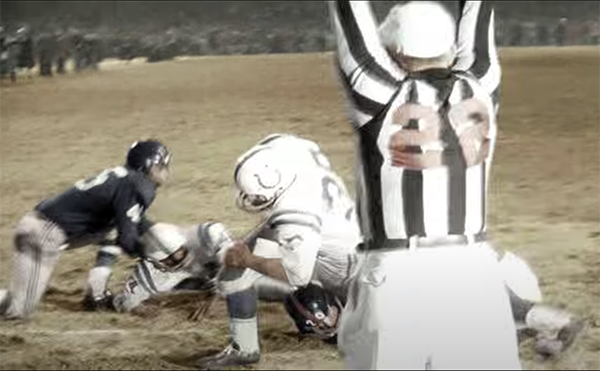
Baltimore’s Alan Ameche plunges over the goal line for the winning touchdown!(courtesy YouTube/NFL Films)

On the field? Maybe. In its impact on pro football and sports broadcasting? Absolutely!

By Mark Wainwright

imIt was one of those indelible moments in sports history: The 1958 NFL Championship, played on December 28, 1958 at Yankee Stadium in New York. The Baltimore Colts defeated the New York Giants 23-17 in sudden death overtime. 65 years later, the events of that Sunday afternoon still resonate throughout pro sports and sports media.
In 1958, the National Football League was far from the huge phenomenon we see today. Americans generally had much more interest in baseball, and during the Fall, college football captured the attention of sports fans on Saturday afternoons. The annual Army/Navy and Harvard/Yale clashes were national news stories, and fans followed the exploits of powerhouses like Notre Dame and Michigan. For most fans, pro football was an afterthought. Even in cities with pro franchises, the NFL clubs often played runner-up to the local baseball teams.

Baltimore and New York were two exceptions. The Colts were upstarts — Baltimore didn’t get an NFL team until 1953 — and the city quickly fell in love with the Colts; on game days, Baltimore’s Memorial Stadium was described as “the world’s largest outdoor insane asylum.” Meanwhile, the Giants had been part of the NFL since 1925, and they were considered the league’s most glamorous team, located in the world’s media capital. Two very different teams, both with passionate fan bases, playing a nationally-televised title game in New York City… indeed, America was destined to notice pro football that day.

Seventeen Pro Football Hall of Fame inductees were in the stadium that afternoon, along with a Heisman Trophy winner (Baltimore running back Alan Ameche). The Colts were led by quarterback Johnny Unitas and defensive end Gino Marchetti. The New York offense revolved around halfback Frank Gifford, while linebacker Sam Huff anchored the defense.

There were all-stars in the broadcast booths, as well. NBC’s national telecast was assigned to Chris Schenkel and Chuck Thompson; both of these gentlemen are now legends of their industry. Joe Bolan and Bill McColgan called the game for NBC’s national radio feed, while Les Keiter did the play-by-play for WCBS Radio in New York. And Bob Wolff did the radio call for Baltimore’s WBAL. Wolff was assisted by an eager teenager who worked as his spotter… a young man named Maury Povich (yes, that guy).

The first half, frankly, wasn’t anywhere near “greatest game” territory. While both defenses played fairly well, the offenses looked sloppy and disorganized, and the two teams combined for six turnovers in the first thirty minutes. The Giants managed only a Pat Summerall field goal, while the Colts — almost in spite of themselves — took a 14-3 lead into halftime. It could have easily been 17-3, but Sam Huff blocked a Baltimore field goal attempt.

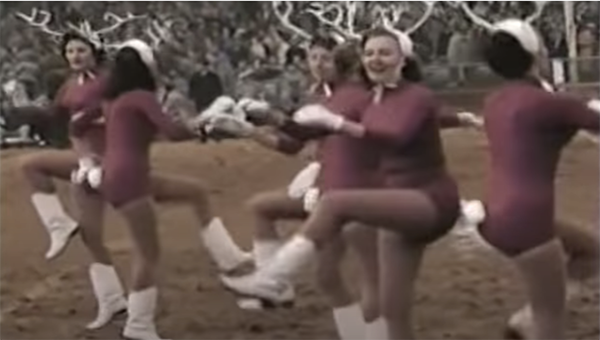
So, what was the halftime entertainment? Over the years, Super Bowl halftimes have featured performers like Lady Gaga and Michael Jackson. What 1950’s superstars would perform in the “super bowl” of 1958? Elvis Presley? Brenda Lee, maybe? Nope. It was the Baltimore Colts Marching Band, with their prancing majorettes looking quite fetching in their red leotards and reindeer antlers…

im

The Baltimore Colts Marching Band majorettes, in “reindeer” mode!  (courtesy YouTube/NFL Films)

Baltimore’s offensive woes continued into the second half. Early on, the Colts drove the ball to New York’s 1-yard line, but Alan Ameche was stopped for no gain on third down, then Ameche was tackled for a loss when he attempted to run wide on fourth down. In an interview decades later, Baltimore’s Lenny Moore revealed that Ameche botched the play; it was supposed to be an option pass, but Ameche didn’t hear Johnny Unitas’ signals correctly, and he ran instead of throwing a short pass to a wide open Colts receiver.

That goal-line stand awakened New York’s offense, and they needed only four plays to score their first touchdown to make it 14-10. The Giants then took a 17-14 lead early in the fourth quarter on a Frank Gifford touchdown reception, and while the Colts responded with two effective drives, they came up empty on both possessions; one ended with a missed field goal, the other ended when Unitas was sacked twice, taking the Colts out of scoring range. The Giants’ offense only needed a first down or two to ice the game, but Frank Gifford was stopped on a critical third down run. For decades, Gifford insisted he made the first down; Baltimore’s Gino Marchetti suffered a badly broken ankle in the pileup, and Gifford often said that amidst the chaos and confusion of tending to Marchetti’s injury, the officials did not spot the ball properly. However, when ESPN restored the footage for a 50th anniversary broadcast in 2008, an accident reconstruction expert analyzed the images and determined that Gifford was, indeed, just short of the first down (more about that ESPN program in our Epilogue). The Giants chose to punt the ball, and the Colts took over on their own 14-yard line.

This was the moment when Johnny Unitas began his ascent to legendary status. With just two minutes left, he moved the Colts downfield quickly. While there were several misfires, he made four critical completions, including three straight passes to his star receiver Raymond Berry. Those last three plays moved the ball 62 yards to the Giants’ 13-yard line, and with just seconds remaining, the Colts rushed Steve Myhra out to attempt a tying field goal. Myhra had struggled with field goal attempts all season, and Baltimore fans held their collective breath until the ball went through the uprights. The fourth quarter ended tied 17-17.

So… what happens next? Many of the players and coaches weren’t sure. It was not unusual for football games to end in a tie, but this game was for the NFL title. Would the teams be declared co-champions? Fortunately, the NFL had recently instituted an overtime rule for championships, and it would be decided on the field. The teams would play pure “sudden death.” The first team to score in any manner would win, and they would play for as long as it took.

The Giants won the toss and chose to receive, but they were not able to mount any kind of drive, and they punted the ball back to the Colts. Unitas now had all the time in the world, and Johnny U methodically moved the Baltimore offense to the New York 8-yard line. It was first-and-goal, and then, suddenly… the NBC Television feed disappeared! Nothing but snow on the screen!

This caused immediate panic in NBC’s control room, not to mention in homes across the nation, as viewers — particularly in Baltimore — bolted from their living rooms and scrambled to find the nearest radio. It was one of the worst possible moments to lose the live feed of a TV broadcast. And then…

A fan ran onto the field! Play was halted for nearly a full minute before New York’s Finest chased him down and escorted him to the sideline. Over the years, there has been endless rumor and speculation about this incident. Photographs show the fan was well-dressed and appeared very cooperative when the cops took him away; he certainly didn’t look like a drunken lout. Who was this guy?

Whoever he was, he is now the stuff of sports broadcasting legend. More than six decades later, it is widely believed that he was an NBC employee who realized the broadcast was interrupted and ran onto the field — or perhaps was told to run onto the field — to delay the game long enough to give the TV crew enough time to find a loose cable and fix the connection. As far as I know, he was never identified and the story has never been confirmed. One hopes the fellow received a bonus and a promotion for his quick thinking!

When the game resumed, the Colts ran two plays to reach third-and-goal from just over a yard away. A field goal attempt might have been the obvious choice, but Baltimore coach Weeb Ewbank was leery of sending a struggling Steve Myhra in to kick. Meanwhile, the coach trusted Unitas completely, and he left Johnny U and the offense on the field. A routine handoff to Alan Ameche secured a 23-17 Baltimore victory.

The game was breaking news nationwide. It was a big topic of Sunday afternoon dinner conversations, and it was headline news on front pages and in sports sections the following day. NFL and television executives soon realized that professional football could become a very valuable property, and they started making plans for increasing television coverage and boosting marketing exposure for the teams, the star players, and the sport overall. And down in Dallas, Lamar Hunt — a son of oil tycoon H.L. Hunt — started thinking about owning his own football team. Those dreams eventually led to his role in establishing the rival American Football League, which merged with the NFL just over a decade later. Historians and sportswriters have studied the 1958 title game, and they generally agree that event was the start of professional football growing into the colossus it has since become. It was the aftermath and the impact  — as much as the drama of the game itself — that led them to calling it “The Greatest Game Ever Played.”

*************************************************************************************************************

EPILOGUE

As I’ve mentioned in previous articles, television did not put a high priority on archiving sports events back then. There is no known videotape of the game; videotape was in its infancy, and while NBC presumably had one or two of the early machines available, it seems nobody bothered racking them up. There is no known kinescope film recording of the television broadcast, either. Fortunately, there was plenty of film footage of the game, both from overhead and from sideline views. This footage was shot by NFL Films, as well as various newsreel cameramen working for different organizations.

On the 50th anniversary of the game in 2008, ESPN produced a special documentary that used the old footage to re-create much of the action. The historic clips were colorized for broadcast, and the action was interspersed with comments and memories from players, fans, and broadcasters who were there. (Sadly, many of these gentlemen have passed away in the fifteen years since.) Most of Bob Wolff’s Baltimore radio broadcast was saved, and the NBC national radio call was saved almost in entirety. This historic audio was used in conjunction with the preserved video. Several versions of the ESPN special can be found on YouTube; here is a link to one of those.

Others have collaborated on an almost-complete reconstruction of the game, using the original newsreel and NFL footage, some of the colorized ESPN content, stock footage, and still photos. The audio portion uses the NBC national radio call by Joe Bolan and Bill McColgan (complete with vintage commercials!). There are several uploads of this project on YouTube, and there is also a version on the Internet Archive, available here. If you’ve never seen any of “The Greatest Game Ever Played,” punch it up on your laptop and enjoy!

Mark Wainwright is a long-time radio personality and voiceover performer. He was most recently the morning host at WSYR in Syracuse; he is also a Baltimore native and life-long Baltimore Colts fan (and he still hasn’t gotten over the Colts leaving town and moving to Indianapolis decades ago!). He can be reached at: markwainwright@earthlink.net

Industry News

TALKERS News Notes

News/talk WGDJ, Albany and owner Paul Vandenburgh are the subjects of an interesting piece by Chris Churchill in the Times-Union. Vandenburgh has been the owner of the standalone station (it also broadcasts on W254DA at 98.7 FM) for 17 years. In addition to owning and running the ship, he also hosts the local morning program. His success – Vandenburgh says the station is in the black – bucks the trend of consolidation. Read the full story here.

Cumulus Media announces that “The Ed Mylett Show” joins the Cumulus Podcast Network. The program showcases interviews with the greatest peak performers across all industries – including business, health, collegiate and professional sports, politics, entrepreneurship, science and entertainment – sharing their journeys, knowledge and thought leadership to help inspire listeners to become their best selves.

ABC News Radio adds Hubbard Broadcasting’s WTOP-FM, Washington, DC as its newest affiliate station. ABC News Radio says, “This new partnership will support WTOP-FM by providing the station access to live two-ways with ABC News correspondents, including chief Washington correspondent Jonathan Karl, White House correspondent Karen Travers, national correspondent Steven Portnoy and many others.

iHeartMedia Connecticut adds FOX Sports Radio to the lineups at WUCS-FM, Hartford “97-9 FM” and WAVZ-AM, New Haven. Stations programmer Ben Darnell comments, “We’re thrilled to now have FOX Sports Radio’s powerful lineup on 97-9 and on 1300AM. This addition, along with ‘The Rob Dibble Show,’ play-by-play and the UConn Sports Network, will continue our position as the broadcast sports leader in Connecticut.”

FOX News Media promotes Scott Wilder to EVP of production and operations. In this capacity, Wilder will oversee all technical, field and production operations of FOX News Media’s special events and breaking news coverage, including the 2024 presidential election.