Beasley Media Group appoints Kevin LeGrett chief business officer, effective today. LeGrett, who most recently served as president of iHeartSports, will “work closely with chief operating officer Brian Beasley to help unify the company’s business operations, aligning revenue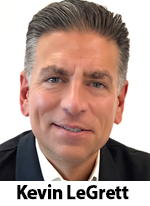 strategy, cross-platform partnerships, and digital growth to strengthen the company’s competitive position to ensure long-term success.” Beasley Media Group CEO Caroline Beasley comments, “Kevin’s deep experience across broadcast, digital, experiential, podcasting, and sports makes him uniquely qualified to lead our revenue strategy. His proven ability to scale platforms, grow teams, and deliver results on both a national and local level will be instrumental as we continue to evolve and innovate for our clients and communities.” LeGrett says, “I’m excited to join Beasley Media Group at such an exciting time. Beasley’s commitment to local communities, strong culture, and forward-thinking approach to media – especially its transformation across digital, streaming, and multiplatform platforms – aligns perfectly with my passion for building innovative, integrated solutions that drive real impact for advertisers and listeners alike. I’m excited to help lead the next chapter of growth.”




 $8.558 billion, a 2% decline from 2024. However, the satellite and internet broadcaster posts net income of $805 million for 2025 compared to the net loss of $2.01 billion it reported for 2024. SiriusXM is reporting that it had 31.3 million self-pay subscribers at the end of 2025, compared to the 31.6 million it reported at the end of 2024 – a dip of 1%.
 last 9 years. Being your voice, using my platform to speak up for you, to take on the powerful, the connected, the politicians, has been the greatest honor of my professional life. You have responded with incredible ratings and support of our advertisers that stood behind me. In the process we have formed an unbreakable bond. In the end, the show was always about us. In a battle together. I also want to thank those of you who have written letters in support of me the last 3 weeks. I was so moved by the outcry demanding this beautiful thing we’ve forged together keep going at the place we made it happen. If you want the answers why it will not occur, that’s a question for Urban One. We have some amazing things coming soon! Our bond is so much bigger than any singular platform or frequency. You have proven that in recent weeks. I can’t wait to tell you all about our new opportunities together in the near future. In the meantime, thank you for all YOU have given to me the last 9 years. Your loyalty and dedication allowed me to live out my boyhood dream. I will never be able to thank you enough.” Kendall hasn’t publicized his plans for the future but appears to be leaning toward a digital platform as he’s continuing to post Indiana and Indianapolis news via social media.
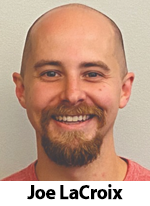 help to the entire team throughout the past year, stepping in without hesitation and taking on added responsibility. His work ethic, commitment to the station, and focus on fostering a collaborative environment have not gone unnoticed, making him the ideal candidate for this elevated role.” LaCroix, who’s been with the station since 2017 and has served as executive producer of the morning show since 2021, says, “I’m delighted to accept this role and grateful for the opportunity. I’m excited to continue working with this team and to help drive the continued growth and success of ‘The Fan.’”
 and content for iHeart’s My Cultura podcast network. The first show from the collaboration will debut early 2026 featuring MLB’s 2025 Comeback Player of the Year and Rimas talent Ronald Acuña Jr. My Cultura Podcast Network head Leo Gomez states, “Sports aren’t just something the Latino community watches, it’s something we live. Sports are part of the culture, heritage and legacy that is woven into who we are. Partnering with Rimas Sports on amazing audio content curated by Bad Bunny and his team will allow us to bring sports and pop-culture icons like Ronald to listeners everywhere and share richer stories about how Latinos experience, elevate and redefine sports every day.”
 produce and distribute radio broadcasts for preseason, regular season and playoff games starting in 2026. The Bills say, “The traditional radio broadcast, currently on WGR-AM 550 and Rochester affiliate 950-AM The Fan, will transition to streaming exclusively on BuffaloBills.com and THE BILLS APP from 1-3 p.m. every weekday. ‘One Bills Live’ will continue to be simulcast on MSG Western New York.” Bills president of business operations Pete Guelli says, “The delivery of media content has changed dramatically over the years. We believe the model of in-house production, distribution, and sales will better position the organization to provide access to our fans as well as allow us to further engage with the local business community.” The team notes that “One Bills Live” co-hosts Chris Brown and Steve Tasker will remain in their current roles.
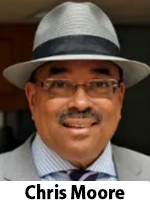 said, “Having our meaningful discussions about world and local issues, as well as more mundane issues with you has been one of the highlights of my career.” In a piece posted to KDKA’s website, the station says Moore’s health and mobility issues, combined with the recent winter weather forced him to consider his future. “‘The Moore of Pittsburgh’ has been a local weekend staple since 1994 and Chris has provided countless hours of entertaining radio that made listeners smile, think and participate.” Moore is also the founder and co-chairperson of the educational committee of the Frank Bolden Urban Journalism Workshop of the Pittsburgh Black Media Federation where a Chris Moore Internship was named in his honor in 2024.
 CEO. NYPR says Tanner is “known for more than two decades of transformative media industry leadership in executive roles at CBS – where she oversaw the global expansion of CBSN, helping redefine live news for digital audiences – TV Guide, and The Washington Post Company. She serves as chair of Swerve Sports, a streaming TV company, and on the board of directors of Audacy, one of the nation’s largest audio companies.”
 amount of approximately $1.7 million under the 11.000% senior secured first lien notes due August 1, 2028. In its filing with the Securities and Exchange Commission states, “The decision to utilize the grace period will not trigger an Event of Default under the indentures governing the Notes and the Company retains the right to make the interest payment to the holders of the Notes through the end of the grace period. The decision to utilize the grace period does not impact any of the Company’s business operations or obligations to advertisers, employees, suppliers or other stakeholders.” Beasley says it is “actively engaged in discussions with various stakeholders with respect to a number of potential alternatives regarding a restructuring of the Company’s outstanding indebtedness and strengthening its overall financial flexibility. At this time, no agreement has been reached regarding the Company’s indebtedness, and no assurances can be given as to the timing or outcome of this process.”
 contract dispute Urban One management but he’s not exactly sure why. Kendall’s contract expired in October and his attorney Jay Kanzler says the problem is not about money. He tells the Star, “It’s not like he walked in there and demanded more money. People are scratching their heads.” Kendall began speaking with management prior to his October contract date asking “to discuss new marketing ideas and flexibility in his role in a challenging radio industry.” When those efforts failed, he hired Kanzler who reached out to management. But, Kendall and Kanzler say neither of them have heard back from the company.
  slot. The station notes that Godbolt is a former University of Texas running backs coach and the station is the radio flagship of Longhorns football. Station PD Bryan Erickson states, “‘Bucky & BK’ is already a proven, fan-favorite show and we’re thrilled to add it to The Zone’s afternoon lineup. Bucky & BK’s credibility, insight and strong UT sports connection further strengthens our unrivaled coverage of UT athletics.”
 the recipient of the Philip J. Lombardo Spirit Award. BFoA Chair Scott Herman says, “Ernest exemplifies the values at the heart of the Broadcasters Foundation — generosity, leadership, and an unwavering commitment to helping others. His dedication to our mission and his longstanding support of the broadcasting community make him an exceptionally deserving recipient of the Philip J. Lombardo Spirit Award.”
 deal to provide a one-minute news update hosted by one of the network’s anchors to over 15,000 taxis across the country, including in New York City. In a January 21 letter to Mamdani and Taxi and Limousine Commissioner Midori Valdivia, Hoylman-Sigal stated the cabs should not carry Newsmax because of its “politically charged content.” The letter went further, stating Newsmax “is not a credible news source for New Yorkers. I urge you to summarily suspend the NYC Taxi and Limousine Commission’s partnership with Curb… and demand that Curb cease its collaboration with Newsmax as a condition of licensure given the platform’s history of misinformation and disingenuous reporting.” Newsmax says, “This is a pure act of censorship targeting a news organization reaching over 50 million Americans regularly. Newsmax plays it straight and that drives the far left crazy.”
  talking a little bit more on WABC radio in the near future.” That has become reality as Red Apple Media announces the launch of “The Pulse of the People,” starring Cuomo. The one-hour show premiered yesterday (2/1) at 5:00 pm. Catsimatidis states, “Today on WABC Radio we are introducing a new program, ‘The Pulse of the People,’ hosted by former Governor Andrew Cuomo. The show will focus on listener calls and open discussion about the issues, concerns, and views of New Yorkers. WABC Radio believes in bipartisan conversation and thoughtful discussion of solutions, and we invite listeners to tune in and be part of the discussion.” Cuomo comments, “This is a moment when our country has rarely felt more divided, politics more polarizing, and public discourse more toxic. ‘The Pulse of the People’ is about cutting through the noise and the rancor to have real, substantive, fact-based conversations about the issues that actually affect people’s lives. I’ve spent my career focused on making government work and getting results, and that’s the same straightforward, problem-solving approach I’ll bring to this program.”
 listening to the 10k flamethrower, with a history dating back to 1947, that blankets the Santa Cruz / Monterey / Salinas market and most of the Central California coast. Since acquiring the station, Zwerling has operated it hands-on as a conservative-leaning news-talker featuring a carefully crafted balance between local programming with a parade of hometown personalities (including local superstar Dave Michaels) and a menu of leading syndicated talent. It was one of the original affiliates of Rush Limbaugh and carried the iconic show until his passing in 2021. Zwerling tells
  TALKERS, “Back then I was 39 years old and never dreamed I’d last this long as a real broadcaster.” TALKERS publisher Michael Harrison – a longtime fan of KSCO – stated, “Congratulations to Michael Zwerling and all the folks at one of America’s most colorful radio stations, for keeping the spirit of independent local broadcasting alive through the many obstacles and changes that have proven challenging for the practitioners of this wonderful industry. They are champions of a major slice of grassroots Americana represented by the modern era of talk radio.” Today, KSCO maintains its powerful presence in the world-famous market at 1080 AM with the addition of three FM translator signals at 104.1, 95.7, and 107.9. The station still broadcasts from a historic art deco building located on the beach in Santa Cruz and continues to surprise its listeners with unexpected twists and turns in what Harrison describes as “one of radio’s longest running reality shows.”
 7:00 pm to 10:00 pm beginning tonight (2/2). KIRO-FM director of news and talk programming Bryan Buckalew states, “Chad has a unique ability to break down complex issues in a way that’s engaging and accessible. He respects the intelligence of the audience, values facts, and understands how to connect with listeners in a meaningful way. He’s a strong addition to our evening programming.”
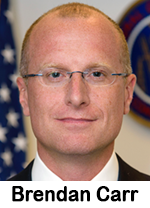 that wasn’t part of anything in that decision. It was focused on the potential misreading of precedents on the broadcast TV side. Of course, as you know, the rule applies to broadcast, radio and TV, but that one was focused on those TV precedents.” The memo to broadcast TV was relative to the 1996 bona fide news interview exemption that came about in the wake of an interview Jay Leno did with then-California Governor Arnold Schwarzenegger on “The Tonight Show.” The FCC Media Bureau ruled that “The Tonight Show” did not have to give Schwarzenegger’s opponent equal time because that interview segment qualified as a bona fide news interview. This matter doesn’t seem to be a big one for news/talk radio since news/talk stations are viewed as news outlets, on top of the fact that most talk radio hosts would love the opportunity to interview candidates with whom they might not personally agree.
  founders, world-leading investors, media and more than 1,600 startups to the Doha Exhibition and Convention Centre from February 1-4. iHeart Media says that this year’s Centre Stage sessions will welcome Conal Byrne, CEO of the iHeartMedia Digital Audio Group along with other leading podcast talent including Questlove, host of “The Questlove Show”; Steven Bartlett, host of the podcast “The Diary of a CEO”; Arabic sensation Islam Fawzy and more. The event will also serve as the official launch of iHeartArabi, iHeartPodcasts Arabic show slate. iHeartMedia chairman and CEO Bob Pittman comments, “At iHeart we believe in fostering conversations that lead to creative and innovative ideas and solutions, and our partnership with the GCO continues to expand the boundaries of podcasting. Our goal is to work together to generate the kind of discussions and interactions that enhance and grow the future of this medium for audiences everywhere.”
 FAN Sports Network. Audacy Portland SVP and market manager Ryan Cooley states, “We’re extremely excited to partner with the Portland Timbers as we continue delivering the best local sports content and growing the FAN Sports Network. Together, we’re committed to delivering high-quality coverage and meaningful access for fans, so The Fan becoming the radio home of the Portland Timbers was a natural fit. We look forward to working closely with the club to enhance the matchday and season-long experience.”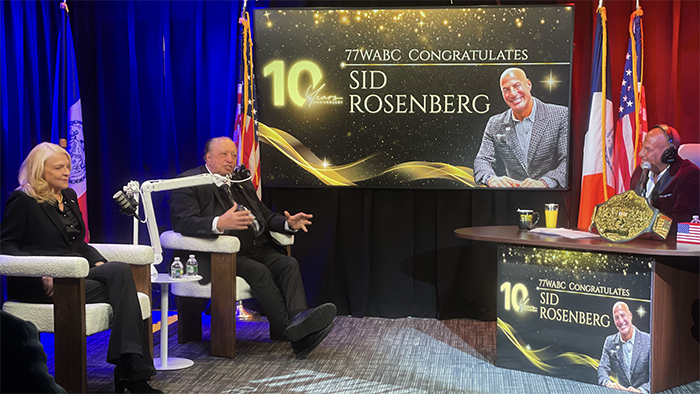
 once again bring together entrepreneurs, business leaders, and community partners who are making a powerful impact across Long Island.” The 2026 Latino Business Awards Gala will take place on May 14 at Stereo Garden in Patchogue, New York. JVC Broadcasting CEO John Caracciolo says, “Latino-owned businesses are essential to the strength and growth of our local economy. Through the Latino Business Awards, we proudly highlight the entrepreneurs whose dedication, innovation, and leadership continue to move our communities forward.” Station operations manager Ana María Carballo adds, “These awards go beyond recognition — they tell the story of perseverance, sacrifice, and success behind every Latino-owned business. We are honored to provide a platform that celebrates their contributions and inspires future generations of entrepreneurs.”
 Super Bowl Week coverage that will emanate live from live Radio Row in San Francisco culminating with the official local call of the game. Station PD Rick Radzik says, “After an eight-year absence, ‘The Sports Hub’ is thrilled to celebrate the Patriots’ return to the big game with fans across the region. We’ll once again deliver the best coverage all week, capped by the best call of the game on Sunday. Pats Nation will be well represented in San Francisco, and we can’t wait to be part of it.”
 politics! If you live and breathe politics, this is not the job for you. This is an 8-hour-a-day, full-time job doing prep, research, and living life that translates and relates to a 35-64-year-old. Must have an extremely strong work ethic, be sales department and client friendly, a team player and coachable, embrace all social media platforms daily, be a great interviewer, and have a proven track record of radio ratings success. The right fit for this job is extremely reliable, flexible and passionate about radio and digital audio mediums.