By Erik Cudd
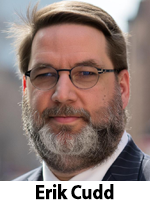 From my teenage years to today, radio has been the career of my adult life. When I first began listening in my teens, I was drawn less to the music and more to the conversation. I tuned into stations not for my favorite songs, but because I enjoyed hearing people talk, debate, and share ideas. Over my lifetime, I have seen many changes in the medium. The news/talk format, in particular, has always fascinated me for its mix of news, commentary, and immediacy.
In such a time as this, because radio is the medium I know best and love most, I write this appeal to those influential in news/talk. My hope is that you will step forward once again as the architects and innovators you have always been, and raise a rallying cry for this unique moment. The freedoms and ambitions that make the format so vital also create challenges. By design, it invites sharp opinions, spirited disagreement, and cultural edge. Those qualities are its strengths. But in our current climate, they also carry the risk of drifting into tribalism and rhetoric that can spill over into something more dangerous.
This is not an implication that I believe news/talk is responsible for the death of Charlie Kirk. I would like to be crystal clear. What I am saying is that a perfect storm has been gathering for many years, and no one can deny the polarized, charged landscape we now inhabit. And that storm is not radio’s sole responsibility. Television, social media, and digital platforms have found their profit margins in spaces that thrive on provocation. Cable news leans on conflict. Social media algorithms reward outrage. Digital outlets chase clicks and controversy. Radio is part of this broader ecosystem, not apart from it. And while no single medium created our current atmosphere, each has a role to play in reflecting on its impact and considering how best to move forward.
This is not about drawing a simple line between “toxic” and “non-toxic” content. Such judgments are rarely clear, and program directors deserve the benefit of the doubt. Yet it may be worth asking whether radio, like all media, could benefit from a renewed look at how editorial choices can help keep conversations as civil and constructive as possible. Debate and controversy will always be part of the medium, but escalation does not need to be the only outcome.
The September 10 tragedy underscored this in more ways than one. Beyond the event itself, the aftermath played out across digital spaces, where ordinary citizens made comments that, while protected speech, resulted in lost jobs, reputational damage, and news coverage. The lesson is not that speech should be curtailed, but that our civic discourse is increasingly fragile. And because radio is one of the most intimate and influential media, its choices ripple outward into that discourse in profound ways.
Audiences are noticing. As someone in my early 50s, squarely within talk radio’s target demographic, I should be a loyal listener. Yet I find myself tuning in less often, not from a lack of loyalty, but because I long to hear more voices who can thoughtfully engage both sides of an issue, giving each perspective a fair hearing and treating every listener as though their view matters. That is why I believe there may be room to pull back a bit, to allow for more variety, nuance, and genuine curiosity in how issues are approached.
Serious does not mean boring. Civility does not mean dull. Across platforms, authenticity and curiosity consistently earn audiences. Podcasts like SmartLess and Armchair Expert succeed not by stoking outrage but by elevating storytelling and connection. Public affairs series such as Frontline and American Experience continue to attract loyal audiences through rigorous, measured reporting. Nonfiction authors like Malcolm Gladwell and Brené Brown demonstrate that thoughtful exploration can reach mass audiences. These examples are proof that depth and balance can succeed when executed with energy and creativity.
Radio is uniquely positioned to do the same. The path forward is not retreat from controversy but innovation. Maybe it begins by encouraging new hosts who bring curiosity, empathy, and an equal openness to both sides of an issue, alongside conviction. It could include piloting alternative formats in off-peak slots where experimentation can thrive. It will require recalibrating success metrics to value loyalty, digital engagement, and cross-platform trust, not just short-term spikes. And it may also mean weaving national voices together with local conversations so that stations strengthen both their reach and their roots.
I do not write this from a high perch. I write as a member of the audience who also walked the halls of the station and still believes in the power of the medium. My words are not meant as accusation but as an open hand in friendship. What I am asking is simple: perhaps it is time for a more purposeful, deliberate engagement of conversation in the conference room. To sit together and ask if everything that airs is doing what it should. To take a long, hard look at whether anything might need to be discussed, reconsidered, or rebalanced in light of what we have all just witnessed.
Radio, because of its intimacy and reach, is uniquely positioned to lead by example. By being more proactive in its own yard, radio could encourage the same self-reflection across media, and even among the public itself. That is not retreat. That is leadership.
Radio still matters. Its intimacy can at times divide, but it can also renew. The question is not whether talk radio will remain bold, it always will, but whether it can channel that boldness in a way that builds the public square rather than fractures it.
The opportunity is here: to prove that freedom and responsibility can coexist, and that doing so is good for the culture, and good for the business.
Erik Cudd has worked in radio and media since 1991. He can be emailed at erik@cudd.us.
Share this with your network

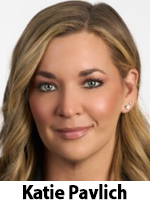 Salem Radio Network is providing coverage of President Donald Trump’s visit to Israel as headdresses the Israeli Knesset and personally greets Israeli hostages released as part of the Israel-Hamas peace plan he negotiated. Townhall.com editor Katie Pavlich is among six American media members in the out-of-town travel pool accompanying President Trump on Air Force One. Pavlich will be filing reports as she follows Trump’s schedule.
 When we first covered this case, it felt like only 2024 could invent it – a disgraced congressman, George Santos, selling Cameos and a late-night host, Jimmy Kimmel, buying them under fake names to make a point about truth and ego. A year later, the Second Circuit turned that punchline into precedent. (Read story here:
 of NBC and Hubbard Radio president and general manager Joel Oxley. The Media Mixer series is designed to “celebrate the camaraderie of the broadcasting community and bring to light the charitable mission of the BFOA to provide a lifeline to colleagues in acute need from illness or disaster.” BFoA chair Scott Herman says, “We thank the NAB for providing this impressive event space at their headquarters, and we’re grateful to Curtis, Kelly, and Joel for their support in making this event a success for all attendees. Our Media Mixers bring together junior and senior level broadcast professionals and on-air celebrities, while raising the profile of our mission to help every broadcaster who qualifies for aid.”
  aftermath of his slaying in Utah on September 10. The top three podcasts remain in order from the August ranker with NPR’s “NPR News Now” at #1, followed by The New York Times’ “The Daily” at #2 and NPR’s “Up First” at #3. Other talk radio related shows include FOX Audio Network’s “FOX News Hourly Update” rising one place to #4 and DailyWire’s “The Ben Shapiro Show” falling four places to #12.
  These aren’t just bulletin boards. They’re extensions of your station, where listeners expect to be acknowledged and advertisers expect to see results.
 director, I have submitted my notice. I’m grateful to Connoisseur Media, a fantastic company that, at the time, owned WFMD, and to Frank Mitchell, who hired me and trained me, for the opportunity to be part of this legendary station, and to my close friend and mentor, Bob Miller. My passion for radio is strong, and I look forward to returning to the airwaves as soon as my time at WFMD comes to an end. I love the radio industry. Who knows where this journey will take me next, but I hope it will still be in this area. You will hear me on the air again one day, because my radio career is NOT over. I still have a month here, and I am looking forward to finishing my time here. Primarily working with the fantastic team that I get to work with every day.”
 With topics ranging from Mars and UFOs to flying cars and ‘civilization starter kits,’ each episode blends science, technology, and imagination with the real choices shaping our world.” For example, on this week’s program Cirilli welcomes Harvard astrophysicist Dr. Avi Loeb for a conversation about comet 3I/ATLAS, alien tech, and the future of space exploration. He also chats with Rich Cooper, vice president of strategic communication and outreach for Space Foundation, about America’s $1 trillion space economy and why investing in space isn’t just about exploration – it’s about building America’s economic future. Premiere Networks president Julie Talbott states, “We’re thrilled to welcome ‘Hello Future’ to the network. With years of experience as a journalist covering global affairs, technology and policy, Kevin has the unique ability to connect the dots between science and the future for listeners who crave bold ideas and fresh perspectives on what’s ahead.”
 unapologetically conservative, culturally aware, and authentically Black voices to the forefront – voices that have been ignored for far too long. This show is about faith, family, freedom, and fearless truth-telling. I’m proud to be part of a network that values bold ideas and real conversations, and I can’t wait to shake things up.” Separately, Cumulus announces that “The Next Role with Vernon Davis” also joins the Cumulus Podcast Network. Former NFL star and Super Bowl champion turned actor and producer Vernon Davis’ podcast focuses on career transition and reinvention. Davis says, “The Next Role is more than a podcast – it’s a movement. I created this show to highlight the courage it takes to reinvent yourself, especially after a career in the spotlight. Partnering with the Cumulus Podcast Network gives me the platform to amplify these powerful stories and connect with listeners who are navigating their own transitions. I’m excited to bring these conversations to life and inspire others to embrace their next chapter.”
  Jimmy Kimmel’s first monologue back after the recent suspension had the audience laughing and gasping, and, in the hands of countless radio hosts and podcasters, replaying. Within hours, clips of his bit weren’t just being shared online. They were being chopped up, (re)framed, and (re)analyzed as if they were original show content. For listeners, that remix feels fresh. For lawyers, it is a fair use minefield.
 Markets broadcast operations. Salem CEO David Santrella says, “Linnae is a proven builder of teams and revenue streams. For nearly three decades she has delivered results across every part of Salem’s business, and she has the rare ability to connect vision with execution. As we move into a ‘One World’ selling environment, Linnae is exactly the leader we need to unlock new opportunities across all of our platforms and deepen our service to advertisers. Her leadership will be central to accelerating Salem’s growth.” Also, Jamie Cohen is promoted to chief digital officer, a newly created role designed to unify and oversee all digital operations across Salem Media. Cohen was most recently SVP of broadcast digital. Santrella says, “Jamie has been one of the key architects of Salem’s digital transformation. In just seven years, he took a $6 million business and scaled it to over $40 million—proof of both his vision and his execution. This new role gives him the mandate to break down silos and unify all of Salem’s digital assets under one strategy. With Jamie at the helm, Salem is positioned not just to compete in the digital marketplace, but to lead as a fully integrated media company.”
 several capacities over the past 20 years but was most recently with crosstown sports talker WIP-FM co-hosting with Ike Reese. Beasley Media Group Philadelphia Paul Blake says, “Jon Marks is a proven leader and a trusted voice in Philadelphia sports. His credibility, passion, and connection with our audience will be instrumental in driving The Fanatic’s continued growth and success in the market.” Marks comments, “I’m beyond excited for this opportunity. Philadelphia is the best sports city in the country, and the fans here are as passionate as they come. To be able to talk sports with them every day in this new time slot is an honor, and I can’t wait to bring that same energy and passion to middays on The Fanatic.”
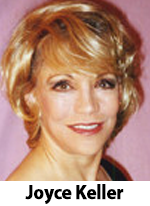 host on WGBB-AM, Freeport, New York (Long Island) for more than 35 years. She appeared on major television programs including, “The Oprah Winfrey Show” and “Good Morning America.” She also served as a columnist for Lifetime Television since. Keller’s long-running radio program with international reach established her as an enduring voice in the metaphysical and self-help space.
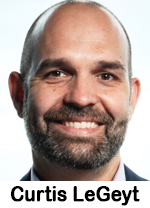 our airwaves free from government influence. The First Amendment affords our stations – and all Americans – this fundamental right, and the mere perception that broadcasters acted because of undue pressure is a problem for our credibility and the trust we have built with our audiences.
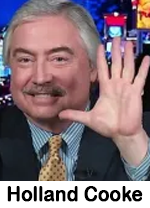 Don’t let Halloween sneak-up on you. The only holiday Americans spend more for is Christmas. So – to seem more in-touch than your robotic and/or non-local audio competitors – plan something spook-tacular.
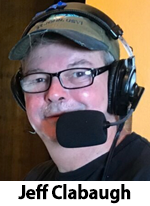 WTOP, Washington is announcing that its business reporter Jeff Clabaugh died last Thursday at the age of 63 after a yearlong battle with cancer. WTOP says that Clabaugh, “whose steady-paced voiceconversationally delivered money news to the D.C. region for three decades,” was “a master of consumer business news” who “gave reports twice an hour on WTOP’s airwaves and wrote punchy, popular stories for WTOP.com.” WTOP director of news and programming Julia Ziegler wrote to the staff, “Jeff Clabaugh made WTOP’s Business Reports what they are today. His work ethic was incredible. And his voice was so smooth. He was one of the best storytellers in the WTOP newsroom.”
 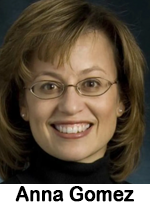 Federal Communications Commissioner Anna M. Gomez issued a statement criticizing the Commission’s threats against ABC that, in part, led to the suspension of the “Jimmy Kimmel Live!” program. Her statement is as follows: “We cannot allow an inexcusable act of political violence to be twisted into ajustification for government censorship and control. First, an ABC reporter was told that his coverage amounted to hate speech and that he should be prosecuted simply for doing his job. Then, the FCC threatened to go after this same network, seizing on a late-night comedian’s inopportune joke as a pretext to punish speech it disliked. That led to a shameful show of cowardly corporate capitulation by ABC that has put the foundation of the First Amendment in danger.
 and “Up First” stayed in the #1 and #2 spots, respectively. News/talk radio related shows of note include Cumulus Podcast Network’s “VINCE” rising two places to #11 and iHeart Audience Network’s “Armstrong & Getty On Demand” climbs two places to #22. The ranker is based on weekly average downloads for participating publishers.
  Charlie Kirk’s tragic assassination shook the talk radio world. Emotions were raw, and broadcasters across the spectrum tried to capture that moment for their audiences. Charles Heller of KVOI in Tucson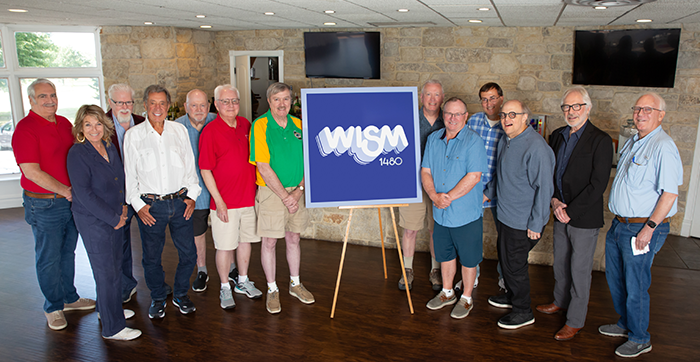
 In the wake of Charlie Kirk’s murder, one would expect every company that owns a talk radio station, every network that syndicates conservative voices, and every corporation that employs talk radio hosts to issue a unified statement of defiance. This was not just an attack on Charlie; it was an attack on the entire industry of talk radio, on the free exchange of ideas, and on the First Amendment itself. Yet, shockingly, most of these companies have remained silent. That silence is unacceptable. At a moment like this, the industry should stand shoulder to shoulder and declare to the world: we will not be intimidated, we will not be silenced, and we will never abandon the microphone.
 Radio programmers and sales managers know the drill: The GM drops an idea, a client makes a request, or a listener offers feedback – and the reflex is to jump straight into execution. But what if the real opportunity lies not in what’s asked for, but in what’s actually needed?
 and the countless people whose lives he touched through his words, his work, and his unwavering commitment to faith and country.” Salem CEO David Santrella is quoted saying, “Charlie was more than a broadcaster – he was a fearless defender of truth and a faithful servant of God. This assassination was not just an attack on Charlie, it was an attack on free speech and on the values Charlie championed every day. His absence leaves a tremendous void, but his legacy of faith, courage, and conviction will continue to inspire generations.” Salem Media chief strategy officer Bradley Parscale stated, “I have had the privilege of working with Charlie for nearly a decade. He was part of the Salem family. His voice was fearless, unyielding, and relentless in the defense of faith and freedom. This heinous act of evil was meant to silence him, but as Christians, we know darkness cannot overcome the light. Charlie’s influence cannot and will not be silenced.” The company added, “Charlie’s partnership with Salem Media was defined by his uncompromising defense of biblical values, liberty, and truth. Through his nationally syndicated show and podcast, he reached millions who relied on his voice to cut through lies, honor truth, and give courage to those fighting for faith and freedom.”