Features
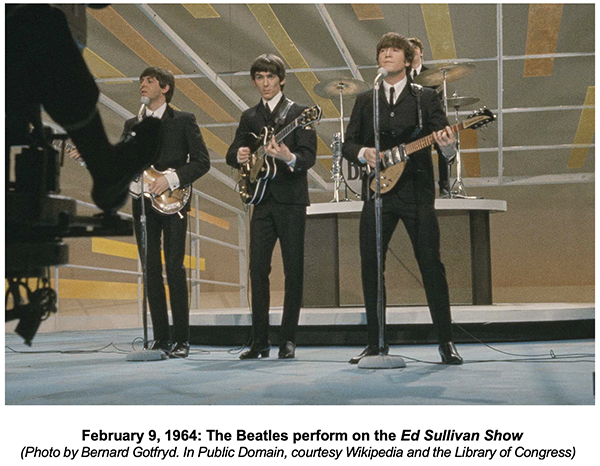
On a February night in 1964, a veteran TV host and four young musicians from England changed music, broadcasting, popular culture… they changed everything.
By Mark Wainwright
 In early December 1963, America was a very gloomy place. The assassination of President John F. Kennedy on November 22 brought the country to a virtual standstill for four days, and the emotional and psychological hangover lingered for weeks. The nation needed a dose of uplifting energy and fun, and the Beatles were the ideal remedy.
The Beatles were hardly newcomers. They had already been a successful act in the UK and mainland Europe (especially in Germany) for several years; oddly, they never got much traction in the United States. They had released a handful of songs in the US on smaller, independent record labels as far back as 1962, but they received little attention.
“She Loves You,” one of their early signature songs, was a failure when it was first released here in 1963. Dick Clark tried to feature it on “American Bandstand,” but the young dancers on his show didn’t know what to make of it and rated it poorly. But as the year went on, their popularity in England dramatically turned into a phenomenon that featured wildly enthusiastic crowds of screaming teenage girls. No one seems to be able to pinpoint what the catalyst was, but their already established popularity quickly grew into what became known as “Beatlemania.”
The Beatles first appeared on American TV on network news broadcasts. NBC’s “Huntley-Brinkley Report” aired a segment about the Beatles and Beatlemania in England on November 18,1963. Edwin Newman was the correspondent, and he and his colleagues were rather dismissive of the group, their music, and their young fans. Meanwhile, over at CBS, Walter Cronkite’s take was more generous. Their reporter in London, Alexander Kendrick, was pretty condescending as well, but Cronkite liked the segment when he saw it on the “CBS Morning News” on November 22 and planned to run it on his evening newscast. Sadly, what happened in Dallas hours later preempted everything.
A few weeks later, Cronkite thought his viewers could use a lift from the gloom that had descended upon the country, and he thought that segment would be a nice diversion. He ran it on his newscast on December 10, and that story really got the nation’s attention.
Young America was soon clamoring for everything Beatles. Radio stations dug up the records that hadn’t been successful and started playing them constantly. Beatles paraphernalia was heavily marketed and sold well. Capitol Records released “I Want to Hold Your Hand” in the United States on December 26 — the boys finally had a deal with a major record company in the US — and by New Year’s Eve, it was already a hit. It was the first of six Beatles’ songs that reached #1 on the Billboard “Hot 100” chart in 1964.
Meanwhile, Ed Sullivan was the host/master of ceremonies of a long-running CBS variety show that dominated the Sunday night ratings for years. Unlike most of his contemporaries, he was happy to present many of the early stars of rock-and-roll; Elvis Presley, Buddy Holly, and Jackie Wilson were among the pioneering artists of the new music genre who got their first major television exposure on Sullivan’s program.
Sullivan heard about the Beatles, saw them receive a tumultuous reception at Heathrow Airport in London, saw the CBS news segment, and was determined to present them on his show. Whatever he thought of their music, he respected talent and knew a hot act when he saw one.
A deal was quickly arranged between Sullivan and Brian Epstein, the Beatles’ long-time manager. Sullivan would bring them to the United States for three consecutive Sunday night shows. The February 16 performance would be broadcast live from the Deauville Hotel in Miami Beach, the third appearance on February 23 would be taped in advance. But the first of the three, a live performance on the Ed Sullivan Show February 9, was the one most anticipated. The two New York shows would be presented at the studio venue now known as the “Ed Sullivan Theater.”
When word got out, the demand for tickets was insane. CBS received more than 50,000 ticket requests (the tickets were free) for a studio theater that held 728. Getting one of the tickets was largely a matter of luck. Numerous notables and VIPs called upon favors owed and contacts at CBS to get tickets for their daughters (or granddaughters). Only a few succeeded.
When the Beatles arrived in New York on a Pan Am 707, they were greeted by a near-hysterical crowd of teenage girls (this had become a routine occurrence). They needed a police escort to get into Manhattan, and they needed a phalanx of New York cops to get them in and out of their hotel. All of this, of course, was breathlessly reported in the news media.
They arrived at the theater on Saturday, February 8, for a lighting and sound check and a brief rehearsal. George Harrison was recovering from a throat infection and was still tired and feverish, so he stayed at the hotel to rest, while a member of their entourage and a CBS production assistant took turns as stand-ins for George.
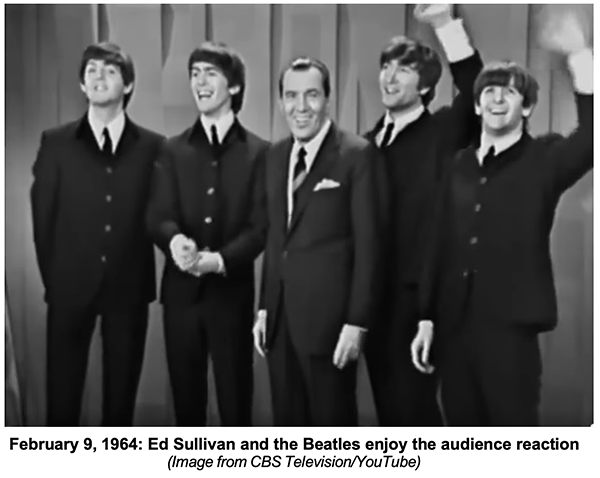
The following evening, at 8:00 pm Eastern Time, the “Ed Sullivan Show” went on the air, and shortly after the opening credits, Sullivan came on stage and offered a few brief remarks about the Beatles and their spectacular overnight success (“overnight” at least as far as Americans were concerned). Then… “Ladies and Gentlemen… THE BEATLES!” The theater erupted.
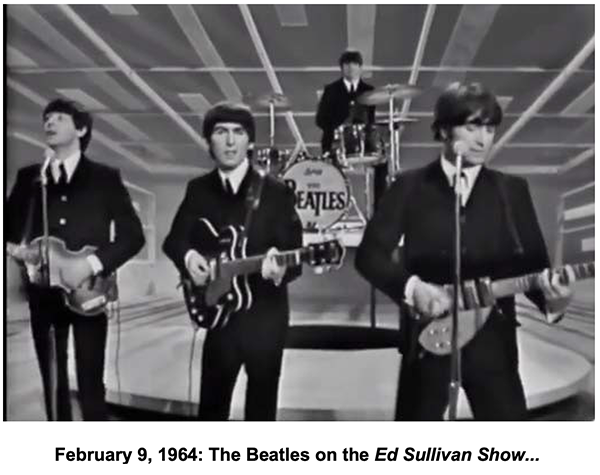
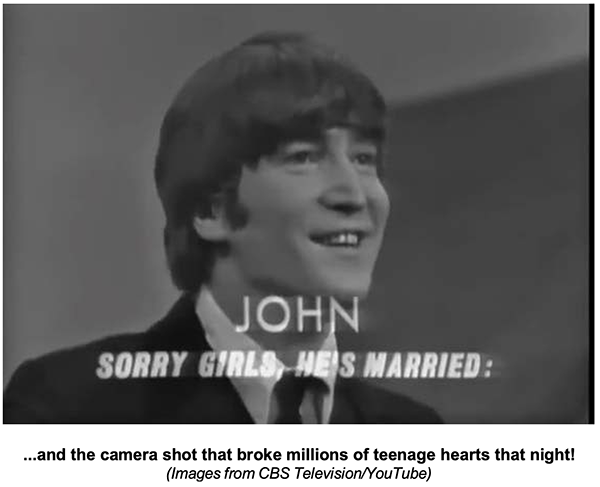
This moment led to one of the enduring music/broadcasting history trivia questions: What was the first song the Beatles performed live on their first “Ed Sullivan Show” appearance? No, it wasn’t “She Loves You” or “I Want to Hold Your Hand” (although they did those later in the show). Hint: while it was one of their most popular early songs, it was never officially released as a single. Okay, it was “All My Loving,” track #6 on side one of their iconic Meet the Beatles! album.
The ratings for the show were unprecedented. More than 73 million viewers – 39% of the country’s population – saw the performance. The broadcast drew a 60 share, which meant that 60% of American TV households were tuned in. Ed Sullivan always had pretty good ratings, but this was more than triple the size of his usual audience.
The Beatles were far from finishing their first American visit. Brian Epstein had managed to squeeze a couple of concert appearances into their tight schedule. One of those took place in Washington, DC two nights later, at the old Washington Coliseum. The old barn had seen some big events in its history, but nothing like this. The folks who owned and managed the building had barely heard of the group, but a concert promoter in the region convinced them to book a show. There was minimal promotion and advertising, but it wasn’t necessary. The tickets sold out in only a few hours.
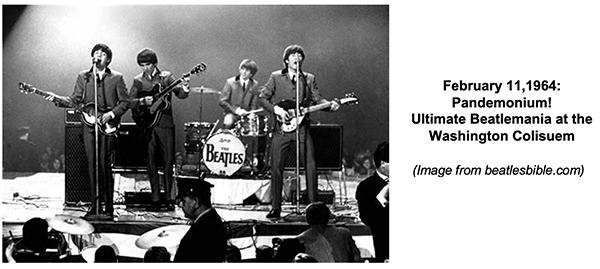
It turned out to be one of the most intense and intimidating concert environments ever seen, and is still regarded as such. The Beatles performed one of their few (maybe their only?) concerts “in the round,” on a small stage at the center of the arena, placed where the boxing ring would normally be situated. The building was packed with 8,092 ticket holders, most of them (as usual) screaming teenagers, with the front rows only a few feet from the stage. Imagine the frenzy in Ed Sullivan’s studio theater, now multiplied by a factor of ten. Fortunately, nothing really serious occurred, and the band handled the situation flawlessly, even making adjustments on the fly to handle audio and microphone issues…although it’s hard to believe they could even hear themselves amidst the screaming. They returned to New York to perform at Carnegie Hall the following day, then flew to Florida to spend a few days before returning to England. They returned for a North American concert tour in late summer. That tour was much better organized and promoted, although Beatlemania had not subsided at all, and the receptions they received were just as frenzied as their earlier appearances.
Typically, in an article like this, you would see links to various sources on the web. It would be superfluous here. There are countless sources of audio, video, photographs, and text of all these events and many others relating to that weekend in 1964. They are easily accessed on YouTube and other online locations. You can use one of the popular search engines or simply type a few key words into the YouTube search bar. All sorts of material will pop up; you’ll never run out of stuff to enjoy. If you are looking for maximum available audio and video quality, there are many downloads and DVD’s available from Amazon and other merchants.
The Beatles’ first weekend in America – particularly that first appearance on the “Ed Sullivan Show” – is widely regarded as a sort of cultural watershed that ignited Beatlemania here and opened America to other performers of the “British Invasion” era… artists like the Rolling Stones, the Dave Clark Five, Dusty Springfield, and many others. Many sociologists and cultural historians have opined that the Beatles coming to the United States was (at least in a pop culture sense) the beginning of the era that we now commonly view as “The Sixties.” Indeed, a veteran television host and four young musicians from the UK changed everything that night.
EPILOGUE
If their first “Ed Sullivan Show” performance was the “penthouse suite” of their first visit to America, the foundations of that structure were the countless radio stations around the United States that highlighted the band and played their music incessantly. There are endless stories about the big AM Top-40 stations of that era, their star disc jockeys, and their various encounters with the Beatles, both on and off the air.
I was a youngster in Baltimore at that time, and I was already hooked on radio and everything about it. I was a big fan of AM Top-40 powerhouse WCAO. The “Big 60” was the radio station for young Baltimore in that era, and their on-air staff were all celebrities in the community. Noted radio entrepreneur Kerby Confer was a WCAO disc jockey then, using the name “Kerby Scott” on the air.
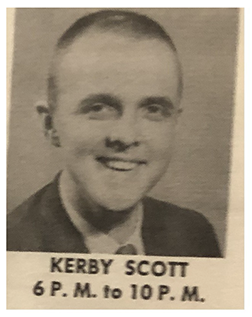 1964 WCAO Promotional Material: “Kerby Scott photo
(Photo courtesy Kerby Confer)
I recently spoke with Kerby Confer (almost two hours on the phone!) and reminisced about that era and WCAO’s role in it. When the Beatles took the train from New York to their gig in Washington, one of Kerby’s colleagues, veteran WCAO newsman Frank Luber, managed to board the train when it stopped at Pennsylvania Station in Baltimore and recorded an interview with the Beatles. The tape was brought back to the station and aired.
If WCAO was already immersed in Beatlemania, that episode had the station and its staff absolutely swimming in it. Kerby Confer told me that moment influenced his life and his career in ways he didn’t fully appreciate at the time. He said he was just another guy doing pretty well on the air in Baltimore, but that moment led to him becoming Baltimore’s “Fifth Beatle.” Wait, what? Baltimore’s “Fifth Beatle?”How did that come about?
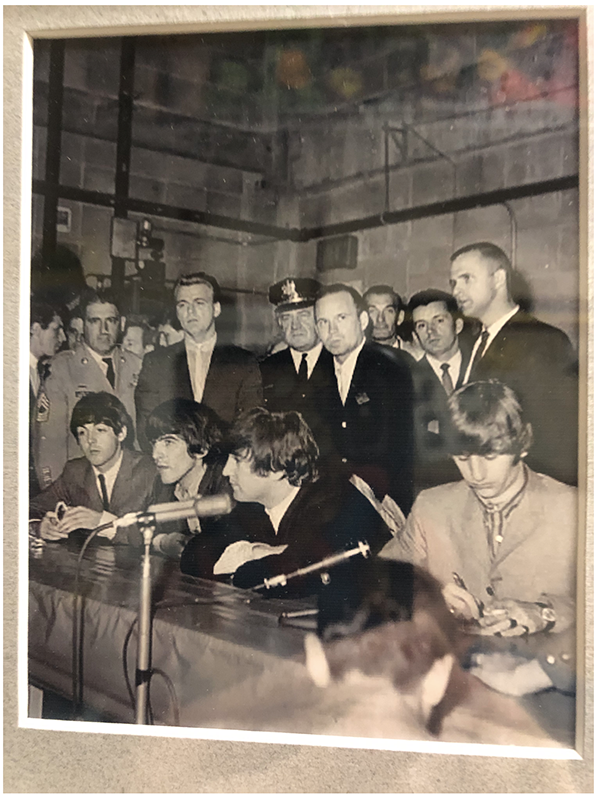
September, 1964: The Beatles and Baltimore media. “Kerby Scott” Confer is at the far right, directly behind Ringo (Photo courtesy Kerby Confer)
As it turned out, Kerby Scott soon became the host of WCAO’s “Liverpool Hour,” an evening program in conjunction with his regular on-air work at the station. The program featured the music of the Beatles and the many other artists who came out of the UK at that time.
Kerby usually wore his hair short in a buzz cut, but Paul Rodgers – his lifelong friend, WCAO colleague, and business partner later – convinced him to grow his hair out enough to solidify the “Fifth Beatle” persona. Kerby eventually sported a very restrained Beatles-style haircut to complete the image (I don’t think he kept the haircut for very long). He was an obvious choice to emcee one of the Beatles’ shows when they performed at the Baltimore Civic Center in September of 1964, and he later hosted “The Kerby Scott Show” on WBAL-TV; it was a dance party program, Baltimore’s version of Dick Clark’s show “American Bandstand,” and I believe it was eventually syndicated elsewhere. Before long, Kerby Confer moved over to the business side of radio in management and ownership. He was very successful in that endeavor, and still owns and operates many radio stations today.
So, Kerby Scott Confer and Mark Wainwright were just two more young radio guys whose lives and careers were influenced by that first Beatles weekend in the United States. It bears repeating: a veteran television host and four young musicians from England changed everything on the night of February 9,1964.
Mark Wainwright is a long-time radio personality, talk show host, and voiceover performer who has worked on the air at numerous respected radio stations around the United States. He was most recentlythe morning host at WSYR in Syracuse, New York. A Baltimore native, Mark currently resides inSaratoga County, New York. He can be reached at: markwainwright@earthlink.net
Share this with your network

 from West Virginia to Georgia. The programming includes “The John Fredericks Show,” “The War Room with Steve Bannon,” Newsmax’s “Rob Carson Show,” and more. Fredericks states, “This West Virginia opportunity is key to our growth plan, as it dovetails nicely with our Pittsburgh footprint and reaches a very pro-populist, pro-America First and pro-Trump area of America. We are excited about offering listeners in West Virginia a choice from the stale, woke, and warmed over pablum served up every day by the corporatists and conservative Inc. bunch that regurgitate the FOX and RNC talking points of the day. Our lame and boring news/talk competition falls into one of four categories: weather on the fives and traffic on the eights, stock prices trading below fifty cents, stock de-listed off the big board, or George Soros buying up bankruptcy debt with a controlling stake to eventually take over the company and its programming.”
 When reviewing our industry’s awards such as the Crystals or Marconis there are two categories missing. They are: “Best New” and “Best Innovation.” Imagine if winners were announced for these prizes:
 and passionate people within Audacy’s newsrooms and across the larger company. And I’m proud of our collective accomplishments: building out digital and podcasting capacity; integrating broadcast and digital teams within newsrooms; strengthening communication and collaboration across a network of brands; navigating the first wave of AI; and creating new revenue opportunities in partnership with sales teams. All of this was done while delivering over and over in high-leverage, breaking news situations and racking up awards that validate Audacy’s local news brands as best in class. The challenges for media and journalism these days — and for local news in particular — are profound, and the stakes are high. But there are new frontiers on the horizon, and we can deploy innovative ways of thinking about how we do what we do. As always, I’m excited to explore those frontiers and draw on my many years of strategic and operational experience to help media brands and other organizations find a way forward.”
  Have we passed the disappointment of 2023?
 reach 17% more voters.” The study references Pennsylvania Senator John Fetterman’s 2022 campaign, noting that it deployed radio to reach voters in Philadelphia and Pittsburgh. In doing so, it allocated 20% of media dollars to radio and generated a 10% lift from radio above the local TV campaign, amounting to 676,000 additional voters at no extra cost. Audacy SVP of strategy, partnerships and analytics Jon Blum says, “When campaigns activate a TV plan, they should activate a corresponding radio plan and incorporate it into the mix with TV. The portion of the population that isn’t reachable via TV could be the swing vote and what throws it over the top for a candidate.” Nielsen’s study noted that if a campaign moved 20% of ad spending to radio, the optimized media plan would connect with 15% more Democratic and Republican voters and 23% more unaffiliated voters.
  should keep quarterback Justin Fields or trade him in the upcoming draft for the #1 pick. Parkins and Spiegel will kick off the discussion from Audacy Chicago’s Blue Cross Blue Shield Performance Stage from 2:00 pm to 6:00 pm. Football experts and a live audience will join Parkins and Spiegel to weigh in on the looming decision. “The Score” ran a contest this week for a chance to attend the “QB1 Town Hall.” These winners will make up the crowd that will have the opportunity take part in the debate. WSCR VP of programming Mitch Rosen says, “This decision will determine the entire season’s trajectory and the fans are passionate about their views on it. We’re looking forward to opening up this conversation to our listeners and Bears faithful.” The show is being made available via the Audacy app & website, the station’s Twitch, and YouTube channels.
  Post says it confirmed the report with Audacy and the company added, “The decision by our existing and new debtholders to become equity holders in Audacy represents a significant vote of confidence in our company and the future of the radio and audio business.” The story cites an insider close to the situation who is a Republican saying he believes its “possible Soros was buying the stake to exert influence on public opinion in the months leading up to the 2024 presidential election.”
  Moshos. Moshos died on January 11 and today (2/14) would have been his 67th birthday. General manager Joel Oxley says, “George helped me so much when I first started at WTOP 30 some odd years ago. I knew little about production and he let me know it. His gruff demeanor and direct style took a minute to get used to. But it didn’t take long for me to realize this guy with the glint in his eyes was a person who cared. Really cared. About his job and doing it right and more importantly about people. He touched so, so many people and made things better for them. Seems only right to name where he spent so much of his time ‘The George Moshos Production Studio.’”
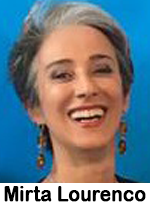 the automobile industry has intelligently responded. The issue however is much larger. As UNESCO’s chief of section for media development and society, Mirta Lourenco puts it, ‘The free flow and easily accessible information provided by terrestrial radio supports the spirit of the First Amendment via the concept of media pluralism and more. This expands to a valid concern about privacy rights – which is equally important to freedom and democracy. With GPS and internet platforms simultaneously in our cars, we are turning the enormous power to invade the privacy of individuals over to a mere handful of Big Tech giants. They know what and who we listen to, including where, when and how we travel.’” Harrison adds, “Finally, I am compelled as a lifelong radio broadcaster and publisher of a major trade journal to protect the viability of radio stations as a going concern and the well-being of their owners, employees, and listeners.”
 Jessica Tighe, who joins the station from “CBS58” airing from 11:00 am to 1:00 pm; “Spanning the State,” hosted by As Goes Wisconsin founder Kristin Brey, airing from 1:00 pm to 3:00 pm; and “Wisconsin’s Afternoon News” host John Mercure is joined by new co-host Julia Fello, formerly a lead reporter at WTMJ-TV. Good Karma Milwaukee market manager Greg Scalzo comments, “As a Wisconsin-based media company, we are excited to further our commitment to providing best-in-class news content that unites the state and strengthens the communities we call home. With this new lineup, one thing we wanted to emphasize is a shift in who we hear on the station and how our content can be consumed. Our fans will hear from hosts with new, diverse perspectives and experiences with shows and stories distributed across all mediums to reach fans where they are. We remain dedicated to continuing 620 WTMJ’s storied legacy, delivering purposeful news and telling the stories that matter to you throughout Wisconsin. Our new shows and voices will give us more of an opportunity to relate and be relevant to anyone who tunes in, while staying committed to the mission of being Wisconsin’s News Radio.”
  Super Bowl LVIII could have been the best ever.
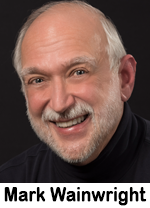 Radio personality, talk host, and voiceover performer Mark Wainwright writes today (2/9) in a piece for TALKERS magazine about the 60th anniversary of The Beatles’ appearance on “The Ed Sullivan Show” on February 9, 1964. He writes, “In early December 1963, America was a very gloomy place. The assassination of President John F. Kennedy on November 22 brought the country to a virtual standstill for four days, and the emotional and psychological hangover lingered for weeks. The nation needed a dose of uplifting energy and fun, and the Beatles were the ideal remedy.” As he notes, the arrival of The Beatles in America and their appearance on the popular Sunday night TV show “changed everything.”
  For several years I’ve had the surprising privilege of serving as a member of the nominating committee of the Radio Hall of Fame. How does the process work? Let me clear up some of the mystery. FAQ:
 and I would have never imagined that all of my dreams would be multiplied by two. I was blessed with an amazing journey; from Emporium to New York City and every city in between including Nashville, Dallas, San Antonio, Austin, Baltimore and Pittsburgh…. The best part of my job was working with some of the best talent in the country. I tried to never get in their way, and I listened in awe to what they created daily. They were the reason for my success, and I am thankful for the privilege of tagging along… The time has come for me to walk away, and I do so with the deepest appreciation. If I worked with you, I hope you can say that I gave you my best and that I helped you succeed. I know my life was richer because of you and I will cherish the memories we created together. Thank you! Now, about that last break…”
 and politics (78%) shows. In addition, 89% of news-focused podcasts (across topics) brought on at least one guest in 2022; 2) Most podcasts aren’t bringing the same guests on over and over. More than 99% of all guests only appeared once on any top podcast in 2022. In addition, about half (49%) of top podcasts brought on at least one guest more than once, and 23% hosted more than five different people more than once. The most common guests represent a range of professional backgrounds, including entertainment figures, scientists, journalists and political commentators. Pew senior computational social scientist Galen Stocking comments, “Our research has shed light on the variety of topics and approaches within the podcasting landscape. Here, we found that most top-ranked podcasts are bringing on guests, and often from a wide range of professional backgrounds. This can add to the perspectives heard on each podcast.”