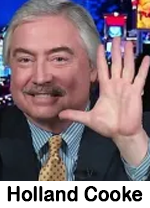
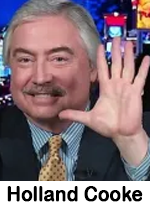
By Holland Cooke
Consultant
 Music radio’s competitors were vinyl, then tape, then CDs – before smartphone streaming and satellite radio offered more portability and variety. And before consolidation, broadcasters were under less of the revenue pressure that now commercializes many stations beyond listeners’ tolerance. TALKERS NAB Show coverage included Edison Research founder Larry Rosin lamenting “many, many [music] stations now loading all their spots into two interminable breaks per hour.” I cringe hearing FMs struggle to remain among listeners’ music appliances. And I fret that monologue-heavy talk radio is relinquishing interactive dialogue to social media.
Before moving to all-news, and eventually news/talk, I worked in music formats less-structured than today’s. So now I hear music radio as an outsider, more like a consumer. Which got me wondering: How does my format sound to music consultants? So, I asked several whose work I respect.
Beware the one-joke act
Mike McVay reckons that “listeners want to know a little bit about a lot of things,” a point other colleagues echo. Explaining that “music radio is all about variety,” adult contemporary specialist Gary Berkowitz: “To me, listeners are tired of all this political back and forth. Sure, it has its place, but it’s like if music radio only played five different artists!” Jon Holiday – who customizes station playlists for a variety of formats – asks “are talk listeners getting what they want?” Calling some formats “very artist-heavy,” he thinks stations were right to play so much Taylor Swift in 2024, certainly her year. And 2025 sure is Trump’s, but Holiday calls “banging the same drum all day, every day” the most common flaw he hears on talk radio.
McVay says listeners like “stories that pull on their heart strings. It’s why “NBC Nightly News” ends with a touching story. It’s not fluff. It’s information relief.” He also recommends topics you are likely to overhear at the next table during lunch: “Discretionary Time Information” (binge-worthy shows on Apple+, Max, Netflix). Health. And – lately more than ever – what Mike calls “purse” stories (think: eggs). Been to Costco? On weekends it’s mobbed. Ask any member and they’ll recite a shopping list of Kirkland-brand bargains.
Play the hits
When Gary Berkowitz – then an accomplished music programmer – took over stately WJR, he “approached it like it was a music station, the only difference was my ‘songs’ were my personalities, news coverage and, at the time, play-by-play of all the major Detroit teams.” He bought a jingle package “to ‘decorate’ the station;” and “got ‘JR involved with everything that was happening in Detroit. All I did was put it all together and present it like my top-40 upbringing taught me.”
I can relate. Before I programmed all-news WTOP, Washington, I had no news experience. I came from a music FM. The WTOP staff I inherited was impressive, and their work was solid, but the station wasn’t “programmed enough.” I was sent there to convert Cume to Average Quarter Hour – the blocking-and-tackling formatics fundamental to music radio. We owned “the Top news…instantly” image, and we said those very words LOTS. But research told us that traffic and weather were “the hits;” and how we presented them moved the needle.

Great talkers are great listeners
In every transaction, consumers now expect to interact; and “listeners like to hear others’ voices,” Mike McVay observes: “When the audience is comfortable enough to weigh in with an opinion, their own story, or a reaction, you’ve created a ‘friend circle.’” Jon Holiday tells morning shows he works with to “take time going into breaks to be topical and interact with callers.” And engage by texting and social media. And don’t just push-TO listeners. Be quick to REPLY, and you will make them feel special.
Yet, in three decades coaching talk hosts, the most unwelcome word I say seems to be “callers.” Imitating gifted Rush Limbaugh, many hosts are prone to windy monologue, rather than inviting the busy dialogue that makes a station sound popular (something local advertisers notice). DJs deftly weaving interactivity into music shows often sound more inviting than sermonizing talkers. Holiday remembers El Rushbo as “a master at having fun, particularly in his early days as a syndicated personality.”
Prescription: Local
Twenty years ago at the TALKERS conference, publisher Michael Harrison’s advice was elegantly simple: “Give them something they can’t get anywhere else.” Especially now, with so many non-local audio competitors. Regardless of format, helpful local information can increase Occasions of Tune-In per week.
Simply doing local news is a start. But does yours enable the listener by telling what an item means to him or her? On any given day, what you’re overhearing at lunch is something big that’s happening somewhere else. Can you explain the local impact? “National news needs to mean something to me, my community, my region or state,” according to McVay.
With weather so erratic in so many places, owning that image is gold. If you’re news/talk, don’t assume that you’re the market’s weather station. If you’re music, don’t assume you can’t be. Noting typical news/talk demographics, Jon Holiday surmises that, “as we get older, we seem to be more interested in weather.”
And as successful music stations have always done, show up! Gary Berkowitz had WJR go all-in on Detroit’s Thanksgiving Day parade, “with our people all over the parade route. It was better than the TV coverage!”
Holland Cooke (HollandCooke.com) is a consultant working the intersection of broadcasting and the Internet. Follow HC on Twitter @HollandCooke and connect on LinkedIn
Share this with your network



 some changes in our lifestyle, our geography and our living standards to protect our safety and sanity that include an international move. That simply makes this job no longer feasible.” Reflecting on his career, Grayson remembers getting into the business. “As a kid I was always steered away from potential careers that depended on personal talent alone, since my mom was convinced that people who made their living that way were somehow possessed of a magic that us regular folks don’t have. But the day I first heard talk radio – a day I remember very clearly – I fell in love. I had no choice in the matter. From calling in to talk shows as a college student to beating down the doors of my local station to hire me, this business always held a kind of allure I found irresistible.” During his career, he worked in Tampa, Nashville, and St. Louis, where he worked at KTRS and KMOX. At KMOX he hosted the syndicated “Overnight America” program.
 those consumers report having taken an action based on radio ads, in particular. Such actions can be recommending something to others, posting or following on social media, visiting a website, going to a retail location, or actually making a purchase. While we do not know which advertisers’ messaging they responded to, we do know that these radio-influenced consumers are highly engaged across categories, making them advantageous to brands – and more valuable than ad-influenced adults in general. Radio-influenced consumers are more likely to be spending money on sports betting, vacations, cars, movies, and retail than the average adult, and even more than other ad-influenced adults.”
  and Subscription Digital Marketing Solutions net revenue increased 4.2%. Townsquare CEO Bill Wilson says, “I am pleased to share that Townsquare’s first quarter results met or exceeded our previously issued guidance, driven by
  the continued strength of our differentiated digital platform. Additionally, this morning we are reaffirming our 2025 full-year guidance for both net revenue and Adjusted EBITDA. In the first quarter, net revenue decreased – 0.5% year-over-year excluding political, and -1.0% in total, meeting our guidance, and Adjusted EBITDA increased +6.2% year-over-year excluding political, and +3.5% in total, exceeding our guidance. In addition, net income declined $3.1 million year-over-year. Digital is and will continue to be Townsquare’s growth engine, and we believe Townsquare’s ability to drive profitable, sustainable digital growth is a key differentiator for our company, and consistent with our strategy of being a Digital First Local Media Company principally focused on markets outside the Top 50 in the U.S.”
 decreased 2.2% for the quarter to $22 million compared to the same period last year. Saga reports a net loss of $1.6 million for the quarter consistent with the same period last year. Looking ahead, the company says revenue pacing for the second quarter remains uncertain but is improving as the quarter progresses. For the second quarter Saga is currently pacing down mid-single digits. April was down high-single digits. May improved to being down low-single digits and June is approximately flat with the same period last year.
 followed by The New York Times’ “The Daily” at #2, NPR’s “Up First” at #3, NBC News’ Dateline NBC at #4, and FOX Audio Network’s “FOX News Hourly Update” at #5. Other radio-centric podcasts of note include Cumulus Podcast Network’s “The Shawn Ryan Show” rising two spots to #6, and Silverloch’s “VINCE” falling 11 places to #18.
  investment. Other notes from the first quarter include: Revenue from new business accounted for 18% of net revenue; Local revenue, including digital packages sold locally, accounted for 71% of net revenue; Digital revenue was comparable to the first quarter of 2024 but increased 6% year-over-year to $10.8 million, on a same-station basis; Digital revenue accounted for 22% of net revenue; and Digital segment operating margin was 18%. Beasley CEO Caroline Beasley says, “Our first quarter results
  reflect the strength of our ongoing transformation and the resilience of our core strategy. While revenue was impacted by persistent macroeconomic headwinds, we mitigated this through disciplined cost management, operational streamlining, and continued momentum in our digital business, resulting in an Operating Loss of $2.0 million and year-over-year Adjusted EBITDA growth. Digital revenue now represents over 20% of total revenue, and the meaningful expansion in digital segment operating income underscores the scalability of our platform and the impact of our strategic investments. As we look ahead, we remain focused on unlocking margin expansion, accelerating our digital evolution, and driving long-term value for our stockholders through thoughtful execution and innovation. We are particularly encouraged by the continued growth in our high-margin digital offerings and the early success of new digital and content initiatives. With a more agile operating structure, a differentiated content portfolio, and deepened advertiser engagement, we believe Beasley is well-positioned to navigate short-term market challenges while building a more durable and diversified revenue base.”
 given out at the recent 2025 Wisconsin Broadcasters Association Awards Gala. Civic Media stations received 11 first place awards, 15 second place awards, and 12 third place awards. Civic Media CEO Sage Weil says, “I couldn’t be more proud of our team’s performance this year, and their ongoing dedication to serving our audiences around the state. We believe that local media plays a critical role in our communities, and it is always great to see the WBA recognizing the quality work being done around Wisconsin, both by Civic Media and the many other excellent organizations.”
  Krantz was most recently co-host of “The BradandBrittcast” podcast with Britt Whitmire. He served as host at a number of rock stations during his long radio career as well as morning host on news/talk WBT-AM/FM, Charlotte.
  Geary says, “FOX News Media and SiriusXM are leaders in news and entertainment programming respectively, and we are delighted to bring to the market a bundle of our streaming services that offers exceptional consumer value. FOX Nation’s library of original video programming and SiriusXM’s vast offering of music for every mood and moment, live sports from every major league, plus entertainment and news combine to make a highly attractive streaming audio and video bundle.”
 voracious consumers of movies in the theater and films on streaming services. They are first to see a movie in the theater on opening weekend and when films debut on streaming services; and 2) Versus linear TV viewers, audio listeners are far more likely to see movies in the theater and indicate a greater willingness to watch content. Looking at data about marketing moves and streaming video, the study finds that 1) Linear TV advertising spend for theatrical releases and video streaming brands is 30X audio. Despite this, TV viewers show low awareness of new films and low interest in upcoming films and streaming service subscriptions; and 2) Audio (AM/FM radio, streaming audio, and podcasts) should become a much greater allocation in the entertainment marketing media plan. Reallocating 20% of linear TV theatrical and streaming video media plans to AM/FM radio doubles campaign reach with no additional cost.
  and public television have enjoyed bipartisan support since 1967. The system has a profound impact on Americans in all 50 states and in every type of community—urban, suburban, rural, and remote. This indispensable service costs the American taxpayer about $1.60 a year, and it is one that the majority of Americans want to maintain. Recent polling from the Pew Research Center shows that only 24 percent of Americans support cutting federal funding. The budget request and executive order are only part of the administration’s ongoing effort to dismantle the American public broadcasting system as we know it. We expect even more to come. If successful, the effort will exacerbate existing news deserts and create new ones, as public radio has become the main (or only) remaining source for fact-based local news, educational and cultural programming, and critical emergency broadcast services in many communities across the country.” He encourages them to contact their legislators and to either donate or increase one’s current contribution to the public broadcasting organization.
 “It won’t work on FM.” Country. Country was predicted to be a failing format for the FM band. At the dawn of FM proliferation in the 1970s, the future of the band was viewed with fear and skepticism. Why wouldn’t country music work on the FM band? The conventional chatter said that “country needs to be on AM because truckers drive long distances and AM signals cover long distances. FM does not.”
 When a blogger found “no biography, or further information about the woman who is supposedly presenting this show,” it forced Australian Radio Network to
  Global, the parent company of CBS, have begun charging what’s known as ‘reverse’ retransmission fees to broadcasters. The networks demand a share of broadcasters’ revenue for the right to use their content. This practice was once unheard of, but some networks now regularly require more than 100% of broadcasters’ retransmission fees as ‘reverse’ fees, leaving broadcasters to sustain themselves solely on whatever ad sales they can make with their limited inventory (also capped by the networks, and often amounts to only a few minutes of airtime per hour). This funnels more and more money out of local markets and local journalism and into the hands of mega media corporations, who threaten broadcasters with content blackouts if they don’t get sky-high payouts.” They go on to argue that the “problem gets even worse with providers like YouTube TV and Hulu Live. Under their affiliate agreements with the networks, local affiliates can’t even negotiate for online providers to carry the content. The networks do it for them and pay the affiliates whatever they deem reasonable (sometimes, nothing). This gives the networks total control over streaming distribution while robbing local stations of revenue and autonomy in the rapidly growing online video space. What was once a mechanism to support hometown news is now a corporate racket. Instead of investing in local reporters, meteorologists, and producers, local broadcasters’ funds are siphoned to bloated national newsrooms that churn out anti-Trump propaganda and woke talking points. Meanwhile, higher cable bills pass the cost to everyday Americans.”
 CEO Jennifer Witz said the company is re-focusing on in-car listening after its less-than-successful attempt to become a leader in streaming content. She says, “We entered 2025 focused on what we do best: delivering standout experiences to our core subscribers, curating compelling content, strengthening our advertising business, and enhancing the value of our service. Today, we’re operating with greater discipline, improving execution across the board, and reallocating capital toward the areas where we see the greatest impact. We’re building a more focused, more efficient SiriusXM — aligned around what matters most to our listeners and our business — and I’m pleased with how we’ve started the year.”
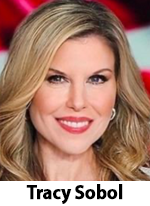 is “bringing America the headlines that matter – fast, accurate, and in-depth. Anchor Tracy Sobol covers politics, economy, culture, and global affairs with trusted analysis and real-time reporting from coast to coast and around the world.” Sobol comes to Newsmax from EWTN where she anchored “EWTN News Nightly.” Sobol comments, “I am thrilled and honored to be joining Newsmax. I could not be more excited to be a part of one of the fastest-growing news organizations, bringing real news to Americans. There is no place that I would rather be.”
  and CEO Mary Berner says, “For the first quarter, we delivered revenue in line with pacing guidance despite worsening economic headwinds reflecting, among other things, the imposition of tariffs that have depressed both
 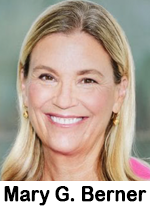 consumer and advertiser sentiment. However, with that backdrop, what remains constant is our relentless focus on actions to mitigate the impacts of the macro environment. For example, we accelerated growth in our digital marketing services business, which was up 30% for the quarter; leveraged our entire platform to capture demand opportunities; and drove additional annualized cost reductions of $7.5 million. Moving forward, we will continue to execute these strategies while simultaneously working to fundamentally transform the way we use and leverage our key assets.”
 lies in its ability to deploy high-end, labor-light, automation-heavy processes at scale. It’s a productivity story now, driven by robotics, industrial AI, and, most crucially, advanced 5G infrastructure deployed as an industrial platform — not just as a consumer gimmick.” He adds, “Compare this with our own policy environment, where even the best private sector players are hamstrung by outdated regulations, capricious permitting processes, and the dogma that government shouldn’t pick winners — especially in telecom or manufacturing. That ideology might have made sense in the 1990s, but it’s lethal to the future of our telecommunications industry now, and in consequence, our manufacturing future.”
  three stagnant years below inflation and a net drop of 2.5% last year – appear to be rebounding. RTDNA says reported salaries are increasing 14.5%. “Employees who contribute to the web were among the higher earners, which brought the figures up. Additionally, commercial stations often matched or exceeded the wages of non-commercial stations — an uncommon trend historically.”