
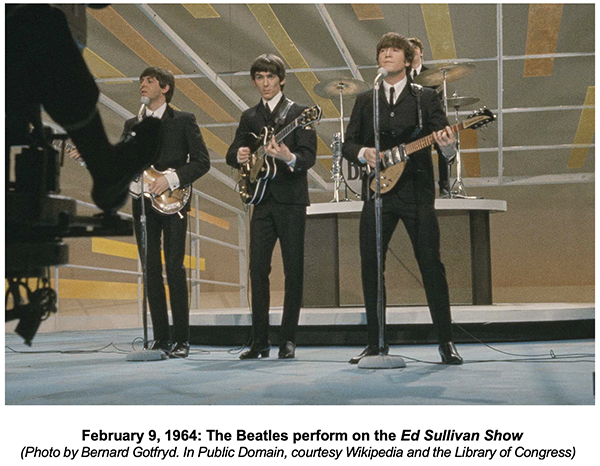
“Ladies and Gentlemen… THE BEATLES!”
On a February night in 1964, a veteran TV host and four young musicians from England changed music, broadcasting, popular culture… they changed everything.
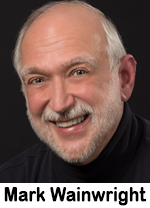
By Mark Wainwright
 In early December 1963, America was a very gloomy place. The assassination of President John F. Kennedy on November 22 brought the country to a virtual standstill for four days, and the emotional and psychological hangover lingered for weeks. The nation needed a dose of uplifting energy and fun, and the Beatles were the ideal remedy.
The Beatles were hardly newcomers. They had already been a successful act in the UK and mainland Europe (especially in Germany) for several years; oddly, they never got much traction in the United States. They had released a handful of songs in the US on smaller, independent record labels as far back as 1962, but they received little attention.
“She Loves You,” one of their early signature songs, was a failure when it was first released here in 1963. Dick Clark tried to feature it on “American Bandstand,” but the young dancers on his show didn’t know what to make of it and rated it poorly. But as the year went on, their popularity in England dramatically turned into a phenomenon that featured wildly enthusiastic crowds of screaming teenage girls. No one seems to be able to pinpoint what the catalyst was, but their already established popularity quickly grew into what became known as “Beatlemania.”
The Beatles first appeared on American TV on network news broadcasts. NBC’s “Huntley-Brinkley Report” aired a segment about the Beatles and Beatlemania in England on November 18,1963. Edwin Newman was the correspondent, and he and his colleagues were rather dismissive of the group, their music, and their young fans. Meanwhile, over at CBS, Walter Cronkite’s take was more generous. Their reporter in London, Alexander Kendrick, was pretty condescending as well, but Cronkite liked the segment when he saw it on the “CBS Morning News” on November 22 and planned to run it on his evening newscast. Sadly, what happened in Dallas hours later preempted everything.
A few weeks later, Cronkite thought his viewers could use a lift from the gloom that had descended upon the country, and he thought that segment would be a nice diversion. He ran it on his newscast on December 10, and that story really got the nation’s attention.
Young America was soon clamoring for everything Beatles. Radio stations dug up the records that hadn’t been successful and started playing them constantly. Beatles paraphernalia was heavily marketed and sold well. Capitol Records released “I Want to Hold Your Hand” in the United States on December 26 — the boys finally had a deal with a major record company in the US — and by New Year’s Eve, it was already a hit. It was the first of six Beatles’ songs that reached #1 on the Billboard “Hot 100” chart in 1964.
Meanwhile, Ed Sullivan was the host/master of ceremonies of a long-running CBS variety show that dominated the Sunday night ratings for years. Unlike most of his contemporaries, he was happy to present many of the early stars of rock-and-roll; Elvis Presley, Buddy Holly, and Jackie Wilson were among the pioneering artists of the new music genre who got their first major television exposure on Sullivan’s program.
Sullivan heard about the Beatles, saw them receive a tumultuous reception at Heathrow Airport in London, saw the CBS news segment, and was determined to present them on his show. Whatever he thought of their music, he respected talent and knew a hot act when he saw one.
A deal was quickly arranged between Sullivan and Brian Epstein, the Beatles’ long-time manager. Sullivan would bring them to the United States for three consecutive Sunday night shows. The February 16 performance would be broadcast live from the Deauville Hotel in Miami Beach, the third appearance on February 23 would be taped in advance. But the first of the three, a live performance on the Ed Sullivan Show February 9, was the one most anticipated. The two New York shows would be presented at the studio venue now known as the “Ed Sullivan Theater.”
When word got out, the demand for tickets was insane. CBS received more than 50,000 ticket requests (the tickets were free) for a studio theater that held 728. Getting one of the tickets was largely a matter of luck. Numerous notables and VIPs called upon favors owed and contacts at CBS to get tickets for their daughters (or granddaughters). Only a few succeeded.
When the Beatles arrived in New York on a Pan Am 707, they were greeted by a near-hysterical crowd of teenage girls (this had become a routine occurrence). They needed a police escort to get into Manhattan, and they needed a phalanx of New York cops to get them in and out of their hotel. All of this, of course, was breathlessly reported in the news media.
They arrived at the theater on Saturday, February 8, for a lighting and sound check and a brief rehearsal. George Harrison was recovering from a throat infection and was still tired and feverish, so he stayed at the hotel to rest, while a member of their entourage and a CBS production assistant took turns as stand-ins for George.
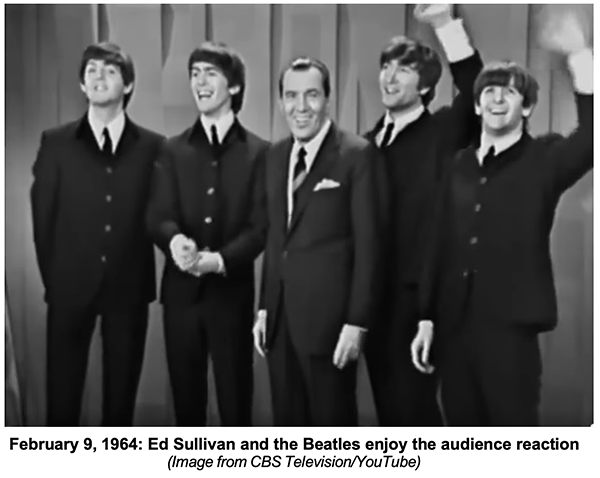
The following evening, at 8:00 pm Eastern Time, the “Ed Sullivan Show” went on the air, and shortly after the opening credits, Sullivan came on stage and offered a few brief remarks about the Beatles and their spectacular overnight success (“overnight” at least as far as Americans were concerned). Then… “Ladies and Gentlemen… THE BEATLES!” The theater erupted.
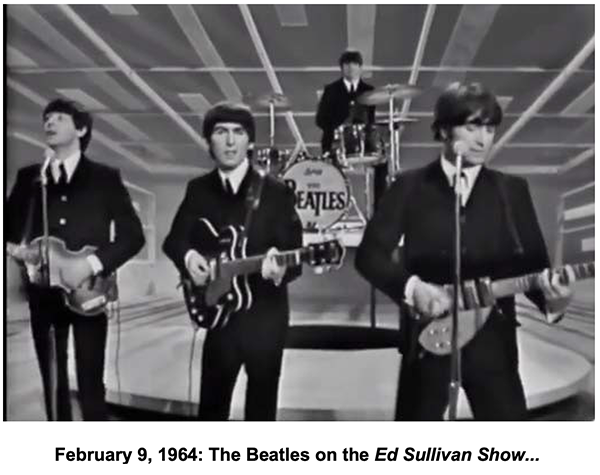
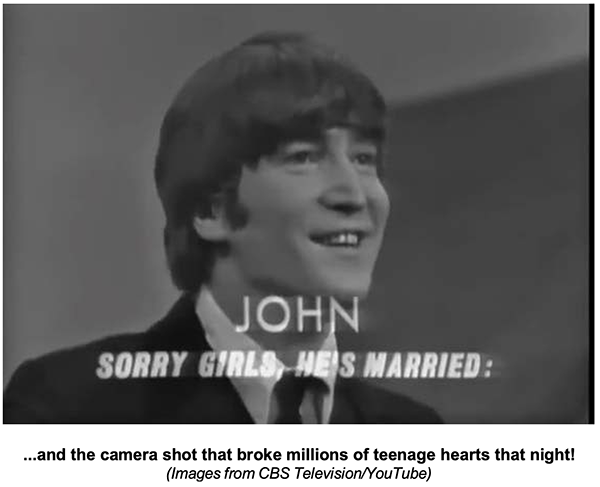
This moment led to one of the enduring music/broadcasting history trivia questions: What was the first song the Beatles performed live on their first “Ed Sullivan Show” appearance? No, it wasn’t “She Loves You” or “I Want to Hold Your Hand” (although they did those later in the show). Hint: while it was one of their most popular early songs, it was never officially released as a single. Okay, it was “All My Loving,” track #6 on side one of their iconic Meet the Beatles! album.
The ratings for the show were unprecedented. More than 73 million viewers – 39% of the country’s population – saw the performance. The broadcast drew a 60 share, which meant that 60% of American TV households were tuned in. Ed Sullivan always had pretty good ratings, but this was more than triple the size of his usual audience.
The Beatles were far from finishing their first American visit. Brian Epstein had managed to squeeze a couple of concert appearances into their tight schedule. One of those took place in Washington, DC two nights later, at the old Washington Coliseum. The old barn had seen some big events in its history, but nothing like this. The folks who owned and managed the building had barely heard of the group, but a concert promoter in the region convinced them to book a show. There was minimal promotion and advertising, but it wasn’t necessary. The tickets sold out in only a few hours.
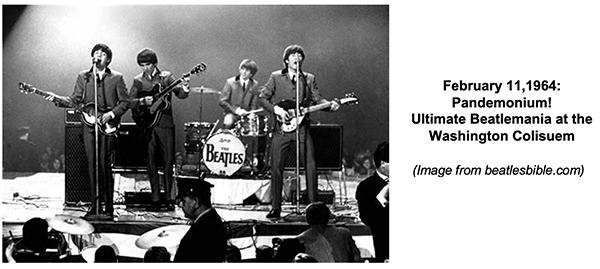
It turned out to be one of the most intense and intimidating concert environments ever seen, and is still regarded as such. The Beatles performed one of their few (maybe their only?) concerts “in the round,” on a small stage at the center of the arena, placed where the boxing ring would normally be situated. The building was packed with 8,092 ticket holders, most of them (as usual) screaming teenagers, with the front rows only a few feet from the stage. Imagine the frenzy in Ed Sullivan’s studio theater, now multiplied by a factor of ten. Fortunately, nothing really serious occurred, and the band handled the situation flawlessly, even making adjustments on the fly to handle audio and microphone issues…although it’s hard to believe they could even hear themselves amidst the screaming. They returned to New York to perform at Carnegie Hall the following day, then flew to Florida to spend a few days before returning to England. They returned for a North American concert tour in late summer. That tour was much better organized and promoted, although Beatlemania had not subsided at all, and the receptions they received were just as frenzied as their earlier appearances.
Typically, in an article like this, you would see links to various sources on the web. It would be superfluous here. There are countless sources of audio, video, photographs, and text of all these events and many others relating to that weekend in 1964. They are easily accessed on YouTube and other online locations. You can use one of the popular search engines or simply type a few key words into the YouTube search bar. All sorts of material will pop up; you’ll never run out of stuff to enjoy. If you are looking for maximum available audio and video quality, there are many downloads and DVD’s available from Amazon and other merchants.
The Beatles’ first weekend in America – particularly that first appearance on the “Ed Sullivan Show” – is widely regarded as a sort of cultural watershed that ignited Beatlemania here and opened America to other performers of the “British Invasion” era… artists like the Rolling Stones, the Dave Clark Five, Dusty Springfield, and many others. Many sociologists and cultural historians have opined that the Beatles coming to the United States was (at least in a pop culture sense) the beginning of the era that we now commonly view as “The Sixties.” Indeed, a veteran television host and four young musicians from the UK changed everything that night.
EPILOGUE
If their first “Ed Sullivan Show” performance was the “penthouse suite” of their first visit to America, the foundations of that structure were the countless radio stations around the United States that highlighted the band and played their music incessantly. There are endless stories about the big AM Top-40 stations of that era, their star disc jockeys, and their various encounters with the Beatles, both on and off the air.
I was a youngster in Baltimore at that time, and I was already hooked on radio and everything about it. I was a big fan of AM Top-40 powerhouse WCAO. The “Big 60” was the radio station for young Baltimore in that era, and their on-air staff were all celebrities in the community. Noted radio entrepreneur Kerby Confer was a WCAO disc jockey then, using the name “Kerby Scott” on the air.
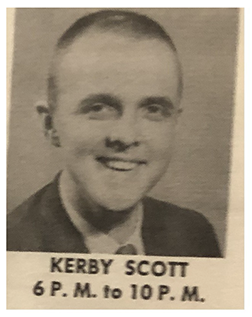 1964 WCAO Promotional Material: “Kerby Scott photo
(Photo courtesy Kerby Confer)
I recently spoke with Kerby Confer (almost two hours on the phone!) and reminisced about that era and WCAO’s role in it. When the Beatles took the train from New York to their gig in Washington, one of Kerby’s colleagues, veteran WCAO newsman Frank Luber, managed to board the train when it stopped at Pennsylvania Station in Baltimore and recorded an interview with the Beatles. The tape was brought back to the station and aired.
If WCAO was already immersed in Beatlemania, that episode had the station and its staff absolutely swimming in it. Kerby Confer told me that moment influenced his life and his career in ways he didn’t fully appreciate at the time. He said he was just another guy doing pretty well on the air in Baltimore, but that moment led to him becoming Baltimore’s “Fifth Beatle.” Wait, what? Baltimore’s “Fifth Beatle?”How did that come about?
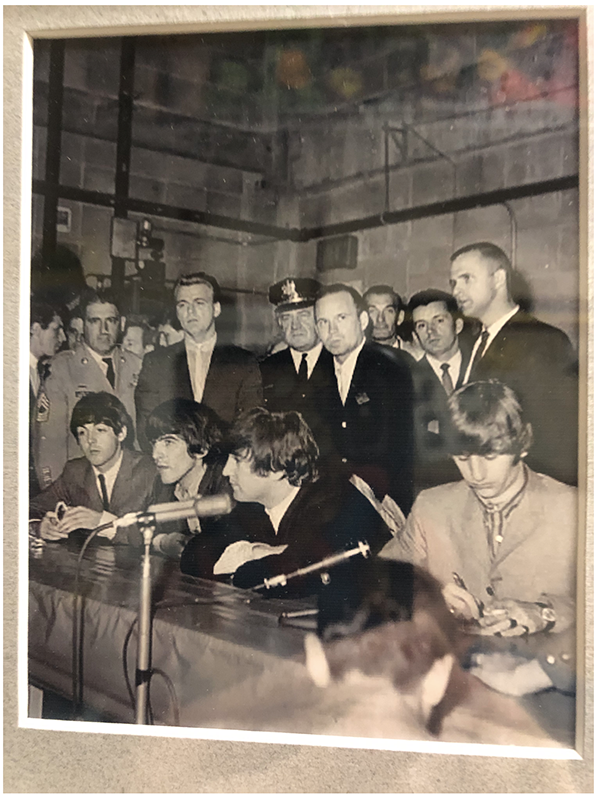
September, 1964: The Beatles and Baltimore media. “Kerby Scott” Confer is at the far right, directly behind Ringo (Photo courtesy Kerby Confer)
As it turned out, Kerby Scott soon became the host of WCAO’s “Liverpool Hour,” an evening program in conjunction with his regular on-air work at the station. The program featured the music of the Beatles and the many other artists who came out of the UK at that time.
Kerby usually wore his hair short in a buzz cut, but Paul Rodgers – his lifelong friend, WCAO colleague, and business partner later – convinced him to grow his hair out enough to solidify the “Fifth Beatle” persona. Kerby eventually sported a very restrained Beatles-style haircut to complete the image (I don’t think he kept the haircut for very long). He was an obvious choice to emcee one of the Beatles’ shows when they performed at the Baltimore Civic Center in September of 1964, and he later hosted “The Kerby Scott Show” on WBAL-TV; it was a dance party program, Baltimore’s version of Dick Clark’s show “American Bandstand,” and I believe it was eventually syndicated elsewhere. Before long, Kerby Confer moved over to the business side of radio in management and ownership. He was very successful in that endeavor, and still owns and operates many radio stations today.
So, Kerby Scott Confer and Mark Wainwright were just two more young radio guys whose lives and careers were influenced by that first Beatles weekend in the United States. It bears repeating: a veteran television host and four young musicians from England changed everything on the night of February 9,1964.
Mark Wainwright is a long-time radio personality, talk show host, and voiceover performer who has worked on the air at numerous respected radio stations around the United States. He was most recentlythe morning host at WSYR in Syracuse, New York. A Baltimore native, Mark currently resides inSaratoga County, New York. He can be reached at: markwainwright@earthlink.net
 largest share of listening, accounting for more than one-third of daily time with audio among those age 13+. The vast majority of that listening (31%) is to AM/FM over-the-air signals.” (The other 5% comes from radio streams.) Behind AM/FM in listening is streaming music (20%), YouTube (14%), podcasts (11%), SiriusXM (8%), owned music (4%), TV music channels (3%), audiobooks (3%) and other (1%).
  and I would have never imagined that all of my dreams would be multiplied by two. I was blessed with an amazing journey; from Emporium to New York City and every city in between including Nashville, Dallas, San Antonio, Austin, Baltimore and Pittsburgh…. The best part of my job was working with some of the best talent in the country. I tried to never get in their way, and I listened in awe to what they created daily. They were the reason for my success, and I am thankful for the privilege of tagging along… The time has come for me to walk away, and I do so with the deepest appreciation. If I worked with you, I hope you can say that I gave you my best and that I helped you succeed. I know my life was richer because of you and I will cherish the memories we created together. Thank you! Now, about that last break…”
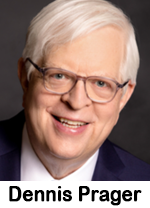 monumental five-volume Bible commentary, The Rational Bible, as well as three other books.” Salem adds that each hour of Prager’s show will contain six more minutes of talk than at present and that third-hour affiliates are being offered the opportunity to take an hour of the Charlie Kirk show, which airs at the same time as Prager’s program. Additionally, Prager will do a monthly virtual “hangout” with subscribers to his Pragertopia +. Salem SVP of spoken word Phil Boyce comments, “Dennis Prager is a true talk radio icon and has been for the last 42 years since he first began on the radio at KABC in Los Angeles hosting the original ‘Religion on the Line.’ Millions of listeners spend the day with Dennis, enjoying his wit, wisdom, and knowledge. He is one of the most viral talk hosts on the air today, and we wanted him to remain on the Salem Radio Network for years to come.”
 Despite his seemingly nonchalant, bad boy on-air persona, David Letterman is exceptionally respectful of broadcasting and its history.
 Scott will lead a discussion with analysts, financial planning experts, real estate specialists, and college planners. He adds, “So many New Jersey residents fear they will never be able to afford to retire. This program will help New Jersey residents make smart decisions and ask the right questions as they plan for their future.” The station will broadcast online streamed live available for embedding at facebook.com/nj1015/live as well as via nj1015.com, the New Jersey 101.5 YouTube channel, or the New Jersey 101.5 app.
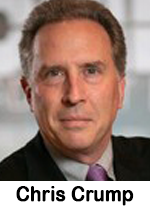 Yellowtec, will be discussing new developments and TALKERS founder Michael Harrison will be chatting about the forthcoming United Nations’
  TALKERS founder Michael Harrison will talk about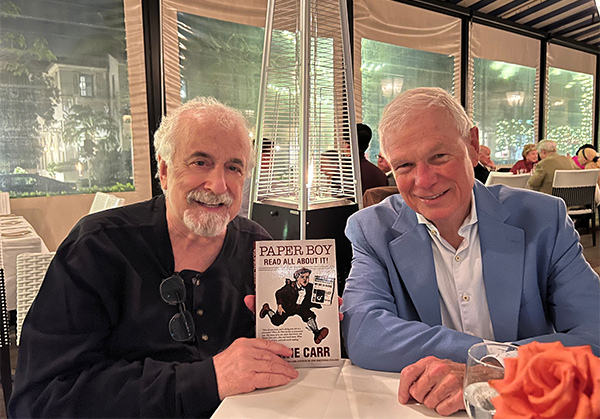
 national news and entertainment. The station will play host to nationally syndicated programs like “The Ramsey Show,” “The Michael Berry Show,” “The Joe Pags Show,” “Armstrong & Getty” and “Michael DelGiorno” as well as “Bloomberg Radio.” iHeartMedia Tampa Bay SVP of programming Tommy Chuck adds, “Tampa Bay is one of the fastest-growing communities in the United States. As the region’s economy continues to grow, we are pleased to offer programming tailored to the people making that happen. Around the clock, the programming will keep listeners informed on issues affecting their everyday lives and pocketbooks.”
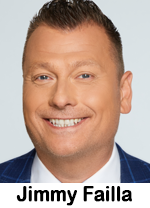 success story and a perfect fit for this role. We look forward to watching him make America laugh on Saturday nights.” Failla comments, “‘FOX News Saturday Night’ is a show for everyone who realizes that our country doesn’t need more Republicans or more Democrats, it needs more comedy.” In addition, FOX Nation just released a one-hour special showcasing Failla’s recent standup comedy performance to a sold-out crowd on Long Island, titled, “Jimmy Failla: They’re Just Jokes.” Failla is also the latest author to be published by FOX News Books with Cancel Culture Dictionary being released on January 30.
  LOS ANGELES – As students, enthusiasts and caretakers of this wonderful medium, we’re keenly aware that radio’s “Golden Age” boasted an incredible array of entertainers and broadcasters.
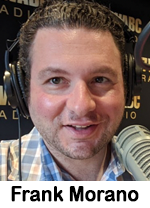 Republican New York 3rd Congressional District representative George Santos appeared on Frank Morano’s “The Other Side of Midnight” program on Red Apple Media’s WABC, New York. Santos tells Morano that he’s writing a book that will detail everything that’s happened to him during his time in Congress. Morano tells TALKERS Santos “went off on his colleagues, says he’s making a ton of money on Cameo and will one day return to Congress.”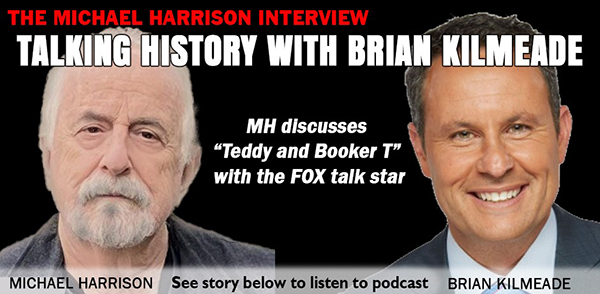
 afternoon drive host Mike Felger’s Facebook Live “Off-Air Show” and said she doesn’t think she’ll get the gig. When asked why she said, “Just because I think that I’m young and new. I think [program director] Rick [Radzik] took me very seriously. It’s just I think that there’s probably someone who, I don’t know, I think that I’m qualified. It’s just I haven’t been here very long, so I don’t know.” Station afternoon personality Jim Murray has said he’s not interested in the position. The piece notes that midday personality Rob “Hardy” Poole is being talked about as a candidate for the morning show post.
  It happens to everyone at least once.
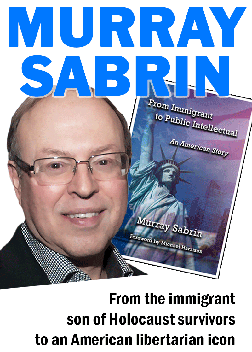 Books, 2022) by Dr. Murray Sabrin. The book has been an Amazon bestseller and a popular vehicle sparking conversations on political news/talk shows across America. Its author, Murray Sabrin, Ph.D. is emeritus professor of finance, Ramapo College of NJ. Dr. Sabrin – a prolific author – is considered a “public intellectual” for writing essays about the economy in scholarly and popular publications as well as being a prolific guest and “go-to” resource on hundreds of radio and TV talk shows and podcasts. According to publisher Michael Harrison, who wrote the book’s provocative foreword, “From Immigrant to Public Intellectual is a truly American story about an immigrant child’s rise from humble beginnings to forge a stellar career as an educator, author, candidate, and media influencer. Murray Sabrin explains libertarianism in plain language using his own life story set against a half-century of changing times. Talk show hosts have been tapping into this articulate scholar’s knowledge and views for more than three decades since his impressive third-party showing as the Libertarian candidate for Governor of New Jersey in 1997.” To learn more about Dr. Murray Sabrin please visit murraysabrin.com and murraysabrin.substack.com.
 In
In 
 Survey says nearly half of all Americans over 13, nearly 135 million, listen to spoken word formats. The growth curve boasts an eye opening 52% jump in time spent listening at home.
 We have a saying around “The Mark Kaye Show” studio:
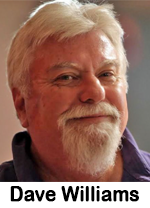 didn’t have a stroke or a heart attack and I don’t have a brain tumor or anything like it. Turns out it’s just one of those unexplained things that happen and very likely will never happen again. I’ve been cleared to return to work but have decided to call it a career. I’m 72, I’ve been in radio for 54 years, and for the past 42 years, I’ve been getting out of bed in the middle of the night to go to work. I just discovered I like sleeping in a bit. I will miss the daily enjoyment of the job and especially the people with whom I worked. And, thanks most of all to those of you who listened each morning and found some informational and entertainment value mornings on KLIF. Nothing lasts forever but I’m going to try. Stay well, y’all. Love your life. This is the month for giving thanks.”
  Fredericks says, “As our stations in Philadelphia have thrived and shown stunning growth, we thought it was critical to bookend the Commonwealth of Pennsylvania with Pittsburgh, giving us robust reach in both dense population centers. We offer listeners in Pittsburgh’s Westmoreland County and now Nashville, Tennessee an exciting news/talk alternative that breaths oxygen into a stale and boring ring of warmed-over RINO syndicated hosts on the conservative news/talk syndication circuit. Our Nashville acquisition gives us a base of operations in the Mid-South as we expand along the spine of the Atlantic Coast. Nashville is a high-growth city and an important cultural center of our movement. We will be competing there with the biggest talk station conglomerates in the nation, including Cumulus and iHeart. We will offer Nashville listeners a dynamic alternative choice.
 team of award-winning journalists brings a fresh perspective to mornings while delivering a perfect mix of news, sports, and entertainment.” Also, station traffic and weather anchor Renee Vitale becomes co-host of “First Thing with Mike Parsons” from 5:00 am to 6:00 am. The station is pairing Detroit Lions great Lomas Brown with WJR’s Sean Baligian for the 6:00 pm to 7:00 pm “Sportswrap with Lomas Brown and Sean Baligian” program. Cumulus Media regional VP and market manager Steve Finateri comments, “‘JR Morning with Guy, Lloyd and Jamie’ plus ‘SportsWrap with Lomas Brown and Sean Baligian’ as bookends to our current big-name local daily shows on WJR has given ‘The Great Voice of The Great Lakes’ more prime time firepower than at any time in the past 20 years!”
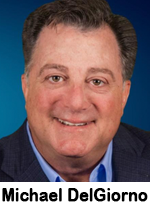 to 8:00 am show will be simulcast on the company’s KTOK-AM, Oklahoma City and KAKC-AM, Tulsa. iHeartMedia Nashville market president Dan Endom says, “We are thrilled to welcome Michael, a true broadcasting legend, to iHeartMedia Nashville. Michael’s extensive knowledge of the airwaves coupled with his innate ability to connect with audiences will elevate our programming to new heights.” DelGiorno served with Cumulus Media’s crosstown WWTN-FM, Nashville from 2007 through March of this year. He also previously hosted shows on KFAQ and KRMG in Tulsa.
 -platform audio with media plans that utilize radio, digital audio and podcasts, working together to reach audiences with unprecedented precision and drive quantifiable outcomes for their brands.” Some of the findings within the guide include: 1) Audio advertising works harder – driving more than two times the attention of TV and social media at more desirable CPMs; 2) Radio and digital audio are stronger together. A multi-platform audio strategy is so powerful that advertisers see 1.5 times the return on ad spend compared to digital-only campaigns; 3) Advertisers are leaving upwards of $6 billion in revenue on the table by not including total audio – a balanced mix of traditional broadcast radio and digital audio – in their media mix, according to a study conducted by Audacy and Neustar. The report also offers actionable tips for producing effective ads under the section titled, “5 Ways the Best Audio Ads Crush the Status Quo.” Here, Audacy says, “Advertising on the #1 reach media — Audio — will get you the most ears. But to keep them, your creative can’t just be good — it needs to be really freaking great.”
 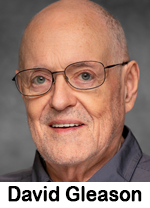 money for the past 20 years, Gleason has built a massive online archive of broadcasting and cable trade publications, books, music magazines, technical manuals, directories, yearbooks, company and station publications, programming guides and more. The archive — www.worldradiohistory.com — now tops nine million pages. Because it is online, the pages are readily available to the public – and searchable.” LABF co-chairs Heidi Raphael and Jack Goodman say, “There is no stopping him. What David has accomplished – virtually single-handedly — is extraordinary. He’s made an unparalleled contribution not only to the history of broadcasting, but to the story of the modern world as reflected and shaped by the media.”
 five-hour special will include episodes from “Lights Out,” one of the first radio horror programs, “Suspense,” “Inner Sanctum Mystery,” “The Whistler,” and “The Sealed Book,” which originally aired on April 14, 1945, on WGN Radio. Host Carl Amari has spent decades licensing and preserving original radio broadcasts and is the curator of the Classic Radio Club and board member of the Museum of Broadcast Communications in Chicago. He also hosts WGN Radio Theatre featuring two classic radio shows on Sundays from 7:00 pm to 9:00 pm.