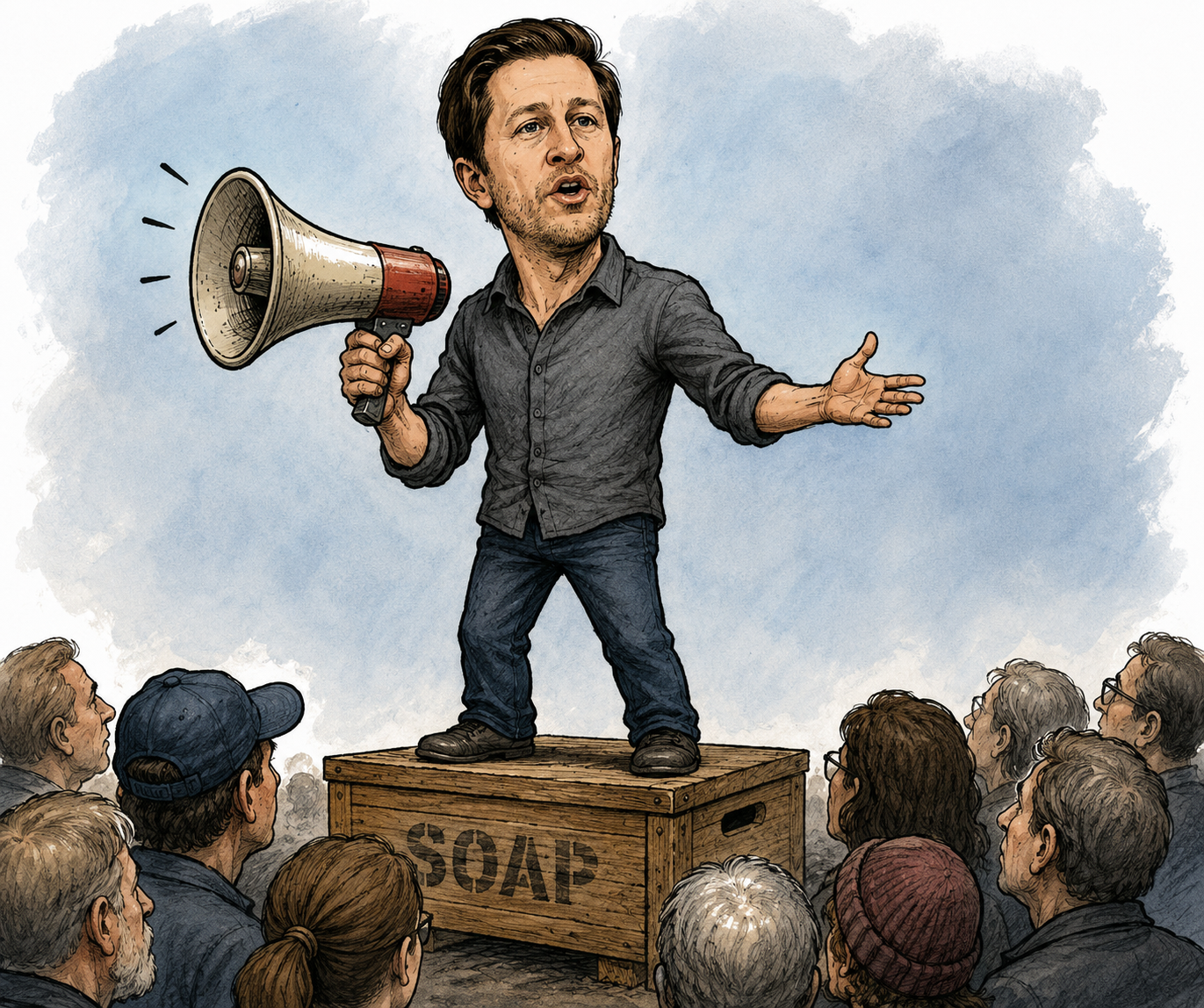
David Pakman, a major online liberal political commentator, is publicly alleging that YouTube’s recommendation and distribution systems are dramatically reducing exposure for left-leaning independent media channels, creating what he describes as an “existential crisis” for progressive political creators on the platform.
In a recent video, Pakman said that since early April, “YouTube has dramatically reduced performance for the vast majority of left-leaning independent media shows,” while asserting that right-leaning content does not appear to be experiencing the same decline.
Pakman framed the issue primarily through platform analytics rather than overt accusations of intentional censorship. He pointed to a sharp decline in impressions – the number of times YouTube displays a video thumbnail to users – while claiming audience engagement metrics remain largely stable.
“We were getting 15 million impressions a day,” Pakman said, explaining that the figure later dropped to approximately 10 million despite what he described as an unchanged audience response rate. “The click-through rate is still close to 8%. But impressions go from 15 million down to 10 million.”
Pakman argued that the consistency of click-through rates undermines the idea that audiences have simply lost interest in progressive political content. “It appears that people are just as interested in hearing from the left on YouTube right now, but they are not being shown the videos,” he said.
He also cited viewer feedback as evidence that something unusual may be occurring within YouTube’s recommendation ecosystem. According to Pakman, subscribers have repeatedly reported needing to manually search for his content despite being subscribed and having notifications enabled.
“You were being suppressed in distribution,” Pakman quoted one viewer as saying. Another viewer reportedly wrote: “I’m not seeing your new videos, and I’ve been subscribed for years.”
Pakman stopped short of alleging direct political targeting by YouTube employees or executives. “I am not arguing that someone at YouTube has flipped a switch and is deliberately suppressing left-wing channels,” he said. Instead, he suggested the platform’s recommendation systems may be reacting to engagement patterns or retention metrics in ways that inadvertently disadvantage certain political content.
At the same time, Pakman said performance on other digital platforms remains strong, including TikTok, Instagram, Snapchat, Facebook, and podcast distribution channels. “Every single other platform is doing fine,” he said. “It’s only YouTube.”
The comments add to a broader ongoing debate among digital creators regarding algorithmic visibility, platform transparency, and the growing dependence of independent media companies on recommendation systems they neither control nor fully understand.
Pakman urged viewers to subscribe directly, enable “all notifications,” and join his Substack mailing list in an effort to reduce reliance on platform algorithms. “We don’t want to rely on AI for recommendations,” he said. “We have to go back to telling the platforms what we want.”
To view David Pakman’s recent video in which he discusses this issue in full detail, please click here.




 stations. Audacy says, “The move ensures listeners continue receiving trusted national and international reporting from ABC News Audio, while Audacy stations remain focused on delivering live, local journalism in the communities they serve. Existing ABC News Audio affiliates, including 1010 WINS in New York and KYW Newsradio in Philadelphia, will continue their longstanding relationships as part of the expanded collaboration.”
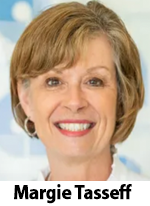 music brands. iHeartMedia area president Matt Bell says, “Margie’s passion for this business, her commitment to the Mansfield and Marion communities and the relationships she built over nearly four decades have left an incredible mark on our company and everyone fortunate enough to work alongside her. She has been a trusted leader, mentor and advocate for both our employees and our partners, and her presence will truly be missed. We are deeply grateful for everything she has contributed to iHeartMedia and wish her nothing but happiness and success in this next chapter.” Reflecting on her career, Tasseff comments, “Spending 39 years with one employer is truly uncommon. I’m deeply proud of what we’ve built together over the years — from the friendships and partnerships to the impact we’ve made through local radio. I’ve been fortunate to grow professionally while working with outstanding colleagues and serving a community that has meant so much to me. These stations will always hold a special place in my heart.”

 Mike Hulvey says, “Sabina’s leadership experience, industry knowledge and understanding of broadcasters and the local communities which they serve make her an outstanding addition to the RAB team. Her passion for helping media organizations grow and evolve will further strengthen the support, education and resources RAB provides to its members.” Widmann comments, “I’m excited to join RAB during such an important time for the industry. Radio and audio continue to play a vital role for our communities and advertisers. I look forward to working with RAB’s members and team to help provide meaningful resources, education and support that help broadcasters navigate continued change and growth.”
 program is hosted by husband-and-wife team Jeremy and Amy Long. It is currently also heard on digital stations throughout the United States, Australia, United Kingdom, New Zealand and beyond. Seaboard marketing solutions consultant Bob Stei says, “I was hooked the moment Jeremy and I first started talking about travel. Travel is a topic people are extremely passionate about. This will go well with our growing portfolio of lifestyles shows which include a wrestling show and program about pets.”
 Radio for Every Vehicle Act in its surface transportation reauthorization package. We thank Chairmen Brett Guthrie and Gus Bilirakis and Ranking Member Frank Pallone for their continued leadership on this critical issue and for creating another path to pass this overwhelmingly bipartisan legislation. As lawmakers consider policies affecting America’s transportation infrastructure, ensuring continued access to AM radio in vehicles remains essential for public safety. Leaders on both sides of the aisle recognize AM radio’s unique and indispensable role in keeping Americans informed, especially in times of emergency. We appreciate the support of the Act’s nearly 380 House and Senate cosponsors and urge Congress to take swift action to advance this legislation into law.”

 Public media firm WNYC in New York names Sonia Rao the culture reporter joining the WNYC / Gothamist newsroom. Rao will cover the arts, with a specialty in film, television, and food. She has covered arts and culture for a decade, most recently as a features reporter and critic at The Washington Post.
 Adam Smith‘s “invisible hand” is a metaphor he used to describe how individuals pursuing their own self-interest in competitive markets can unintentionally produce socially beneficial outcomes – such as efficient allocation of resources and increased wealth. Smith uses the phrase in The Theory of Moral Sentiments in 1759 and more famously in The Wealth of Nations in1776.
 with those breaks filled by exclusive bonus segments, behind‑the‑scenes moments, extended discussions and original content – resulting in nearly three continuous hours of programming each day.” iHeartMedia chairman Bob Pittman comments, “The Breakfast Club has always been at the center of culture, breaking artists, shaping conversations, and reflecting real life in real time. Taking this show live every day to a global audience on Netflix is a powerful example of how we’re expanding the reach of our biggest brands while giving audiences entirely new ways to experience them. Whether it’s morning in NYC or the afternoon in London, the conversation is live and reaching the world in real time.”
 Through the partnership, Salem Media and Compel Studios will bring the film to audiences nationwide through streaming platforms, churches, and Salem’s extensive multimedia network.” SalemNOW general manager Rob Ellis adds, “By Dawn’s Early Light is exactly the kind of meaningful and culturally relevant storytelling that resonates deeply with our audience. We’re excited to partner with Compel Studios to help expand the film’s reach and bring its message to viewers across the country.”
 focused opportunity called, “We Need A 4th,” giving listeners the chance to bid online for the opportunity to join either the Fred Toucher, Rob ‘Hardy’ Poole & Jon Wallach foursome or the Tony Massarotti, Mike Felger & Jim Murray foursome. The highest bidder for each group will earn a coveted spot as the fourth player. Massarotti states, “We launched this event 15 years ago with the goal of combining our passion for sports, entertainment, and giving back. To see how much this tournament has grown over the years – and the incredible support from listeners, sponsors, and local organizations – has been truly rewarding. We’re excited to make this year’s event another memorable day for a great cause.” Since its launch in 2011, the “Who’s Your Caddy” Golf Classic has raised more than $300,000 for charities including Boston Children’s Hospital Pediatric Care Unit, Jaylen Brown’s 7uice Foundation, and now Special Olympics Massachusetts.
 production, station imaging, promotional audio, and other broadcast content across multiple stations and digital platforms. The Assistant Production Manager works closely with Programming, Sales, Traffic, Promotions, and On-Air staff to ensure all production elements are completed accurately, creatively, and on schedule while maintaining Lotus Seattle Corp. quality standards and FCC compliance requirements. This position requires strong audio production skills, creativity, technical proficiency, and the ability to effectively manage multiple deadlines in a dynamic broadcasting environment.



 Radio has always been about connection, the feeling of belonging to something larger than yourself, of being drawn into a story told by a voice you trust. Perhaps, that’s why you tune in as well. There is little that is more rewarding for us than finding a way to connect you to what you want to hear, whether that’s your favorite jazz station, a particular show, or your former alma mater’s student-run station. It’s why we do what we do, and why we show up for the people who keep those stories alive.
 The Radio Hall of Fame announces this year’s class of inductees and among them are iHeartMedia chairman Bob Pittman and WFAN, New York morning drive personality Boomer Esiason. The 2026 inductees will be honored at the 2026 Induction Ceremony on Thursday, October 8 at the Fairmont Hotel in Chicago.
 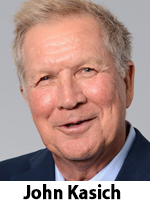 “There’s too much shouting and not enough listening in our country right now. I’ve always believed in unity over division, personal responsibility, service to others, and the ability of everyday Americans to make a difference. This show is about slowing things down, having honest conversations, and creating a place where people can reflect, find clarity, and focus on what still unites us in a noisy world.” The show airs from 11:00 am to 12:00 noon ET with a Sunday replay.