


Monday Memo: Radio’s New Fall Season
By Holland Cooke
Consultant
 As TV is touting its coming attractions, take a step back. We – inside the box – live-and-breathe radio.
Listeners have their hands full just living and breathing. Their day is time-crunched and financially-challenged, and we want to be its soundtrack. But listening is free, unlike umpteen other purchase decisions they agonize. So what’s high-stakes to us is low-stakes to them.
We only matter if we matter, and we’ve never had so much audio competition.
- This month, as the school year begins in so many places, the listeners local retailers want as customers revert to “normal.” Their tempo changes, and builds to a holiday season climax. Do they know who you are and how you can help?
- Off-air promotion (remember that?) merely says give-us-a-try. When they do, does what they hear deliver? Even with scant (or no) off-air promotion, much of what you can do to become more habit-forming costs nothing. As consultants do, I’m talking about “the fundamentals,” the blocking-and-tackling stuff. For starters, think: recognition and relevance.
Who are you?
- Are call letters or station nickname delivered frequently? PPM myth: call letters matter less. Baloney. Awareness drives use. Ditto your dial position(s) and how to listen via smartphone, smart speaker, and streams. Name-and-address.
- As your listeners cume 3 stations this week, help ’em remember yours more than the other 2 (not to mention streams and satellite radio and podcasts). And are you selling — or merely reciting — call letters, dial position, and slogans? This is often an issue with veteran talent, creatures of habit.
“Who cares?”
Or as my WTOP successor Jim Farley (RIP) asked: “W.G.A.S.?” He hung a sign in the newsroom there, meaning “Who Gives A Shit?”
- Are topics relatable and useful? Enable listeners with helpful information, and they’ll keep coming back.
- Do you say “you” and “your,” a lot? It’s a litmus test for relevance.
- Do you keep setting the stage as audience tunes in? Someone JUST got in the car.
- Are you teasing the next quarter hour? And what you’ll offer same-time-tomorrow?
- Even with apps in the dashboard, weather and traffic are super-local and can be super-impactful.
- Is your on-air imaging about the station? Or about listeners’ lives? “Because ONE traffic jam can jam-up your whole day…”
There’s more from radio’s right-now To-Do list at HollandCooke.com
Holland Cooke is a consultant working the intersection of broadcasting and the Internet. Follow HC on Twitter @HollandCooke and connect on LinkedIn
 report include: When it comes to audio’s value versus TV, diehard fans are 1.4 times more likely to tune into pre- and post-game shows on radio than on TV; Local voices matter as 79% of fans say sports make them feel part of a community. Many mute national broadcasts to follow local radio calls that capture their city’s emotion and history. Audacy adds that it now ranks #1 in sports talk reach across radio and television, surpassing ESPN and FS1; When it comes to reaching Gen Z, younger fans aren’t disengaged, they follow personalities, podcasts, and audio creators instead of networks; It’s a myth that only marketing beer and betting works on sports audio: sports audio drives measurable results beyond traditional categories, with web traffic lifts on air days vs. off-air days: +105% for financial services, +42% home improvement, +22% grocery, +10% automotive.
  Linear broadcast media have never been more challenged. Internet video now commands far more viewing time than over-the-air TV. And their own networks are hijacking viewers! Your local NBC station tells you to watch Peacock. ABC points you to Disney+. CBS pushes Paramount+. Affiliates are effectively forced to promote their own competition.
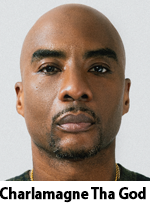 morning radio show with co-hosts DJ Envy, Jess Hilarious and Loren LoRosa. Charlamagne Tha God comments, “When it comes to iHeartMedia, gratitude will always be my attitude. They’ve created space for me to grow not just as talent, but as an executive and true partner through The Black Effect Podcast Network. To say that I’m thankful is an understatement. iHeart is the biggest and best audio company on the planet and audio is the foundation on which the whole media conglomerate will be built. Podcasting, live events, TV/film and documentaries, the sky is the limit for where we are going; and radio will always be at the core of it. Here’s to a new era of growth, impact, and prosperity.”
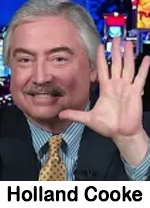 News people I coach reckon that my epitaph will read: “Consequence, not Process.”
 sports talk KSAC-AM/K284CM, effective September 2. This comes five years after he was fired by Bonneville’s KHTK, Sacramento and the Kings after a social media exchange with former Kings player DeMarcus Cousins about the Black Lives Matter movement and used the phrase, “all lives matter.” Napear sued Bonneville and lost but is currently appealing that ruling. Napear tells the Bee, “It’s going to be the Grant Napear show that people have listened to for decades. I’m competitive. I’m not only coming back to Sacramento. I’m coming back to win.”
  place. This new data fusion will integrate the industry-leading Edison Podcast Metrics into Nielsen’s widely used media planning tool, Nielsen Media Impact
  (NMI).” Nielsen adds, “As podcast listenership continues to grow, it is critical for advertisers to have sophisticated tools and data to effectively plan, measure and optimize their audio investments. Nielsen Podcast Fusion in NMI will provide an even more holistic view of media planning and help users uncover valuable insights and demonstrate the effectiveness of their campaigns. NMI users will also be able to optimize media plans by specific podcast networks and genres, as well as top podcast programs.” NPR and Ocean Media are among the charter subscribers at launch.
 Why we’re already seeing TV tout its coming attractions: They understand how, after Labor Day, routines settle in. Viewers will be ready to re-engage.
 Podcasting is no longer a niche platform lacking scale. Podcasts deserve a larger role in media plans as opposed to “test and learn” experimental buys. 158 million Americans, 55% of persons 12+, are reached monthly. Among persons 18-34, 18-49, and 25-54, monthly reach is now 65% to 73%; 2) It is feasible to consider shifting TV budgets to podcasting given that podcast 18-34 weekly reach (52%) is as big as TV’s (52%); 3) Brands targeting women should give podcasts a starring role in media plans: Podcast female audiences have hit record highs in habituation and reach; 4) Among male demographics, monthly reach is now in the low 70% range; and 5) Adopt agency media legend Arnie Semsky’s “5% solution” to podcasts: Allocate 5% of digital ad budgets to podcasts.
  platforms that emphasize conversation and create a sense of connection. To win with this community who wields $2 trillion in buying power, brands must prioritize engagement strategies that center diverse Black experiences and cultural nuances.” The study notes that social media apps have become a haven for Black consumers – Black adults overall spend more time scrolling than their peers. Black millennials (between 18 and 34-years-old) spend the most time on social media among all adults by almost an hour per week. Black adults also have high engagement with radio and podcasts. Radio averages the same as TV in weekly reach with Black adults – each medium reaches 27 million Black adults on average.
  number of retailers shopped, retailers shopped most often, brand perceptions, and advertising recall have recovered; 2) Brand equity and shopping patterns for the top two performers (AutoZone and O’Reilly Auto Parts) are stable to up. The second-tier players are slightly off; 3) AM/FM radio and podcasts are the ideal platforms to advertise auto aftermarket. TV underperforms with category usage and brand equity: Heavy AM/FM radio and podcast listeners visit more retailers in the category, make more shopping trips, and spend far more than the average. Two key consumer segments, do-it-yourselfers and ultra-heavy shoppers are more likely to be heavy AM/FM radio listeners. TV viewers are weak category users.
  Wall Street investors do not put up money for traditional radio and television stations.
 AI-generated content in political ads; 2) Proposing to apply the disclosure rules to both candidate and issue advertisements; 3) Requesting comment on a specific definition of AI-generated content, and 4) Proposing to apply the disclosure requirements to broadcasters and entities that engage in origination programming, including cable operators, satellite TV and radio providers and section 325(c) permittees. Chairwoman Jessica Rosenworcel says, “As
  artificial intelligence tools become more accessible, the Commission wants to make sure consumers are fully informed when the technology is used. Today, I’ve shared with my colleagues a proposal that makes clear consumers have a right to know when AI tools are being used in the political ads they see, and I hope they swiftly act on this issue.” However, Republican Commissioner Brendan
 Carr opposes the move, saying, “There is no doubt that the increase in AI-generated political content presents complex questions, and there is bipartisan concern about the potential for misuse. But none of this vests the FCC with the authority it claims here. Indeed, the Federal Election Commission is actively considering these types of issues, and legislators in Congress are as well. But Congress has not given the FCC the type of freewheeling authority over these issues that would be necessary to turn this plan into law. And for good reason. The FCC can only muddy the waters. AI-generated political ads that run on broadcast TV will come with a government-mandated disclaimer but the exact same or similar ad that runs on a streaming service or social media site will not? Consumers don’t think about the content they consume through the lens of regulatory silos. They just view content on screens. Will they conclude that the absence of a government warning on an online ad means that the content must be real? I don’t see how this type of conflicting patchwork could end well. Unlike Congress, the FCC cannot adopt uniform rules.”
 It seems every hour Nielsen and Pierre Bouvard of Cumulus fame (formerly of Westwood One) put out a release stating that radio is just fine, thank you. Radio is more persuasive than TV, direct mail, streaming and print. Radio is a proven success for over 100 years. Most of the buildings housing Procter & Gamble were built on radio – not TV – advertising success. Happily, P&G realized radio’s clout and is now a dominant radio advertiser – again!
 reach 17% more voters.” The study references Pennsylvania Senator John Fetterman’s 2022 campaign, noting that it deployed radio to reach voters in Philadelphia and Pittsburgh. In doing so, it allocated 20% of media dollars to radio and generated a 10% lift from radio above the local TV campaign, amounting to 676,000 additional voters at no extra cost. Audacy SVP of strategy, partnerships and analytics Jon Blum says, “When campaigns activate a TV plan, they should activate a corresponding radio plan and incorporate it into the mix with TV. The portion of the population that isn’t reachable via TV could be the swing vote and what throws it over the top for a candidate.” Nielsen’s study noted that if a campaign moved 20% of ad spending to radio, the optimized media plan would connect with 15% more Democratic and Republican voters and 23% more unaffiliated voters.
  Let’s take a minute to welcome back an old reliable that has been part of our sales and marketing world since Adam pitched Eve and got the first “yes” on the original cold call. No telling how cold that call really was.
 In
In 
 I am always impressed when I see-and-hear radio and TV stations swapping product.
 In May 2007, I was enjoying the brand-new app called YouTube. Still independently owned, still relatively unknown. Some of the videos pulled millions of viewers, more viewers than enjoyed by ESPN or any cable network. More interesting, the videos with high counts were not made by NBC or ESPN or any traditional video source. High view count videos were being made by people with no experience in traditional media, they were experimenters producing in their basements and bedrooms.
 2018, Nielsen’s Total Audience Report reveals the 18-49 weekly reach of live and time-shifted TV has dropped -26%. Over the same period, TV’s daily time spent is down -59%; 2) cord-cutting is a major driver of TV’s audience collapse: The MRI Simmons January 2023 “How Americans Watch TV” report reveals 51% have cut the cord; 3) While a huge number of Americans have abandoned traditional TV for streaming, AM/FM radio remains the dominant audio platform: According to Edison Research’s Q2 2023 “Share of Ear,” AM/FM radio has a massive 69% share of U.S. ad-supported audio. AM/FM radio audience shares are over 17 times larger than ad-supported Pandora and ad-supported Spotify.
  How about a collective “thank you” to the 45th president of the United States for keeping your talk radio programming relevant, timely, unpredictable and most of all engaging?
 in London, Springer got a law degree from Northwestern University, served on the Cincinnati City Council before exiting in a prostitution scandal, returned to the Council a year later and eventually served as mayor of Cincinnati. He ran unsuccessfully for governor of Ohio as a Democrat. He moved into television news and won regional Emmy Awards before debuting his own soon-to-be-a-hit TV show that began as an issues-oriented program. Springer was part of the Air America liberal talk radio experiment during the early 2000s in which he hosted the 9:00 am to 12:00 noon ET show. In 2005, TALKERS magazine managing editor Mike Kinosian (who then was special features editor for Inside Radio) interviewed Springer.
  Welcome to the NAB edition of Pending Business.
 It’s tough enough for radio talent to navigate stable careers in these days of consolidated station ownership, personnel cutbacks and drastic salary reductions – but the NAB’s newly stated stance on non-competes adds insult to injury and is out of step with the interests of beleaguered professionals still hanging on for dear life in the programming sector of this industry. I understand that the National Association of Broadcasters is at heart a lobbying group representing the interests of the medium’s ownership but, c’mon – non-competes really are of another era and egregiously unfair.