


Changing the Words Isn’t Changing the Use
By Matthew B. Harrison
TALKERS, VP/Associate Publisher
Harrison Media Law, Senior Partner
Goodphone Communications, Executive Producer
 AI can make someone else’s story sound like you. What have you added?
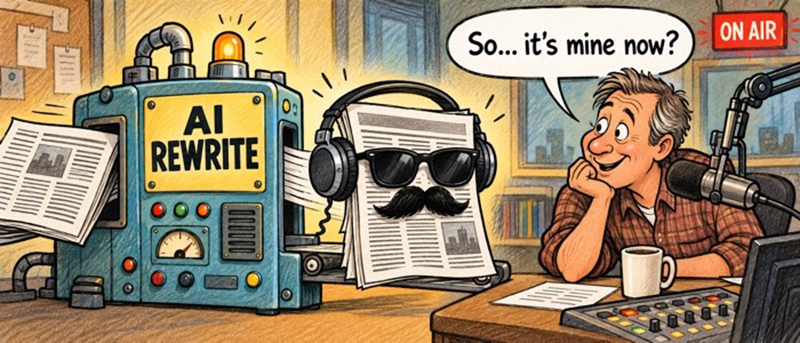
Imagine this morning’s show prep: a host finds a terrific newspaper feature, drops it into an AI tool, and types, “Make this 90-seconds, conversational, in my voice.” Seconds later, there is a polished script. The sentences are different, the pacing works, and it even sounds like something the host would say. The software has changed the words. But has it changed the use?
That question deserves a moment before the microphone opens. “Rewrite this” is an instruction to software, not a legal clearance process. Copyright reaches beyond identical sentences: an abridgment or adaptation can still use protected material from the original. Replacing the vocabulary does not necessarily remove the underlying copyright issue.
First, though, let’s protect something equally important: the freedom to report the news. A newspaper does not own the facts it uncovers, and broadcasters can report those facts in their own words. Copyright protects the author’s expression, not the event, information, or idea itself. An AI-assisted factual summary is therefore not automatically an infringement, either.
When a use does borrow protected expression, fair use requires more than checking whether the wording changed. Courts consider the purpose and character of the use, the nature of the original, how much protected material the user took, and the effect on the original’s potential market. News reporting and commentary can qualify, but neither label guarantees the result. A shorter version that serves as a substitute for the original raises a different question from an excerpt used to examine or criticize it.
For a host, a useful editorial question follows: What am I adding besides my voice? Perhaps the story prompts an interview with the reporter, a challenge to the conclusions, or an explanation of what the issue means locally. Those choices give the audience a reason to hear your treatment. They do not automatically establish fair use, but they help distinguish developing a segment from repackaging a feature.
AI can help with that development. Ask it to suggest follow-up questions, identify assertions worth checking, or organize your own notes into a workable outline. Then read the source, verify the facts, and make the editorial decisions yourself. Credit the reporting that helped you, while remembering that attribution and permission serve different purposes. A source acknowledgment is good practice, but it does not authorize an otherwise infringing use.
The opportunity here goes beyond avoiding a claim. A host’s value includes judgment, curiosity, experience, and the relationship with listeners, all things worth bringing to the microphone. Use AI to make room for more of that work. A script can sound like you without giving the audience anything of yours.
Matthew B. Harrison is a media and intellectual property attorney who advises radio hosts, content creators, and creative entrepreneurs. He has written extensively on fair use, AI law, and the future of digital rights. Reach him at Matthew@HarrisonMediaLaw.com or read more at TALKERS.com.