By Erik Cudd
 From my teenage years to today, radio has been the career of my adult life. When I first began listening in my teens, I was drawn less to the music and more to the conversation. I tuned into stations not for my favorite songs, but because I enjoyed hearing people talk, debate, and share ideas. Over my lifetime, I have seen many changes in the medium. The news/talk format, in particular, has always fascinated me for its mix of news, commentary, and immediacy.
In such a time as this, because radio is the medium I know best and love most, I write this appeal to those influential in news/talk. My hope is that you will step forward once again as the architects and innovators you have always been, and raise a rallying cry for this unique moment. The freedoms and ambitions that make the format so vital also create challenges. By design, it invites sharp opinions, spirited disagreement, and cultural edge. Those qualities are its strengths. But in our current climate, they also carry the risk of drifting into tribalism and rhetoric that can spill over into something more dangerous.
This is not an implication that I believe news/talk is responsible for the death of Charlie Kirk. I would like to be crystal clear. What I am saying is that a perfect storm has been gathering for many years, and no one can deny the polarized, charged landscape we now inhabit. And that storm is not radio’s sole responsibility. Television, social media, and digital platforms have found their profit margins in spaces that thrive on provocation. Cable news leans on conflict. Social media algorithms reward outrage. Digital outlets chase clicks and controversy. Radio is part of this broader ecosystem, not apart from it. And while no single medium created our current atmosphere, each has a role to play in reflecting on its impact and considering how best to move forward.
This is not about drawing a simple line between “toxic” and “non-toxic” content. Such judgments are rarely clear, and program directors deserve the benefit of the doubt. Yet it may be worth asking whether radio, like all media, could benefit from a renewed look at how editorial choices can help keep conversations as civil and constructive as possible. Debate and controversy will always be part of the medium, but escalation does not need to be the only outcome.
The September 10 tragedy underscored this in more ways than one. Beyond the event itself, the aftermath played out across digital spaces, where ordinary citizens made comments that, while protected speech, resulted in lost jobs, reputational damage, and news coverage. The lesson is not that speech should be curtailed, but that our civic discourse is increasingly fragile. And because radio is one of the most intimate and influential media, its choices ripple outward into that discourse in profound ways.
Audiences are noticing. As someone in my early 50s, squarely within talk radio’s target demographic, I should be a loyal listener. Yet I find myself tuning in less often, not from a lack of loyalty, but because I long to hear more voices who can thoughtfully engage both sides of an issue, giving each perspective a fair hearing and treating every listener as though their view matters. That is why I believe there may be room to pull back a bit, to allow for more variety, nuance, and genuine curiosity in how issues are approached.
Serious does not mean boring. Civility does not mean dull. Across platforms, authenticity and curiosity consistently earn audiences. Podcasts like SmartLess and Armchair Expert succeed not by stoking outrage but by elevating storytelling and connection. Public affairs series such as Frontline and American Experience continue to attract loyal audiences through rigorous, measured reporting. Nonfiction authors like Malcolm Gladwell and Brené Brown demonstrate that thoughtful exploration can reach mass audiences. These examples are proof that depth and balance can succeed when executed with energy and creativity.
Radio is uniquely positioned to do the same. The path forward is not retreat from controversy but innovation. Maybe it begins by encouraging new hosts who bring curiosity, empathy, and an equal openness to both sides of an issue, alongside conviction. It could include piloting alternative formats in off-peak slots where experimentation can thrive. It will require recalibrating success metrics to value loyalty, digital engagement, and cross-platform trust, not just short-term spikes. And it may also mean weaving national voices together with local conversations so that stations strengthen both their reach and their roots.
I do not write this from a high perch. I write as a member of the audience who also walked the halls of the station and still believes in the power of the medium. My words are not meant as accusation but as an open hand in friendship. What I am asking is simple: perhaps it is time for a more purposeful, deliberate engagement of conversation in the conference room. To sit together and ask if everything that airs is doing what it should. To take a long, hard look at whether anything might need to be discussed, reconsidered, or rebalanced in light of what we have all just witnessed.
Radio, because of its intimacy and reach, is uniquely positioned to lead by example. By being more proactive in its own yard, radio could encourage the same self-reflection across media, and even among the public itself. That is not retreat. That is leadership.
Radio still matters. Its intimacy can at times divide, but it can also renew. The question is not whether talk radio will remain bold, it always will, but whether it can channel that boldness in a way that builds the public square rather than fractures it.
The opportunity is here: to prove that freedom and responsibility can coexist, and that doing so is good for the culture, and good for the business.
Erik Cudd has worked in radio and media since 1991. He can be emailed at erik@cudd.us.



 local news, weather and information across radio, television and digital platforms.” KXL program director Grant McHill says, “Partnering with KOIN 6 News allows us to expand our commitment to delivering fast, accurate and essential news to the Pacific Northwest. By combining KXL’s deep roots in local news radio with KOIN-6’s trusted reporting, we are building a stronger, more dynamic news ecosystem for Portland and beyond.”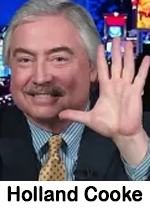
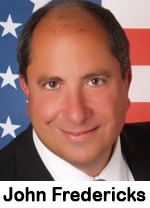 equity, or Wall Street investors. We answer to one group: our audience. This milestone proves there’s tremendous demand for independent voices delivering news, politics, sports, and commentary people can trust. Truth and clarity are making a comeback.” Company CEO Anne Fredericks adds, “We strive to cover what matters most in people’s daily lives: their country, their community, and their sports teams. News, talk, and sports are simply different expressions of the same mission: giving people truthful information, honest perspective, and a voice. What makes the John Fredericks Media Network different is our independence. No newsroom hierarchy, no C-Suites, no suits and no boardrooms.”
 illness or disaster. The BFOA has distributed more than $20 million in aid to radio and television professionals over the past 15 years, representing over 200 broadcast companies across 45 states and U.S. territories. BFOA says, “On Giving Day, we encourage everyone in broadcasting to come together and support our broadcast community. Every contribution helps ensure that the Broadcasters Foundation can continue to provide a helping hand to broadcasters in need when tragedy strikes.”
 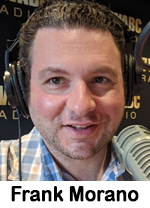 the availability of professional sports programming on free, over-the-air broadcast television. The resolution comes amid growing frustration among baseball fans over the increasing number of games being placed behind streaming paywalls and spread across multiple subscription services. Morano, who previously served as host of the late-night program on WABC, New York, states, “Baseball is America’s pastime, but in New York it’s also our pastime. For generations, families could turn on the television or radio and follow their hometown team. Today, fans are often expected to juggle multiple subscriptions and streaming platforms just to watch a season’s worth of games. That’s bad for consumers, bad for working families, bad for seniors, and ultimately bad for the future of the game itself.”
 In “
In “ audience looking for real-time news and opinion.” Salem News VP and general manager Cary Pahigian adds, “Expanding Salem News Channel onto Prime Video allows us to bring our programming to one of the largest streaming audiences in the world. As more viewers shift to streaming platforms for news and commentary, we are focused on ensuring Salem’s voices and perspectives are available wherever audiences are watching.”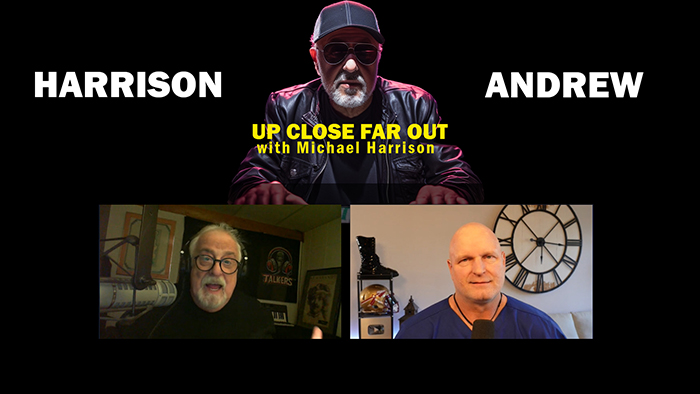
 “If you think radio has problems,” consultant Holland Cooke says, “Netflix et al are to television stations what Pandora et al are to music stations. So local news is TV stations’ silver bullet. And – like radio – their need to promote off-air exceeds their promotion budget.” In this week’s column, he outlines tactics for “partnering with a fellow broadcaster who’s also challenged.”
  media franchise – has hosted and produced more than 1,000 TV shows, 800 radio shows, and traveled all 50 states during the course of his media career. Lipford says he’s shifting the business model of his media company, which will now focus on streaming and licensing the brand’s extensive library of home improvement content. Lipford will continue to host his weekly two-hour “Today’s Homeowner” Radio show, and “Tips for Today’s Homeowner” radio features through the end of 2023, with the final show and features airing the week of December 25.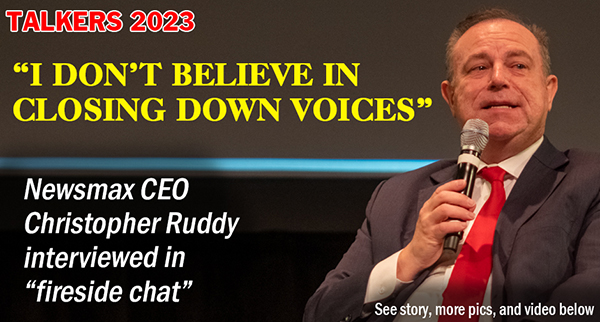
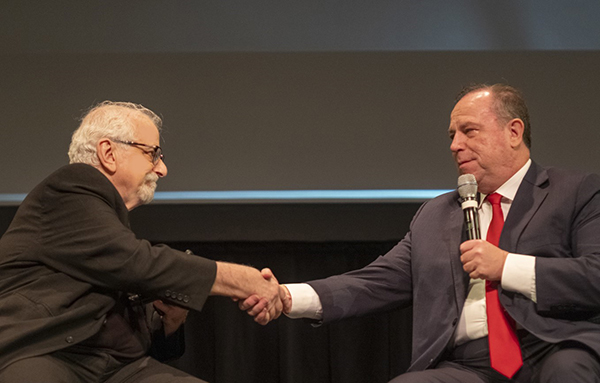
 delighted to have him as a guest in this setting and at this time.” In a fast-paced session sponsored by Collette guided travel tour specialists, Ruddy and Harrison engaged in a candid conversation about positioning, programming and navigating the infrastructure of modern media including print, digital and radio as well as cable news/talk television.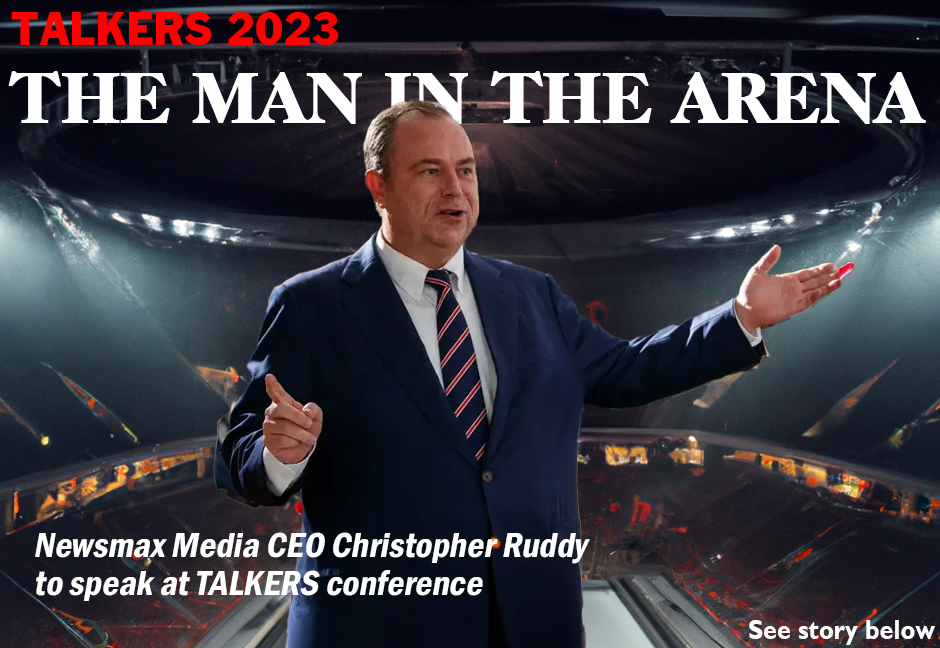
 syndicated radio health-based talk show continues to gain affiliates, was recently appointed the role of “ringside physician” for Impact Wrestling which doubles as a serious medical position as well as an entertainment position. Doctor Asa tells TALKERS, “The NFL, just like combat sports, includes years of high-impact play, raising concerns for long-term wellness. Concussions, joint injuries, cardiovascular health, obesity, and neurological complications are the norm as the average career for
  an NFL player is very short.” Doctor Asa will be speaking and educating as the leading health and wellness voice for NFL Franchises and Alumni with strategies for optimal health, performance, and longevity. He continues, “The NFL is a worldwide sports giant with some of the greatest athletes. The players are the ones we need to make sure are in the best position to enter the sport well and exit with their greatest win, their health. NFL Alumni Health has a passion to educate the players for better current play health and longevity choices which creates a better post-play outcome. Many former NFL Alumni Players are losing quality of life and facing serious health challenges. NFL Alumni Health is on a mission to create a better way. I’m here to be the voice, the storyteller, and catalyst to inspire the NFL and its Alumni, and influence others to reach their potential and becoming the best version of themselves.” Dr. Asa Andrew will be speaking on “The Big Picture” panel at TALKERS 2023, June 2 at Hofstra University.
 programming and individual achievement by, for and about women in television, radio/audio and digital media. Submissions from all facets of media are encouraged. A full list of the categories can be found