



The Political-Year Cash That Makes a Station’s November Look Healthier Than It Is in
By Ryan Joneson
GlassJar
Founder
 Political and issue money can make a talk station’s books look good in an election year. There is a lot of money coming in fast, and much of it is paid before the spots air. The money can be in the bank by November, making that month the highest of the year.
The balance of the talk station’s books can spike up in November, but that spike is only temporary. The station has to live on it until spring, and reading the books correctly during that time requires three things: 1) separating the two types of money, 2) budgeting for the trough before it arrives and 3) watching a few key numbers that are not affected by the campaign money.
Separate political cash from recurring local billings
Political and issue advertising is concentrated into a few weeks, often paid in advance and does not renew. Local advertising through agencies is steady, recurring and paid on a 60 to 90 day billing cycle after the spots run.
The monthly total is the sum of local billing and political and issue advertising, but the underlying numbers for each of these two sources of revenue are very different. Let’s look at a hypothetical talk station that generates $150,000 per month in local advertising through the summer. Every figure here is round and invented to show the mechanism. Then, in October, the station runs $180,000 in political and issue advertising. So, for the month of October, the station generated $320,000 in revenue, the best month in years.
By separating the local and political billing, the picture for the talk station is much different. Local billing in October was $140,000, down from the summer average of $150,000. This was caused by political and issue inventory taking up space and several regular advertisers sitting on the sidelines for the month. Local billing in November dropped even further to $130,000 but was offset by $40,000 of political and issue billing. So the combined billing for the month was up but the local billing was down.
To be able to track the true health of the business, the political and issue revenue must be carried as its own line on the income statement and in the cash forecast for each and every month.
Budget the post-election trough before it arrives
The slowdown in local advertising won’t show up in cash until January, February and March, because agencies pay 60 to 90 days after airing. That is the first quarter of the year, which is thin anyway.
Let’s look at the cash for this station again. It starts October with $80,000. The local collections come in 2 to 3 months after the air date. The political money comes in when the campaign books. The fixed costs for staff, tower and transmitter, music and program fees are $150,000 a month.
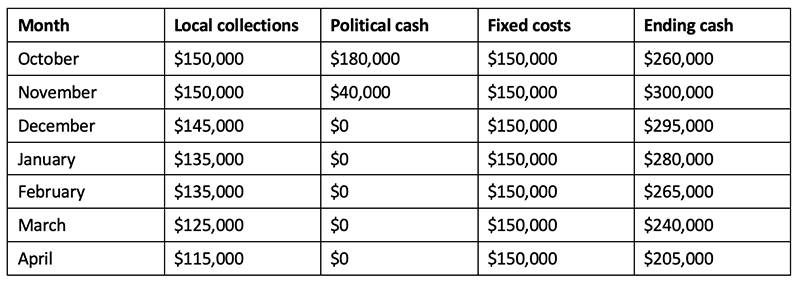
November peaks at $300,000, then declines every month as the local collections lag behind the fixed costs of the station. By April, the station is down to $205,000, and spring billings haven’t started yet.
Again, nothing went wrong. No advertiser defaulted. No agency failed to pay on time. All of the decline in cash was from the collection lag of the local business, compared to the fixed costs of the station.
Now remove the political money. If the station had no political revenue, November would have ended at about $80,000. In April, the station would have been in the red by about $15,000. The political revenue is not profit to spend. Most of it is the cushion that carries the station through the trough its own local business created.
How much can you spend on other things? Set a floor. If you want to have 1 month of fixed costs in cash at all times, then that would be $150,000. The local-only forecast bottoms out at about minus $15,000. So, you would need to hold back $165,000 of the $220,000 of political cash to keep the station at its floor. That leaves about $55,000 of the political cash that is truly spare. If you need more than that for your plan, then you had better check with your accountant or banker before the trough starts.
The monthly numbers that tell the real story
After the campaign money is gone, these are the numbers that will tell the real story of the business:
- Local billings against the same month last year, with political excluded.
- Days to collect from agencies. If the average stretches from 75 days to 105, a full extra month of local cash lands after the trough instead of in it.
- Months of fixed costs covered by cash. The example station sits at two months in November and about 1.4 by April.
- Share of local revenue from the top five advertisers. If one renewal decides the quarter, that’s a risk worth seeing early.
- Political and issue revenue as a share of the year, so a big election year isn’t used as next year’s baseline.
Run this each January:
- Split last quarter’s revenue and cash into political and local lines.
- Compare local billings with the same months a year earlier.
- Forecast cash through April using the dates agencies actually pay.
- Mark how much political cash must stay in reserve to hold the floor.
- Budget only what’s left above that reserve.
An election year can be a very good thing for a talk station, but remember that it is a one-time cash infusion, not proof that the station has grown.
Ryan Joneson writes about the financial side of running a small business. He is the founder of GlassJar, which makes accounting software for small businesses and a free income statement template. He can be emailed at: ryan@tryglassjar.com.
 In Las Vegas, talk host Steve Sanchez takes over the 9:00 am to 12:00 noon daypart on Kemp Broadcasting’s KMZQ “The Right Talk for Vegas.” Sanches was previously heard in the market on Audacy’s K-DAWN talk station heard on KMXB-HD3 and K268CS in the early evenings.
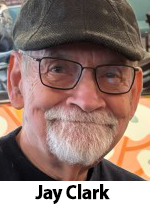
 Jay Clark was the first program director of WABC as a talk station. He set the tone and path for modern talk radio. This week I had Jay on as a special guest on the Red Apple Audio Networks all night show, “The Other Side of Midnight.” We celebrated the anniversary, May 10, (1982) of WABC’s switch from music to talk on the giant signal at 770 AM.
 format in America. KGO was the killer biller in San Francisco. The execs who ran them were mighty proud: Ben Hoberman, Ed McLaughlin, Al Racco, Chuck Debere. Yes, they ran those stations, but they also invented the caller-driven talk format. There were other winning talk stations, but they were guest centric rather than listener centric (i.e. WOR, WGN). At the time, there were 43 stations listed as “talk” stations. 43. Not many models.

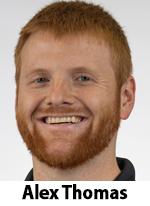 Woodward Community Media makes talk programming leadership moves that it says “strengthens its talk radio leadership with a key promotion and new hire.” Alex Thomas is promoted to brand manager fornews/talk WHBY-AM/W278AU and sports talk WSCO-AM/W256DD in Appleton, Wisconsin. At the same time, Paul Johnson joins the company as the new assistant brand manager for the Woodward Community Media Talk Team. Johnson most recently served with Midwest Communications. Thomas says, “I am thrilled to be given the opportunity to be brand manager of such prestigious stations of WHBY & The Score. With WHBY celebrating its 100th year Anniversary and WSCO’s local sports presence, it’s an honor to represent Woodward Community Media as the talk station brand manager. I look forward to continuing our community impact and highlighting the Fox Valley with great local radio programming.” Johnson comments, “I’m excited to be part of the team at Woodward Community Media! So many talented individuals on staff, and I feel very fortunate to join the team at WHBY and WSCO with the goal of providing great local radio to the listeners of the Fox Valley.”
 Original ideas are golden and rare. Here are five ideas worth stealing because of their novelty, success and oh-wow factor!
 Dependency upon a PPM panel to deliver high time spent listening is a bad business model. Would you rather count on one person listening for one hour or four people listening for 15 minutes? Right.
 The decision to change WABC from music to talk back in 1982 was not made by corporate, it was made by its then-program director, Jay Clark. Corporate was hoping he would approve the change, “they” lobbied for it, but the call was the ultimate responsibility of the program director. The business plan for WABC as a talk station predicted it to be profitable in year 10. (That’s because KABC, Los Angeles took 10 years to turn a profit.) As it turned out, WABC turned a profit in year 11.
 the Minority Photo-Journalism Institute are making a tangible difference in our community by helping students pursue careers in journalism and communications. KBLA ‘Talk 1580’ strongly believes in enlightening, empowering and encouraging tomorrow’s reporters, editors and potential talk radio hosts. Hopefully, our scholarships make a difference.” The scholarship donations were raised at KBLA’s February 28, 2023, Black History Month luncheon in tribute to Black legends in Los Angeles media.
 communities with local news, entertainment, and community affairs programming seven days a week. The station was built to uplift the voices in the Black community, sharing their stories, ideas and experiences following the George Floyd incident and protests. The station produces a tapestry of content for fans and advertising opportunities for partners that truly represents the Black experience in our city.” The station was honored with a 2022 Anthem Award (from the creators of the Webby Awards) in the Diversity, Equity, Inclusion and Corporate Responsibility category. Hosts on the station have interviewed notable guests including Vice President Kamala Harris, U.S. Senator Cory Booker, Wisconsin Governor Tony Evers, musicians Jennifer Hudson and Mary J. Blige, and many more.

 Every radio sales presentation should start with one powerful number. This number – often found under the Sphinx – will dazzle any buyer, but is rarely revealed. The number is Homes Using Radio (HUR). Once upon a time it was part of the conversation. HUR shows how many people are using radio at any given time, a total number.