By Erik Cudd
 From my teenage years to today, radio has been the career of my adult life. When I first began listening in my teens, I was drawn less to the music and more to the conversation. I tuned into stations not for my favorite songs, but because I enjoyed hearing people talk, debate, and share ideas. Over my lifetime, I have seen many changes in the medium. The news/talk format, in particular, has always fascinated me for its mix of news, commentary, and immediacy.
In such a time as this, because radio is the medium I know best and love most, I write this appeal to those influential in news/talk. My hope is that you will step forward once again as the architects and innovators you have always been, and raise a rallying cry for this unique moment. The freedoms and ambitions that make the format so vital also create challenges. By design, it invites sharp opinions, spirited disagreement, and cultural edge. Those qualities are its strengths. But in our current climate, they also carry the risk of drifting into tribalism and rhetoric that can spill over into something more dangerous.
This is not an implication that I believe news/talk is responsible for the death of Charlie Kirk. I would like to be crystal clear. What I am saying is that a perfect storm has been gathering for many years, and no one can deny the polarized, charged landscape we now inhabit. And that storm is not radio’s sole responsibility. Television, social media, and digital platforms have found their profit margins in spaces that thrive on provocation. Cable news leans on conflict. Social media algorithms reward outrage. Digital outlets chase clicks and controversy. Radio is part of this broader ecosystem, not apart from it. And while no single medium created our current atmosphere, each has a role to play in reflecting on its impact and considering how best to move forward.
This is not about drawing a simple line between “toxic” and “non-toxic” content. Such judgments are rarely clear, and program directors deserve the benefit of the doubt. Yet it may be worth asking whether radio, like all media, could benefit from a renewed look at how editorial choices can help keep conversations as civil and constructive as possible. Debate and controversy will always be part of the medium, but escalation does not need to be the only outcome.
The September 10 tragedy underscored this in more ways than one. Beyond the event itself, the aftermath played out across digital spaces, where ordinary citizens made comments that, while protected speech, resulted in lost jobs, reputational damage, and news coverage. The lesson is not that speech should be curtailed, but that our civic discourse is increasingly fragile. And because radio is one of the most intimate and influential media, its choices ripple outward into that discourse in profound ways.
Audiences are noticing. As someone in my early 50s, squarely within talk radio’s target demographic, I should be a loyal listener. Yet I find myself tuning in less often, not from a lack of loyalty, but because I long to hear more voices who can thoughtfully engage both sides of an issue, giving each perspective a fair hearing and treating every listener as though their view matters. That is why I believe there may be room to pull back a bit, to allow for more variety, nuance, and genuine curiosity in how issues are approached.
Serious does not mean boring. Civility does not mean dull. Across platforms, authenticity and curiosity consistently earn audiences. Podcasts like SmartLess and Armchair Expert succeed not by stoking outrage but by elevating storytelling and connection. Public affairs series such as Frontline and American Experience continue to attract loyal audiences through rigorous, measured reporting. Nonfiction authors like Malcolm Gladwell and Brené Brown demonstrate that thoughtful exploration can reach mass audiences. These examples are proof that depth and balance can succeed when executed with energy and creativity.
Radio is uniquely positioned to do the same. The path forward is not retreat from controversy but innovation. Maybe it begins by encouraging new hosts who bring curiosity, empathy, and an equal openness to both sides of an issue, alongside conviction. It could include piloting alternative formats in off-peak slots where experimentation can thrive. It will require recalibrating success metrics to value loyalty, digital engagement, and cross-platform trust, not just short-term spikes. And it may also mean weaving national voices together with local conversations so that stations strengthen both their reach and their roots.
I do not write this from a high perch. I write as a member of the audience who also walked the halls of the station and still believes in the power of the medium. My words are not meant as accusation but as an open hand in friendship. What I am asking is simple: perhaps it is time for a more purposeful, deliberate engagement of conversation in the conference room. To sit together and ask if everything that airs is doing what it should. To take a long, hard look at whether anything might need to be discussed, reconsidered, or rebalanced in light of what we have all just witnessed.
Radio, because of its intimacy and reach, is uniquely positioned to lead by example. By being more proactive in its own yard, radio could encourage the same self-reflection across media, and even among the public itself. That is not retreat. That is leadership.
Radio still matters. Its intimacy can at times divide, but it can also renew. The question is not whether talk radio will remain bold, it always will, but whether it can channel that boldness in a way that builds the public square rather than fractures it.
The opportunity is here: to prove that freedom and responsibility can coexist, and that doing so is good for the culture, and good for the business.
Erik Cudd has worked in radio and media since 1991. He can be emailed at erik@cudd.us.



 Radio programmers and sales managers know the drill: The GM drops an idea, a client makes a request, or a listener offers feedback – and the reflex is to jump straight into execution. But what if the real opportunity lies not in what’s asked for, but in what’s actually needed?


 Imagine SiriusXM acquires the complete Howard Stern archive – every show, interview, and on-air moment. Months later, it debuts “Howard Stern: The AI Sessions,” a series of new segments created with artificial intelligence trained on that archive. The programming is labeled AI-generated, yet the voice, timing, and style sound like Stern himself.
 newsprint tabloid, TALKERS proclaimed that “talk radio” was, indeed, an “industry within an industry” and worthy of its own, unique full-service trade publication. Founded by pioneering radio broadcaster (KMET, WNEW-FM, WLIR-FM, WCBS-FM, WPIX, KPRI, CBS, Westwood One, RKO) Michael Harrison, who also brought his experience with publications including Radio & Records, Goodphone Weekly, and Billboard to the table, the independent journal went on to produce annual conferences, numerous radio shows, and contribute to the ongoing success and influence of a variety of spoken word formats and talk media offshoots.
 In early 2024, voters in New Hampshire got strange robocalls. The voice sounded just like President Joe Biden, telling people not to vote in the primary. But it wasn’t him. It was an AI clone of his voice – sent out to confuse voters.
 after four years to take a job on Capitol Hill in Washington. The ideal candidate must have at least three years of talk radio experience with a strong background in politics and news. This position is based in Memphis. Send resume and air check to
  Krantz was most recently co-host of “The BradandBrittcast” podcast with Britt Whitmire. He served as host at a number of rock stations during his long radio career as well as morning host on news/talk WBT-AM/FM, Charlotte.
 There has never been more news. And news has never been more quotable. It costs two-plus cents to make a penny.
 Jim Gearhart is a remarkable on-air talent who was the AM drive host on New Jerey 101.5 for 20-plus years. In the 1960’s he was a star on WCBS-AM and WNEW. The illustration is an ad for his 2:00 pm to 4:00 pm show on WNBC circa 1968.
 Broadcasting weekdays 5:00 am to 9:00 am PT, the show delivers what station sources describe as “unmatched news coverage of the critical stories shaping the community.”
  The program has a reputation for being a trusted news source dedicated to delivering timely and accurate coverage tackling everything from local and national news to business, entertainment headlines plus traffic and weather reports. Known for her warm delivery and engaging storytelling, Carter’s distinguished career includes roles at major news outlets such as WBBM in Chicago and Newsradio KFBK in Sacramento, where she became known for her sharp reporting and ability to connect with audiences. She will report to PD Mary Ayala who tells TALKERS, “I’m thrilled to welcome Veronica to our team,” adding, “Her depth of experience, vibrant enthusiasm and passion for connecting with the people of California make her a great addition to our morning show.” Carter comments, “I’m honored to join such a respected team and excited to connect with our listeners each morning, bringing them the news and stories that matter most.” Carter replaces LaDona Harvey, who announced she was stepping down from the role earlier this month.
 The podcast publishing arm of iHeartMedia and Radio Ambulante Studios (RAS), a pioneering Spanish-language podcast production company that tells the stories of Latin America and Latino communities around the world, announced a deal that will bring RAS and its full slate of shows to iHeart’s My Cultura Podcast Network. As part of the deal, Radio Ambulante Studios’ flagship, award-winning podcast “
 X – which most people I hear still call “Twitter” – is a great way to attract new ears.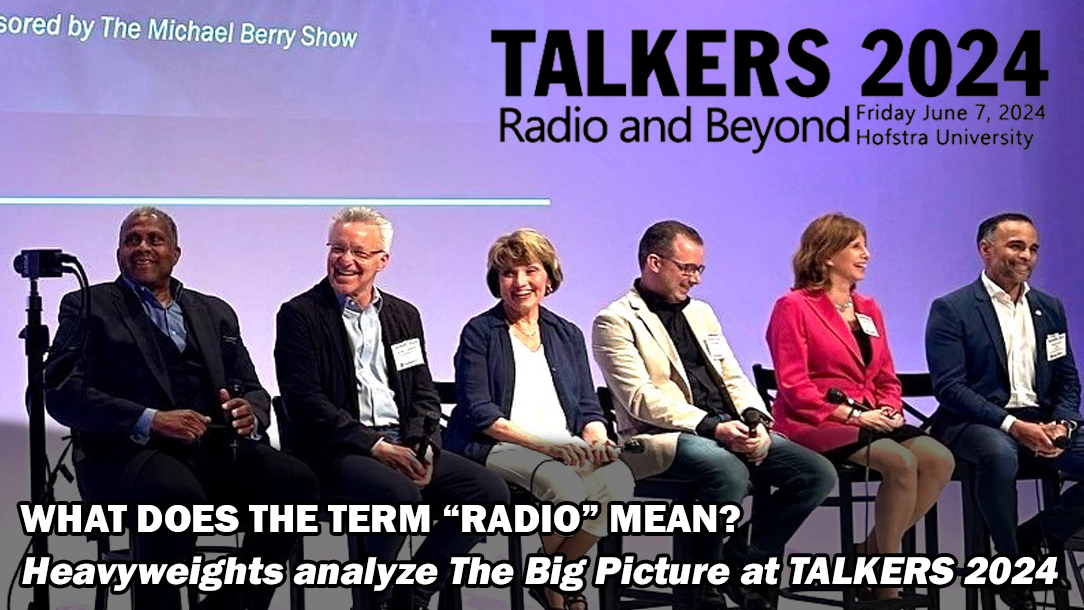
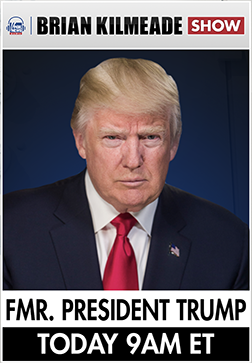 hour appearance, Trump did not bring up the matter of Joe Biden’s health but stated that he didn’t care whether Biden stays in the race as the Democratic nominee or not, believing that he has the voter support to beat any Democrat because they all share the same “radical lunatic” policies. He also told Kilmeade that he plans to announce his vice-presidential candidate pick just before next week’s Republican National Convention in Milwaukee. When asked if the pick would be influenced by whether or not Biden drops out of the race, Trump responded, “No” adding, VP Kamala Harris is “a disaster.” Kilmeade pressed the former president on a number of issues including NATO, immigration, and the economy. Trump stated that his good relationship with Putin is “a good thing” because it’ll keep us out of the growing danger of World War III and the only reason NATO members are now willing to pay their fair share of costs is because they feel threatened by the increased danger of war that has been heightened by the policies of Biden.
  station after retiring from Cumulus Media’s crosstown sports talker KTCK-AM/FM “The Ticket” tells the Observer that he and castmates Julie Dobbs and Jeff Cavanaugh were let go on Friday (4/26). Rhyner says, “I could be standing at the New Mexico border and still see this coming. It’s a feeling that I and plenty of others at the station had been getting for some time now. iHeartRadio is a music company that really doesn’t do that much talk radio, and the talk radio they do is not local or locally originated, and they got caught into something [97.1 The Freak] they didn’t know anything about, and they were kind of overwhelmed by it, and they decided that ‘this is not our bag.’” Whitt’s Athlon story noted that “lagging ratings” and the talent expense [high overhead] had the station in corporate’s fiscal sights.
  Time to thank the lawyers in the Donald Trump trial for once again proving beyond any doubt the power of talk radio.
 It seems every hour Nielsen and Pierre Bouvard of Cumulus fame (formerly of Westwood One) put out a release stating that radio is just fine, thank you. Radio is more persuasive than TV, direct mail, streaming and print. Radio is a proven success for over 100 years. Most of the buildings housing Procter & Gamble were built on radio – not TV – advertising success. Happily, P&G realized radio’s clout and is now a dominant radio advertiser – again!
 For spring break this year, Sarah and I revisited Sandals Grand Bahamian all-inclusive resort – NOT inexpensive, and very worth it. We’ve already booked same-week-next-year, and we think we know who we’ll see there then.

 Have we passed the disappointment of 2023?
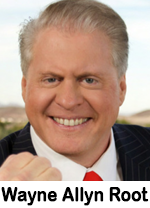 candidate Nikki Haley come in behind “None of the Above Candidates.” (“None of the Above Candidates” is choice that has been on Nevada ballots since 1975.) Root tells TALKERS that he came up with the strategy of convincing his audience to vote “None of the Above” to support Donald Trump and claims, “This is Exhibit A for the power of talk radio. Look at the vote totals. The number of ‘None of the Above’ voters almost exactly matches the number of listeners to my Vegas and statewide Nevada radio show. We did this. My Nevada audience almost single-handedly ended Nikki’s presidential ambitions.”