


Colbert-Talarico Interview Draws Attention to Equal Time Rule as FCC Commissioners Disagree About its Interpretation
It’s no surprise to regular TALKERS readers that FCC Chairman Brendan Carr and Democratic Commissioner Anna M. Gomez disagree – at least to some degree – on how the equal time rule should be applied to television and radio programming. After the back-and-forth between The Late Show’s Stephen Colbert and CBS attorneys over the interview with U.S. Senate candidate U.S. Rep. James Talarico that did not air on CBS television but was pushed out on the show’s social media accounts instead, broadcasters – including news/talk radio programmers and hosts – may be confused about how the equal time rule is being applied.
For her part, Gomez issued the following statement: “This is yet another troubling example of corporate capitulation in the face of this Administration’s broader campaign to censor and control speech. The  FCC has no lawful authority to pressure broadcasters for political purposes or to create a climate that chills free expression. CBS is fully protected under the First Amendment to determine what interviews it airs, which makes its decision to yield to political pressure all the more disappointing. It is no secret that Paramount, CBS’s parent company, has regulatory matters before the government, but corporate interests cannot justify retreating from airing newsworthy content. The FCC is powerless to impose restrictions on protected speech, and any attempt to intimidate broadcasters into self-censorship undermines both press freedom and public trust. I once again urge broadcasters and their parent companies to stand firm against these unlawful pressures and continue exercising their constitutional right to speak freely and without government interference.”
As far as news/talk radio is concerned, TALKERS editors have pointed out that in most cases, talk radio stations and their hosts are usually happy to have any qualified candidate be interviewed – whether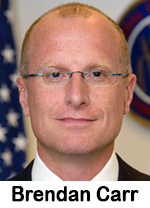 Republican or Democrat. Often, Democratic candidates balk at being interviewed by conservative hosts for fear they will not get a “friendly” interview as their Republican opponent might have. Regardless, the law is about equal time, and the matter late night shows are dealing with is assuming they qualify for the “bona fide news” exemption that excuses them from the equal time rule. Chairman Carr’s position is there is no blanket exemption; it is taken on a case-by-case basis.
 Jimmy Kimmel’s first monologue back after the recent suspension had the audience laughing and gasping, and, in the hands of countless radio hosts and podcasters, replaying. Within hours, clips of his bit weren’t just being shared online. They were being chopped up, (re)framed, and (re)analyzed as if they were original show content. For listeners, that remix feels fresh. For lawyers, it is a fair use minefield.
 months. This auction to raise funds includes fun experiences on which to bid, including: lunch with Emmy award-winning actor Henry Winkler; tickets to CBS’ “The Late Show with Stephen Colbert”; sit with sports radio host Jim Rome in-studio or on-site at NFL’s Radio Row the week leading up to Super Bowl LVIII in Las Vegas; and more. MBC board chair David Plier says, “It’s an exciting time for the museum and our future. The enthusiasm and generosity we have received for this fundraising effort from the broadcast community and celebrities – not just in Chicago but nationwide – has been tremendous. This fundraiser is about creating access and memorable experiences – from being a producer for a day at a major network, touring a live working newsroom or even having your voicemail greeting personalized by TV and comedy great Bob Newhart – ‘Forty for 40’ is not to be missed.”